Contents
Rocket Espresso Appartamento Review (2026): Still Worth It?
TL;DR: The Rocket Espresso Appartamento is a single-boiler heat exchanger machine delivering genuine prosumer espresso in a compact, wall-visible design. It pulls excellent shots with stable temperature, steams milk capably, and holds its value well — but the $1,600–$1,800 price tag means you need to be serious about espresso to justify it.
What Is the Rocket Appartamento?
The Appartamento is Rocket Espresso’s entry-level heat exchanger machine, designed for home baristas who want Italian-built quality without a full dual-boiler footprint. It brews at HX temperatures with a copper boiler, pulls 9-bar shots through a commercial-grade 58mm portafilter, and does it all in a chassis narrow enough for a cramped kitchen counter.
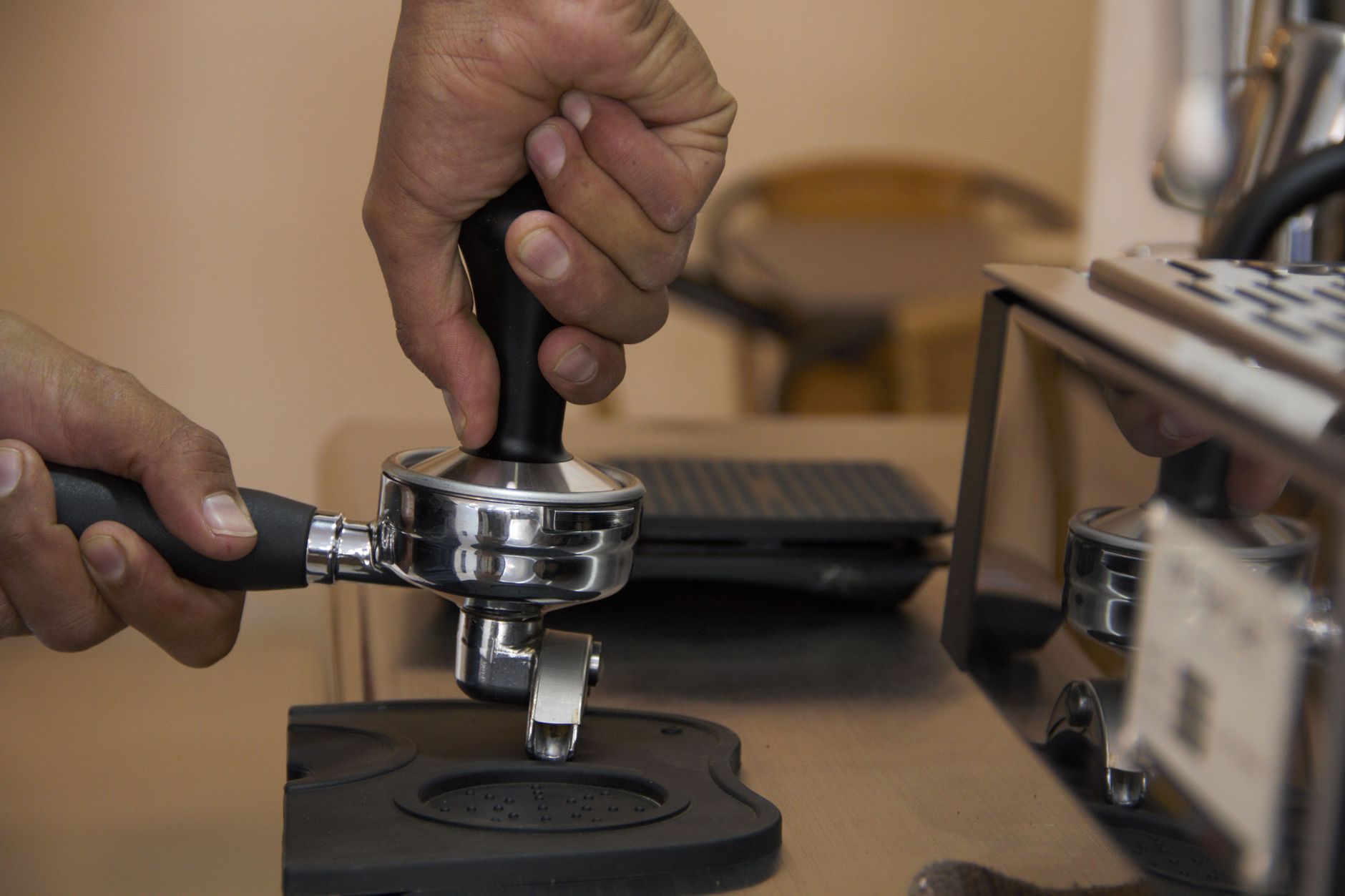
 Photo: 🇻🇳🇻🇳 Việt Anh Nguyễn 🇻🇳🇻🇳 via Pexels
Launched in 2015 and refreshed with cosmetic options over the years, the Appartamento has become one of the most recommended machines in the $1,500–$2,000 bracket. The flat sides (no protruding handles), circular cutouts on the side panels, and compact 270mm width make it stand out on a shelf. But looks are secondary — what matters is what’s in the cup.
The machine uses a copper heat exchanger boiler, meaning one boiler heats both brew water and steam simultaneously. This is the classic Italian home espresso setup: always-ready steam, no waiting between shots, but requiring a temperature-surfing technique (or a cooling flush) to dial in brew temperature.
Specs and Build Quality
The Appartamento is built to a standard you’d expect from a $1,700 machine — solid brass group head, stainless and copper internals, Italian manufacturing. It’s not as refined as a La Marzocco Linea Mini, but it’s materially closer to commercial gear than anything in the sub-$1,000 segment.
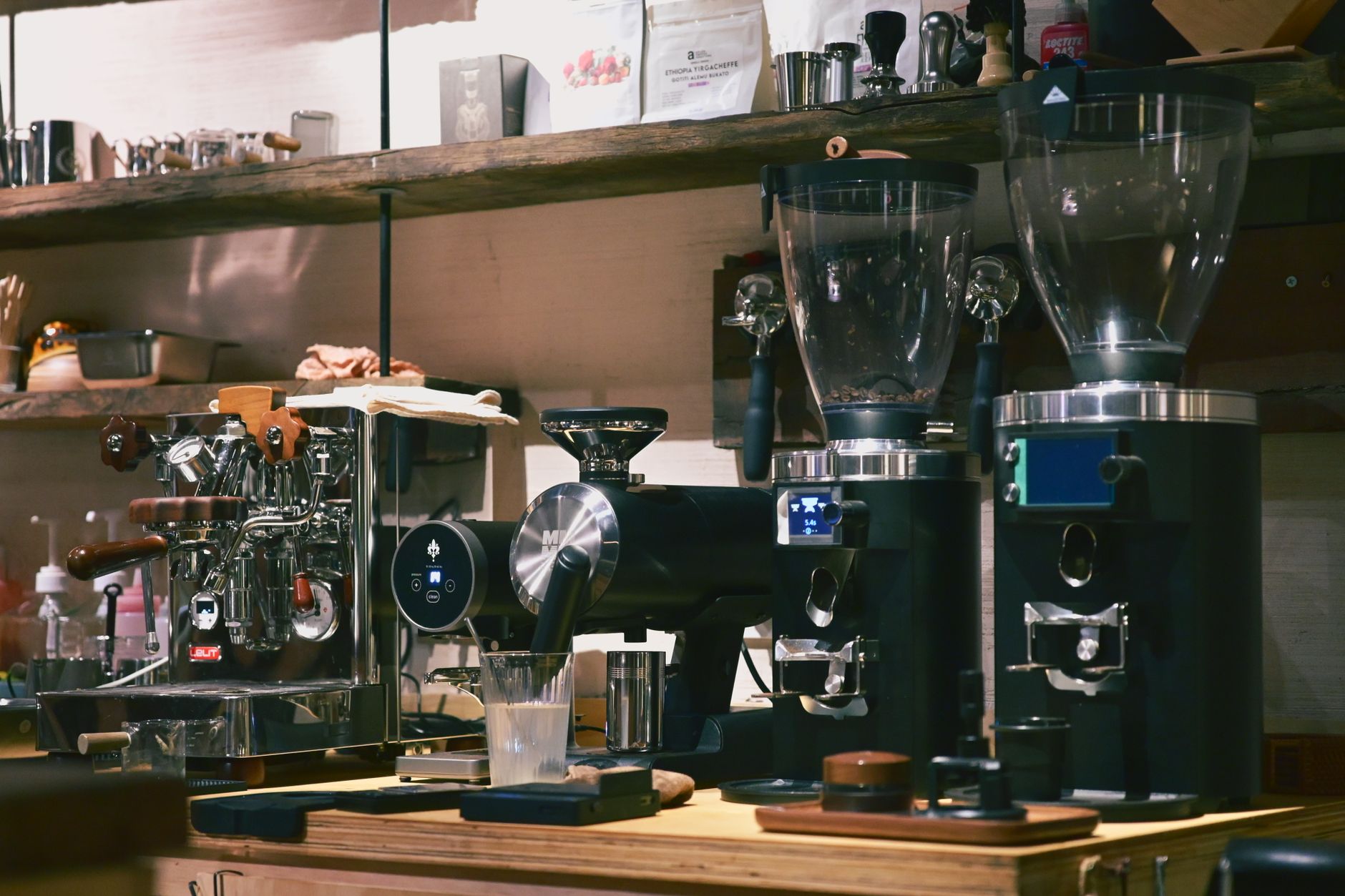
 Photo: Pavel Danilyuk via Pexels
Specs Table
| Feature | Detail |
|---|---|
| Boiler type | Heat exchanger (copper, 1.8L) |
| Group head | E61 thermosyphon |
| Portafilter size | 58mm commercial |
| PID | No (thermostat-controlled) |
| Pump type | Rotary vane |
| Pressure gauge | Single (boiler) |
| Dimensions (W×D×H) | 270 × 450 × 360mm |
| Weight | 20kg |
| Voltage | 120V / 15A |
| Price (2026) | ~$1,699–$1,799 |
No PID is the notable absence here. The Appartamento uses a pressurestat, not a PID controller. This means you’re managing brew temperature through the thermosyphon behavior and manual flushes — a skill that’s learnable but adds a variable beginners often underestimate.
The rotary pump is a significant differentiator from vibration-pump machines at lower price points. It runs quieter, delivers more consistent pressure, and is rated for plumb-in use if you ever want to hardwire the machine.
Shot Quality and Temperature Stability
Properly dialed in, the Appartamento pulls shots that compete with machines twice its price. The E61 group head provides thermal mass and consistent pre-infusion; the rotary pump holds pressure steady across the puck. Temperature management is the skill tax — but once you’ve learned it, the results are excellent.
The heat exchanger design means brew temperature isn’t PID-precise. In practice, after a 20–25 minute warm-up and a short cooling flush (3–5 seconds), the machine holds a stable brew temperature in the 93–96°C range. Experienced users develop a rhythm quickly. If temperature precision is non-negotiable for you, look at dual-boiler machines like the Breville Dual Boiler or the ECM Synchronika.
Crema is rich and persistent. Shot timing is consistent. The 58mm portafilter means you have access to the full range of third-party baskets (VST, IMS) and puck screens — a meaningful advantage over proprietary-size machines.
Steam Performance
The Appartamento steams like a machine that costs more than it does. The single steam wand has two holes and plenty of boiler pressure behind it — you can texture milk for flat whites and lattes without fighting the machine. It won’t match a dual-boiler for volume baristas, but for one-to-two drinks at a time, it’s more than capable.
 Photo: Pixabay via Pexels
Steam-to-brew workflow on an HX machine requires a sequence: pull shot, allow boiler to recover slightly, steam. It’s not the simultaneous workflow of a dual-boiler. If you’re making back-to-back milk drinks for multiple people, that gap (roughly 30–60 seconds) can feel slow. For a household making one or two drinks, it’s a non-issue.
The steam knob is a stepped valve — some users find it less refined than a lever-style wand, but it’s functional and durable.
Comparison: Appartamento vs. Key Competitors
| Machine | Price | Boiler | Portafilter | PID | Pump | Best For |
|---|---|---|---|---|---|---|
| Rocket Appartamento | ~$1,749 | HX copper | 58mm | No | Rotary | Espresso purists, small kitchens |
| Breville Dual Boiler | ~$1,399 | Dual SS | 54mm | Yes | Vibration | Precision brewers, beginners to prosumer |
| ECM Classika PID | ~$1,799 | Single SS | 58mm | Yes | Rotary | Espresso purists wanting PID simplicity |
| Profitec Pro 300 | ~$1,599 | Dual SS | 58mm | Yes | Vibration | Value-focused dual-boiler buyers |
| La Marzocco Linea Mini | ~$4,500 | Dual | 58mm | Yes | Rotary | Serious home bars, no compromises |
The Appartamento’s closest real competition is the ECM Classika PID — same rotary pump, same Italian build quality, same 58mm portafilter, but with PID control. The Classika costs slightly more; whether PID control is worth the premium depends entirely on your tolerance for HX temperature management.
The Profitec Pro 300 is the value argument against the Appartamento: dual boiler, PID, 58mm, at a lower price. The trade-off is vibration pump and slightly less refined build.
Design and Usability
 Photo: Helena Lopes via Pexels
The Appartamento’s 270mm width is genuinely narrow for an E61 HX machine. Combined with the flat side panels, it fits spaces where other prosumer machines won’t. The circular cutouts are aesthetic, not functional — but they’re distinctive enough that the machine gets noticed.
The drip tray is shallow and fills fast under heavy use. The water reservoir (2.5L) is accessed from the top and requires lifting the top panel — inconvenient if you have overhead cabinets. There’s no plumb-in fitting on the base model (it requires a kit), though the rotary pump supports it.
The single pressure gauge reads boiler pressure, not brew pressure. You’re flying partially blind on the brew side unless you add an aftermarket portafilter gauge — an annoyance at this price point.
Verdict by User Archetype
Espresso purist — Buy it. The E61 group, rotary pump, 58mm portafilter, and Italian build are exactly what you’re paying for. Learn the HX flush and you’ll pull shots that embarrass machines at twice the price.
Milk drinker — Capable, but consider alternatives. The steam wand works well; the HX workflow adds a small delay between shots and steam. If you’re making multiple milk drinks daily, a dual-boiler at this price point (Profitec Pro 300, Breville Dual Boiler) may serve you better.
Convenience-first — Wrong machine. No PID, no auto-start, no programmable volumes. The Appartamento rewards engagement, not automation. Look at the Breville Barista Express
→ See Also
- The Complete Guide to Espresso Machines (2026)
- Best Espresso Machine Under $200 (2026)
- Best Espresso Machine Under $500 (2026)
FAQ
Is the Rocket Espresso Appartamento worth the money in 2026? Yes, if espresso quality is the priority. At ~$1,749, you’re buying Italian rotary-pump build quality, an E61 group head, and a 58mm commercial portafilter — components that hold value and pull excellent shots for years. If you want PID control or a dual-boiler at this price, alternatives exist, but few match the Appartamento’s build quality at the same price.
Does the Rocket Appartamento have a PID? No. The Appartamento uses a pressurestat to regulate boiler temperature, not a PID controller. Brew temperature is managed through the HX thermosyphon and a short cooling flush before pulling shots. It’s a learnable technique, but if PID precision matters to you, look at the ECM Classika PID or Profitec Pro 300.
How long does the Rocket Appartamento take to warm up? Allow 20–25 minutes for the boiler and E61 group head to reach stable operating temperature. Some users run it on a smart plug timer to have it ready in the morning. A shorter warm-up (10–15 minutes) is possible but produces less consistent shot temperatures.
Can you plumb in the Rocket Appartamento? Yes, with the optional plumb-in kit. The rotary pump supports direct water line connection, eliminating the need to refill the reservoir. The kit requires a standard water line connection and is a straightforward upgrade for permanent installations.
What grinder should I pair with the Rocket Appartamento? The Appartamento deserves a proper espresso grinder — at minimum a Baratza Sette 270
Editorial methodology: Assessments are based on manufacturer specifications, published user reviews, and editorial research. Physical hands-on testing is noted explicitly where it occurred. Rankings reflect our editorial judgment and are not influenced by affiliate commission rates. Full editorial policy · Affiliate disclosure