Contents
V60 vs Chemex vs Kalita Wave: Which Pour Over to Buy?
TL;DR: The Hario V60 gives you the most control and the brightest cup — ideal if you want to dial in your technique. The Chemex brews cleaner, heavier batches with a forgiving filter. The Kalita Wave sits between them: consistent, flat-bed extraction, great for beginners who still want clarity. Your grinder matters more than which you pick.
V60 vs Chemex vs Kalita Wave: Head-to-Head Overview
The V60 rewards precision and punishes slop. The Chemex rewards patience and batch size. The Kalita Wave rewards consistency. If you already own a decent burr grinder and want to chase nuance, get the V60. If you brew for two or more people and want reliable clarity without obsessing over pour angle, get the Chemex. If you’re new to pour over and want a forgiving learning curve, the Kalita Wave is your safest entry.
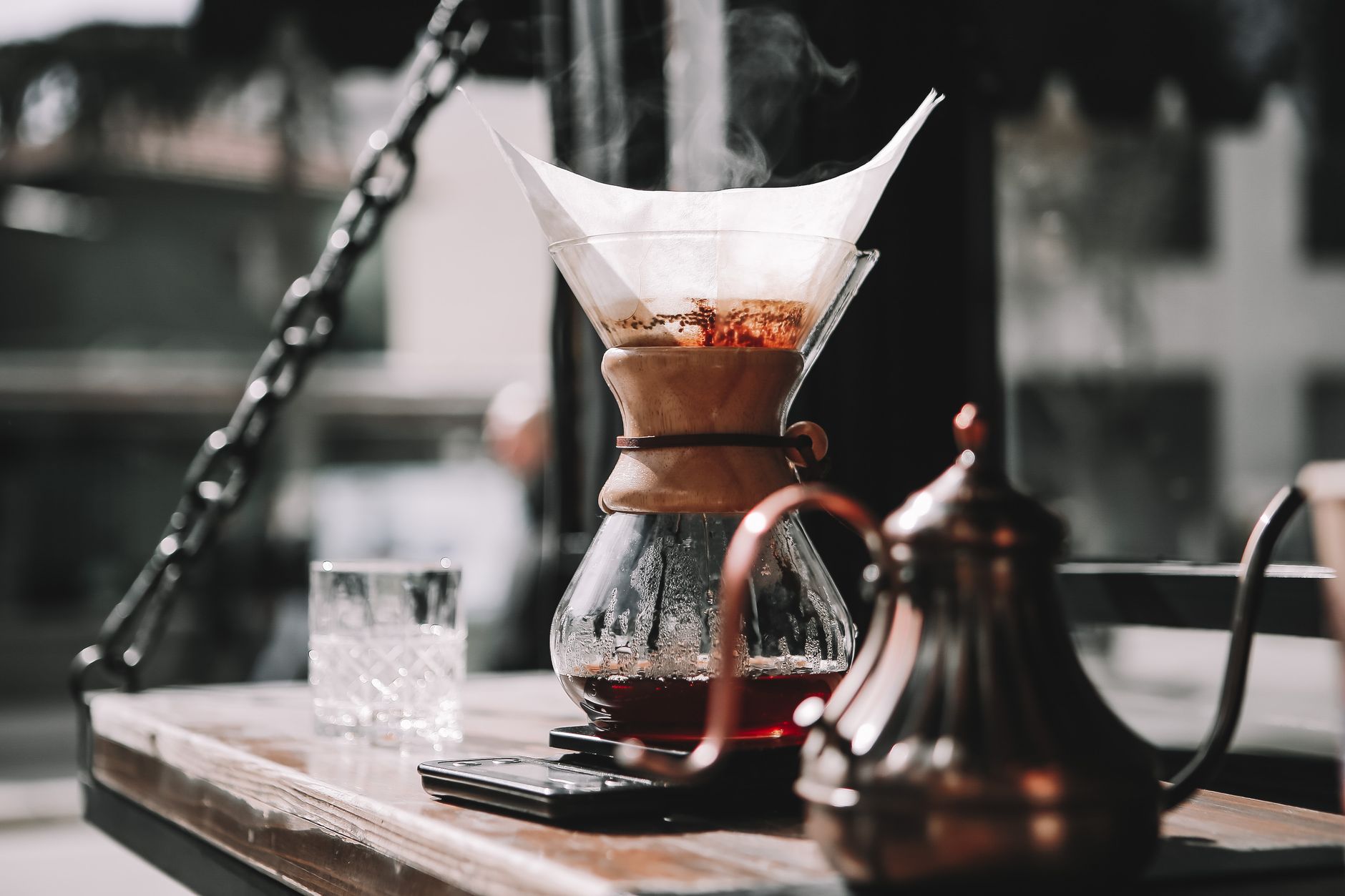 Photo: Taha Samet Arslan via Pexels
| Feature | Hario V60 | Chemex | Kalita Wave |
|---|---|---|---|
| Bed shape | Conical | Conical | Flat |
| Filter type | Paper (thin) | Paper (thick, bonded) | Paper (wavy, 3-hole) |
| Flow restriction | Spiral ribs, open drain | Thick filter slows flow | 3 small holes, controlled |
| Brew time | 2:30–3:30 min | 3:30–5:00 min | 3:00–4:00 min |
| Batch size | 1–2 cups (easily) | 3–8 cups (better) | 1–2 cups |
| Learning curve | Steep | Moderate | Gentle |
| Body | Light–medium | Clean, light | Medium |
| Best for | Dialing in origin character | Entertaining, clean batches | Consistent daily brewing |
Hario V60 — Maximum Control, Maximum Accountability
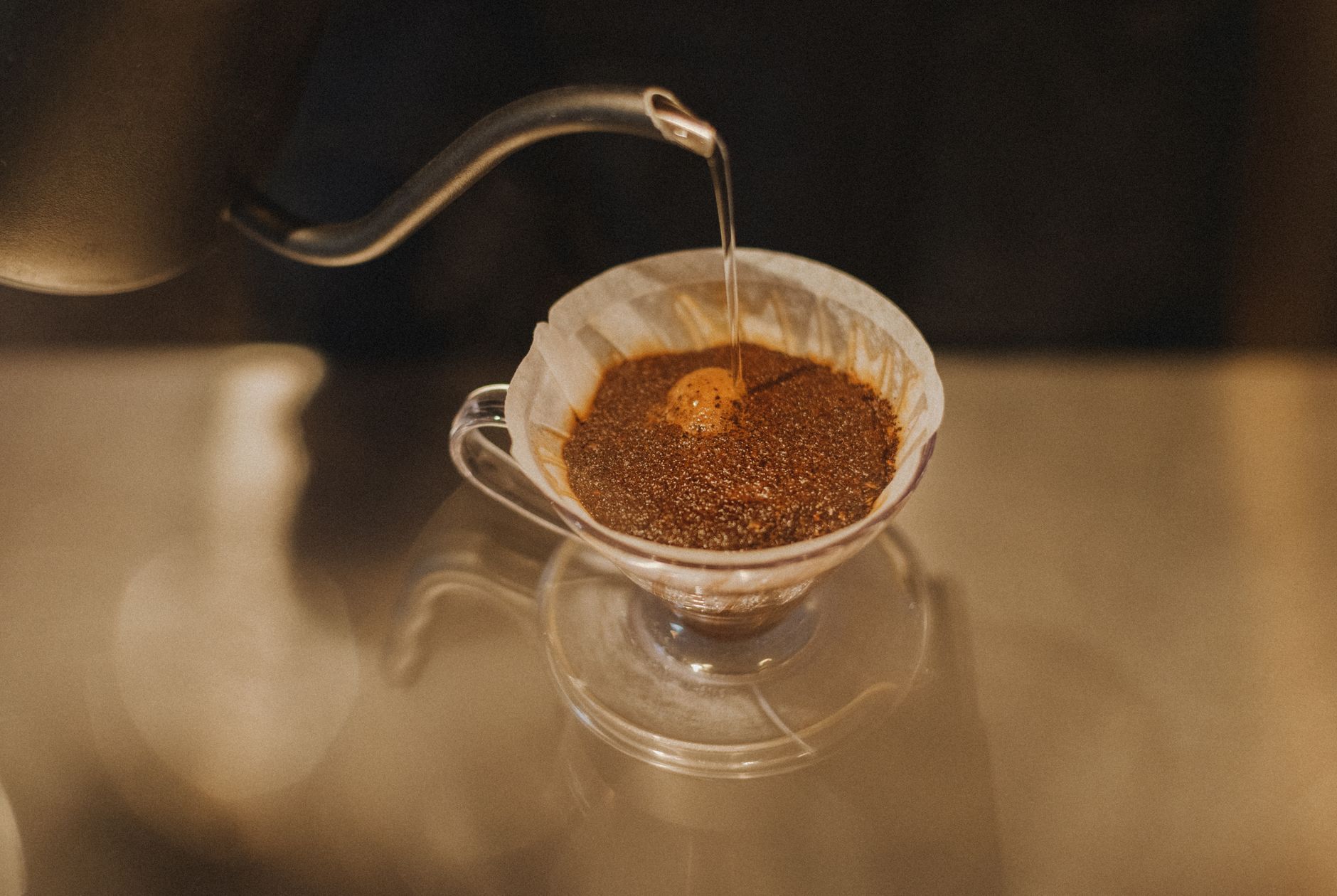
The V60 is a transparent brewer: technique flaws are immediately audible in the cup. Its single large drain hole and spiral ribs give your pour unimpeded freedom, which means your grind size, water temperature, pour rate, and agitation all leave a direct fingerprint on the final taste. Get those right and no other pour over touches its clarity on a single-origin light roast.
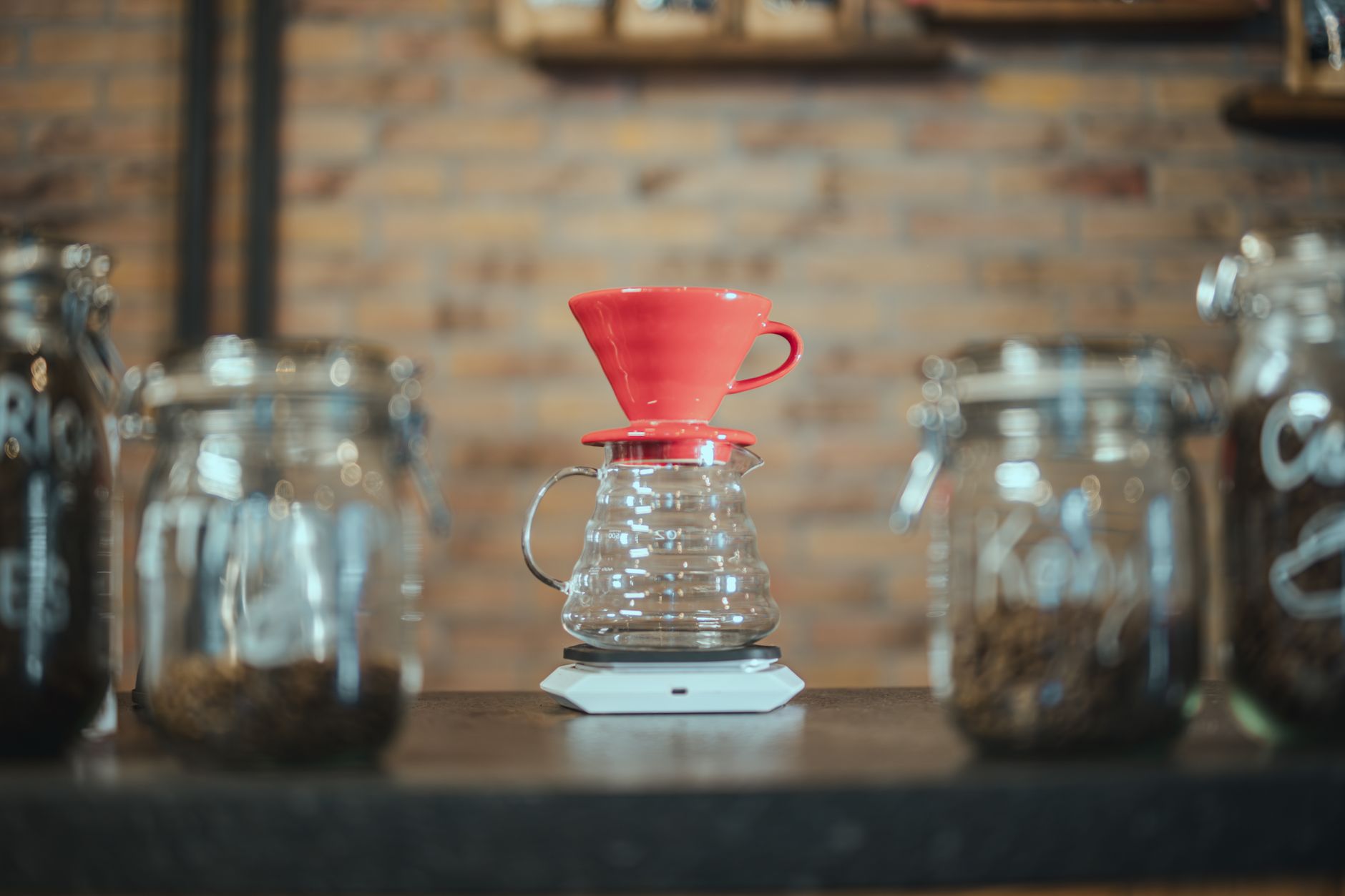 Photo: Yasin Onuş via Pexels
The V60 ships in ceramic, glass, plastic, and metal. The plastic version () is the best travel brewer on the market and retains heat nearly as well as ceramic at a fraction of the weight. Ceramic () has better thermal mass — worth it if you’re brewing at home and want the aesthetics.
Technique that works: use a 1:15–1:16 ratio (e.g. 20g coffee / 300–320g water), 93–96°C water off a gooseneck kettle (), and a medium-fine grind. Bloom 50g water for 30–45 seconds, then pour in controlled spirals. Total brew time 2:30–3:30.
The main failure mode is a stalled brew — grinds too fine, agitation too aggressive, or a cone stuffed with too much coffee. Aim for a continuous but controlled drain.
Chemex — Elegant Batch Brewer, Polarizing Body
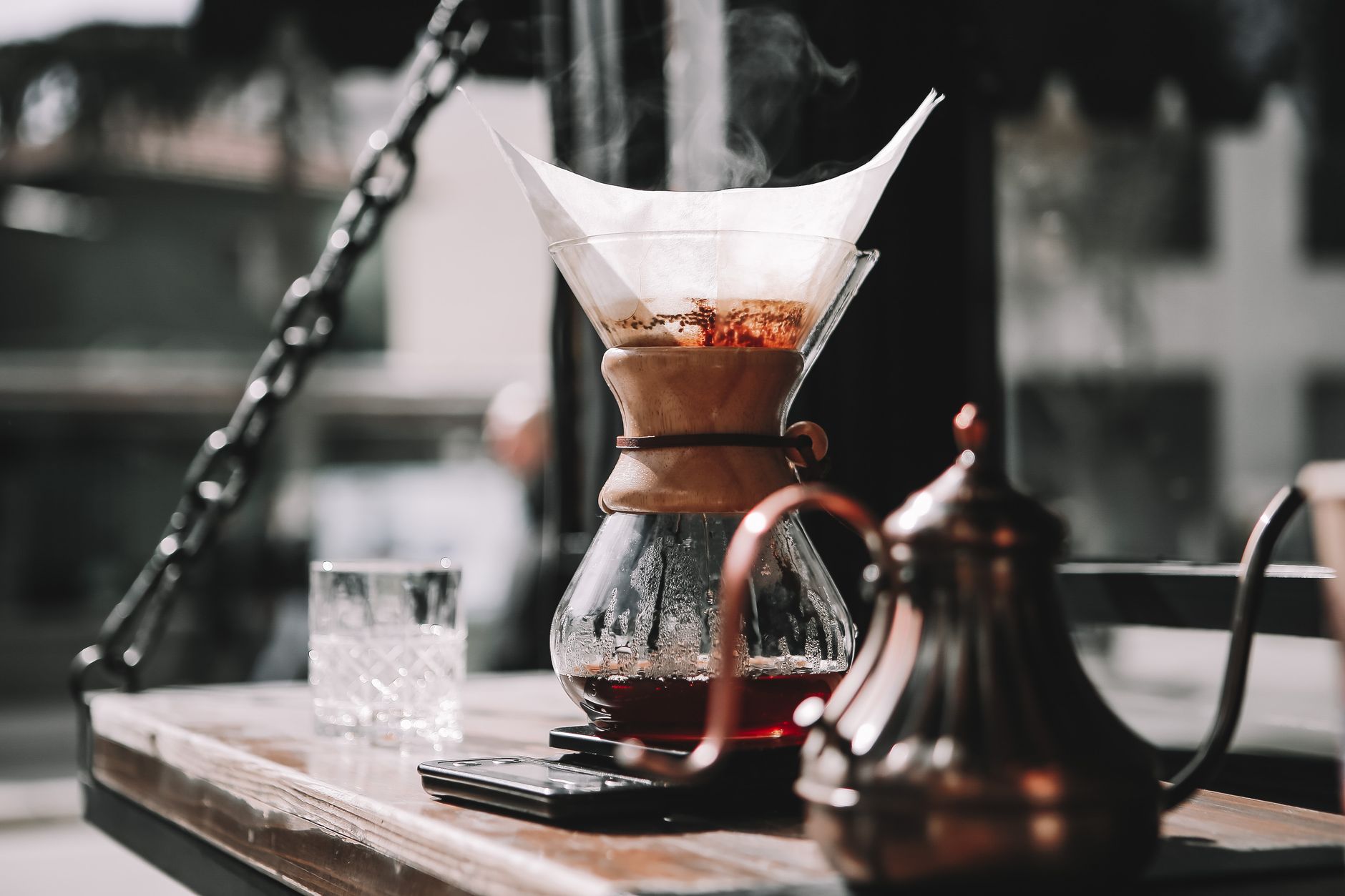
The Chemex’s thick, oxygen-cleansed bonded filter removes almost all oils and fine particles, producing a uniquely clean, delicate cup. It’s the best pour over for brewing 3+ cups at once, and its iconic hourglass carafe doubles as a serving vessel. The tradeoff: that same filter kills body and rounds off flavor edges that some drinkers love.
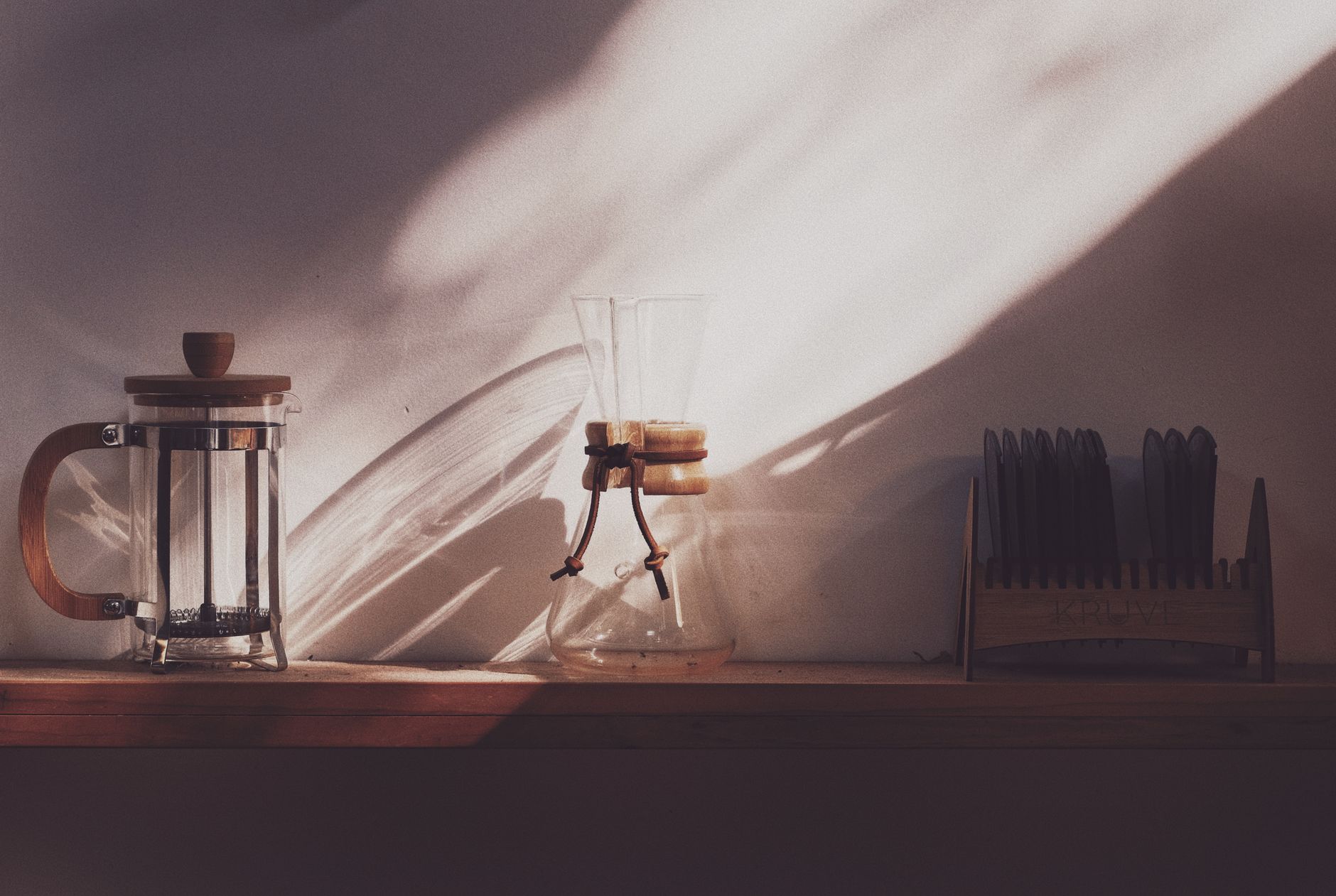 Photo: Khoa Võ via Pexels
The 6-cup Chemex () is the standard. The 3-cup () is elegant but the geometry makes small batches awkward — the V60 is better for one cup. Go 8-cup () if you regularly serve four or more.
Chemex filters () are proprietary and significantly thicker than V60 papers. This isn’t a substitute situation — Chemex papers are part of the brewer’s character. Rinse them thoroughly before brewing; the bonded paper has a noticeable flavor when not pre-wetted.
Technique: 1:15–1:17 ratio, 92–94°C, medium-coarse grind. The slower flow means you can use coarser grinds than the V60 without under-extraction. Bloom 60g water for 45 seconds. Pour in steady, wide spirals. Expect 4–5 minutes total.
Kalita Wave — Flat Bed, Forgiving Flow
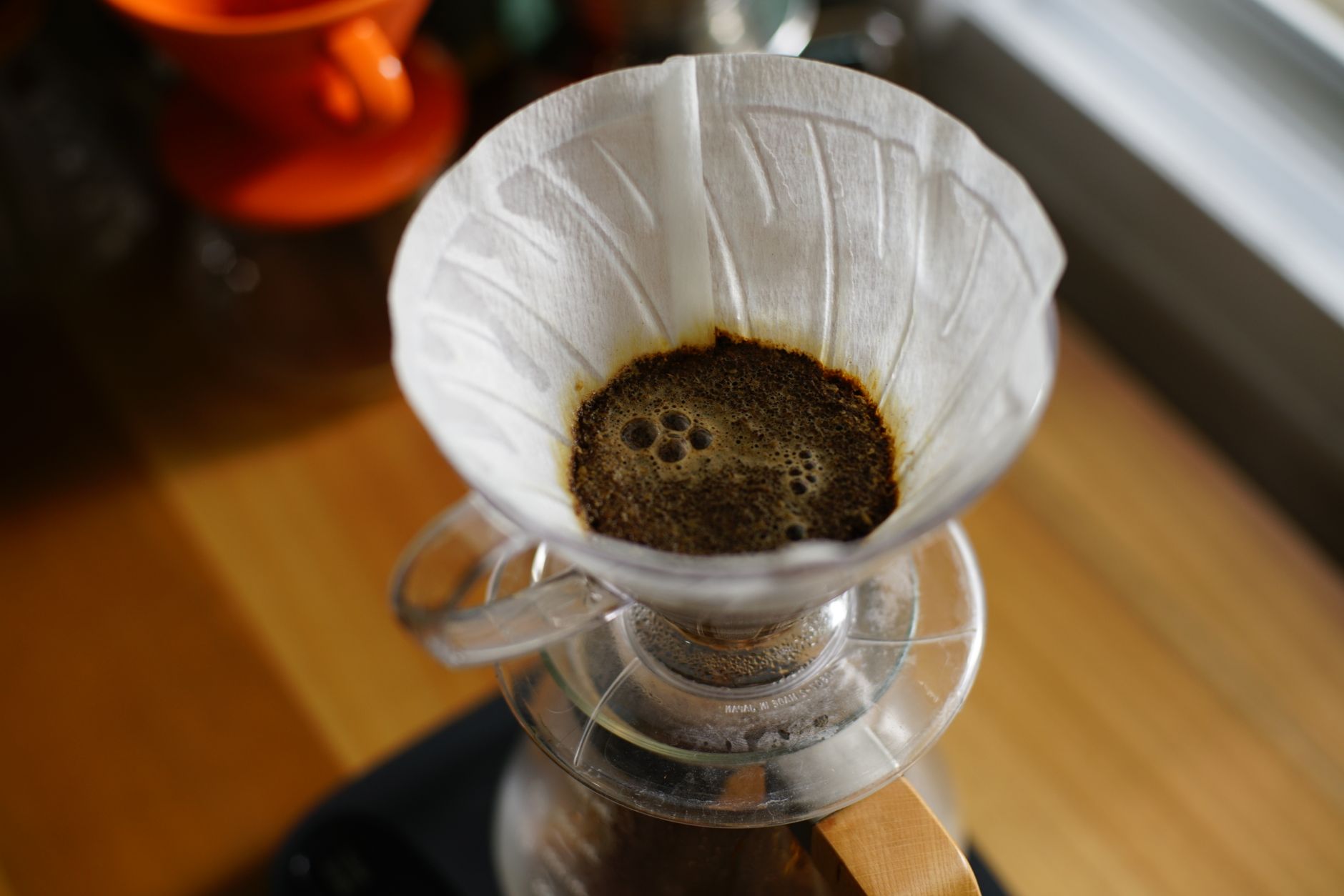
The Kalita Wave’s flat-bed geometry creates even saturation across the entire puck — there’s no cone racing toward a single drain point. Three small holes restrict flow just enough to build a brief contact reservoir, which makes over- and under-extraction less sensitive to pour inconsistencies. It’s the most forgiving of the three.
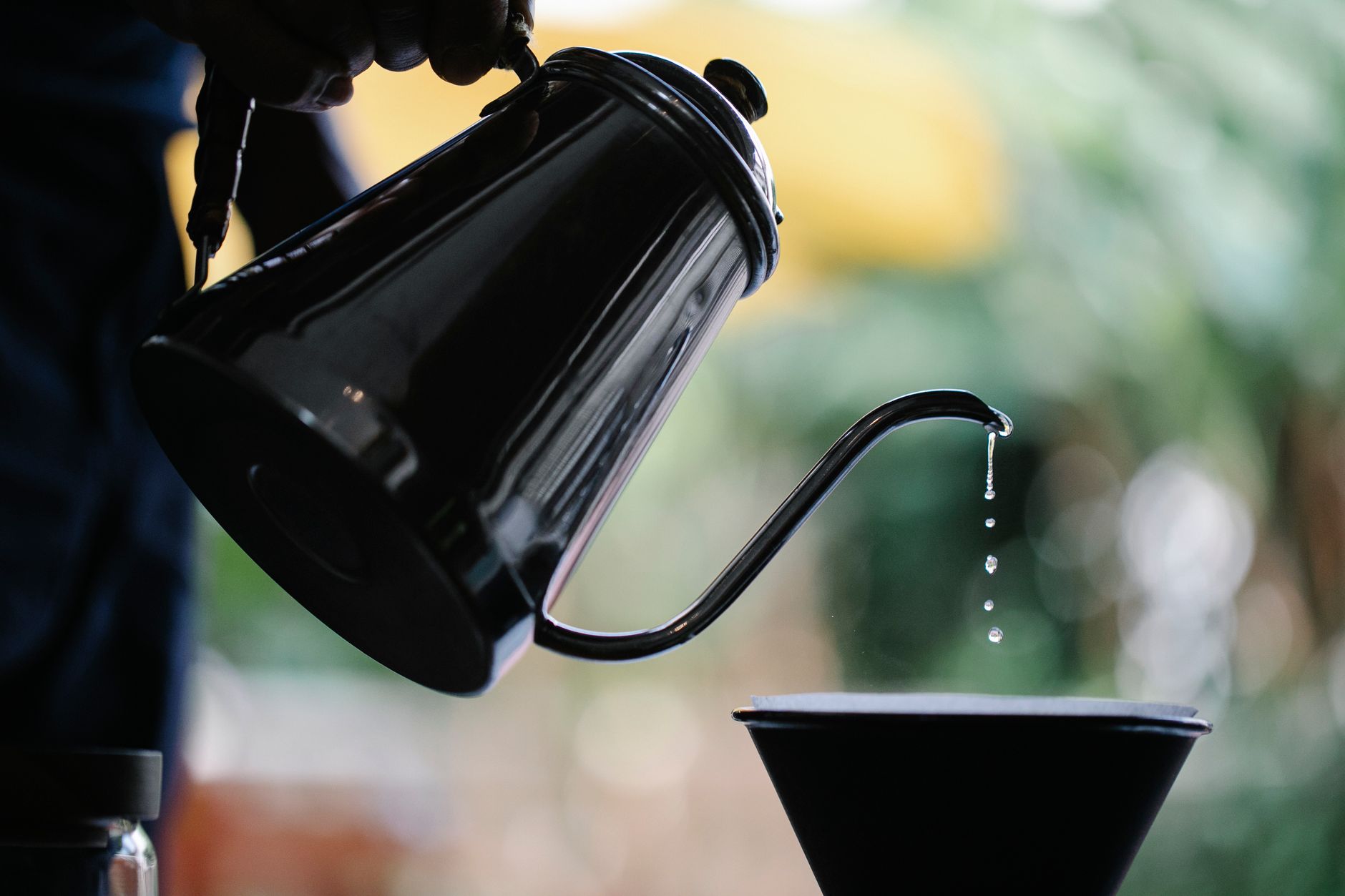 Photo: Michael Burrows via Pexels
The Wave comes in two sizes: 155 (for 1 cup) and 185 (for 1–2 cups, ). The stainless steel version () is more durable; the glass () looks better. The wavy paper filters () are key to the design — the ridges keep the filter off the brewer walls so air escapes freely. Don’t substitute flat-bottom filters.
The Kalita Wave produces a slightly rounder, more textured cup than the V60 — more body, less sharp acidity. For medium and medium-dark roasts that could come across as one-dimensional through the V60, the Wave often flatters them.
Technique: 1:15 ratio, 92–94°C, medium grind. Bloom 2× the coffee weight for 30 seconds. Pour in the center, moving outward — avoid pouring on the filter walls. Aim for 3–4 minutes total.
Brewing Guide: Pour Over Core Parameters
Extraction Parameters
| Parameter | V60 | Chemex | Kalita Wave |
|---|---|---|---|
| Dose | 15–20g | 40–60g | 15–20g |
| Yield | 240–320g | 600–900g | 240–300g |
| Ratio | 1:15–1:16 | 1:15–1:17 | 1:15 |
| Time | 2:30–3:30 | 4:00–5:00 | 3:00–4:00 |
| Temperature | 93–96°C | 92–94°C | 92–94°C |
| Pressure | Gravity only | Gravity only | Gravity only |
Puck Prep
All three require similar pre-brew discipline:
- WDT equivalent (dry): Break up clumps after grinding. Pour coffee into a container, use a toothpick or small whisk to de-clump before adding to the filter. Static makes this worse in dry climates.
- Filter rinse: Pre-wet with hot water, discard the rinse water. Eliminates paper taste and warms the vessel.
- Leveling: After adding coffee, tap the brewer gently or use a finger to flatten the bed before blooming.
- Bloom: Always bloom — 30–45 seconds at 2–3× the coffee weight in water. Degassing CO₂ allows even extraction in subsequent pours.
- Pre-infusion: The bloom is your pre-infusion. There’s no pressure-based pre-infusion with gravity brewers.
- Channeling prevention: Avoid pouring on the filter wall; keep spirals tight and centered.
Troubleshooting Matrix
| Symptom | Likely Cause | Fix |
|---|---|---|
| Brew stalls / overflows | Grind too fine or over-agitated | Coarsen by 1–2 steps; reduce stir |
| Brew runs too fast (<2:30) | Grind too coarse | Fine by 1–2 steps; slow your pour |
| Sour, thin cup | Under-extraction: too fast, too coarse, too cool | Finer grind, hotter water, slower pour |
| Bitter, dry finish | Over-extraction: too slow, too fine | Coarser grind, shorter brew time |
| Papery or flat taste | Filter not pre-rinsed | Always rinse with boiling water |
| Uneven extraction rings | Inconsistent pouring | Use a gooseneck kettle; practice center-out spirals |
Which Grinder Do You Need?
All three brewers expose grind quality directly. A blade grinder will undermine any of them. The minimum is a consistent burr grinder at 30 micron or better distribution. The Baratza Encore (
The V60 demands more grind precision than the other two because its open drain amplifies grind inconsistencies. The Chemex’s thick filter and the Wave’s three-hole restriction both provide a buffer.
→ See also
- How to Brew Coffee at Home: Complete Method Guide
- French Press Coffee: Complete Brewing Guide (Ratios + Technique)
- French Press Coffee-to-Water Ratio Calculator
FAQ
Is the V60 better than the Chemex? Neither is objectively better — they produce different cups. The V60 gives brighter, more defined acidity with lighter body, and rewards precision. The Chemex produces a cleaner, heavier cup with more room for error. For single-cup light roasts, the V60; for batch brewing or medium roasts, the Chemex.
Can I use V60 filters in a Chemex? No. Chemex filters are specifically designed to be three to four times thicker than standard V60 papers and have a proprietary fold that creates a three-layered wall on one side. Substituting standard V60 papers changes the brew time, extraction, and body significantly — you’ll get a thinner cup and likely bitter extraction from too-fast flow.
Is the Kalita Wave good for beginners? Yes — it’s the most forgiving of the three major pour overs. The flat bed and restricted three-hole drain give you more contact time to work with even if your pour technique is inconsistent. You’ll produce a good cup before you’ve fully mastered the technique.
Which pour over is easiest to clean? The Kalita Wave stainless steel is the easiest — rinse it out and you’re done. The Chemex is straightforward (wide mouth, no crevices) but bulky. The V60 in plastic or stainless is easy; ceramic and glass V60s require care not to thermal-shock them.
Do I need a gooseneck kettle for pour over? For the V60, yes — a standard kettle pour is too aggressive to control the bloom and subsequent pours. For the Chemex and Kalita Wave, a gooseneck improves results significantly but a standard kettle with practice is workable. A gooseneck with a variable temperature feature is worth the investment () — controlling water temperature is as important as controlling flow.
What grind size is best for pour over? Medium-fine for V60, medium to medium-coarse for Chemex, and medium for Kalita Wave. The reference point is kosher salt or slightly finer for V60; coarse sand for Chemex. Adjust based on your actual brew time — if you’re finishing too fast, grind finer; too slow or stalled, coarsen.
Editorial methodology: Assessments are based on manufacturer specifications, published user reviews, and editorial research. Physical hands-on testing is noted explicitly where it occurred. Rankings reflect our editorial judgment and are not influenced by affiliate commission rates. Full editorial policy · Affiliate disclosure