Contents
French Press Coffee: Complete Brewing Guide (Ratios + Technique)
TL;DR: To make french press coffee, use a 1:15 coffee-to-water ratio (roughly 1g coffee per 15ml water), steep coarsely ground coffee for 4 minutes at 200°F (93°C), then press slowly and pour immediately. It’s forgiving, requires no paper filter, and produces a full-bodied cup that showcases a bean’s natural oils and texture.
What You Need to Know Before Brewing
The french press is one of the most straightforward ways to brew coffee at home — no paper filter, no special pour technique, just immersion brewing that lets coarse grounds steep in hot water before a metal mesh plunger separates them. The result is heavier body, more texture, and a cup that tastes like the bean, not the filter.
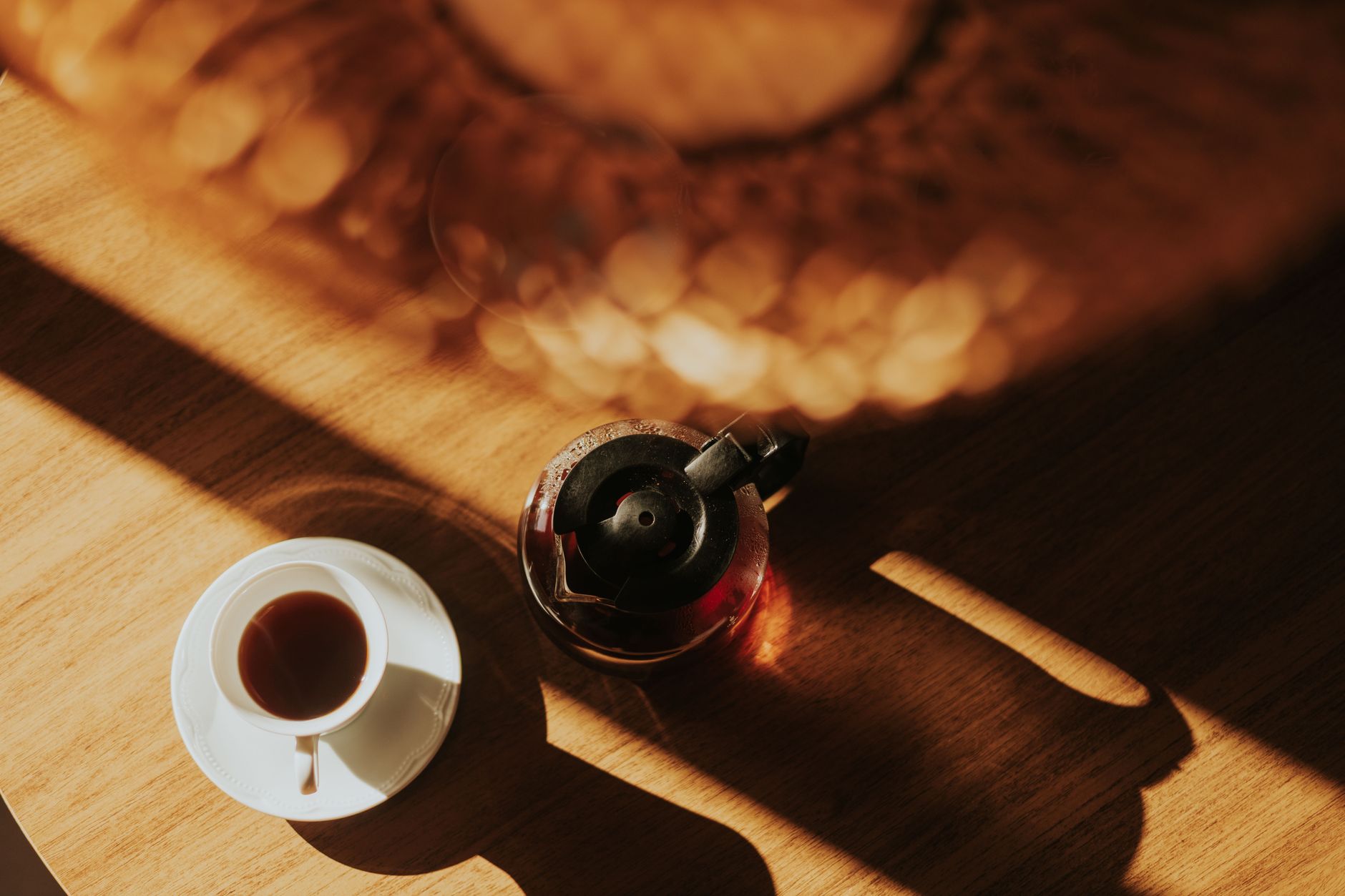 Photo: Letícia Alvares via Pexels
French press coffee works on a simple principle: full immersion. Coffee grounds sit in contact with water for the entire brew time, extracting oils and fine particles that paper-filtered methods strip out. That’s why the cup feels heavier and why using fresh, coarsely ground coffee matters — stale beans and fine grinds both ruin the texture.
The Right Coffee-to-Water Ratio
Start with 1:15 by weight — 1 gram of coffee for every 15 grams (ml) of water. For a standard 12oz (350ml) press, that’s 23g of coffee. Adjust to 1:12 for a stronger brew or 1:17 if you prefer lighter. Weight beats volume every time; tablespoon scoops vary too much to be reliable.
| Cup Size | Water | Coffee (1:15) | Coffee (1:12 — Strong) |
|---|---|---|---|
| 8oz (240ml) | 240g | 16g | 20g |
| 12oz (350ml) | 350g | 23g | 29g |
| 32oz (950ml) | 950g | 63g | 79g |
| 51oz (1.5L) | 1500g | 100g | 125g |
For a deeper dive on ratios, see the French Press Coffee-to-Water Ratio Calculator.
Choosing and Grinding Your Coffee
Use a coarse grind — roughly the texture of coarse sea salt or raw sugar. Anything finer will over-extract through the metal filter and leave silt and bitterness in the cup. Blade grinders produce uneven particle sizes that cause both under- and over-extraction simultaneously; a burr grinder is worth the investment.
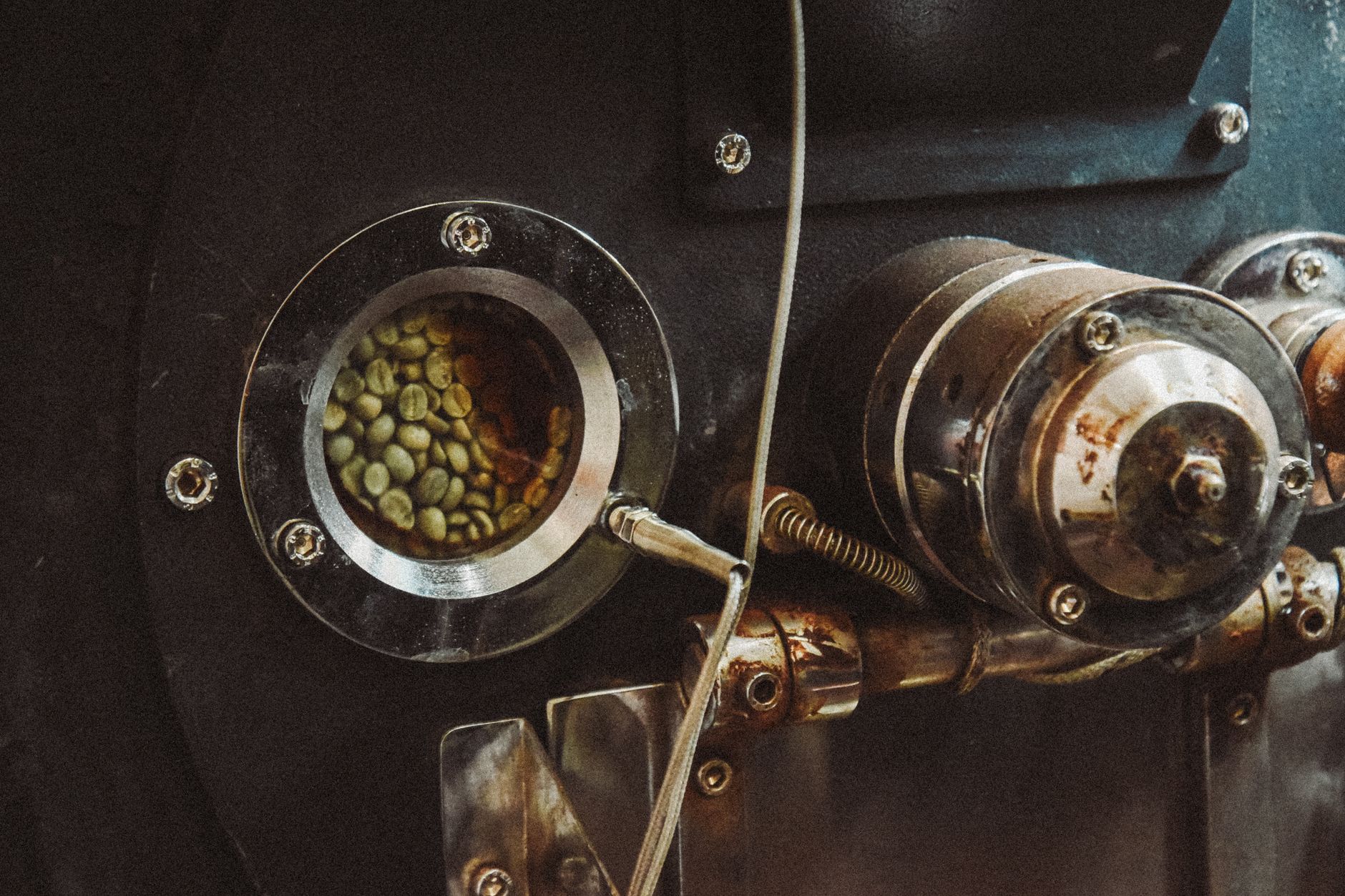 Photo: Matt Webster via Pexels
A burr grinder gives you consistent particle size, which is the single biggest variable after freshness. If you’re grinding for french press, set your grinder to its coarser settings — usually 7–9 on a numbered dial, or “French Press” on grinders with preset labels.
Any medium-to-dark roast works well here. Lighter roasts can be excellent in a french press, but they require precision — slightly finer grind, slightly higher temperature — to extract fully.
How to Make French Press Coffee
Equipment
- French press (any size — glass, stainless, or ceramic)
- Burr grinder
- Kitchen scale
- Kettle (gooseneck preferred, but not required)
- Timer
Step-by-Step Brewing Guide
Extraction Parameters
| Parameter | Target |
|---|---|
| Dose | 23g coffee (for 350ml) |
| Yield | 300ml brewed coffee |
| Ratio | 1:15 (adjust to taste) |
| Steep Time | 4:00 minutes |
| Temperature | 200°F / 93°C (just off boil, ~30 sec rest) |
| Pressure | Gentle downward press only |
Puck Prep & Brew Process
- Preheat the press. Pour hot water in, swirl, discard. Keeps temperature stable during the brew.
- Grind. Weigh and grind your coffee coarse just before brewing.
- Add grounds. Pour ground coffee into the empty press.
- Start timer, add water. Pour all water over the grounds in one slow, even pour. Ensure all grounds are saturated. Place the lid on with the plunger pulled fully up — don’t press yet.
- Bloom (optional but recommended). At 0:30, stir gently with a wooden spoon or chopstick to break the crust and ensure even saturation.
- Wait. Let steep undisturbed until 4:00.
- Press. At 4:00, press the plunger down slowly and steadily. If it meets significant resistance, your grind is too fine. If it drops with no resistance, it’s too coarse.
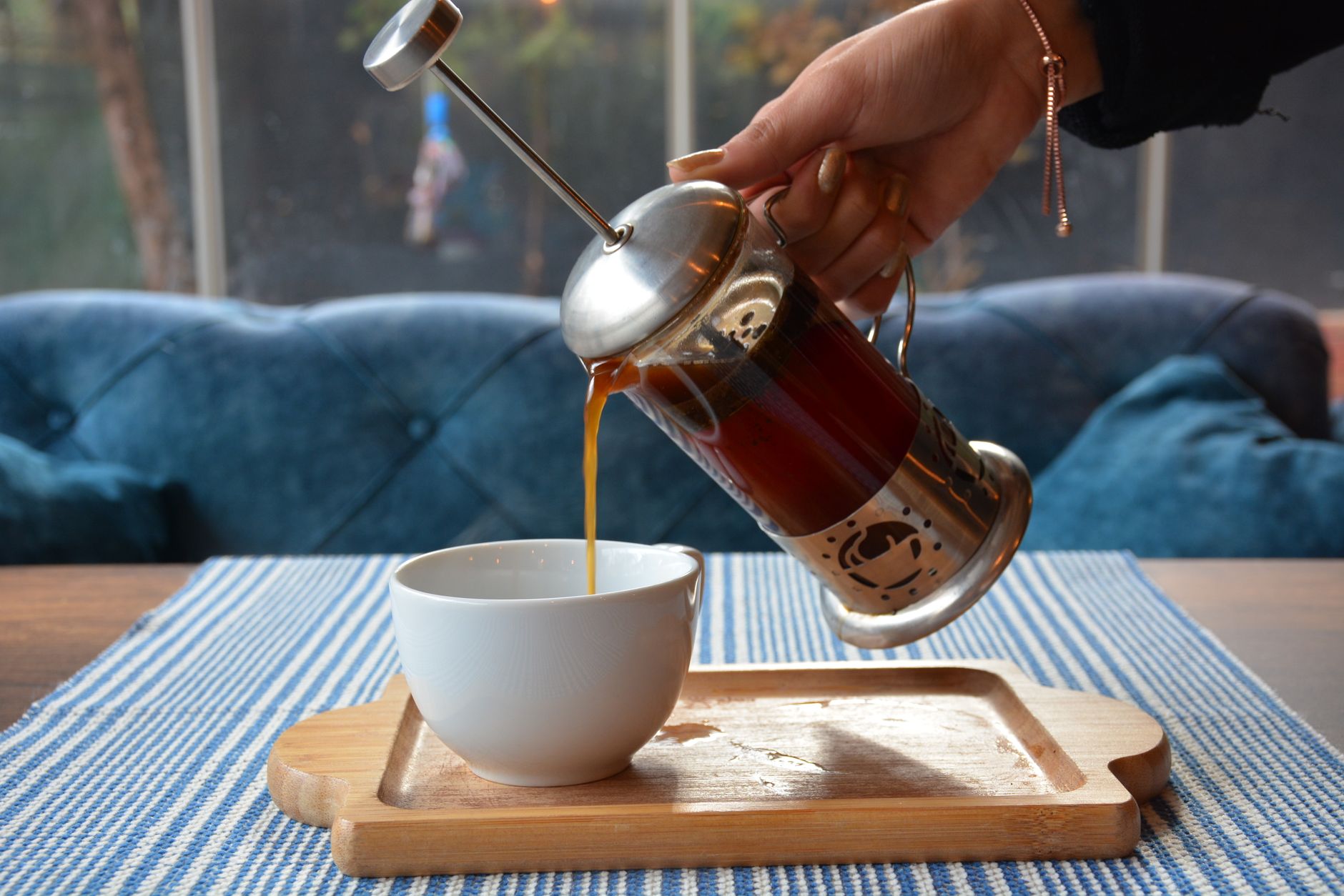
- Pour immediately. Don’t leave brewed coffee sitting in the press — it continues extracting and will turn bitter within minutes.
 Photo: Sedanur Kunuk via Pexels
Troubleshooting Matrix
| Symptom | Likely Cause | Fix |
|---|---|---|
| Bitter, harsh, astringent | Over-extracted: grind too fine, water too hot, or steeped too long | Grind coarser, drop temp to 195°F, or reduce steep time to 3:30 |
| Weak, thin, sour, or hollow | Under-extracted: grind too coarse, water too cool, or steeped too short | Grind finer, use hotter water, extend steep to 4:30 |
| Gritty, muddy cup | Grind too fine for the metal filter | Step up two settings on grinder |
| Plunger is very hard to press | Grind too fine | Coarser grind; never force the plunger |
| Plunger drops freely with no resistance | Grind too coarse | Step down one setting |
| Grounds floating after press | Normal with very light roasts (CO₂ off-gassing) | Give an extra 30-second rest after pour |
| Flat, dull flavor | Stale coffee or water too hot | Use fresh beans; pull water off boil 45 seconds before pouring |
Common French Press Mistakes
Using Pre-Ground Coffee
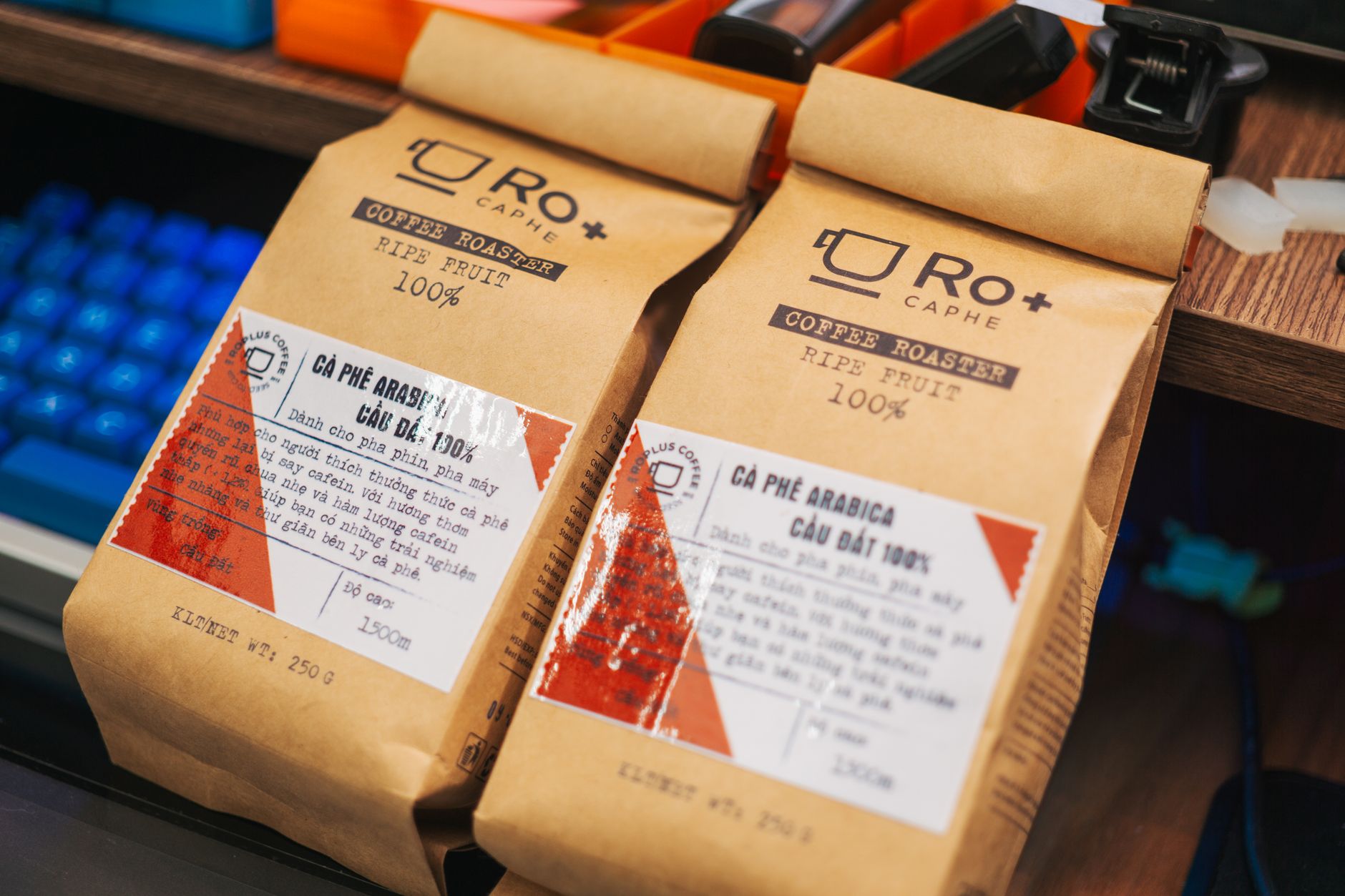 Photo: FOX ^.ᆽ.^= ∫ via Pexels
Pre-ground coffee, especially from a blade grinder, starts oxidizing the moment it’s ground. For french press you want coarse and fresh — grind within minutes of brewing for the best flavor. Pre-ground coffee sold for “french press” is often inconsistent in particle size and weeks stale by the time it reaches you.
Leaving Coffee in the Press
This is the most common mistake. Once you press, all the grounds are still in contact with the liquid. The extraction doesn’t stop at the plunger. Pour into a separate carafe or cups immediately after pressing, or accept that the bottom third of the pot will be noticeably more bitter.
Pressing Too Hard or Too Fast
If the plunger is hard to push, stop. Forcing it breaks the seal, pushes grounds through the filter, and risks cracking glass presses. The fix is always in the grind, not the press.
Water Quality and Temperature
Tap water with strong chlorine or mineral taste will show up in your cup — french press is unforgiving here because there’s no paper filter masking it. Filtered water makes a measurable difference.
Temperature: aim for 195–205°F (90–96°C). If you don’t have a thermometer, bring water to a rolling boil and wait 30–45 seconds. Lighter roasts do better at the higher end of that range; darker roasts at the lower end.
→ See also
- How to Brew Coffee at Home: Complete Method Guide
- French Press Coffee-to-Water Ratio Calculator
- Pour Over Coffee Guide: Beginner to Advanced
FAQ
How long should you steep french press coffee? Four minutes is the standard steep time for french press and works for most grind sizes and roast levels. If your cup tastes weak or sour, extend to 4:30. If it tastes bitter, cut to 3:30. Always adjust grind size first before changing steep time.
What’s the best grind size for french press? Coarse, similar to the texture of coarse sea salt. A consistent coarse grind lets water flow freely through the metal filter without letting fine particles pass through. A burr grinder is strongly preferred over a blade grinder for this reason.
Can you make french press coffee without a scale? Yes, but expect less consistent results. A reasonable approximation is 2 heaping tablespoons of coarse ground coffee per 6oz of water. That gets you close to a 1:15 ratio, though scoop volume varies enough that a $10 kitchen scale is a worthwhile upgrade.
Why is my french press coffee bitter? The three main causes are grind too fine, steep time too long, or water too hot. Start by grinding coarser — it’s the most common culprit. If the bitterness persists, drop water temperature to 195°F and reduce steep time by 30 seconds.
Does french press coffee have more caffeine? French press coffee typically has slightly more caffeine than drip coffee at the same ratio, mainly because the metal filter doesn’t trap cafestol or fine particles that contribute to extraction. But the difference is modest — ratio and roast level affect caffeine far more than brew method.
Is french press coffee bad for your health? French press coffee is unfiltered, meaning it retains cafestol and kahweol — compounds found in coffee oils that can raise LDL cholesterol with very high daily consumption. For most people drinking 1–3 cups a day, the effect is negligible. Those managing cholesterol levels may prefer paper-filtered methods.
Editorial methodology: Assessments are based on manufacturer specifications, published user reviews, and editorial research. Physical hands-on testing is noted explicitly where it occurred. Rankings reflect our editorial judgment and are not influenced by affiliate commission rates. Full editorial policy · Affiliate disclosure