Contents
Hario V60 Brew Guide: Ratios, Technique & Troubleshooting
TL;DR: The Hario V60 rewards precision — a 1:15 to 1:16 ratio (e.g., 20g coffee to 300–320g water), a controlled pour, and a 2:30–3:30 total brew time consistently produce clean, bright, expressive cups. This hario v60 brew guide covers everything from grind size to pour technique to fixing flat or bitter results.
What You Need Before You Brew
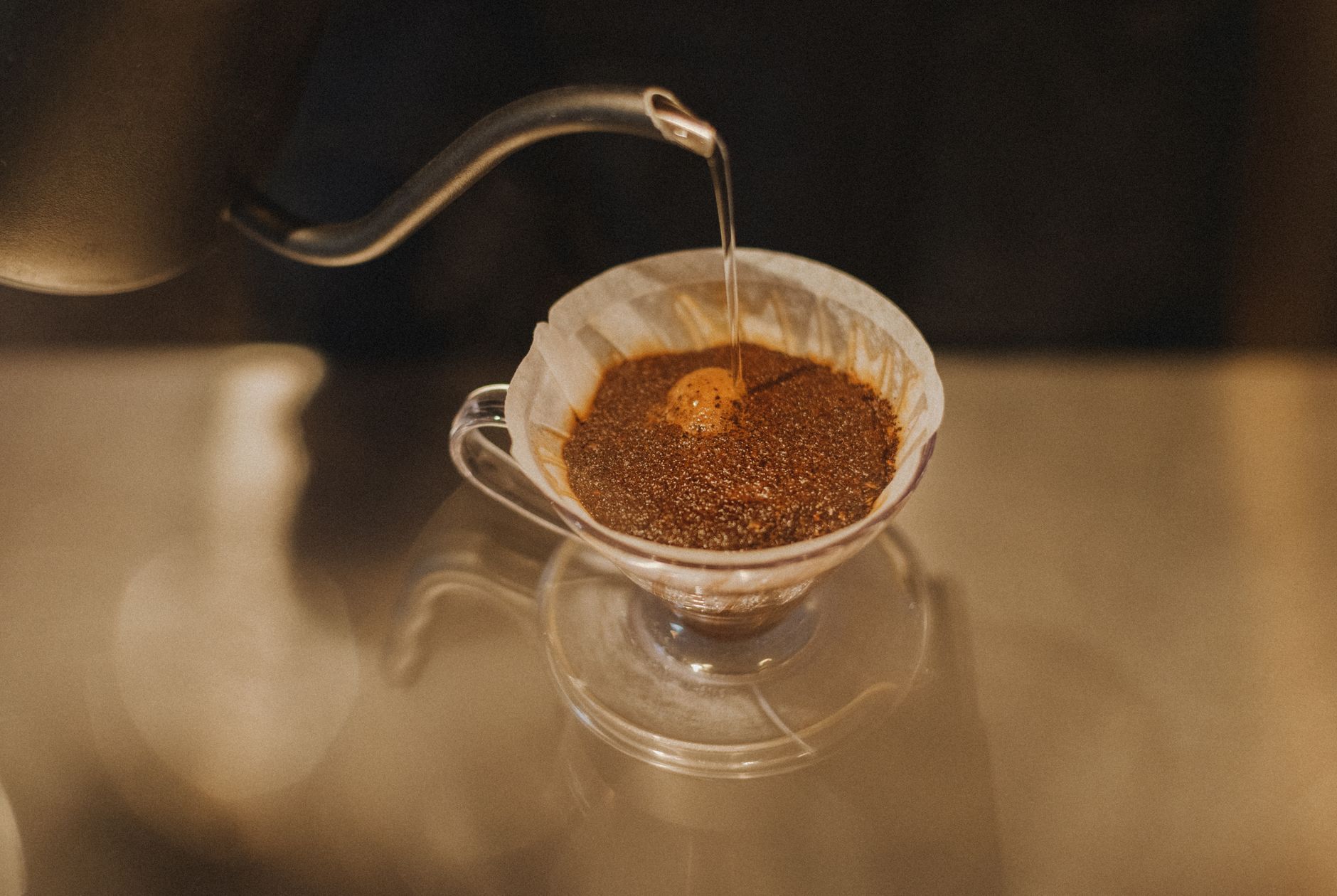
The V60 is unforgiving of bad inputs and forgiving of imperfect technique — get your variables locked first. You need a gooseneck kettle for pour control, a scale accurate to 0.1g, a quality burr grinder, and fresh coffee (roasted within 4 weeks). Paper filters (Hario tabbed white or natural) must be rinsed to remove papery taste and pre-heat the dripper.
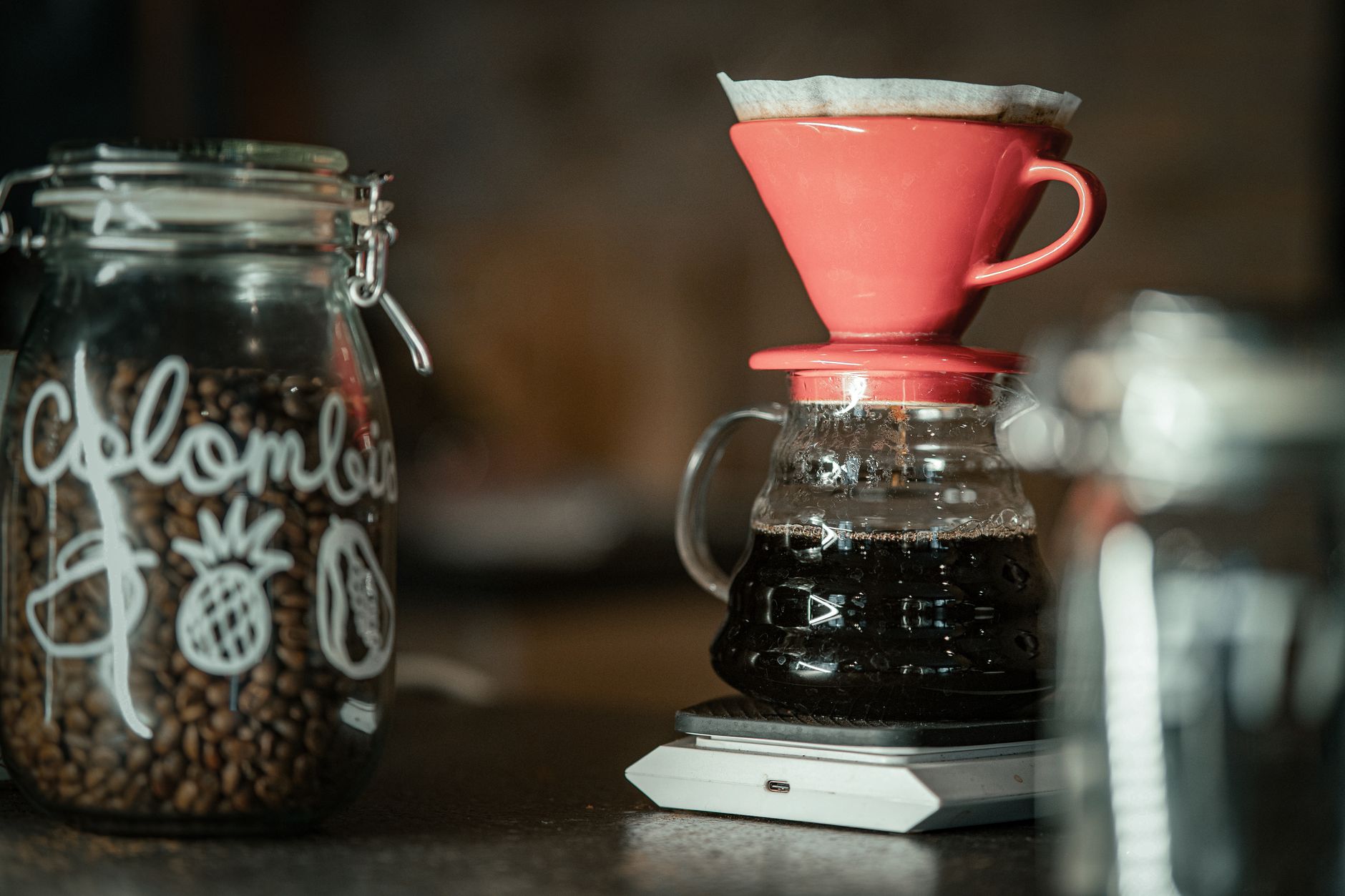 Photo: Ubeydulah Beşir KÖROĞLU via Pexels
Equipment checklist:
| Item | Why It Matters |
|---|---|
| Gooseneck kettle | Controls pour rate and placement precisely |
| Burr grinder | Uniform particle size = even extraction |
| Scale (0.1g) | Reproducibility — eyeballing fails here |
| Timer | Bloom timing and total draw-down |
| V60 (01 or 02) | 01 for 1 cup, 02 for 1–2 cups |
| Hario paper filter | Rinsed before use every time |
Hario V60 Brew Guide: Core Parameters
Start here: 20g coffee, 300g water at 93°C, medium-fine grind, total time 2:45–3:15. These numbers work for most light-to-medium roasts. Darker roasts pull better slightly coarser and cooler (88–91°C). The ratio is 1:15 — adjust by taste, not by guessing.
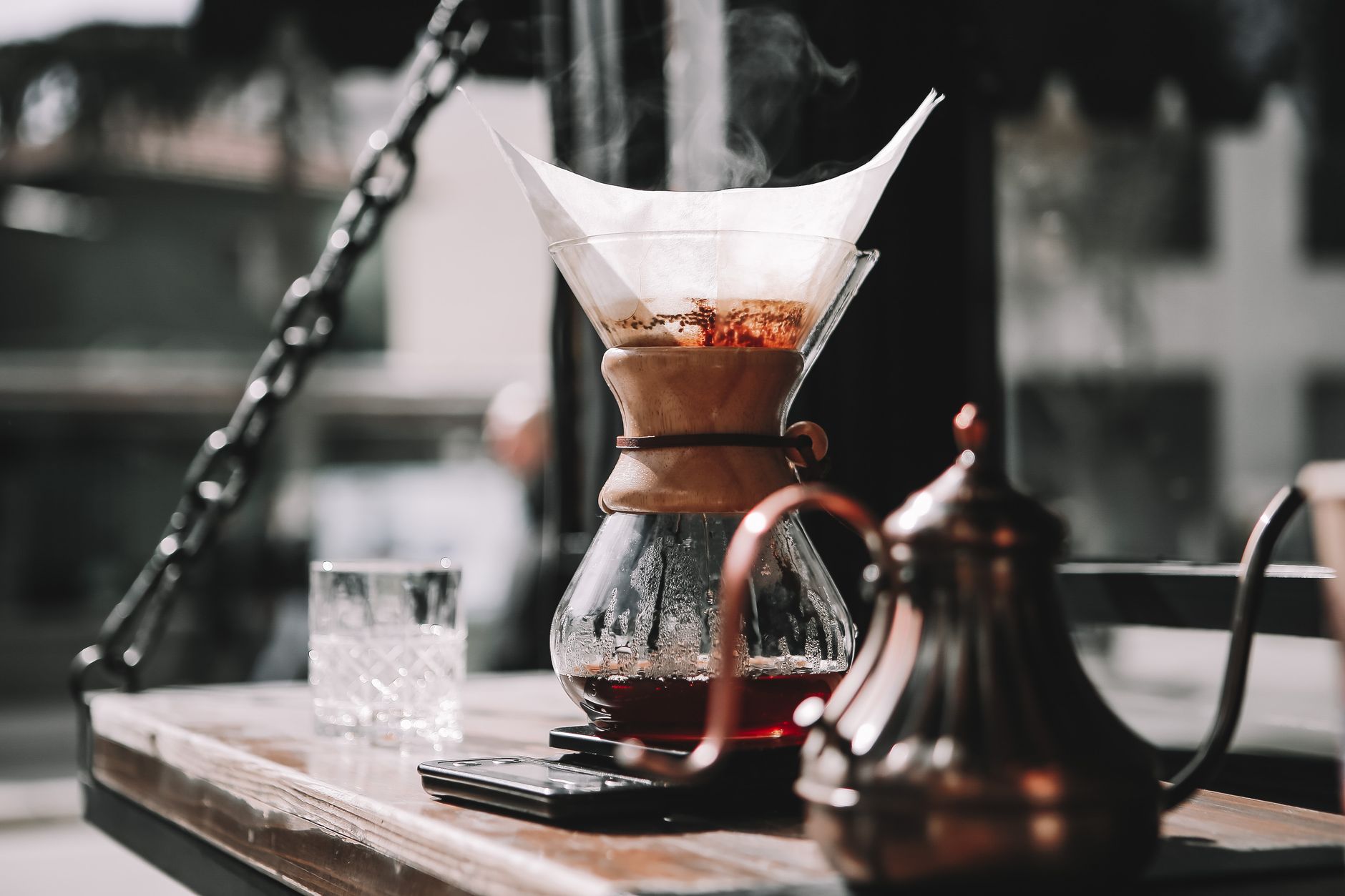
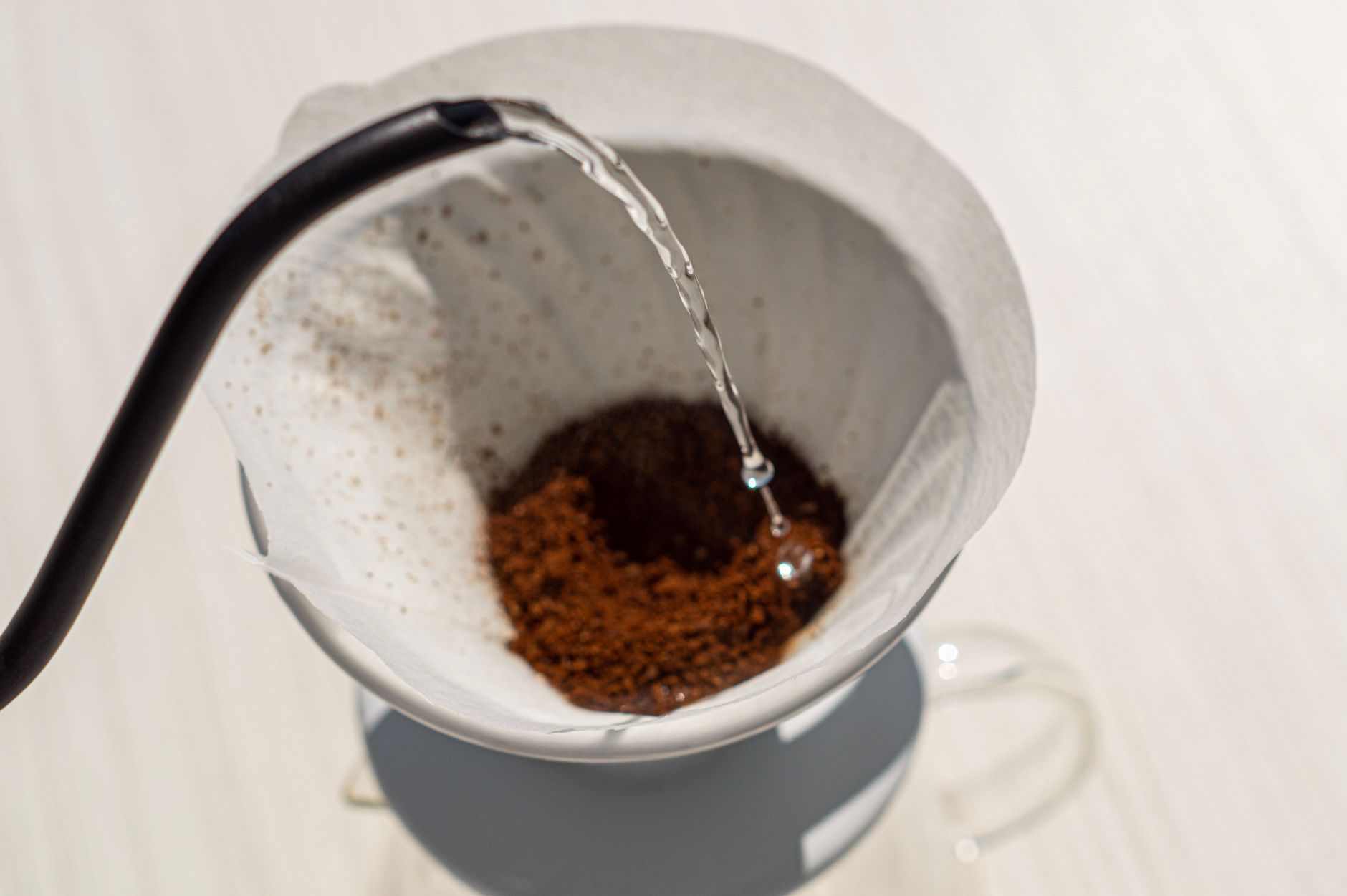 Photo: Tolga deniz Aran via Pexels
Extraction Parameters
| Variable | Target |
|---|---|
| Dose | 15–20g (scale to cup size) |
| Yield | 225–300g brewed coffee |
| Ratio | 1:15 (standard) — 1:16 for lighter body |
| Brew Time | 2:30–3:30 total |
| Water Temp | 93°C (light roast) / 88–91°C (dark roast) |
| Grind | Medium-fine (finer than drip, coarser than espresso) |
| Pressure | Gravity-fed — no pressure variable |
Puck Prep and Pour Technique
Consistent pours matter more than any single technique detail — slow, controlled, centered spirals beat aggressive technique every time.
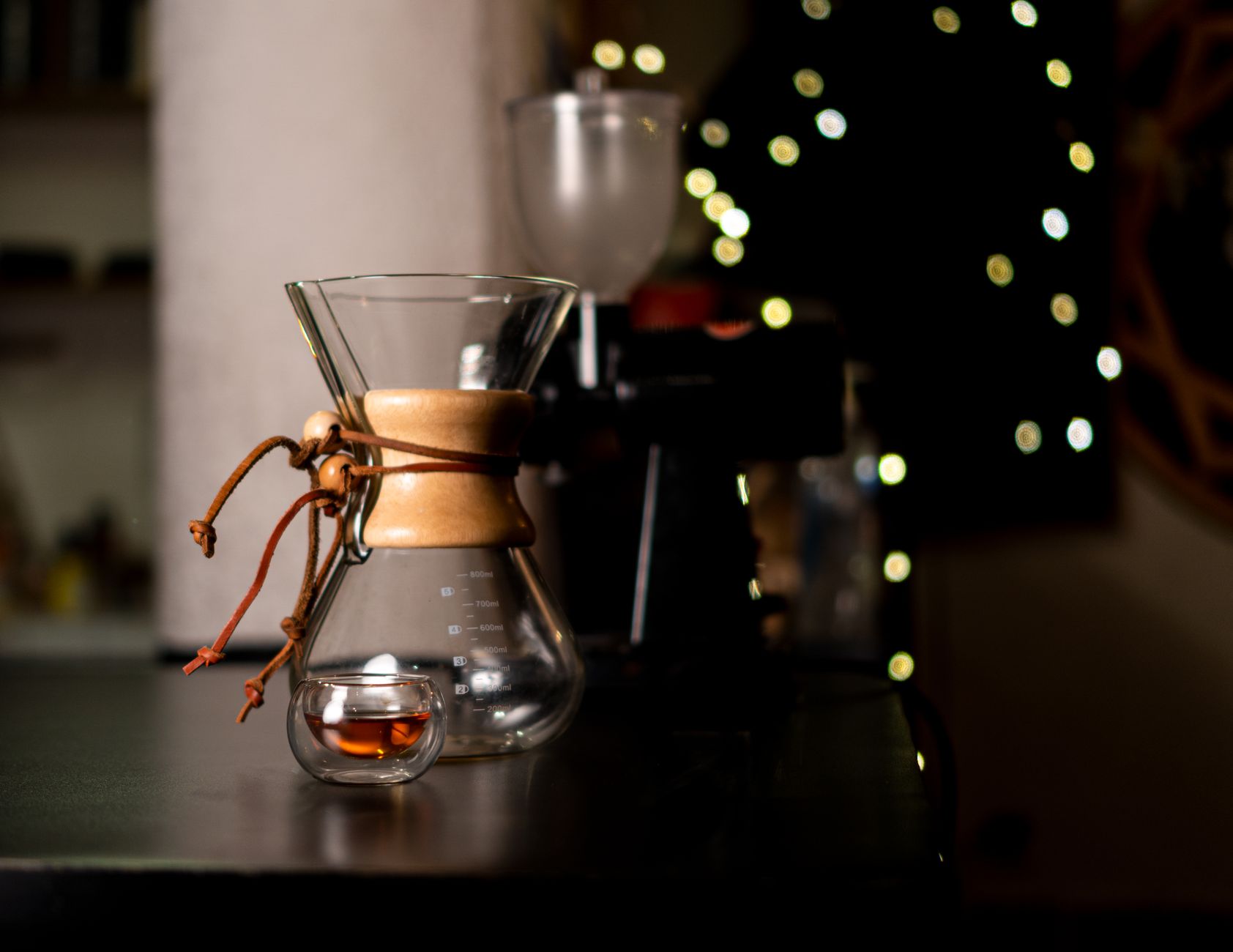
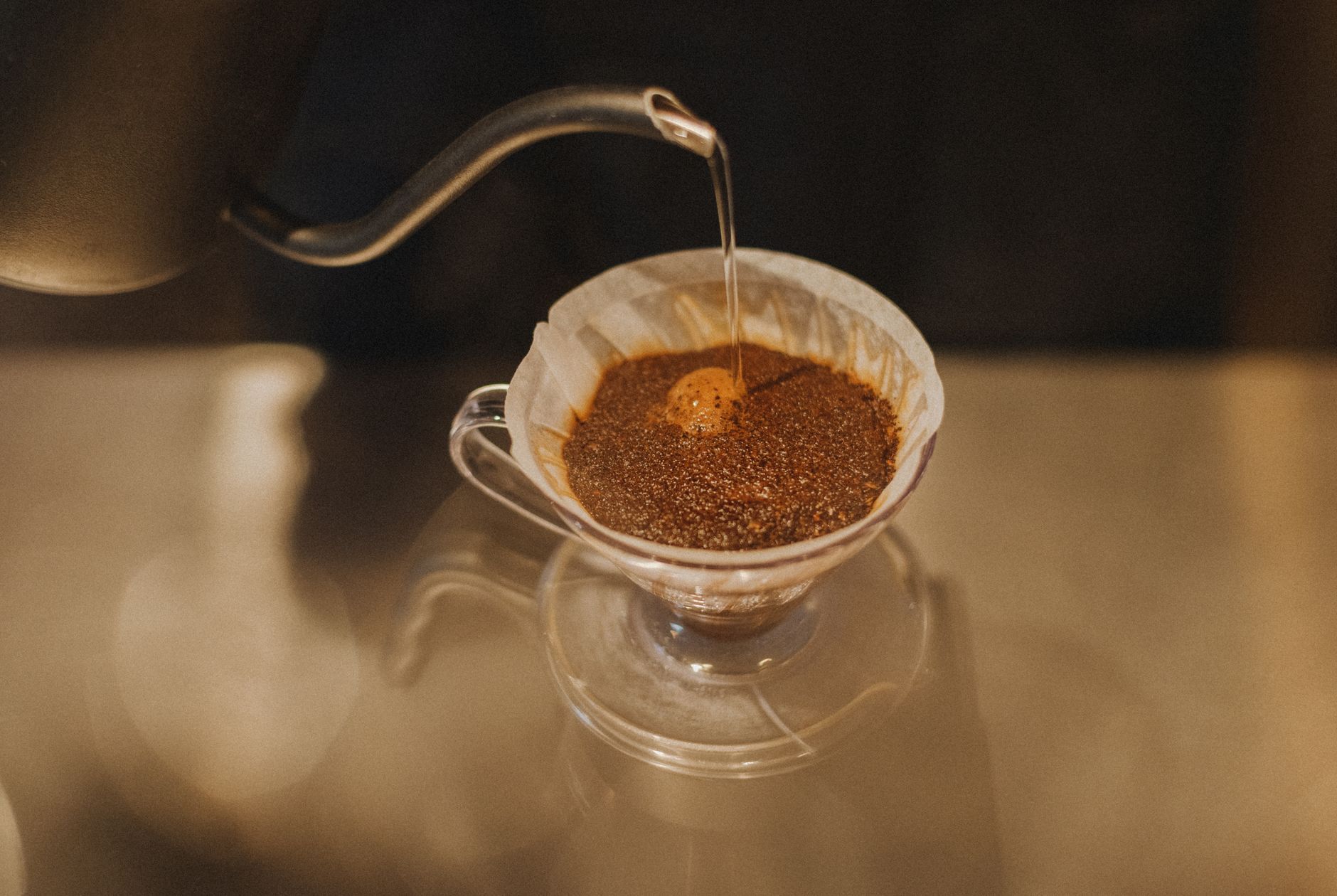 Photo: Gu Ko via Pexels
Step-by-Step Method
0:00 — Rinse and pre-heat Place the rinsed filter in the dripper, pour hot water through, discard. This also warms your server or mug.
0:00 — Bloom (40–60g water, 30–45 seconds) Add twice the coffee weight in water — for 20g coffee, pour 40g. Saturate all grounds. The bloom degasses CO₂ from fresh coffee; without it, escaping gas repels water and causes uneven extraction. Wait 30–45 seconds. If grounds don’t dome and bubble, your coffee is stale.
0:45 — First pour (to ~150g) Slow spiral from center outward, never pouring directly onto the filter. Keep the bed level. Don’t rush — you want the water to catch up.
1:30 — Second pour (to ~225g) Same spiral pattern. The bed should be slightly submerged, not a dry island. Maintain a gentle, consistent flow.
2:00 — Final pour (to ~300g) Complete the pour. A small, fast pour at the end can pull fines and over-extract — keep it calm.
2:45–3:15 — Draw-down complete Swirl the server gently. Taste immediately while hot, then at 55–60°C for full flavor.
WDT and Leveling for V60
WDT (Weiss Distribution Technique) applies here — stir dry grounds before the bloom to break up clumps from the grinder. After the bloom, a gentle Rao spin (swirl the dripper) levels the bed and improves even extraction. A flat bed at draw-down = even contact time.
Grind Size Guide
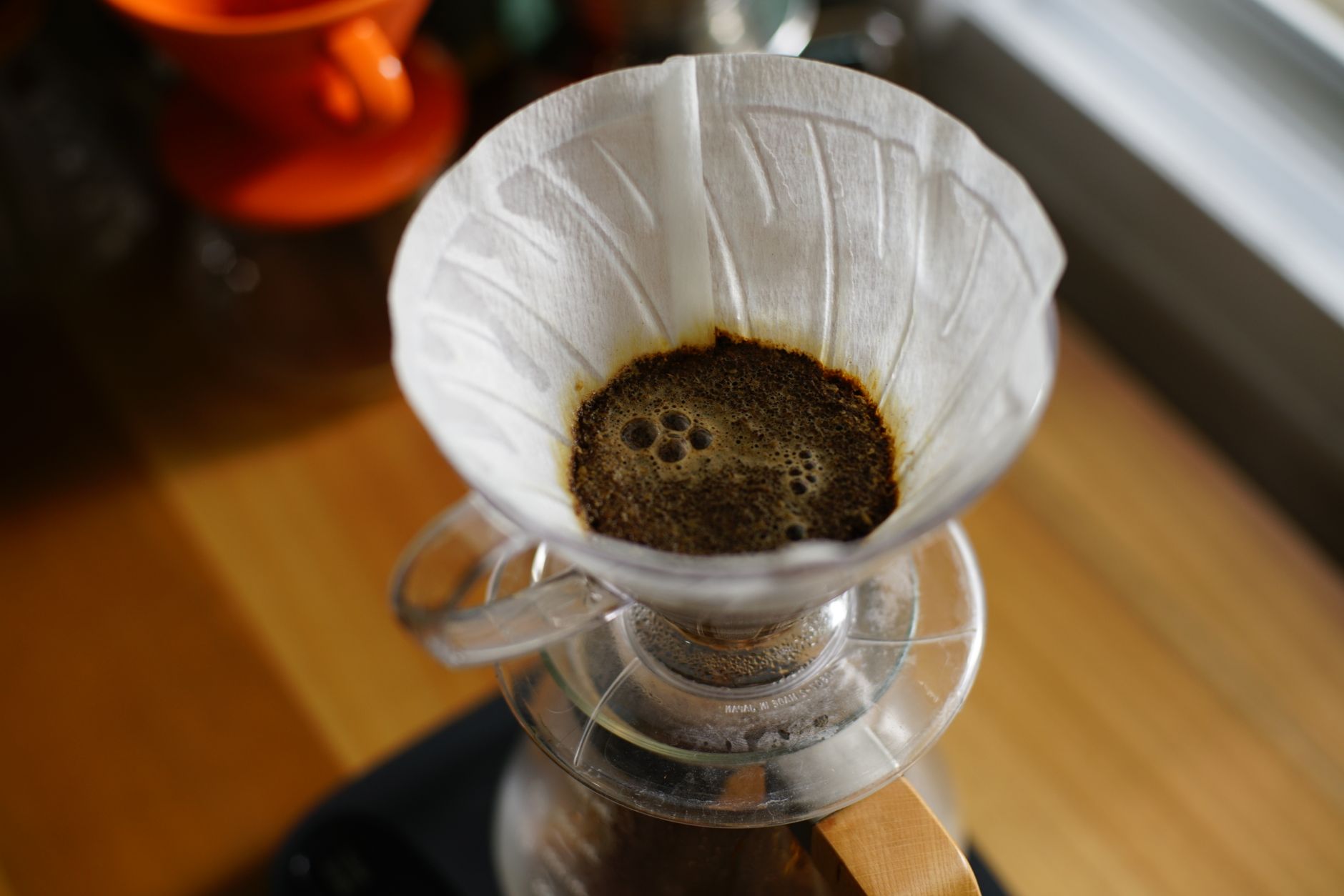
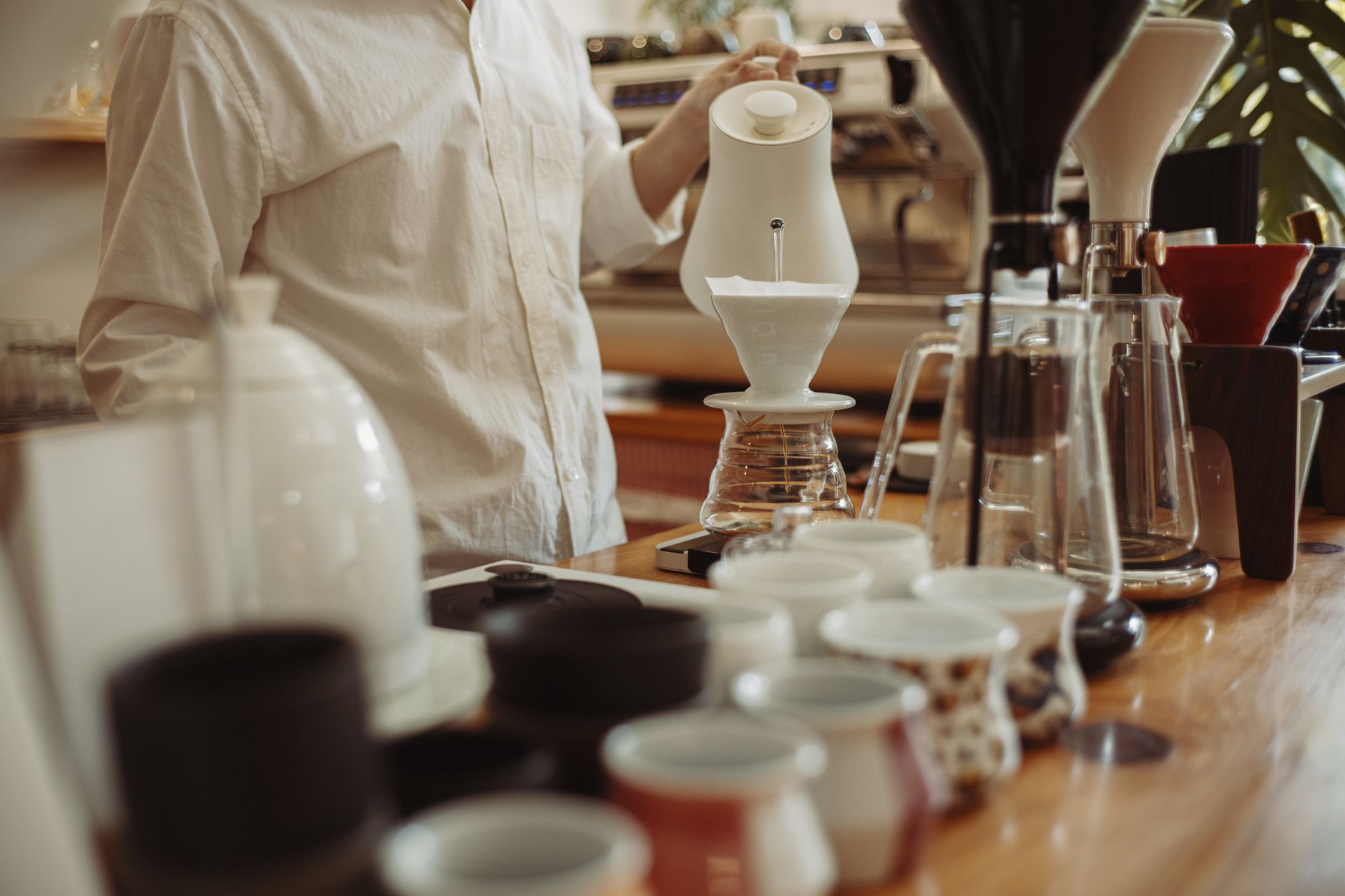 Photo: Khoa Võ via Pexels
| Grind | Brew Time Result | Fix |
|---|---|---|
| Too fine | Slow draw-down (4min+), bitter | Coarsen one step |
| Too coarse | Fast draw-down (<2:15), sour/thin | Fine one step |
| Correct | 2:45–3:15, sweet finish | Stay there |
Grind size is your primary extraction lever. Adjust in small increments — one notch at a time on most grinders.
Troubleshooting Matrix
| Symptom | Likely Cause | Fix |
|---|---|---|
| Sour, thin, underdeveloped | Grind too coarse / water too cool / too short | Finer grind, higher temp, slower pour |
| Bitter, harsh, drying | Grind too fine / too hot / too long | Coarsen, lower temp by 2°C, faster pour |
| Flat, no sweetness | Stale coffee / no bloom / ratio off | Use fresher beans, extend bloom to 45s |
| Channeling (fast one side) | Uneven pour / clumped grounds | WDT before bloom, center your pour |
| Draw-down too slow | Over-fine grind / fines clog | Coarsen, check filter rinse water temp (use hot, not boiling) |
| Papery taste | Filter not rinsed | Always rinse, discard rinse water |
| Inconsistent cup to cup | No scale, timing by feel | Weigh every pour, use a timer |
V60 Ratio Variations
The 1:15 ratio is a starting point, not a rule. Here’s how to dial by preference:
| Preference | Ratio | Notes |
|---|---|---|
| Strong, rich | 1:13–1:14 | Reduce yield; watch for over-extraction |
| Balanced | 1:15 | Default for most light/medium roasts |
| Light, delicate | 1:16–1:17 | Good for high-grown light roasts, cold cups |
| Cold V60 (over ice) | 1:10 (hot portion) | Brew 200g hot onto 100g ice; adjust grind finer |
Coffee Module B — Complete Brewing Reference
Extraction Params Block
Dose:         15–20g
Yield:        225–300g
Ratio:        1:15 (adjust ±1 by taste)
Time:         2:30–3:30 total
Temperature:  93°C light / 88–91°C dark
Pressure:     N/A (gravity)
Puck Prep Checklist
- WDT: Stir dry grounds in filter before bloom to break clumps
- Leveling: Rao spin after bloom to flatten the bed
- Tamping: Not applicable
- Channeling prevention: Even spiral pour, never stream on filter paper
- Pre-infusion: The bloom IS the pre-infusion — 40–60g, 30–45 seconds
Full Troubleshooting Matrix
| Symptom | Likely Cause | Fix |
|---|---|---|
| Bitter finish | Over-extraction | Coarser grind, lower temp, shorter brew |
| Sour, sharp | Under-extraction | Finer grind, higher temp, slower pour |
| Flat, no clarity | Stale beans | Fresh coffee within 2–4 weeks of roast |
| Watery body | Ratio too high | Drop to 1:15 or 1:14 |
| Muddy cup | Fines in cup | Don’t agitate at end; pour calmly |
| Bloom won’t bubble | Coffee too old | Buy fresh — no technique fix for stale |
→ See Also
- How to Brew Coffee at Home: Complete Method Guide
- French Press Coffee: Complete Brewing Guide (Ratios + Technique)
- French Press Coffee-to-Water Ratio Calculator
FAQ
What is the best ratio for Hario V60? 1:15 is the standard starting point — 20g coffee to 300g water. If the cup tastes thin or weak, drop to 1:14. If it tastes harsh or too intense, go to 1:16. Adjust ratio only after you’ve ruled out grind and temperature as the cause.
How long should a V60 take to brew? 2:30 to 3:30 total, including the 30–45 second bloom. Under 2:30 almost always means the grind is too coarse or the pour too fast; over 3:30 means too fine or clogged. Both produce an unbalanced cup — time is your clearest diagnostic signal.
What grind size for Hario V60? Medium-fine — similar to table salt, noticeably finer than a French press grind but coarser than espresso. On most quality burr grinders, this lands somewhere in the middle of the grind range. If your brew time is outside the 2:30–3:30 window, grind adjustment is the first fix to try.
Do I need a gooseneck kettle for V60? Yes, practically speaking. A standard kettle dumps water too fast and too aggressively to control bloom saturation or consistent spiral pours. The gooseneck gives you the slow, precise pour rate the V60 requires for even extraction. It’s the single most impactful equipment upgrade after a good grinder.
Why does my V60 taste bitter? Bitterness in V60 points to over-extraction — typically from grinding too fine, water too hot, or brew time running long. Start by coarsening your grind one step. If that doesn’t resolve it, drop water temperature by 2°C. Bitterness that persists regardless of adjustments often means the coffee itself is over-roasted.
Can I use the V60 for iced coffee? Yes — brew directly over ice using a 1:10 ratio for the hot portion (e.g., 20g coffee, 200g hot water poured over 100g ice in the server). Grind slightly finer than your hot brew setting to compensate for the higher concentration. This method preserves volatile aromatics that disappear when hot coffee is chilled after brewing.
Editorial methodology: Assessments are based on manufacturer specifications, published user reviews, and editorial research. Physical hands-on testing is noted explicitly where it occurred. Rankings reflect our editorial judgment and are not influenced by affiliate commission rates. Full editorial policy · Affiliate disclosure