Contents
Chemex Brew Guide: Master the 6-Cup and 8-Cup Methods
TL;DR: The Chemex brew guide comes down to a few non-negotiables — medium-coarse grind, a 1:15 to 1:17 ratio, and a 4-minute total brew time. The thick Chemex bonded filter removes oils and fines, producing a remarkably clean, tea-like cup. Nail the bloom and pour technique and you’ll consistently pull some of the cleanest filter coffee possible.
What Makes the Chemex Different
The Chemex is a pour-over brewer with a built-in carafe, using proprietary 20–30% thicker bonded paper filters that remove most lipids and ultra-fine sediment. The result is clarity you won’t get from a standard Hario V60 or Kalita Wave — brighter acidity, no silt, and a long, clean finish.
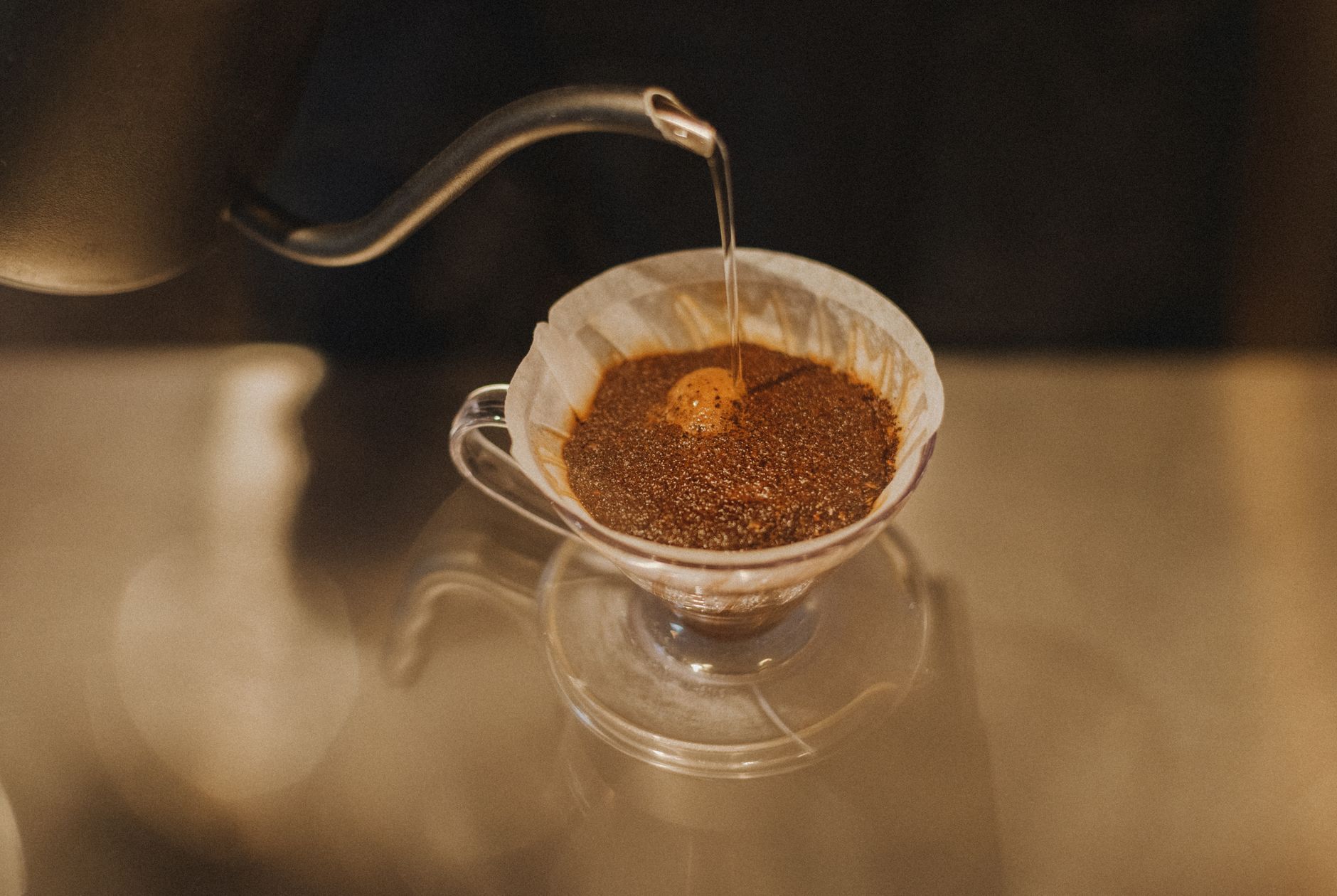
 Photo: Ron Lach via Pexels
The hourglass borosilicate design isn’t just aesthetic — it restricts airflow from the bottom, creating a natural drawdown that gives you more contact time than most pour-overs. That’s why the Chemex rewards a slightly coarser grind than a V60.
The tradeoff: those thick filters kill fine oils. Light, fruity naturals lose some body. But washed Central Americans and Ethiopians absolutely sing.
Chemex Brew Guide: 6-Cup Method
The 6-Cup Chemex (30 oz capacity) brews 2–4 real-world servings. Target 40g coffee to 600–640ml water for a full carafe. Total brew time should land between 3:45 and 4:30.
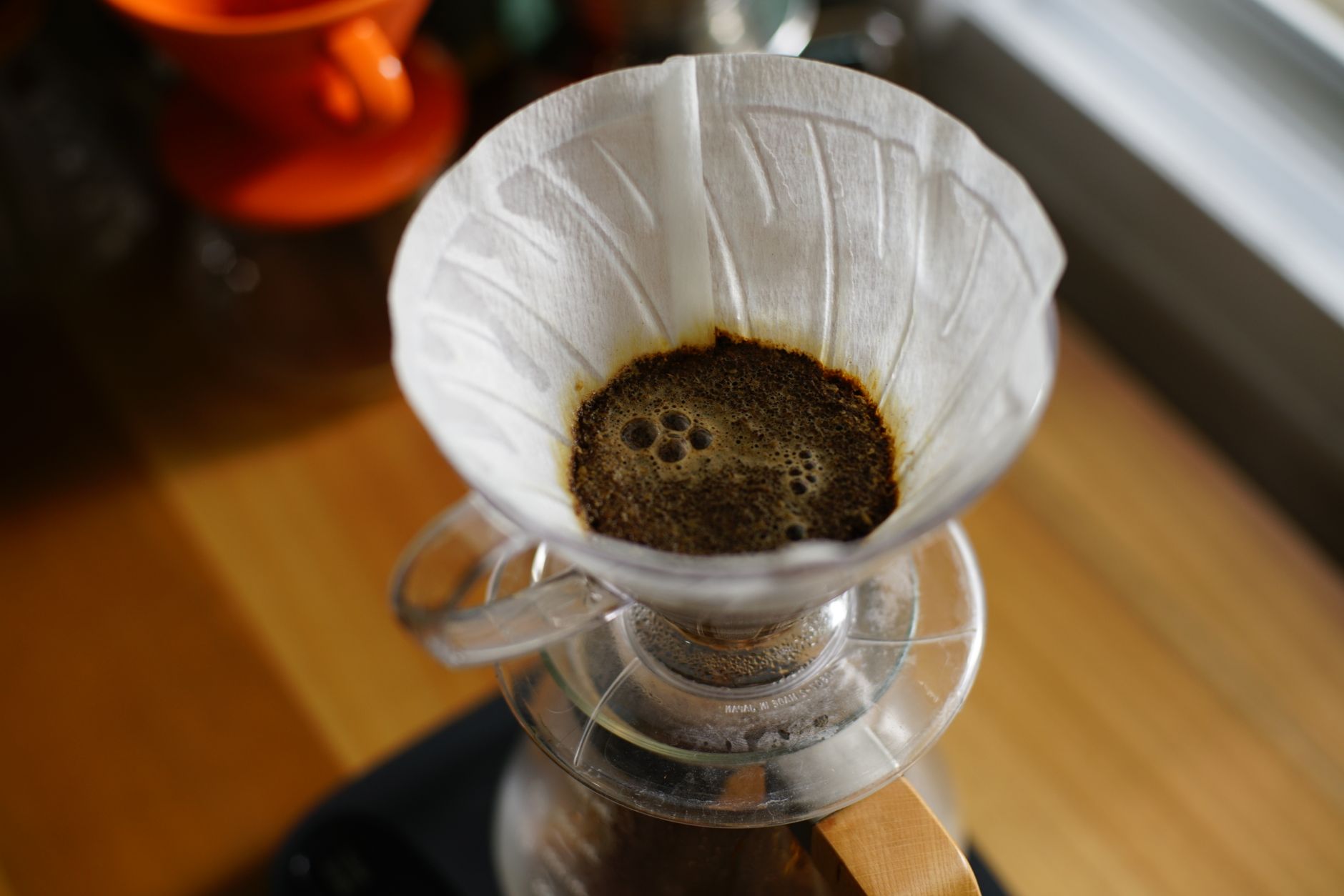
 Photo: Adventure Studio via Pexels
Equipment You Need
| Item | Recommendation |
|---|---|
| Chemex 6-Cup | Classic or Handblown |
| Filter | Chemex Bonded Square (oxygen-bleached) |
| Kettle | Gooseneck, variable temp |
| Grinder | Burr grinder, medium-coarse |
| Scale | 0.1g resolution |
Step-by-Step: 6-Cup Chemex
- Boil and rinse. Fold the filter into the Chemex (three layers face the spout). Rinse with 200ml+ of hot water. Discard the rinse water — this also preheats the carafe.
- Dose. Add 40g of freshly ground coffee at a medium-coarse setting (roughly a French press grind, dialed back one notch finer). Shake gently to level.
- Bloom. Start your timer. Pour 80–90ml of water at 94–96°C in a slow spiral, saturating all the grounds. Wait 45 seconds. A vigorous bloom means fresh coffee — good.
- Pour 1. At 0:45, pour steadily up to ~250ml total, keeping water level below the top of the filter.
- Pour 2. At 1:45, pour to ~440ml. Keep the stream slow and centered, then spiral outward. Avoid pouring directly on the filter paper.
- Pour 3. At 2:30, bring the total to 630ml. Let it draw down.
- Done. Drawdown should finish by 4:00–4:30. Pull the filter, serve immediately.
Chemex Brew Guide: 8-Cup Method
The 8-Cup Chemex (40 oz) is the right choice for 4–6 people or batch brewing. Scale to 55g coffee and 825–850ml water. The physics stay identical — only volume changes.
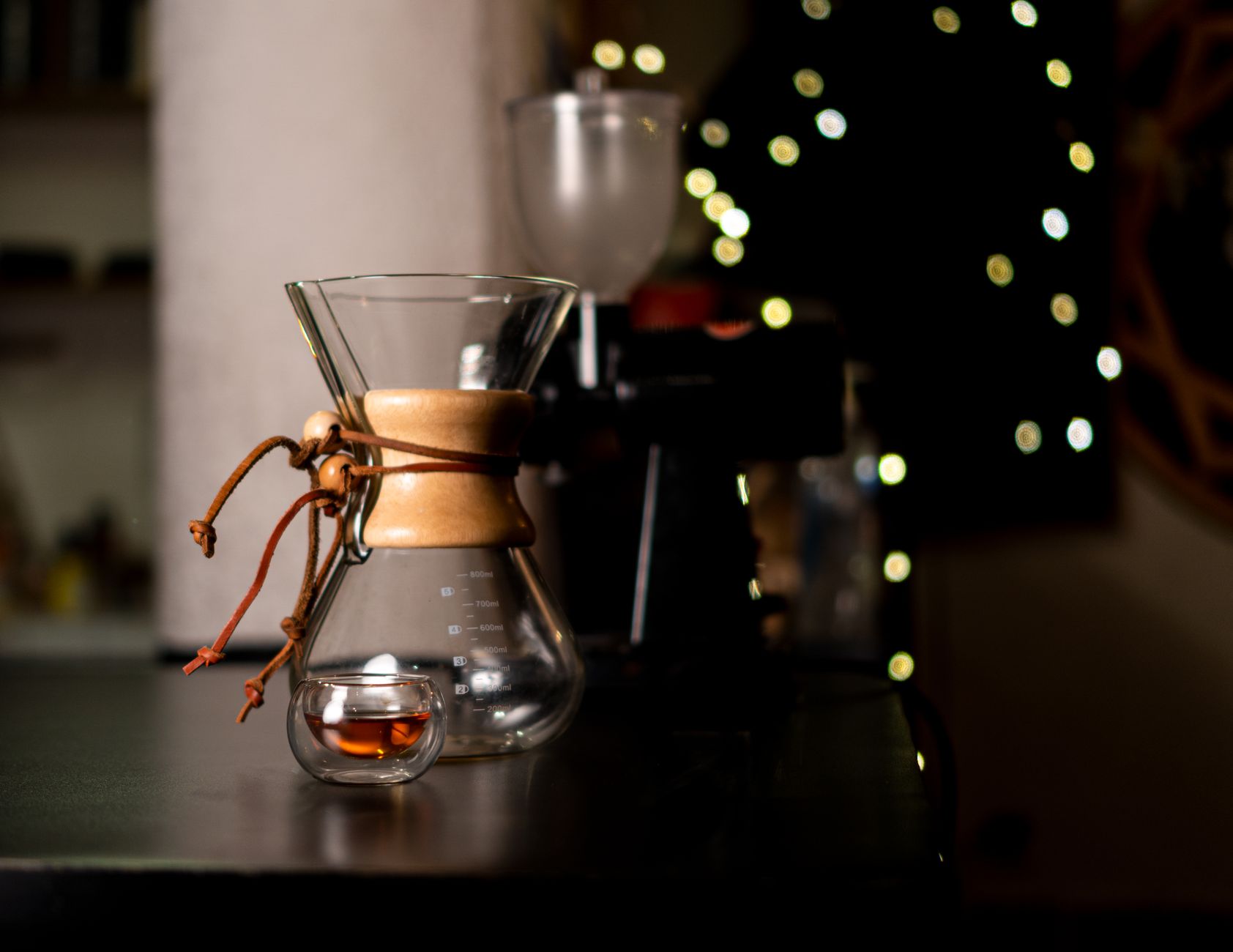
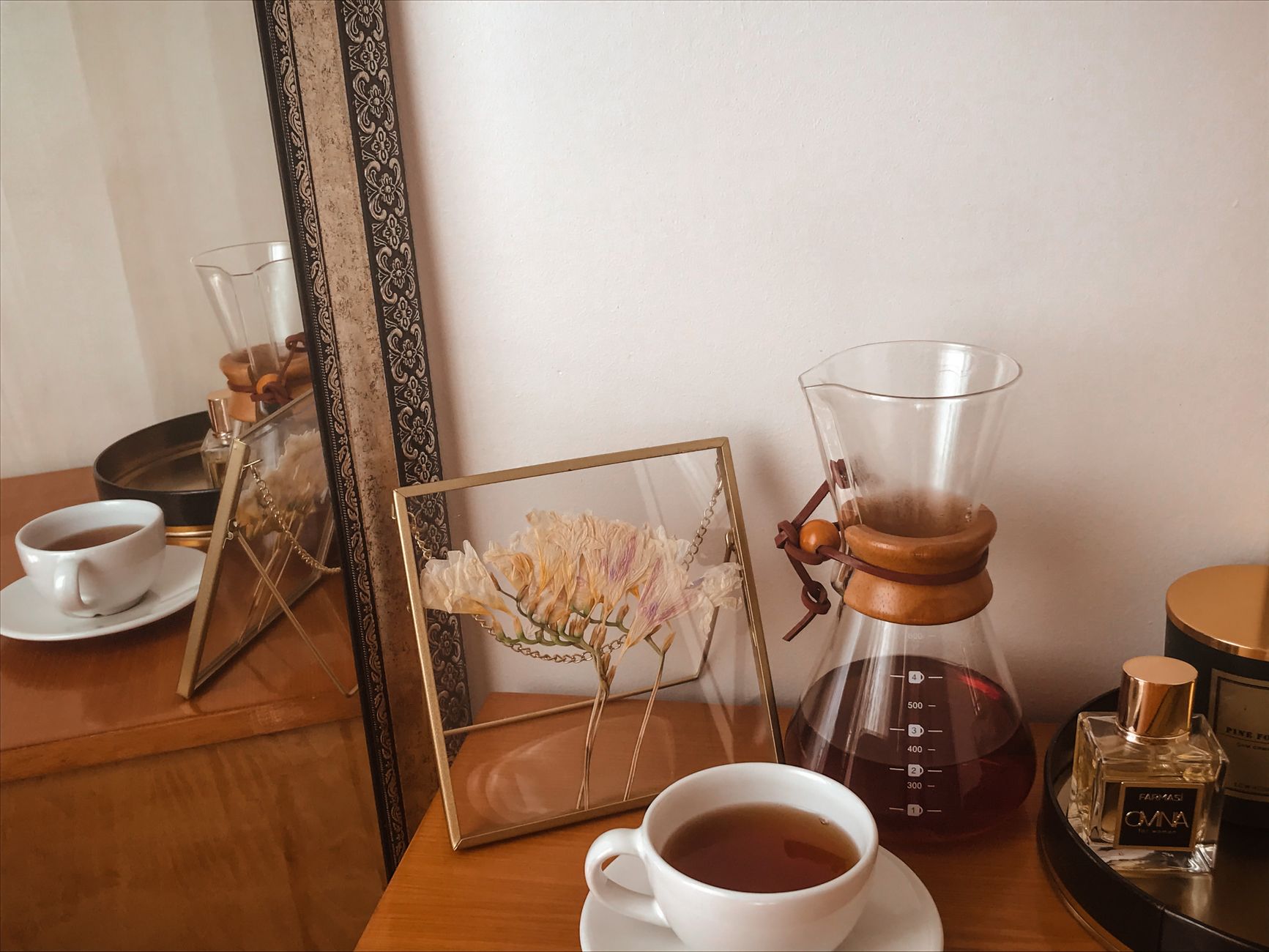 Photo: Esra Nur Kalay via Pexels
8-Cup Recipe at a Glance
| Parameter | Value |
|---|---|
| Dose | 55g |
| Water | 825ml |
| Ratio | 1:15 |
| Bloom | 110ml / 45 sec |
| Total time | 4:15 – 5:00 |
| Temperature | 94–96°C (201–205°F) |
Pouring Strategy for the 8-Cup
Pour in four stages rather than three, keeping the water level no more than 1.5 inches from the top of the filter. With 55g of coffee the filter packs tighter; slow pours prevent overflow and keep extraction even across the entire bed.
- 0:00 — 110ml bloom
- 0:45 — pour to 330ml
- 2:00 — pour to 550ml
- 3:00 — pour to 825ml
A slower drawdown (up to 5 minutes) is normal with the 8-Cup due to filter bed depth. If you’re consistently over 5:30, go one notch coarser on your grinder.
Grind Size, Ratio, and Water Temperature
Medium-coarse is the target — think raw cane sugar in texture. Too fine and the thick Chemex filter chokes the drawdown; too coarse and your brew is watery with a fast, under-extracted finish.
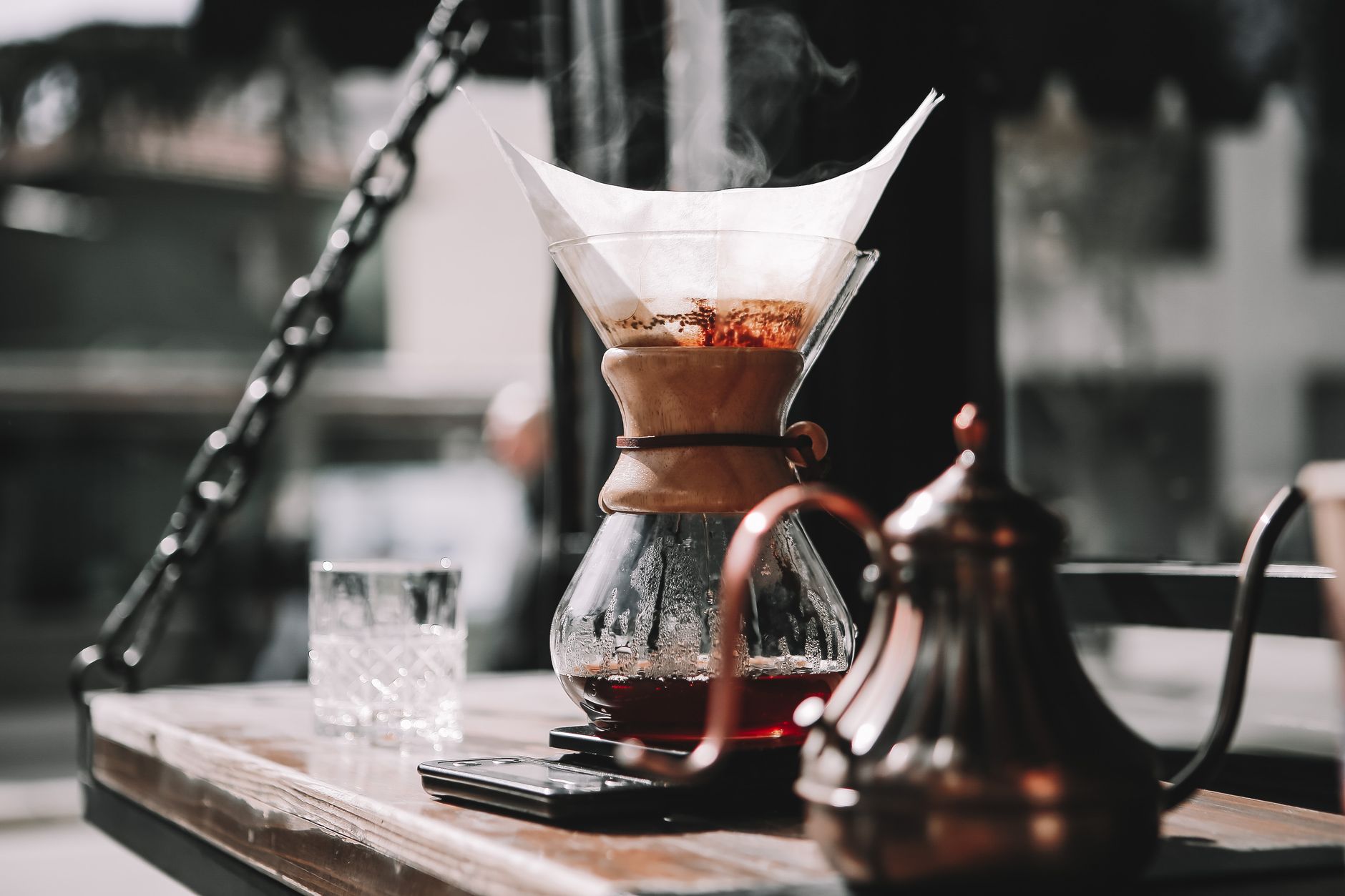
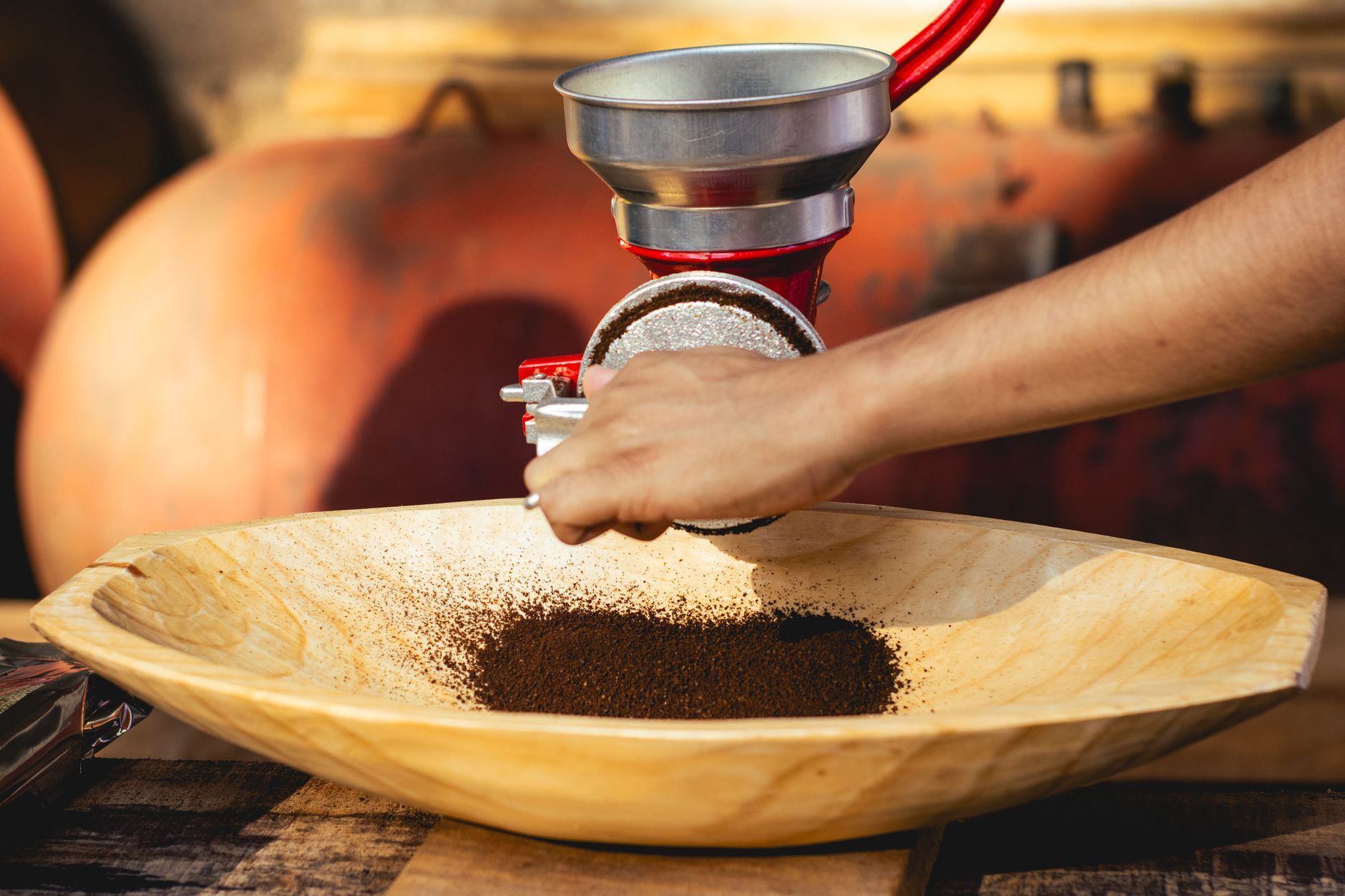 Photo: Daniel Morales via Pexels
Ratio Reference Table
| Coffee (g) | Water (ml) | Ratio | Cups (6oz) |
|---|---|---|---|
| 25 | 375 | 1:15 | 2 |
| 34 | 510 | 1:15 | 3 |
| 40 | 630 | 1:15.75 | 4 |
| 50 | 750 | 1:15 | 5 |
| 55 | 825 | 1:15 | 6 |
Temperature: 94–96°C is the working range. Light roasts pull toward 96°C; darker roasts drop toward 92–93°C to prevent harshness. If you don’t have a variable-temp kettle, let boiling water sit off heat for 45–60 seconds.
Extraction Parameters and Puck Prep
Extraction Block
| Parameter | 6-Cup | 8-Cup |
|---|---|---|
| Dose | 40g | 55g |
| Yield | 600–630ml | 825ml |
| Ratio | 1:15–1:16 | 1:15 |
| Total Time | 3:45–4:30 | 4:15–5:00 |
| Temperature | 94–96°C | 94–96°C |
| Pressure | Gravity (no pressure) | Gravity |
Puck Prep for Pour-Over
Unlike espresso, there’s no puck — but bed prep still matters significantly.
- Leveling: Shake the Chemex gently after adding grounds. A flat bed extracts evenly; a mounded center extracts at a different rate than the edges.
- WDT equivalent: Not applicable for pour-over, but if grounds are clumping (happens with electrostatic in dry climates), stir the bed lightly with a chopstick before the bloom pour.
- Pre-infusion (bloom): This IS your pre-infusion. 2× coffee weight in water, 45 seconds. Don’t skip it — degassing during bloom prevents channeling in later pours.
- Channeling prevention: Use a slow, spiraling pour rather than a hard center stream. Never dump water from height — break the stream with the back of a spoon if your kettle pours too hard.
Troubleshooting Matrix
| Symptom | Likely Cause | Fix |
|---|---|---|
| Drawdown over 5:30 | Grind too fine | Go one notch coarser |
| Drawdown under 3:00 | Grind too coarse | Go one notch finer |
| Sour, thin, sharp finish | Under-extraction | Finer grind or hotter water |
| Bitter, astringent finish | Over-extraction | Coarser grind or cooler water |
| Weak, watery cup | Ratio too low | Increase dose or reduce water |
| Uneven drawdown | Uneven grounds bed | Flatten bed before bloom |
| Overflow/flood during pour | Too fast a pour | Slow down, pour in smaller pulses |
| Paper taste | Filter not rinsed | Pre-rinse with boiling water, discard |
→ See also
- How to Brew Coffee at Home: Complete Method Guide
- French Press Coffee: Complete Brewing Guide (Ratios + Technique)
- French Press Coffee-to-Water Ratio Calculator
FAQ
How much coffee do I use for a 6-cup Chemex? Use 40g of coffee to 620–630ml of water — a 1:15.5 ratio. This fills the 6-Cup Chemex to its practical capacity (not the rated 30oz, which includes headroom). Adjust by ±5g if you prefer stronger or lighter.
What grind size is best for Chemex? Medium-coarse — roughly the texture of raw cane sugar or coarse sea salt. The thick bonded Chemex filter requires a slightly coarser grind than a V60 to achieve the same 4-minute target brew time. If your drawdown stalls past 5 minutes, go one step coarser immediately.
Can I use regular paper filters in a Chemex? Technically yes, but results will differ. Standard filters are thinner and allow more oils and fines through, losing the clean clarity the Chemex is known for. For the best cup, use Chemex bonded filters — oxygen-bleached square filters are the most common and easiest to find.
Why does my Chemex coffee taste weak? Usually a ratio or grind issue. Check your ratio first — many people eyeball 3–4 tablespoons per cup and end up well under 1:15. If ratio is correct, check your grind: Chemex-ground coffee that’s too coarse flows through fast and under-extracts, leaving a watery, underdeveloped cup.
Is the 8-cup Chemex worth it over the 6-cup? If you regularly brew for more than two people, yes. The 8-Cup is more forgiving with larger batches and is the only format where a 50–55g dose makes practical sense. For solo or double brewing, the 6-Cup is easier to manage and produces the same cup quality at smaller volumes.
How do I keep Chemex coffee hot after brewing? The glass carafe loses heat quickly. Pre-heating the carafe (by rinsing the filter with boiling water and swirling before discarding) adds a few degrees. For extended holding, transfer to a preheated thermal carafe immediately after brew — don’t leave it on a heat plate, which scorches filtered coffee within minutes.
Editorial methodology: Assessments are based on manufacturer specifications, published user reviews, and editorial research. Physical hands-on testing is noted explicitly where it occurred. Rankings reflect our editorial judgment and are not influenced by affiliate commission rates. Full editorial policy · Affiliate disclosure