Contents
AeroPress Brew Guide: Classic, Inverted & Recipes
TL;DR: The AeroPress brew guide covers everything from dose and grind to the inverted method and recipe variations. Use 15g coffee to 240g water (1:16), medium-fine grind, 80–90°C water, and press in 1:30–2:00 total. The AeroPress is forgiving, fast, and produces clean, concentrated coffee with virtually no cleanup.
What Is the AeroPress and Why Does It Work?
The AeroPress brews under gentle pressure (0.5–0.75 bar) in under two minutes, producing low-acid, full-flavored coffee. It combines immersion and pressure filtration — the plunger creates positive pressure that forces water through the puck faster than gravity alone, shortening extraction time and limiting bitterness.
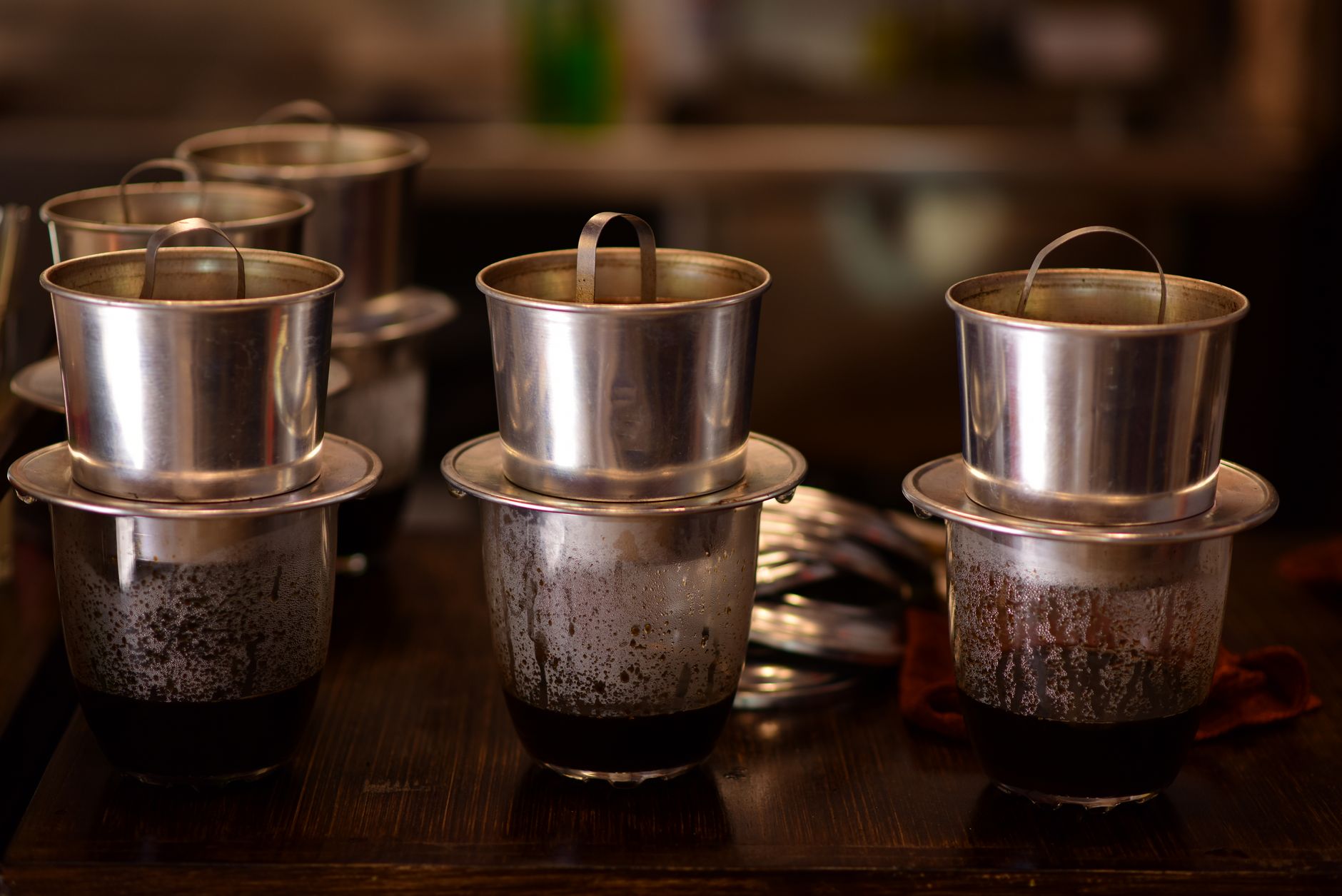 Photo: Sóc Năng Động via Pexels
The AeroPress was invented in 2005 by Alan Adler — the same engineer behind the Aerobie frisbee. It uses a paper (or metal) filter, which strips most oils and produces a cleaner cup than French press. The short brew time means less time for chlorogenic acids to dissolve, giving noticeably lower perceived acidity.
Grind size and water temperature are your two biggest levers. Everything else — dose, time, stir count — is tuning.
AeroPress Brewing Parameters
Use these parameters as your baseline. The AeroPress tolerates wide variation; if your shot tastes flat, go finer or hotter. If it’s harsh, go coarser or cooler.
| Parameter | Classic Method | Inverted Method |
|---|---|---|
| Dose | 15–17g | 15–17g |
| Yield | 200–240g | 200–240g |
| Ratio | 1:14 to 1:16 | 1:14 to 1:16 |
| Grind size | Medium-fine (table salt) | Medium-fine to medium |
| Water temp | 80–90°C (175–195°F) | 85–92°C (185–198°F) |
| Total time | 1:15–2:00 | 1:30–2:15 |
| Pressure | ~0.5–0.75 bar (manual) | ~0.5–0.75 bar (manual) |
Classic AeroPress Method (Step-by-Step)
The classic orientation sits the AeroPress directly on your cup. Insert the plunger just enough to create a seal before you pour — this prevents drip-through during steeping.
Setup
- Boil water, let off-boil for 30–60 seconds (target ~85–88°C for light roasts, ~80°C for dark)
- Place paper filter in cap, wet it with hot water to remove paper taste, discard rinse water
- Assemble AeroPress on sturdy mug, plunger inserted ~1cm into chamber (creates back-pressure seal)
- Grind 15g coffee to medium-fine
Brew
- 0:00 — Add grounds, tare scale
- 0:00–0:10 — Pour 30g water (bloom), stir gently 3–4 times
- 0:10–0:30 — Pour remaining water to 240g
- 0:30 — Stir 10 seconds with paddle
- 0:45 — Attach cap + filter
- 0:45–1:30 — Press slowly and steadily (20–30 seconds); stop at the hiss
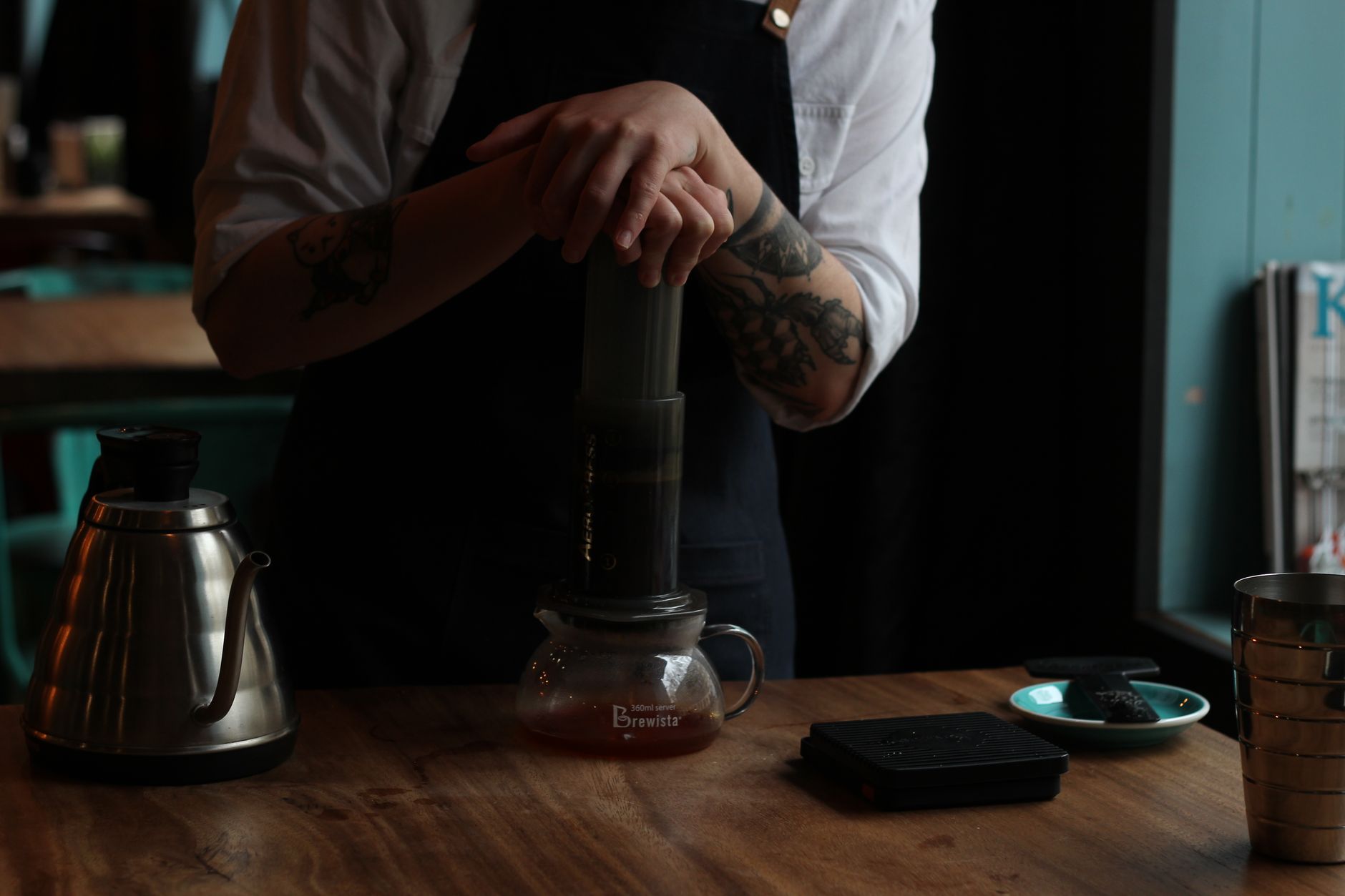 Photo: Viktoria Alipatova via Pexels
Total brew time: ~1:30. If pressing requires serious force, grind coarser. If it drops freely in 5 seconds, go finer.
Inverted AeroPress Method
Flip the AeroPress upside-down (plunger at the bottom) so zero liquid escapes before you press. This gives you full control over steeping time — preferred by most competition brewers and anyone who wants longer, more even extraction.
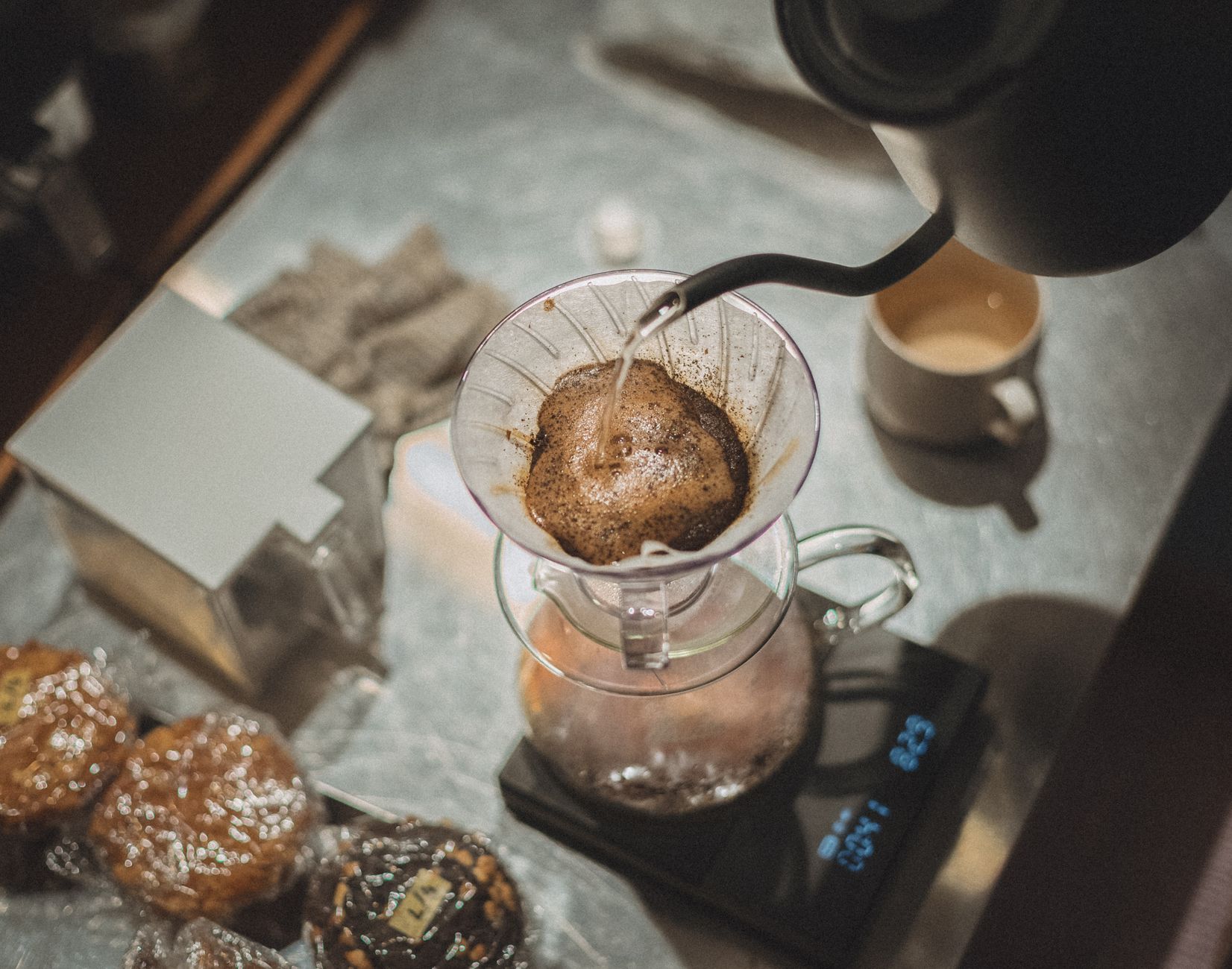 Photo: Gu Ko via Pexels
Why Go Inverted?
In the classic method, liquid starts dripping the moment you pour. The inverted method turns the AeroPress into a true immersion vessel — all the water steeps with all the coffee until you flip and press. The tradeoff: you have to flip a full chamber of hot liquid. Do it decisively and it’s not an issue.
Inverted Steps
- Place AeroPress inverted (plunger down, cap end up), plunger pulled to #4 mark
- Add 15g medium-fine grounds
- 0:00 — Pour to 240g, stir 5 times
- 0:30 — Wet and lock filter cap in place
- 1:00 — Flip onto mug in one smooth motion
- 1:00–1:30 — Press 20–30 seconds; stop at hiss
Inverted is slightly more forgiving on grind size because you’re not fighting drip-through.
AeroPress vs. Other Methods
| Method | Clarity | Body | Acidity | Time | Cleanup |
|---|---|---|---|---|---|
| AeroPress | High | Medium | Low | 2 min | 10 sec |
| French Press | Low | High | Medium | 4 min | 2 min |
| Pour Over | Very high | Low-Med | High | 3–4 min | 1 min |
| Moka Pot | Medium | High | Medium-high | 5 min | 2 min |
| Espresso | High | Very high | High | 25–30 sec | 3+ min |
AeroPress Recipe Variations
James Hoffmann’s Ultimate AeroPress
15g coffee / 250g water at 100°C / medium-coarse grind / no stir / press at 2:00. Uses full boil (removes one variable) and coarser grind to compensate.
World AeroPress Championship Style (Concentrated)
20g coffee / 120g water at 85°C / medium-fine grind / inverted / press at 1:00. Top up with 80–100g hot water in the cup for an americano-style finish.
Cold-Steep AeroPress
18g coffee / 200g room-temperature water / medium grind / steep 12–15 min / press over ice. Clean cold brew concentrate in under 20 minutes.
Puck Prep and Technique Details
Puck prep matters less in AeroPress than in espresso, but a few habits prevent channeling and uneven extraction.
- Distribution: Give the chamber a gentle shake after loading grounds to level the bed before pouring
- Bloom: The 30g bloom pour degasses CO₂; skip it on beans older than 3 weeks
- Stir technique: Stir in a deliberate north-south or swirl pattern — don’t just poke
- Press rate: 20–30 seconds of steady pressure. Hovering (letting the plunger sit without pushing) adds steep time; press only when ready
- Filter seal: Wet the paper filter — dry paper can create air gaps that let grounds slip through
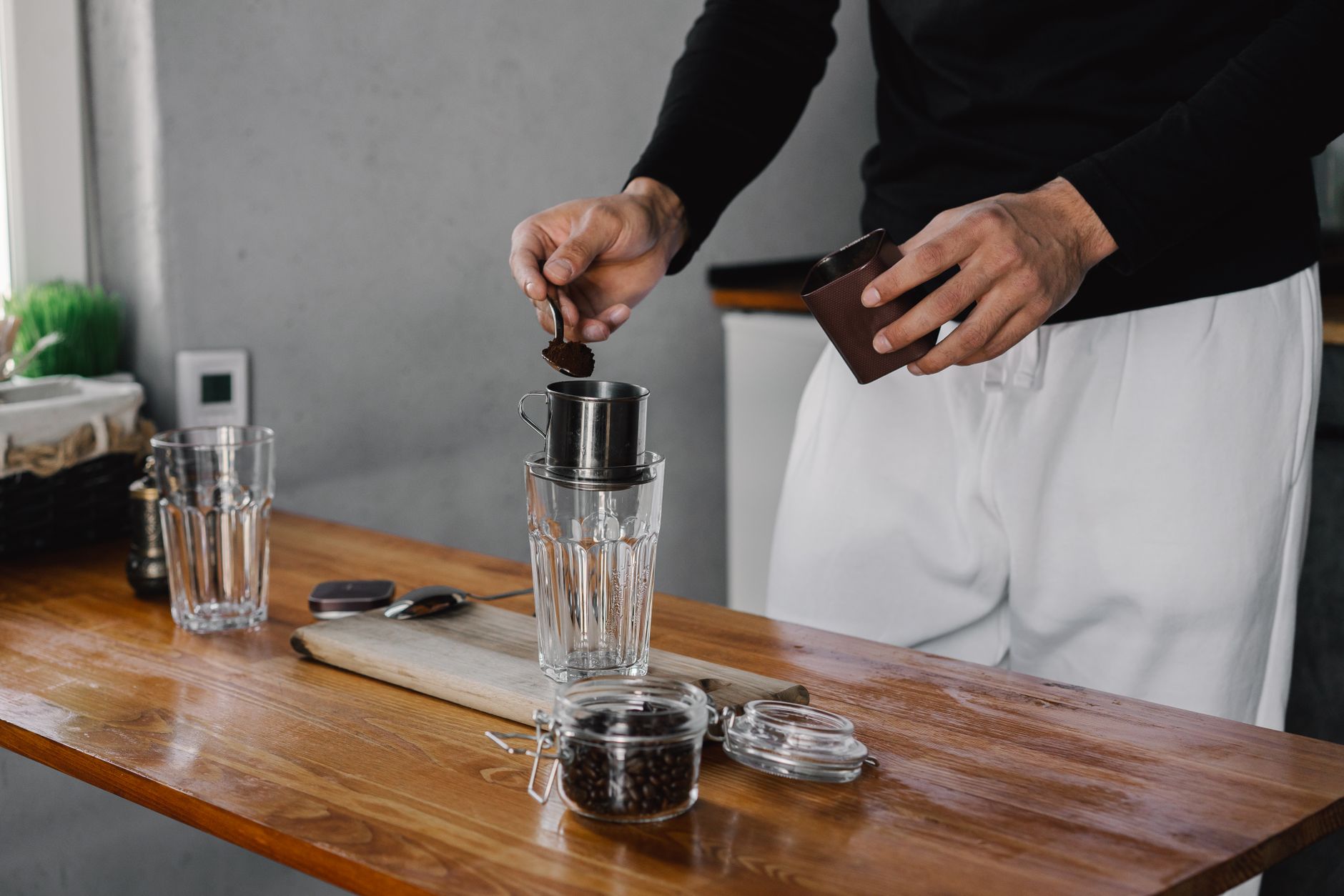 Photo: Mikhail Nilov via Pexels
Troubleshooting Matrix
| Symptom | Likely Cause | Fix |
|---|---|---|
| Sour, thin, weak | Under-extracted | Grind finer, raise water temp, add 10 sec steep |
| Bitter, harsh | Over-extracted | Grind coarser, lower water temp, shorten steep |
| Gritty texture | Filter gap or bypass | Re-wet filter, press slower, check cap seal |
| Hard to press | Too fine grind | Coarsen by 2–3 clicks |
| Plunger drips (classic) | No pre-seal | Insert plunger 1cm before adding water |
| Muddy cup | Too much agitation | Reduce stir count, press slower |
| Flat flavor, no sweetness | Stale beans or low temp | Use fresher beans, try 90°C |
Paper vs. Metal Filter
Paper filters produce a cleaner, brighter cup by trapping coffee oils and micro-fines. Metal filters (disk style) pass oils through — the result is more body and mouthfeel, closer to French press. If your coffee tastes bright and clean but you want more richness, swap to metal.
Both work. Paper is better for light, floral, or high-clarity roasts. Metal suits dark roasts or anyone who prefers body over clarity.
→ See also
- How to Brew Coffee at Home: Complete Method Guide
- French Press Coffee: Complete Brewing Guide (Ratios + Technique)
- French Press Coffee-to-Water Ratio Calculator
FAQ
What grind size for AeroPress? Medium-fine — roughly the texture of table salt — is the baseline for most recipes at 1:15–1:16 ratio. Go finer for faster recipes (concentrated, short steep) and coarser for longer steeps or the inverted method. Grind size has more impact on flavor than any other variable.
Is the inverted AeroPress method actually better? It extracts more evenly because no liquid drips before steeping begins, and you control total steep time precisely. Most World AeroPress Championship winners use inverted. That said, the classic method is faster, safer, and produces excellent results with the right grind. Neither is objectively “better” — inverted gives more control, classic is lower risk.
What water temperature for AeroPress? 85–88°C (185–190°F) works for most medium roasts. Light roasts benefit from 88–92°C to fully extract. Dark roasts extract fast at lower temps (80–83°C) without bitterness. The AeroPress is one of the few methods where you can go lower than usual and still extract fully because of the pressure assist.
Can you make espresso with an AeroPress? Not true espresso — that requires 9 bar of pressure, and the AeroPress maxes out around 0.75 bar manually. You can make espresso-style concentrate (20g coffee / 60–80g water, fine grind, 45-second steep, hard press), which works well in lattes and flat whites. It’s not the same extraction chemistry, but the result is usable.
How do you clean an AeroPress? Pop the puck: hold it over a bin and push the plunger all the way through. The puck drops out as a dry, tidy disc. Rinse the rubber seal under water and you’re done — 10 seconds total. No soaking required. Once a week, wash the chamber with mild soap to prevent oil buildup.
How much coffee for one cup in an AeroPress? 15g for a standard mug (240g water). Scale to 12–13g if you prefer a lighter brew or are using a small cup. The AeroPress chamber holds up to ~250g water and ~30g grounds before it’s packed — don’t go above that or you won’t have room to press.
Editorial methodology: Assessments are based on manufacturer specifications, published user reviews, and editorial research. Physical hands-on testing is noted explicitly where it occurred. Rankings reflect our editorial judgment and are not influenced by affiliate commission rates. Full editorial policy · Affiliate disclosure