
Contents
Saturated vs E61 Group Head: Which Is Better?
TL;DR: The saturated group head offers superior thermal stability through direct boiler integration, making it the choice for espresso purists who pull back-to-back shots. The E61 is a proven, repairable workhorse that runs cooler and suits home setups with moderate shot frequency. Neither is universally better — the right answer depends on your workflow.
What’s the Difference Between Saturated and E61 Group Heads?
Direct Answer: A saturated group head is bolted directly to the boiler, keeping it at boiler temperature continuously. An E61 is a thermosiphon-fed brass group with a mechanical pre-infusion lever mechanism — thermally stable but not as consistently hot as saturated. The gap matters most at high shot volume.
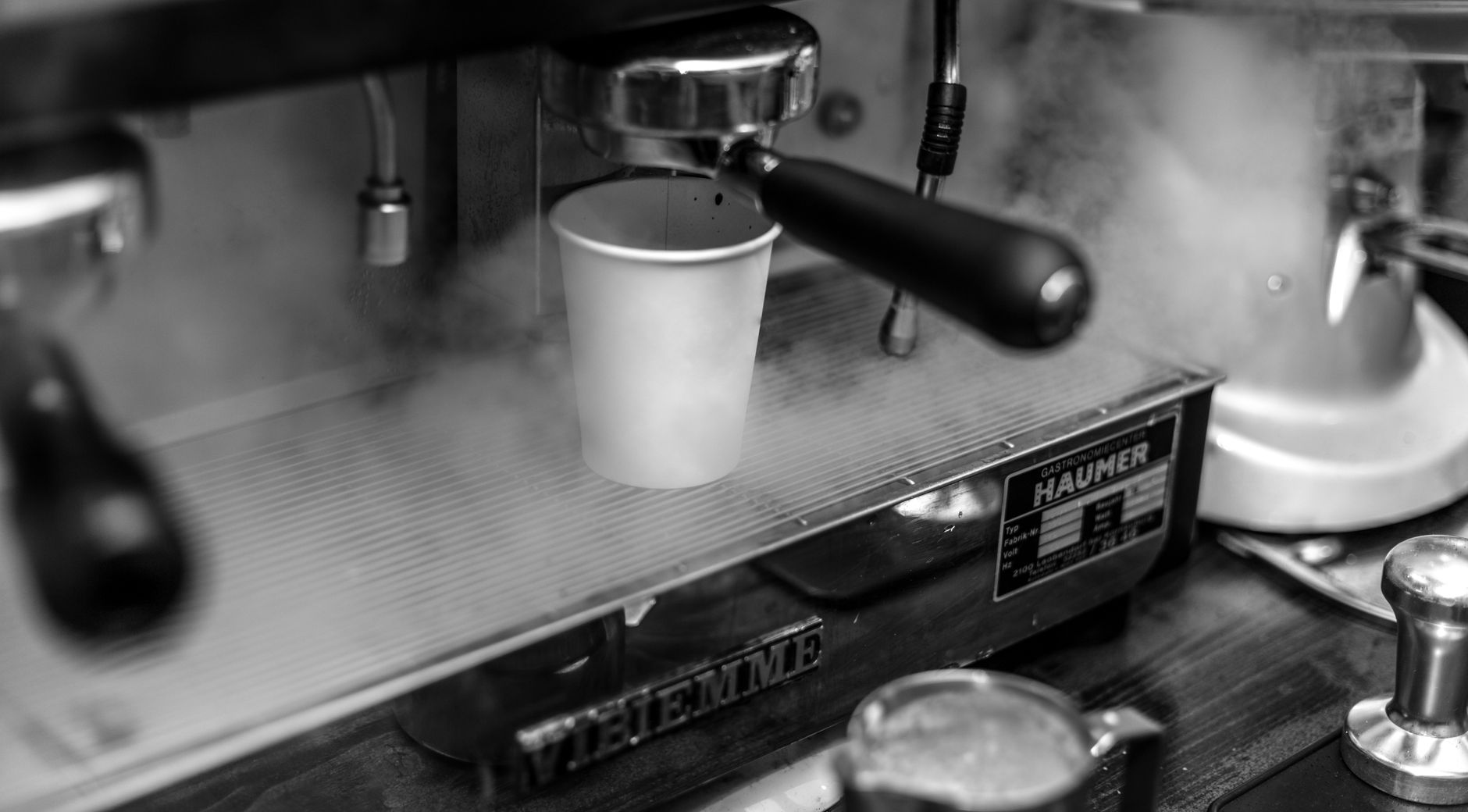 Photo: Gáspár Ferenc via Pexels
Both designs dominate the prosumer and commercial market, but they solve the thermal management problem differently. Saturated groups — found on machines like the La Marzocco Linea Mini and GS3 — circulate hot water directly around the group body. There’s no temperature lag and no warm-up guesswork.
The E61 group head, introduced by Faema in 1961, uses a thermosiphon loop: hot water circulates from the heat exchanger or boiler through the group passively. It also includes a mechanical pre-infusion chamber that gently saturates the puck before full pressure — a feature baked into the design, not added on.
Thermal Stability: Where Saturated Groups Win
Direct Answer: Saturated groups maintain brew temperature within ±0.5°C across consecutive shots because they’re always in direct contact with boiler water. E61 groups fluctuate more — typically ±1–2°C — depending on idle time and flush technique.
 Photo: Ahmed via Pexels
For a home barista pulling one or two shots a morning, this difference is largely academic. For a busy café workflow — or anyone dialing in espresso methodically — it becomes significant. A saturated group on a dual-boiler machine with PID gives you the repeatability that makes shot-to-shot comparison meaningful.
E61 machines require a flush before each shot to stabilize temperature, especially after sitting idle. Experienced users learn to time their flushes by feel or by using a group thermometer. It works, but it adds a variable.
| Condition | Saturated Group Temp Drift | E61 Group Temp Drift |
|---|---|---|
| Back-to-back shots | ±0.3–0.5°C | ±0.5–1.0°C |
| 5-min idle | ±0.5°C | ±1.5–2.5°C |
| Cold start (after warm-up) | Stable once boiler stable | Requires 20–30 min + flush |
Pre-Infusion: Where E61 Has a Built-In Edge
Direct Answer: The E61’s mechanical pre-infusion is passive and built into the lever cam — when you lift the lever, water enters the puck at low pressure before the pump kicks in. Saturated groups require electronic pre-infusion via the pump or a dedicated valve, which costs extra.
 Photo: Phát Trương via Pexels
Pre-infusion matters for light roasts and uneven grinds — it lets the puck saturate evenly before full extraction pressure hits, reducing channeling. The E61 delivers this automatically on every shot. Machines like the Rocket Appartamento and ECM Synchronika carry this as a selling point.
Saturated group machines can match or exceed E61 pre-infusion performance, but you’re typically paying for programmable pressure profiling (GS3 MP, Decent) to get there.
Maintenance and Repairability
Direct Answer: The E61 wins on repairability. Its design is open, documented, and parts are commodity. Saturated group machines require more involved access — often partially disassembling the machine — and parts are brand-specific.
The E61 group has been in production for 65 years. Rebuild kits are cheap, every independent repair shop knows the design, and the mushroom valve, cam, and gaskets are interchangeable across brands. Backflushing with Cafiza is standard. A full E61 group service takes 30–45 minutes with basic tools.
Saturated group service on La Marzocco or Slayer hardware requires factory-trained techs or confident DIYers. Not impossible, but the parts ecosystem is narrower and the labor cost is higher.
Head-to-Head Comparison
| Feature | Saturated Group | E61 Group |
|---|---|---|
| Thermal mass | High — direct boiler contact | Medium — thermosiphon fed |
| Temp stability | ±0.5°C | ±1–2°C (flush-dependent) |
| Built-in pre-infusion | No (requires separate valve/pump control) | Yes — passive, mechanical |
| Pressure profiling | Available (machine-dependent) | Limited unless machine-equipped |
| Warm-up time | 20–30 min | 25–45 min |
| Serviceability | Brand-specific | Universal, easy |
| Typical machine tier | Prosumer/commercial | Home prosumer |
| Price range (machine) | $2,000–$10,000+ | $600–$3,500 |
Which Should You Buy?
Direct Answer: Buy a saturated group if you pull 4+ shots daily and want temperature you never think about. Buy an E61 if you value repairability, budget, and the built-in pre-infusion that handles lighter roasts well.
For the Espresso Purist
A saturated dual-boiler — La Marzocco Linea Mini, Breville Dual Boiler — gives you the thermal floor that makes dialing in meaningful. If you’re chasing extraction data, you want variables you can control.
For the Milk Drink-Focused Home Barista
An E61 heat exchanger machine like the Rocket Appartamento or Bezzera Matrix is the sweet spot. Steam power is abundant, temperature is manageable with technique, and you’ll save $800–$1,500 versus a saturated dual-boiler.
For Convenience-First Users
Neither design is plug-and-play at this level. If you want true fire-and-forget, a superautomatic or a Breville Barista Express
→ See Also
- The Complete Guide to Espresso Machines (2026)
- Best Espresso Machine Under $500 (2026)
- Best Espresso Machine Under $200 (2026)
FAQ
What is a saturated group head? A saturated group head is physically integrated with the boiler — hot water circulates continuously around and through the group body. This keeps the group at a stable, consistent temperature without relying on a thermosiphon loop or external heating element.
Is the E61 group still relevant in 2026? Yes. The E61 remains the dominant group head design in home prosumer machines because of its repairability, parts availability, and built-in mechanical pre-infusion. Its thermal stability limitations are manageable with proper technique and matter less for low-volume home use.
Do saturated group machines need to be flushed before pulling a shot? Generally no — saturated groups maintain temperature continuously, so there’s no thermal recovery step required. Some baristas do a short blank shot to clear stale water from the shower screen, but it’s optional rather than mandatory.
Can you add pre-infusion to a saturated group machine? Yes, but the method depends on the machine. Some saturated group machines support programmable pre-infusion via pump pressure ramping (e.g., La Marzocco GS3 MP). Others require a third-party flow control device installed between the pump and group.
Which group head is better for light roast espresso? Light roasts benefit from lower brew temperatures and gentler pre-infusion to avoid harsh extraction. An E61’s passive pre-infusion handles this well at base configuration. A saturated group with PID and programmable pressure profiling can outperform it — but at significantly higher cost.
Why do commercial machines use saturated group heads? Volume. A café environment demands consistent extraction across dozens of shots per hour. Saturated groups eliminate thermal recovery time between shots, which matters when a queue is forming. The higher maintenance cost is offset by the consistency and reduced shot variability during a rush.
Editorial methodology: Assessments are based on manufacturer specifications, published user reviews, and editorial research. Physical hands-on testing is noted explicitly where it occurred. Rankings reflect our editorial judgment and are not influenced by affiliate commission rates. Full editorial policy · Affiliate disclosure