Contents
How to Season a New Espresso Machine
TL;DR: Seasoning a new espresso machine means running water and steam through the system before pulling your first real shot — flushing out manufacturing residue, stabilizing temperature, and breaking in gaskets. Do 3–5 blank flushes and a few steam purges. Your first real shot should come after the machine has been through at least one full heat cycle.
What “Seasoning” Actually Means
Running hot water through a new machine removes factory oils, metal particles, and any residue from manufacturing. It also expands and seats rubber gaskets, stabilizes the boiler coating, and gives you a baseline read on your machine’s actual temperature behavior before you waste good coffee on it.
 Photo: Craig Adderley via Pexels
New machines — even quality ones — come with traces of machining lubricants, packing materials, and sometimes a light preservative coating inside the boiler. You’re not imagining things if your first shot tastes metallic or flat. Seasoning clears that out.
This applies whether you just unboxed a Breville Bambino Plus
Step-by-Step: How to Season a New Espresso Machine
Step 1 — First Fill and Visual Check
Fill the water tank with fresh, filtered water. Cold tap water works, but filtered is better — you’re establishing the machine’s first contact with water, and scale deposits start immediately.
Power on. Let the machine complete its full warm-up cycle. Don’t rush this. A single-boiler machine like the Silvia needs 15–25 minutes to reach thermal stability. A thermoblock machine like the Bambino heats faster but still needs a few minutes.
Check for leaks around the group head, water tank connection, and portafilter seal while the machine heats.
Step 2 — Blank Flush the Group Head
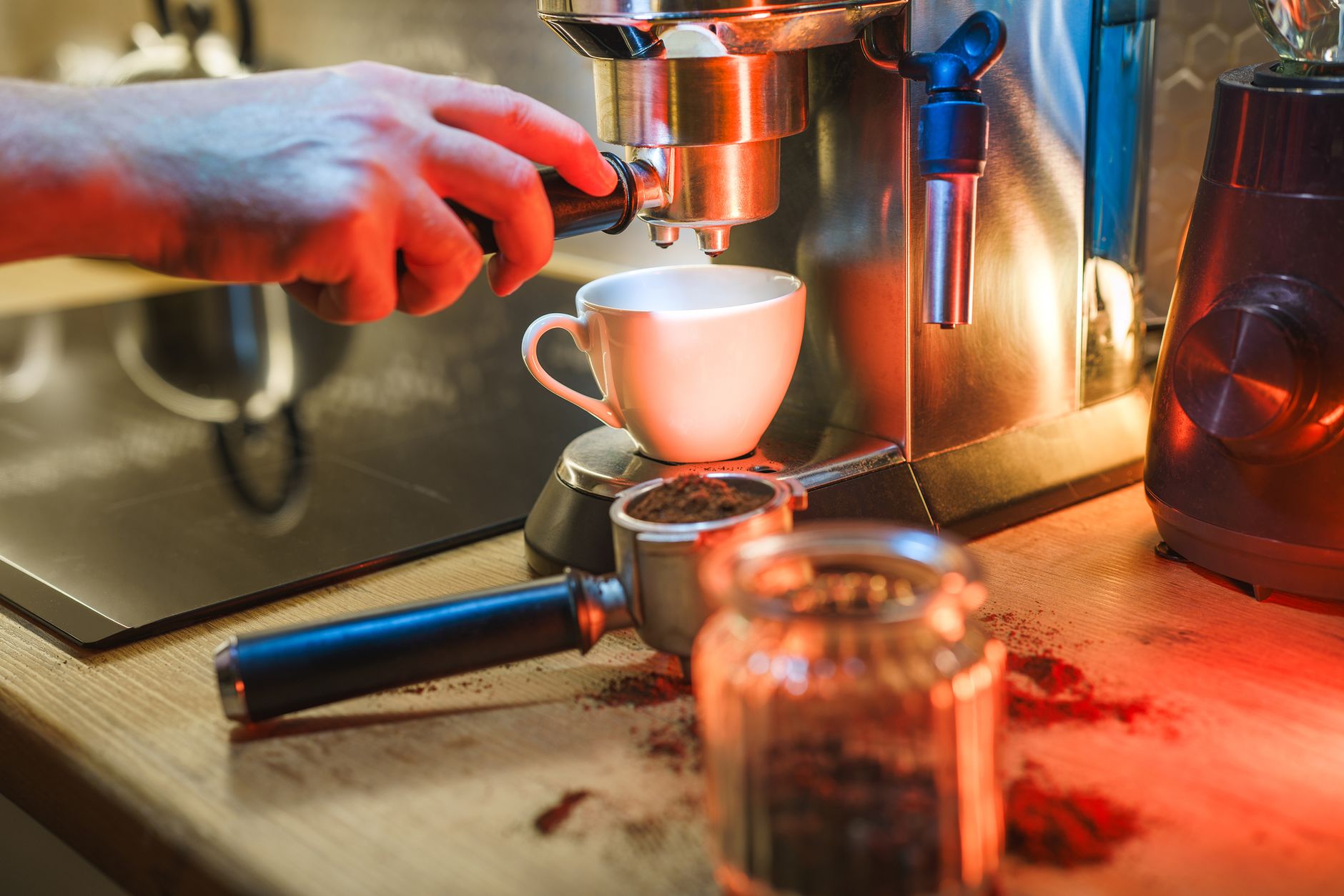 Photo: Jakub Zerdzicki via Pexels
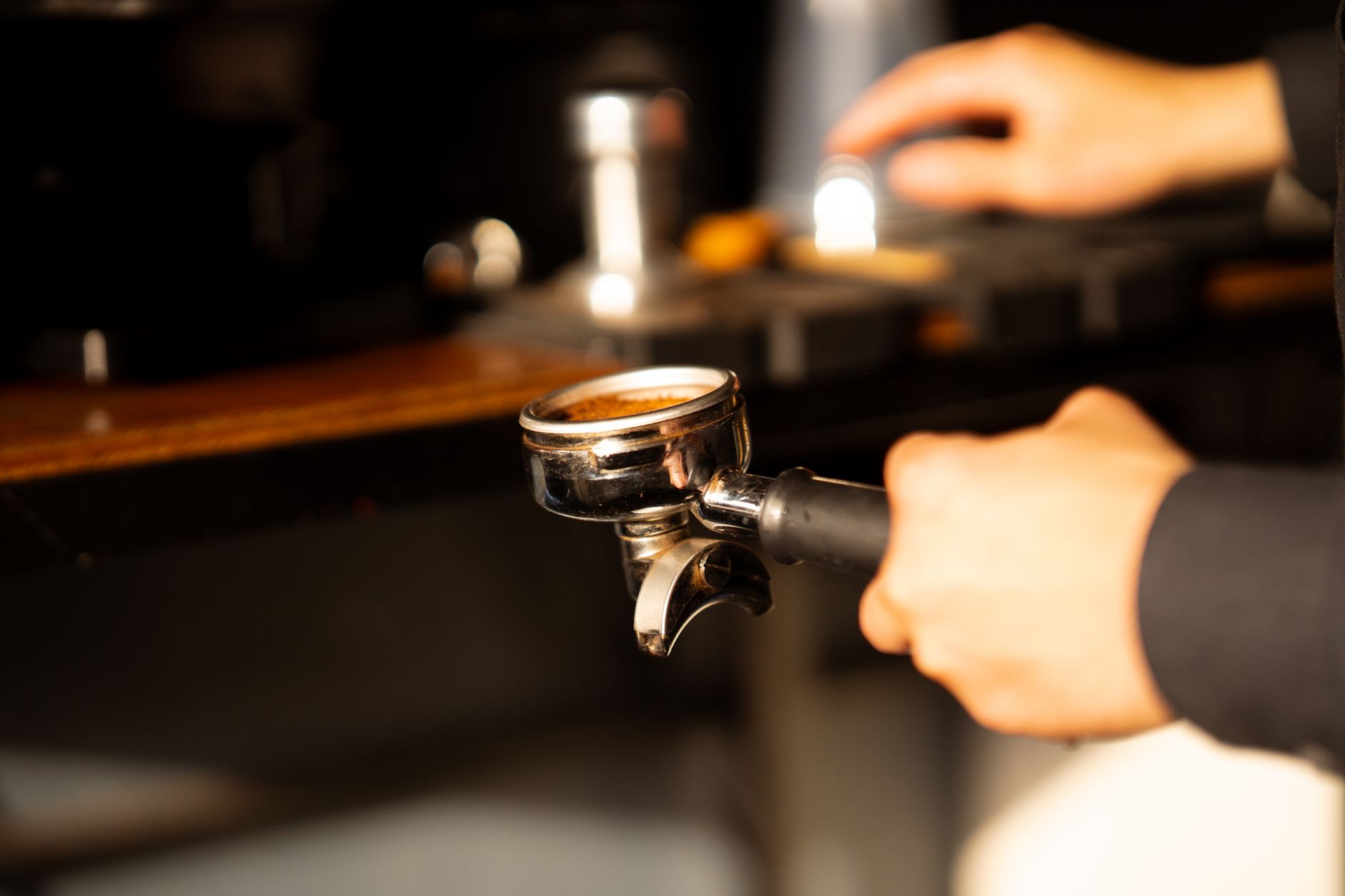
Lock in a blind basket (a solid rubber disc that fits your portafilter) or simply run without a basket. Activate the pump for 10 seconds, stop for 10, repeat 5 times.
This pushes water through the group head solenoid and screen without the resistance of coffee. You’re clearing out anything sitting in the shower screen, group gasket, and solenoid valve.
What to watch for:
- Water runs clear by the second or third flush
- No visible debris or discoloration
- Even flow across the shower screen, no channeling
If you see brown or milky water on the first flush, that’s normal. Keep flushing until it runs clear.
Step 3 — Purge the Steam Wand
Open the steam valve for 5–10 seconds. You may see a small burst of condensate or steam with a slight smell. This is normal — it’s clearing moisture and any residue from the steam boiler or thermoblock path.
 Photo: Đan Thy Nguyễn Mai via Pexels
Do this 2–3 times. The steam should smell clean and neutral by the second purge. If there’s a chemical or plastic smell that persists past three purges, contact the manufacturer — that’s not normal.
Step 4 — Pull Sacrifice Shots
Now run 2–3 actual shots using inexpensive, fresh coffee — not your best beans. Dial in a rough grind and use 18–20g doses as normal.
These shots exist to:
- Season the portafilter basket and group gasket under real pressure
- Identify any pressure or extraction issues before you commit to expensive coffee
- Let the pump work under load for the first time
Taste them if you want, but don’t judge the machine on these. Discard and move on.
Step 5 — Full Heat Cycle Cool-Down
After your sacrifice shots, let the machine run through a complete heat cycle — heat up fully, use it, then power off and let it cool completely to room temperature. This expands and contracts the metal components, seating gaskets and helping any internal coatings cure.
After the cool-down, do one more flush sequence. You’re done.
How Long Does Seasoning Take?
| Stage | Time Required |
|---|---|
| Initial warm-up | 15–25 min |
| Blank flushes (5×) | ~5 min |
| Steam purges (3×) | ~3 min |
| Sacrifice shots (2–3) | ~15 min |
| Full cool-down cycle | 1–2 hours |
| Total | ~2–3 hours |
You don’t need to babysit it. Start the process, do your flush cycles, then let the machine cool while you go do something else.
Does Every Machine Need This?
Yes — but the depth varies.
 Photo: Muhammed Hanefi via Pexels
Single boiler machines (Silvia, Gaggia Classic Pro
Thermoblock and thermocoil machines (Bambino, Dedica) have smaller water paths and typically need fewer flushes — 3 blank flushes and 2 steam purges is sufficient.
Heat exchanger and dual boiler machines (Breville Dual Boiler , Lelit Bianca
→ See Also
- The Complete Guide to Espresso Machines (2026)
- Best Espresso Machine Under $200 (2026)
- Best Espresso Machine Under $500 (2026)
FAQ
Do I need to season an espresso machine if it was tested at the factory? Factory testing typically uses water that gets drained before shipping, but it leaves mineral deposits and doesn’t season gaskets under consumer-level use. Still run 3–5 flush cycles. Ten minutes now prevents metallic-tasting espresso for the first week.
How many shots before an espresso machine is fully broken in? Gaskets and group head components typically reach their optimal seal after 50–100 shots. Seasoning gets you past the worst of it; the machine continues to improve subtly over the first few weeks of regular use.
Can I use descaler during initial seasoning? No. Descaler removes mineral scale — there’s nothing to descale on a brand-new machine. Running descaler on new rubber gaskets can soften them prematurely. Use plain filtered water for seasoning.
Why does my new espresso machine smell like plastic? Plastic or chemical odors in the first few flushes come from the water reservoir, tubing, or internal seals curing under heat. This should clear within 3–5 flush cycles. If the smell persists after 10 flushes, the machine may have a defective component — contact support.
Does seasoning void the warranty? No. Seasoning is normal first-use maintenance. What can void a warranty is using non-recommended descalers, modifying internal components, or using the machine with an incompatible water supply.
How do I know when seasoning is complete? Three indicators: water runs clear and odorless from the group head, steam smells neutral, and a sacrifice shot pulls without unusual off-flavors (metallic, chemical, or musty). If all three pass, you’re ready for your first real shot.
Editorial methodology: Assessments are based on manufacturer specifications, published user reviews, and editorial research. Physical hands-on testing is noted explicitly where it occurred. Rankings reflect our editorial judgment and are not influenced by affiliate commission rates. Full editorial policy · Affiliate disclosure