Contents
Best Coffee-to-Water Ratio for Every Brew Method
TL;DR: The standard coffee-to-water ratio is 1:15 to 1:17 (1g coffee per 15–17g water) for most brew methods. Espresso runs much stronger at 1:2 to 1:2.5. Your ideal ratio shifts with grind size, bean roast, and personal taste — but these numbers are where to start.
What Is Coffee-to-Water Ratio?
The coffee-to-water ratio is the weight of dry coffee grounds divided by the weight of water used. Measuring by weight — not volume — is the only reliable method. A tablespoon of coarse French press grind weighs roughly half what a tablespoon of fine espresso grind weighs, making volume measurements nearly useless for dialing in.
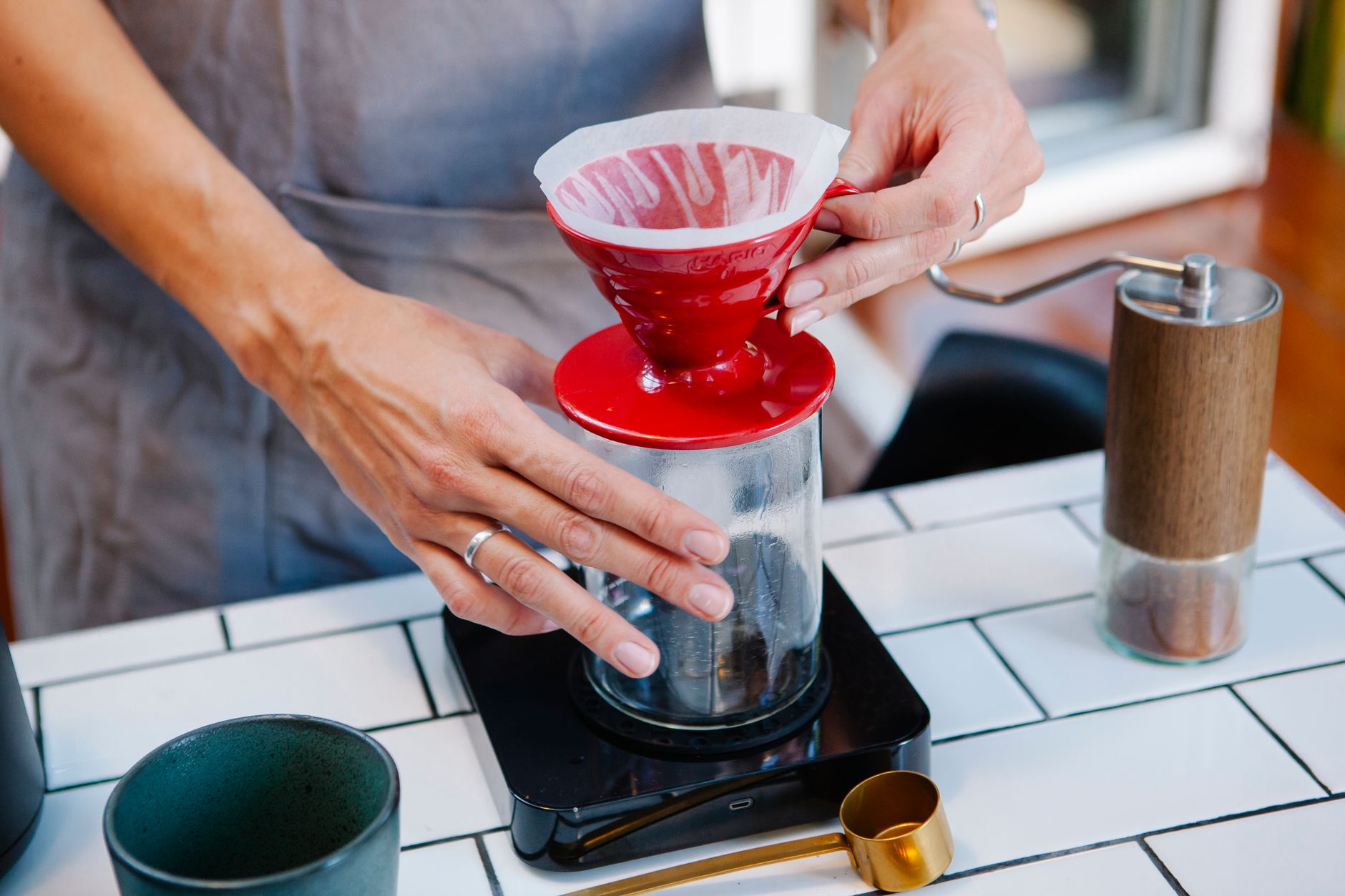 Photo: Tim Douglas via Pexels
The Specialty Coffee Association (SCA) recommends a “Golden Ratio” of 55g per liter (roughly 1:18), but most specialty brewers and competition baristas use 1:15–1:16 for a fuller extraction. The SCA number skews lighter — it was designed for American drip drinkers.
Weight everything. A $15 kitchen scale changes your consistency more than a $200 kettle.
Ratios by Brew Method
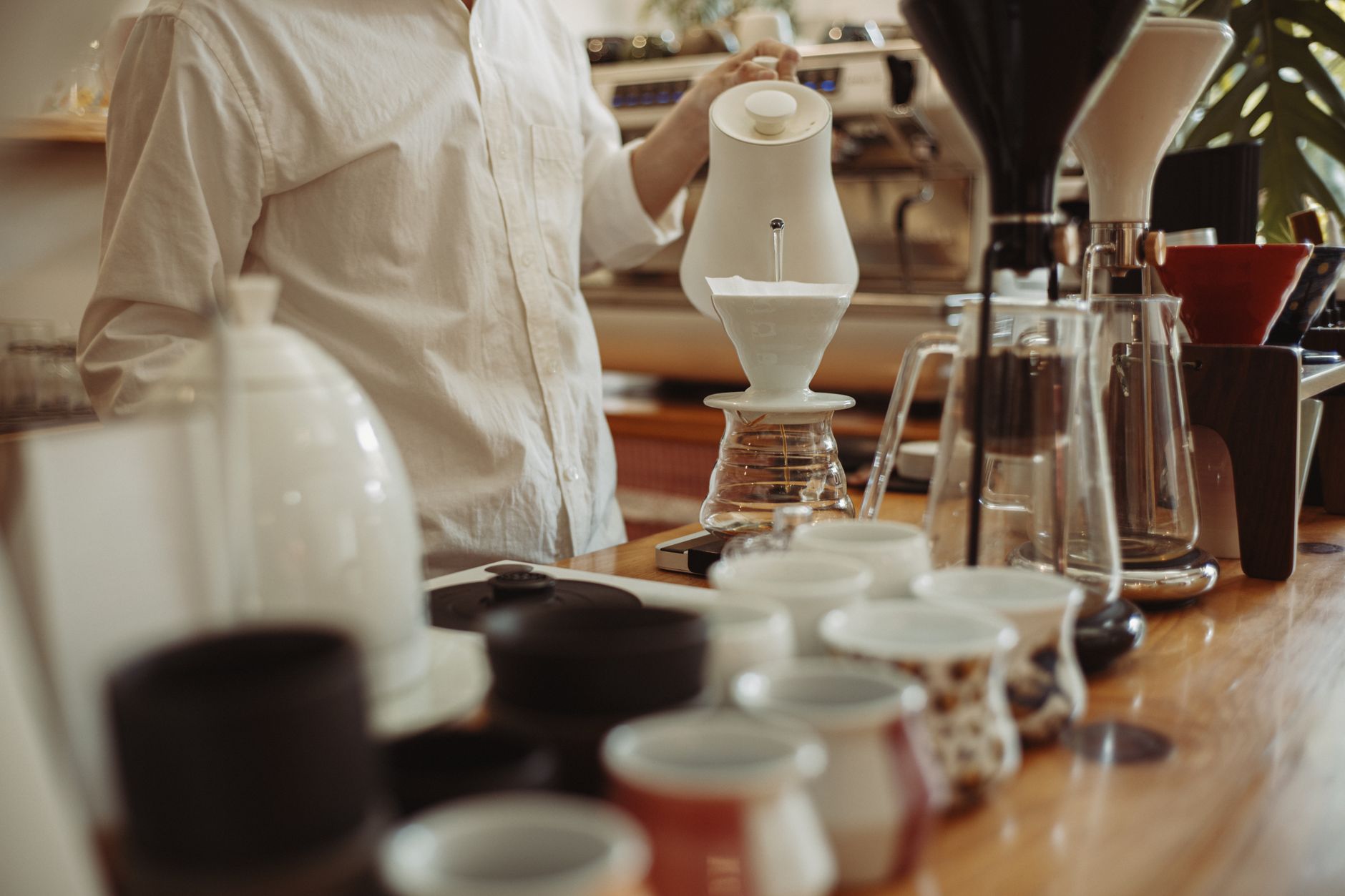
Each brew method has a different ideal coffee-to-water ratio because contact time, water temperature, pressure, and grind fineness all affect extraction rate. A ratio that’s perfect for French press will taste thin in a Moka pot.
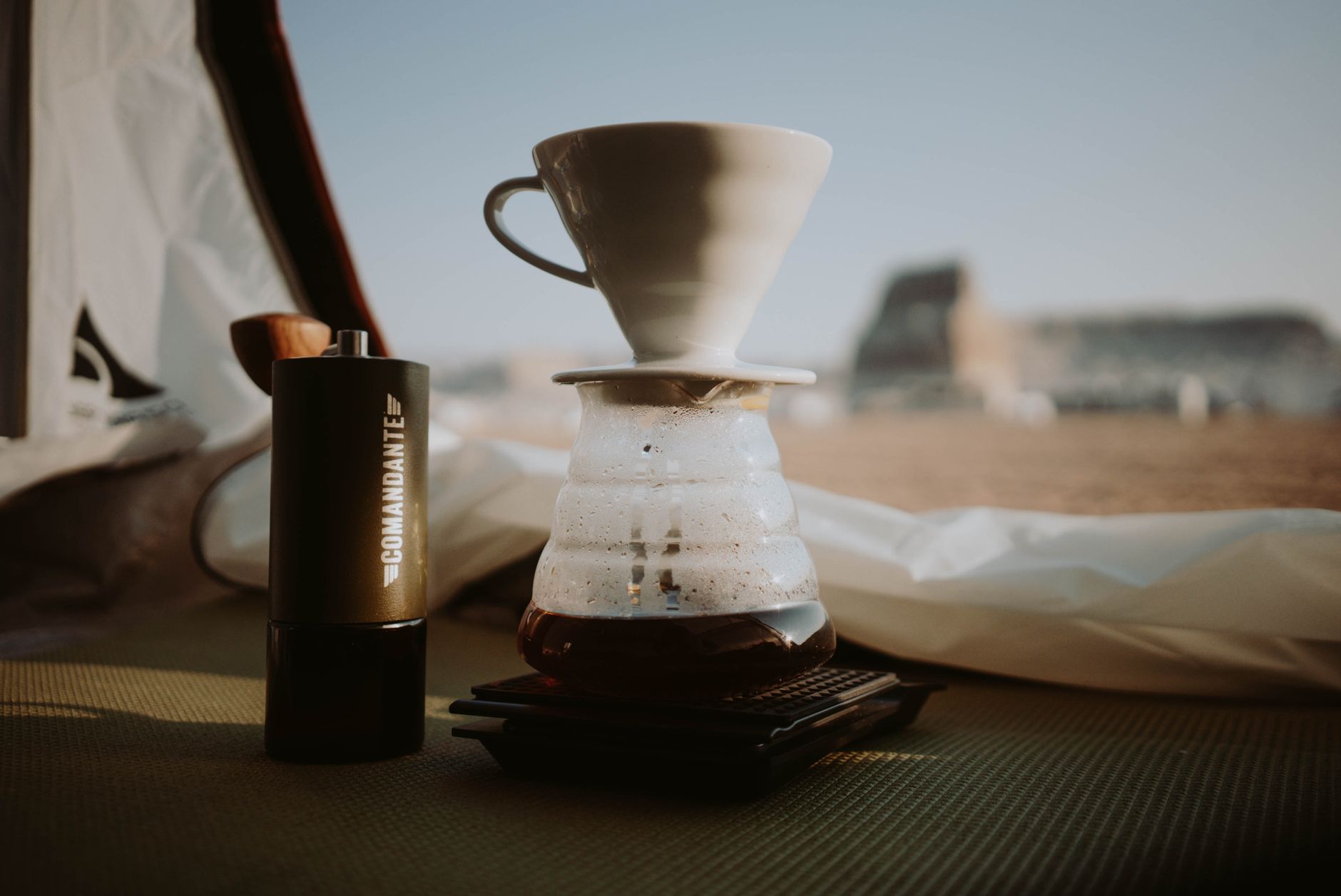 Photo: Dziana Hasanbekava via Pexels
Drip Coffee (Auto or Manual Pour Over)
| Brew Style | Ratio | Coffee (g) | Water (ml) |
|---|---|---|---|
| Light/fruity | 1:15 | 30g | 450ml |
| Balanced (SCA) | 1:16.7 | 30g | 500ml |
| Mild/American | 1:18 | 30g | 540ml |
Start at 1:16 for most filter roasts. Push to 1:15 if the cup tastes thin; pull back to 1:17 if it tastes harsh or astringent.
French Press
The French press full-immersion method extracts aggressively. 1:15 is the practical sweet spot — the longer steep time pulls more from the grounds than a pour over does at the same ratio.
See the full technique breakdown: French Press Coffee: Complete Brewing Guide (Ratios + Technique) | French Press Ratio Calculator
 Photo: Hannoversche Kaffeemanufaktur via Pexels
| Ratio | Character |
|---|---|
| 1:12 | Strong, bold, meal-sized mug |
| 1:15 | Balanced, full body |
| 1:17 | Light, easy drinking |
AeroPress
The AeroPress is intentionally flexible. Inverted or standard, the ratio depends on whether you’re brewing concentrate (add hot water after) or drinking it straight.
| Use | Ratio | Notes |
|---|---|---|
| Concentrate | 1:6–1:8 | Dilute 1:1 with hot water |
| Direct (espresso-style) | 1:8–1:10 | Short, punchy |
| Filter-style | 1:13–1:15 | Standard steep |
Pour Over (V60, Chemex, Kalita)
These methods reward precision. The Hario V60 and Chemex both perform best at 1:15–1:16 with medium-fine to medium grind.
| Dripper | Recommended Ratio | Notes |
|---|---|---|
| Hario V60 | 1:15–1:16 | Highlight acidity and clarity |
| Chemex | 1:15–1:17 | Heavier filter absorbs oils, go tighter |
| Kalita Wave | 1:15–1:16 | Flat bed, forgiving extraction |
Cold Brew
Cold brew uses a coarse grind and long steep (12–24 hours) at room temp or refrigerated. The concentrate ratio is intentionally strong because it’s diluted before serving.
| Style | Ratio | Steep Time |
|---|---|---|
| Concentrate | 1:4–1:5 | 18–24 hrs |
| Ready-to-drink | 1:8 | 12–18 hrs |
Espresso
Espresso ratios work differently — you measure the shot yield (liquid espresso out) against the dry dose in. A 1:2 ratio means 18g in produces 36g out.
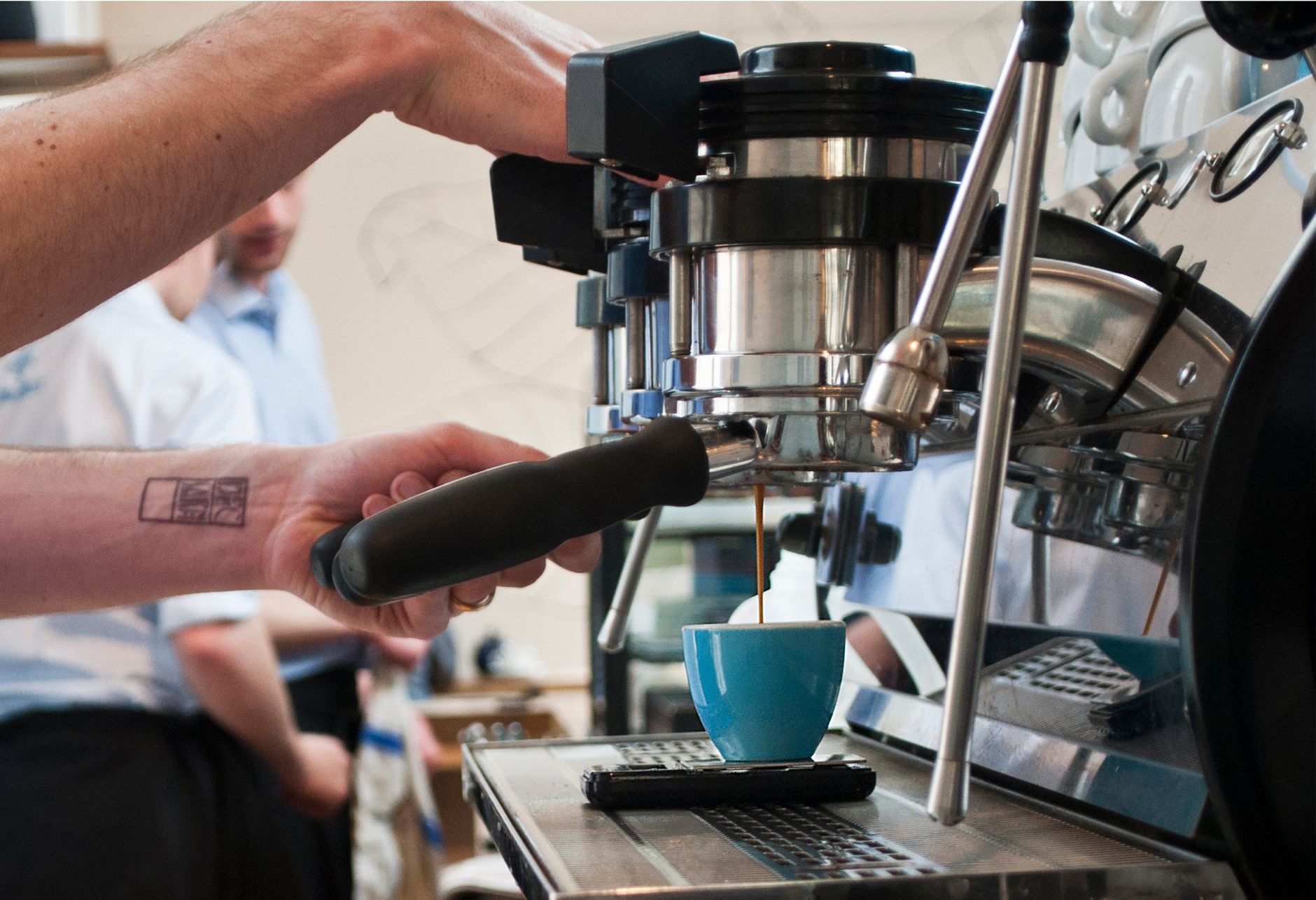 Photo: Amelia Hallsworth via Pexels
| Style | Ratio | Dose | Yield | Character |
|---|---|---|---|---|
| Ristretto | 1:1.5 | 18g | 27g | Dense, syrupy, low bitterness |
| Normale | 1:2 | 18g | 36g | Balanced, full flavor |
| Lungo | 1:3 | 18g | 54g | Extended, thinner, more bitter |
How Ratio Affects Flavor
Ratio controls strength (concentration) — not to be confused with extraction (how much of the coffee is dissolved). You can have a high-ratio weak coffee that’s also over-extracted and bitter, or a low-ratio strong coffee that’s under-extracted and sour.
| Variable | Adjust Ratio | Adjust Grind |
|---|---|---|
| Too weak/thin | Go lower (1:14) | — |
| Too strong | Go higher (1:18) | — |
| Sour/underextracted | — | Finer |
| Bitter/overextracted | — | Coarser |
Ratio and grind are independent levers. Fix one at a time.
Coffee Module B — Brewing Guide
Extraction Parameters (Filter Coffee Reference)
| Parameter | Value |
|---|---|
| Dose | 15–30g (scale to cup size) |
| Yield | 225–480ml brewed coffee |
| Ratio | 1:15–1:17 |
| Time | 3–4 min (pour over), 4 min (French press) |
| Temperature | 93–96°C / 200–205°F (light roast higher) |
| Pressure | N/A (gravity-fed); 9 bar for espresso |
Puck Prep (Espresso)
- Dose to ±0.1g using a dosing funnel
- WDT (Weiss Distribution Technique) — break clumps with a needle tool before tamping
- Level the bed with a distribution tool or the palm tap
- Tamp at consistent pressure, perfectly level — a calibrated tamp like the Normcore eliminates variables
- Pre-infusion — 3–5 seconds at low pressure saturates the puck and reduces channeling
Troubleshooting Matrix
| Symptom | Likely Cause | Fix |
|---|---|---|
| Thin, watery cup | Ratio too high or under-extracted | Lower ratio (1:15) or grind finer |
| Bitter, harsh finish | Over-extracted or ratio too low | Grind coarser or raise ratio |
| Sour, sharp taste | Under-extracted | Grind finer, raise brew temp |
| Espresso runs fast (<20s) | Grind too coarse | Step finer 1 click at a time |
| Espresso runs slow (>35s) | Grind too fine or channeling | Step coarser, check WDT |
| Channeling in puck | Uneven distribution | WDT + level before tamp |
| Inconsistent day-to-day | Measuring by volume | Switch to weight |
→ See also:
- How to Brew Coffee at Home: Complete Method Guide
- French Press Coffee: Complete Brewing Guide (Ratios + Technique)
- French Press Coffee-to-Water Ratio Calculator
FAQ
What is the best coffee-to-water ratio for beginners? Start with 1:16 — 15g coffee to 240ml water — for any filter method. It’s the midpoint of the SCA’s recommended range and gives you a balanced cup to calibrate from. Adjust from there once you know which direction you want to go.
Does coffee-to-water ratio change for dark vs. light roast? Yes. Dark roasts extract faster and taste stronger at the same ratio. Use a slightly higher ratio (1:17–1:18) with dark roasts to avoid bitterness. Light roasts often need a tighter ratio (1:14–1:15) and higher water temperature to get full extraction.
Can I use tablespoons instead of grams? You can, but it’s imprecise. A standard guideline is 1–2 tablespoons per 6oz of water, but grind size changes the weight per tablespoon significantly. If consistency matters, use a scale — they cost less than a bag of specialty coffee.
Why does my coffee taste different even at the same ratio? Grind size, water temperature, pour technique, and water quality all affect extraction independently of ratio. Two cups brewed at 1:16 with different grinders will taste different. Lock in ratio first, then dial in grind.
What coffee-to-water ratio do specialty cafes use? Most specialty shops brew filter at 1:15–1:16 and pull espresso at 1:2 to 1:2.5. Some light-roast-focused cafes push espresso to 1:3 (lungo-style) to highlight fruit notes. Competition baristas often go as tight as 1:1.5 for ristretto-style shots.
Does the ratio matter for cold brew? Yes, and it matters more than in hot brewing because you have no temperature lever to adjust extraction. Cold brew at 1:4–1:5 for concentrate (dilute before drinking), or 1:8 for ready-to-drink. Going too loose produces a flat, hollow cup no amount of steeping time fixes.
Editorial methodology: Assessments are based on manufacturer specifications, published user reviews, and editorial research. Physical hands-on testing is noted explicitly where it occurred. Rankings reflect our editorial judgment and are not influenced by affiliate commission rates. Full editorial policy · Affiliate disclosure