Contents
Turkish Coffee Guide: How to Make It at Home
TL;DR: To make Turkish coffee, combine finely ground coffee and cold water in a cezve (ibrik), heat slowly until foam rises — twice — then pour without filtering. The result is thick, intensely flavored coffee with sediment that settles at the bottom of the cup. No espresso machine, no filters, no fuss.
What Is Turkish Coffee and Why Does It Taste Different?
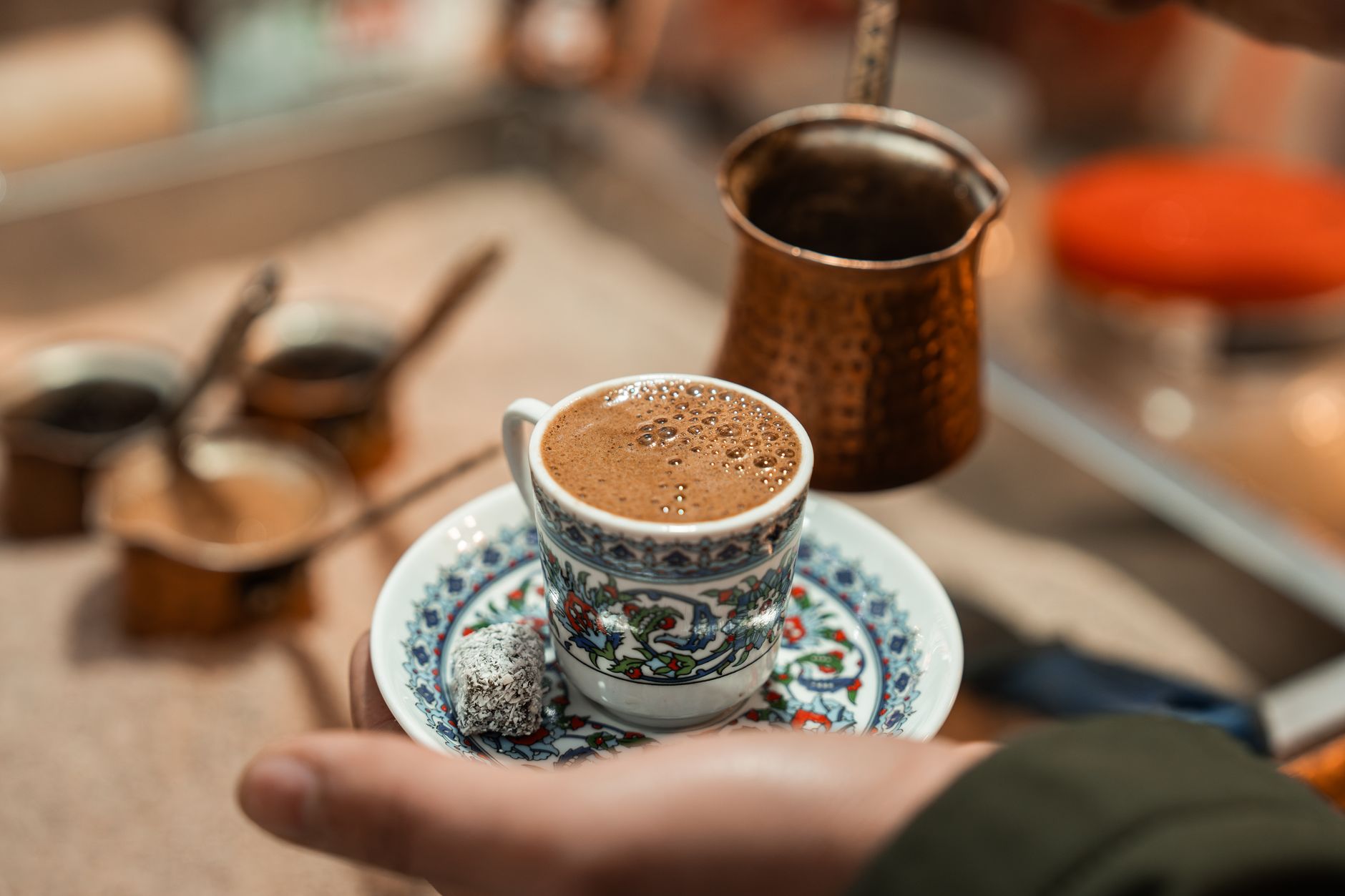
Turkish coffee is unfiltered, simmered (never boiled) ground coffee served with its grounds. The ultra-fine grind — finer than espresso — means the coffee brews directly in the cup. That sediment isn’t a flaw; it’s the method. The low, slow heat preserves delicate aromatics that paper filters strip away.
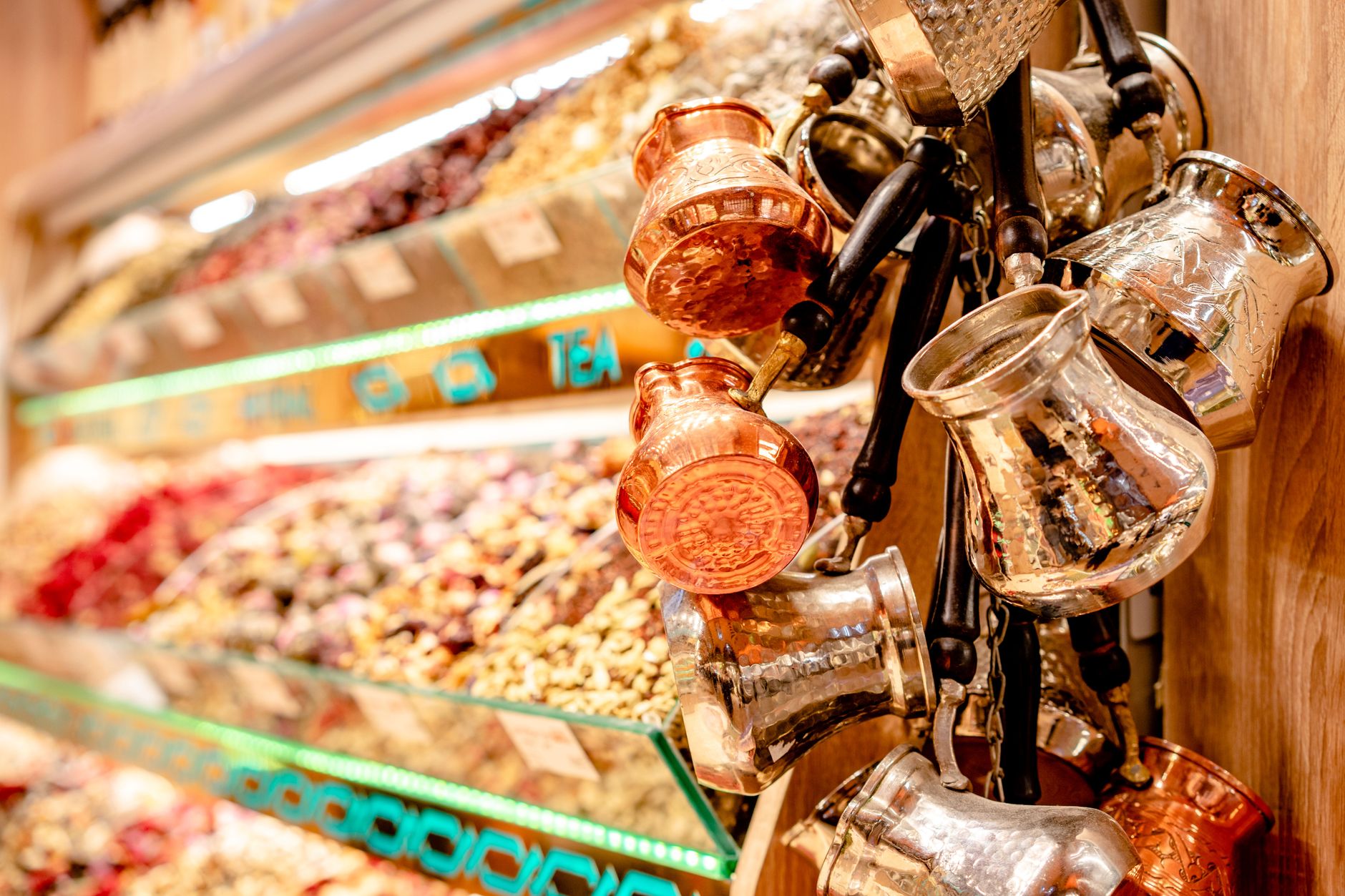 Photo: Atlantic Ambience via Pexels
The flavor profile is heavy-bodied, slightly syrupy, and intensely aromatic. Origin matters more here than in filtered methods because nothing masks the bean’s character. A washed Ethiopian adds floral brightness; a natural Brazilian reads chocolatey and round. Medium roast hits the sweet spot — dark roast turns bitter fast at this extraction intensity.
The grind must be powdery, close to talc. A standard burr grinder won’t get there. Either ask your roaster to grind it for Turkish, or invest in a grinder with a Turkish setting.
Equipment You Actually Need
You need a cezve (also called ibrik), cold water, and Turkish-ground coffee. That’s it. Stovetop works fine; sand or electric cezve heaters give more control but aren’t required.
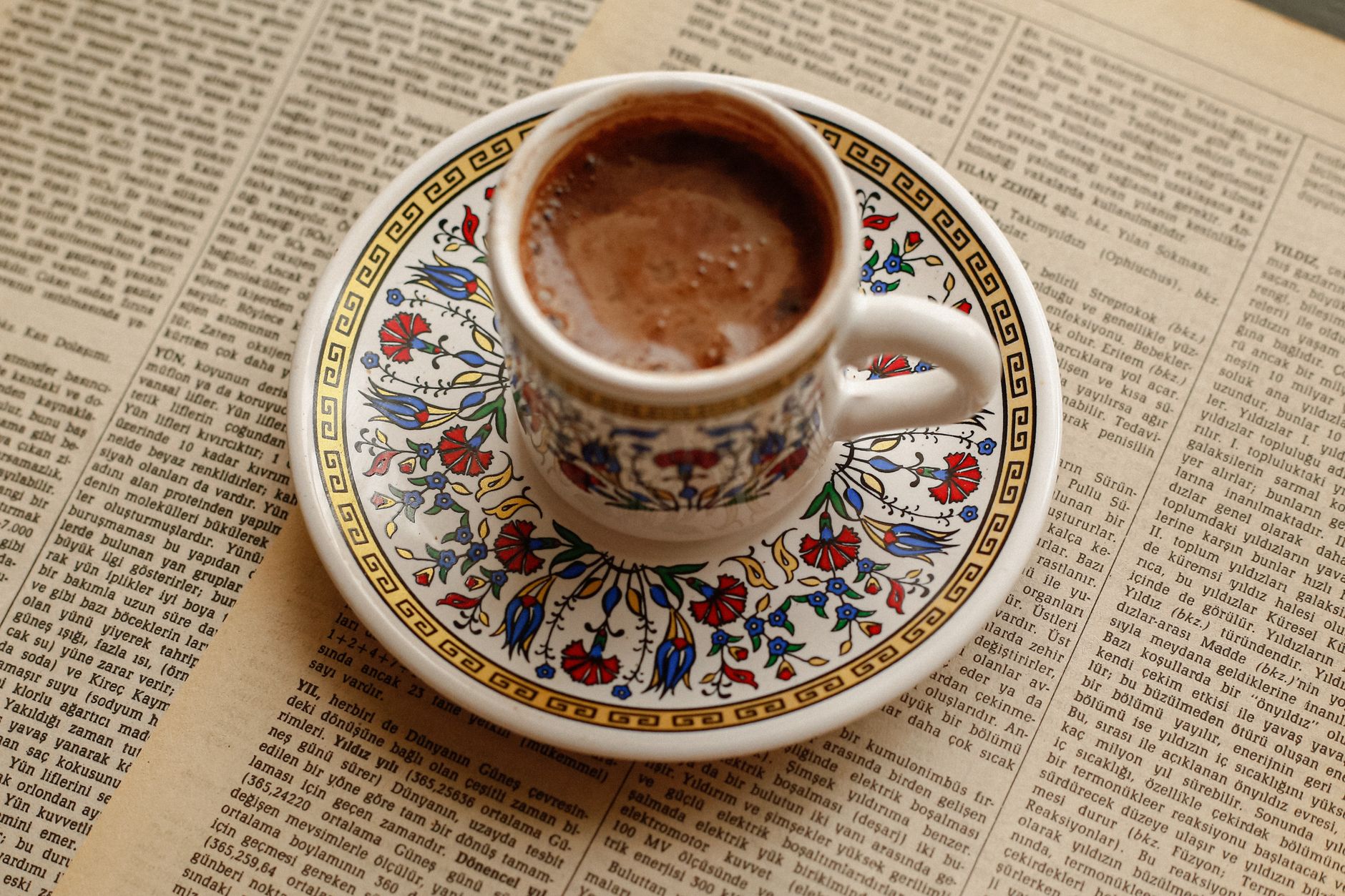 Photo: betül nur akyürek via Pexels
| Item | Minimum | Better |
|---|---|---|
| Cezve | Any small saucepan | Copper or brass cezve sized for 1–2 cups |
| Grinder | Pre-ground Turkish coffee | Grinder with Turkish setting |
| Heat source | Gas or electric stovetop | Sand heater or induction with low simmer |
| Cup | Any small cup | Demitasse (60–90 ml) |
Cezve size matters: brewing 1 cup in a 4-cup cezve gives you no foam because the surface area is too large relative to liquid volume. Match the vessel to your batch size.
How to Make Turkish Coffee: Step-by-Step
Add cold water to the cezve first, then coffee (and sugar if using), stir once, then heat on the lowest flame until foam mounts to the rim — twice. Never boil. Pour the foam into the cup first, then the coffee slowly.
 Photo: Samer Daboul via Pexels
Extraction Parameters
| Parameter | Spec |
|---|---|
| Dose | 7–8 g per 60 ml water |
| Yield | ~60 ml (no yield loss — unfiltered) |
| Ratio | 1:7.5 to 1:8 |
| Time | 3–5 minutes total |
| Temperature | Never above 85–90°C (stop before full boil) |
| Pressure | None — gravity brew |
The Process
- Measure 60 ml cold water per cup into the cezve.
- Add 7–8 g Turkish-ground coffee. Add sugar now if you want it (sade = no sugar, az şekerli = light, orta = medium, çok şekerli = sweet).
- Stir once to wet the grounds. Don’t stir again.
- Place over the lowest heat setting.
- Watch for foam to slowly form and rise. When it reaches the rim, remove from heat for 10 seconds.
- Return to heat. Allow foam to rise a second time.
- Pour — foam first into the cup, then the coffee in a slow stream.
- Wait 2 minutes for grounds to settle before drinking.
Puck Prep (Puck = the ground bed in the cezve)
- No WDT needed — the single stir distributes grounds adequately
- No tamping — grounds sink naturally
- Channeling prevention — low, even heat is the only variable to control
- Pre-infusion equivalent — the initial cold-water saturation before heat begins serves this role
Troubleshooting
| Symptom | Likely Cause | Fix |
|---|---|---|
| No foam forms | Heat too high, grounds too coarse, or stale coffee | Lower heat; verify grind is talc-fine; use fresher beans |
| Bitter, harsh taste | Boiled instead of simmered, or over-extracted | Pull off heat before foam breaks; reduce time |
| Thin, watery body | Too little coffee or grind too coarse | Increase dose to 8 g; recheck grind fineness |
| Grounds in every sip | Poured too fast or didn’t wait | Pour slower; wait full 2 min for settlement |
| Foam collapses immediately | Stirred after heating or heat too high | Never stir once on heat; use the lowest flame |
| Muddy, gritty aftertaste | Grind too coarse (not fine enough to compact) | Turkish grind must be finer than espresso — recheck |
Turkish Coffee vs. Other Brewing Methods
 Photo: Sena via Pexels
| Method | Grind | Filter | Body | Brew Time | Equipment Cost |
|---|---|---|---|---|---|
| Turkish | Talc-fine | None | Very heavy | 4–5 min | Low |
| French Press | Coarse | Metal (partial) | Heavy | 4 min | Low |
| Espresso | Fine | Portafilter basket | Heavy | 25–30 sec | High |
| Pour Over | Medium | Paper | Light–medium | 3–4 min | Low |
Turkish coffee and French press are the two closest unfiltered methods, but Turkish is far more concentrated and the grind is incomparably finer. If you’re coming from French press, expect a shorter, more intense cup.
→ See also
- How to Brew Coffee at Home: Complete Method Guide
- French Press Coffee: Complete Brewing Guide (Ratios + Technique)
- French Press Coffee-to-Water Ratio Calculator
FAQ
What grind size is needed for Turkish coffee? Turkish coffee requires the finest grind of any brew method — finer than espresso, almost talc-like. Most home burr grinders can’t reach this fineness. Either buy pre-ground Turkish coffee or use a hand grinder that explicitly lists a Turkish setting, like the Timemore Chestnut series.
Can you make Turkish coffee without a cezve? Yes. A small saucepan works — the physics are identical. You lose some control over heat distribution and it’s harder to manage foam in a wider vessel, but the result is functionally the same. A 200 ml saucepan for a single serving is about right.
Do you drink the grounds in Turkish coffee? No — you let them settle. After pouring, wait at least 2 minutes. A well-brewed cup leaves a compact mud layer at the bottom that stays put as long as you don’t agitate the cup. Stop drinking when you taste the thickness of the settled layer approaching.
Why does Turkish coffee foam matter so much? Foam (called köpük) is the traditional quality signal — a foamless cup is considered poorly made. Functionally, foam indicates you preserved the volatile aromatics by keeping temperature below boiling. A thick, stable foam also slightly insulates the cup and improves mouthfeel.
Can you add milk to Turkish coffee? Traditionally, no. The fine sediment reacts unpredictably with milk and the flavor balance — designed around the coffee’s own sweetness and bitterness — changes significantly. If you want a milky cup, French press or moka pot are better starting points.
Is Turkish coffee stronger than espresso? By caffeine per ml, yes — a 60 ml Turkish coffee contains roughly the same caffeine as a double espresso (80–100 mg) but at a lower concentration per sip because of the larger volume. By flavor intensity, they’re comparable; Turkish is more aromatic and herbal where espresso is more roasty and dense.
Editorial methodology: Assessments are based on manufacturer specifications, published user reviews, and editorial research. Physical hands-on testing is noted explicitly where it occurred. Rankings reflect our editorial judgment and are not influenced by affiliate commission rates. Full editorial policy · Affiliate disclosure