Contents
Espresso Machine Pressure Gauge Explained
TL;DR: An espresso machine pressure gauge measures the pressure in bars your machine generates during extraction. Optimal espresso pulls at 9 bars of brew pressure — most gauges on home machines read boiler pressure, not brew pressure. Knowing which one yours shows changes how you use it.
What an Espresso Machine Pressure Gauge Actually Measures
Most home espresso machines ship with a single gauge that reads boiler pressure, not brew pressure. These are different things. Boiler pressure tells you steam availability; brew pressure tells you extraction quality. A few machines include both — those are the ones worth learning from.
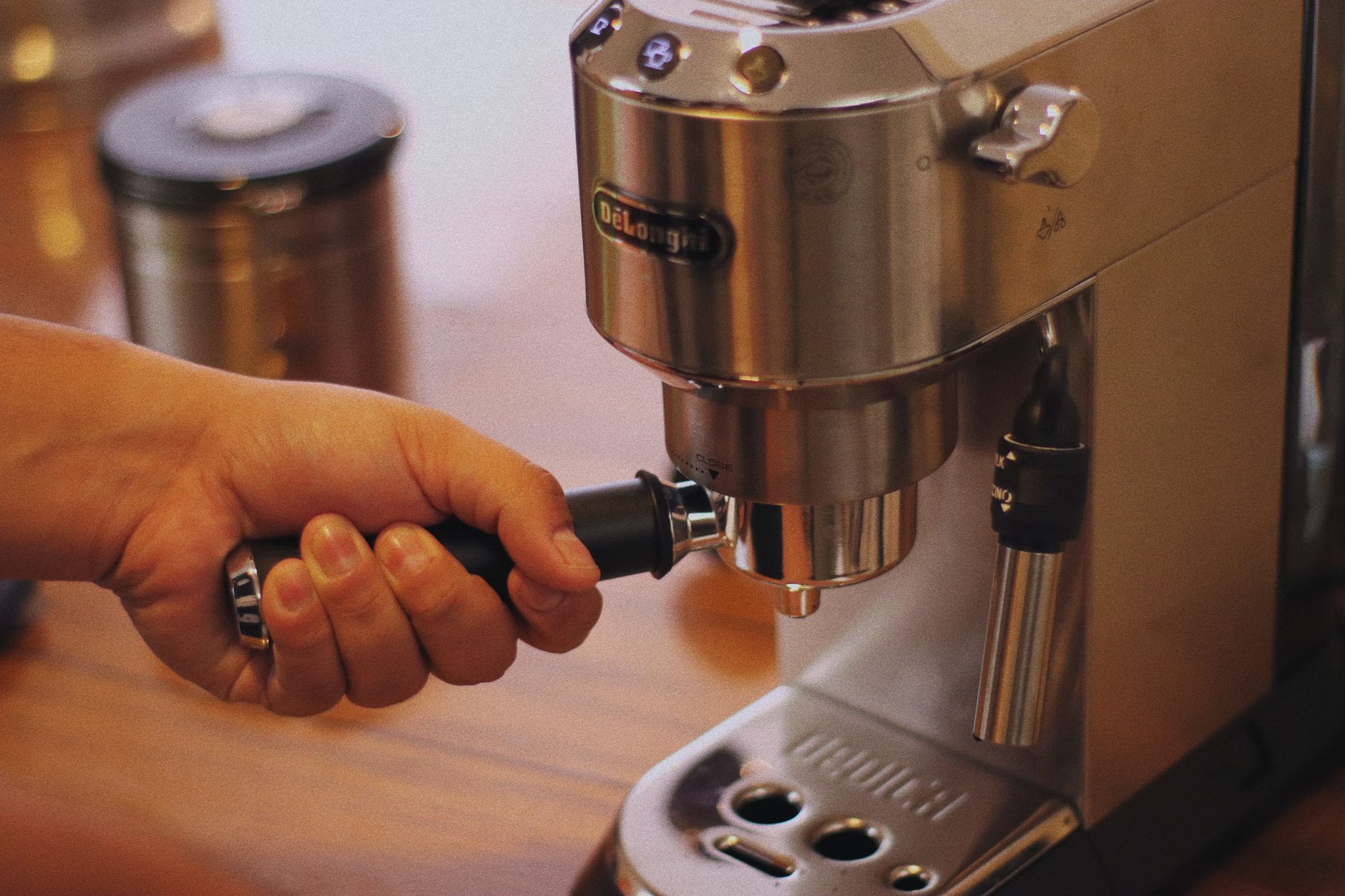 Photo: Braulio Enrique Bedolla Martinez via Pexels
Your machine’s gauge needle swings across a dial marked in bars. Bar is a unit of pressure roughly equal to atmospheric pressure at sea level. Espresso extraction targets 9 bars — a spec set by the Istituto Nazionale Espresso Italiano and reinforced by decades of commercial machine design.
The confusion starts because single-boiler and thermoblock machines often only have one gauge. That gauge typically shows boiler or steam pressure, which peaks around 1–1.5 bar during normal operation. When you hit the brew switch, that number doesn’t jump to 9 — because the pump pressure isn’t what this gauge is showing.
Dual-boiler and E61 group machines frequently include a separate brew pressure gauge or a combined gauge with two needles. That second reading — the one that climbs when you pull a shot — is the one that tells you something about your extraction.
Boiler Pressure vs. Brew Pressure
Boiler pressure governs steaming. Brew pressure governs extraction. They’re generated by separate systems — the boiler’s thermal expansion versus the pump’s mechanical force — and conflating them leads to chasing the wrong number.
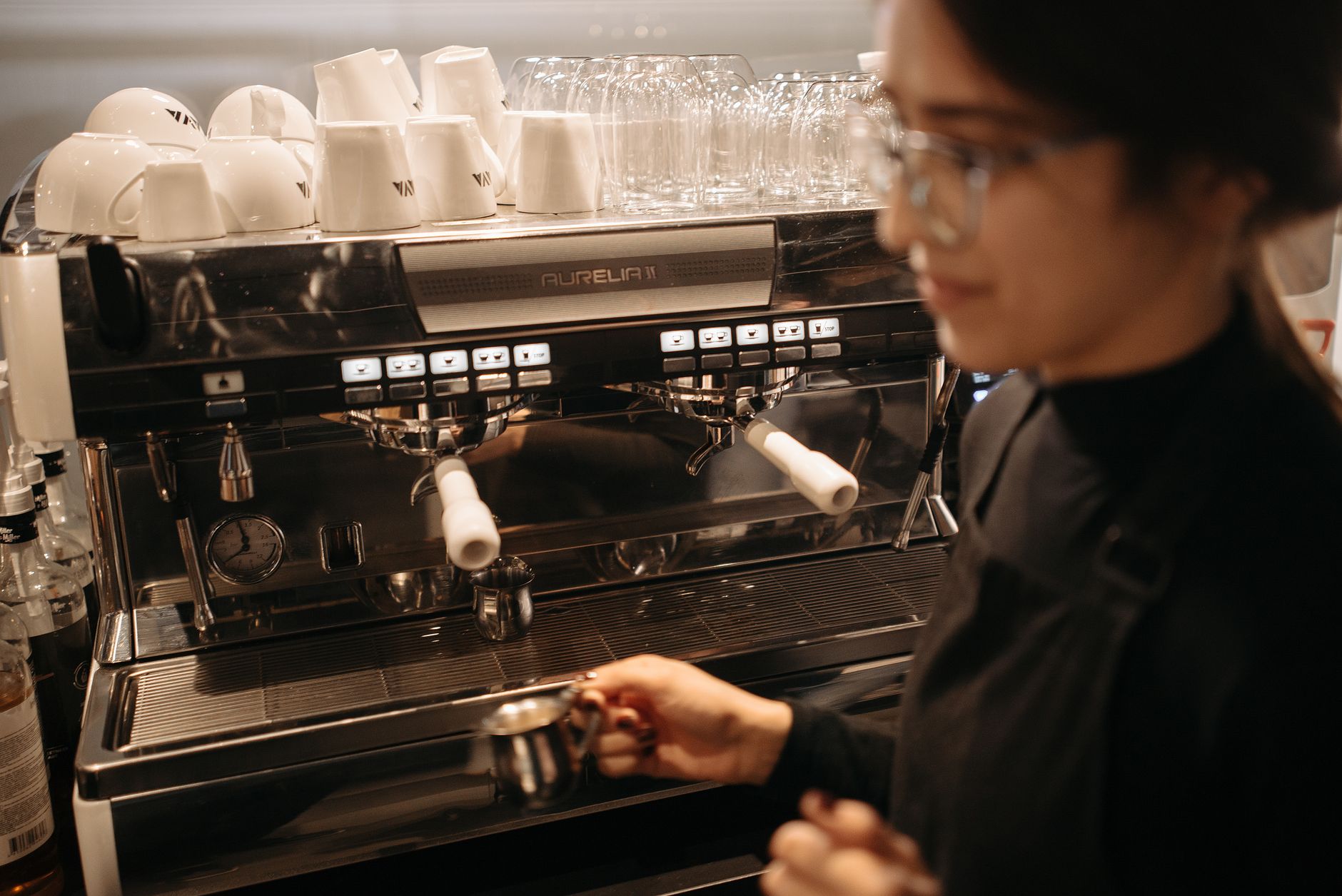 Photo: Pavel Danilyuk via Pexels
Boiler Pressure
Steam boilers maintain pressure between 0.8 and 1.5 bar. This pressure is what pushes steam through the wand. On a single-boiler machine, this is what your gauge reads. The thermostat or pressurestat controls it — turn the pressurestat up and you get hotter, more aggressive steam.
This number doesn’t need to be 9. A reading of 1 bar at the boiler is completely normal and correct.
Brew Pressure
The pump — almost always a vibration pump (ULKA or similar) or a rotary pump on prosumer machines — generates brew pressure independently of the boiler. Vibration pumps are rated at 15 bar but are typically restricted to 9 bar via an OPV (over-pressure valve). Rotary pumps are dialed in at the pump head.
If your machine has a brew pressure gauge, you’ll see it climb from 0 to somewhere in the 8–10 bar range during the shot. A well-dialed single-origin might sit at 9 bar; an intentionally low-pressure pre-infusion phase might hold at 4–6 bar before ramping up.
Reading the Gauge: What’s Normal
A gauge sitting in the green zone during a shot — typically marked 8–10 bar on machines that show brew pressure — indicates the pump and OPV are working as intended. Numbers outside this range point to specific, diagnosable problems.
 Photo: Ketut Subiyanto via Pexels
| Reading | What It Means |
|---|---|
| 0 bar (no shot running) | Normal — pump is off |
| 1–1.5 bar (steaming) | Normal boiler pressure |
| 7–8 bar (shot running) | Slightly under, check grind or OPV |
| 9 bar (shot running) | Target — well calibrated |
| 11–13 bar (shot running) | Over-pressure — OPV needs adjustment or grind too fine |
| 15 bar (shot running) | OPV bypassed or failed — back-flush immediately |
Over-pressure is more common than under-pressure on cheap machines. Entry-level machines like the Breville Bambino Plus
Machines With Brew Pressure Gauges
Not all gauges are equal. A machine showing brew pressure — the actual force at the puck — gives you real-time feedback on extraction. A machine showing only boiler pressure gives you steam availability information.
| Machine | Gauge Type | OPV Adjustable | Best For |
|---|---|---|---|
| Gaggia Classic Pro |
E61 group machines — the Lelit, ECM, Profitec — typically mount the brew gauge on the group itself, reading pressure at the puck rather than upstream at the pump. This is more accurate and shows pre-infusion behavior clearly.
Adjusting Brew Pressure
If your gauge shows consistent over- or under-pressure, the OPV is the fix — not the grind. Grind adjustments compensate for pressure errors but introduce other extraction variables. Set the OPV correctly first, then dial in grind.
Most vibration pump machines have an accessible OPV screw. Turning it clockwise increases resistance, raising pressure; counter-clockwise lowers it. You’ll need a blind basket and a pressure gauge or portafilter manometer kit to calibrate accurately — guessing by shot taste alone is unreliable.
Rotary pump machines typically have a pressure adjustment at the pump head. These are more stable and consistent than vibration pumps, which can vary 0.5–1 bar shot-to-shot.
→ See also:
- The Complete Guide to Espresso Machines (2026)
- Best Espresso Machine Under $200 (2026)
- Best Espresso Machine Under $500 (2026)
FAQ
What should an espresso machine pressure gauge read during a shot? Brew pressure should read 9 bar during active extraction. If your machine only has a boiler gauge, you’ll see 1–1.5 bar during steaming and the needle won’t move meaningfully during a shot — that’s normal.
Why does my espresso machine gauge read 15 bar? Most 15-bar claims are pump ratings, not brew pressure. The OPV restricts actual brew pressure to 9 bar. If your gauge is actually hitting 15 bar at the puck, the OPV is either set too high or has failed — adjust or replace it before pulling more shots.
Can I use the pressure gauge to diagnose extraction problems? Yes, if it reads brew pressure. Sour, fast shots with low pressure suggest grind too coarse or a channeling puck. Bitter, slow shots with high pressure suggest grind too fine or tamping too hard. A consistently off reading (outside 8.5–9.5 bar) points to OPV miscalibration.
Does pressure gauge placement matter? Yes. A gauge reading at the pump reads higher than one at the group head, because pressure drops across the E61 group or brew path. Group-mounted gauges (common on E61 machines) give the most accurate picture of what the coffee puck actually sees.
Editorial methodology: Assessments are based on manufacturer specifications, published user reviews, and editorial research. Physical hands-on testing is noted explicitly where it occurred. Rankings reflect our editorial judgment and are not influenced by affiliate commission rates. Full editorial policy · Affiliate disclosure