Contents
Espresso Machine No Pressure: Fix It Fast
TL;DR: An espresso machine with no pressure almost always has one of four causes: a clogged portafilter or group head, incorrect grind size, a failing pump, or a blocked steam wand/OPV valve. Most fixes take under ten minutes with no tools required. This guide walks through every cause in order of likelihood.
Why Your Espresso Machine Has No Pressure
The pump generates pressure — but a blockage, wrong grind, or worn component somewhere between the water tank and your cup kills it before it builds. Start with the simplest checks: is the portafilter seated correctly, and is your grind fine enough? Nine out of ten “no pressure” calls end there.
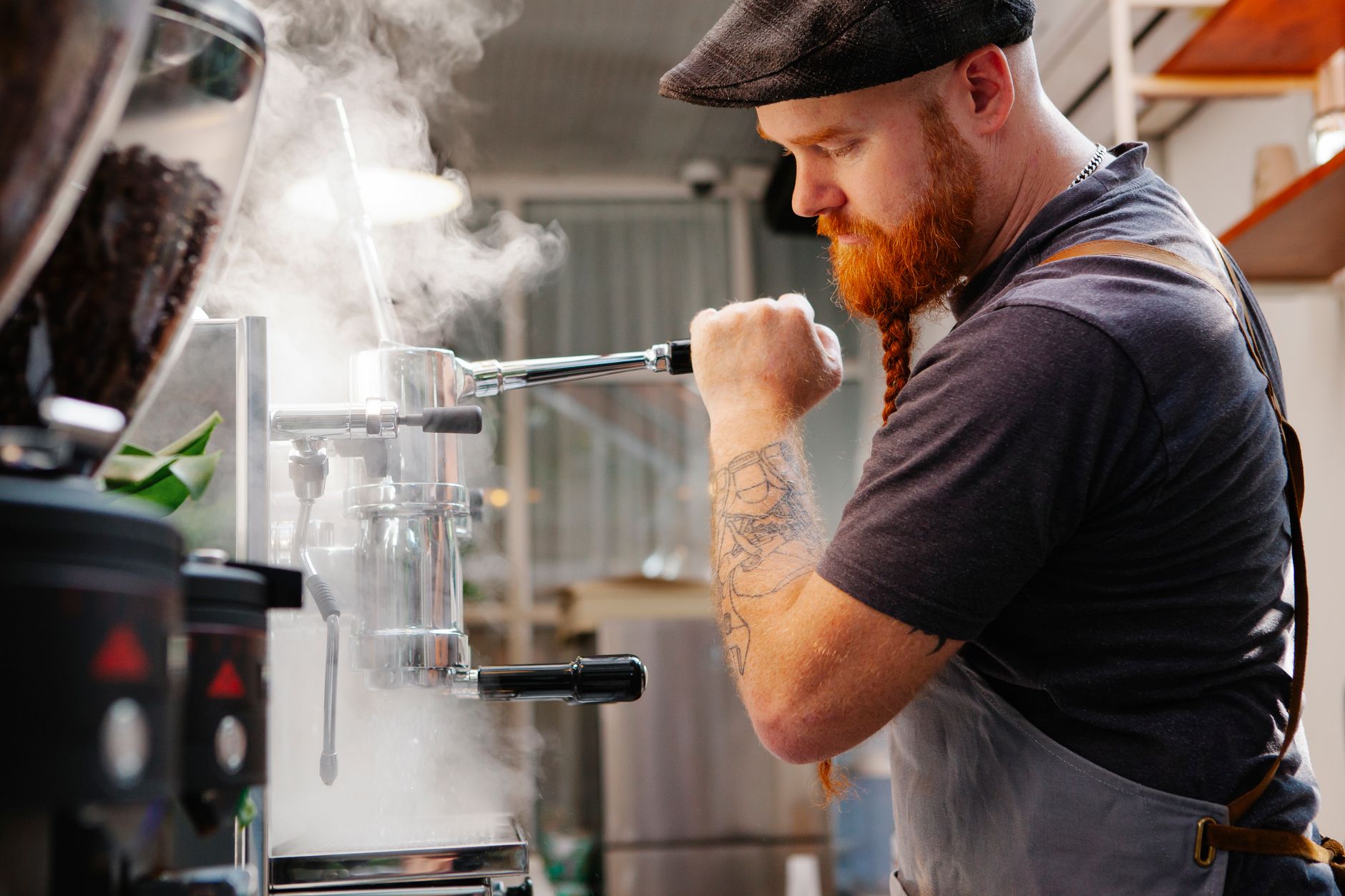 Photo: Tim Douglas via Pexels
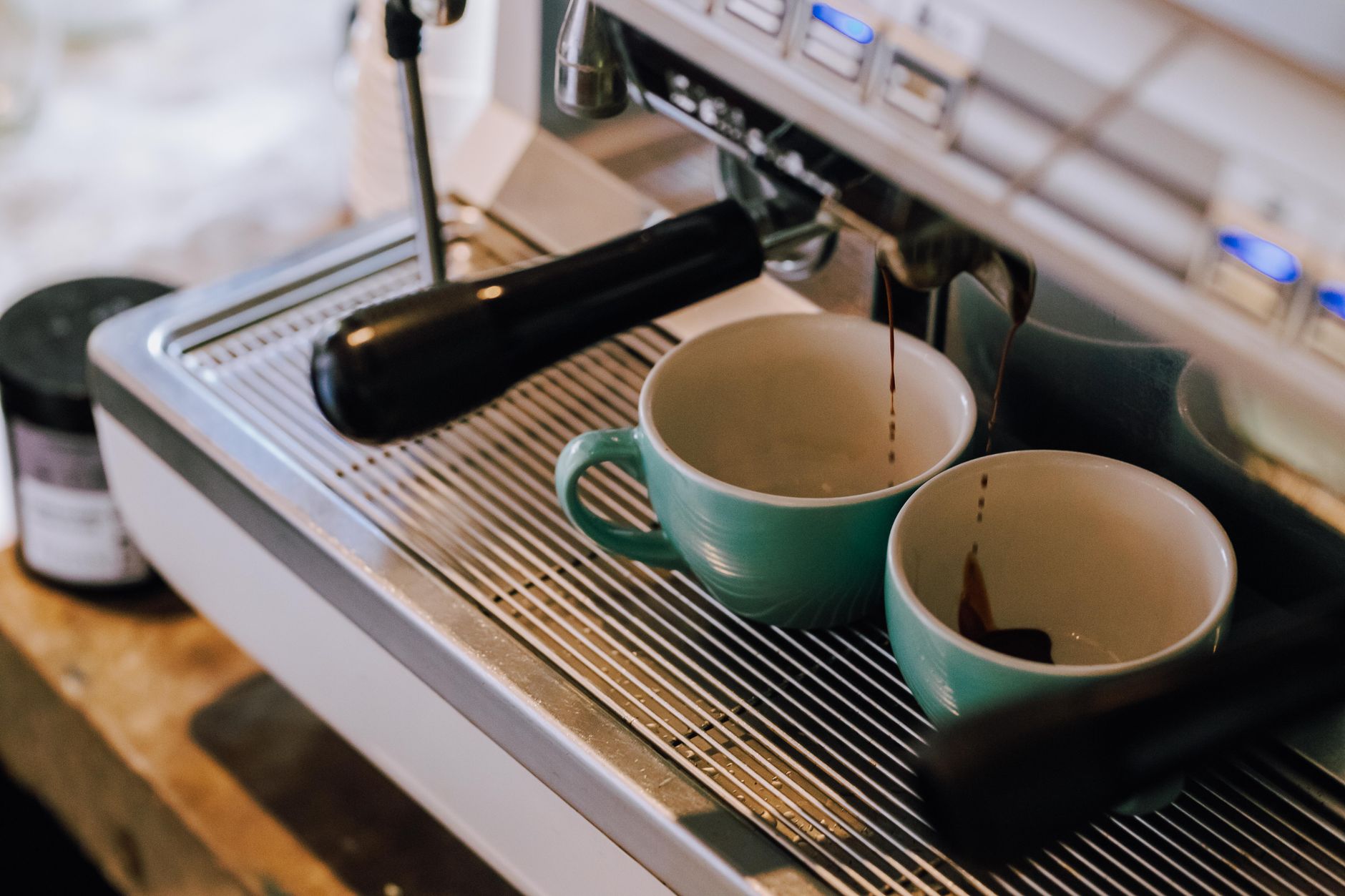
Pressure in an espresso machine works like a sealed hydraulic system. Water gets pushed through a bed of compacted coffee at 9 bars. Any leak, blockage, or insufficient resistance in that chain drops pressure — sometimes to zero.
The symptoms split into two categories:
- No flow at all — pump runs but nothing comes out, or pump sounds different
- Weak flow, no crema — water passes through too fast, shot is watery and flat
Each points to a different root cause.
Grind Size: The Most Common Culprit
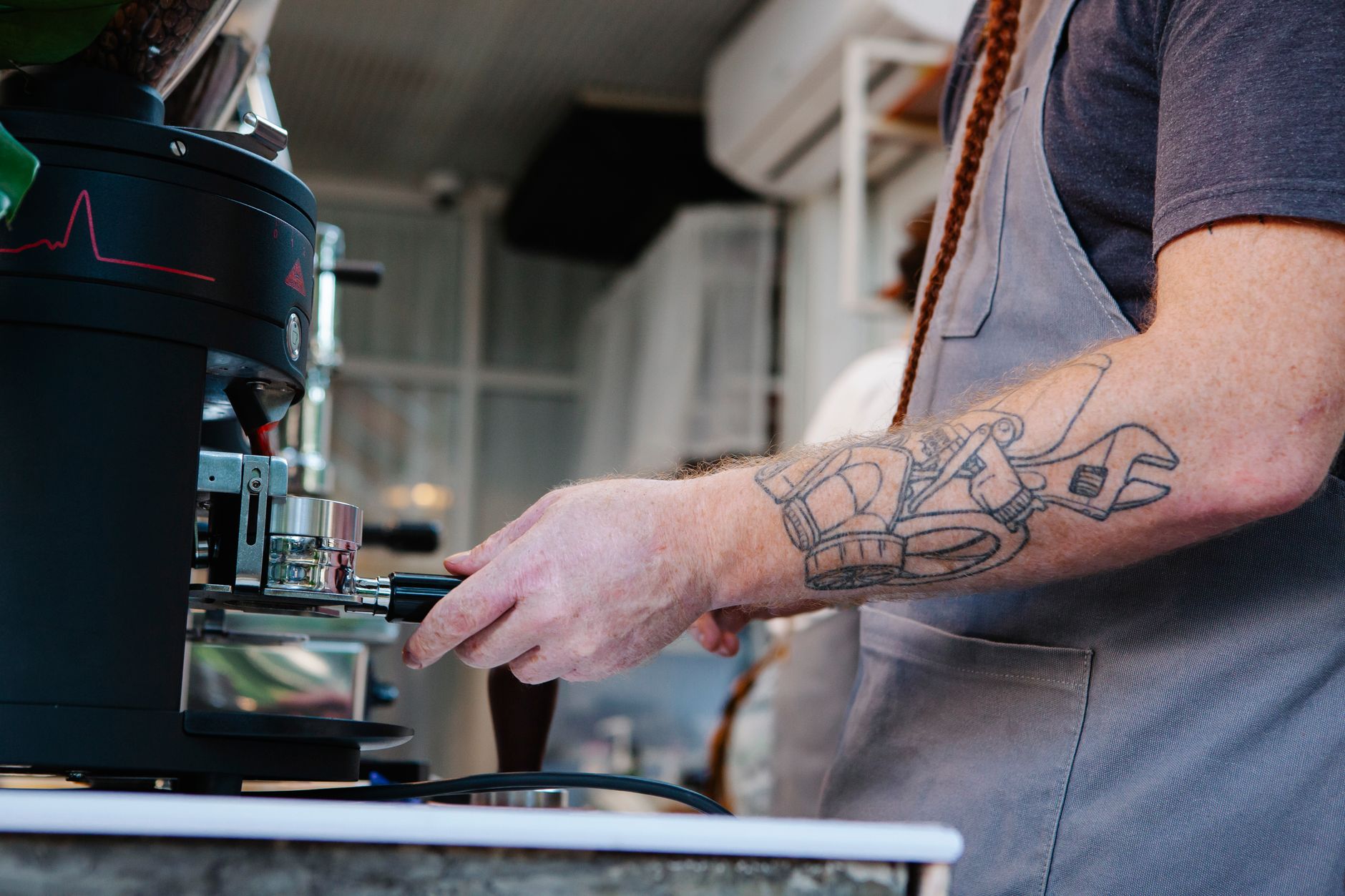
If your grind is too coarse, water blasts through with no resistance — you get fast, watery espresso with zero crema. Too fine and the pump strains against a blocked puck. The target is 25–30 seconds for a 1:2 ratio shot. Start here before assuming hardware failure.
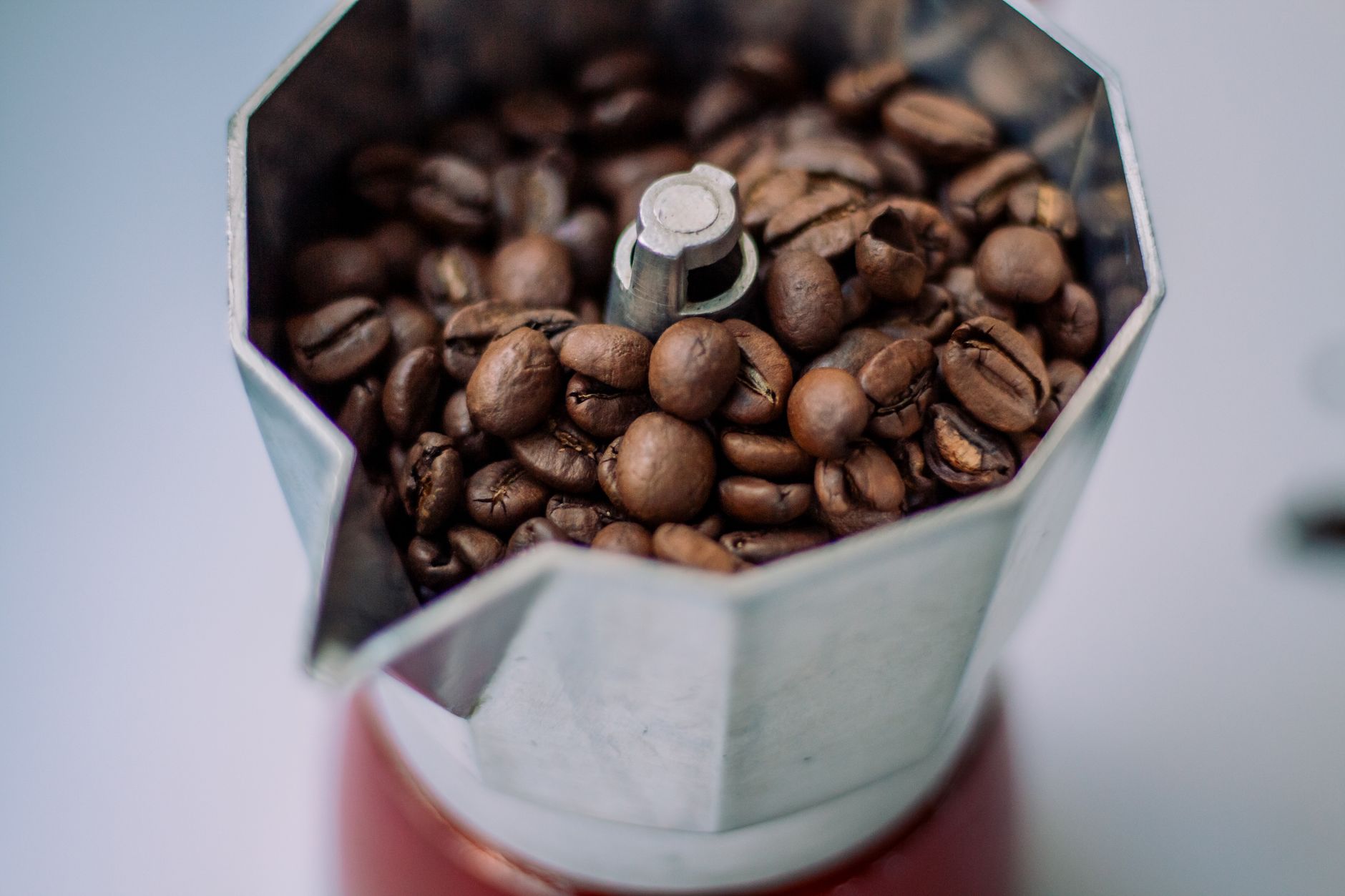 Photo: Sedanur Kunuk via Pexels
A single half-step on your grinder changes shot time by 5–10 seconds. If you recently:
- Switched coffee bags
- Changed roast level (lighter roasts often need finer)
- Had someone else use the grinder
…your grind likely shifted. Dial it finer in small increments, pull a shot, repeat.
| Symptom | Grind Direction |
|---|---|
| Shot runs in under 15 sec, watery | Go finer |
| Pump strains, barely any flow | Go coarser |
| Shot runs 25–35 sec, good crema | You’re dialed in |
Portafilter, Basket, and Puck Issues
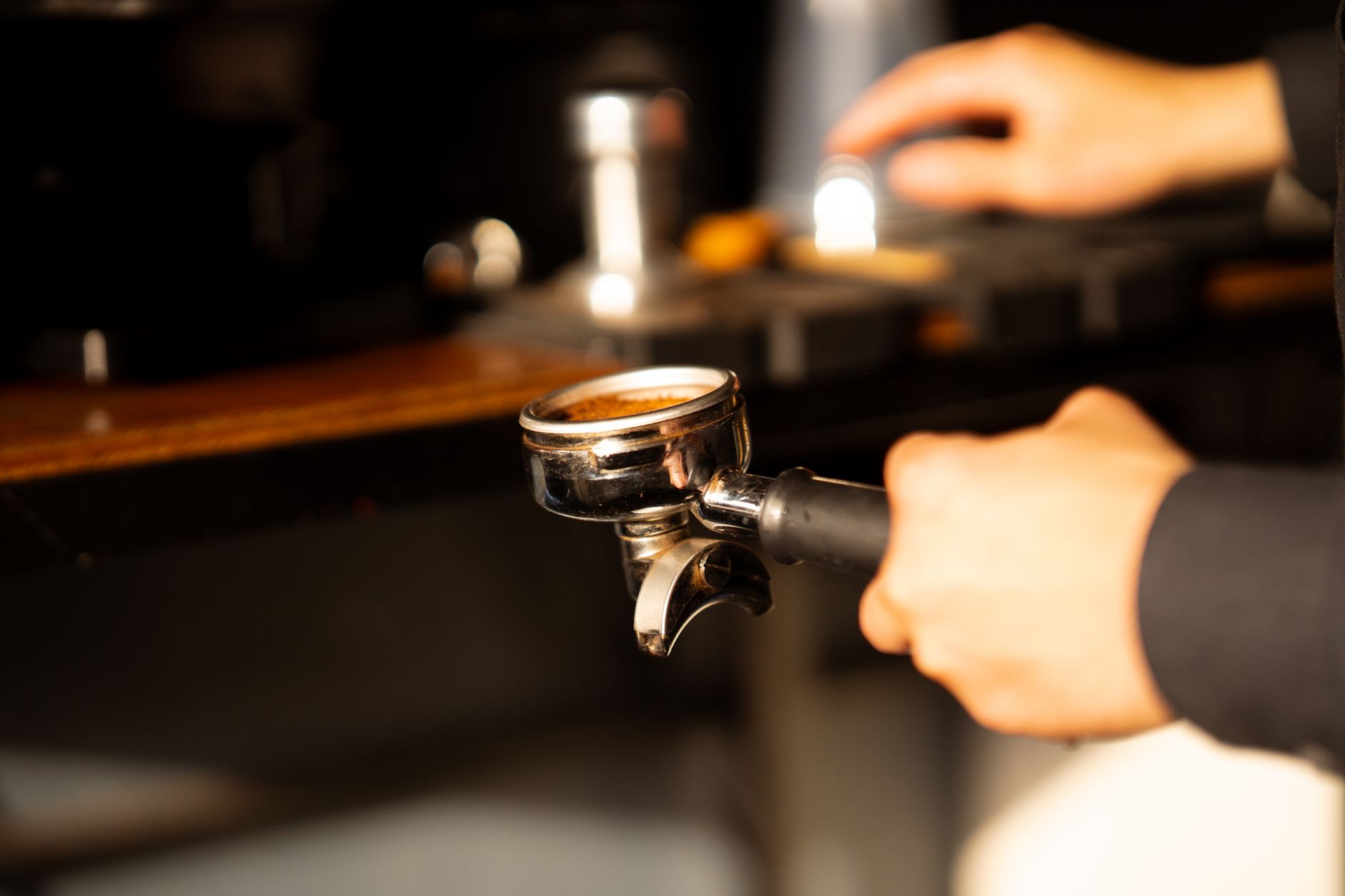
A channeling puck, cracked basket gasket, or incorrectly dosed basket bypasses pressure around the coffee rather than through it. Lock the portafilter fully — you should feel resistance — distribute the grounds evenly, and tamp level with ~15 kg of pressure.
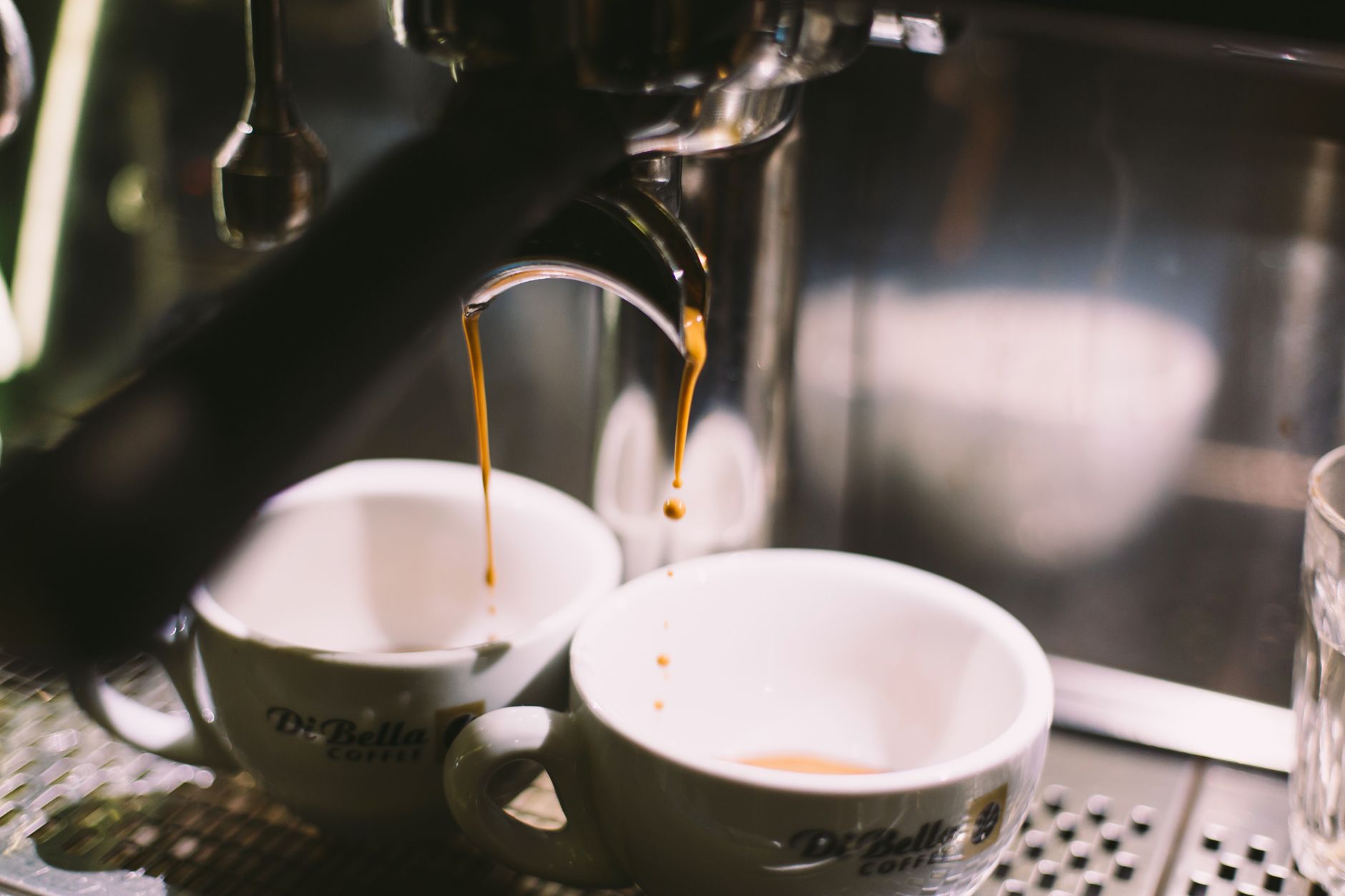 Photo: Di Bella Coffee via Pexels
Basket fit and dosing
Overfilling or underfilling the basket is the second most common cause. A basket that’s 80% full has room for the puck to shift. A stuffed basket prevents the shower screen from seating properly. Weigh your dose — single baskets typically take 7–9 g, doubles 14–18 g.
Group head gasket
The rubber gasket that seals the portafilter to the group head hardens over time. If it’s cracked or deformed, pressure bleeds out sideways. Signs: you can wiggle the portafilter after locking, or you see steam escaping from the sides during a shot. Replacement gaskets cost under $10 and press in by hand on most machines.
Pump Problems
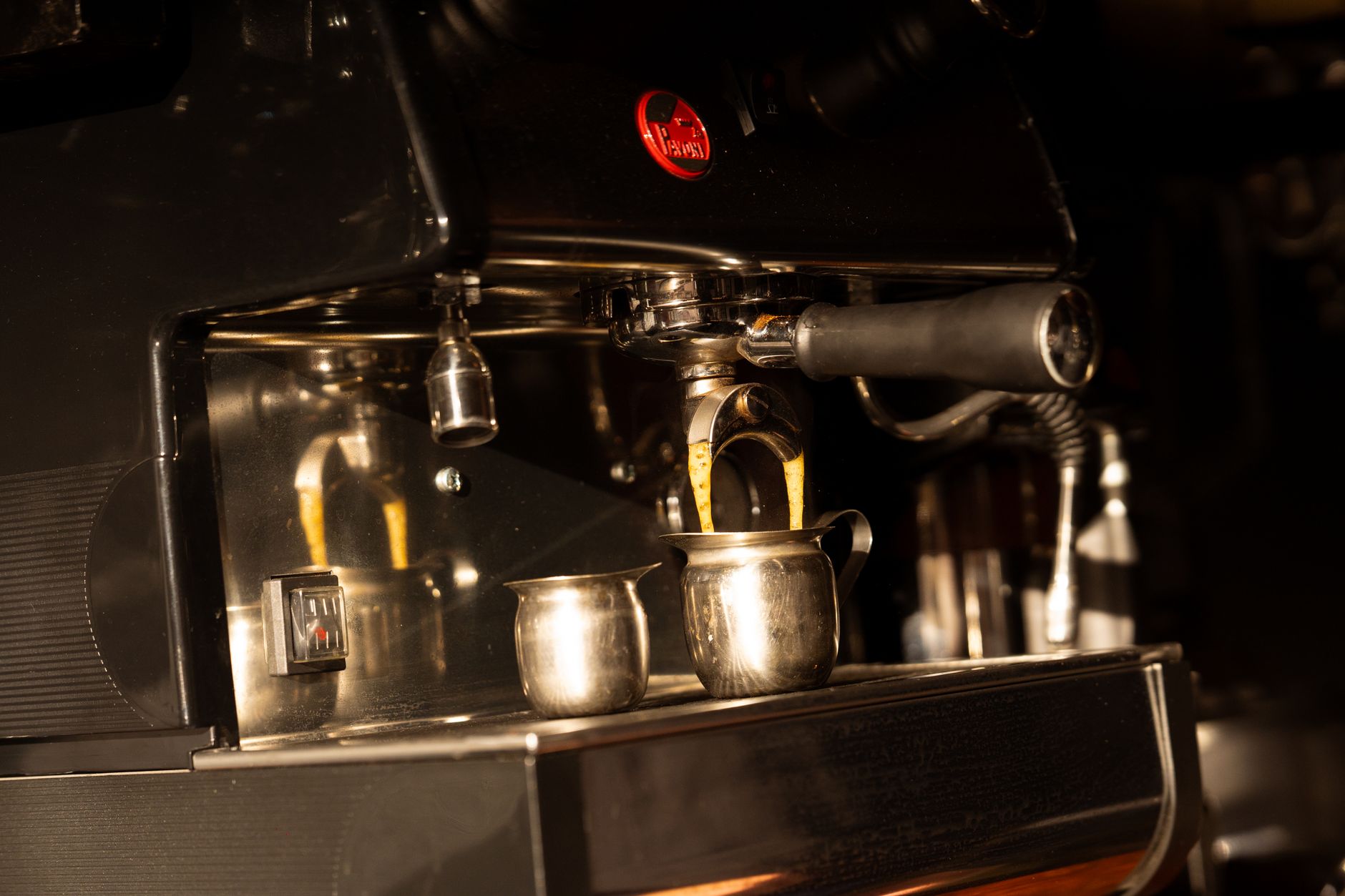
A pump that hums but produces no flow is either airlocked, scaled up, or failing. An airlocked pump is fixed by priming — running the steam wand briefly to draw water into the system. Scaling requires descaling solution. A seized pump needs replacement.
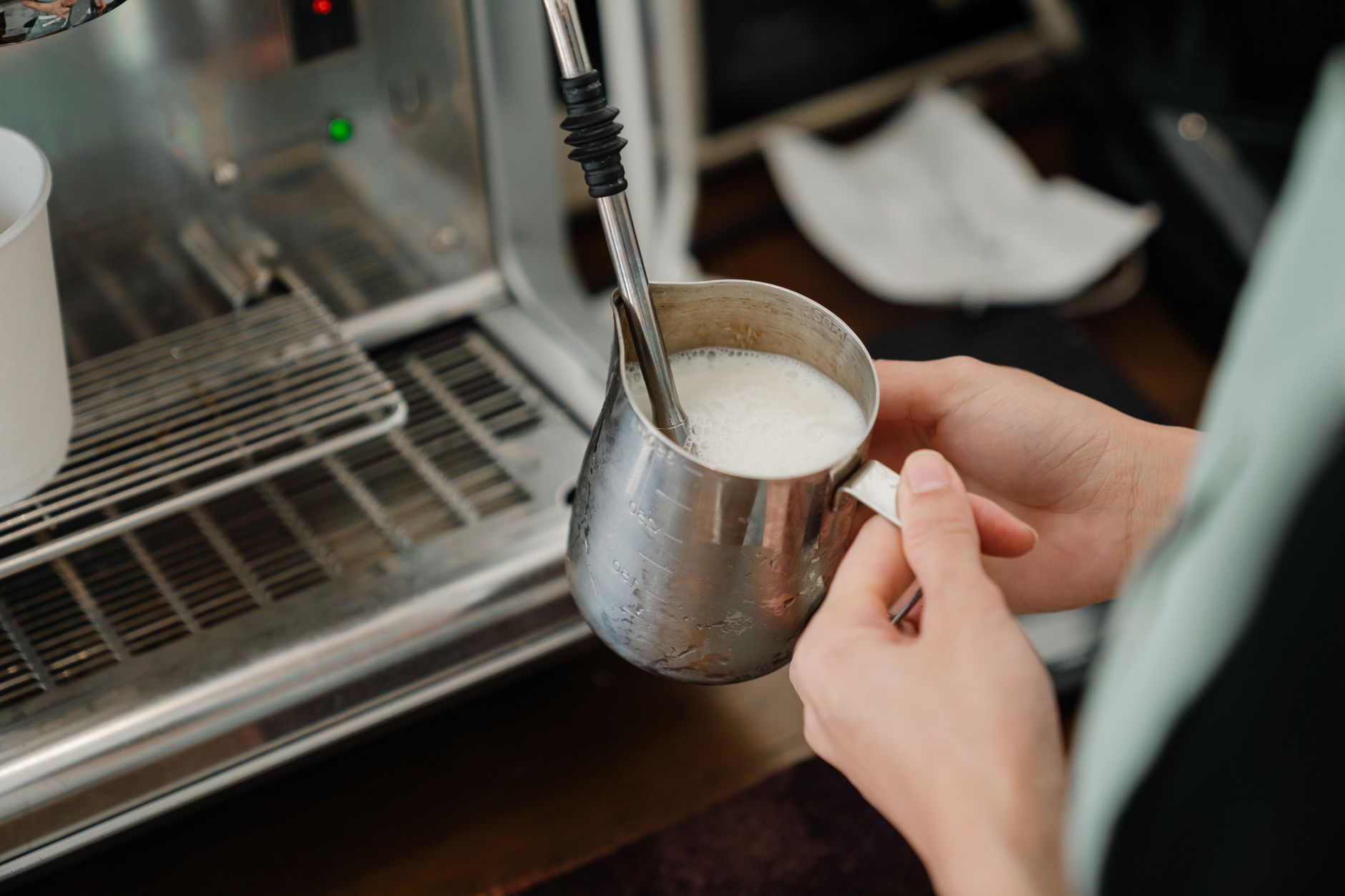 Photo: Ketut Subiyanto via Pexels
Priming an airlocked pump
- Fill the water tank fully
- Open the steam wand and let it run for 10–15 seconds
- Switch to brew mode and try a shot
This pulls water into the pump head and clears the air pocket. Common after the tank ran dry.
Descaling
Calcium deposits coat pump internals and restrict flow. If your machine is 6–12 months old and you’ve never descaled, scale is likely contributing. Run a full descale cycle with a dedicated espresso descaler — not vinegar, which leaves residue and can damage internal seals.
| Machine Age | Descale Frequency |
|---|---|
| Soft water area | Every 6 months |
| Hard water area | Every 2–3 months |
| Never descaled, 1+ year | Do it now |
Pump replacement
If priming and descaling don’t help and the pump hums without producing flow (or makes a grinding noise), the pump itself may have failed. ULKA EP5 and EP6 pumps are the most common OEM units — they cost $15–25 and swap in with two screws and a pair of connectors on most prosumer machines.
OPV and Pressure Relief Valve
The over-pressure valve (OPV) regulates brew pressure and opens above the set threshold. If it’s stuck open or set too low, it dumps pressure before it can build. On most single-boiler machines, the OPV is adjustable with a flathead screwdriver.
Some machines ship from the factory set to 12–13 bar. Specialty coffee targets 9 bar. A misadjusted OPV explains machines that suddenly “lost pressure” with no other change — they may have never been right.
If you have a pressure gauge portafilter (a blind basket with a gauge), use it to check actual brew pressure. Without one, adjusting the OPV is trial-and-error — tighten a quarter turn, pull a shot, repeat.
→ See Also
- The Complete Guide to Espresso Machines (2026)
- Best Espresso Machine Under $200 (2026)
- Best Espresso Machine Under $500 (2026)
FAQ
Why does my espresso machine have pressure when steaming but not when brewing? The steam circuit and brew circuit share the same pump on most single-boiler machines, but the brew path goes through the group head and portafilter. If you have steam pressure but no brew pressure, the blockage is almost certainly in the group head, portafilter, or the solenoid valve that routes water to the group. Clean both, then test.
Can a dirty group head cause no pressure? Yes. Coffee oils and fine particles build up in the shower screen and dispersion block over weeks of use. A backflush with a blind basket and group head cleaner tablet (Cafiza or equivalent) restores flow in most cases. Do this weekly on machines with a 3-way solenoid, monthly on machines without.
My espresso machine pump is loud but produces no water — what’s wrong? A loud, straining pump with no output is either airlocked (most likely) or scaled solid. Try priming first by running the steam wand with the tank full. If that doesn’t restore flow within 30 seconds, run a descale cycle. If the pump is still dry after descaling, the pump head has likely failed and needs replacement.
How do I know if my espresso machine pump is failing vs. just scaled? A scaled pump produces weak, slow flow and often makes more noise than usual. A failing pump either makes a noticeably different sound (grinding, clicking, no sound at all despite power) or produces zero flow even after priming and descaling. If descaling restores any flow improvement, scaling was at least a contributing factor. No improvement at all after descaling = pump replacement.
Does water temperature affect espresso pressure? Temperature doesn’t directly create pressure, but it affects extraction. A machine that hasn’t fully preheated has lower water temperature, which produces different-looking shots — often faster-running and lighter in color — that can be mistaken for a pressure problem. Allow 20–30 minutes of full preheat (not just the indicator light) before pulling a diagnostic shot.
Editorial methodology: Assessments are based on manufacturer specifications, published user reviews, and editorial research. Physical hands-on testing is noted explicitly where it occurred. Rankings reflect our editorial judgment and are not influenced by affiliate commission rates. Full editorial policy · Affiliate disclosure