Contents
Burr vs Blade Grinder: Why It Matters for Your Coffee
TL;DR: A burr grinder crushes beans to a uniform size you control; a blade grinder chops randomly, producing a mix of powder and chunks that ruins extraction. For any brew method beyond drip, buy a burr grinder. The taste difference is immediate and obvious.
What’s the Actual Difference?
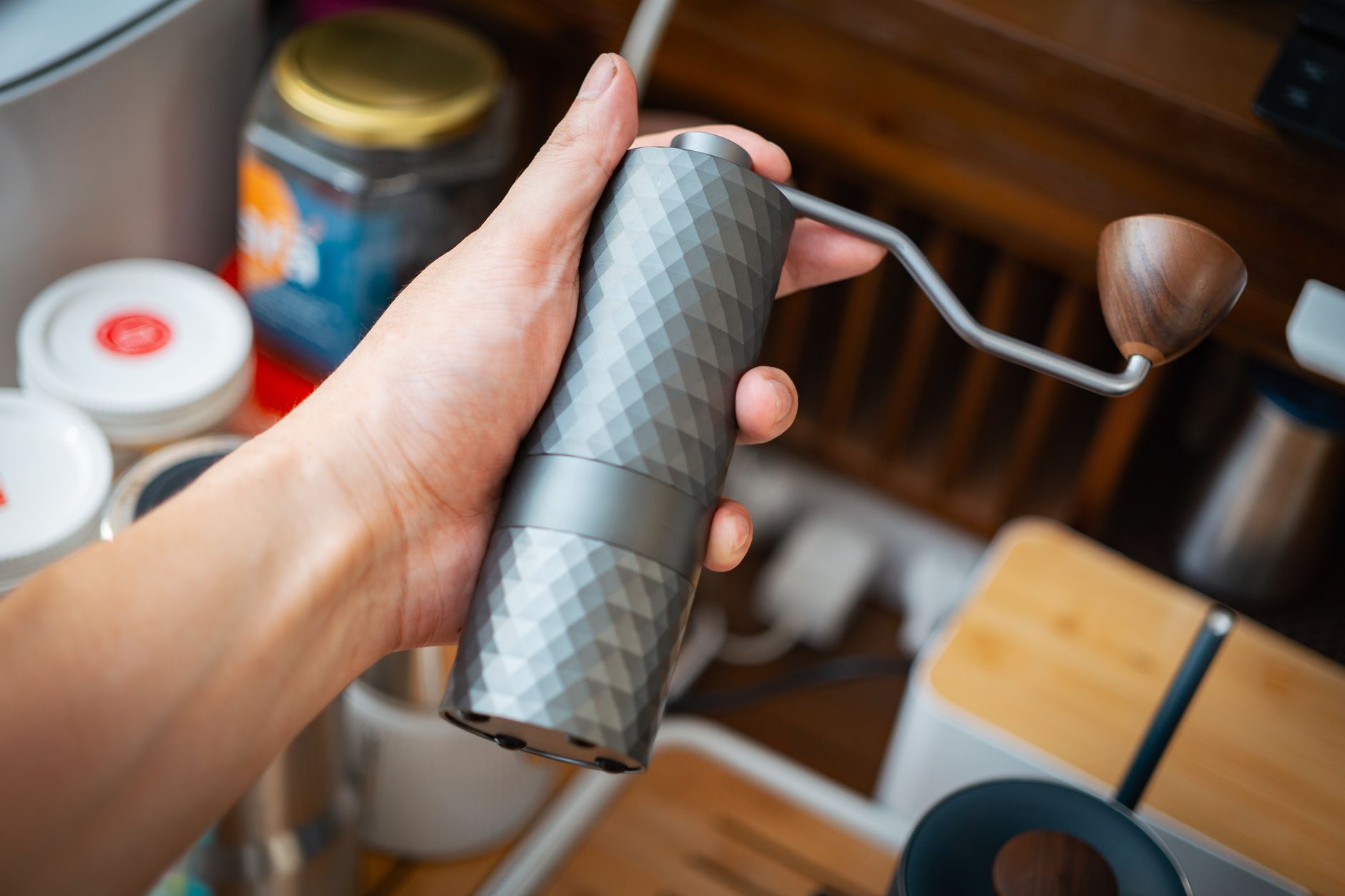
Burr grinders use two abrasive surfaces — one fixed, one spinning — to mill beans to a consistent particle size. Blade grinders use a propeller that spins at high speed, smashing beans into whatever size it happens to hit. The gap between burrs determines your grind size; a blade grinder gives you no control at all.
 Photo: Light nPixel via Pexels
This isn’t a subtle distinction. A blade grinder produces what grinders call “bimodal distribution” — a mix of fine powder and coarse chunks in every batch. Fine particles over-extract (bitter, astringent), coarse chunks under-extract (sour, weak), and you taste both at once. No amount of brewing skill corrects for that.
Burr grinders — whether flat burr or conical burr — produce a tight, predictable particle distribution. Every particle extracts at roughly the same rate. That’s what “even extraction” means in practice, and it’s why every coffee professional uses one.
Burr vs Blade Grinder: How It Affects Each Brew Method
The gap between burr and blade matters most at the extremes. Espresso and Turkish coffee require fine, precise grinds — a blade grinder simply cannot do this. French press and drip are more forgiving, but you’ll still taste the difference in clarity and sweetness.
 Photo: Sóc Năng Động via Pexels
Espresso
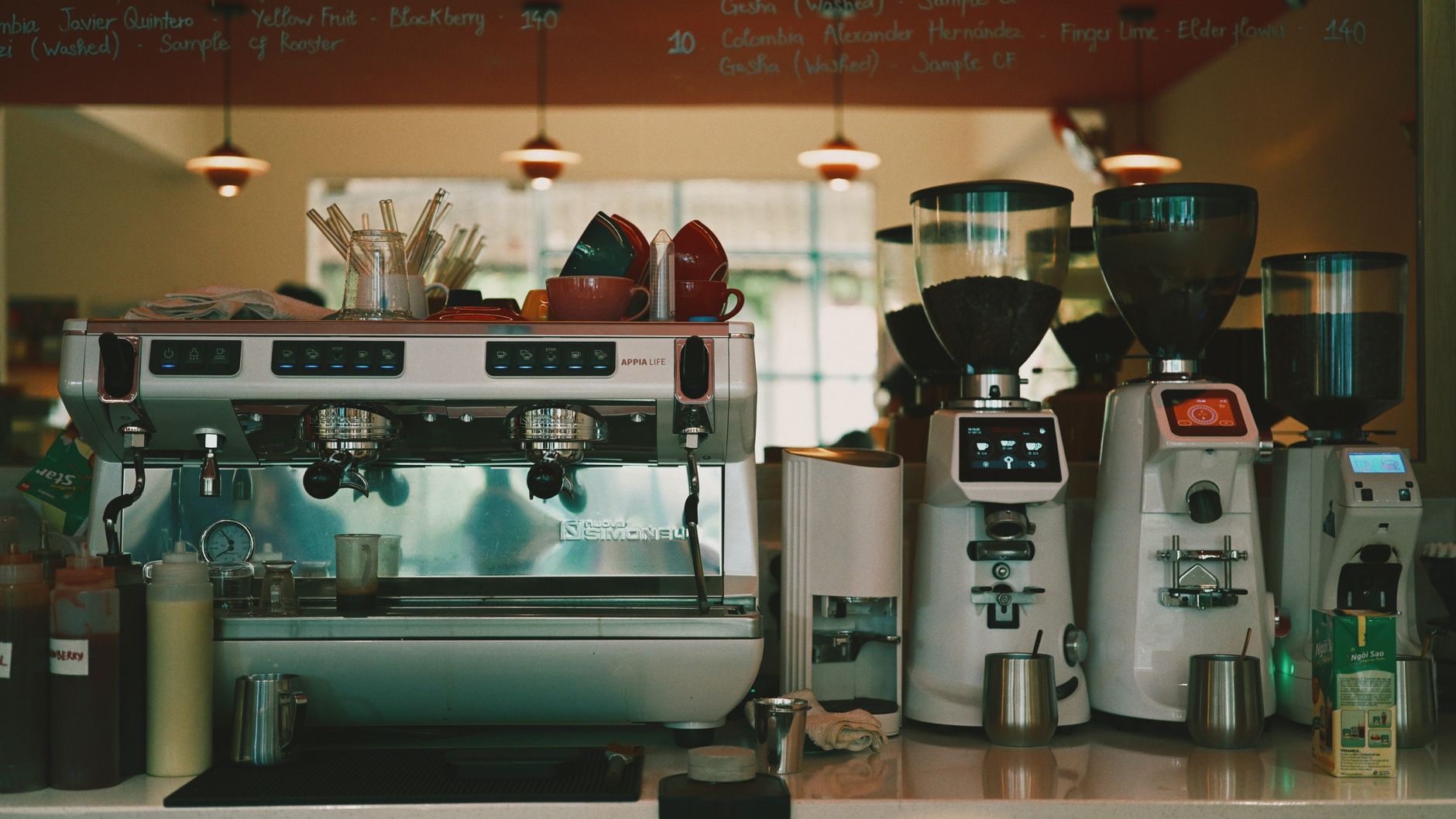
Espresso runs water at ~9 bar through a puck of grounds for 25–30 seconds. Particle size consistency is everything — one fine particle can block flow and cause channeling; one coarse chunk creates an escape route for under-extracted water. A blade grinder is functionally useless for espresso. Full stop.
A burr grinder with espresso-range adjustment (typically 1–5 on a grind scale) lets you dial in extraction by moving the grind one step finer or coarser until your shot time and taste land where you want them. This iterative control is the entire basis of espresso dialing.
Pour-Over and Drip
Pour-over (V60, Chemex, Kalita) rewards medium-fine grinds with consistent particle size. With a blade grinder, the fines clog the filter and slow drawdown while the coarse chunks rush through under-extracted. The result is muddy, hollow, and inconsistent cup to cup.
With a burr grinder, you can set medium-fine once and replicate it every morning. The cup will be brighter, cleaner, and noticeably sweeter because even extraction pulls sugars alongside acids.
French Press
French press is the most forgiving brew method — a coarse grind with some variation won’t destroy it. This is why blade grinders are sometimes recommended for “French press only” use. That recommendation is technically survivable but still produces an inferior cup; fines that slip through the metal filter turn the bottom of your cup into sludge.
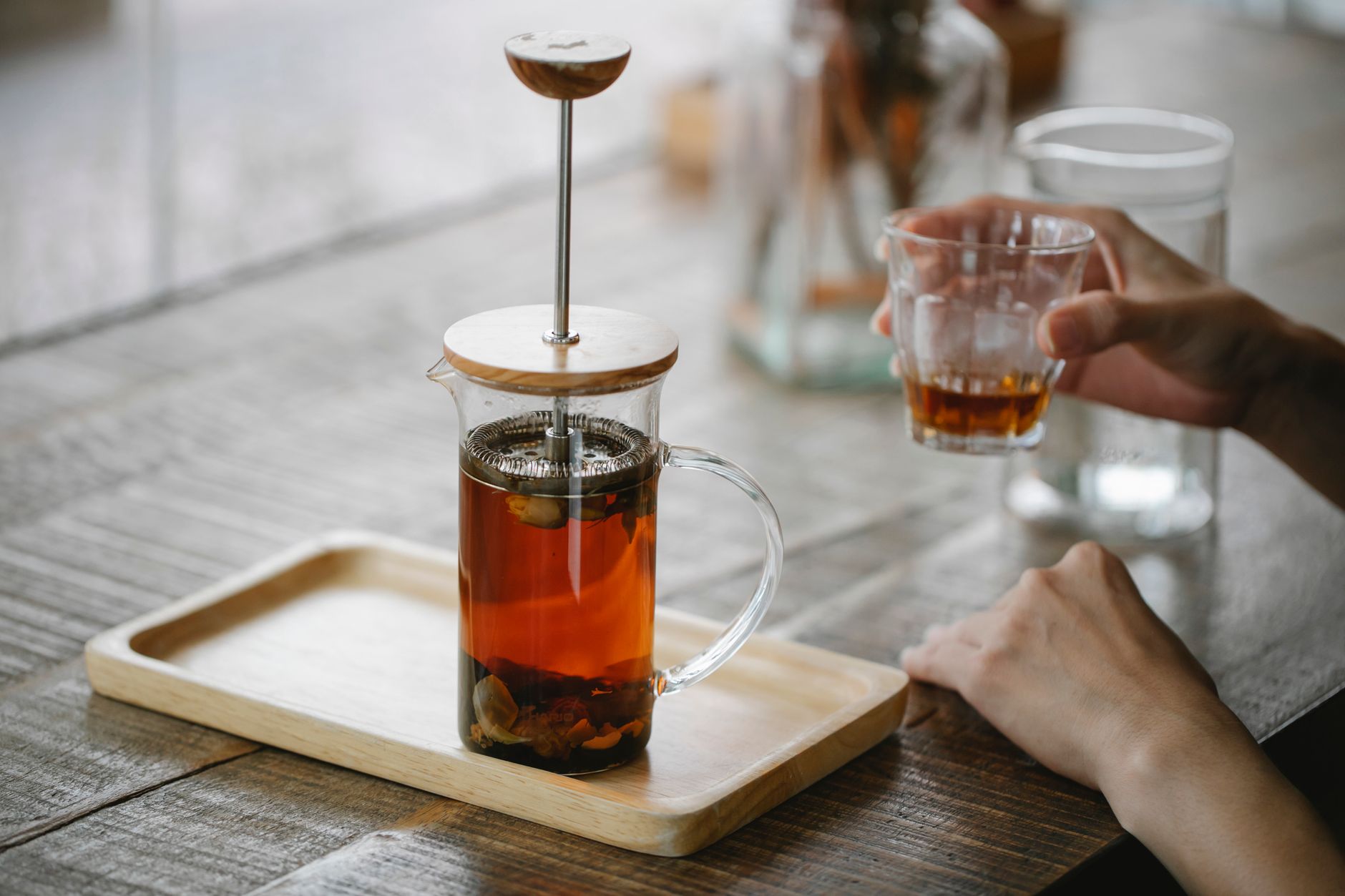 Photo: Charlotte May via Pexels
Cold Brew
Cold brew uses a coarse grind steeped for 12–18 hours. A blade grinder produces enough fines to make the filtration messy and the concentrate gritty. A burr grinder set to coarse produces a clean, easy-to-filter concentrate.
Flat Burr vs Conical Burr: Does It Matter?
Flat burrs tend to produce a bimodal grind that favors espresso clarity and brightness. Conical burrs produce a slightly wider distribution with more body, making them versatile for filter and espresso. For home use, conical burrs are more common because they run quieter and retain less coffee.
 Photo: 🇻🇳🇻🇳 Việt Anh Nguyễn 🇻🇳🇻🇳 via Pexels
The honest answer: at the entry and mid-level price points ($50–$200), the difference between flat and conical burr is smaller than the difference between any burr grinder and a blade grinder. Choose by the other specs first.
Side-by-Side Comparison
| Feature | Burr Grinder | Blade Grinder |
|---|---|---|
| Grind consistency | Uniform, adjustable | Random, uncontrolled |
| Grind size control | Yes — fine to coarse | None |
| Espresso capable | Yes (with espresso-range model) | No |
| Heat generated | Low | High (can damage aromatics) |
| Repeatability | High | None |
| Entry price | ~$30 (hand grinder) | ~$15–$25 |
| Best for | All brew methods | Emergency use only |
Do Blade Grinders Have Any Place in Coffee?
One legitimate use: spice grinding. For coffee, the only case for a blade grinder is if you have a drip machine, you’re camping, or you need a short-term placeholder before you buy something real.
If you’re reading a guide like this, you care enough about coffee that you’ve already outgrown a blade grinder. A hand burr grinder like the 1Zpresso JX-Pro or Timemore C3 costs $50–$80 and produces grind quality that competes with $200 electric models. That’s your burr entry point.
Entry-Level Burr Grinders Worth Buying
| Machine | Price | Burr Type | Burr Size | Best For |
|---|---|---|---|---|
| Timemore C3 Pro | ~$75 | Conical | 38mm steel | Filter, light espresso |
| 1Zpresso JX-Pro | ~$90 | Conical | 38mm steel | Espresso, filter |
| Baratza Encore ESP | ~$200 | Conical | 40mm steel | Espresso, filter |
| Breville Smart Grinder Pro | ~$200 | Conical | 40mm steel | Espresso, filter |
| Fellow Ode Gen 2 | ~$195 | Flat | 64mm SSP | Filter only |
Note: The Fellow Ode is filter-only (no espresso range) — exceptional for pour-over and batch brew, wrong tool for espresso.
→ See Also
- The Complete Coffee Grinder Guide (2026) — full taxonomy of grinder types, burr materials, and what specs actually matter
- Best Coffee Grinders Under $100 (2026) — tested picks at the entry burr tier
- Best Coffee Grinders Under $200 (2026) — where the real value sits for home espresso and filter
FAQ
Does a blade grinder ruin coffee beans? Not physically — the beans still contain their oils and aromatics. But the chaotic chop creates so many fines and boulders in a single batch that you cannot extract the coffee evenly, no matter how you brew it. The beans aren’t ruined, the grind is.
Can I use a blade grinder for espresso? No. Espresso requires precise, repeatable grind sizes with minimal variation. A blade grinder cannot produce this. Even cheap burr grinders in the espresso range give better results than any blade grinder for espresso.
Is a hand burr grinder worth it over a cheap electric burr grinder? At the same price point, yes — usually significantly. Hand grinders like the Timemore C3 or 1Zpresso JX use quality steel burrs and tight tolerances. Cheap electric burr grinders in the $30–$50 range often use low-quality burrs with poor alignment. Manual work is the tradeoff, not quality.
How much does a decent burr grinder cost? A hand burr grinder starts around $50 and produces genuinely good results for filter and light espresso work. Electric burr grinders hit their value zone around $150–$200 (Baratza Encore ESP, Breville Smart Grinder Pro). Below $100 electric, quality drops sharply.
Does grind consistency really affect taste that much? Yes, more than most variables you can control. Espresso drinkers who switch from a blade grinder to a mid-range burr grinder consistently report it as the single biggest upgrade they’ve made — bigger than a better machine. Even on drip, the difference in sweetness and clarity is obvious within the first cup.
What’s the difference between grind size and grind consistency? Grind size is the average particle diameter — coarse for French press, fine for espresso. Grind consistency is how tightly clustered those particles are around that average. A blade grinder might produce an average grind size that matches medium, but the range runs from dust to pebbles. Consistency is what extracts evenly; size just sets the target.
Editorial methodology: Assessments are based on manufacturer specifications, published user reviews, and editorial research. Physical hands-on testing is noted explicitly where it occurred. Rankings reflect our editorial judgment and are not influenced by affiliate commission rates. Full editorial policy · Affiliate disclosure