Contents
Best Grinder for Pour Over Coffee (2026)
TL;DR: The best grinder for pour over is one with consistent burrs, stepless or fine-stepped grind adjustment, and enough uniformity to avoid channeling in your V60 or Chemex. For most people, the Baratza Encore ESP or 1Zpresso JX-Pro hits the sweet spot between price and performance. Budget under $100? The Timemore C2
What Makes a Grinder Good for Pour Over?
Pour over brewing is unforgiving of inconsistent grinds. Fines clog, coarses escape extraction, and a bi-modal distribution produces a cup that’s simultaneously bitter and thin. You need flat or conical burrs, tight grind distribution, and enough adjustment resolution to dial in a 20g dose within a 30-second pour window.
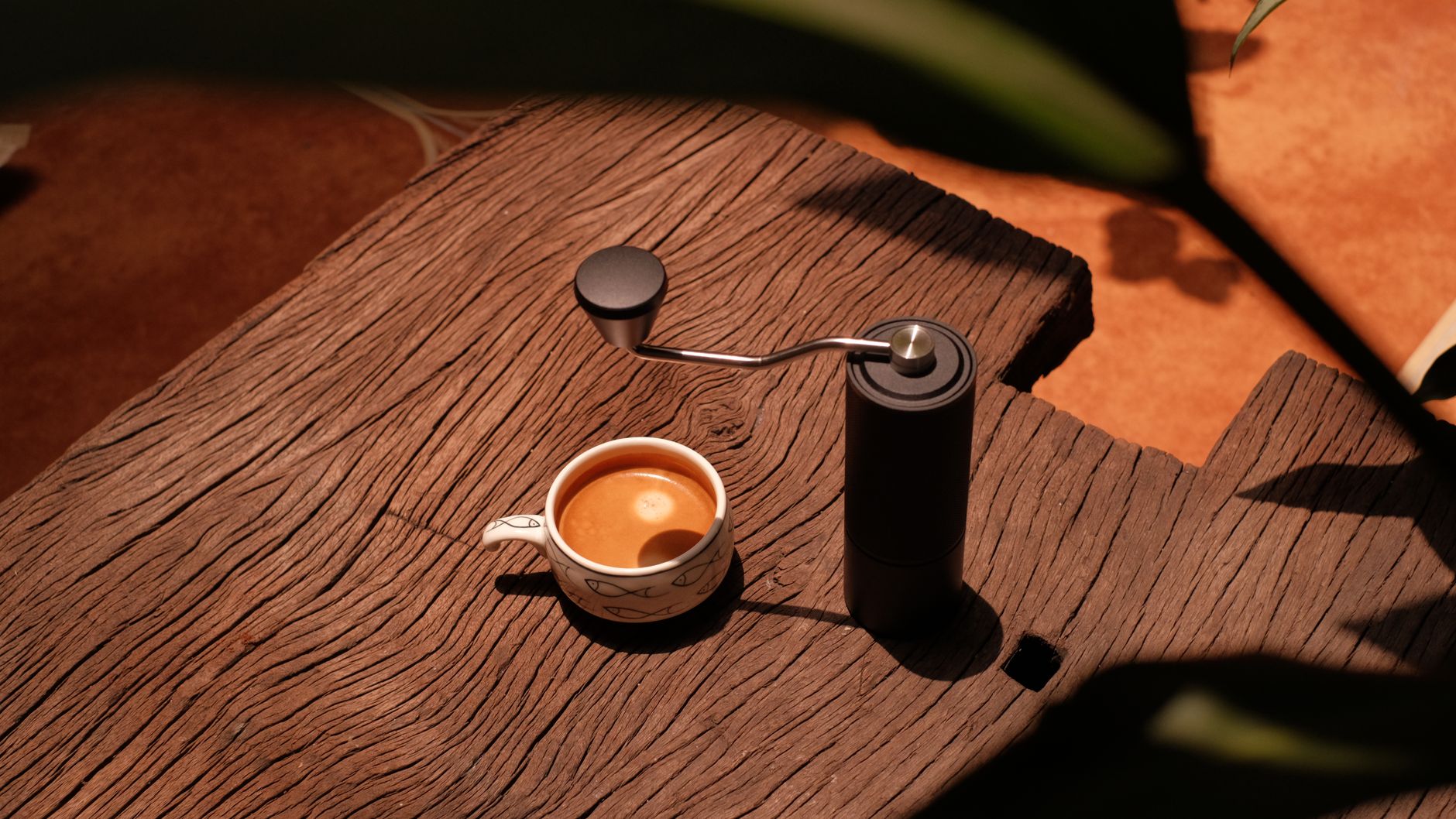 Photo: Pew Nguyen via Pexels
Pour over sits in the medium-coarse range — roughly 700–900 microns for most recipes. That’s not the most demanding zone (espresso is), but the wide brew bed and long contact time amplify inconsistency in ways a French press would hide. A blade grinder produces a scatter-plot of particle sizes; a cheap burr grinder with high fines still muddies clarity.
Three things matter most:
| Factor | Why It Matters for Pour Over |
|---|---|
| Burr geometry | Flat burrs produce more uniform cuts; quality conicals are close enough |
| Adjustment resolution | Fine steps = easier dialing; coarse steps = frustrating |
| Retention | Old grounds mixing in ruins repeatability |
Best Overall: Baratza Encore ESP
The Encore ESP is the best grinder for pour over under $200. It has 40 macro steps (9 used in pour over range), consistent conical burrs, and nearly zero retention. Baratza’s spare-parts ecosystem means it’ll outlive trendier grinders by years.
 Photo: Uriel Mont via Pexels
The ESP variant adds a portafilter holder fork — irrelevant for pour over, but it doesn’t add cost. What matters is the 40mm conical Kyocera burr set, which produces clean, predictable grind at medium-coarse settings. Grind time for 20g runs about 8 seconds.
At $200, it’s not cheap, but it’s the point where diminishing returns start to flatten. Step up to $350+ and you gain better grind uniformity and lower fines; step down below $100 and you’ll feel it in the cup.
Specs
| Spec | Baratza Encore ESP |
|---|---|
| Burr type | 40mm conical (Kyocera ceramic) |
| Steps | 40 macro |
| Motor | DC gear motor |
| Retention | ~0.5g |
| Weight | 2.3 kg |
| Hopper capacity | 230g |
Best Manual: 1Zpresso JX-Pro
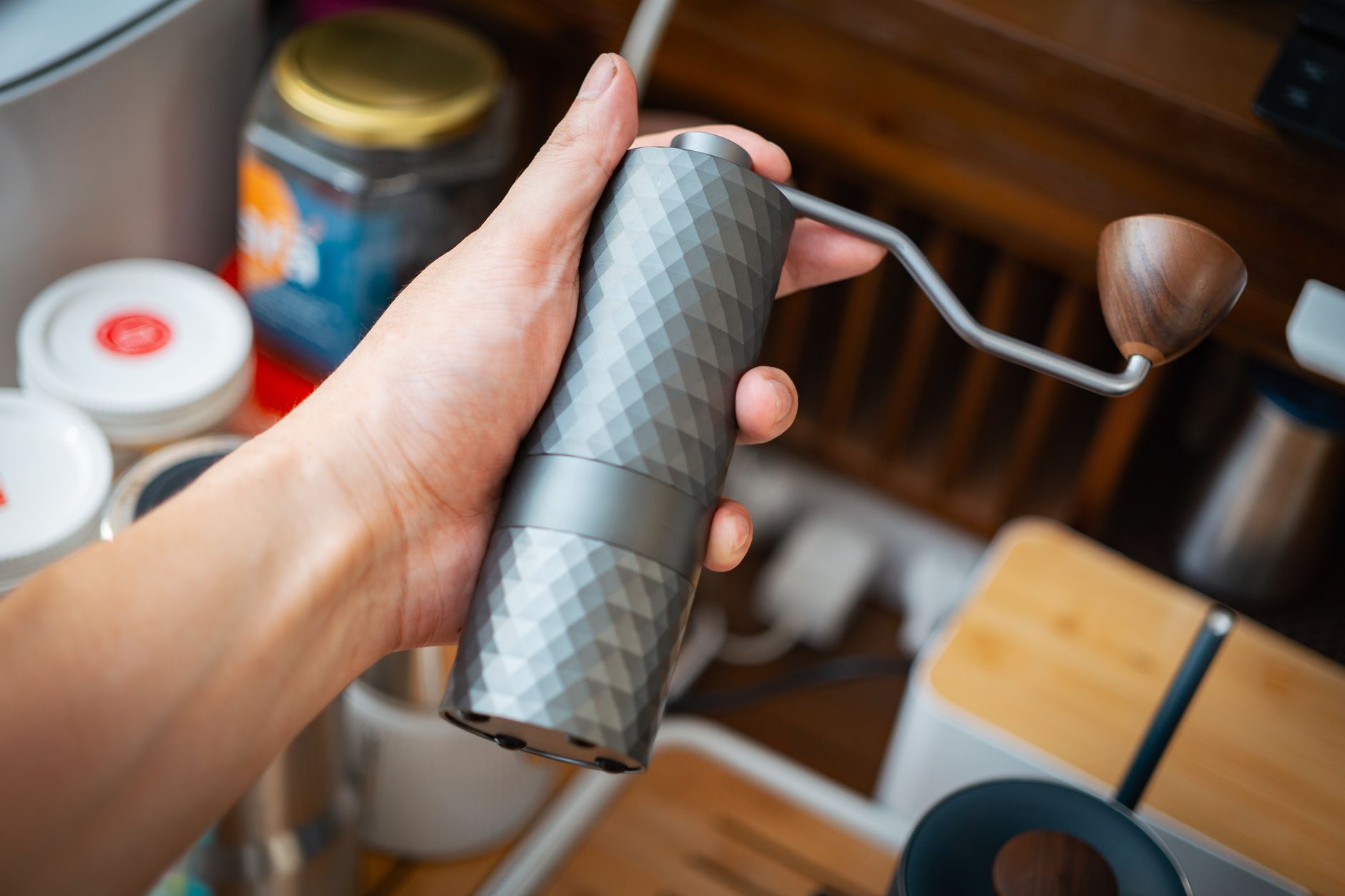
The JX-Pro is the best manual grinder for pour over. Its 48mm stainless steel conical burrs outperform most electric grinders under $200 in grind uniformity, with 0.025mm per click — fine enough to dial in within 2–3 adjustments.
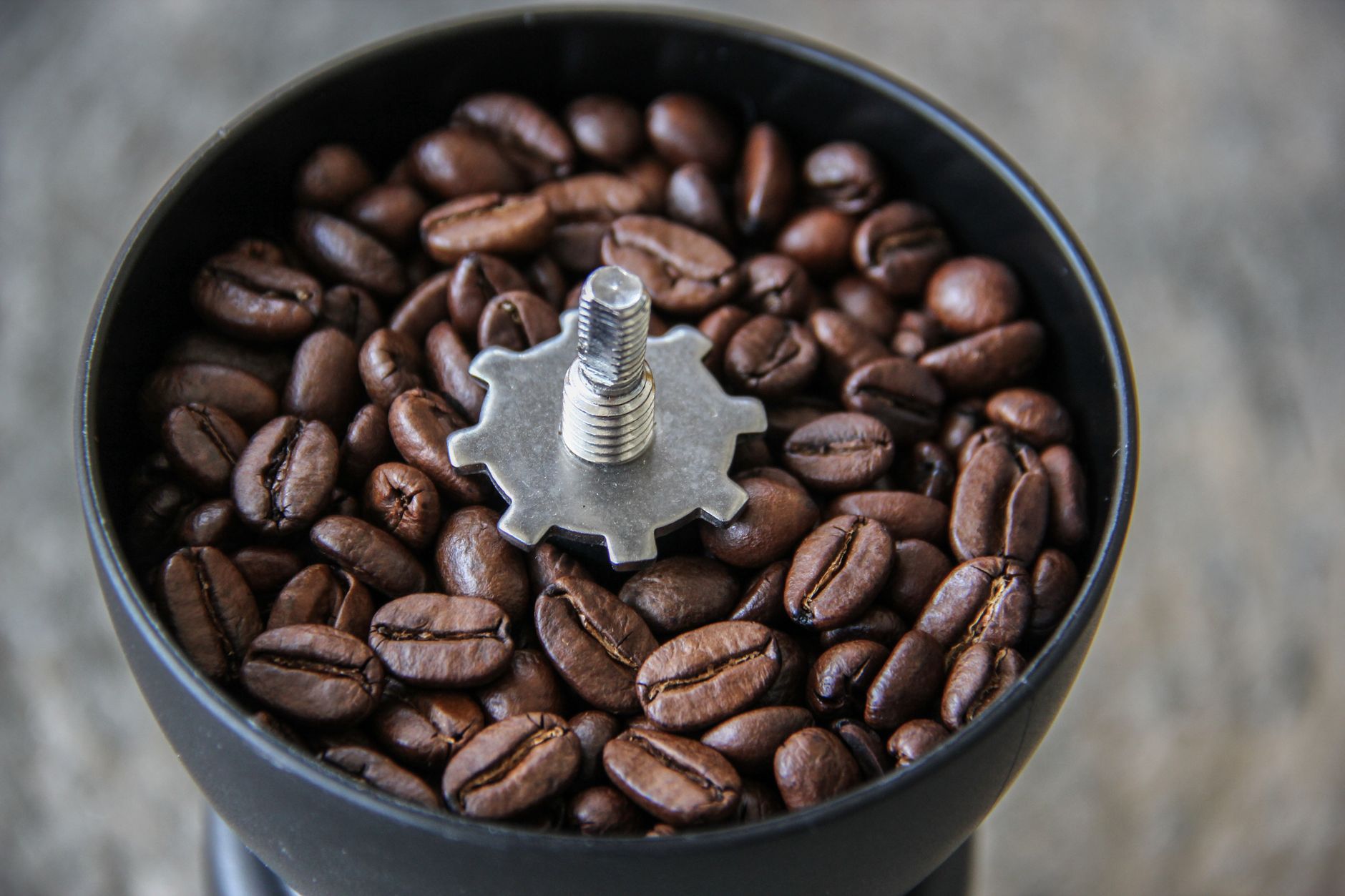 Photo: Jess Ho via Pexels
Manual grinders trade time for performance-per-dollar. The JX-Pro grinds 20g in about 30–40 turns — roughly 45 seconds for most people. That’s acceptable for a single cup but tiring for four. The magnetic catch cup and tool-free adjustment dial make it practical to use daily.
The axle-mounted external dial is the killer feature: you read your setting visually instead of counting clicks from zero. For people who switch between brewing methods, this is meaningful.
Best Budget: Timemore C2 / C3 Pro
Under $60, the Timemore C2 is the best grinder for pour over. Its 38mm stainless conical burrs and 30 clicks per rotation give it adjustment resolution that shames grinders twice its price. Grind quality at medium-coarse is genuinely competitive with $150 electrics.
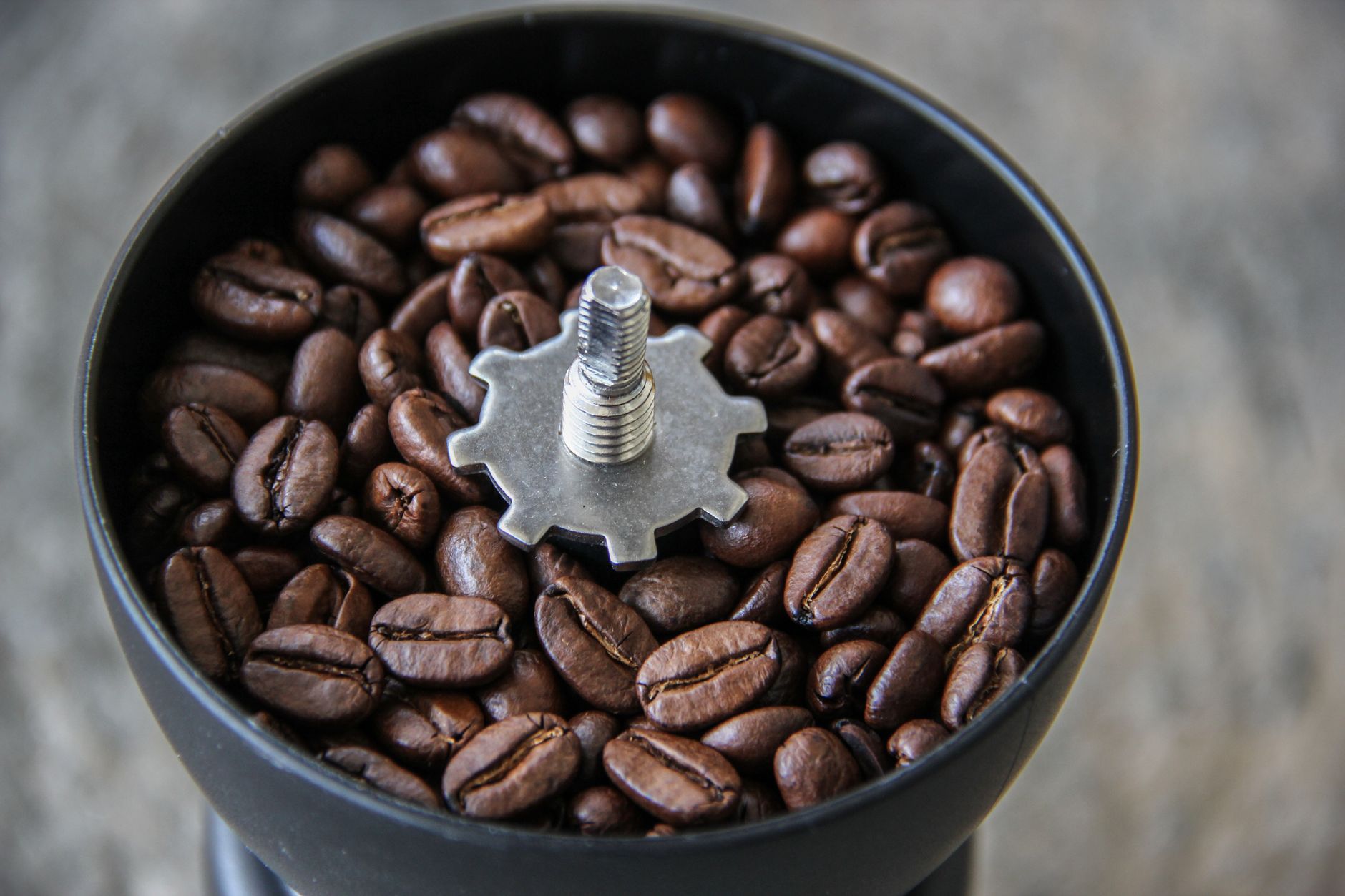 Photo: Jess Ho via Pexels
The C3 Pro adds a ball-bearing lower burr carrier that reduces wobble — worth the $15 upgrade if you brew multiple cups. Both share the same chassis and burr set. Neither has a fold-out handle, which matters for travel but not desktop use.
The catch: 15g of light roast takes about 50 turns. For a single-cup daily driver, that’s fine. For a household with multiple drinkers, budget up.
Best Electric Under $100: Baratza Encore (Original)
The original Encore remains the best electric grinder for pour over under $100 (street price ~$80–$90 used/refurb). Same burr quality as the ESP, same reliability, and Baratza’s repair-first warranty policy still applies.
The new unit price is $170, but Baratza sells factory-refurbished units directly for $89. That’s the same machine with a 1-year warranty — it’s the honest recommendation for a budget buyer who doesn’t want to grind by hand.
Full Comparison Table
| Grinder | Price | Type | Burr Size | Steps | Best For |
|---|---|---|---|---|---|
| 1Zpresso JX-Pro | ~$170 | Manual | 48mm conical | 0.025mm/click | Single-cup purists |
| Baratza Encore ESP | ~$200 | Electric | 40mm conical | 40 | Most home brewers |
| Fellow Ode Gen 2 | ~$365 | Electric | 64mm flat | 31 | Flat-burr clarity seekers |
| Timemore C2 | ~$55 | Manual | 38mm conical | 30/rotation | Budget, travel |
| Baratza Encore (refurb) | ~$89 | Electric | 40mm conical | 40 | Budget electric |
| Comandante C40 | ~$230 | Manual | 39mm conical (nitro) | 0.027mm/click | Flavor-obsessed travelers |
 Photo: Israyosoy S. via Pexels
Equipment Review: Fellow Ode Gen 2
The Ode Gen 2 is the step-up pick for pour over specialists who want flat-burr clarity without crossing into commercial territory.
Specs
| Spec | Fellow Ode Gen 2 |
|---|---|
| Boiler type | N/A |
| Portafilter size | N/A |
| PID | N/A |
| Pump type | N/A |
| Burr size | 64mm flat SSP |
Comparison: Mid-Range Electric Pour Over Grinders
| Machine | Price | Burr | Steps | Retention | Best For |
|---|---|---|---|---|---|
| Baratza Encore ESP | $200 | 40mm conical | 40 | ~0.5g | Beginners, multi-method |
| Fellow Ode Gen 2 | $365 | 64mm flat | 31 | ~0.3g | Pour over only, clarity |
| Niche Zero | $700 | 63mm conical | Stepless | ~0.1g | Pour over + light espresso |
Verdict by archetype:
- Consistency-first: Baratza Encore ESP — proven platform, easy to maintain
- Flavor-maximalist: Fellow Ode Gen 2 — flat burrs extract cleaner at medium-coarse
- One grinder for everything: Niche Zero — stepless covers espresso and pour over, but at 3.5× the Encore’s price
→ See Also
- The Complete Coffee Grinder Guide (2026)
- Burr vs Blade Grinder: Why It Matters for Your Coffee
- Best Coffee Grinders Under $100 (2026)
FAQ
What grind size is best for pour over coffee? Medium-coarse — roughly the texture of coarse sea salt, around 700–900 microns. Start at the coarser end and work finer if extraction is too fast or the cup tastes thin and sour. The exact setting varies by grinder, coffee density, and roast level.
Is a hand grinder good enough for pour over? Yes, often better than an electric at the same price. Manual grinders eliminate the motor cost and put that money into better burrs. The 1Zpresso JX-Pro and Comandante C40 outperform electrics at twice their price in grind uniformity tests. The tradeoff is time: 30–50 turns per dose.
Do I need a $200+ grinder for good pour over? Not necessarily. The Timemore C2 at $55 produces genuinely good pour over results. Above $200, gains are real but incremental — improved clarity, lower fines, more consistent cup-to-cup. Under $50 (blade grinders, cheap burr grinders), you’ll feel it.
What’s the difference between flat and conical burrs for pour over? Flat burrs tend to produce a bimodal particle distribution weighted toward the target size — more “even” cuts and slightly brighter, cleaner cups. Conical burrs produce a wider distribution but often a fuller body. Both work well for pour over; the quality of the burr matters more than the geometry.
How much does grinder retention affect pour over? More than people expect. A grinder with 3–5g retention means stale grounds mix into every fresh dose. For pour over, where you’re often brewing 15–20g doses, that’s 15–25% contamination. Aim for grinders with under 1g retention. The Niche Zero (~0.1g) and 1Zpresso JX-Pro (~0.1g) are best-in-class.
Can I use an espresso grinder for pour over? Yes, but with caveats. Most espresso grinders (Eureka Mignon, Rancilio Rocky) run fine at medium-coarse settings. The issue is stepped grinders designed for espresso often jump too coarsely between steps in the pour over range. Stepless grinders like the Niche Zero handle both methods cleanly.
Editorial methodology: Assessments are based on manufacturer specifications, published user reviews, and editorial research. Physical hands-on testing is noted explicitly where it occurred. Rankings reflect our editorial judgment and are not influenced by affiliate commission rates. Full editorial policy · Affiliate disclosure