Contents
How to Adjust Grind Size on Any Grinder
TL;DR: To adjust grind size, turn your grinder’s adjustment ring or dial — coarser for faster extraction (French press, drip), finer for slower (espresso, moka). The exact mechanism differs by grinder type, but the principle is universal: finer = more surface area = slower flow = stronger extraction.
Why Grind Size Controls Your Entire Cup
Direct Answer: Grind size is the single highest-leverage variable in coffee brewing. Too coarse and water rushes through, leaving sour, thin coffee. Too fine and it chokes — bitter, over-extracted, or simply won’t flow. Every brew method has a target particle size, and knowing how to adjust grind size precisely puts you in control of the result.
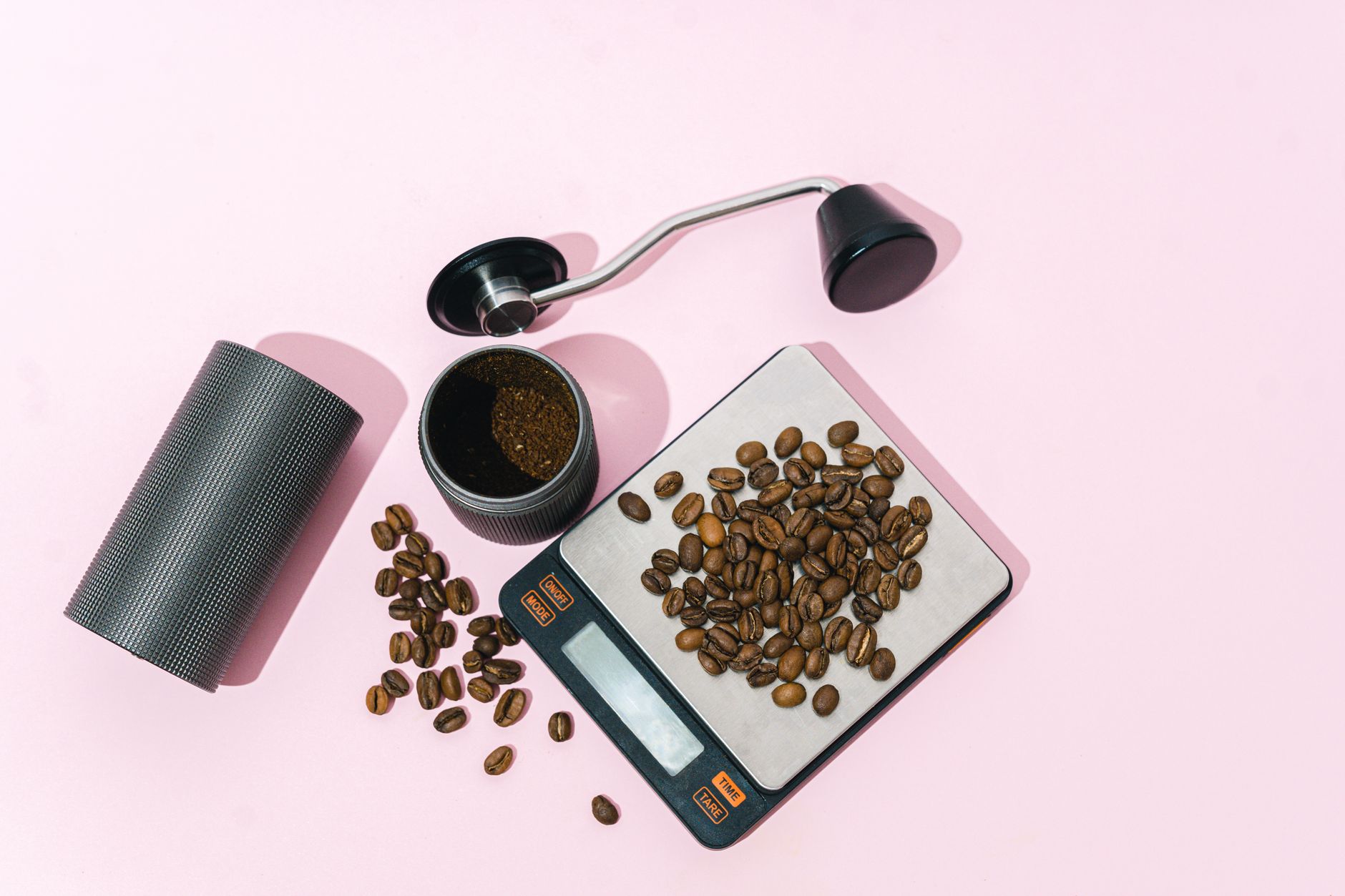 Photo: SHVETS production via Pexels
Particle size dictates how much surface area water contacts and for how long. A French press needs coarse grounds because water sits in contact for four minutes — fine grounds would over-extract and clog the mesh. Espresso needs fine grounds because water passes through in 25–30 seconds under 9 bars of pressure.
The adjustment mechanism on your specific grinder is just a means to an end. Learn your grinder’s interface once — then think in extraction, not in clicks.
How to Adjust Grind Size: By Grinder Type
Stepped Burr Grinders (Budget to Mid-Range)
Direct Answer: Stepped grinders have numbered positions — higher number = coarser on most models. Rotate the adjustment collar one click at a time and purge 3–5 grams of old grounds before pulling a shot or brewing.
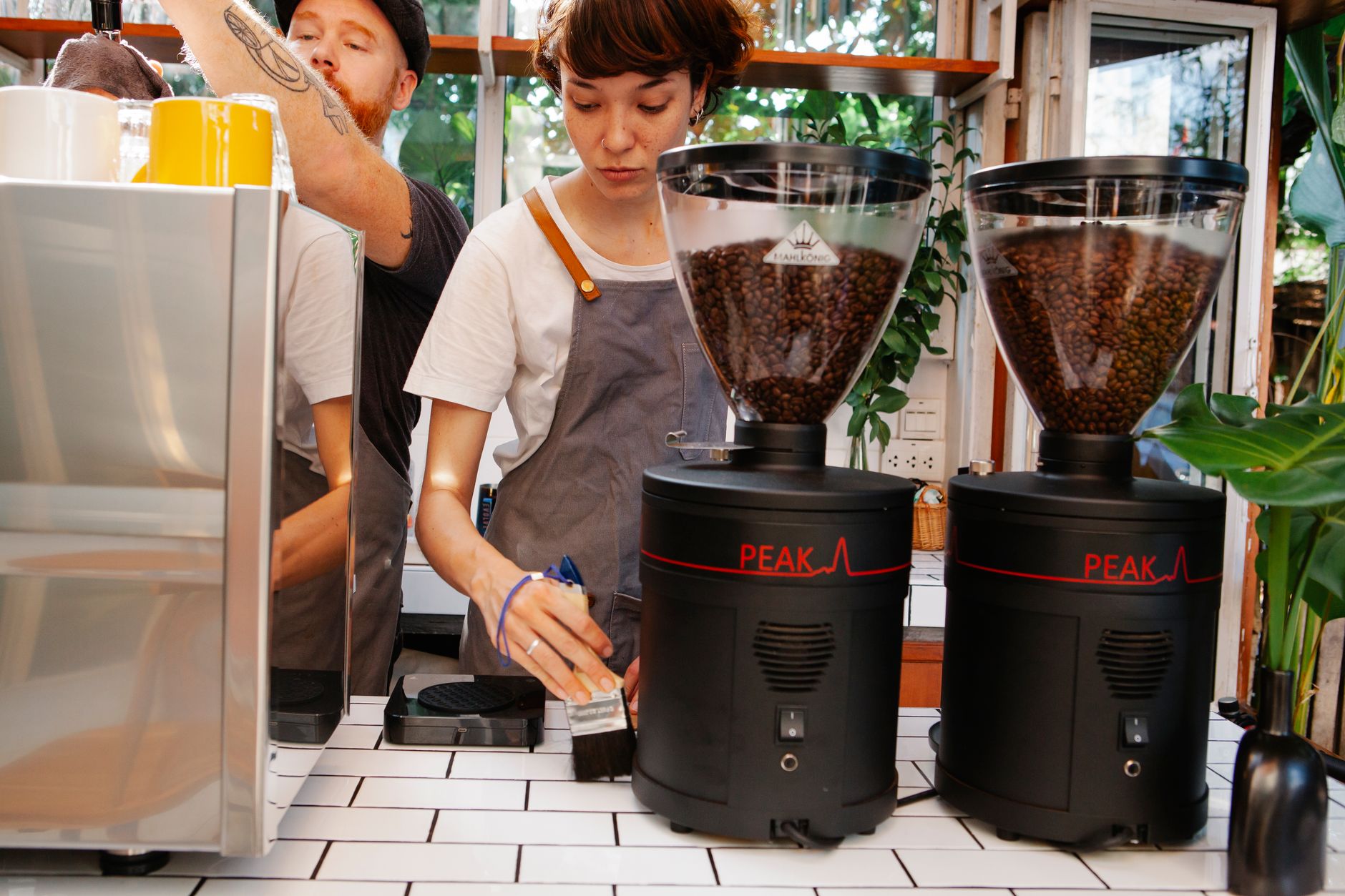 Photo: Tim Douglas via Pexels
Common models: Baratza Encore
- Note your current number before changing anything
- Rotate the collar one increment in the direction marked (usually ➕ for coarse, ➖ for fine)
- Run the grinder briefly to purge stale grounds from the chute — this takes 5–10 seconds or ~5g of coffee
- Grind your dose and evaluate the brew
Key habit: always purge after adjusting. The grounds sitting in the chute are from your previous setting and will skew your result.
Stepless Burr Grinders (Mid-Range to High-End)
Direct Answer: Stepless grinders offer infinite adjustment between two extremes — micro-turn the collar and mark your position with tape or a marker. Changes as small as 1–2 degrees of rotation are meaningful for espresso.
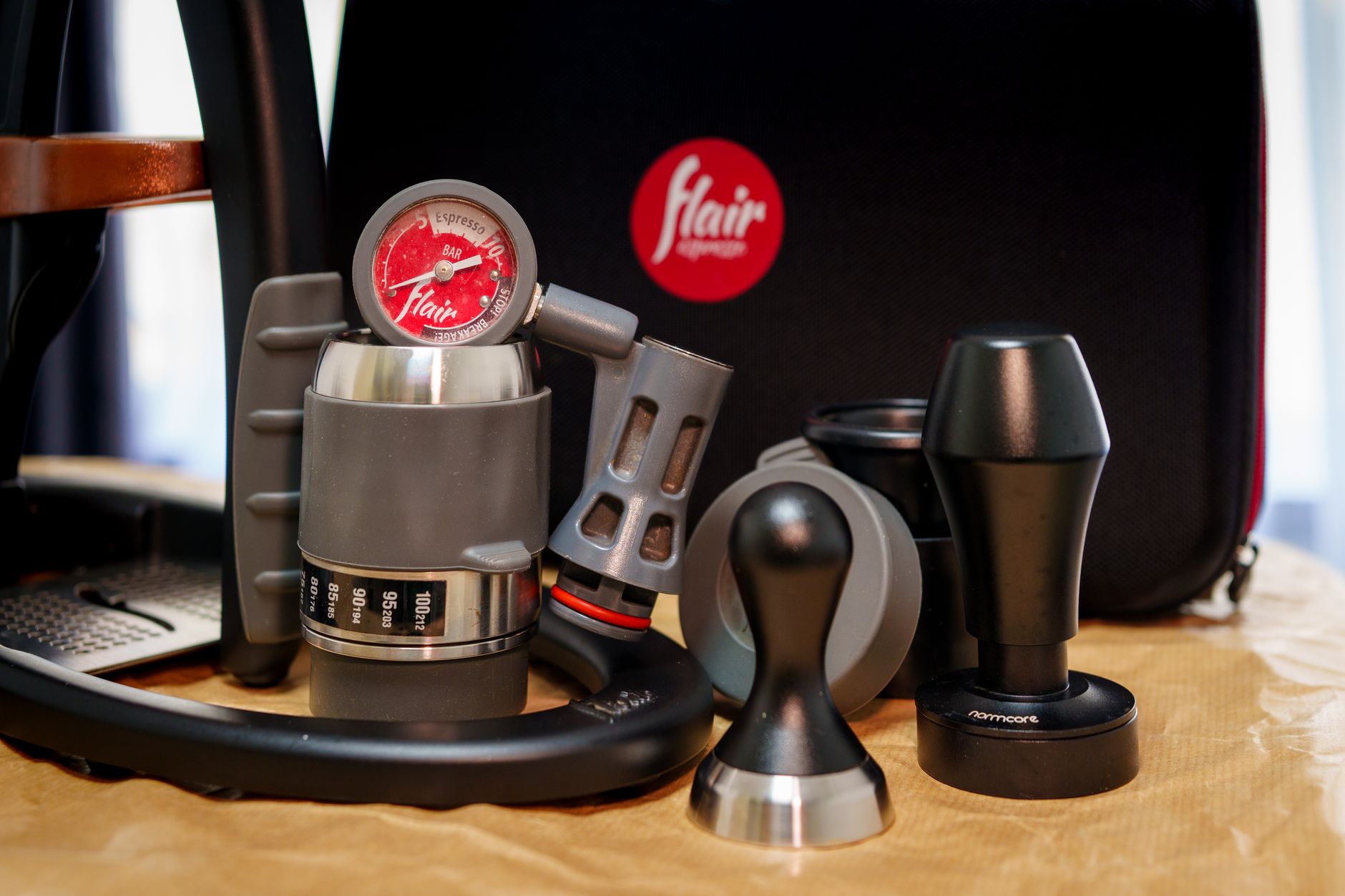 Photo: Richard L via Pexels
Common models: DF64 , Niche Zero
Because there are no clicks to count, you need a reference system:
- Put a strip of masking tape on the collar and mark your current position with a pen
- Move in small increments — for espresso, a 2° rotation can shift shot time by 3–5 seconds
- Keep a brew journal for the first week until you internalize your grinder’s range
Hand Grinders
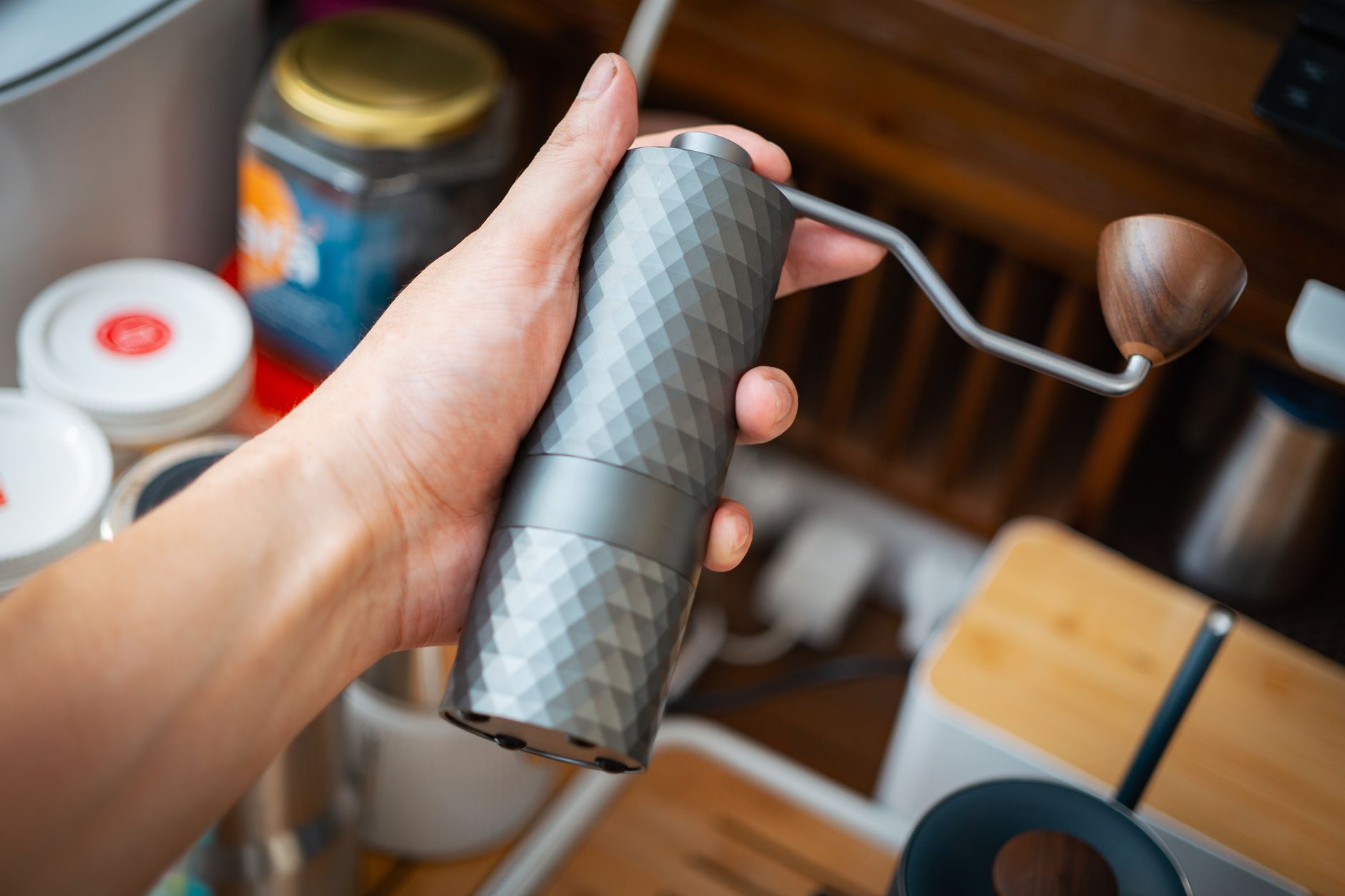
Direct Answer: Most hand grinders (Comandante , 1Zpresso , Timemore ) use a numbered click system on the central axle — remove the top cap, turn the adjustment nut, replace and count your clicks from zero.
Setting a hand grinder from scratch:
- Finger-tighten the adjustment nut until burrs just touch (this is zero/burr kiss)
- Back off to your target range — typically 15–20 clicks for espresso, 25–35 for pour-over, 40+ for French press
- Reattach the handle and grind
The “clicks from zero” system is portable and repeatable across brewing sessions. Write down your setting — you’ll thank yourself when switching brew methods.
Blade Grinders
Direct Answer: Blade grinders don’t truly adjust — they chop by time, not position. Shorter pulse = coarser; longer = finer, but particle size is wildly inconsistent. If you’re here to improve your coffee, a burr grinder is the upgrade that matters most.
See Burr vs Blade Grinder: Why It Matters for Your Coffee for the full breakdown.
Dialing In: How to Read Your Extraction
| Symptom | Likely Cause | Adjustment |
|---|---|---|
| Sour, thin, watery | Too coarse — under-extracted | Go finer |
| Bitter, harsh, dry finish | Too fine — over-extracted | Go coarser |
| Espresso shot running fast (<20s) | Too coarse | Go finer |
| Espresso shot choking/no flow | Too fine | Go coarser |
| Pour-over drains in <2 min | Too coarse | Go finer |
| Pour-over stalls, takes >5 min | Too fine | Go coarser |
| French press muddy/gritty | Too fine | Go coarser |
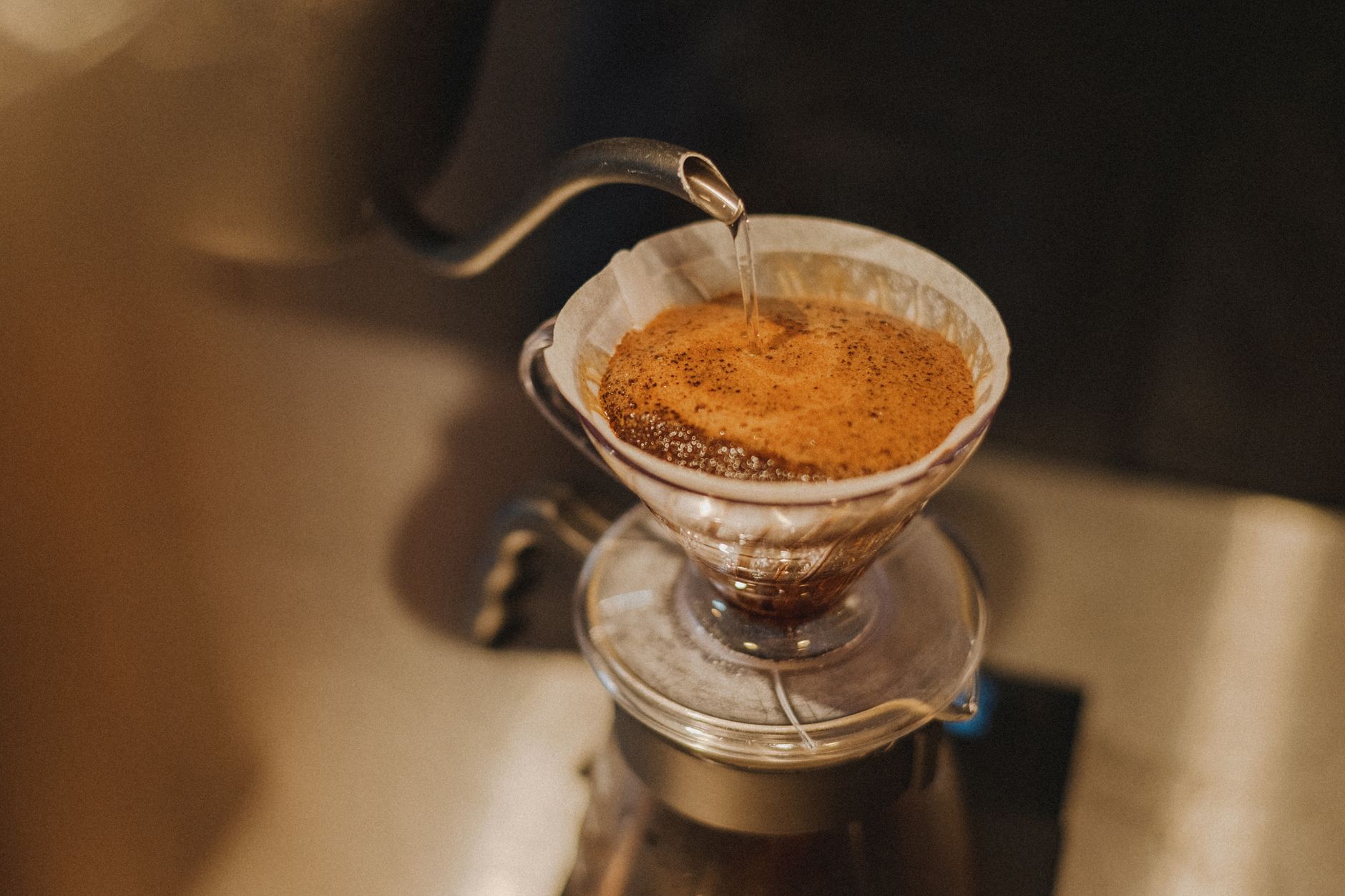 Photo: Gu Ko via Pexels
One variable at a time. When dialing in, change only grind size until you’ve isolated its effect. Don’t adjust dose, water temperature, and grind simultaneously — you’ll never know what fixed it.
Grind Size Reference by Brew Method
| Brew Method | Grind Size | Baratza Encore Setting (approx.) | Comandante Clicks (approx.) |
|---|---|---|---|
| Espresso | Extra fine | 5–10 | 15–20 |
| Moka Pot | Fine | 10–15 | 18–24 |
| AeroPress | Medium-fine | 15–20 | 22–28 |
| Pour-Over (V60, Chemex) | Medium | 18–25 | 25–32 |
| Drip Machine | Medium | 20–28 | 28–35 |
| French Press | Coarse | 30–40 | 38–45 |
| Cold Brew | Extra coarse | 38–40 | 42–48 |
Settings are starting points. Altitude, roast level, bean density, and humidity all shift the target — use the table to get close, then taste and adjust.
Common Mistakes When Adjusting Grind Size
Adjusting while the grinder is off. On most flat burr grinders, the burrs need to be spinning for the adjustment ring to move cleanly. Forcing it static can strip the collar or shift the calibration. Check your manual — most conical burr grinders (Encore, Comandante) can be adjusted stationary.
Not purging after adjustment. The throat of any grinder holds 2–8 grams of grounds from the previous setting. Skipping the purge means your first dose is a blend of two grind sizes.
Making jumps that are too large. For espresso especially, one-click changes are the norm. A five-click jump on a stepped grinder like the Encore shifts shot time by 10+ seconds. Make small moves, evaluate, repeat.
Recalibrating unnecessarily. If your espresso was dialed in yesterday and now it’s off, the grinder settings probably didn’t shift — the coffee did. Beans degas over time, and a bag opened two weeks ago extracts differently than a freshly opened one. Adjust for the coffee, not the machine.
→ See also:
- The Complete Coffee Grinder Guide (2026)
- Burr vs Blade Grinder: Why It Matters for Your Coffee
- Best Coffee Grinders Under $100 (2026)
FAQ
How many clicks should I change grind size at a time? For espresso, one click at a time — each click on a stepped grinder like the Baratza Encore shifts shot time by 3–8 seconds. For pour-over and drip, two to three clicks is a reasonable starting increment. Always purge, brew, and taste before adjusting again.
Why does my espresso taste different even though I didn’t change the grind? Bean age is the most common culprit. As coffee degasses after roasting, the same grind setting extracts differently over the bag’s lifespan. Fresh beans (3–10 days off roast) often need a coarser setting than beans that are 3–4 weeks old. Humidity changes can also affect extraction.
Do I need to recalibrate my grinder after adjusting grind size? No. Adjusting grind size and calibrating are different things. Grind adjustment is routine — you do it every time you switch brew methods. Calibration (setting the burr-touch zero point) is a one-time setup, or after cleaning. Don’t confuse the two.
Can I adjust grind size mid-bag if the espresso tastes off? Yes, and you should. As beans degas and age, small corrections keep extraction consistent. Going finer by one click every week or two as a bag ages is normal practice in any espresso-focused setup.
What’s the difference between adjusting for a new brew method vs. dialing in espresso? Switching brew methods is a coarse jump — you’re moving 10–30 clicks/increments to hit a completely different extraction range. Dialing in espresso is micro-adjustment within a narrow target window. The process is the same (adjust → purge → brew → taste), but the scale is different.
Editorial methodology: Assessments are based on manufacturer specifications, published user reviews, and editorial research. Physical hands-on testing is noted explicitly where it occurred. Rankings reflect our editorial judgment and are not influenced by affiliate commission rates. Full editorial policy · Affiliate disclosure