Contents
Vietnamese Iced Coffee Recipe (Ca Phe Sua Da)
TL;DR: Vietnamese iced coffee recipe (ca phe sua da) is brewed hot through a phin filter directly over sweetened condensed milk, then poured over ice. Use a dark-roasted Vietnamese robusta blend, 20–25g of coffee, and 120ml of water at 93°C. The result is a dense, sweet, intensely caffeinated drink unlike anything from a drip machine.
What Is Ca Phe Sua Da?
Ca phe sua da is Vietnamese iced coffee: strong phin-filtered coffee layered over sweetened condensed milk and ice. The phin is a single-serve metal drip filter that produces a slow, concentrated brew. “Sua da” means “milk with ice” — the condensed milk is not optional, it’s structural to the drink’s flavor profile.
 Photo: 🇻🇳🇻🇳Nguyễn Tiến Thịnh 🇻🇳🇻🇳 via Pexels
The phin sits directly on the glass. Coffee drips through at roughly 1 drop per second, taking 4–6 minutes for a full brew. That slow drip extracts more body and bitterness than a fast pour-over — intentional, because the sweetened condensed milk needs something muscular to stand up to it.
Vietnamese coffee blends traditionally use robusta, sometimes with a small percentage of arabica. Robusta has higher caffeine, more bitterness, and a chocolatey, rubbery depth that cuts through the milk. If you can’t find a Vietnamese blend (Trung Nguyen, Café Du Monde with chicory, or Nguyen Coffee Supply), a dark-roasted espresso blend works. Avoid light roasts — the acidity clashes with condensed milk.
Equipment and Ingredients
You need a phin filter, a heatproof glass, sweetened condensed milk, coarsely ground dark-roast coffee, and near-boiling water. No phin? A Moka pot or strong Aeropress shot both work as substitutes, though the texture changes.
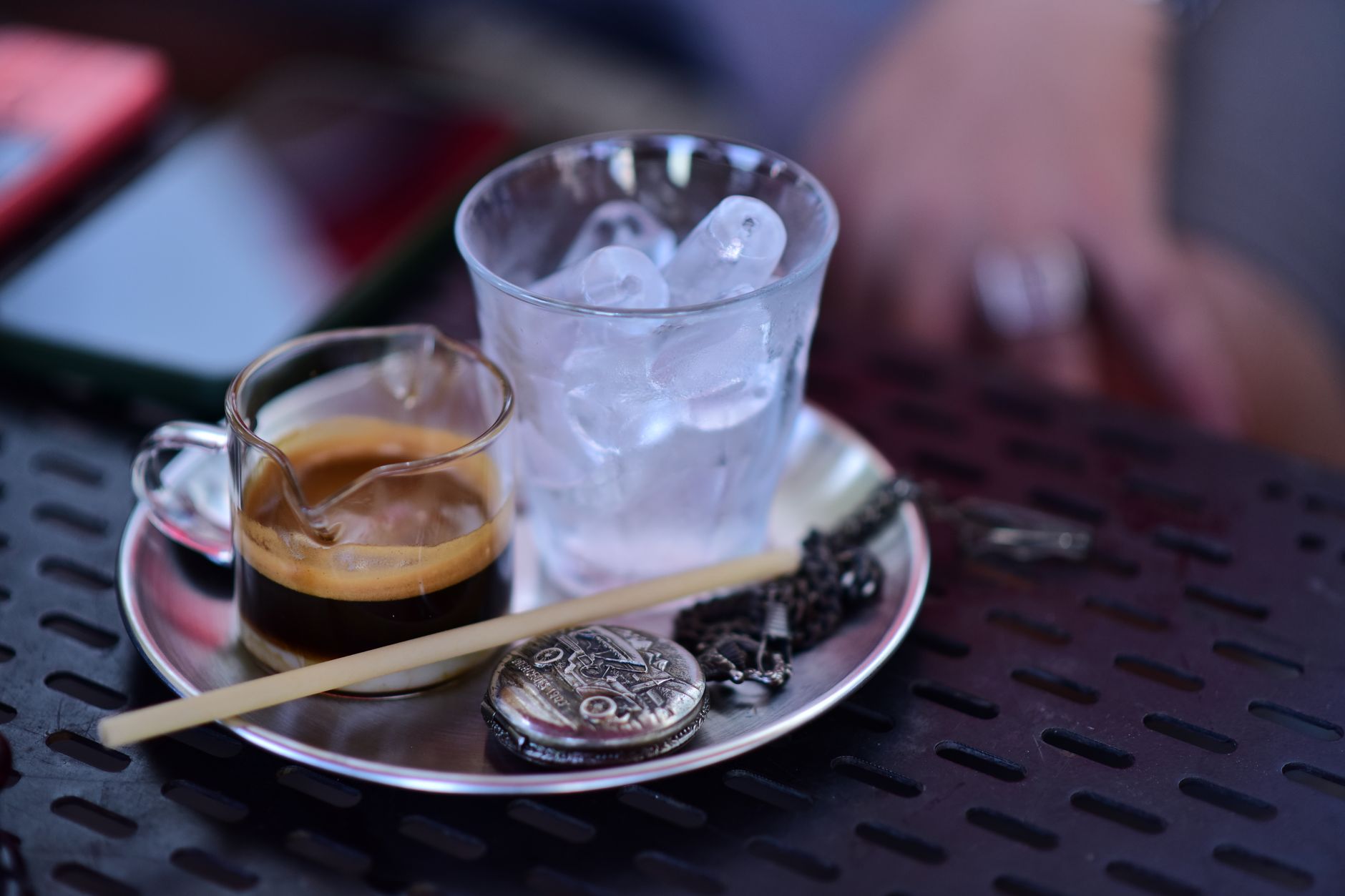 Photo: Sóc Năng Động via Pexels
| Item | Spec | Notes |
|---|---|---|
| Phin filter | 6–8 oz capacity | Stainless steel, screw-press or gravity press |
| Coffee | Dark roast robusta/blend | Trung Nguyen, Chestnut, Nguyen Coffee Supply |
| Grind size | Medium-coarse | Coarser than espresso, finer than French press |
| Condensed milk | Sweetened, full-fat | 2–3 tbsp per glass; adjust to taste |
| Water | 93°C (200°F) | Just off boil |
| Ice | Plenty | Large cubes melt slower |
Brewing Guide
Extraction Parameters
| Parameter | Target |
|---|---|
| Dose | 20–25g |
| Yield | 100–130ml brewed coffee |
| Ratio | 1:5 to 1:6 (coffee to water) |
| Brew time | 4–6 minutes |
| Temperature | 93°C / 200°F |
| Pressure | None (gravity drip) |
Puck Prep & Brew Steps
- Add condensed milk. Spoon 2–3 tablespoons into the bottom of the glass. More for sweeter, less if you want the coffee forward.
- Assemble the phin. Place the chamber on the glass. Add 20–25g of medium-coarse ground coffee.
- Level the bed. Tap gently to flatten — no WDT needed, the phin doesn’t channelize the way espresso does.
- Press the filter plate. Screw or press it down gently, just enough to compress without choking the grind. Too tight = stalling; too loose = weak brew.
- Bloom. Add 30–40ml of hot water. Wait 30 seconds. This degasses fresh coffee and ensures even saturation.
- Fill. Add remaining water to the chamber. Put the lid on to retain heat.
- Wait. 4–6 minutes total. You should see steady individual drips, not a stream and not a trickle.
- Add ice. Once the coffee finishes dripping, fill the glass with ice and stir vigorously to combine the condensed milk.
 Photo: Pew Nguyen via Pexels
Troubleshooting Matrix
| Symptom | Likely Cause | Fix |
|---|---|---|
| Brew stalls / won’t drip | Press plate too tight; grind too fine | Loosen press plate; coarsen grind one notch |
| Brew too fast (under 3 min) | Grind too coarse; press too loose | Tighten plate slightly; fine the grind |
| Watery, weak flavor | Under-dosed; low-quality robusta | Increase dose to 25g; switch to Vietnamese blend |
| Too bitter after adding milk | Over-extracted or wrong roast | Shorten brew time; check water temp isn’t above 96°C |
| Condensed milk won’t mix | Ice added before stirring | Stir coffee into condensed milk before adding ice |
Variations
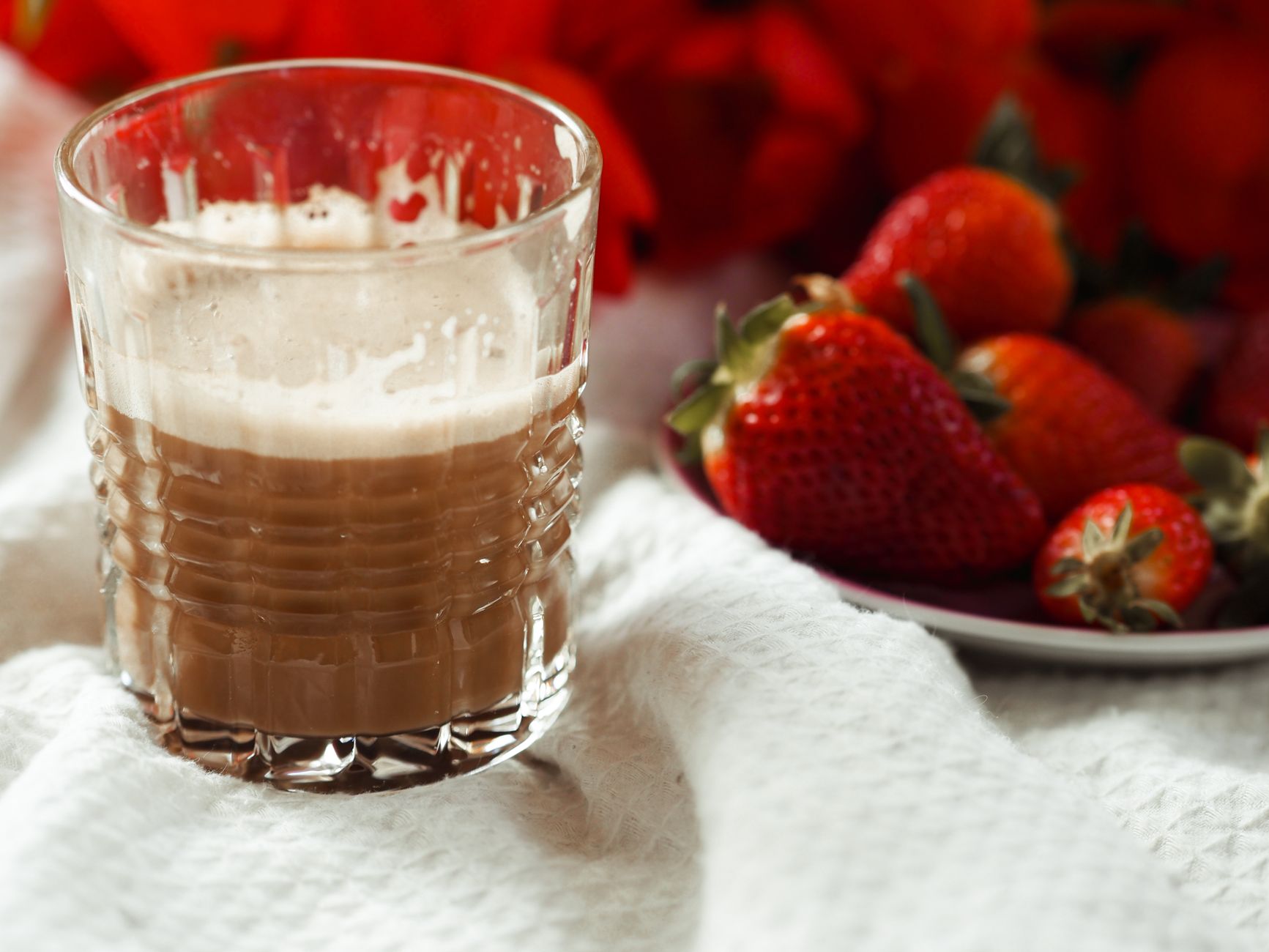 Photo: Alina Zahorulko via Pexels
Ca phe trung (egg coffee): Replace condensed milk with a whipped egg yolk and sugar foam. Common in Hanoi — the yolk creates a dense, custard-like layer on top.
Ca phe den da (black iced coffee): Skip the condensed milk entirely. Strong, bitter, and high-caffeine. Used as a base for Vietnamese coffee cocktails.
Coconut coffee: Blend the phin output with coconut cream, sweetened condensed milk, and ice. Popular in Ho Chi Minh City cafes.
→ See also
- How to Brew Coffee at Home: Complete Method Guide
- French Press Coffee: Complete Brewing Guide (Ratios + Technique)
- French Press Coffee-to-Water Ratio Calculator
FAQ
What coffee is best for Vietnamese iced coffee? A dark-roasted robusta or robusta-arabica blend is the traditional choice. Trung Nguyen and Nguyen Coffee Supply are reliable options widely available online. Avoid light or medium roasts — their acidity becomes harsh against the condensed milk’s sweetness.
Can I make Vietnamese iced coffee without a phin? Yes. A Moka pot produces a comparably concentrated brew and is the closest substitute. A strong Aeropress shot (1:5 ratio, 3-minute steep) also works. Standard drip machines make the coffee too weak and too fast — the 1:15–1:17 ratio doesn’t translate.
How much condensed milk should I use? Start with 2 tablespoons (about 30ml) per 12 oz glass. Increase to 3 tablespoons if you want it sweeter or if your coffee is particularly bitter. The condensed milk contributes both sweetness and fat, so cutting it entirely changes the character of the drink.
Why does my phin take forever to drip? The press plate is either screwed too tight or the grind is too fine. Unscrew the plate a quarter turn and check your grinder setting — for a phin, you want medium-coarse, roughly the texture of raw sugar. Espresso-fine grinds will choke the filter completely.
Is Vietnamese iced coffee high in caffeine? Yes — significantly more than a standard drip coffee. Robusta has roughly twice the caffeine of arabica, and the phin’s slow concentrated extraction amplifies it further. A single phin brew at 20–25g of robusta-based coffee can contain 150–200mg of caffeine.
Editorial methodology: Assessments are based on manufacturer specifications, published user reviews, and editorial research. Physical hands-on testing is noted explicitly where it occurred. Rankings reflect our editorial judgment and are not influenced by affiliate commission rates. Full editorial policy · Affiliate disclosure