Contents
How Often Should You Clean Your Coffee Grinder?
TL;DR: For daily home use, brush out your grinder weekly and do a full deep clean monthly. If you’re grinding oily dark roasts, go weekly on both. Knowing how often to clean your coffee grinder prevents stale oil buildup that ruins flavor faster than a bad roast.
How Often to Clean Your Coffee Grinder
Clean your grinder’s chute and burrs with a brush every 7 days for light-to-medium roasts, every 3–5 days for dark or oily beans. A full disassembly and wipe-down with grinder cleaning pellets should happen monthly. Neglect lets rancid coffee oils coat the burrs, turning every shot or cup slightly bitter and flat.
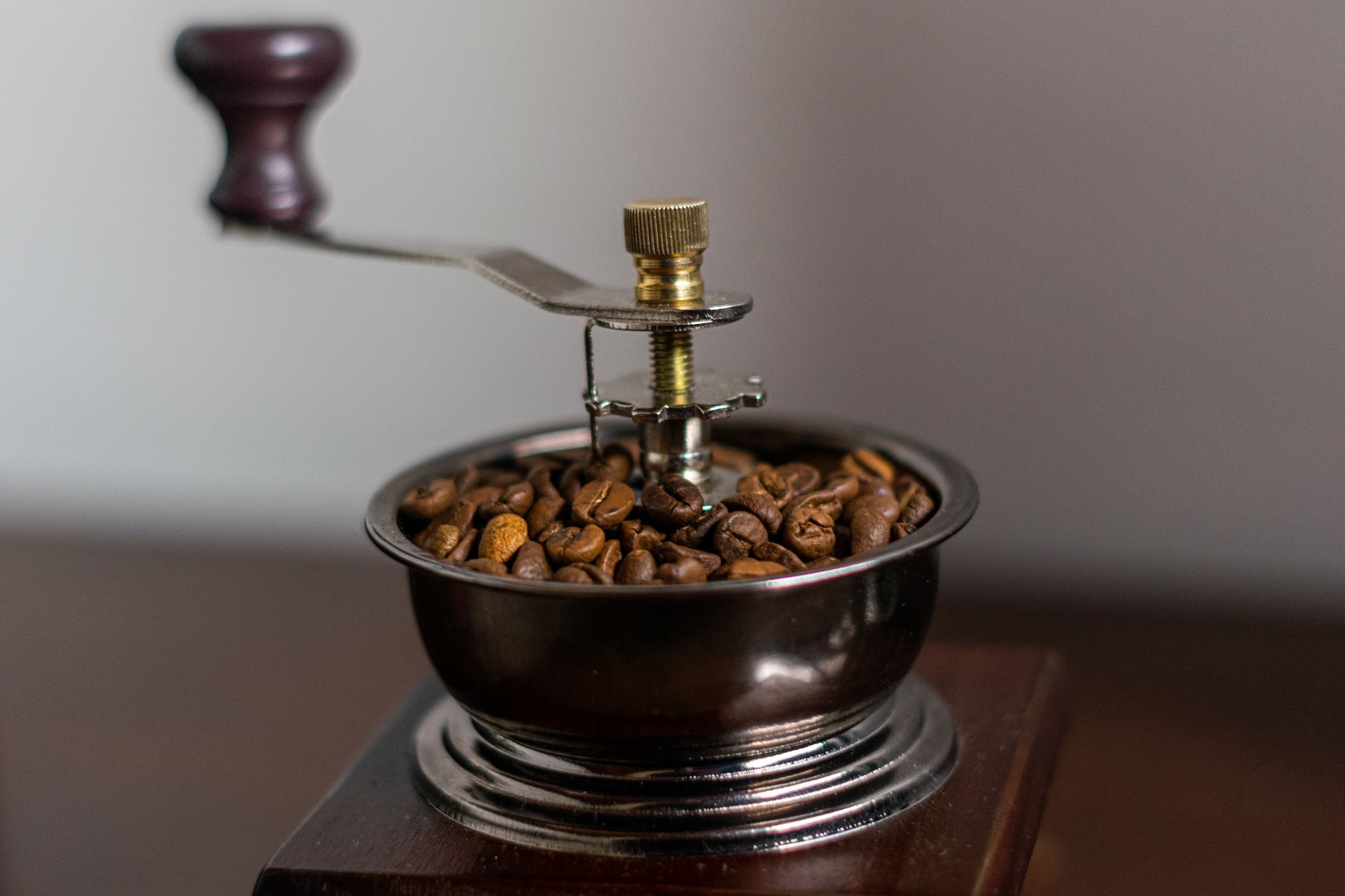 Photo: Gonzalo Facello via Pexels
Frequency depends on three variables: roast level, daily volume, and grinder type.
| Variable | Lower Frequency | Higher Frequency |
|---|---|---|
| Roast | Light / medium | Dark / oily |
| Volume | 1–2 cups/day | 4+ cups/day or commercial |
| Type | Blade grinder (less retention) | Burr grinder (more retention channels) |
If you’re grinding espresso, add retention to that picture. High-retention grinders like the Eureka Mignon series hold 0.5–2g of grounds in the chute after each grind — that’s stale powder waiting to contaminate your next dose.
Quick Daily Habit vs. Deep Clean: What’s the Difference?
A quick clean is 30 seconds: tap the hopper, run the grinder empty, brush the exit chute. A deep clean is 15 minutes: disassemble the burr carrier, brush every surface, run grinder-cleaning tablets, reassemble. Both matter — one prevents buildup, the other removes it.
 Photo: Lukas Blazek via Pexels
Quick Clean (Weekly or More)
- Empty and knock out the hopper
- Run a small amount of stale beans or rice through to sweep the chute (some manufacturers warn against rice — check yours)
- Brush the exit chute and grounds bin
- Wipe the hopper with a dry cloth
Deep Clean (Monthly)
- Unplug the grinder
- Remove and disassemble the burr carrier — upper burr lifts out on most flat-burr grinders; conical burrs usually unscrew
- Brush both burr surfaces with a stiff-bristled grinder brush
- Run one dose of Grindz or similar cleaning tablets through at your standard grind setting
- Follow with a small purge of fresh beans to clear the cleaning compound
- Wipe all plastic surfaces with a slightly damp cloth — never wet the burrs or motor housing
- Reassemble and calibrate if your grinder needs it after disassembly
Does the Grinder Type Change Anything?
Yes. Flat burr grinders accumulate more oils across a wider surface area than conical burrs. Blade grinders have no retention but collect fine powder in the blade housing. Espresso grinders need more frequent attention than filter grinders because the fine grind creates more surface area for oils to stick.
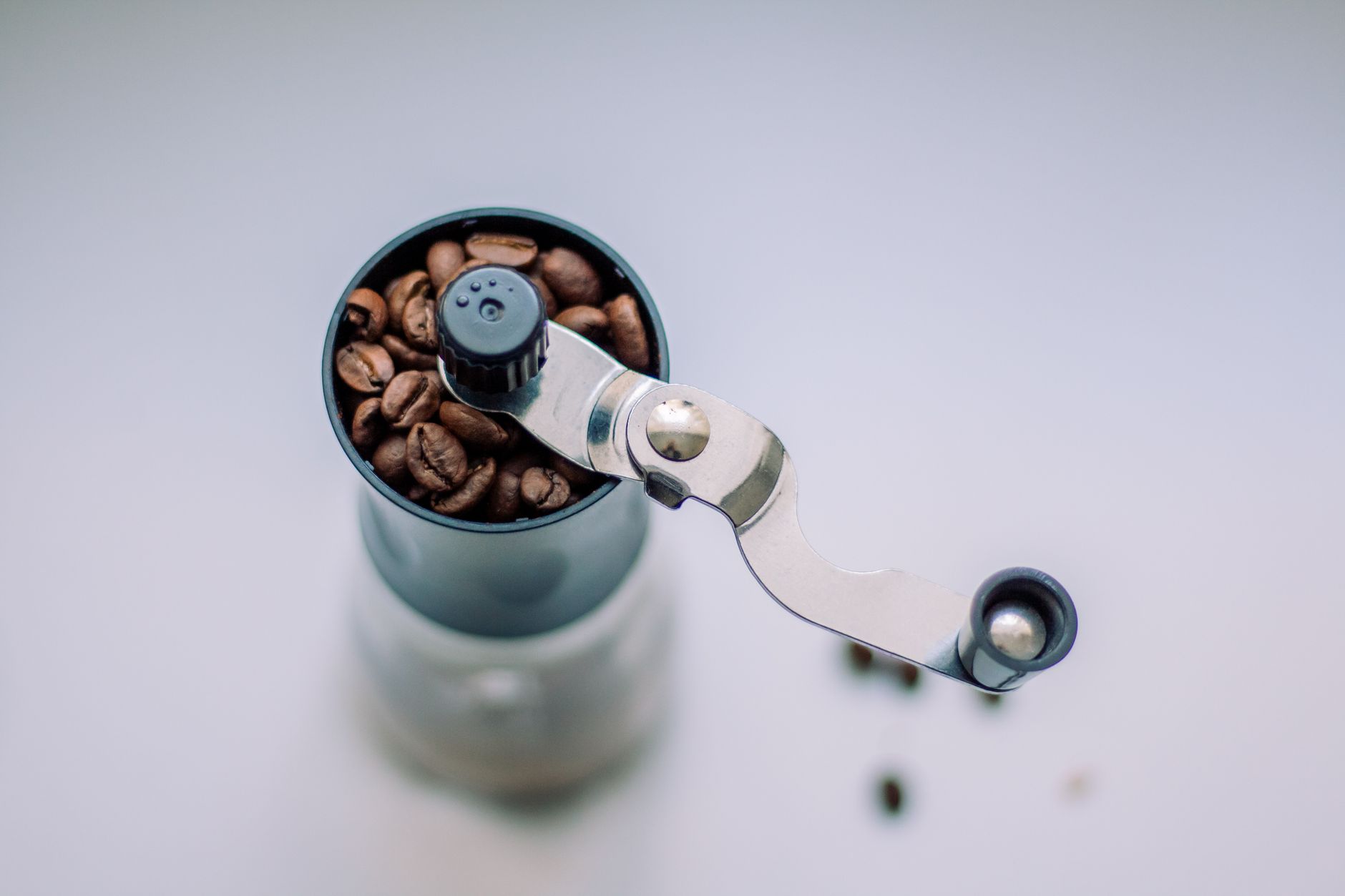 Photo: Sedanur Kunuk via Pexels
| Grinder Type | Typical Retention | Recommended Clean Frequency |
|---|---|---|
| Flat burr (home) | 0.5–2g | Weekly brush, monthly deep |
| Conical burr (home) | 0.2–0.8g | Weekly brush, monthly deep |
| Flat burr (commercial) | 2–5g | Daily brush, weekly deep |
| Blade grinder | Low retention | Monthly — clear blade housing |
| Single-dose (e.g., Niche Zero) | <0.1g | Monthly deep only |
Single-dose grinders like the Niche Zero are low-maintenance precisely because they’re designed to leave nothing behind. If you’re purging 2–3g before every dose on a traditional hopper grinder, you’re already paying the retention tax — don’t skip the cleaning.
What Happens If You Don’t Clean It?
Rancid coffee oils oxidize on the burr surface within days when you’re grinding oily beans. The result is a persistent bitter, musty, or cardboard-like note in every cup — even with fresh, quality beans. It’s the most common cause of “my coffee tastes off” that has nothing to do with the beans, water, or technique.
Beyond flavor: fine coffee dust can jam burr carriers over time, and grounds compacting in the chute can cause clumping that throws off your dose weight.
→ See Also
- The Complete Coffee Grinder Guide (2026)
- Burr vs Blade Grinder: Why It Matters for Your Coffee
- Burr Grinder Maintenance: Complete Step-by-Step Guide (2026)
- Best Coffee Grinders Under $100 (2026)
FAQ
How often should I clean my coffee grinder if I only use it on weekends? Every 2–3 weeks for a quick brush is sufficient for light weekend use. Do a full deep clean once every 6–8 weeks. Low volume reduces buildup, but oils still oxidize on the burr surface between sessions.
Can I use water to clean my coffee grinder burrs? No. Water causes rust on steel burrs and can damage the motor housing and bearings. Use a dry brush, compressed air, or purpose-made cleaning tablets. The only wet wiping is the plastic hopper and grounds bin — fully dried before reassembly.
Do grinder cleaning tablets actually work? Yes, for clearing oils from the burr surface and grinding path. Products like Urnex Grindz are food-safe, abrasive enough to strip oil residue, and leave no meaningful taste transfer after a purge. They don’t replace brushing, but they reach surfaces a brush can’t.
My grinder smells stale even after cleaning — what’s wrong? Check the hopper seam and the gasket if your model has one — oils accumulate in those joints. Also inspect the exit chute for compacted fine powder that a quick brush won’t reach. A wooden skewer or a pipe cleaner clears those spots.
Does grinding light roast require less cleaning? Yes. Light roasts are lower in surface oils and less likely to leave sticky residue. Monthly deep cleans are usually enough for a daily light-roast drinker, with a quick weekly brush to clear fine dust.
Editorial methodology: Assessments are based on manufacturer specifications, published user reviews, and editorial research. Physical hands-on testing is noted explicitly where it occurred. Rankings reflect our editorial judgment and are not influenced by affiliate commission rates. Full editorial policy · Affiliate disclosure