Contents
Breville Bambino Plus Review (2026): Still Worth It?
TL;DR: The Breville Bambino Plus is the best automatic milk-steaming espresso machine under $500. It pulls respectable shots, steams milk hands-free, and heats up in 3 seconds — all in a compact footprint. If you want café-quality lattes at home without a steep learning curve, this is the machine to buy.
What Is the Breville Bambino Plus?
The Bambino Plus is Breville’s entry-level semi-automatic espresso machine with an automatic steam wand. It targets home baristas who want real espresso — not pod-based simulacra — but don’t want to spend $800+ or master manual milk-steaming. Priced around $500, it sits between toy machines and serious prosumer gear.
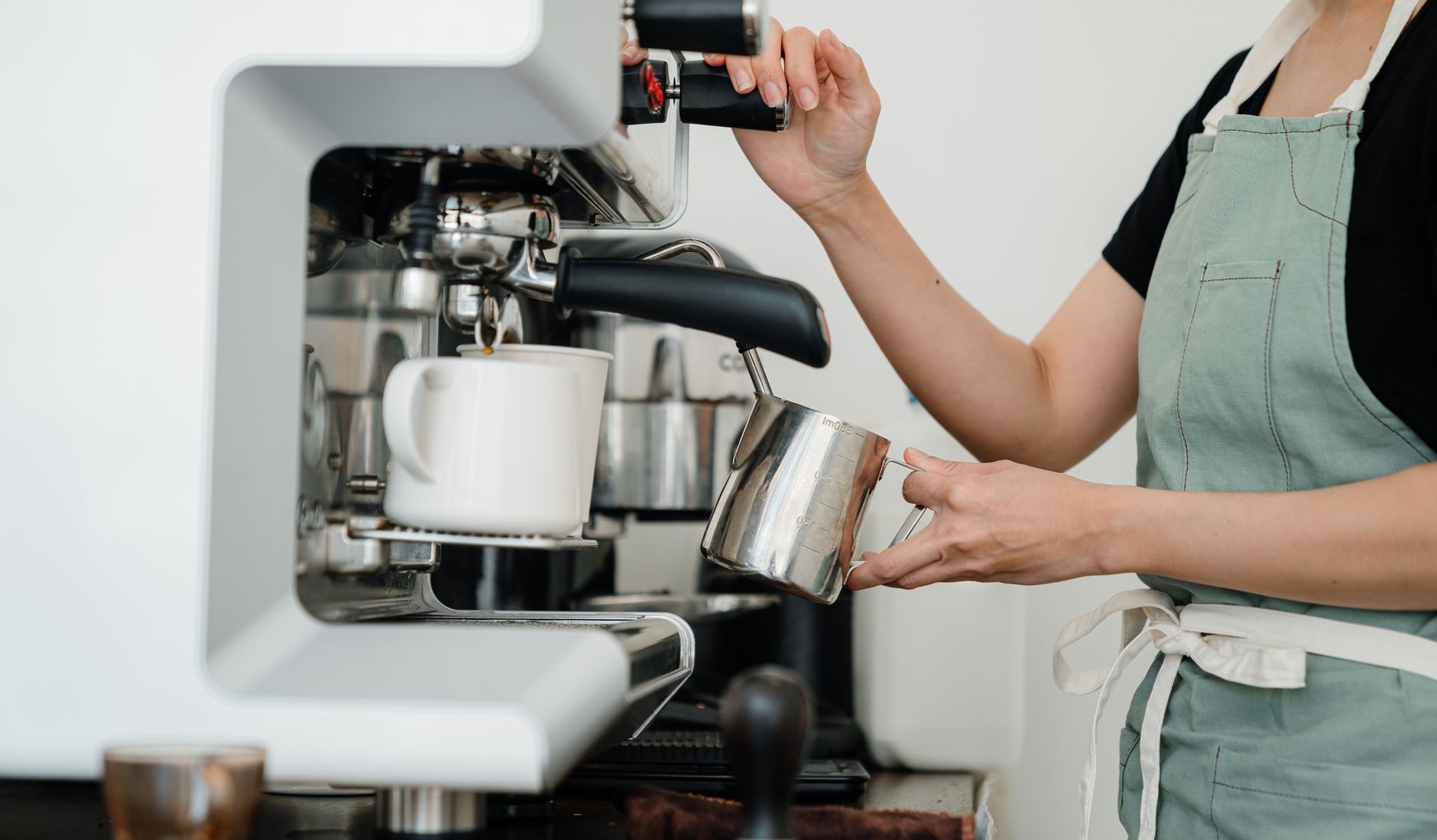
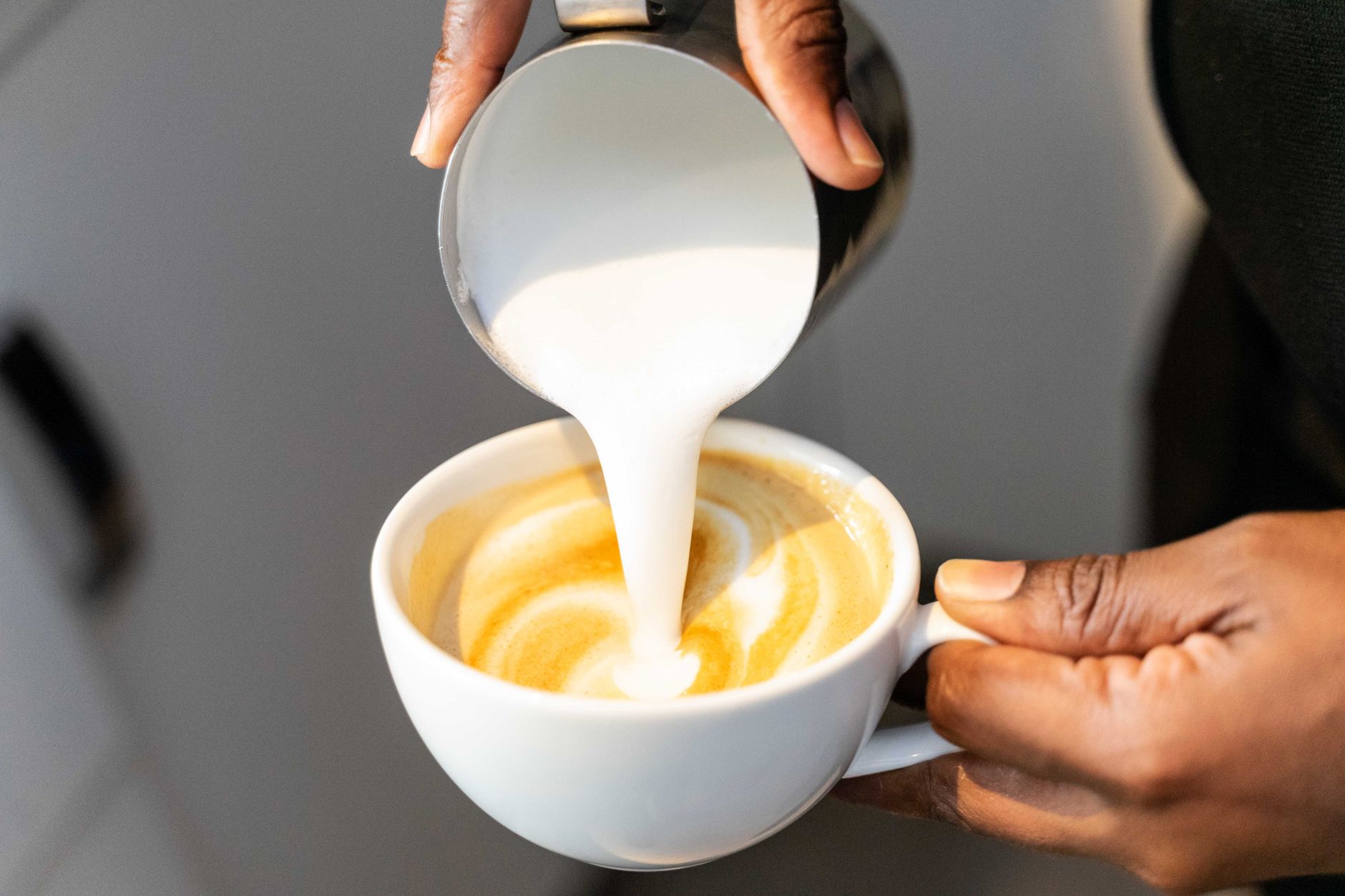 Photo: Ken Mwaura via Pexels
Breville launched the original Bambino in 2019, then added the “Plus” suffix to distinguish the model with an auto-steam wand. That single upgrade changes the machine’s entire value proposition — it means beginners can pull barista-quality lattes by their third shot.
The thermojet heating system is the headline spec: it reaches brewing temperature in 3 seconds, compared to 25–45 seconds for boiler-based competitors. For anyone who makes one or two drinks in the morning without time to waste, that matters.
Breville Bambino Plus Specs
| Spec | Detail |
|---|---|
| Boiler type | Thermojet (instant heating) |
| Portafilter size | 54 mm |
| PID | Yes |
| Pump type | 15-bar Italian vibratory |
| Burr size | N/A (no built-in grinder) |
| Dimensions | 7.7“ W × 12.6“ H × 13.2“ D |
| Weight | 8.4 lbs |
| Water tank | 64 oz |
| Pre-infusion | Automatic |
| Wattage | 1600W |
How Does It Perform on Espresso?
Shot quality is genuinely good for the price. PID temperature control and automatic pre-infusion mean the Bambino Plus extracts more consistently than machines costing twice as much without those features. The limiting factor is the 54 mm portafilter — it’s not the 58 mm industry standard, which limits puck prep flexibility and basket upgrade options.
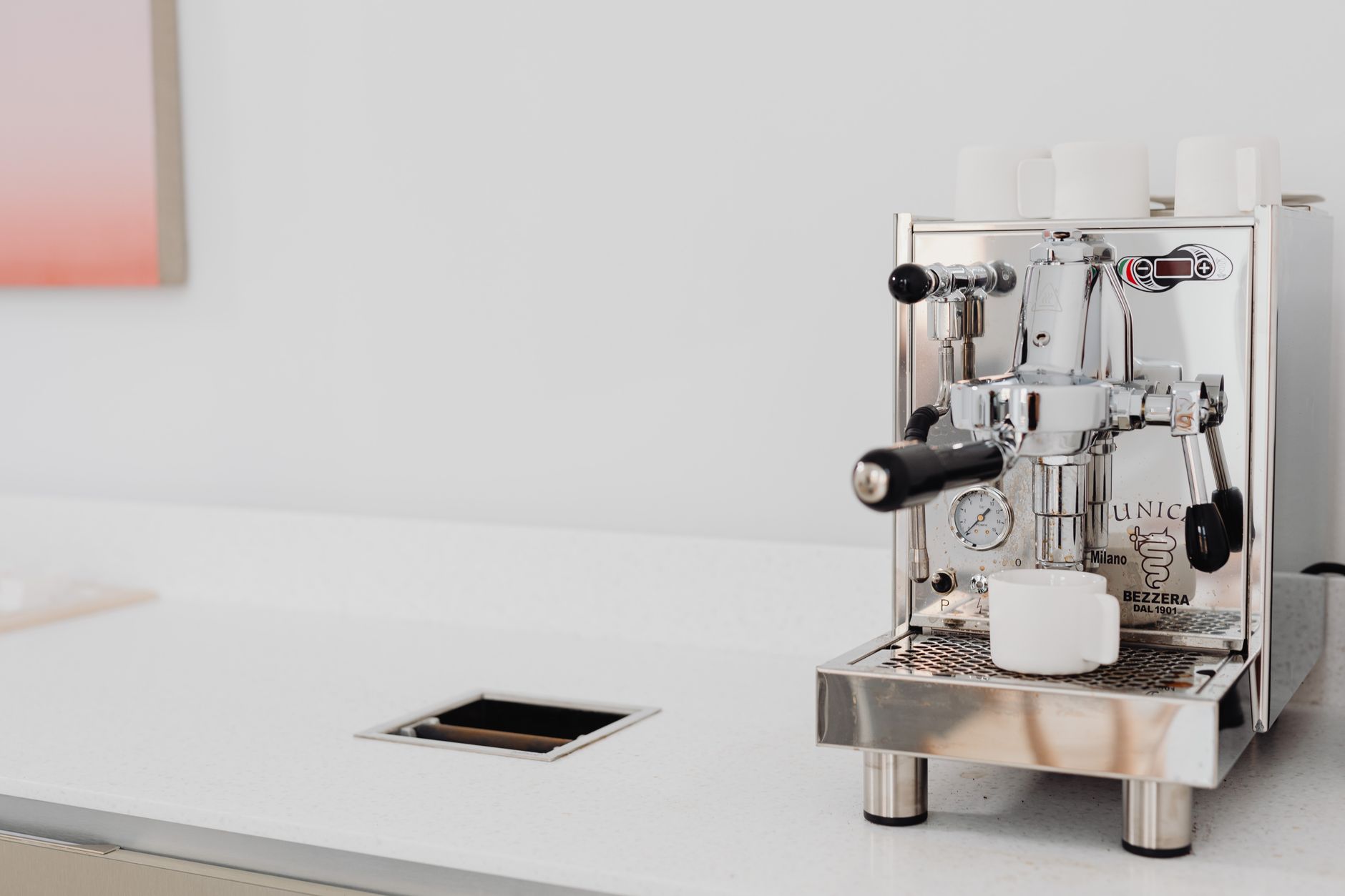
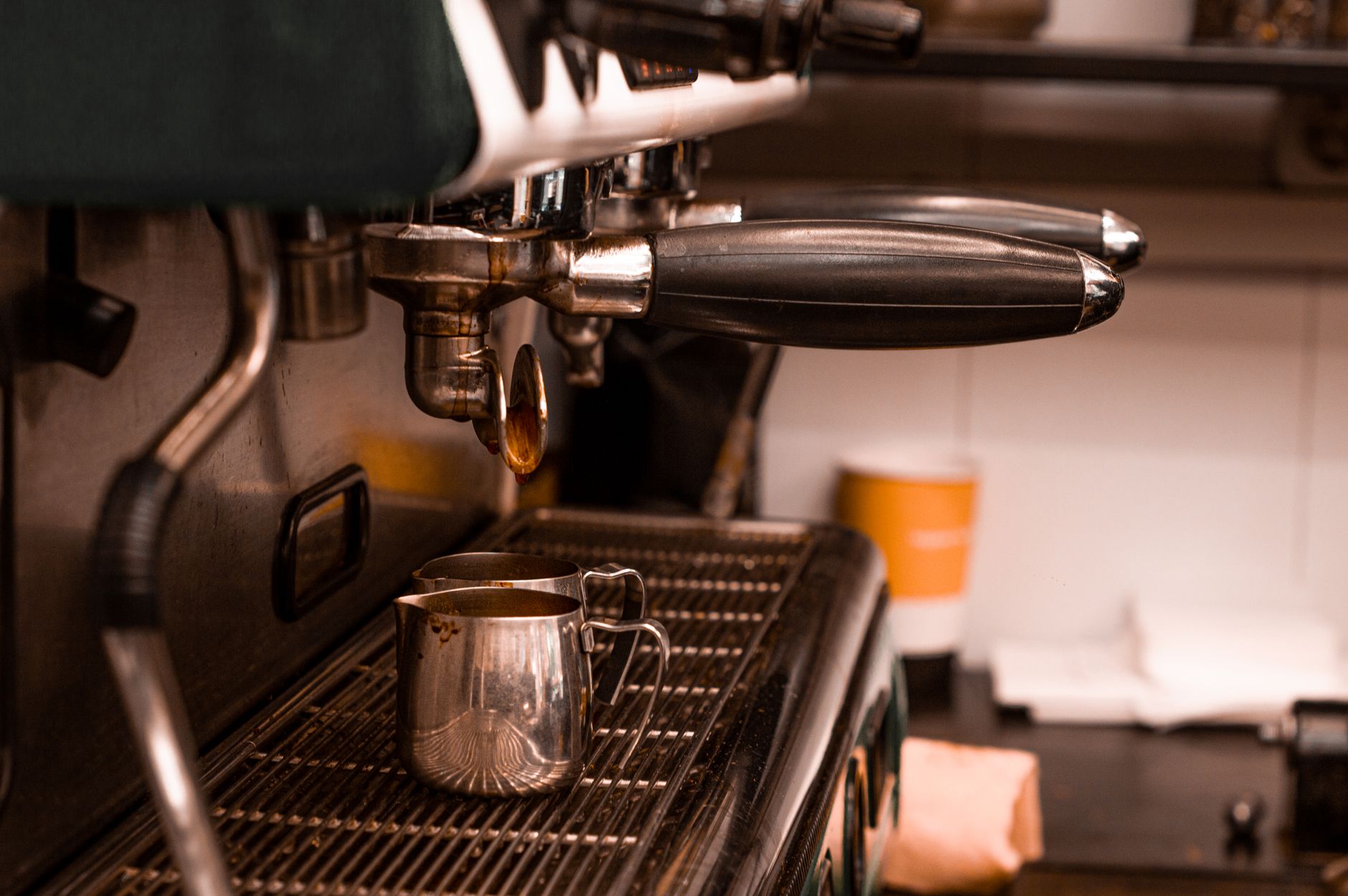 Photo: Pavel Sharko via Pexels
The pressurized (dual-wall) baskets that ship with the machine forgive poor grind quality, which is ideal for beginners using a blade grinder or grocery-store pre-ground coffee. Swap to the included single-wall baskets once you have a decent grinder and you’ll notice meaningfully more clarity and sweetness in the cup.
Pre-infusion wets the puck at low pressure before ramping up — this is the same principle behind the $3,000 La Marzocco Linea Mini’s shot quality advantage. On the Bambino Plus it’s automatic and non-adjustable, but it’s doing real work.
One limitation: the machine has no pressure gauge and no shot clock display. You’re flying blind unless you add a separate shot timer or count seconds manually. Experienced home baristas will miss the feedback loop.
Milk Steaming: The Bambino Plus’s Real Selling Point
The auto-steam wand is what separates the Bambino Plus from virtually every competitor at this price. Set your target temperature (140°F–149°F or 150°F–160°F), submerge the wand, hit the button — the machine textures and heats the milk automatically, then stops. Resulting foam is consistently microfoam-quality: glossy, pourable, and latte-art-ready after minimal practice.
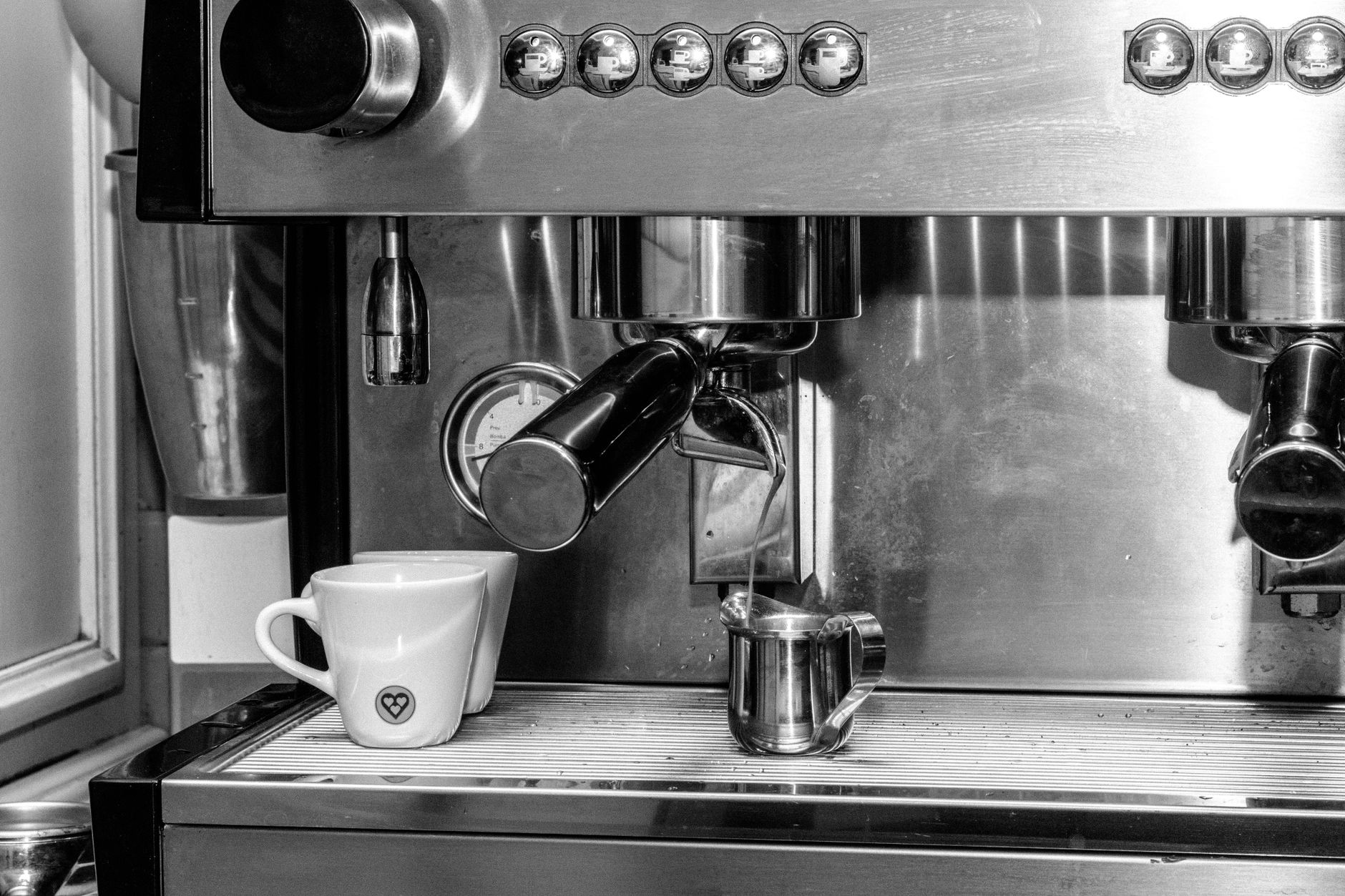
 Photo: Mario Caliaro via Pexels
Manual-wand machines at this price range (Gaggia Classic Pro, DeLonghi Dedica) require practice to not scorch or boulder your milk. The Bambino Plus removes that variable entirely. For flat whites, lattes, and cappuccinos, it’s faster and more consistent than skilled manual steaming on a comparable machine.
The wand also has a manual mode for those who want to develop technique. It’s the best of both paths.
Breville Bambino Plus vs. Competitors
| Machine | Price | Boiler | Portafilter | PID | Pump | Best For |
|---|---|---|---|---|---|---|
| Breville Bambino Plus |
The Gaggia Classic Pro is the main competition. It has a 58 mm portafilter (better long-term upgrade path) and a legendary modding community, but no PID out of the box and a manual steam wand that takes weeks to master. If you prioritize milk drinks and quick daily use, Bambino Plus wins. If you’re an espresso purist who wants to grow into the machine, Gaggia Classic Pro.
Who Should Buy the Breville Bambino Plus?
Verdict by archetype:
Milk drinker / latte lover — Buy it. This machine was designed for you. Auto-steam wand, PID, fast heat-up: everything that makes the daily latte routine fast and consistent. No competition at this price for this use case.
Espresso purist — Hesitate. The 54 mm portafilter limits basket upgrades. No pressure gauge. Shot quality is good but the feedback tools are missing. Consider the Gaggia Classic Pro or stretch to the Breville Barista Pro for a screen.
Convenience-first / beginner — Buy it. Pressurized baskets forgive bad grinding. Auto-steam eliminates the hardest skill to learn. 3-second heat-up means no ritual. It’s the machine most people should start with.
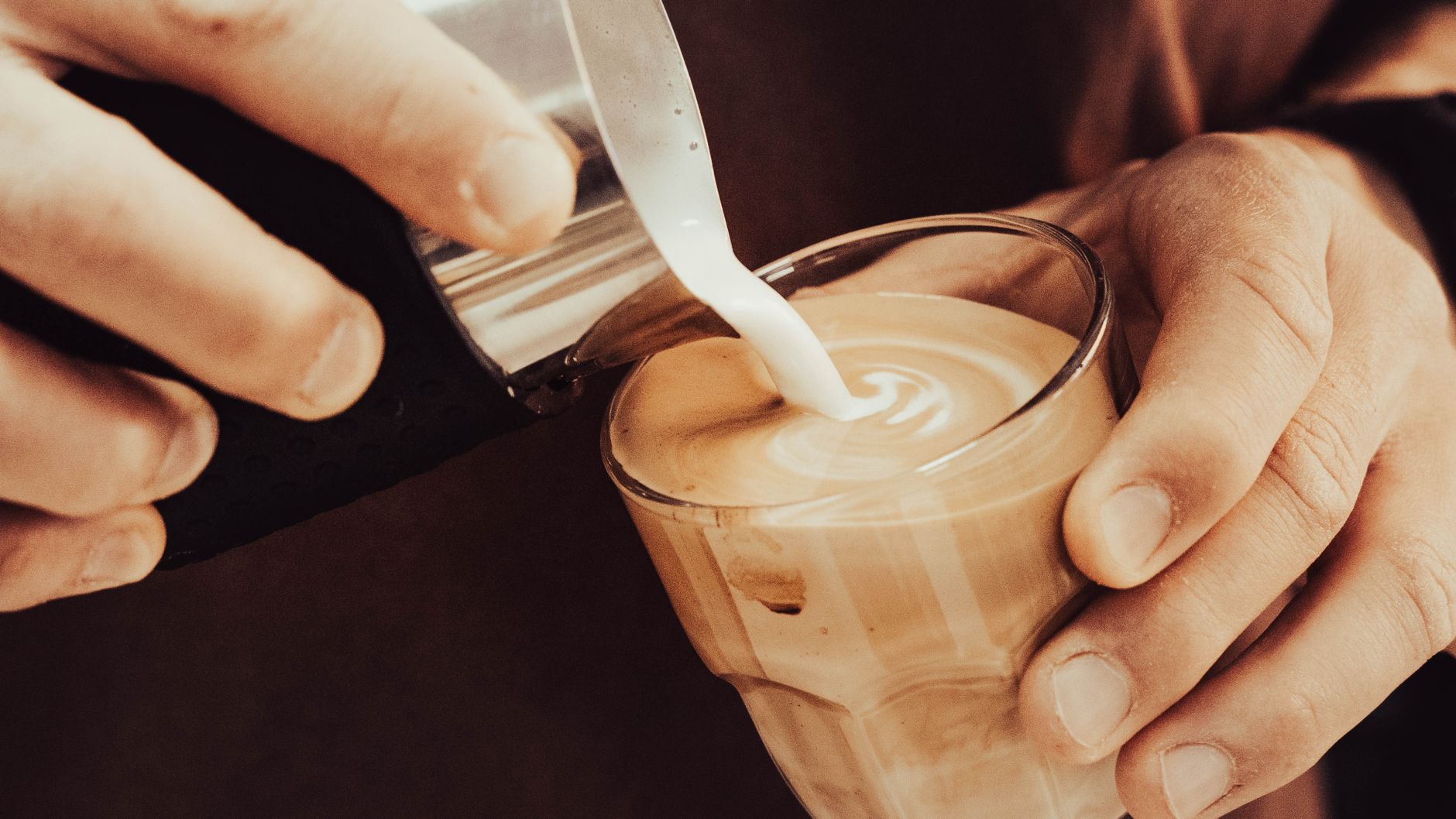
 Photo: Alex Tyson via Pexels
What’s Changed for 2026?
Breville hasn’t issued a hardware revision to the Bambino Plus in 2025–2026. The machine you buy today is the same internally as the 2022 model. Breville has reduced retail pricing slightly in response to competition from DeLonghi’s updated Dedica Arte line. At current pricing (~$499 MSRP, often $399–$449 on sale), the value proposition is stronger than it’s ever been.
Third-party basket upgrades from IMS and VST now come in 54 mm sizing, which somewhat closes the gap with 58 mm machines for espresso quality. If you bought a Bambino Plus two years ago and felt limited by the portafilter, the accessory market has caught up.
Common Criticisms — Are They Fair?
“The 54 mm portafilter is a dealbreaker.” Partially fair. The 58 mm standard offers more basket choices and is what you’ll use at a café. But for home use, the current 54 mm third-party market covers everything you’d actually want. Only an issue if you’re comparing shots in a serious cupping context.
“The steam wand is too slow.” True compared to prosumer single-boiler or heat exchanger machines. For one or two drinks, it’s fine. For a household making four lattes in sequence, the Thermojet recovery time adds up.
“No pressure gauge makes dialing in hard.” Accurate. Breville trades transparency for simplicity. Pair it with a decent shot timer and the Barista Express upgrade guide logic applies: dose, distribute, tamp, time.
→ See Also
- The Complete Guide to Espresso Machines (2026)
- Best Espresso Machine Under $200 (2026)
- Best Espresso Machine Under $500 (2026)
FAQ
Is the Breville Bambino Plus worth it in 2026? Yes, particularly at the sub-$450 sale prices it regularly hits. No machine at this price matches it for automatic milk steaming combined with PID temperature control. If you drink milk-based espresso drinks daily, it pays for itself in café savings within two months.
What’s the difference between the Breville Bambino and Bambino Plus? The Plus adds an automatic steam wand, a second temperature setting for milk, and a larger water tank (64 oz vs. 47 oz). The base Bambino has a manual steam wand. The price difference is typically $100–$150 — worth it for anyone who drinks lattes or cappuccinos.
Does the Breville Bambino Plus work with pre-ground coffee? Yes. The included pressurized dual-wall baskets are specifically designed to produce acceptable espresso with pre-ground coffee and lower-grade grinders. For best results, use fresh beans and a burr grinder — but the machine will produce a drinkable shot regardless.
Can you make latte art with the Breville Bambino Plus? Yes. The auto-steam wand consistently produces textured microfoam pourable enough for basic latte art (hearts, rosettas with practice). The auto-mode targets microfoam at the correct temperature range. Most users can pour a basic heart within the first week.
How long does the Breville Bambino Plus last? With regular descaling (every 2–3 months in hard water areas) and group head cleaning, reported lifespans of 5–8 years are common in user forums. The Thermojet heating element has fewer points of failure than traditional boiler systems. Breville’s parts availability and service network are better than most competitors at this price.
Editorial methodology: Assessments are based on manufacturer specifications, published user reviews, and editorial research. Physical hands-on testing is noted explicitly where it occurred. Rankings reflect our editorial judgment and are not influenced by affiliate commission rates. Full editorial policy · Affiliate disclosure