Contents
Single Boiler vs Double Boiler Espresso Machine: Full Comparison
TL;DR: A single boiler espresso machine uses one boiler for both brewing and steaming — you have to wait between tasks. A double boiler has separate boilers running simultaneously, letting you pull a shot and steam milk at the same time. If you make milk drinks daily, the double boiler is worth the price premium. If you mostly drink black espresso, a single boiler is all you need.
What’s the Actual Difference?
A single boiler heats to brew temperature (~93°C), then you manually switch it to steam temperature (~130°C+) — that transition takes 30–90 seconds each way. A double boiler maintains both temperatures simultaneously via independent boilers, eliminating the wait entirely. The tradeoff is cost: double boilers typically start at $800 and climb fast.
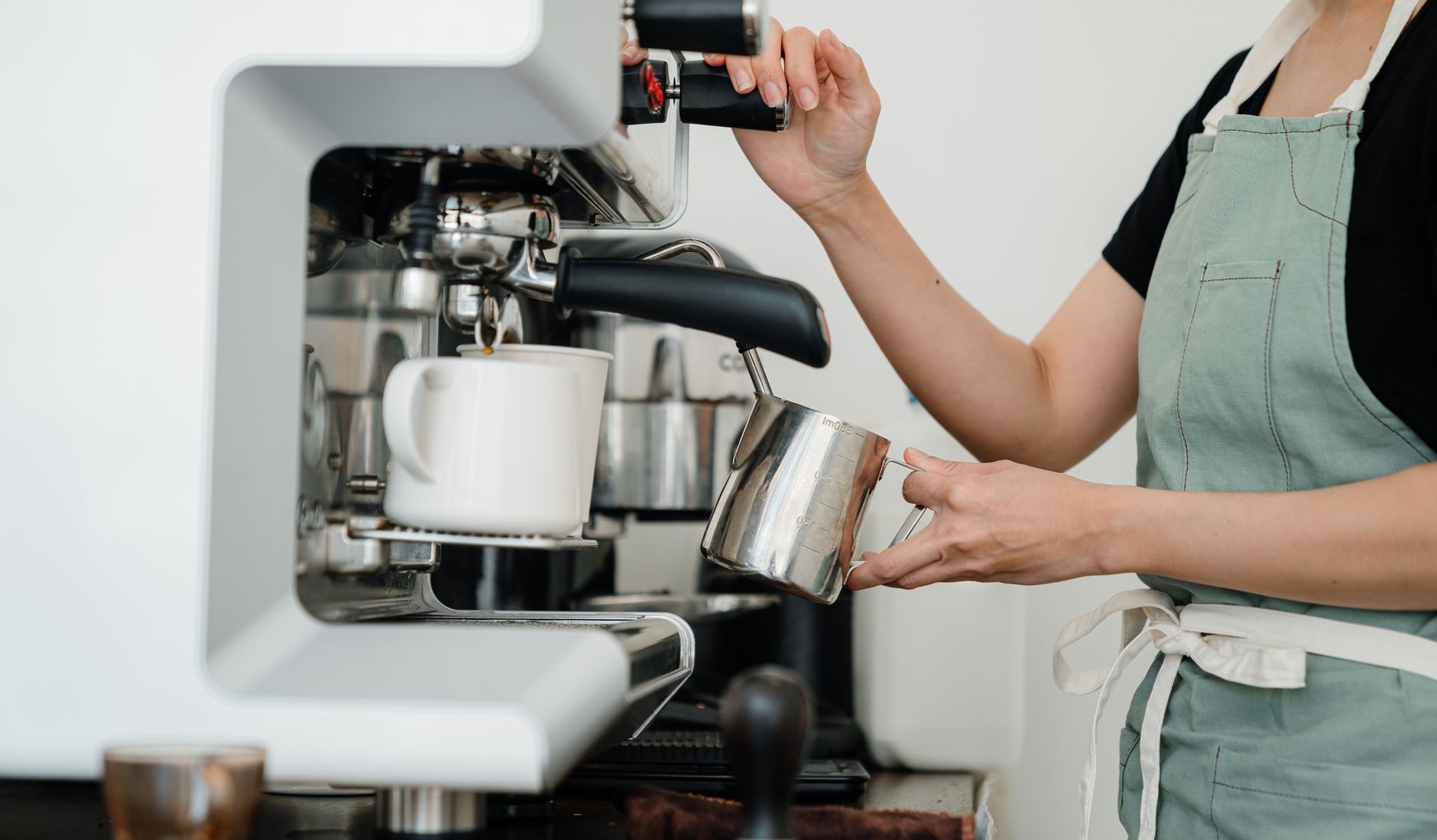
 Photo: Los Muertos Crew via Pexels
Most home machines under $500 are single boiler. The Breville Bambino Plus
There’s also a middle-ground category — heat exchanger (HX) machines — covered below.
Single Boiler Espresso Machines: Who They’re For
Single boiler machines are the right choice if you drink mostly black espresso, make one drink at a time, or want the lowest possible entry price into quality espresso. The “wait” between brewing and steaming is real, but for an Americano drinker or espresso purist it’s a non-issue.
 Photo: Khoa Võ via Pexels
Performance Ceiling
Modern single boilers with PID temperature control (the Gaggia Classic Pro with aftermarket PID, or the Rancilio Silvia Pro ) can produce genuinely excellent espresso. The PID eliminates temperature surfing — the old ritual of purging to stabilize brew temp before pulling.
Where single boilers genuinely struggle: back-to-back milk drinks. Pull a cortado for yourself, then immediately make one for someone else — the second steam takes 45–60 seconds to recover. In a commercial setting, that’s dead time. At home, it’s a minor inconvenience.
Price Range
Single boilers dominate the $200–$700 bracket. The Breville Bambino Plus sits around $500 and automates the steam transition. The Gaggia Classic Pro at ~$450 is the manual benchmark. Above that, value-per-dollar starts favoring HX machines.
Double Boiler Espresso Machines: Who They’re For
Double boilers are built for milk drink workflows — cappuccinos, flat whites, lattes back to back. Both the brew boiler and steam boiler are always at temperature, so you can steam during extraction or pull consecutive drinks without any recovery wait. You pay for this with price, size, and power draw.
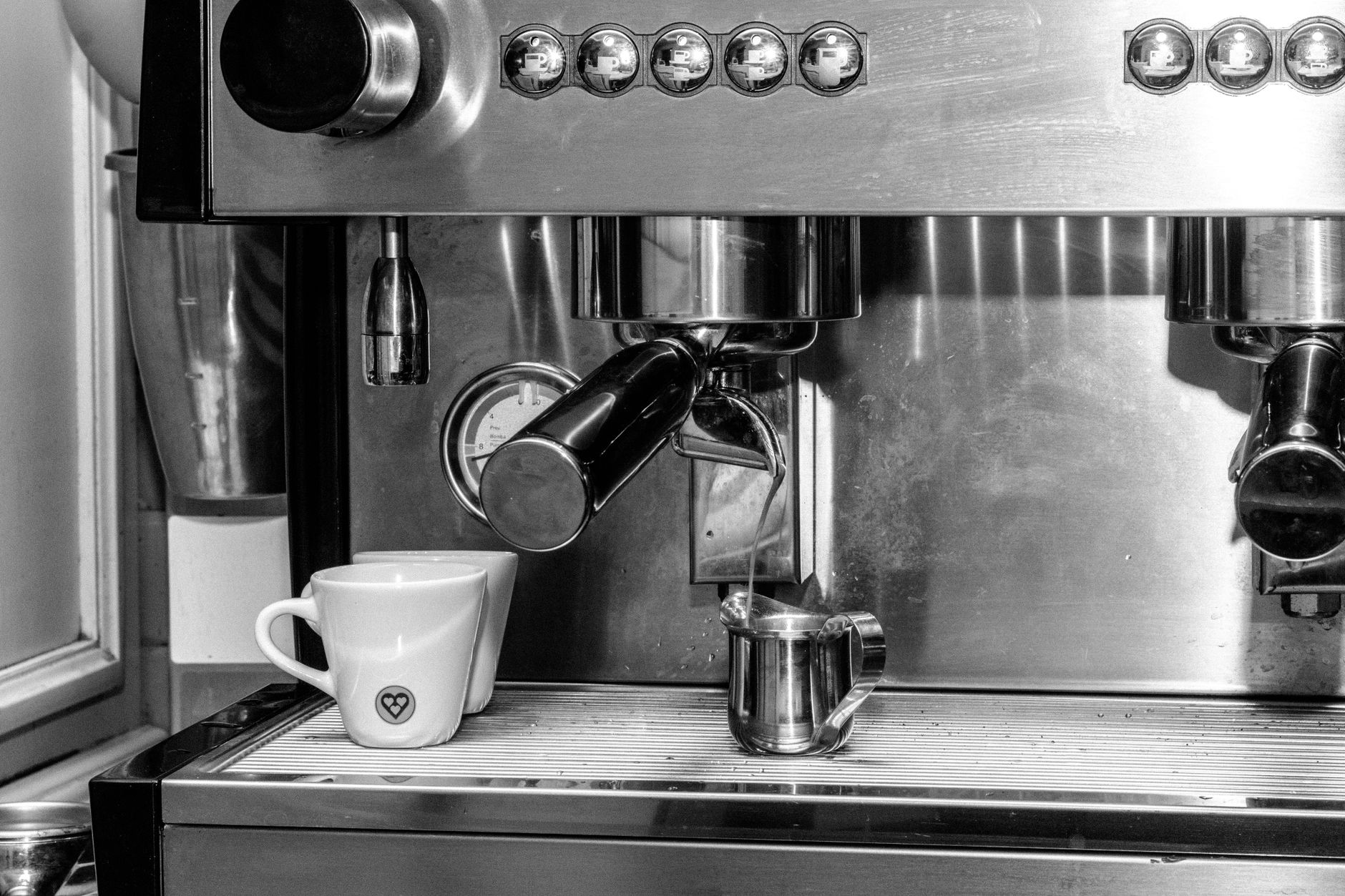
 Photo: Mike Bird via Pexels
The Simultaneous Workflow
The practical difference becomes clear in a household that makes two drinks in the morning. With a double boiler: pull the first shot while steaming milk for the second drink. Total time: ~30 seconds. With a single boiler: pull shot one (25s), wait for steam temp (60s), steam milk (20s), wait for brew temp (45s), pull shot two (25s). Total: ~2.75 minutes. Double that for two people.
Notable Models
| Machine | Price | Steam Boiler | Brew Boiler | PID | Best For |
|---|---|---|---|---|---|
| Breville Dual Boiler | ~$1,400 | 600ml | 500ml | Yes (dual) | Home prosumer |
| Rocket Appartamento | ~$1,600 | 1.8L | HX | Yes | Compact kitchen |
| ECM Synchronika | ~$2,800 | 2.0L | 0.75L | Yes (dual) | Serious home use |
| La Marzocco Linea Mini | ~$5,000 | 3.5L | 0.35L | Yes | Coffee obsessives |
Heat Exchanger Machines: The Middle Ground
HX machines use a single large boiler (maintained at steam temp) with a copper heat exchanger tube running through it — brew water passes through the tube and cools to espresso temp. You get simultaneous steaming capability at single-boiler cost, but brew temperature is less stable than a true dual boiler and requires a flush ritual before pulling.
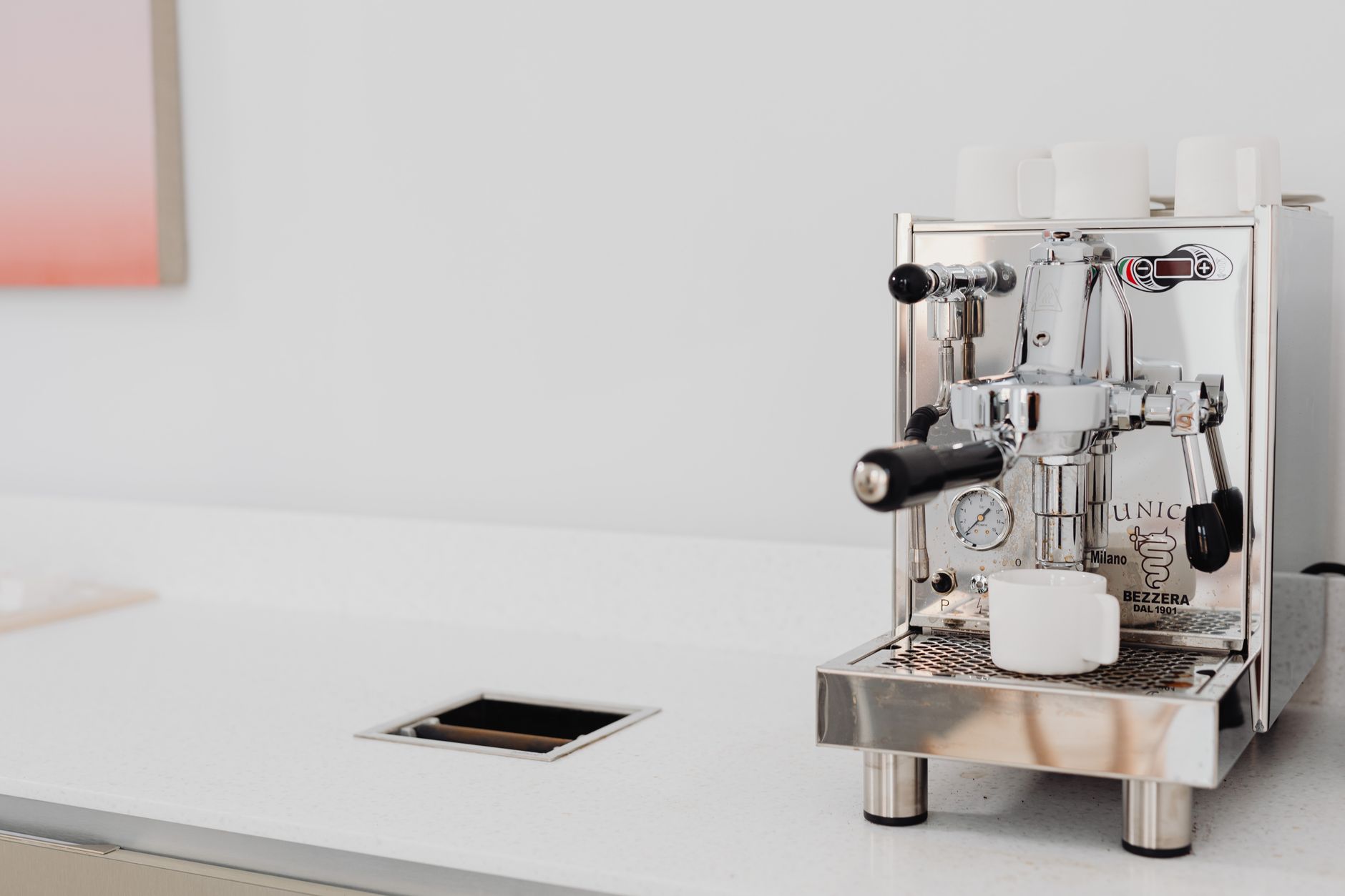
 Photo: Ketut Subiyanto via Pexels
The Rocket Appartamento is an HX machine despite appearing in the “double boiler” category above. The Bezzera BZ10 and Profitec Pro 300 are purpose-built HX machines in the $800–$1,200 window. For most home users who want simultaneous capability without the $1,400+ price of a true dual boiler, HX is a practical compromise.
Specs Comparison: Single vs Double Boiler
| Feature | Single Boiler | Heat Exchanger | Double Boiler |
|---|---|---|---|
| Simultaneous brew + steam | No | Yes (with flush) | Yes |
| Brew temp stability | Good (with PID) | Moderate | Excellent |
| Steam power | Limited | High | High |
| Warmup time | 10–20 min | 20–30 min | 20–30 min |
| Entry price | ~$200 | ~$800 | ~$1,400 |
| Footprint | Compact | Medium–large | Medium–large |
| Maintenance complexity | Low | Medium | Medium–high |
Equipment Module: Key Specs by Machine Type
Single Boiler Reference Specs
| Machine | Boiler Type | Portafilter | PID | Pump | Burr (if integrated) |
|---|---|---|---|---|---|
| Gaggia Classic Pro | Single / 200ml | 58mm | No (mod available) | Vibratory | N/A |
| Rancilio Silvia Pro X | Single / 300ml | 58mm | Yes | Vibratory | N/A |
| Breville Bambino Plus | Thermocoil | 54mm | Yes (via thermocoil) | Vibratory | N/A |
Double Boiler Reference Specs
| Machine | Boiler Type | Portafilter | PID | Pump | Best For |
|---|---|---|---|---|---|
| Breville Dual Boiler | Dual SS | 58mm | Dual | Vibratory | Value prosumer |
| ECM Synchronika | Dual copper | 58mm | Dual | Rotary | Daily driver |
| La Marzocco Linea Mini | Dual | 58mm | Yes | Rotary | Obsessives |
Verdict by User Type
Milk drink daily (cappuccinos, lattes): Double boiler or HX. The sequential wait of a single boiler becomes friction fast. Start with a Profitec Pro 300 HX around $900, or the Breville Dual Boiler if you want PID precision without rotary-pump complexity.
Espresso purist (blacks, lungos, Americanos): Single boiler. A Gaggia Classic Pro or Rancilio Silvia Pro X will push espresso quality far above what most people can taste — no second boiler needed.
Convenience-first: Single boiler with thermocoil (Breville Bambino Plus). Fast warmup (~3 minutes), automatic steam temp switching, no temperature surfing. Accepts that you’re paying for speed of use, not maximum espresso craft.
→ See Also
- The Complete Guide to Espresso Machines (2026)
- Best Espresso Machine Under $200 (2026)
- Best Espresso Machine Under $500 (2026)
FAQ
Is a double boiler worth it for home use? It depends entirely on your workflow. If you make one drink and stop, no. If you regularly pull back-to-back milk drinks or hate waiting between espresso and steaming, yes — the quality-of-life improvement is significant, and machines like the Breville Dual Boiler make it accessible below $1,500.
Can a single boiler make good espresso? Absolutely. The Gaggia Classic Pro and Rancilio Silvia have produced competition-level espresso. Boiler configuration affects workflow and temperature stability — it doesn’t determine espresso quality ceiling on its own. A PID-equipped single boiler with quality beans and a good grinder beats a double boiler with mediocre variables every time.
What is a heat exchanger machine and is it better than a single boiler? An HX machine uses one boiler (at steam temp) with a copper tube through which brew water passes and cools to extraction temperature. It lets you steam and brew simultaneously without the double-boiler price tag. Brew temperature is less precise than a true dual boiler, and you need to flush the group before pulling — a 3–5 second ritual. For most milk-drink households, HX is the sweet spot between cost and capability.
How long does a single boiler take to switch between brew and steam? Typically 30–90 seconds each way. Machines vary: the Gaggia Classic Pro takes ~45 seconds to reach steam temp and about the same to cool back down. Thermocoil machines like the Bambino Plus automate this and do it faster (~20 seconds), but with less raw steam power.
Does a double boiler use significantly more electricity? At idle, yes — maintaining two boilers at temperature draws more power than one. On machines like the ECM Synchronika, typical power draw is 1,200–1,500W during warmup and 200–400W at idle standby. Many double boiler machines include auto-off or eco modes. The actual cost difference in electricity for home use is negligible — a few dollars per month at most.
What maintenance differences should I expect between single and double boilers? Single boilers are simpler: one boiler to descale, fewer solenoid valves, less to go wrong. Double boilers require descaling two independent circuits, have more plumbing complexity, and can develop independent leaks in each boiler. HX machines sit in the middle. That said, all three types are maintainable at home — double boiler maintenance is more involved but not dramatically so.
Editorial methodology: Assessments are based on manufacturer specifications, published user reviews, and editorial research. Physical hands-on testing is noted explicitly where it occurred. Rankings reflect our editorial judgment and are not influenced by affiliate commission rates. Full editorial policy · Affiliate disclosure