Contents
Best AeroPress Accessories (2026)
TL;DR: The best AeroPress accessories are a quality metal filter, a dedicated grinder, an ergonomic tamp, and a precision kettle. These four upgrades transform the AeroPress from a capable brewer into a precision extraction tool — without requiring a full espresso setup.
Metal Filters: The Highest-Impact Upgrade
The Fellow Prismo and Able Disk Fine are the two metal filters worth buying. Metal filters pass more oils and micro-fines than paper, producing a heavier, rounder cup. The Prismo adds a pressure valve for near-espresso shots. For everyday brewing, the Able Disk Fine is the better default — finer mesh, cleaner cup than the standard Able Disk.
 Photo: Kampus Production via Pexels
| Filter | Mesh | Best For | Notes |
|---|---|---|---|
| Able Disk Fine | Fine | Clean, textured cup | No bypass, better than standard |
| Able Disk Standard | Medium | French press fans | More sediment |
| Fellow Prismo | Fine + valve | Espresso-style shots | No-drip seal during steeping |
| Aesir Filter | Very fine | Clarity + body balance | Premium, harder to find |
Paper filters (the AeroPress stock and Aesir paper) remain the cleaner option for clarity — keep a stack. Metal is an addition, not a replacement.
Grinders: Where Consistency Actually Lives
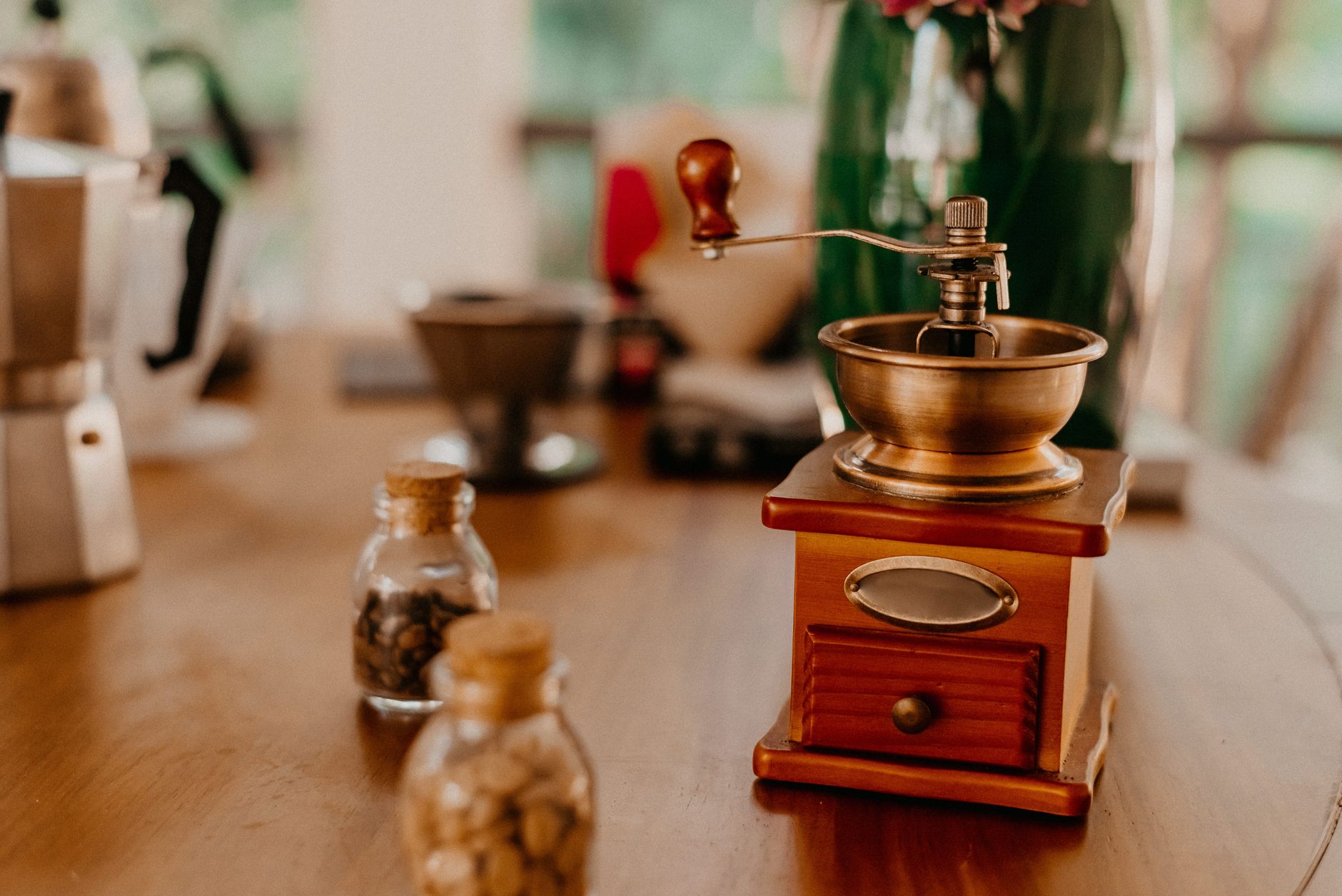
A decent burr grinder matters more for AeroPress than for almost any other brew method, because AeroPress is sensitive to grind distribution. A blade grinder produces uneven particles that extract unevenly — bitterness and sourness in the same cup. For AeroPress specifically, a hand grinder in the $50–$150 range competes directly with electric grinders at twice the price.
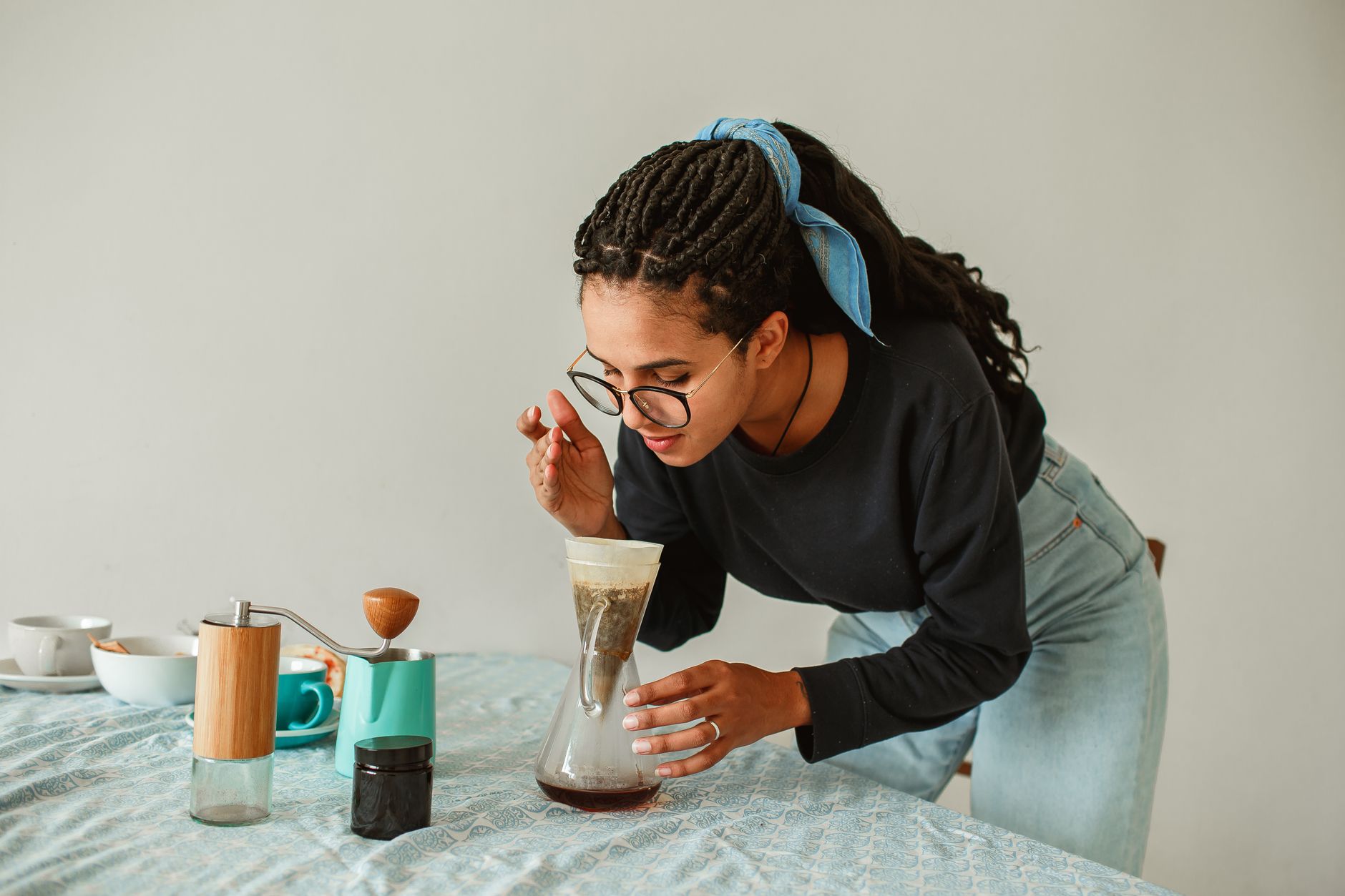 Photo: Helena Lopes via Pexels
| Grinder | Type | Price Range | AeroPress Verdict |
|---|---|---|---|
| 1Zpresso JX-Pro | Hand / conical | $$$ | Excellent — wide grind range, fast |
| Timemore C3 Pro | Hand / conical | $$ | Best value under $80 |
| Baratza Encore ESP | Electric / conical | $$$ | Solid entry electric, consistent |
| Comandante C40 | Hand / conical | $$$$ | Best-in-class hand grinder |
| Hario Slim+ | Hand / conical | $ | Budget entry — acceptable, not great |
For travel, the Timemore C3 Pro is the easy call. For home use where you’re also pulling espresso, the Encore ESP earns its keep.
Kettles: Temperature and Flow Rate Control
An electric gooseneck kettle is not optional if you’re brewing AeroPress seriously. Standard kettles pour too fast and too hot. AeroPress works best at 175–205°F (80–96°C) depending on roast — a variable-temperature gooseneck kettle gives you both precision and control over agitation.
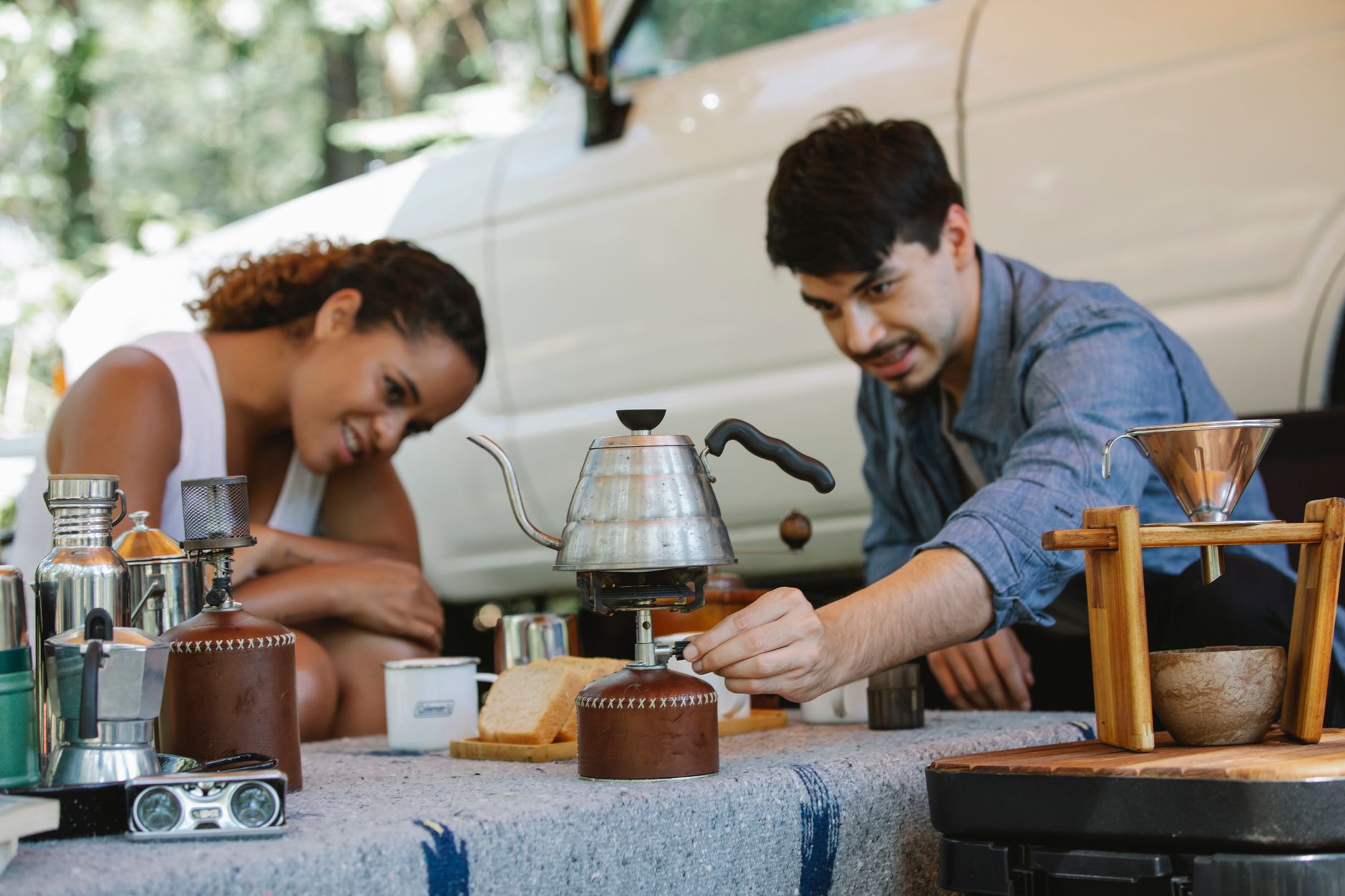 Photo: Uriel Mont via Pexels
| Kettle | Temp Control | Hold Temp | Notes |
|---|---|---|---|
| Fellow Stagg EKG | ±1°F variable | Yes | Best UI, slow-pour spout |
| Timemore Fish Smart | Variable | Yes | Excellent value, precise |
| Brewista Artisan | Variable | Yes | Good flow control |
| Hario V60 Buono | None | No | For those who already temp-check |
If you already own a kettle with a thermometer, buy a cheap instant-read thermometer and use it — that covers you until you’re ready to upgrade.
Scales: Dose and Yield Precision
Weigh your dose and your yield. Eyeballing coffee results in shot-to-shot inconsistency that masks every other improvement you make. A 0.1g-resolution scale with a timer is the spec — you don’t need the most expensive option.
| Scale | Resolution | Timer | Notes |
|---|---|---|---|
| Acaia Pearl | 0.1g | Yes | Best-in-class, Bluetooth |
| Timemore Black Mirror Nano | 0.1g | Yes | Best value — hard to beat at the price |
| Hario V60 Drip Scale | 0.1g | Yes | Reliable, no frills |
| Generic pocket scale | 0.01g | No | Usable — add a phone timer |
The Timemore Black Mirror Nano is the practical recommendation for most AeroPress users. The Acaia is exceptional but priced for obsessives.
Coffee Module B — Brewing Guide
AeroPress Inverted Method Extraction Parameters
Dose:         15–18g coffee
Yield:        200–240ml
Ratio:        1:12 to 1:14
Time:         1:30 – 2:30 total
Temperature:  80–88°C (light roast), 88–96°C (medium/dark)
Pressure:     Manual press — 20–30 seconds
Puck Prep
WDT / Stirring: AeroPress doesn’t use WDT in the espresso sense — use the included paddle or a thin whisk to break clumps and wet grounds evenly after adding water.
Leveling: For the standard method, grounds settle naturally. Inverted method — tap the chamber gently before flipping.
Agitation: One vigorous stir at bloom (30s after first pour) is usually sufficient. More agitation = faster extraction; reduce steep time accordingly.
Seal check: For inverted brewing, ensure the plunger creates a full seal before flipping. A partial seal causes bypass and under-extraction.
Pre-infusion: Add 30–40ml water, stir, and wait 30–45 seconds before adding remaining water. Reduces channeling and degasses fresh roasts.
Troubleshooting Matrix
| Symptom | Likely Cause | Fix |
|---|---|---|
| Sour, thin cup | Under-extraction | Coarser grind, higher temp, longer steep |
| Bitter, harsh cup | Over-extraction | Finer grind, lower temp, shorter steep |
| Watery, no body | Too coarse or low dose | Increase dose or tighten grind |
| Gritty sediment | Paper filter torn or bypassed | Check filter seat; double-filter if needed |
| Slow press / resistance | Grind too fine | Step up 1–2 clicks |
| Fast press, thin flow | Grind too coarse | Step down 1–2 clicks |
| Channeling (uneven extraction) | Uneven tamp or grind clumps | Stir before pressing; grind fresher |
 Photo: Amar Preciado via Pexels
Caps, Stands, and Nice-to-Have Extras
These accessories don’t improve extraction but do improve workflow. The Fellow Prismo doubles as a no-drip cap for standard-orientation brewing. A silicone funnel helps with dosing into the AeroPress chamber without spillage. The AeroPress Go comes with a travel mug that doubles as a carrying case — if you travel with yours, it’s worth considering over the original.
Funnel: The stock AeroPress funnel works. Third-party silicone versions (wide-mouth) are easier to use but not necessary.
Tamp: Not needed for AeroPress — the plunger creates uniform pressure without a separate tamp. Skip it.
Travel case: A neoprene sleeve or the AeroPress Go kit are the two practical options. Rigid cases exist but add weight without much benefit.
→ See also:
- How to Brew Coffee at Home: Complete Method Guide
- French Press Coffee: Complete Brewing Guide (Ratios + Technique)
- French Press Coffee-to-Water Ratio Calculator
FAQ
What accessories do I actually need for AeroPress? Start with a metal or paper filter upgrade and a burr grinder — these two changes have the highest return on extraction quality. A gooseneck kettle and a scale with timer round out the essentials. Everything else is workflow preference.
Is the Fellow Prismo worth buying? Yes, if you want espresso-style shots from your AeroPress or prefer no-drip standard-orientation brewing. It’s not a replacement for a real espresso machine, but it concentrates extraction noticeably compared to a standard filter.
What’s the best budget AeroPress grinder? The Timemore C3 Pro at around $70–80 is the clearest answer. It produces consistent conical burr grinds, handles light and dark roasts well, and is fast enough for daily use. At under $50, the Hario Mini Slim+ is workable but significantly less consistent.
Do I need a scale for AeroPress? Technically no — the AeroPress has a printed dose guide. In practice, weighing dose and yield removes one variable from a short extraction, which matters when you’re dialing in grind size or a new coffee. A $15 pocket scale and a phone timer gets you there.
Can I use AeroPress metal filters with the Fellow Prismo? No — the Prismo has its own integrated metal filter and pressure valve. It replaces the standard filter cap entirely. You can add a paper filter inside the Prismo cap for a cleaner cup, but a separate Able Disk won’t fit alongside it.
How long do AeroPress metal filters last? The Able Disk Fine lasts 12–18 months with daily use before the mesh begins to warp or clog. Rinse immediately after brewing — oils bake onto the mesh if left to dry. Occasional ultrasonic cleaning or a baking soda soak restores flow.
Editorial methodology: Assessments are based on manufacturer specifications, published user reviews, and editorial research. Physical hands-on testing is noted explicitly where it occurred. Rankings reflect our editorial judgment and are not influenced by affiliate commission rates. Full editorial policy · Affiliate disclosure