Contents
Espresso Drinks: The Complete Guide to Every Type
TL;DR: The types of espresso drinks span from a pure 30ml shot to layered milk beverages stretching past 500ml. Every drink on this list starts with one or two espresso shots; what changes is the ratio, temperature, and texture of what gets added. This guide covers every major type with exact ratios, so you know what you’re ordering — and what to make at home.
What Is Espresso, Exactly?
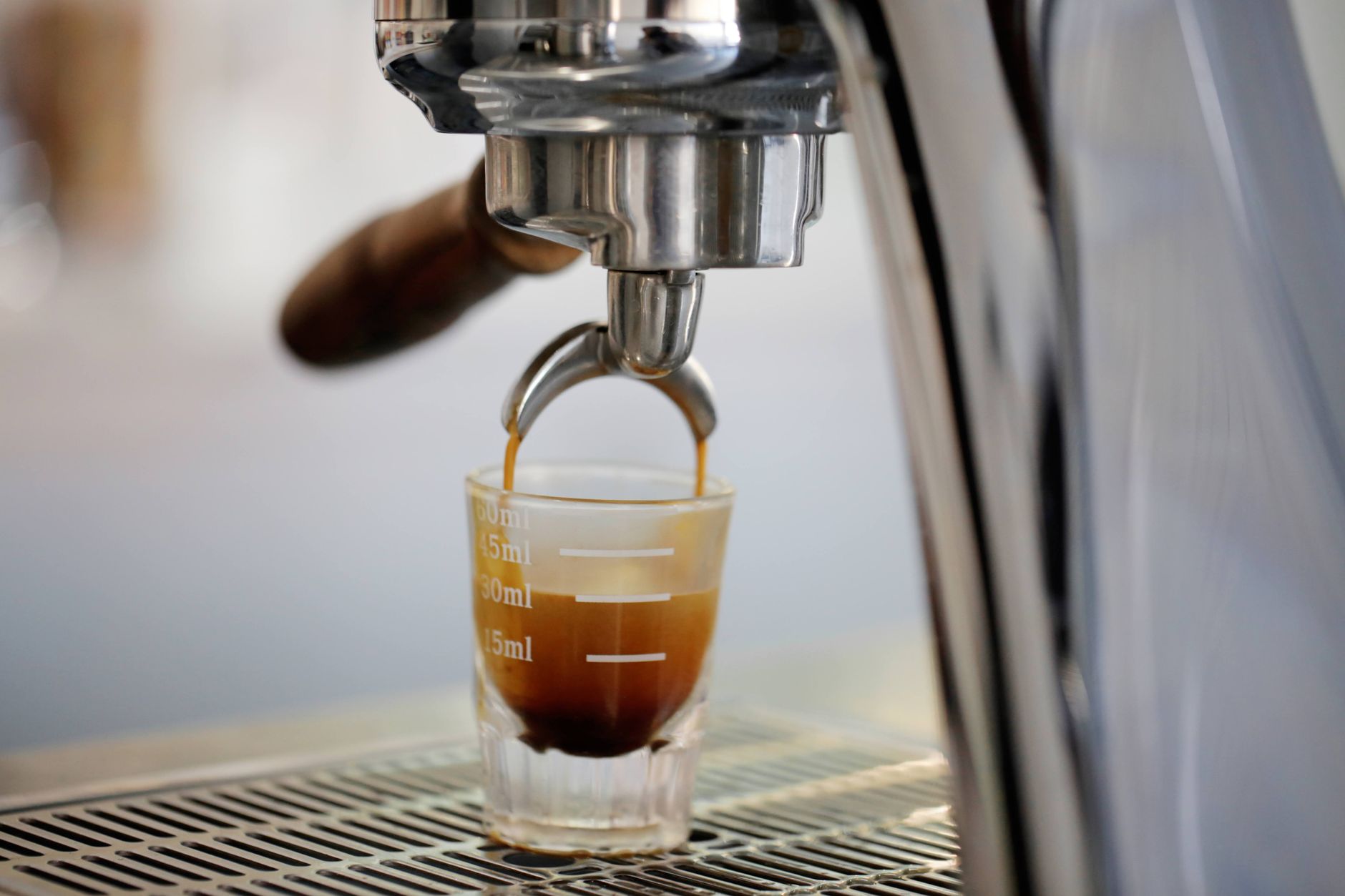
Espresso is coffee brewed under pressure — typically 9 bars — forcing near-boiling water through finely ground coffee in 25–30 seconds. The result is a concentrated shot of 25–35ml with a reddish-brown crema on top. Every drink on this list is built on that foundation.
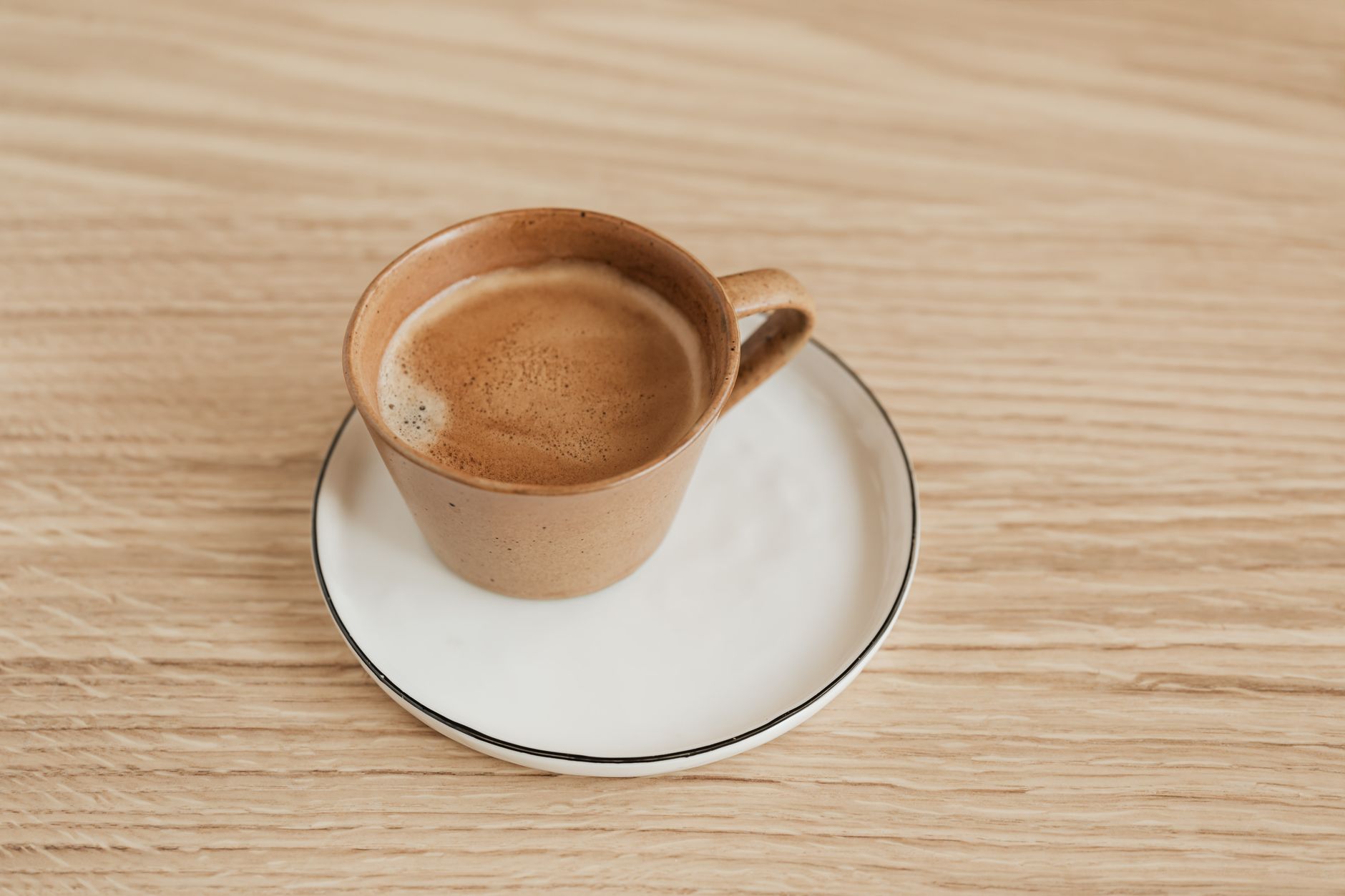 Photo: https://kaboompics.com/ via Pexels
Espresso differs from drip coffee in three ways: grind size (much finer), brew time (much shorter), and pressure (absent in drip). The pressure extracts oils and emulsified compounds that you simply don’t get any other way — which is why an Americano doesn’t taste like filter coffee even though both are diluted with water.
Before diving into individual types of espresso drinks, one thing to get straight: “strength” and “size” are different variables. A double ristretto is smaller and more concentrated than a double espresso. A flat white is smaller than a latte but not necessarily stronger — it just has a higher coffee-to-milk ratio.
Pure Espresso Drinks (No Milk, No Water)
These are the purest expressions of the shot itself. Ristretto, espresso, and lungo differ only in how much water passes through the puck — which changes extraction, flavor, and body dramatically. Order these if you want to taste the coffee itself, not the milk.
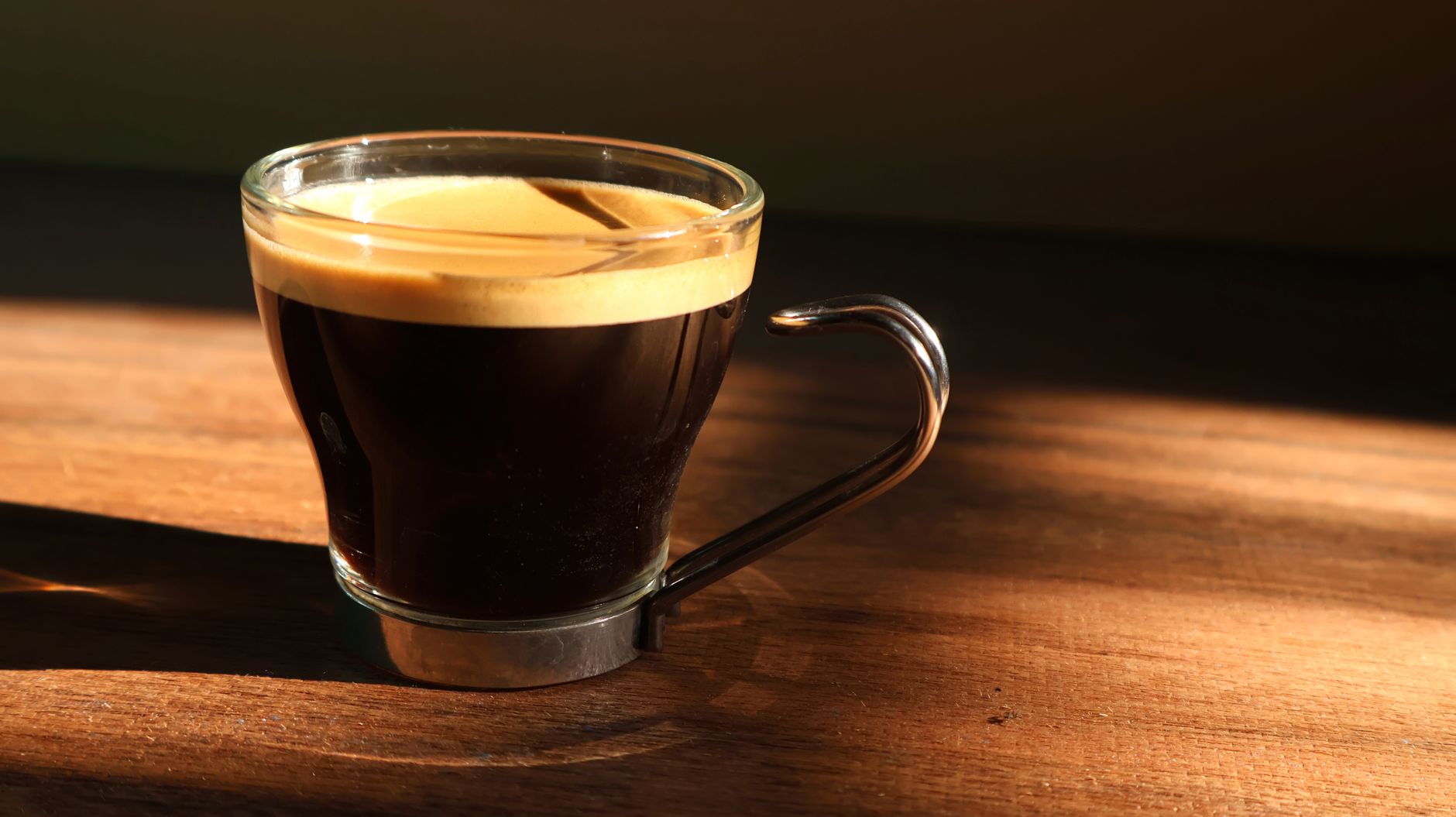 Photo: Sam Basún via Pexels
Ristretto
A ristretto (“restricted” in Italian) uses the same dose as a standard espresso but pulls only 15–20ml of liquid — roughly half the volume. Because extraction stops earlier, it captures the sweeter, more soluble compounds and leaves behind some of the bitter, astringent ones that come out later in the pull.
The result is thicker, sweeter, and more intense per drop — but not more caffeinated. Caffeine extracts early, so ristretto and espresso have similar caffeine content despite the volume difference. Many third-wave cafés now pull ristretto by default without advertising it.
| Drink | Dose | Output | Ratio |
|---|---|---|---|
| Ristretto | 18g | 18–20ml | 1:1 |
| Espresso | 18g | 36ml | 1:2 |
| Lungo | 18g | 55–70ml | 1:3–4 |
Espresso
The standard. One shot is 25–35ml from an 18–20g dose, pulled in 25–30 seconds. A doppio (double) uses the same basket but is the true standard in specialty cafés — most modern espresso machines are calibrated for a double.
Flavor depends entirely on the bean, roast, and dial-in. A well-pulled espresso from a light-roasted washed Ethiopian should taste of berries and lemon. A dark-roasted Brazilian blend pulls chocolate and walnut. Neither is wrong; they’re different tools.
Lungo
A lungo (“long” in Italian) uses the same dose but runs more water through — 55–70ml or beyond. More water means more extraction time and higher extraction yield, which pulls bitter and astringent compounds that stop before in an espresso. Longos taste thinner and more bitter, not more complex.
They’re not popular in specialty circles but remain common in Northern Italy and with capsule machines (Nespresso’s lungo setting, for instance).
Espresso With Water
Americano and lungo get confused constantly, but they’re made differently. An Americano is espresso pulled normally then diluted with hot water afterward. A lungo is brewed with extra water passing through the puck. The dilution method matters — Americano preserves espresso flavor without the additional extraction bitterness.
Americano
Pull a standard double espresso, then add 120–180ml of hot water. The ratio is usually 1:3 to 1:4 (espresso to water). Whether you pour the water over the espresso or vice versa is a minor debate — water first keeps the crema intact, espresso first is more common in North America.
Caffeine content is similar to a drip coffee of the same volume, but the flavor profile remains distinctly espresso: body, crema compounds, and extraction character that filter coffee lacks.
Long Black
The Australian/New Zealand version of the Americano — but the technique matters here. For a long black, hot water goes in the cup first, then the espresso is pulled directly over it. This preserves the crema visibly on top. Volume is typically smaller than an Americano: 150–180ml rather than 240ml.
The long black is marginally stronger and more aromatic than the Americano, though the difference is subtle unless you’re comparing side by side.
| Drink | Water Added | Method | Volume |
|---|---|---|---|
| Americano | 120–180ml | Espresso poured into water or water added to espresso | 150–220ml |
| Long Black | 100–150ml | Water first, espresso on top | 130–180ml |
| Lungo | 0ml added | Brewed long, no post-shot dilution | 55–70ml |
Espresso With Steamed Milk
This is where most people spend most of their time. The types of espresso drinks with milk are differentiated by three variables: milk volume, milk texture (microfoam vs. dry foam), and espresso-to-milk ratio. Get those three right and you can make every drink on this list.
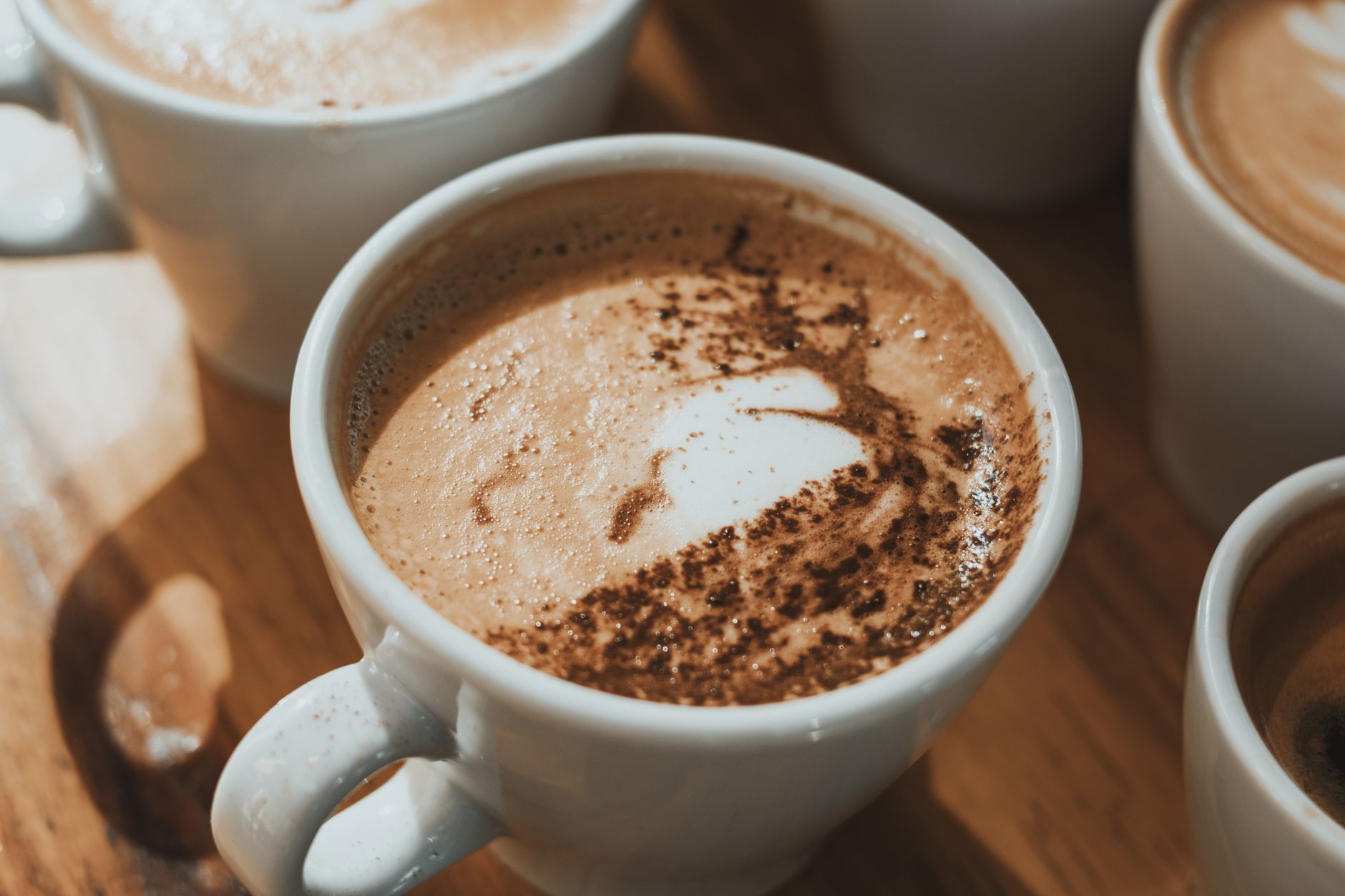 Photo: Franco Monsalvo via Pexels
Cappuccino
A traditional cappuccino is one-third espresso, one-third steamed milk, one-third milk foam — 150–180ml total. The foam should be dense microfoam, not dry froth. The result is rich and bold, with the espresso cutting through clearly.
The 6oz cappuccino is the specialty default. The Starbucks 20oz “cappuccino” with dry foam piled on top is a different animal and bears little relationship to the original. In Italy, a cappuccino is a morning drink — ordering one after noon marks you as a tourist.
Texture is everything in a cappuccino. You want glossy, paint-like microfoam that incorporates into the milk rather than sitting on top. Achieving it requires stretching milk to around 65°C while keeping the steam wand just below the surface.
Latte
The latte (from caffè latte — “milk coffee”) uses more milk and less foam than a cappuccino: typically 150–250ml of steamed milk with just a thin layer of microfoam on top. The coffee-to-milk ratio is lower, making it the mildest of the traditional milk drinks.
In specialty cafés, a latte is usually 6–8oz with a double ristretto or double espresso base. In chain cafés, 12–20oz sizes mean the espresso gets lost — which is why adding an extra shot is often worthwhile.
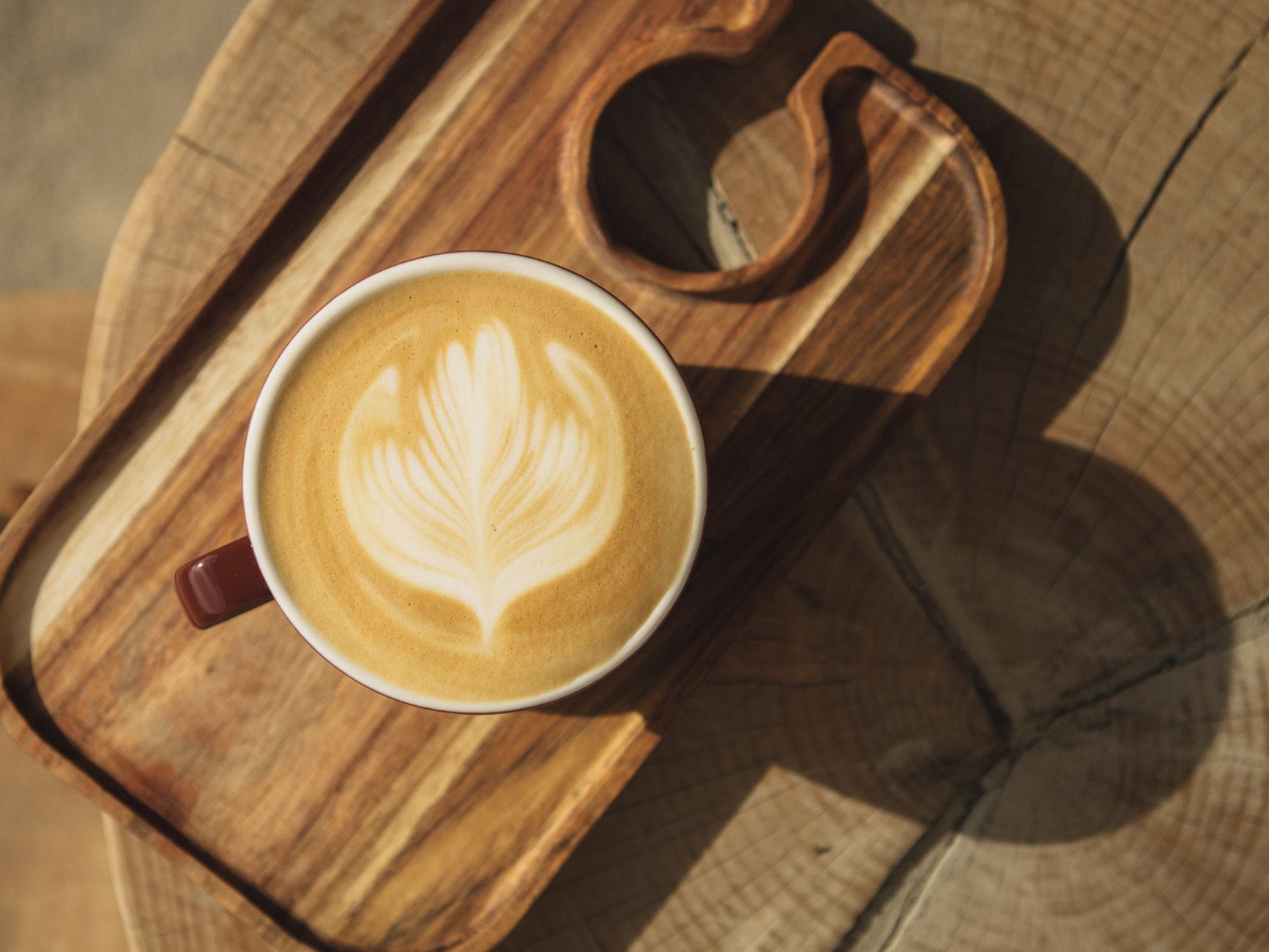
Latte art (the rosette, tulip, or heart patterns) is possible because of the thin, incorporated foam layer — it’s a textural feat, not just decoration.
Flat White
A flat white sits between cappuccino and latte: 4–5oz of steamed milk with a very thin layer of microfoam, over a double ristretto base. The ristretto gives it more intensity in a smaller package. The milk is steamed to a silkier, glossier texture than a cappuccino.
Originated in Australia and New Zealand in the 1980s, though both countries dispute the exact origin. → See also: Cortado vs Flat White vs Macchiato: Full Comparison for a direct ratio breakdown.
| Drink | Espresso Base | Milk Volume | Foam | Total |
|---|---|---|---|---|
| Cappuccino | Double | 60ml steamed | 60ml microfoam | 150ml |
| Flat White | Double ristretto | 90–100ml | Very thin | 130–150ml |
| Latte | Double | 150–200ml | Thin layer | 180–240ml |
Cortado
A cortado (“cut” in Spanish) is 1:1 to 1:2 espresso to warm milk — typically 60–90ml total. The milk is steamed but not heavily textured; the goal is to cut the acidity of the espresso without adding sweetness or body from heavy foam.
Standard serve is a double espresso (40ml) with 40–60ml of warm milk in a small glass. No art, minimal foam, full espresso presence. → See also: What Is a Cortado? (And How It Differs From a Macchiato)
Macchiato (Latte Macchiato vs. Espresso Macchiato)
Two drinks share the name macchiato (“stained”), but they’re built oppositely:
Espresso Macchiato: A double espresso “stained” with a small dollop of steamed milk or foam — 5–10ml. The espresso dominates completely; the milk just softens the edge.
Latte Macchiato: A glass of steamed milk “stained” with espresso poured through the foam. Layers visually (foam on top, espresso in the middle, milk on the bottom) and is significantly milder. Starbucks popularized this version.
Don’t order a “macchiato” without specifying which one.
Iced Espresso Drinks
Cold versions of espresso drinks follow different rules from their hot counterparts — specifically around ice dilution, sweetening, and how milk interacts with cold espresso.
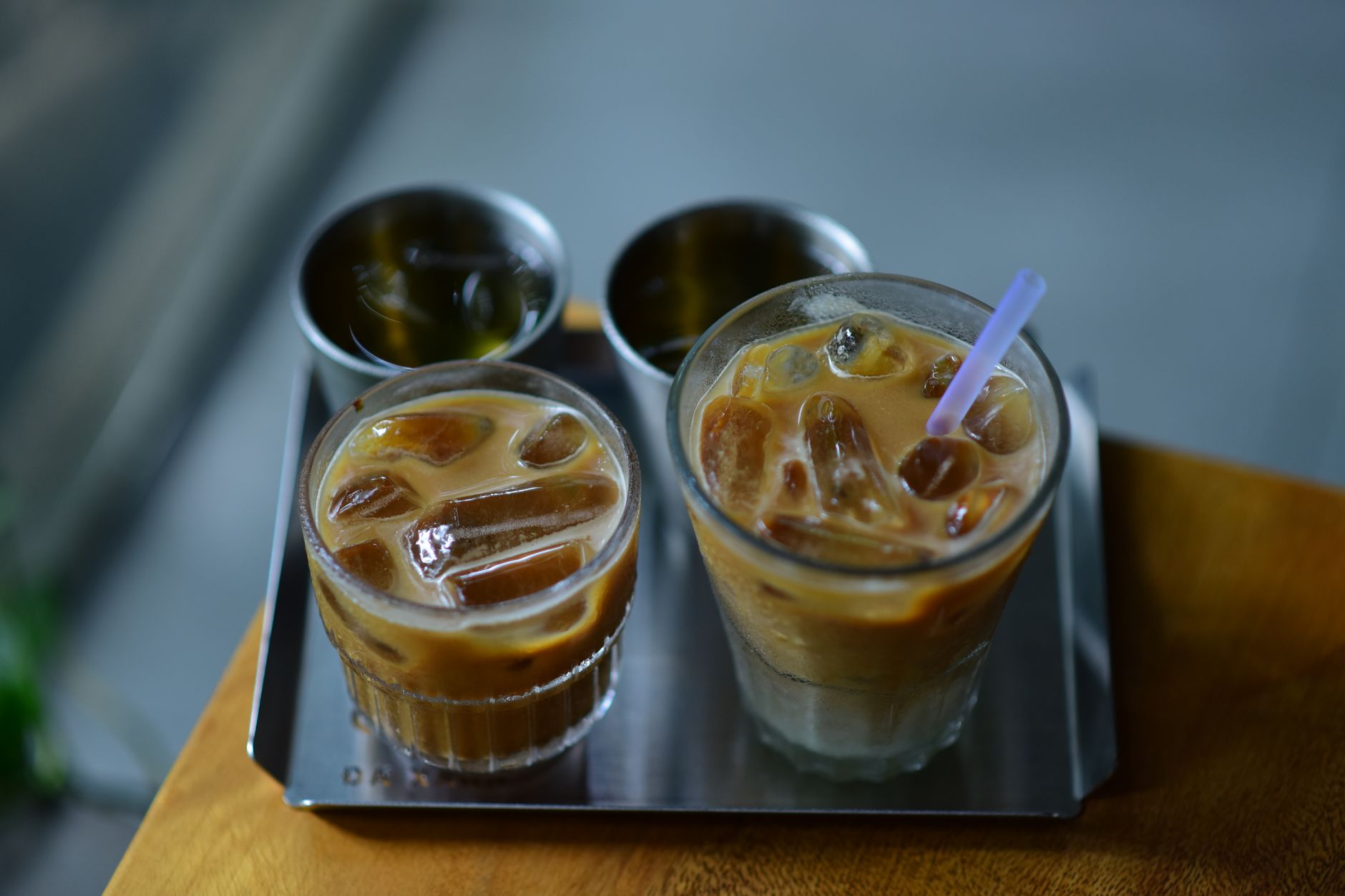 Photo: Sóc Năng Động via Pexels
Iced Latte
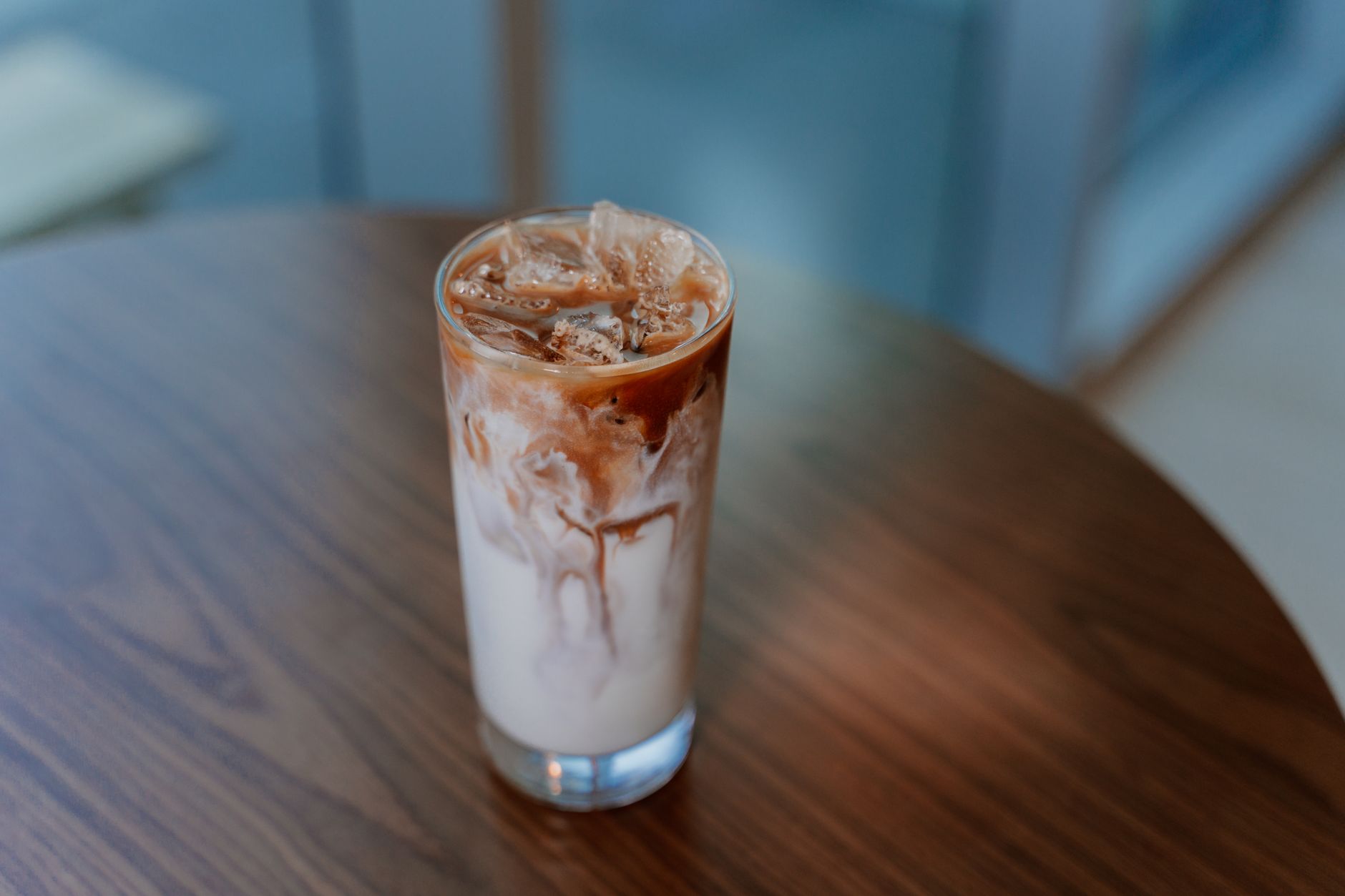
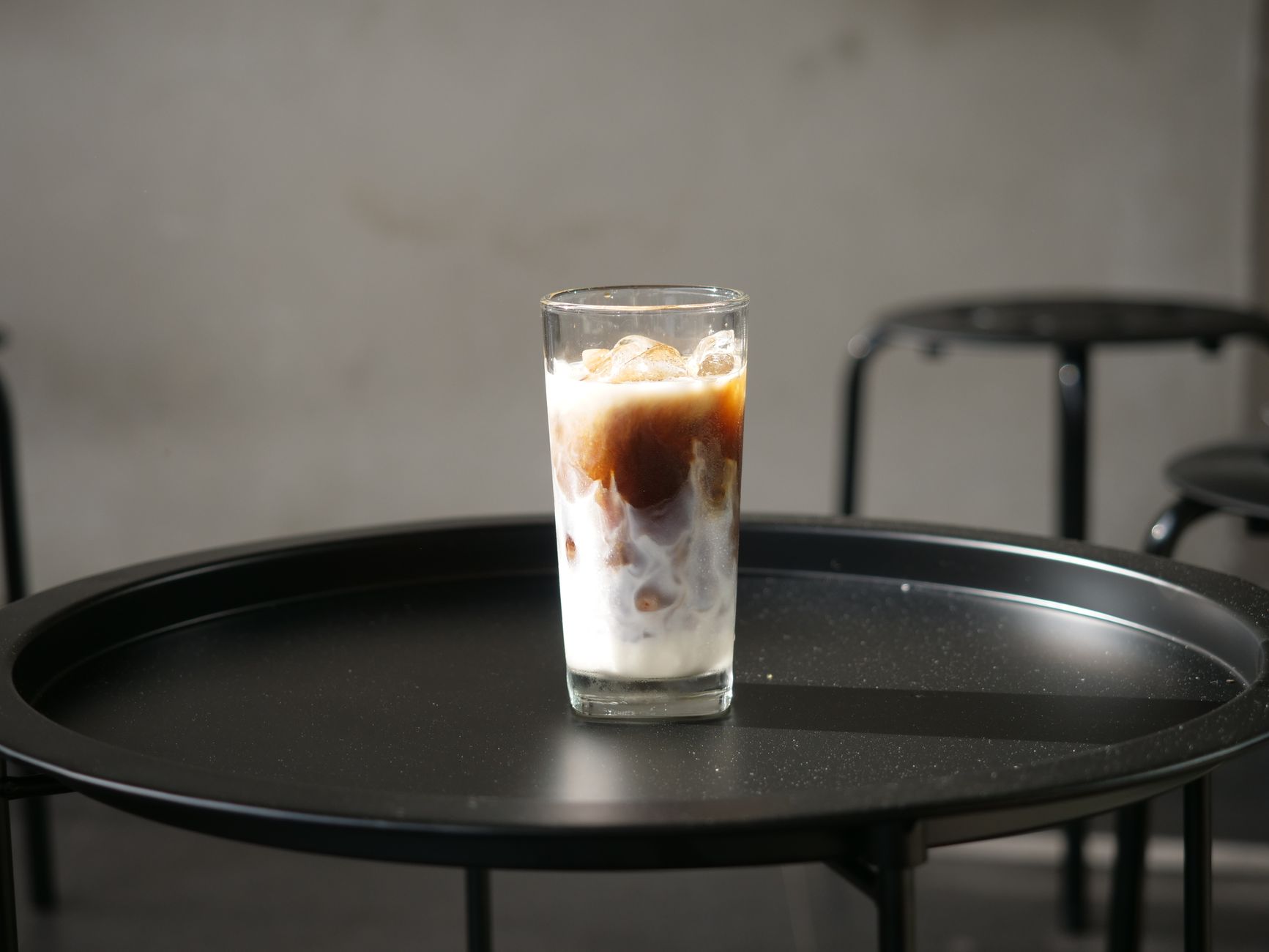
Shot(s) of espresso over ice, topped with cold milk. Standard ratio: double espresso + 150–200ml cold milk over ice in a 12oz glass. The espresso should be fresh and hot — it chills rapidly against the ice — or pulled directly over ice (Japanese iced coffee method).
Pre-chilling the espresso before adding milk avoids dilution but adds steps. For most home setups, pulling over a glass half-full of ice works fine.
Iced Americano
Double espresso over ice, topped with cold water. Simpler than an iced latte, more intense, no dairy. Common as a low-calorie espresso option.
One tactical note: espresso is water-soluble, so iced Americanos hold together fine without separation. Iced lattes can develop a slight bitter-on-top separation if the espresso sits on cold milk without stirring.
Cold Brew vs. Iced Espresso
Cold brew is not an espresso drink — it’s drip or immersion coffee brewed cold for 12–24 hours. The confusion comes from coffee shops listing both under “cold coffee.” Key differences:
| Iced Espresso | Cold Brew | |
|---|---|---|
| Brew method | Pressure, 25–30 sec | Immersion/drip, 12–24 hrs |
| Caffeine | Moderate per oz | High per oz |
| Acidity | Bright | Low |
| Flavor | Complex, aromatic | Smooth, muted |
Specialty and Layered Espresso Drinks
Mocha
Espresso + steamed milk + chocolate (syrup, sauce, or melted chocolate). The ratio varies widely — typically a double espresso with 15–20ml chocolate sauce and 150ml steamed milk, topped with a thin layer of foam or whipped cream. It’s a dessert drink more than a coffee drink; the chocolate competes with the espresso rather than complementing it unless the chocolate quality is high.
Breve
A latte made with half-and-half instead of whole milk. Richer, fattier, higher calorie. Steaming half-and-half produces stiffer foam and a noticeably creamier mouthfeel. Common in the US; uncommon elsewhere.
Café au Lait / White Coffee
Drip coffee with steamed milk, not espresso-based — technically outside the types of espresso drinks, but often listed alongside them. Ratio is typically 1:1. Milder and less concentrated than any espresso-milk combination.
Affogato
A double espresso poured over a scoop of vanilla gelato or ice cream. Technically a dessert. The hot espresso melts the edges of the gelato and creates a hot-cold, bitter-sweet contrast. It’s simple, fast, and surprisingly good — and a legitimate use of a double shot if you’re between meals.
Vienna Coffee
Espresso (or strong drip coffee) topped with whipped cream instead of steamed milk. The cream melts into the drink as you sip through it. Popular in Austria and parts of Germany. Sweeter and richer than a cappuccino; less precise about milk texture.
Gibraltar
The Gibraltar is a specialty café invention — a double ristretto in a 4.5oz glass, topped with equal parts steamed milk. It’s essentially a cortado served in a specific Libbey Gibraltar glass (hence the name). Originated at Blue Bottle Coffee in San Francisco.
Comparison: Every Major Type by Ratio
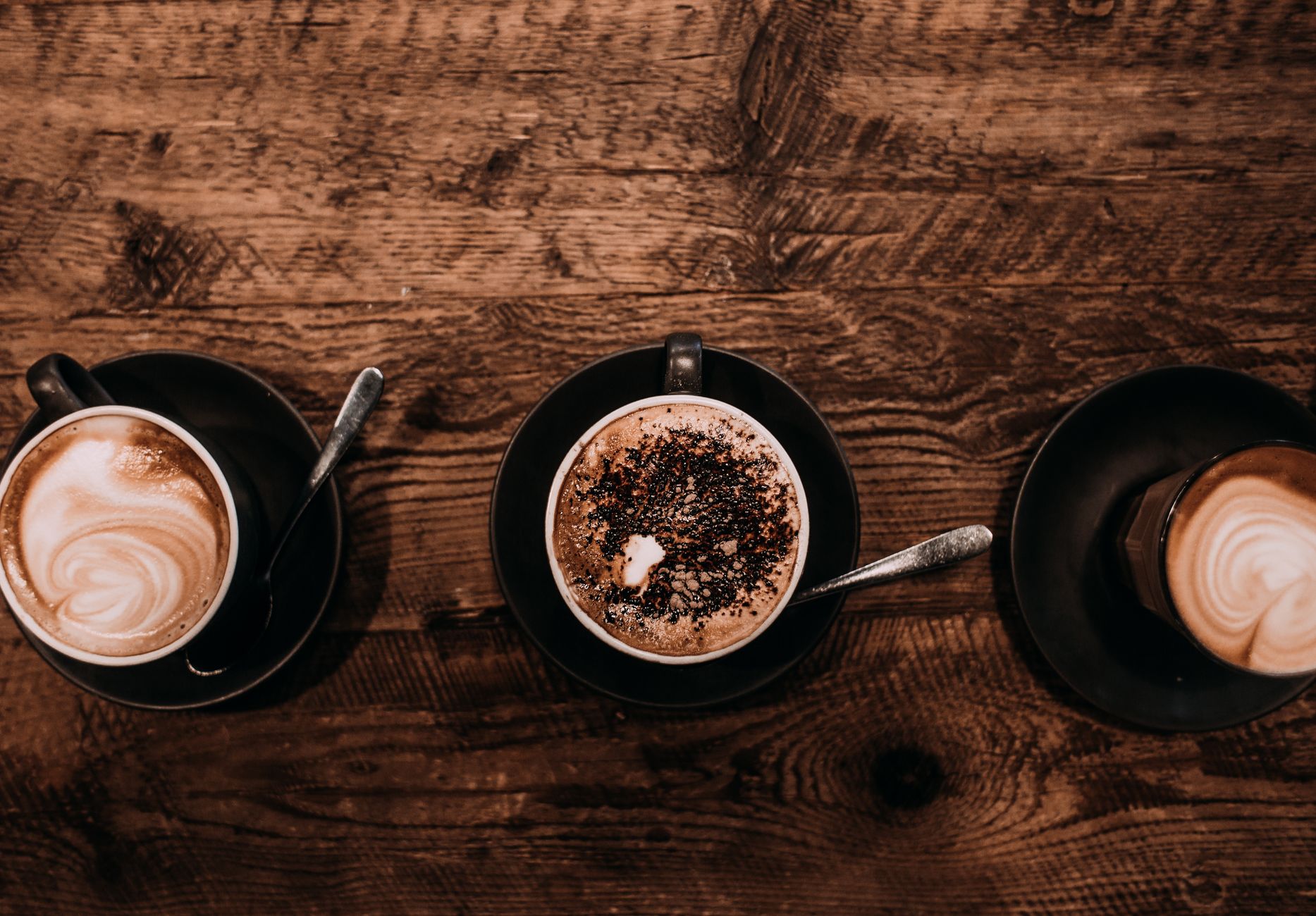 Photo: Rachel Claire via Pexels
| Drink | Espresso | Milk/Water | Foam | Total Volume |
|---|---|---|---|---|
| Ristretto | 15–20ml | — | — | 15–20ml |
| Espresso | 30–36ml | — | — | 30–36ml |
| Lungo | 55–70ml | — | — | 55–70ml |
| Doppio | 60ml | — | — | 60ml |
| Americano | 36ml | 120–180ml | — | 150–220ml |
| Long Black | 36ml | 100–150ml water | — | 130–180ml |
| Macchiato (espresso) | 36ml | 5–10ml | Small dollop | 40–45ml |
| Cortado | 36ml | 36–60ml | Minimal | 70–100ml |
| Flat White | 36ml ristretto | 90–100ml | Very thin | 130–150ml |
| Cappuccino | 36ml | 60ml steamed | 60ml | 150–180ml |
| Latte | 36ml | 150–200ml | Thin | 180–240ml |
| Mocha | 36ml | 150ml | Thin | 200–240ml |
| Latte Macchiato | 36ml | 200ml | Top layer | 230–250ml |
What Affects Flavor Across All These Drinks
Understanding the types of espresso drinks goes beyond ratios — the variables below change what you taste in the cup regardless of which drink you order.
Espresso Dose and Yield
Most specialty cafés use 18–20g of ground coffee per double shot, targeting a 1:2 to 1:2.5 ratio by weight (36–45ml output). Changing the ratio without changing dose shifts extraction: more yield means more extraction, more bitter compounds; less yield means sweeter but potentially under-extracted.
Milk Temperature and Texture
Milk should be steamed to 60–65°C. Above 70°C, proteins denature and the milk tastes scalded — flat and slightly sulfurous. Below 55°C, the milk feels thin. The texture depends on when and how much air is introduced during steaming.
Whole milk works best for latte art and texture. Oat milk (specifically barista-formula oat milk) steams comparably to whole milk and produces decent microfoam. Almond milk tends to separate; most nut milks are inconsistent for steam texture.
Roast Level
Light roasts preserve origin character — fruit, floral, acidity — and are common in third-wave espresso. Dark roasts develop roast flavors (chocolate, caramel, bitterness) that can complement milk drinks but obscure single-origin nuance. Neither is objectively better; they serve different purposes.
For milk-heavy drinks like lattes, darker roasts often hold up better because their flavor cuts through the milk. For cappuccinos and cortados with less milk, lighter roasts show more complexity.
Bean Origin and Processing
Washed-process coffees (most Ethiopian, Kenyan, Colombian) produce brighter, cleaner espresso. Natural-process coffees (many Ethiopian, most Brazilian) produce fruitier, heavier-bodied espresso with more sweetness. Honey-processed coffees fall in between.
Home Equipment for Making Espresso Drinks
You don’t need a $3,000 machine to make good espresso at home, but you do need actual espresso pressure. Moka pots produce 1–2 bars; espresso requires 9 bars. They’re related in culture, not in process.
Entry points:
- Semi-automatic espresso machine : Manual control over extraction, requires a good grinder. The Breville Barista Express
→ See Also
- What Is a Cortado? (And How It Differs From a Macchiato)
- Cortado vs Flat White vs Macchiato: Full Comparison
FAQ
What are the main types of espresso drinks? The core types of espresso drinks are: ristretto, espresso, lungo, Americano, long black, macchiato, cortado, flat white, cappuccino, latte, and mocha. Each is built on one or two espresso shots; what varies is the amount and texture of milk or water added. Every other espresso-based drink is a variation or combination of these.
What’s the difference between a latte and a cappuccino? A latte uses more milk (150–200ml) and only a thin layer of foam, making it mild and creamy. A cappuccino uses equal parts espresso, steamed milk, and dense microfoam (roughly 60ml each), giving it a stronger coffee flavor and thicker texture in a smaller 150–180ml cup.
Which espresso drink has the most caffeine? Per serving, a double espresso or doppio has the most concentrated caffeine — roughly 120–140mg per 60ml. Larger drinks like lattes and Americanos use the same espresso base, so total caffeine is similar. A ristretto has slightly less caffeine than a full espresso because extraction stops earlier, despite being more concentrated by volume.
Is a flat white the same as a cappuccino? No. A flat white uses a double ristretto (shorter, sweeter shot) with 90–100ml of silky, minimally foamed milk, usually in a 130–150ml cup. A cappuccino uses a standard double espresso with equal thirds of milk and foam in a 150–180ml cup. The flat white is smaller, the ristretto base is sweeter, and it has less foam.
What’s the difference between an Americano and a long black? Technique and proportion. An Americano is espresso added to hot water, resulting in 150–220ml. A long black is hot water with espresso pulled over the top, preserving crema, usually smaller at 130–180ml. The long black is marginally stronger and more aromatic because the crema stays intact.
What espresso drink should a beginner order? Start with a latte or flat white. Both are forgiving of minor extraction variables because the milk moderates flavor. A flat white gives you more espresso presence while still being approachable; a latte is softer. If you want to taste the espresso itself, order a cappuccino — you’ll taste the coffee clearly but the foam softens intensity compared to a straight shot.
Can you make espresso drinks without an espresso machine? You can approximate them with a Moka pot or AeroPress, but neither reaches the 9-bar pressure of a real espresso machine. The Moka pot at 1–2 bars extracts differently — stronger than drip but without the emulsified oils and crema that define espresso. For drinks like lattes and cappuccinos, the difference is minor once milk is added; for a straight shot, the gap is obvious.
What is a breve coffee? A breve is a latte made with half-and-half instead of whole milk. The result is richer, fattier, and higher in calories — noticeably creamier than a standard latte. Half-and-half foams to a stiffer texture than whole milk, so the mouthfeel is distinct. Common in American specialty cafés; not standard elsewhere.
FAQ Schema
Editorial methodology: Assessments are based on manufacturer specifications, published user reviews, and editorial research. Physical hands-on testing is noted explicitly where it occurred. Rankings reflect our editorial judgment and are not influenced by affiliate commission rates. Full editorial policy · Affiliate disclosure