
Contents
Café Bombón Recipe: Spanish Sweetened Espresso
TL;DR: A café bombón is a café bombón recipe built on one rule — equal parts espresso and sweetened condensed milk, poured so the layers stay separate. It’s a Valencian classic that takes under 3 minutes and needs no special equipment beyond a shot glass or small glass.
What Is a Café Bombón?
A café bombón is a Spanish espresso drink made with equal parts (roughly 30 ml each) of a hot espresso shot and sweetened condensed milk. The condensed milk goes in first — its density keeps it on the bottom, creating the signature two-tone layer that makes it as visual as it is sweet.
 Photo: Walder via Pexels
The drink originated in Valencia and spread across Spain in the 1980s. It’s now common in any Spanish bar, usually served in a small glass so you can see the layers. The sweetened condensed milk does double duty: sweetener and creamer in one ingredient.
Ingredients and Equipment
| What you need | Amount | Notes |
|---|---|---|
| Espresso | 30 ml (1 shot) | Double ristretto works well |
| Sweetened condensed milk | 30 ml | La Lechera is the Spanish standard |
| Glass | 120–150 ml | Small and clear to show layers |
That’s it. No sugar, no milk, no syrup.
How to Make Café Bombón
Pour the condensed milk first. Pull a single or double ristretto shot and pour it slowly over the back of a spoon onto the condensed milk. The density difference keeps the layers intact. Serve immediately — stir before drinking if you want full sweetness throughout.
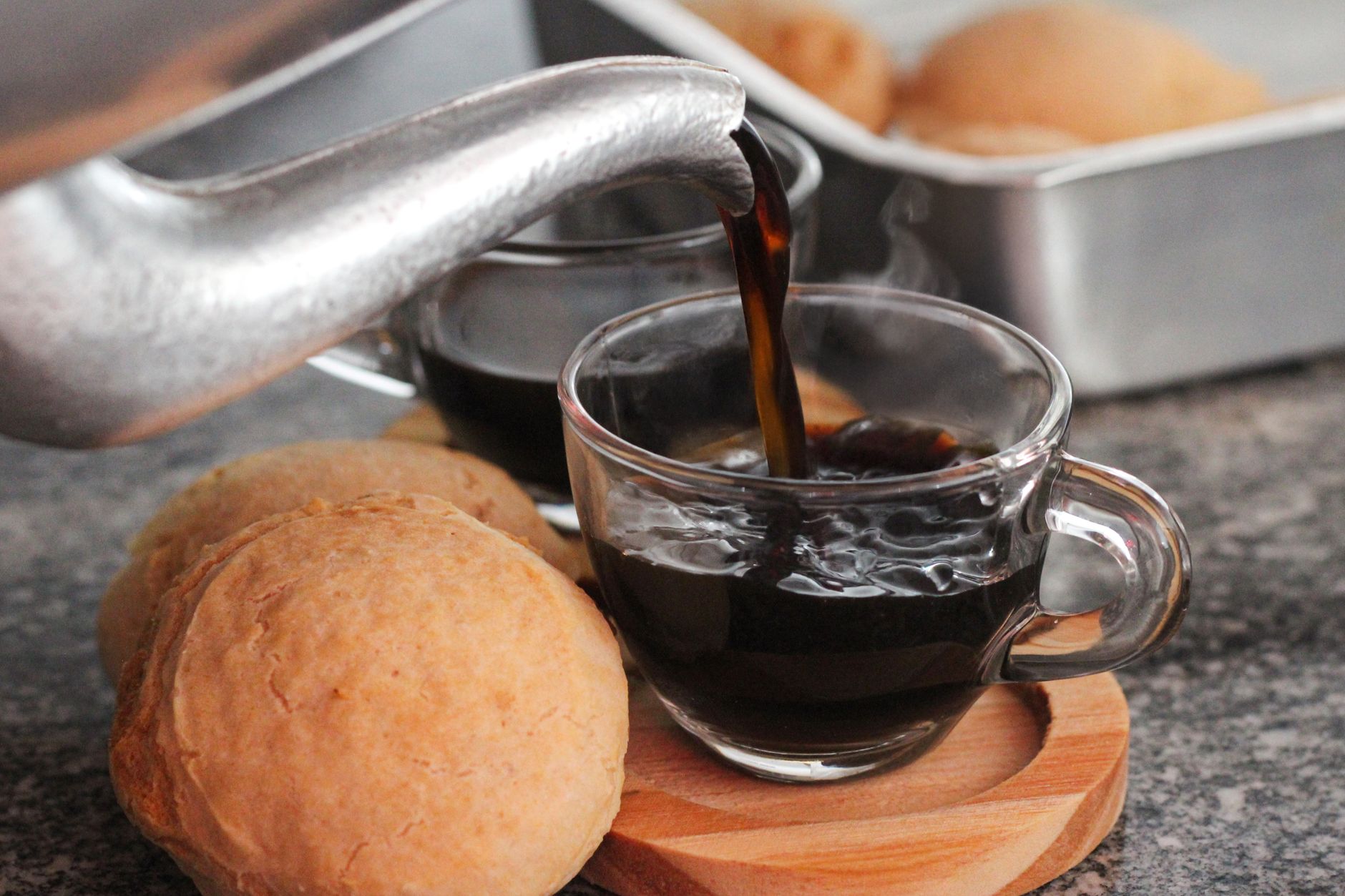 Photo: Nanda Mends via Pexels
Step-by-Step
- Measure 30 ml of sweetened condensed milk into a small, clear glass.
- Pull a single shot of espresso — aim for 25–30 ml, 9 bars, 25–30 seconds.
- Pour slowly — hold a spoon just above the condensed milk surface, pour the espresso over the back of the spoon.
- Watch the layers form. If they mix, the espresso came out too fast or the glass was warm.
- Serve immediately with a small stirring spoon on the side.
Why the Spoon Trick Works
Espresso is less dense than sweetened condensed milk (around 1.0 g/ml vs 1.3 g/ml). As long as you break the pour’s momentum with a spoon, the espresso floats naturally. The same technique works in Irish coffee and layered cocktails.
 Photo: Jana Ohajdova via Pexels
Getting the Espresso Right
Use a medium-dark roast and pull a slightly shorter shot (ristretto style, 20–25 ml) if you want the espresso flavour to cut through the sweetness. A lighter roast or longer pull can get lost under the condensed milk.
The condensed milk adds roughly 15–20 g of sugar per serving. That’s significant sweetness — you want espresso with enough body and bitterness to balance it. A flat, watery shot disappears.
If you’re dialing in on a home machine, a burr grinder makes the difference between a shot that stands up to the milk and one that doesn’t.
 Photo: Pavel Danilyuk via Pexels
Variations
| Variation | Change | Result |
|---|---|---|
| Iced bombón | Pour over ice after layering | Refreshing, layers partially mix |
| Bombón cortado | Add 15 ml warm milk on top | Softer, less sweet finish |
| Decaf bombón | Decaf espresso, same method | Same visual, caffeine-free |
| Coconut bombón | Coconut condensed milk | Vegan-friendly, tropical note |
The iced version is increasingly common in Spanish cafés during summer — pull the shot hot, let the ice chill it, and the layers are less defined but the flavour holds well.
→ See also:
- Espresso Drinks: The Complete Guide to Every Type
- What Is a Cortado? (And How It Differs From a Macchiato)
- Cortado vs Flat White vs Macchiato: Full Comparison
FAQ
What is a café bombón made of? A café bombón is made of two ingredients: one espresso shot and an equal volume of sweetened condensed milk. No added sugar or milk is needed — the condensed milk handles both. The drink is served in a small clear glass to show the two distinct layers.
Why does the espresso float on top of the condensed milk? Sweetened condensed milk has a density of around 1.3 g/ml versus espresso’s roughly 1.0 g/ml. The heavier condensed milk sinks and stays at the bottom as long as you pour the espresso gently, typically over the back of a spoon to slow the stream.
Can I make a café bombón with regular milk instead of condensed milk? You can, but the result is a different drink — closer to a cortado or piccolo latte. Sweetened condensed milk is thick enough to stay layered; regular milk is not. Without the density difference, the layers mix instantly and you lose the defining visual and textural contrast.
How sweet is a café bombón? Very sweet by espresso standards. A standard 30 ml pour of sweetened condensed milk contains roughly 15–18 g of sugar. If you prefer less sweetness, use 20 ml of condensed milk and 30 ml of espresso, which shifts the ratio toward the coffee.
Is café bombón the same as Vietnamese egg coffee? No. Both are sweet espresso-forward drinks with a dense base layer, but Vietnamese egg coffee uses a whipped egg yolk and condensed milk foam on top of drip or phin coffee. A café bombón uses unwhipped condensed milk beneath an espresso shot, with no egg.
Editorial methodology: Assessments are based on manufacturer specifications, published user reviews, and editorial research. Physical hands-on testing is noted explicitly where it occurred. Rankings reflect our editorial judgment and are not influenced by affiliate commission rates. Full editorial policy · Affiliate disclosure