Contents
Maillard Reaction in Coffee Roasting Explained
TL;DR: The Maillard reaction in coffee roasting is a heat-driven chemical process between amino acids and reducing sugars that begins around 150°C (302°F) and is responsible for coffee’s brown color, roasted aroma, and most of its flavor complexity. It’s distinct from caramelization — and understanding it helps you predict how roast profile decisions translate directly into the cup.
What Is the Maillard Reaction?
The Maillard reaction is a non-enzymatic browning reaction between amino acids and reducing sugars triggered by heat. In coffee, it begins around 150°C, accelerates through first crack, and produces hundreds of volatile aromatic compounds — including pyrazines, furans, and aldehydes — that define what roasted coffee actually tastes and smells like.
 Photo: Bon Bons Studio via Pexels
It was first described by French chemist Louis-Camille Maillard in 1912, though he was studying meat and bread, not coffee. The reaction isn’t a single event — it’s a cascade of parallel and sequential reactions producing thousands of compounds, many of which have been identified in coffee but not yet fully mapped.
In green coffee specifically, the key reactants are free amino acids (glutamic acid, alanine, proline) and reducing sugars (glucose, fructose, sucrose derivatives). As temperature climbs during roasting, these molecules collide, bond, and break apart into new compounds that didn’t exist in the raw bean.
Maillard vs. Caramelization: Not the Same Thing
Both reactions brown food and both happen during coffee roasting — but they have different chemistry, different temperature ranges, and produce different flavor compounds. Caramelization is pure sugar pyrolysis (begins ~170°C), while the Maillard reaction requires amino acids and starts earlier (~150°C). In the cup, Maillard products tend toward roasty, nutty, and savory notes; caramelization products lean sweet and buttery.
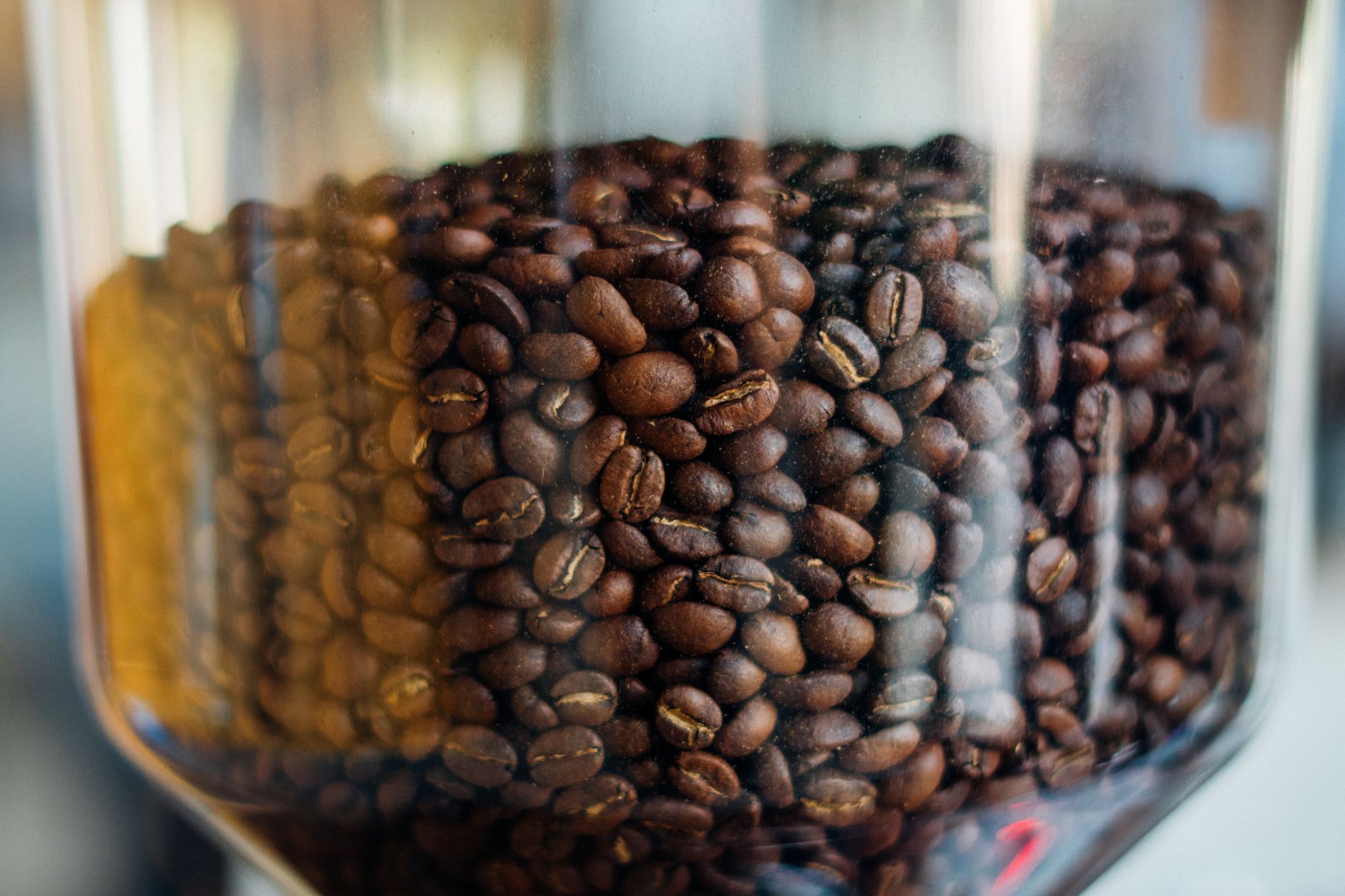 Photo: K via Pexels
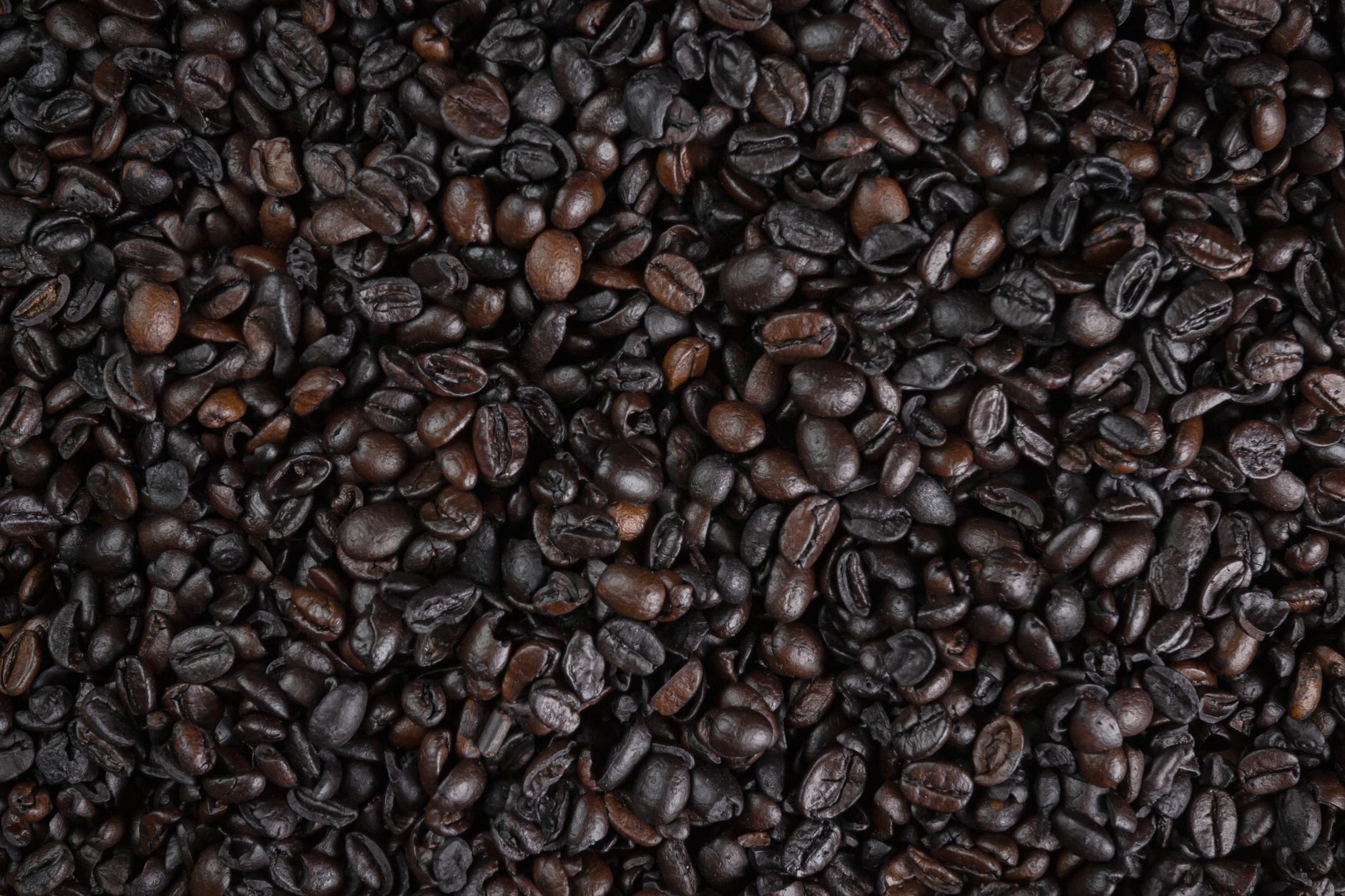
This distinction matters practically. A roaster who drops the bean temperature quickly after first crack limits further caramelization while still capturing Maillard products developed during the main roast phase. A longer, hotter finish pushes caramelization harder and can tip flavor from “dark chocolate and walnut” into “burnt sugar and bitterness.”
Neither reaction is inherently better — the skill is controlling their balance. Specialty light roasts tend to be Maillard-forward; classic espresso dark roasts push further into caramelization territory.
When Does the Maillard Reaction Happen During a Roast?
Maillard chemistry is active from roughly 150°C through the entire development phase and continues until heat is quenched. The rate accelerates with temperature — a few degrees can mean a significant jump in reaction speed — which is why development time and rate-of-rise in the final phase of a roast profile are so critical to flavor outcome.
The Roast Timeline
A typical roast profile moves through distinct phases:
| Phase | Approx. Temp | What’s Happening |
|---|---|---|
| Drying | 100–150°C | Moisture driven off; little Maillard activity yet |
| Browning onset | 150–165°C | Maillard begins; green-to-yellow bean transition |
| First crack | ~196°C | Exothermic; cell structure fractures; Maillard accelerates |
| Development | 196–215°C | Most flavor-critical Maillard and caramelization |
| Second crack | ~224°C | Further pyrolysis; Maillard products begin degrading |
The “development time ratio” (DTR) — the percentage of total roast time spent after first crack — is a metric roasters use to manage Maillard output. A DTR of 20–25% is a common target for balanced filter roasts. Too short and the Maillard products don’t fully develop; too long and they start degrading or being overtaken by pyrolysis.
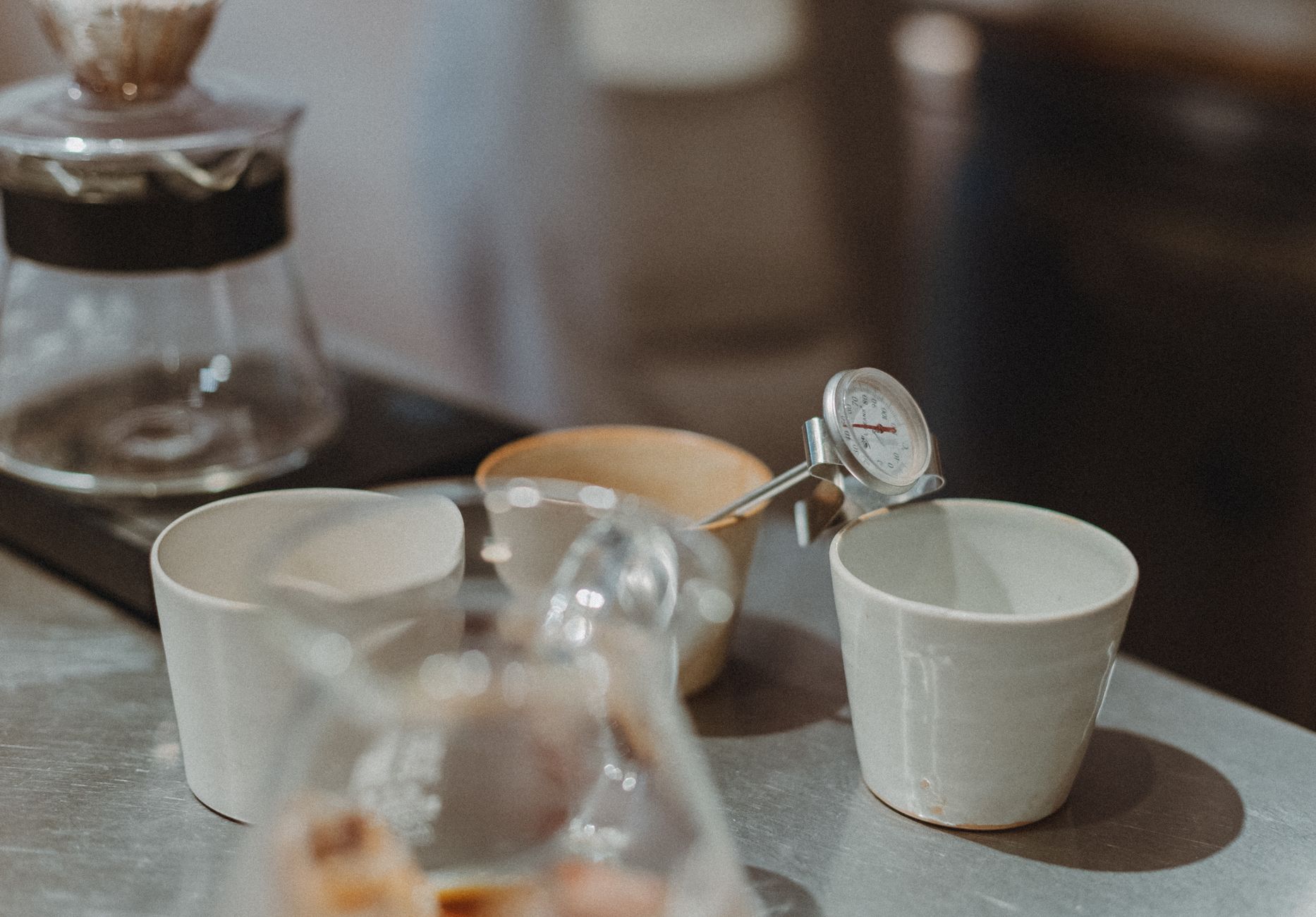 Photo: Gu Ko via Pexels
Rate of Rise and the Maillard Window
Rate of rise (RoR) is the speed at which bean temperature increases, measured in degrees per minute. A declining RoR through development is considered best practice in specialty roasting — it slows the reaction enough to build complexity without scorching, avoiding what roasters call “baked” flavors from stalling.
If you’ve ever had a cup that tasted flat, grainy, or cardboard-like despite being a medium roast, an uncontrolled RoR through the Maillard window is often the cause.
What Flavors Does the Maillard Reaction Produce?
Maillard products include pyrazines (nutty, roasty, earthy), furans (caramel, sweet), Strecker aldehydes (malty, floral), and melanoidins (brown pigments that also contribute bitterness and body). The specific blend of these compounds is determined by precursor chemistry in the green bean, roast temperature, and time.
 Photo: Pixabay via Pexels
Key Compound Families
Pyrazines are among the most recognizable Maillard products in coffee — they’re responsible for the nutty, popcorn, and roasty notes in darker roasts. They form efficiently at higher temperatures, which is why light roasts have less of them.
Furans contribute to caramel and sweet aromas and form relatively early in the Maillard sequence. They’re more prominent in medium roasts.
Strecker degradation aldehydes — a sub-pathway of the Maillard reaction — produce some of coffee’s most delicate floral and malty volatiles. These are fragile compounds: roast too hot or too long and they degrade before they reach the cup.
Melanoidins are the large, brown, non-volatile polymers that give dark roast coffee its characteristic color and contribute to body and perceived bitterness. They’re relatively stable compared to the volatile compounds above.
How Origin and Processing Affect Maillard Potential
The Maillard reaction requires substrates. Green coffee that arrives with higher concentrations of free amino acids and reducing sugars has more Maillard potential — and this is directly influenced by origin and processing method.
Washed (wet-processed) coffees typically retain higher amino acid concentrations, which supports complex Maillard development and tends to produce cleaner, brighter roasted profiles. Natural (dry-processed) coffees often have elevated sugars from fruit fermentation, which can push Maillard reactions in directions that amplify fruit-forward, wine-like, and heavy-bodied flavors.
Elevation matters too. High-altitude beans (1800m+) are denser with tighter cell structure, which means slower heat transfer during roasting — the Maillard reaction proceeds more gradually, which many roasters argue builds more nuanced flavor layering compared to lower-density beans that heat quickly and unevenly.
Practical Takeaways for Home Roasters
If you roast at home — with a fluid bed roaster, drum roaster, or even a stovetop pan — you’re already managing the Maillard reaction whether you think about it in those terms or not.
Charge temperature (the temperature at which you load green beans) affects how quickly the early Maillard window is reached. A higher charge temperature means a faster transit to 150°C and a more aggressive Maillard onset.
Airflow influences the rate at which volatile Maillard products either stay in contact with the bean surface (developing further) or are swept away (preserving delicate aromatics). High-airflow profiles are often preferred for light, floral roasts.
Cooling speed matters more than most home roasters realize. Once beans are dropped, Maillard chemistry doesn’t stop instantly — it continues until heat falls below the threshold. Fast cooling locks in the flavor snapshot you targeted. Slow cooling lets the roast creep.
→ See also:
- Coffee Science: The Complete Guide to Extraction, Chemistry & Flavor
- How Much Caffeine Is in a Cup of Coffee? (All Brew Methods)
- Caffeine in Espresso vs Coffee: Which Has More?
FAQ
What temperature does the Maillard reaction start in coffee roasting? The Maillard reaction begins in earnest around 150°C (302°F) during roasting, once enough moisture has left the bean and the bean surface temperature is sufficient to drive amino acid–sugar collisions. It accelerates significantly through first crack and the development phase that follows.
Is the Maillard reaction the same as caramelization in coffee? No. Caramelization is the thermal degradation of sugars alone and begins around 170°C. The Maillard reaction requires both amino acids and reducing sugars and starts earlier. Both occur during roasting and both contribute to flavor — but they produce different compounds and are controlled by different roast profile decisions.
Does the Maillard reaction affect caffeine content? Not meaningfully. Caffeine is a stable alkaloid that survives roasting with minimal degradation regardless of how aggressively the Maillard reaction proceeds. Roast level affects flavor and acidity far more than caffeine concentration — and bean density and dose per brew matter more to caffeine per cup than roast color does.
Why do light roasts taste more acidic if the Maillard reaction is still active? Light roasts preserve more chlorogenic acids and fruity organic acids (malic, citric) that break down with extended heat exposure. Shorter development time means the Maillard reaction has produced fewer roasty compounds to balance those acids in the cup, which is why the brightness reads as more prominent — not because there’s less Maillard activity, but because the roast has less of the deep, dark counterweights that darker roasts develop.
Can you taste the difference between Maillard and caramelization products in coffee? With practice, yes. Maillard-forward roasts tend to deliver nutty, toasted grain, and savory complexity; caramelization-forward roasts lean toward dark caramel, toffee, and bittersweet chocolate. Most roasts involve both — the ratio is what changes between a light specialty roast and a traditional Italian espresso roast.
Editorial methodology: Assessments are based on manufacturer specifications, published user reviews, and editorial research. Physical hands-on testing is noted explicitly where it occurred. Rankings reflect our editorial judgment and are not influenced by affiliate commission rates. Full editorial policy · Affiliate disclosure