Contents
Coffee Bean Anatomy: From Cherry to Cup
TL;DR: A coffee bean is the seed of a coffee cherry — it has seven distinct layers from fruit skin to silver skin, and each one affects flavor. Understanding coffee bean anatomy explains why processing method, roast level, and grind size all matter so much in the cup.
What Is a Coffee Bean, Actually?
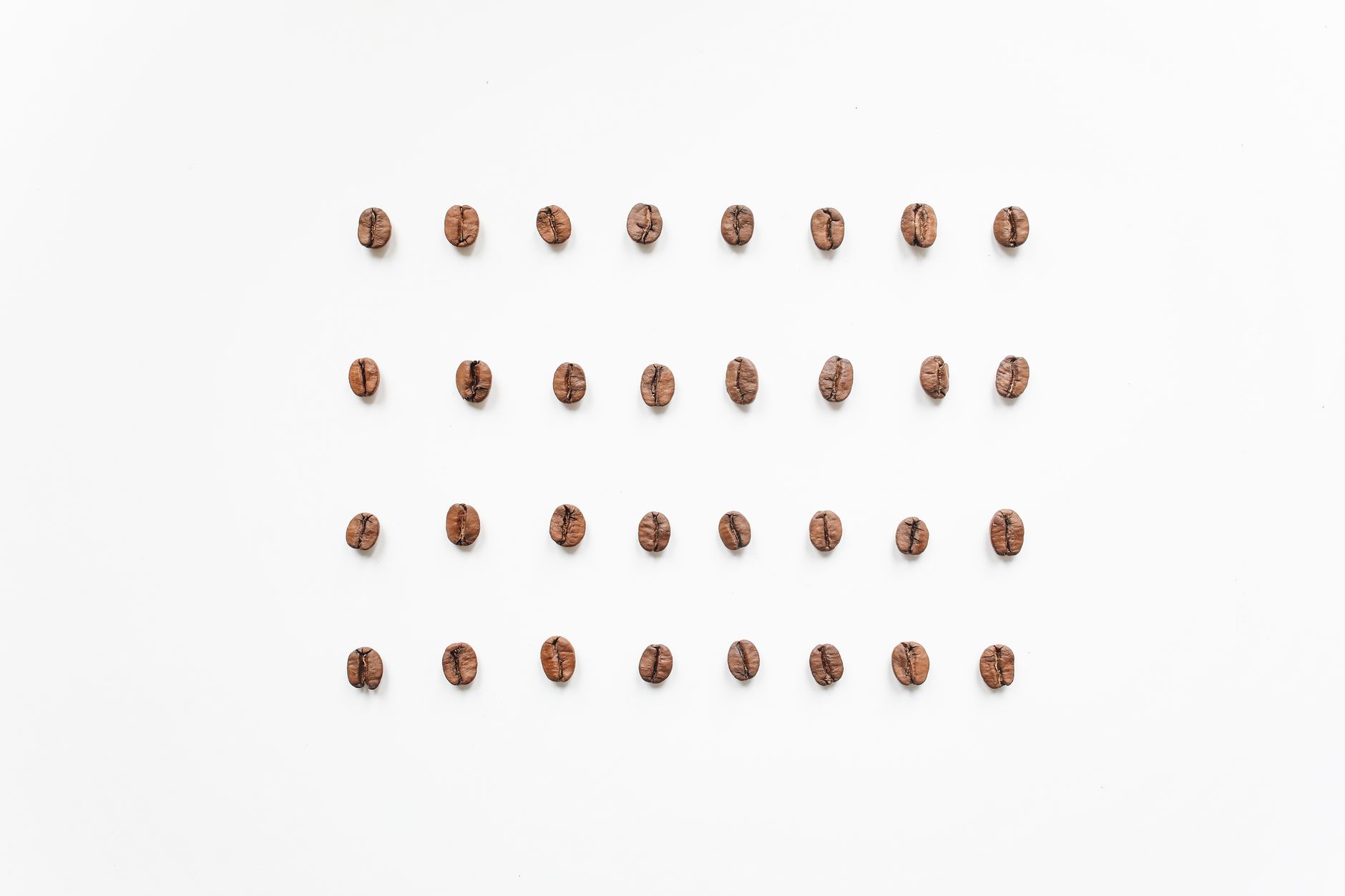
A coffee bean is not a bean — it’s a seed. Two seeds sit face-to-face inside a coffee cherry, a small stone fruit. Each seed is what we roast and brew. Occasionally only one seed develops, creating a rounder “peaberry.” The botanical structure of that seed, and the fruit surrounding it, directly shapes every flavor note in your cup.
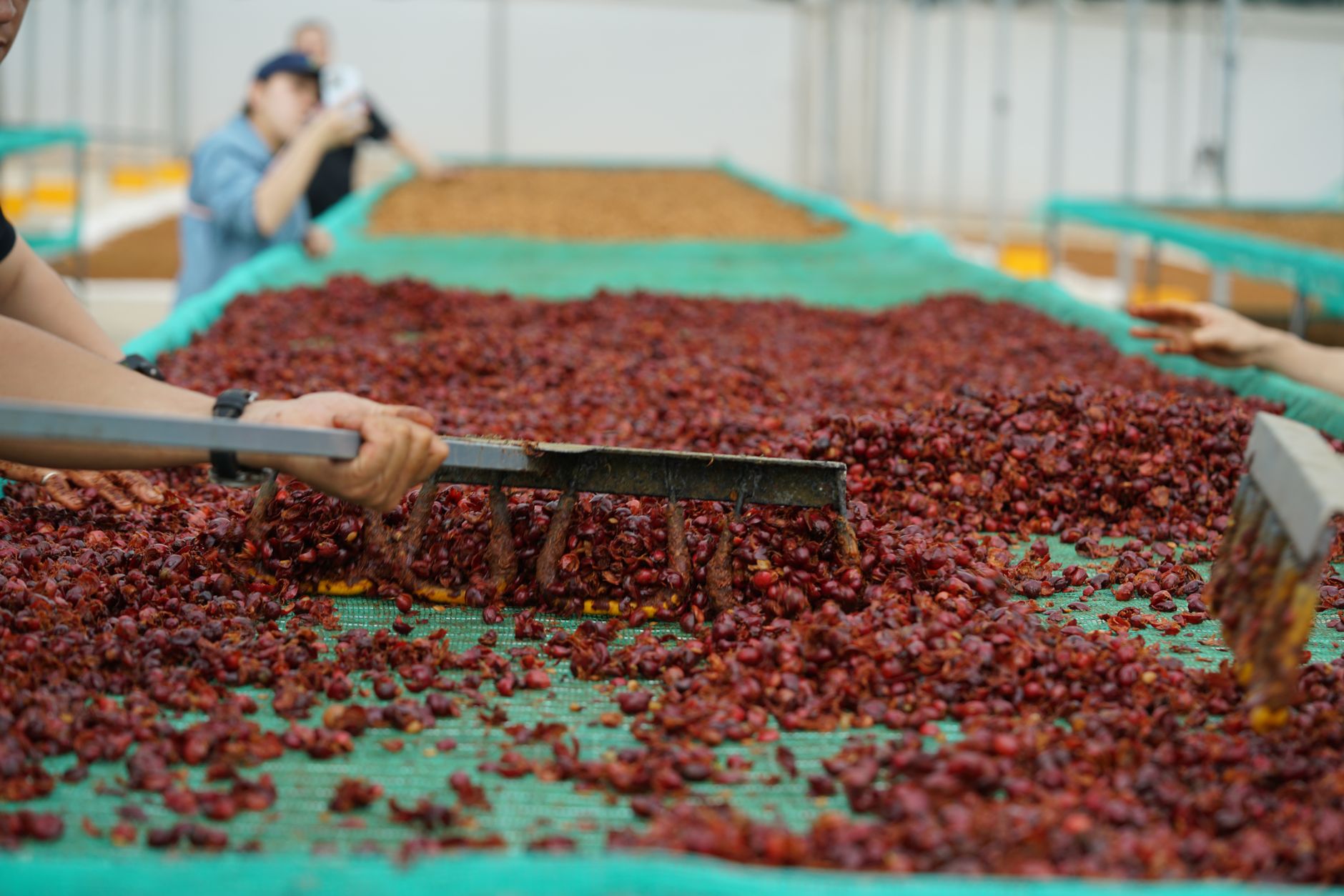 Photo: 1500m Coffee via Pexels
Coffee cherries grow on Coffea shrubs — primarily Coffea arabica and Coffea canephora (robusta). The cherries ripen over 6–11 months, turning red, yellow, or even purple depending on the variety. At peak ripeness, the sugars in the fruit are at their highest, which is why selective hand-picking of ripe cherries produces better coffee than strip-harvesting.
The Seven Layers of a Coffee Cherry
From outside to inside: exocarp, mesocarp, pectin layer, endocarp (parchment), silverskin (spermoderm), and then the two coffee seeds themselves. Each layer plays a role during processing — remove them wrong or too fast, and you get defects in the cup.
1. Exocarp (The Skin)
The outer skin of the cherry. It’s thin, waxy, and bitter — nobody brews it, but in some regions it’s dried and brewed as cascara, a tea-like drink with notes of hibiscus and tamarind.
2. Mesocarp (The Pulp and Mucilage)
This is the fruity flesh of the cherry. The outer part is soft pulp; the inner layer is sticky mucilage (sometimes called “honey”). The mucilage is high in sugars and directly influences flavor development. In honey and natural processing, some or all of this layer is left on the bean during drying — which is why naturally processed coffees taste fruity and fermented while washed coffees taste cleaner and brighter.
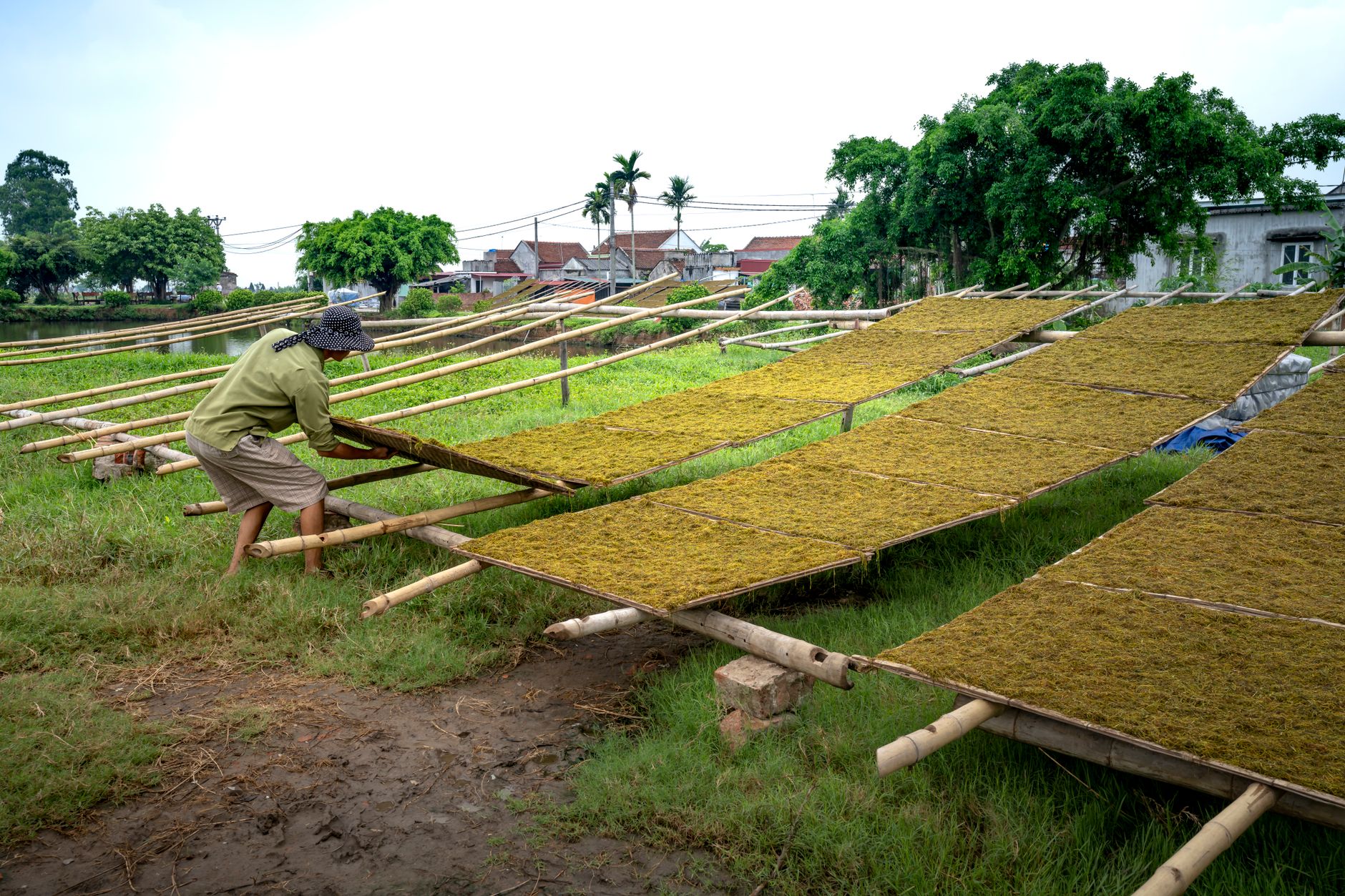 Photo: Quang Nguyen Vinh via Pexels
3. Pectin Layer
A thin, gel-like coating between the mucilage and parchment. It breaks down during fermentation in the wet process — workers traditionally judge fermentation completion by feel: when the pectin washes off cleanly, fermentation is done.
4. Endocarp (Parchment)
A papery, cream-colored husk that protects the seed during drying. It’s removed in a hulling machine before export. Green coffee shipped in parchment (“pergamino”) retains freshness longer — some specialty exporters ship it this way deliberately.
5. Silverskin (Spermoderm)
A delicate membrane clinging to the seed surface. Most of it burns off during roasting, creating the papery flakes in your roaster drum called “chaff.” In lighter roasts, traces remain in the bean’s center crease. It’s essentially inert in the cup.
6. The Coffee Seeds (The “Beans”)
Two seeds, flat sides facing each other, each enclosed in its own silverskin and parchment. This is what gets exported, roasted, and ground. The seed is ~50% carbohydrates, ~13% proteins, ~13% lipids, plus chlorogenic acids, trigonelline, and caffeine — the raw material that roasting chemistry transforms into flavor.
How Processing Removes the Layers
Processing is the controlled removal of the cherry’s outer layers, and the method chosen is the single biggest variable in green coffee flavor — bigger than roast level for most specialty coffees.
| Method | Layers Removed Before Drying | Flavor Profile |
|---|---|---|
| Washed (Wet) | All — pulp, mucilage, and pectin removed via fermentation + washing | Clean, bright, terroir-forward, high acidity |
| Natural (Dry) | None — whole cherry dried intact | Fruity, wine-like, heavy body, fermented notes |
| Honey | Skin removed, some mucilage left on | Balanced; sweetness scales with how much mucilage remains (yellow < red < black honey) |
| Anaerobic | Varies; fermentation in sealed tanks before pulping | Intense, winey, sometimes funky — polarizing in specialty circles |
| Wet-Hulled (Giling Basah) | Parchment removed at ~50% moisture (unique to Sumatra) | Earthy, full-bodied, low acidity — the “Sumatran” profile |
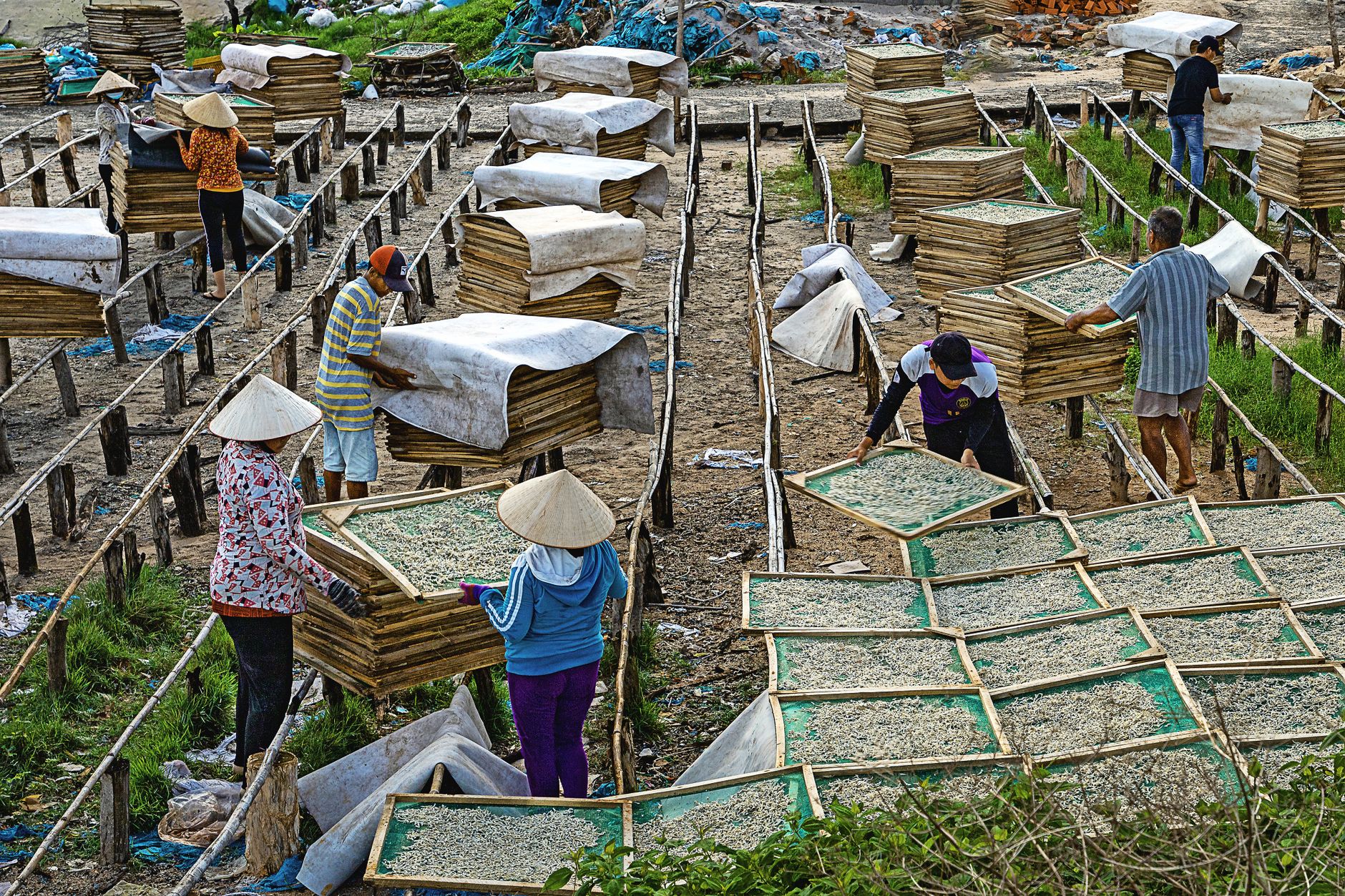 Photo: Văn Long Bùi via Pexels
The washed process strips all fermentable material before drying, so the cup reflects seed genetics and soil almost purely. The natural process lets fruit sugars migrate into the seed over weeks of drying — that’s where the blueberry in Ethiopian Yirgacheffes comes from.
What Happens Inside the Bean During Roasting
Roasting drives the Maillard reaction and caramelization inside the bean, converting raw starch and amino acids into the hundreds of aromatic compounds that make coffee smell and taste like coffee.
Green beans are dense, grassy-smelling, and nearly unbrewable. Apply heat and several things happen in sequence:
- Drying phase (up to ~160°C): Free moisture evaporates. The bean turns from green to yellow.
- Browning phase (~160–200°C): Maillard reactions begin. Sugars and amino acids combine to create melanoidins — the brown color and roasty aromas.
- First crack (~196–205°C): Steam and CO₂ build pressure inside the bean until the cell walls fracture audibly. The bean expands by 50–100% in volume. Light and medium roasts finish here or shortly after.
- Second crack (~224°C+): Cell walls fracture further. Oils migrate to the surface. Dark roasts live here — roast character dominates terroir.
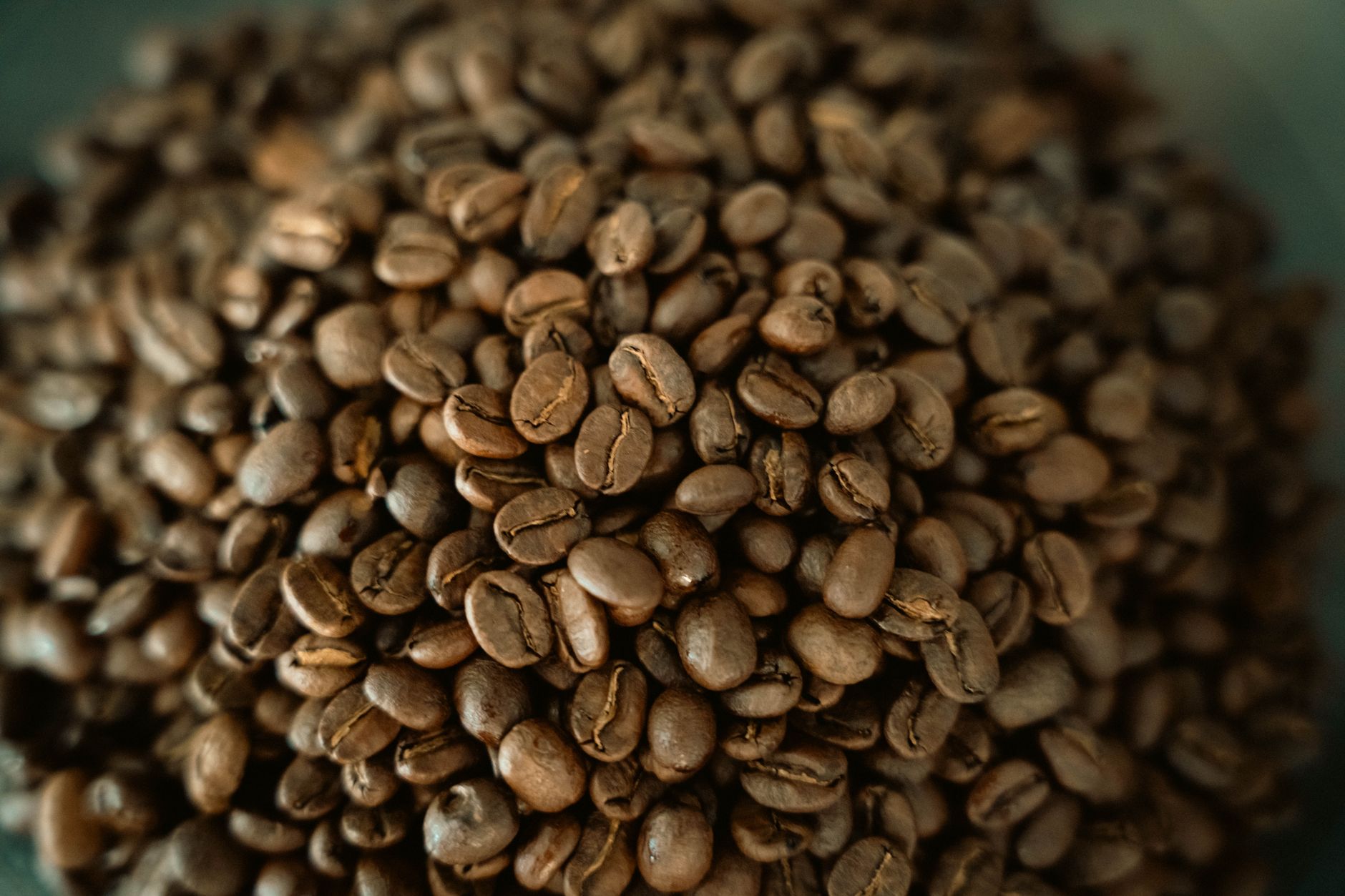 Photo: James Collington via Pexels
The silverskin chaff is released during roasting and separated by airflow in drum roasters. What’s left is the roasted bean you grind — its internal cellular structure now a porous matrix that hot water will extract.
Why Anatomy Matters for Grinding and Extraction
Bean density — determined by altitude, variety, and processing — dictates grind setting. Dense, high-altitude beans (think Kenya, Ethiopia) resist the burrs more, require slightly coarser settings at the same brew method compared to lower-density beans. Under-accounting for density leads to uneven extraction and a grassy, sour cup.
The crease running down the flat face of each bean (the “center cut”) is where silverskin residue collects and where extraction can be uneven in coarser grinds — one reason espresso’s fine, even grind matters so much. Flat burr grinders cut through the bean more uniformly than conical burrs, which is why flat burr grinders dominate in high-volume espresso environments despite the added cost.
→ See also:
- Coffee Science: The Complete Guide to Extraction, Chemistry & Flavor
- How Much Caffeine Is in a Cup of Coffee? (All Brew Methods)
- Caffeine in Espresso vs Coffee: Which Has More?
FAQ
What is the difference between a coffee bean and a coffee seed? They’re the same thing — “bean” is a misnomer that stuck because of the shape. Coffee seeds come from the coffee cherry, a stone fruit. Real beans are legumes; coffee is unrelated botanically.
Why do some coffees taste fruity and others taste clean? Processing method is the primary driver. Natural-processed coffees dry with the fruit intact, allowing fruit sugars to ferment into the seed. Washed coffees have all fruit removed before drying, producing a cleaner, brighter cup that expresses terroir more directly.
What is a peaberry and does it taste different? A peaberry forms when only one seed develops inside the cherry instead of two. The single seed is rounder and develops more evenly in the drum during roasting. Many roasters charge a premium for peaberry lots; whether they taste noticeably better is debated, but the even shape does produce more consistent roast development.
What does the silverskin do? It’s a protective membrane around the seed. Most burns off as chaff during roasting. In the cup it contributes nothing — it’s separated in the roaster and discarded. Traces visible in the center cut of a lightly roasted bean are harmless.
Why does altitude affect coffee flavor? Higher altitude means cooler temperatures, which slows cherry development. A slower maturation cycle allows more complex sugars to develop in the fruit and seed, producing higher density beans with brighter acidity and more nuanced flavor. Altitude is shorthand for “longer development time,” not a magical property of elevation itself.
Editorial methodology: Assessments are based on manufacturer specifications, published user reviews, and editorial research. Physical hands-on testing is noted explicitly where it occurred. Rankings reflect our editorial judgment and are not influenced by affiliate commission rates. Full editorial policy · Affiliate disclosure