Contents
How to Make Coffee Without a Coffee Maker (7 Methods)
TL;DR: You can make coffee without a coffee maker using everyday kitchen equipment — a pot, a cup, and a strainer are enough. The best method depends on what you have: cowboy coffee for pure simplicity, the pour-over hack for clarity, or a makeshift French press for body. All seven methods below brew drinkable-to-excellent coffee with gear you already own.
1. Cowboy Coffee (Pot on the Stove)
Boil coarsely ground coffee directly in a pot of water, let the grounds settle, then pour slowly. It’s the oldest brewing method on Earth and produces a strong, full-bodied cup with minimal equipment.
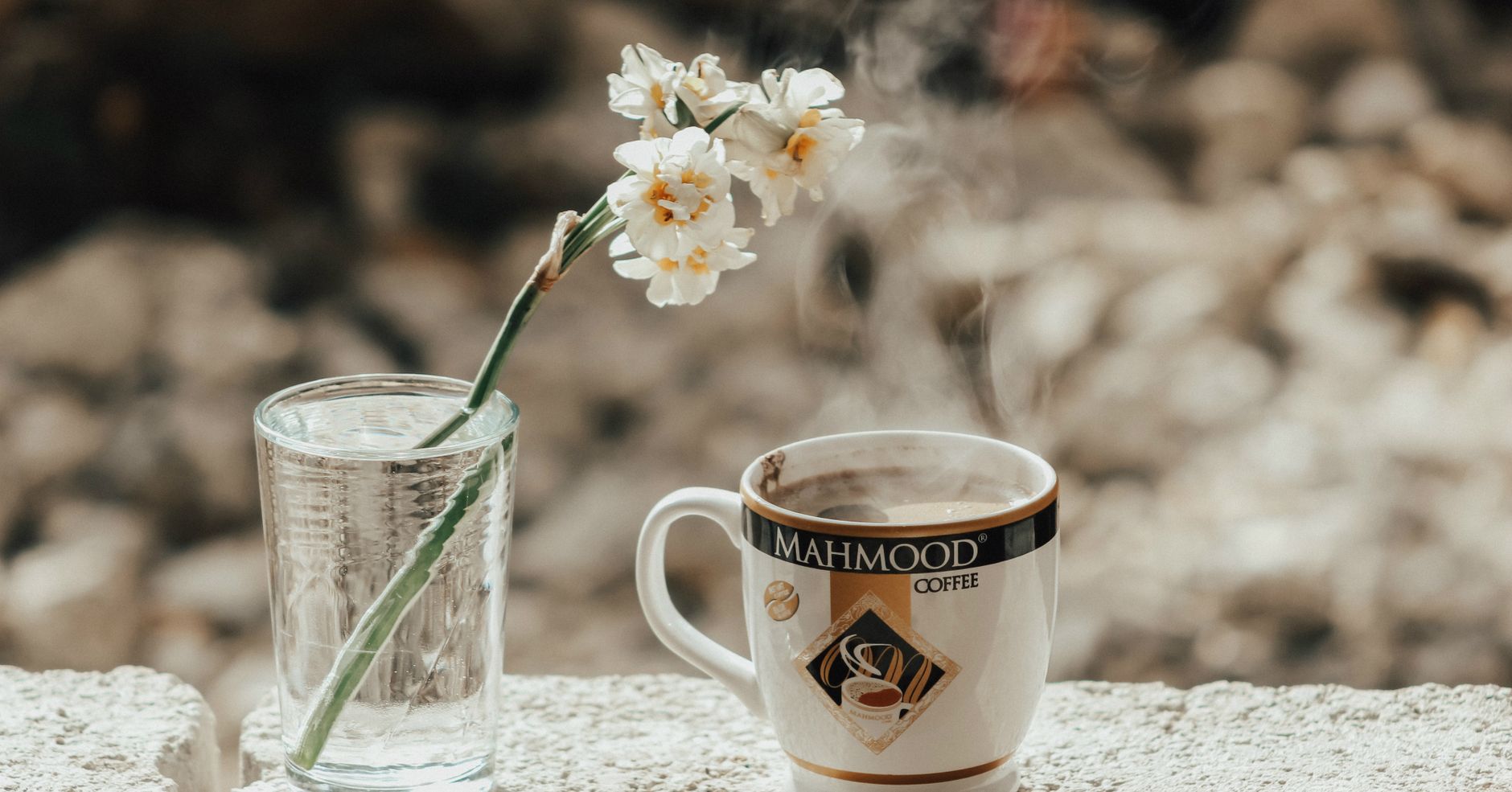
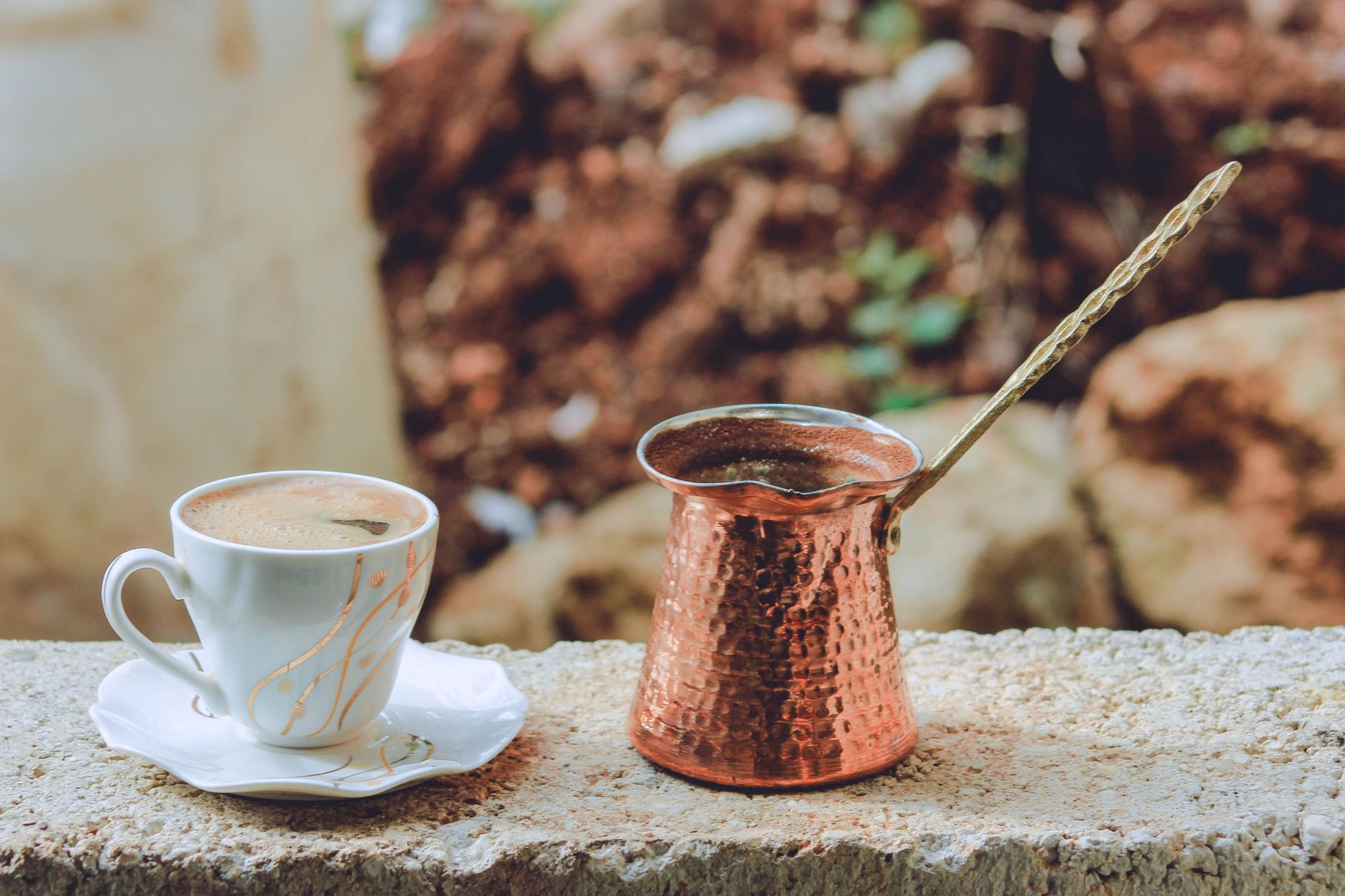 Photo: Samer Daboul via Pexels
What you need: Medium pot, coarse ground coffee, water, a steady hand when pouring.
Ratio: 2 tablespoons (10–12g) per 6 oz (180ml) of water.
Steps:
- Add cold water to the pot and bring to a near-boil (about 200°F / 93°C).
- Remove from heat. Add coffee grounds directly to the water.
- Stir, then let steep for 4 minutes.
- Sprinkle a small amount of cold water over the surface — it helps settle the grounds faster.
- Pour gently into your cup, leaving the last half-inch of liquid (and the sludge) in the pot.
Tips: Coarse grind is non-negotiable here. Fine grounds won’t settle and you’ll drink mud.
2. The Improvised Pour-Over (Coffee Filter + Cup)
If you have paper coffee filters — even basket filters — and a cup, you can replicate a pour-over. The result is clean and bright, closer to drip coffee than any other manual method.
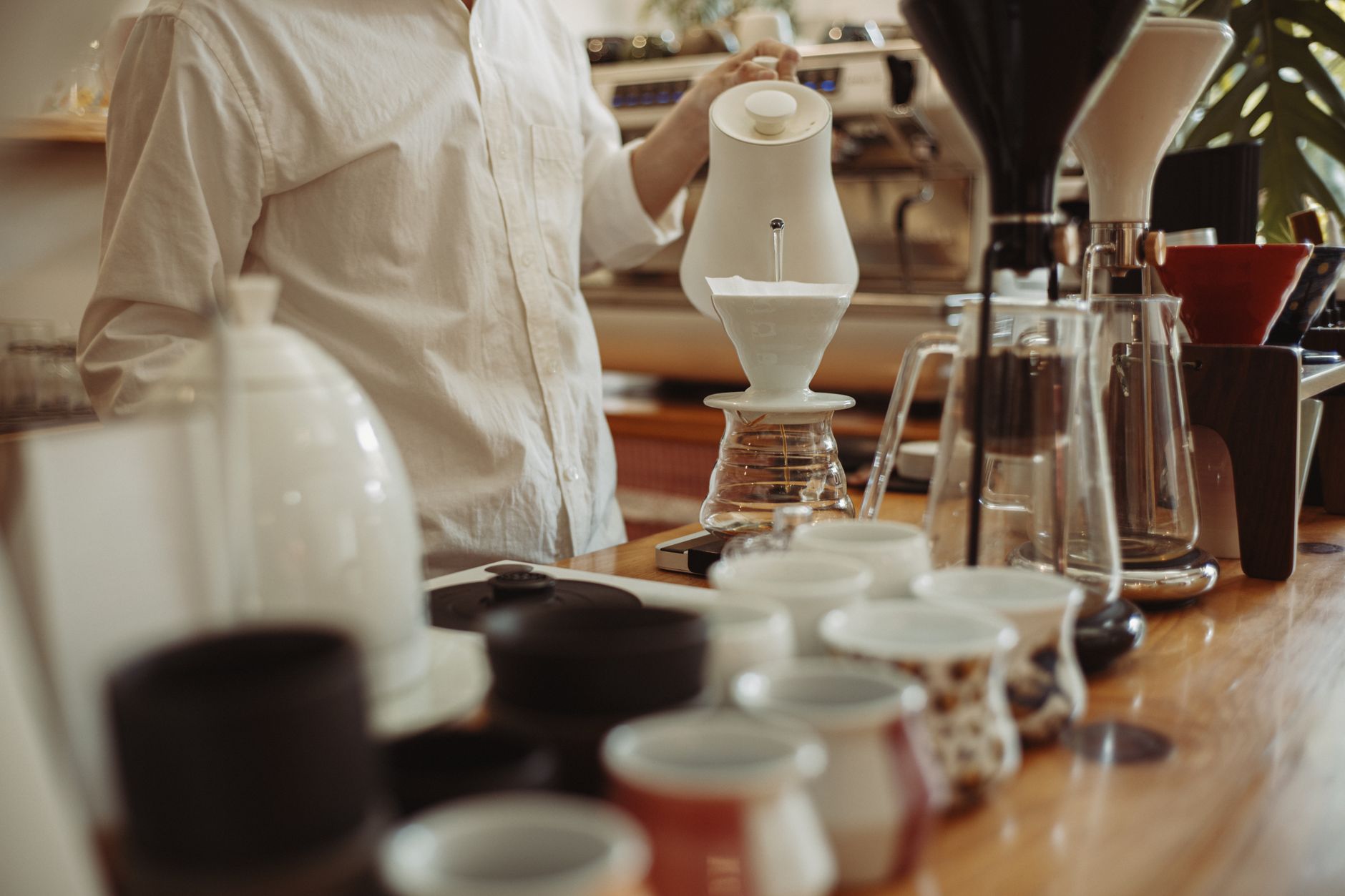
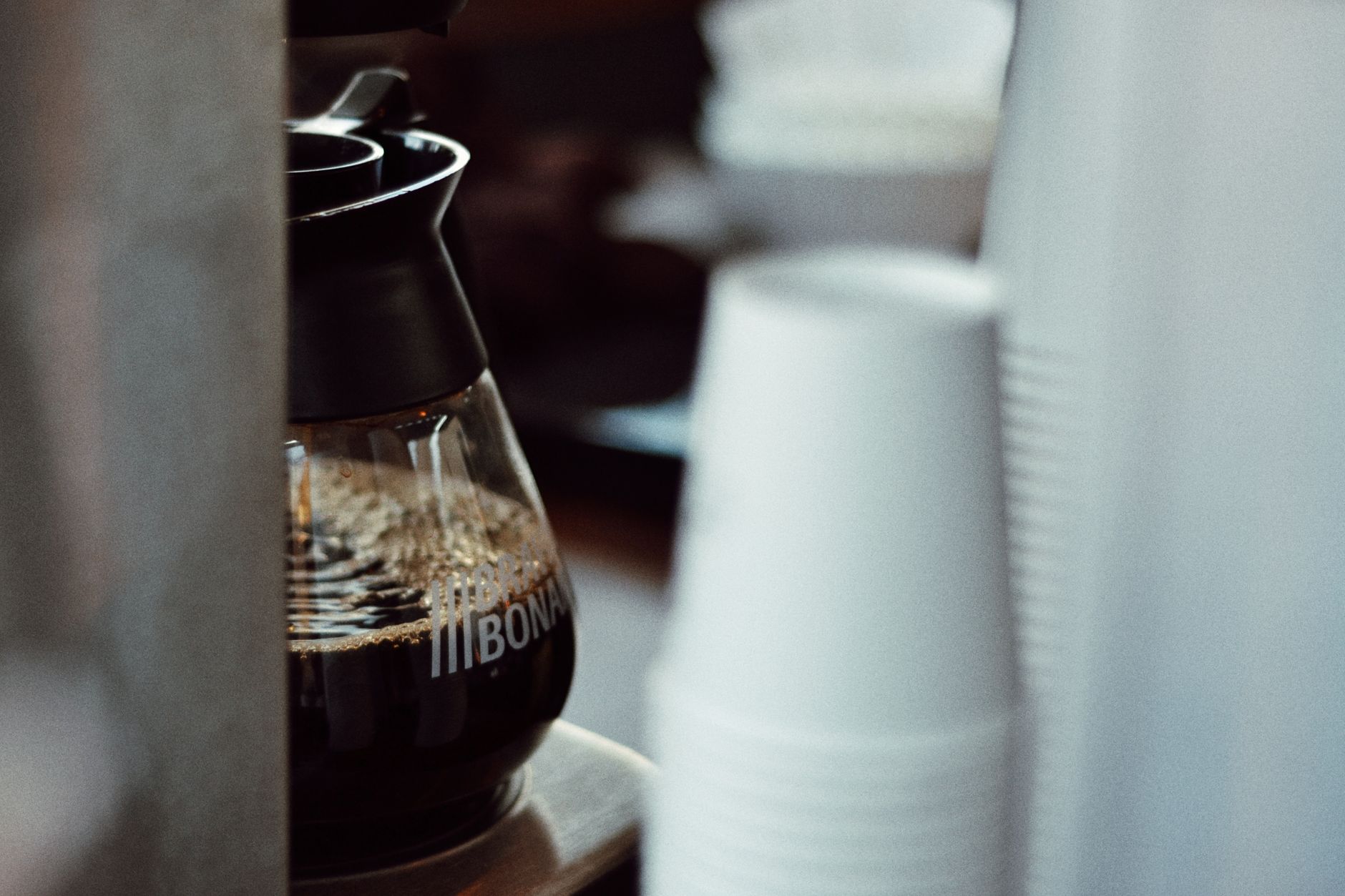 Photo: RABİA via Pexels
What you need: Paper filter (basket or cone), a cup or jar, medium-fine ground coffee, kettle or pot for hot water.
Ratio: 1:15 coffee-to-water by weight, or roughly 15g coffee per 225ml water.
Steps:
- Set the filter inside the cup, folding the edges over the rim so it stays put.
- Add your grounds to the filter.
- Pre-wet the filter with a small splash of hot water — this removes papery taste and pre-warms the cup.
- Pour water in slow, circular passes, starting from the center and working outward.
- Total pour time: 3–4 minutes.
If you have no filters: A clean cloth napkin, a piece of cheesecloth, or even a thin dish towel work in a pinch. Results will be slightly oilier.
3. Mason Jar French Press
Steep coarse grounds in hot water in any jar, then pour through a strainer. Same principle as a French press, without the plunger.
What you need: Any heat-safe jar or mug, coarse ground coffee, fine mesh strainer or cheesecloth.
Ratio: 1:12 to 1:14 coffee-to-water (stronger than drip, matching French press convention).
Steps:
- Add coarse ground coffee to the jar.
- Pour water just off the boil over the grounds.
- Stir once, then steep for 4 minutes.
- Pour through a fine mesh strainer into a second cup.
This method extracts full oils from the bean, giving you the same body-forward character as a proper French press . For the full technique, see French Press Coffee: Complete Brewing Guide.
4. The Cold Brew Concentrate (No Heat, No Equipment)
Cold brew requires zero heat, zero special tools — just a jar, a strainer, and 12–24 hours. Produces a low-acid concentrate you dilute with water or milk.
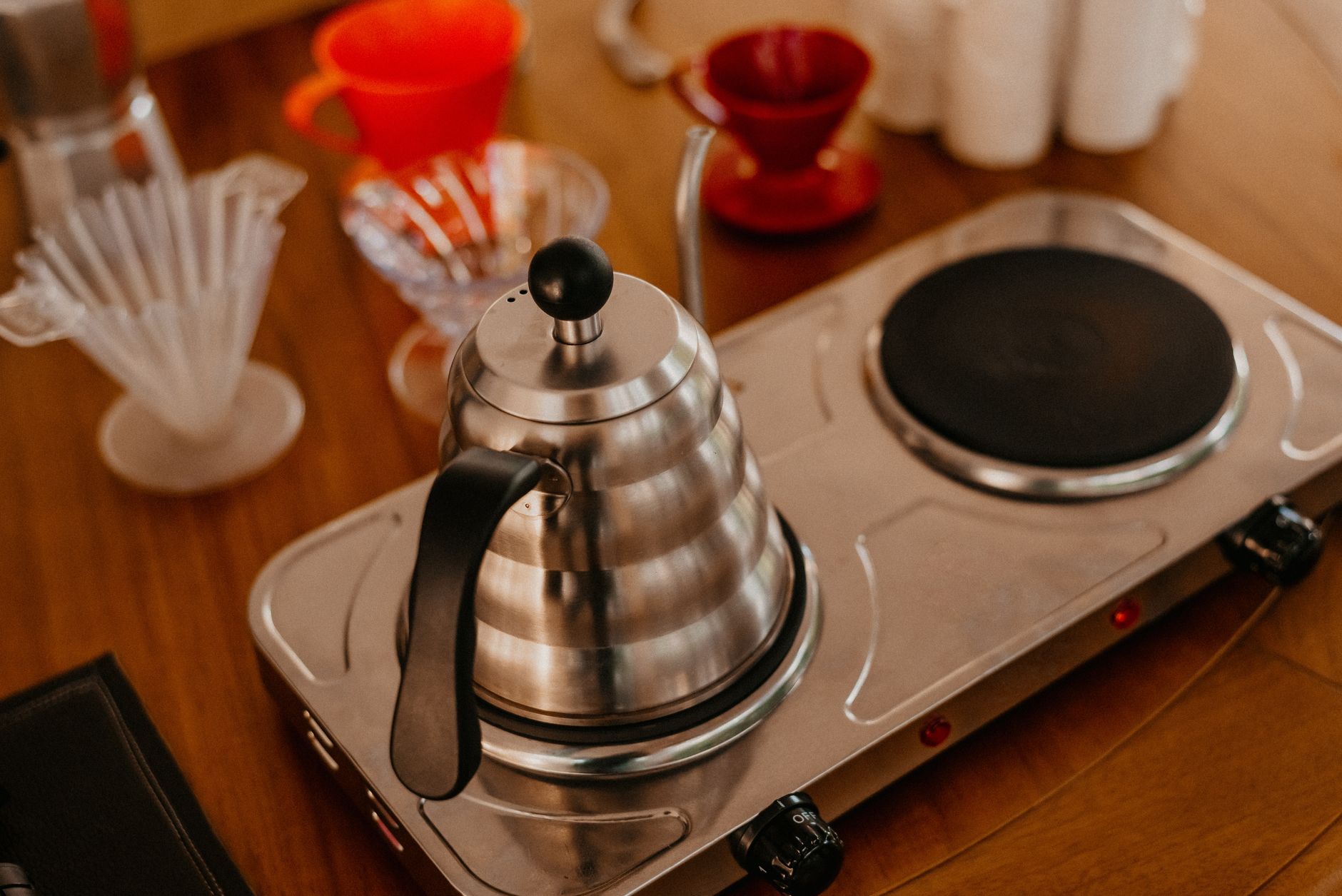
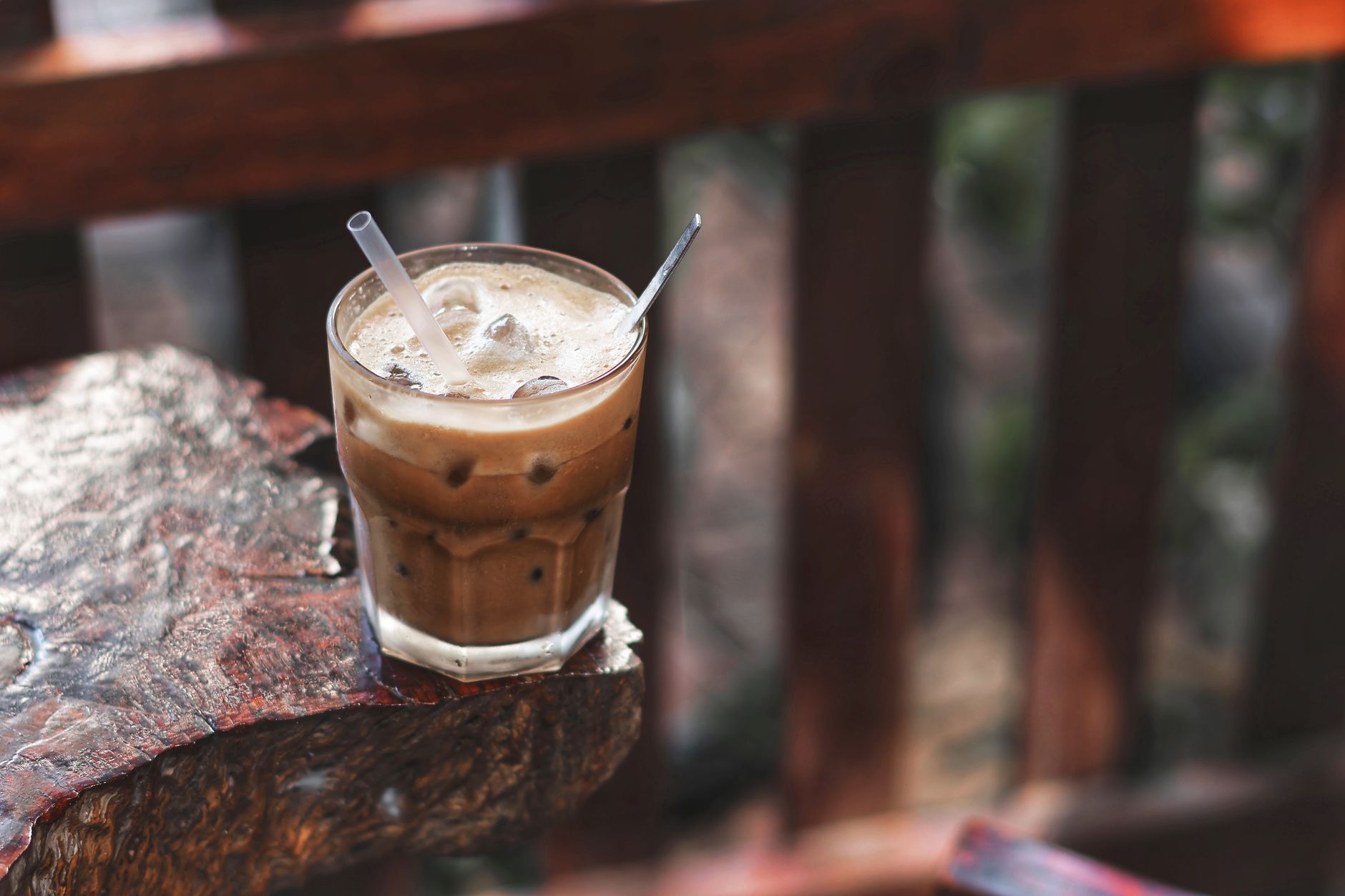 Photo: 🇻🇳🇻🇳Nguyễn Tiến Thịnh 🇻🇳🇻🇳 via Pexels
What you need: Any jar (1L+), coarse ground coffee, cold or room-temperature water, strainer + cloth.
Ratio: 1:5 coffee-to-water for concentrate (e.g., 100g coffee to 500ml water).
Steps:
- Combine coffee and cold water in the jar. Stir to saturate all grounds.
- Cover and let sit at room temperature for 12–15 hours, or in the fridge for 18–24 hours.
- Strain twice — first through a mesh strainer, then through a cloth or paper filter.
- Dilute 1:1 with water or milk before drinking.
Cold brew stored in the fridge keeps for up to 2 weeks.
5. Bag Brew (DIY Coffee Bag)
The coffee equivalent of a tea bag — grind your coffee, wrap it in a filter or cheesecloth pouch, and steep in hot water. Mess-free and surprisingly effective.
What you need: Paper filter or cheesecloth, string or a rubber band, medium-coarse ground coffee, a mug.
Steps:
- Place 15–18g of ground coffee in the center of a filter or cheesecloth square.
- Gather the edges and tie securely with string.
- Place the bag in your mug and pour 250ml of 200°F water over it.
- Steep 4–5 minutes, pressing gently against the side of the cup before removing.
Grind slightly coarser than you would for drip — the bag method tends to over-extract at fine grind sizes.
6. Turkish-Style Pot (Cezve / Ibrik Method)
Finely ground coffee simmered in a small pot with water and optional sugar. Bold, thick, and intentionally unfiltered. One of the most efficient brewing methods possible.
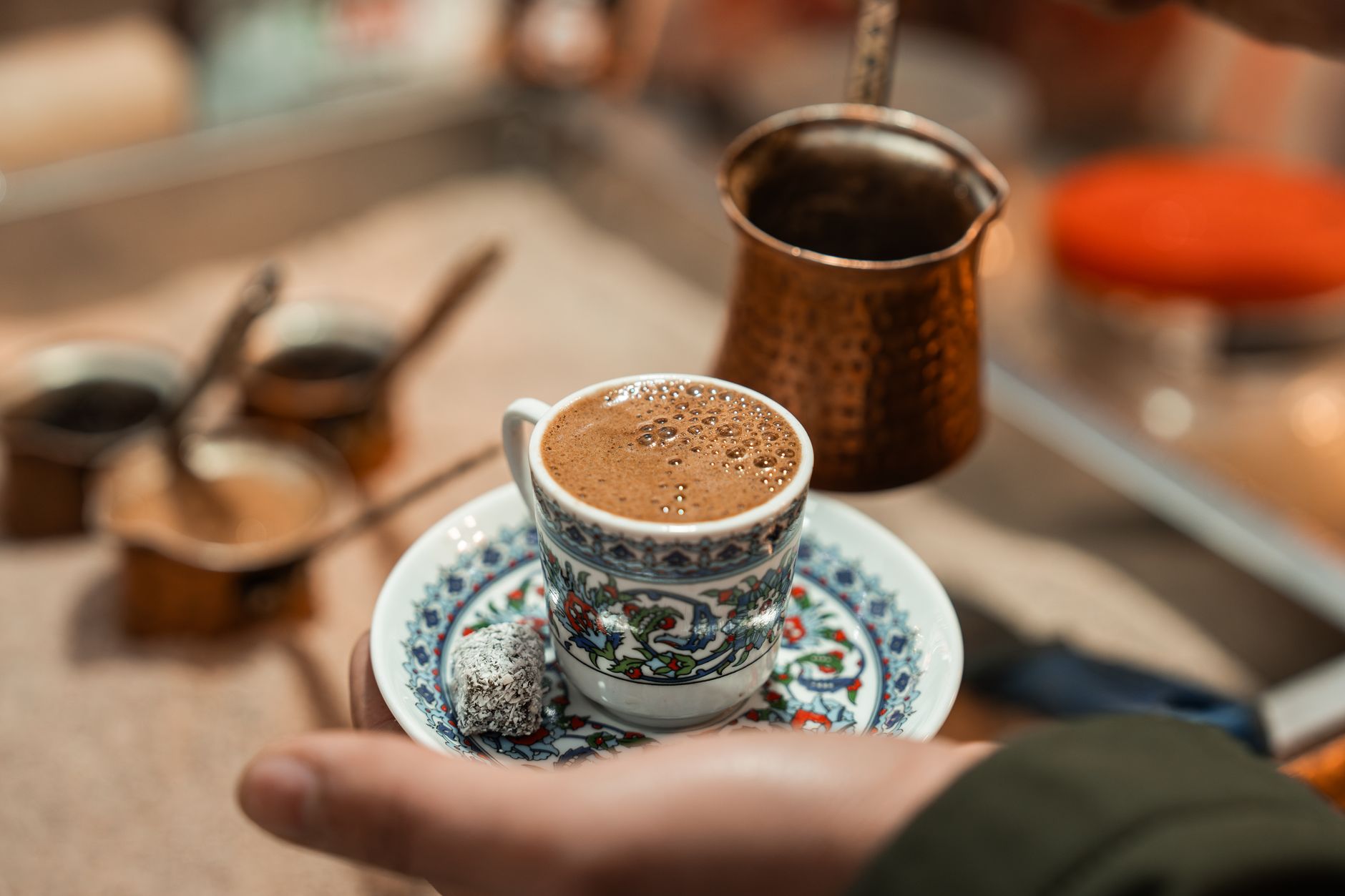
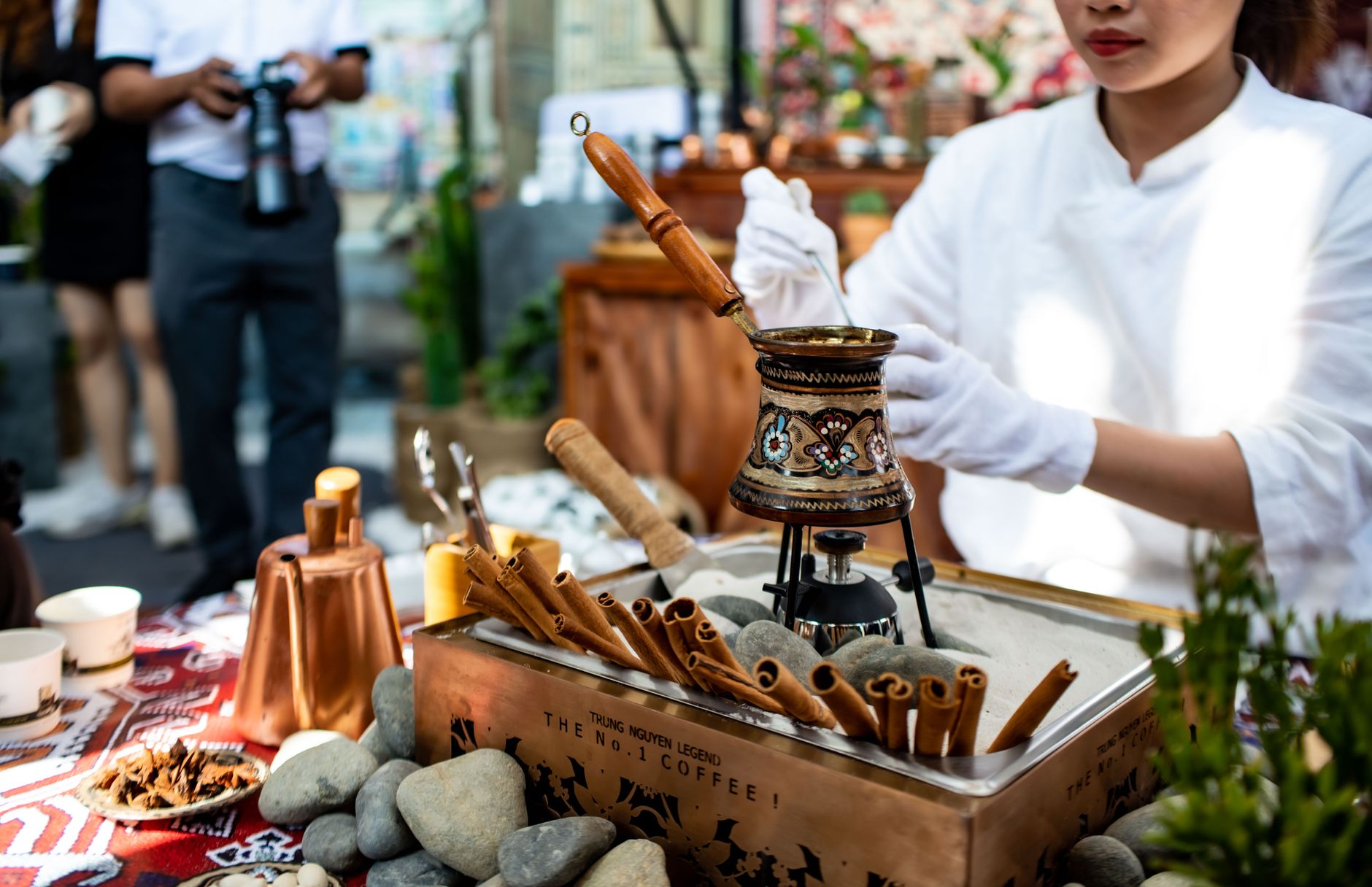 Photo: Thủy Papaya via Pexels
What you need: Any small saucepan (or an actual cezve ), very finely ground coffee (Turkish grind or powder-fine), cold water.
Ratio: 1 heaping teaspoon (5–6g) per 60–80ml water (one demitasse cup).
Steps:
- Combine cold water, coffee, and sugar (optional) in the pot. Do not stir yet.
- Place over low heat. Stir once to combine.
- Watch closely — as the coffee heats, a dark foam will rise.
- Just before it boils over, remove from heat. Spoon the foam into your cup.
- Return to heat briefly until foam rises a second time, then pour slowly into the cup.
- Wait 1–2 minutes for grounds to settle before drinking.
Turkish coffee is never filtered — drink down to the last centimeter and leave the sludge.
7. Microwave Method (Emergency Only)
Heat water in a microwave-safe mug, add ground coffee, steep, and strain. The least elegant method, but it works when you have nothing else.
What you need: Microwave-safe mug, any ground coffee, spoon, paper towel or cloth for straining.
Steps:
- Fill a mug with water and microwave on high for 2 minutes (target ~200°F).
- Add 1–2 tablespoons of medium-fine ground coffee.
- Stir, then let sit undisturbed for 4 minutes.
- Slowly pour through a strainer or paper towel into a second mug.
Avoid re-microwaving after adding coffee — superheating can cause the liquid to erupt. Heat the water first, always.
Method Comparison
| Method | Equipment Needed | Grind Size | Active Time | Cup Quality |
|---|---|---|---|---|
| Cowboy Coffee | Pot | Coarse | 10 min | Full body, some sediment |
| Improvised Pour-Over | Filter + cup | Medium-fine | 5 min | Clean, bright |
| Mason Jar French Press | Jar + strainer | Coarse | 8 min | Rich, full body |
| Cold Brew | Jar + cloth | Coarse | 12–24 hrs | Smooth, low acid |
| Bag Brew | Filter + string | Medium-coarse | 6 min | Clean, easy |
| Turkish-Style | Small pot | Powder-fine | 10 min | Intense, thick |
| Microwave | Mug + towel | Medium-fine | 6 min | Acceptable |
Coffee Module B — Brewing Guide
Universal Extraction Parameters (Stovetop / Manual Methods)
| Parameter | Target |
|---|---|
| Dose | 15–18g per 250ml |
| Yield | 250ml finished cup |
| Ratio | 1:13–1:16 (adjust to taste) |
| Time | 4–5 min steep (varies by method) |
| Temperature | 195–205°F / 90–96°C |
| Pressure | N/A (gravity or immersion only) |
Puck Prep (for immersion methods)
- Saturation: Stir after adding water to ensure all grounds are wet
- Leveling: Not applicable — ensure even distribution in the vessel before pouring
- Settling: Tap the jar/pot once on the counter after steeping begins
- Pre-infusion: A 30-second bloom pour (small amount of water first) applies to pour-over and bag methods to degas fresh beans
Troubleshooting Matrix
| Symptom | Likely Cause | Fix |
|---|---|---|
| Bitter, harsh cup | Over-extraction or water too hot | Coarsen the grind, lower water temp to 195°F, shorten steep |
| Weak, sour, thin | Under-extraction | Finer grind, longer steep, hotter water |
| Too much sediment | Grind too fine or pour too fast | Use coarser grind, pour more slowly, strain twice |
| Papery taste | Unrinsed filter | Always pre-wet the paper filter before adding grounds |
| Flat, no aroma | Stale coffee | Use freshly roasted beans within 3–4 weeks of roast date |
→ See also:
- How to Brew Coffee at Home: Complete Method Guide
- French Press Coffee: Complete Brewing Guide (Ratios + Technique)
- French Press Coffee-to-Water Ratio Calculator
FAQ
Can you make coffee without a filter of any kind? Yes — cowboy coffee and Turkish-style both brew without filters by design. You either let grounds settle (cowboy) or serve them intentionally (Turkish). The key is using coarse ground coffee for cowboy and powder-fine for Turkish, then pouring or drinking carefully.
What’s the easiest way to make coffee without a coffee maker? The improvised pour-over is the easiest if you have any kind of paper filter. If you don’t, cowboy coffee in a pot is the simplest — it only requires a heat source and a vessel. Both methods take under 10 minutes.
Can you use instant coffee with these methods? Instant coffee dissolves in hot water without brewing, so none of these methods apply to it. These methods are all for regular ground coffee that needs to extract, not dissolve. If you have instant, just add hot water directly.
Does the grind size matter when brewing without a machine? It matters more than almost any other variable. Too fine and you get sediment and over-extraction; too coarse and the coffee is weak and sour. Most manual methods call for coarse to medium-coarse — only Turkish coffee specifically requires a powder-fine grind.
How do you make strong coffee without a coffee maker? Use a 1:12 ratio (stronger than the standard 1:15), steep for the full 4–5 minutes, and use water at 200°F. The mason jar French press and Turkish methods naturally produce the strongest results because they’re full-immersion with no filtration pulling out oils.
Editorial methodology: Assessments are based on manufacturer specifications, published user reviews, and editorial research. Physical hands-on testing is noted explicitly where it occurred. Rankings reflect our editorial judgment and are not influenced by affiliate commission rates. Full editorial policy · Affiliate disclosure