Contents
How to Make Chemex Coffee: Step-by-Step With Ratios
TL;DR: To make Chemex coffee, use a 1:15 ratio (e.g., 40g coffee to 600g water at 96°C), grind medium-coarse, bloom for 45 seconds, then pour in 3–4 steady pulses over 4–5 minutes total. The result is exceptionally clean, bright, and tea-like — the Chemex’s thick filter strips nearly all oils and fines.
What Makes Chemex Different From Other Pour-Overs
The Chemex uses a proprietary filter that is 20–30% thicker than standard paper filters. That thickness removes almost all coffee oils (cafestol, kahweol) and micro-fines, producing a cup that is cleaner and lighter-bodied than a V60 or Kalita Wave — at the cost of some sweetness and mouthfeel.
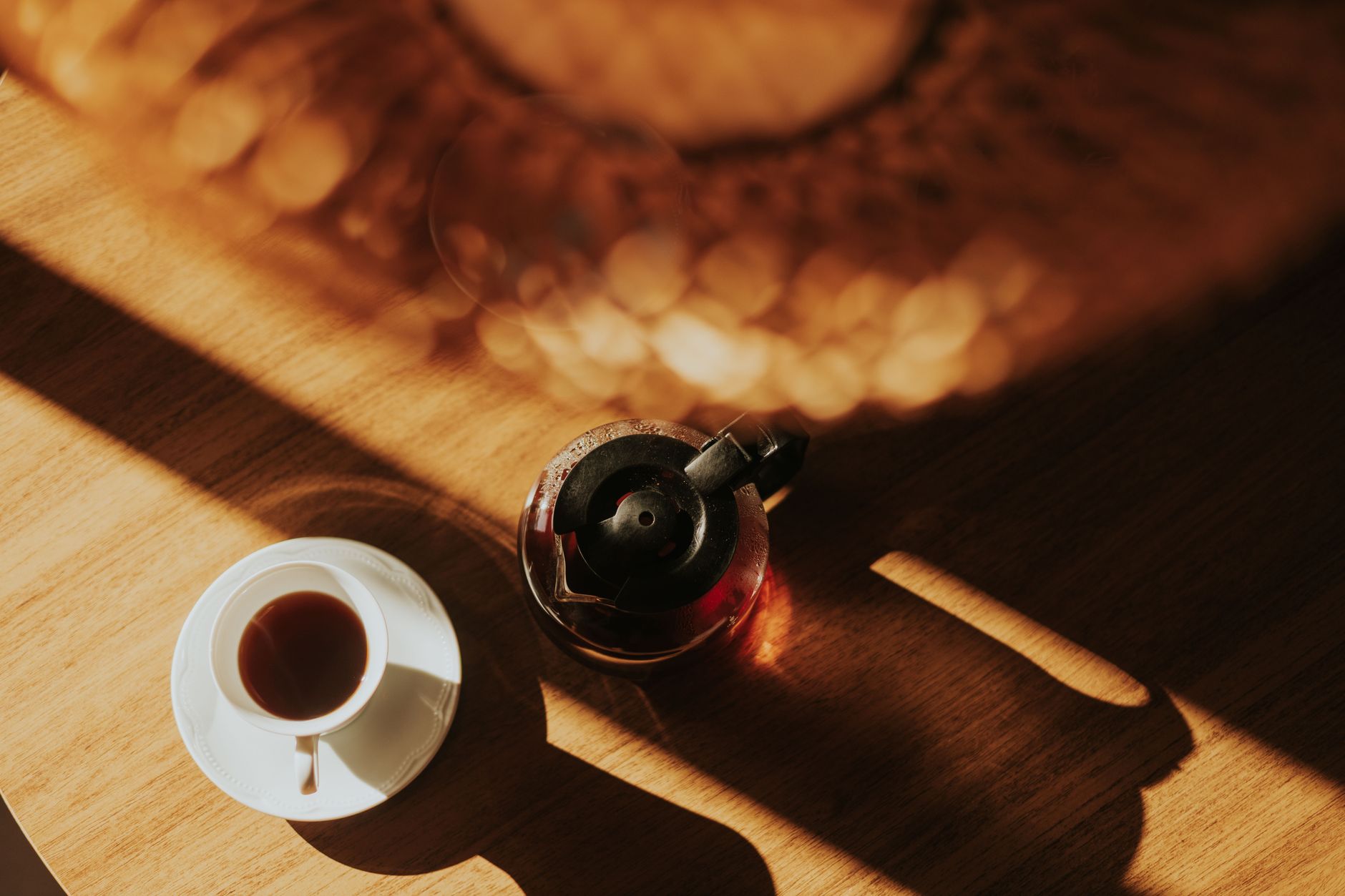 Photo: Letícia Alvares via Pexels
The glass hourglass design isn’t just aesthetic. The air channel created by the folded filter allows gases to escape during bloom without you lifting anything or adjusting airflow. That said, the Chemex rewards precision — a sloppy grind or rushed pour will highlight every flaw in your beans.
Who Should Brew Chemex
If you drink single-origin light roasts and want to taste terroir — fruit, floral notes, acidity — the Chemex is the right tool. If you want a thick, syrupy espresso-style cup, look at a French Press (French Press Coffee: Complete Brewing Guide) or a moka pot.
Chemex Coffee Ratios: The Numbers That Matter
For a balanced Chemex brew, use 1:15 to 1:16 coffee-to-water by weight. 1:15 gives you more body and sweetness; 1:16 is cleaner and more delicate. Start at 1:15 and adjust from there — never guess by scoops.
 Photo: Wenhao Sun via Pexels
| Chemex Size | Coffee (g) | Water (g) | Yield (ml) |
|---|---|---|---|
| 3-cup | 25 | 375 | ~340 |
| 6-cup | 40 | 600 | ~540 |
| 8-cup | 55 | 825 | ~750 |
| 10-cup | 70 | 1050 | ~950 |
Weight always beats volume. A tablespoon of light roast weighs 5g; the same tablespoon of dark roast weighs 7g. Use a scale. The OXO Brew Scale has a built-in timer, which removes one variable from the process.
Gear You Actually Need
- Chemex brewer — 6-cup is the most versatile for 1–2 people
- Chemex filters (square or circle, folded into a cone)
- Burr grinder — not optional; blade grinders produce uneven particles that over- and under-extract simultaneously
- Gooseneck kettle — the narrow spout gives you pour control; any standard kettle will stall your technique
- Scale with timer
- Thermometer or variable-temp kettle
How to Make Chemex Coffee: Full Step-by-Step
Extraction Parameters
| Parameter | Target |
|---|---|
| Dose | 40g (6-cup) |
| Yield | 600g in the server |
| Ratio | 1:15 |
| Grind | Medium-coarse (sea salt texture) |
| Total brew time | 4:00–5:00 |
| Water temp | 93–96°C (199–205°F) |
| Pressure | Gravity (no pressure) |
Step 1 — Rinse the Filter
Fold the Chemex filter so the three-layer side faces the spout. Set it in the brewer, then pour 200–300g of hot water through it. This removes paper taste and preheats the glass. Discard the rinse water before adding coffee.
Step 2 — Grind and Dose
Grind 40g of coffee to a medium-coarse consistency — think coarse sea salt or raw sugar. Finer than this and the thick filter will choke; coarser and extraction will be thin. The 1Zpresso JX-Pro
Seat the grinds in the filter and give the brewer a gentle shake to flatten the bed.
Step 3 — Bloom (0:00–0:45)
Start your timer. Pour 80g of water (2× the coffee weight) evenly over the grounds, starting from the center and spiraling outward. Every particle needs to get wet.
Wait 45 seconds. You should see the bed dome and release CO₂ bubbles — this is degassing. Fresh coffee blooms aggressively; stale coffee barely reacts. A flat bloom is useful feedback about your beans.
Step 4 — Pour in Pulses (0:45–4:30)
After the bloom, pour in 3 controlled pulses:
Pour 2 (0:45): Bring the total to 300g. Pour slowly in a steady spiral, keeping the water level 1–2cm below the filter rim. Avoid pouring directly on the filter paper — it can cause bypassing where water skips the coffee bed entirely.
Pour 3 (2:00): Bring the total to 450g. The bed should have dropped below the water line before you start this pour. If it hasn’t, wait 20 more seconds.
Pour 4 (3:00): Bring the total to 600g. Keep the same even spiral. The brew should finish draining by 4:30–5:00.
Step 5 — Draw-Down and Serve
When the last drop falls, the bed should look flat and even with a slight depression in the center — not a crater on one side (channeling) and not a dome (grind too fine). Remove and discard the filter, give the brewer a gentle swirl to mix the top and bottom of the brew, and pour immediately.
Puck Prep for Chemex (Bed Prep)
The Chemex has no puck — but bed preparation matters the same way:
- WDT equivalent: After dosing, use a chopstick or thin skewer to break up any clumps before the bloom pour
- Leveling: Shake the brewer gently to flatten the bed
- Channeling prevention: Pour slowly and evenly; never dump water in one spot
- Pre-infusion: The bloom IS your pre-infusion — 2× dose weight, 45 seconds, no shortcuts
Troubleshooting Matrix
| Symptom | Likely Cause | Fix |
|---|---|---|
| Brew takes 7+ minutes | Grind too fine | Coarsen 2–3 steps |
| Brew finishes in under 3 min | Grind too coarse | Fine by 2–3 steps |
| Weak, watery cup | Under-extraction or low dose | Try 1:14 ratio; check grind size |
| Bitter, harsh cup | Over-extraction | Coarsen grind; lower water temp to 91°C |
| Uneven bed after brew | Channeling | Pour slower; check bed flatness before bloom |
| Papery taste | Filter not fully rinsed | Rinse with 300g+ water; discard completely |
| Flat bloom | Stale coffee | Buy fresher beans; use within 2–4 weeks of roast |
 Photo: Lucas Andrade via Pexels
→ See Also
- How to Brew Coffee at Home: Complete Method Guide
- French Press Coffee: Complete Brewing Guide (Ratios + Technique)
- French Press Coffee-to-Water Ratio Calculator
FAQ
Does the Chemex make strong coffee? The Chemex makes clean, bright coffee — not heavy or thick. “Strong” in terms of caffeine depends on your ratio and dose, not the brewer. If you want more intensity, drop to a 1:13 ratio rather than changing grind or technique.
What grind size for Chemex? Medium-coarse — similar to coarse sea salt. If you’re dialing in on a stepped grinder, start 2–3 clicks coarser than your V60 setting. The thick Chemex filter requires more resistance from the grind than most pour-over methods.
Can I use regular coffee filters in a Chemex? No. Standard pour-over filters (Melitta, V60, Kalita) don’t fit the Chemex hourglass correctly and won’t seal against the walls — you’ll get bypass and grounds in your cup. Use only Chemex-branded square or circle filters folded into a four-layer cone.
How do I know if my Chemex brew is done correctly? Total brew time of 4–5 minutes, a flat bed with a shallow center depression, and a total yield close to your target weight. The coffee should taste clean and bright without astringency. If the brew is sour, extract longer (finer grind); if bitter, extract less (coarser grind).
Why do I need to rinse the Chemex filter? Unrinsed paper filters leave a detectable papery taste in the cup — the Chemex filter is thick enough that this is more noticeable than with thinner V60 papers. Rinsing also preheats the glass, which keeps your brew temperature stable during extraction.
Can I make iced Chemex coffee? Yes — Japanese-style flash brew works well. Place 200g of ice in the Chemex server, reduce your water to 400g, and keep your coffee dose at 40g (effectively brewing concentrated at 1:10 then diluting on ice). Adjust grind 1–2 steps finer to compensate for the shorter contact time.
Editorial methodology: Assessments are based on manufacturer specifications, published user reviews, and editorial research. Physical hands-on testing is noted explicitly where it occurred. Rankings reflect our editorial judgment and are not influenced by affiliate commission rates. Full editorial policy · Affiliate disclosure