Contents
How to Become a Barista: Training, Skills & Certification
TL;DR: To become a barista, you need hands-on espresso training, grinder calibration skills, and milk texturing technique — most cafés hire with zero experience and train on the job. Formal certification from the SCA or SCAA strengthens your resume but isn’t required. Expect 3–6 months to reach competency behind a specialty bar.
What Does a Barista Actually Do?
Direct answer: A barista extracts espresso, steams milk, maintains equipment, and dials in grinders — every shift. The job is equal parts precision craft and customer service, and the technical floor is higher than most people expect.
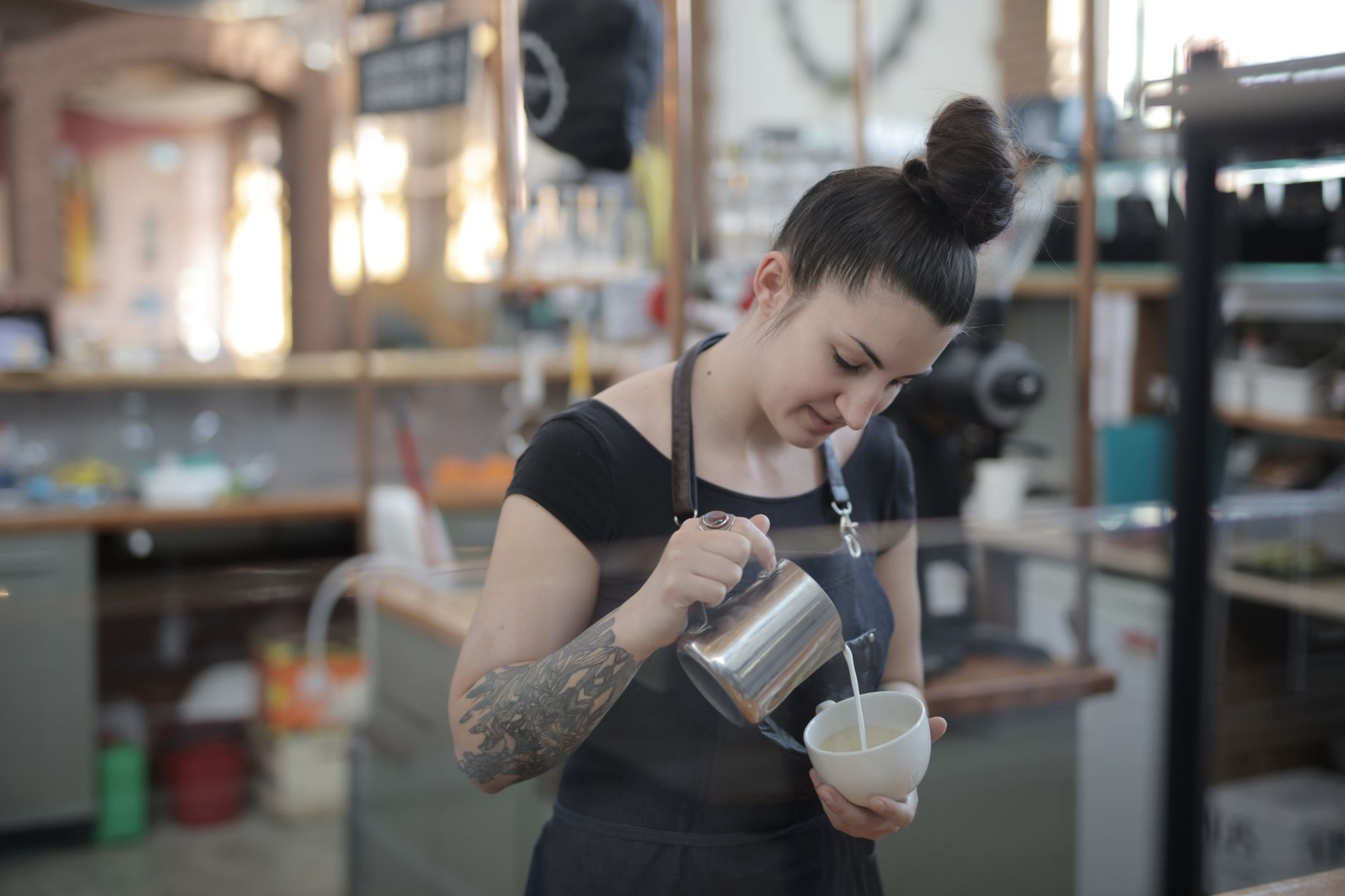 Photo: Andrea Piacquadio via Pexels
At a specialty café, “making coffee” means hitting a 1:2 espresso ratio in 25–30 seconds, reading shot channeling, adjusting grind on the fly when humidity shifts, and steaming milk to 140°F with microfoam tight enough for latte art. At a chain, volume and speed take over. Both are real jobs — they just train differently.
The daily toolkit:
- Espresso machine operation — temperature, pressure, pre-infusion
- Grinder calibration — dose, grind size, retention management
- Milk technique — stretching, texturing, temperature control
- Bar hygiene — backflushing, group head maintenance, steam wand purging
- Customer-facing communication — recommending coffees, explaining processing methods
If you’re targeting third-wave specialty, add: understanding of coffee origin, roast profiles, brew ratios for pour-overs, and enough flavor vocabulary to describe a natural Ethiopian without sounding like a wine parody.
Do You Need Experience to Get Your First Barista Job?
Direct answer: No. Most independent cafés and chains hire entry-level and train from zero. A short home espresso practice period, genuine enthusiasm for coffee, and evidence you’ve tasted widely will outweigh a blank resume.
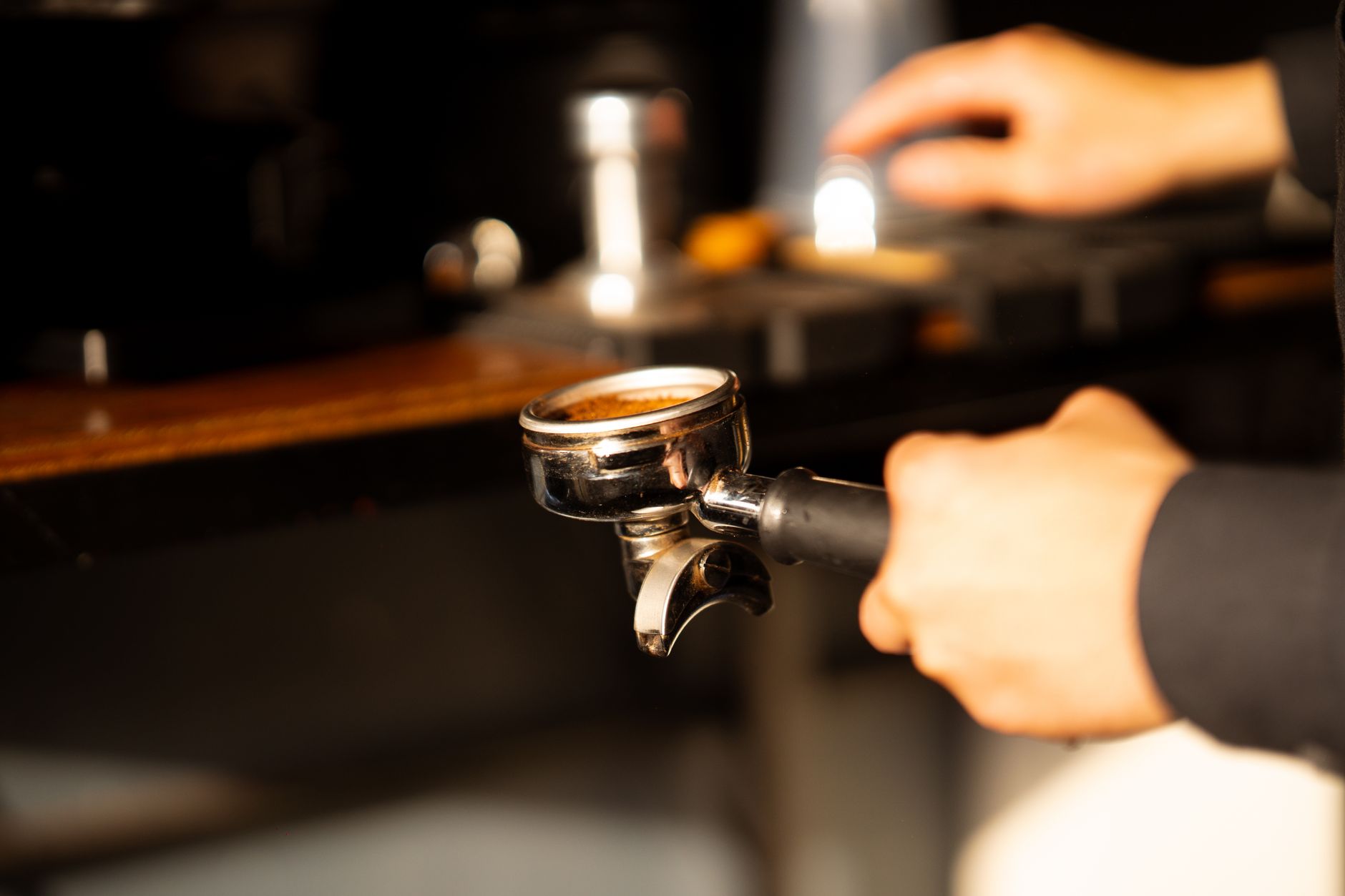 Photo: Mike C via Pexels
This is one of the few skilled trades where the entry barrier is social, not credentialed. Show up knowing the difference between a flat white and a latte, mention you’ve been dialing in a home espresso machine, and you’re ahead of 80% of applicants.
What actually helps more than certification at the entry level:
- Home practice — even a modest machine like the Breville Bambino Plus
Chains like Starbucks and Blue Bottle have structured onboarding programs. Independent specialty shops vary wildly — some have a formal training week, others put you on bar next to a senior barista and expect you to shadow closely.
The Skills You Actually Need
Direct answer: Espresso extraction, grinder adjustment, milk texturing, and bar organization are the four non-negotiables. Everything else — latte art, brew methods, sensory skills — builds on top of those.
Espresso Extraction
Espresso is the hardest and most unforgiving part. You’re working with a ~18g dose, ~9 bars of pressure, and a 25–30 second window. Variables that move your shot: grind size, dose weight, distribution technique, tamp pressure, water temperature, and machine pre-infusion settings.
A productive barista can diagnose a bad shot by taste and observation — sour means under-extracted (fast shot, too coarse), bitter means over-extracted (slow shot, too fine) — and adjust the grinder accordingly without being told. That diagnostic loop is what separates a fast learner from a slow one.
Grinder Calibration
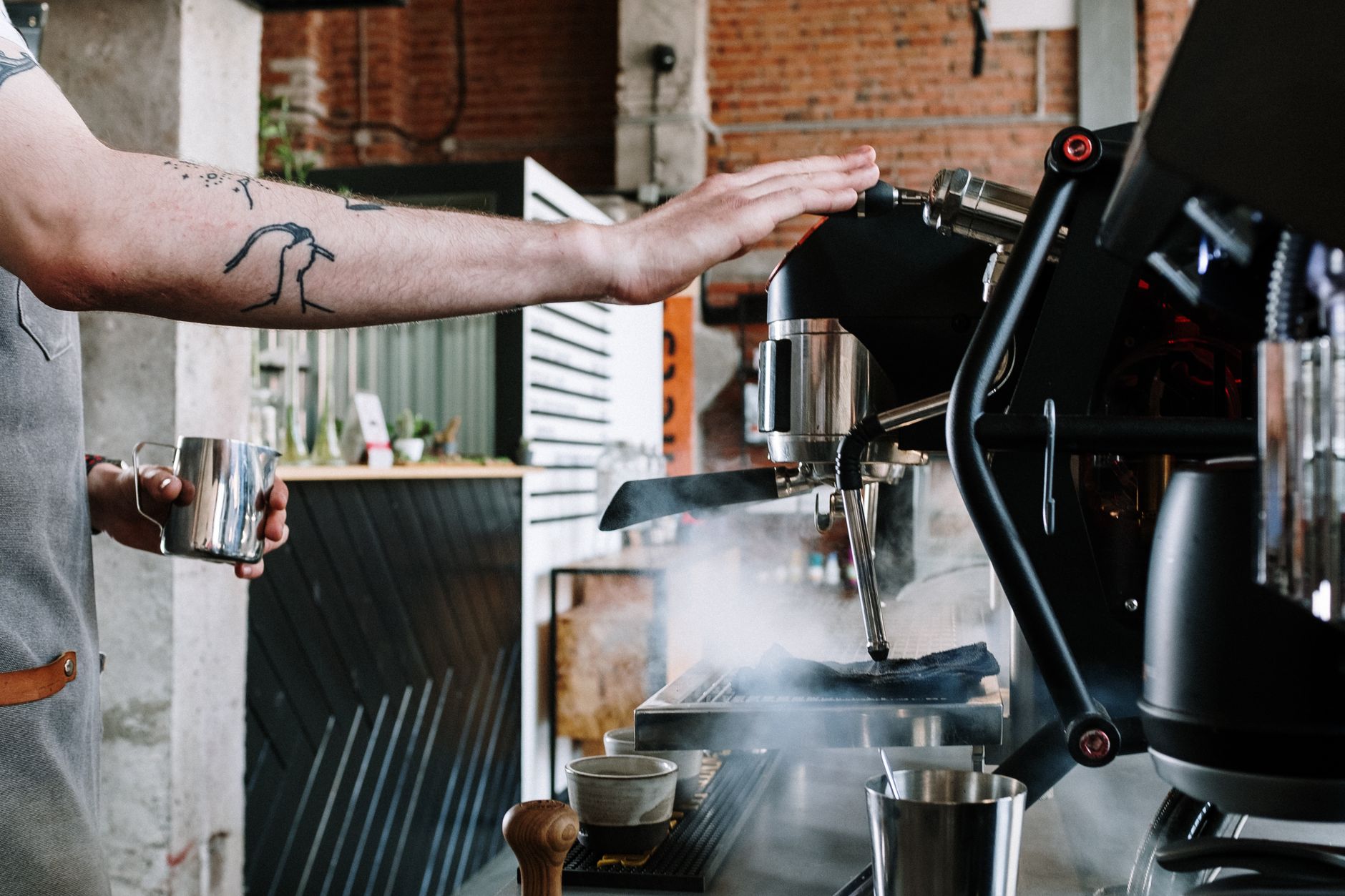 Photo: cottonbro studio via Pexels
The grinder is the most important variable in a coffee shop. Learning to adjust grind size in small increments, compensate for bean freshness and ambient humidity, and zero retention between different coffees is a skill you develop over months, not days.
Most specialty shops run a dedicated espresso grinder (common choices: Mahlkönig E65S , Eureka Mignon Specialita
Milk Texturing
Steamed milk has two stages: stretching (introducing air below the surface to build volume) and texturing (integrating that air into a uniform, glossy microfoam). Most beginners get one or the other right but not both.
Target texture: wet paint or melted ice cream — not bubbly, not frothy, just tight and pourable. Temperature: 130–150°F depending on café standard. Getting this consistent across a rush — pulling shots and steaming simultaneously — takes 4–8 weeks of real bar time.
Latte art (rosettas, tulips, hearts) is downstream of good texture. You can’t pour a pattern into bubbly milk. Good texture first, art follows.
Bar Organization
Speed, cleanliness, and sequence matter more than any individual technique at volume. A barista who steamlines their workflow — knock, dose, distribute, tamp, lock, pull, steam, pour — with no wasted motion will outperform a technically excellent but disorganized one during a Saturday rush.
Barista Certification: SCA and Beyond
Direct answer: The SCA (Specialty Coffee Association) offers the most recognized formal barista credentials worldwide. Their Barista Skills module at Foundation level costs around $200–300 and takes one day — useful for career-switchers and resume differentiation, not required by most employers.
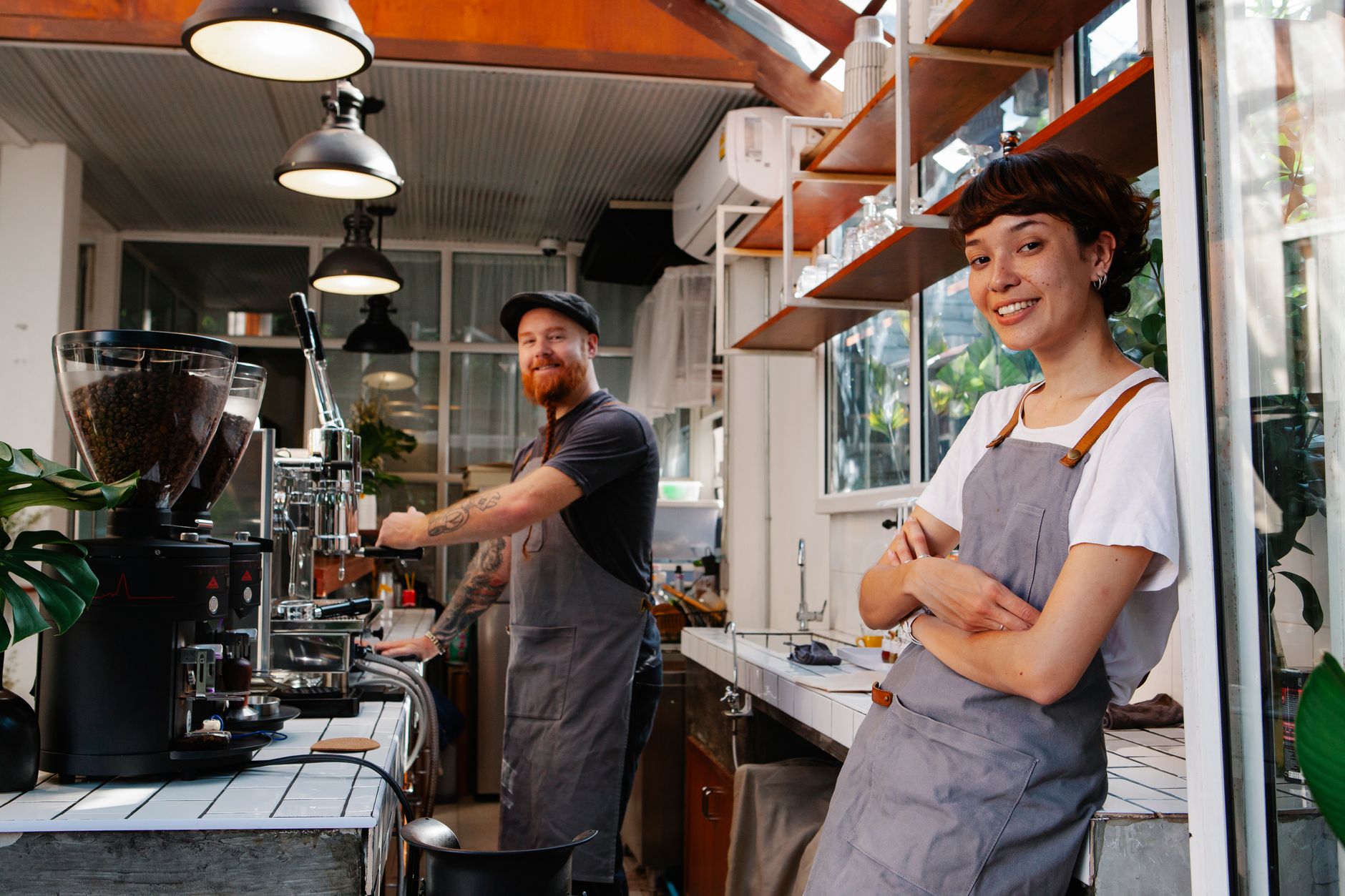 Photo: Tim Douglas via Pexels
The SCA Coffee Skills Program has modular certifications:
| Module | Levels | What It Covers |
|---|---|---|
| Barista Skills | Foundation / Intermediate / Professional | Espresso, milk, recipes, sensory |
| Brewing | Foundation / Intermediate / Professional | Filter methods, extraction theory |
| Sensory Skills | Foundation / Intermediate / Professional | Cupping, palate training, grading |
| Green Coffee | Foundation / Intermediate / Professional | Processing, grading, supply chain |
For a barista role, Barista Skills Foundation is the relevant entry point. If you want to move into head barista or café management, adding Brewing and Sensory Skills signals genuine investment.
The SCAA (now merged into SCA) credential still appears on older resumes — it’s the same organization post-2017 merger, so both are recognized.
Other options:
- Barista Guild of America (BGA) — professional community, not a certification track
- Counter Culture Coffee, Intelligentsia, Stumptown — all run their own training programs, some open to the public
- Online courses (Barista Hustle, Seattle Coffee Gear) — useful for theory, not a substitute for hands-on practice
Formal certification matters most if you’re career-switching from another field and need to signal commitment, applying internationally where credentials carry more weight, or targeting competitive specialty shops in saturated markets like NYC or LA.
How Long Does It Take to Become a Good Barista?
Direct answer: 3–6 months of full-time bar work to reach solid competency. 12–18 months to be genuinely good — consistent shots, confident milk, reliable under pressure. Reaching competition-level technique takes years.
The honest progression:
- Week 1–2: Basic espresso sequence, machine operation, café hygiene
- Month 1: Consistent milk texture on slow periods, beginning to read shots
- Month 3: Dialing in the grinder independently, handling moderate rush volume
- Month 6: Consistent latte art, confident grinder calibration, minimal supervision
- Year 1–2: Speed, efficiency, sensory literacy, readiness for senior or lead roles
The ceiling keeps moving. Baristas who go deep — study cupping, learn green coffee, compete in regional SCA competitions — find years of accumulated skill still feel shallow compared to what’s possible. That’s part of what makes specialty coffee a legitimate career rather than a stepping stone.
Barista Pay and Career Progression
A barista in the US typically earns $13–$18/hour base plus tips, with total effective pay reaching $18–$25/hour in high-tip specialty markets (NYC, SF, Seattle). Head baristas and lead trainers earn more and sometimes hold equity-adjacent roles at small independents.
Career paths out of the bar:
- Head barista / Lead trainer — managing bar standards, onboarding new staff
- Café manager — operations, scheduling, P&L responsibility
- Coffee buyer / Roaster — requires significant cupping and green coffee knowledge
- Brand ambassador / Educator — equipment and roaster-side careers
- Competition circuit — US Barista Championship feeds into World Barista Championship; regional competitors often gain roaster or wholesale roles
→ See also:
- The Third Wave Coffee Movement: A Complete Guide
- Best Coffee Cities in the US (2026 Guide)
- New York City Specialty Coffee Guide: 20 Best Cafés
FAQ
Do you need a barista certificate to work at Starbucks or a chain? No. Starbucks and most chains hire with zero coffee experience and run their own proprietary training program. SCA certification won’t help you get hired there — it’s more relevant for independent specialty shops where the hiring manager is likely an SCA-trained barista themselves.
How do I practice espresso at home before applying for a barista job? Get consistent reps on any espresso machine you have access to — even an entry-level machine teaches you the extraction sequence and milk basics. Focus on weighing your dose (18g in, ~36g out), timing your shots, and steaming milk to a consistent texture. Tasting your shots critically and adjusting grind accordingly is the most transferable skill you can build before your first shift.
What is the SCA barista exam like? The SCA Barista Skills Foundation exam involves a practical bar session — preparing espresso drinks to recipe, demonstrating milk texturing, and answering sensory and technical questions. You’re scored on consistency, technique, and hygiene. The Foundation level is approachable for someone with 3–6 months of bar experience; most candidates who prepare pass on the first attempt.
Is being a barista a good long-term career? It depends what you want from it. The bar itself has a ceiling — physical demands, standing hours, modest base pay. But the broader specialty coffee industry has real career depth: roasting, buying, consulting, equipment, education, and café ownership all flow from barista experience. The people who build lasting careers in coffee treat the bar as a foundation, not a destination.
What’s the difference between a barista and a coffee shop employee? Technically, “barista” means someone trained specifically in espresso and coffee preparation — not just a cashier who operates an automated machine. In practice, the distinction varies by shop. At a specialty café, a barista is expected to dial in the grinder, pull manual shots, and make technical judgments. At a chain, the term is used more loosely for anyone on bar, regardless of technical depth.