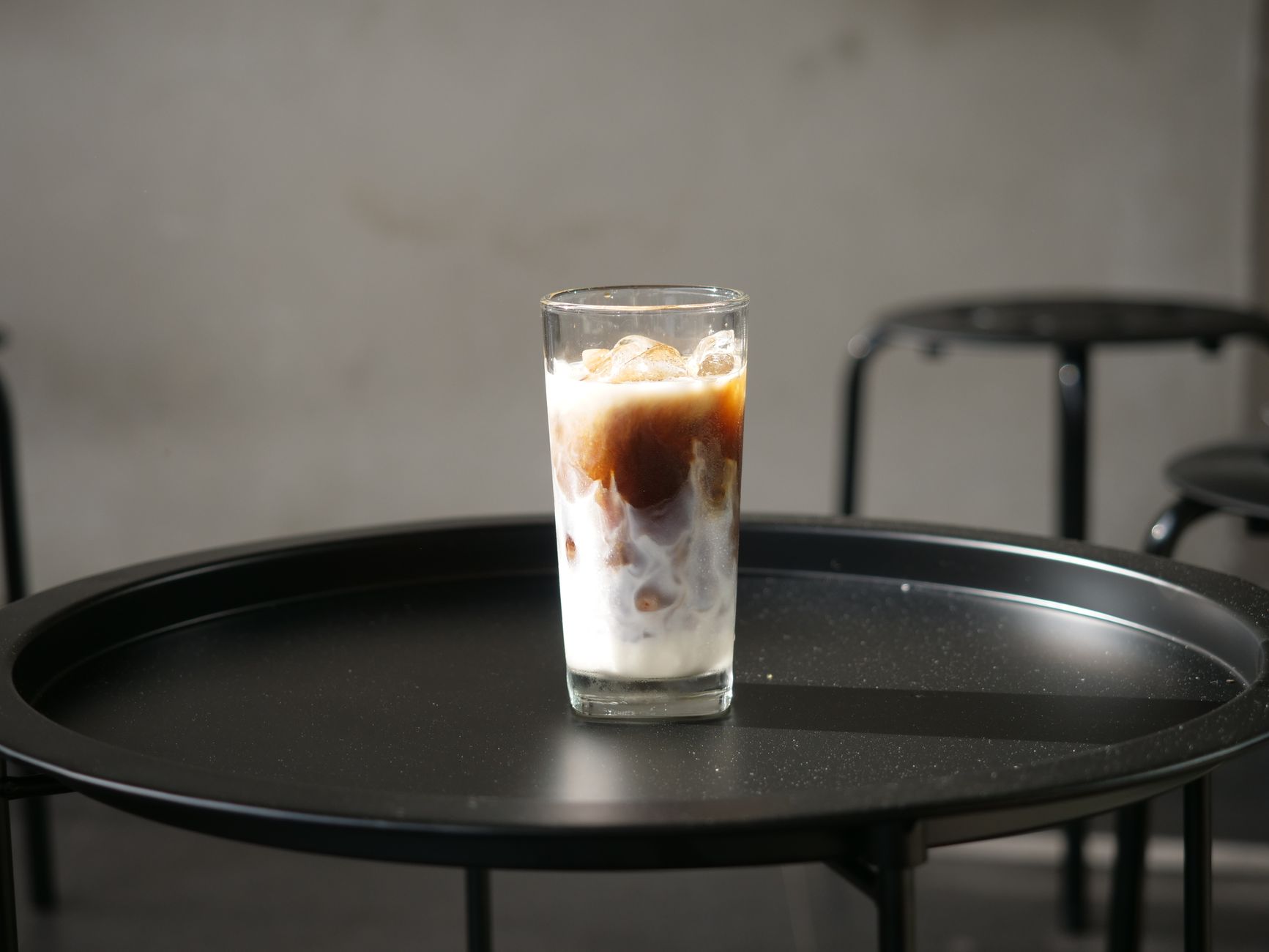
Contents
Cortado vs Flat White vs Macchiato: Full Comparison
TL;DR: A cortado is equal parts espresso and steamed milk (1:1), a flat white is espresso with a thin layer of microfoam at roughly 1:2–1:3, and a macchiato is espresso “stained” with just a small dollop of milk foam or steamed milk. If you want milk that supports the espresso without diluting it, the cortado wins. If you want silky texture with slightly more volume, go flat white. If you want espresso with the barest hint of milk, macchiato is your drink.
What Is a Cortado vs Flat White vs Macchiato?
Direct Answer: These are three distinct espresso-to-milk ratios. A cortado sits at 1:1 espresso to steamed milk (60–90 ml total). A flat white runs 1:2–1:3 and is served in a 150–160 ml ceramic cup with velvety microfoam. A macchiato is either a tiny 40 ml espresso “marked” with foam (espresso macchiato) or a layered 120 ml drink with milk poured over espresso (latte macchiato).
 Photo: Amine Kübranur Çakıroğlu via Pexels
The naming confusion comes from regional drift. “Macchiato” means “stained” in Italian — the original espresso macchiato is nothing more than a single shot with a spoon of foam placed on top to cut the bitterness. What Starbucks calls a macchiato is a latte macchiato — an entirely different construction where hot milk is poured first and espresso floats on top.
Espresso-to-Milk Ratio Breakdown
Direct Answer: Ratio is the defining variable across all three drinks. Cortado = 1:1. Flat white = roughly 1:2 to 1:3. Espresso macchiato = roughly 4:1 (espresso dominant). Latte macchiato = roughly 1:3 with reversed layering. These ratios aren’t arbitrary — they determine how much the milk sweetness and texture masks the espresso’s acidity and bitterness.
 Photo: sena kırca via Pexels
| Drink | Espresso | Milk/Foam | Total Volume | Milk Temperature |
|---|---|---|---|---|
| Espresso Macchiato | 25–30 ml | 5–10 ml foam | ~35–40 ml | N/A (cold foam or steamed) |
| Cortado | 25–30 ml | 25–30 ml steamed | 50–60 ml | 60–65 °C |
| Latte Macchiato | 25–30 ml | ~90 ml steamed | ~120 ml | 60–65 °C |
| Flat White | 25–30 ml (double ristretto) | ~90–100 ml microfoam | ~150–160 ml | 60–65 °C |
One critical difference between the flat white and the others: most specialty cafés pull a double ristretto for a flat white — a shorter, more concentrated extraction — to keep the espresso flavor punching through the larger milk volume. A cortado typically uses a standard double shot.
Milk Texture: Where the Drinks Actually Diverge
Direct Answer: The cortado uses lightly steamed, minimally frothed milk — you’re not chasing microfoam, you’re cutting acidity. The flat white demands thin, velvety microfoam with a glossy paint-like consistency that integrates fully with the espresso. The espresso macchiato uses a small foam dollop that sits on top and doesn’t blend.
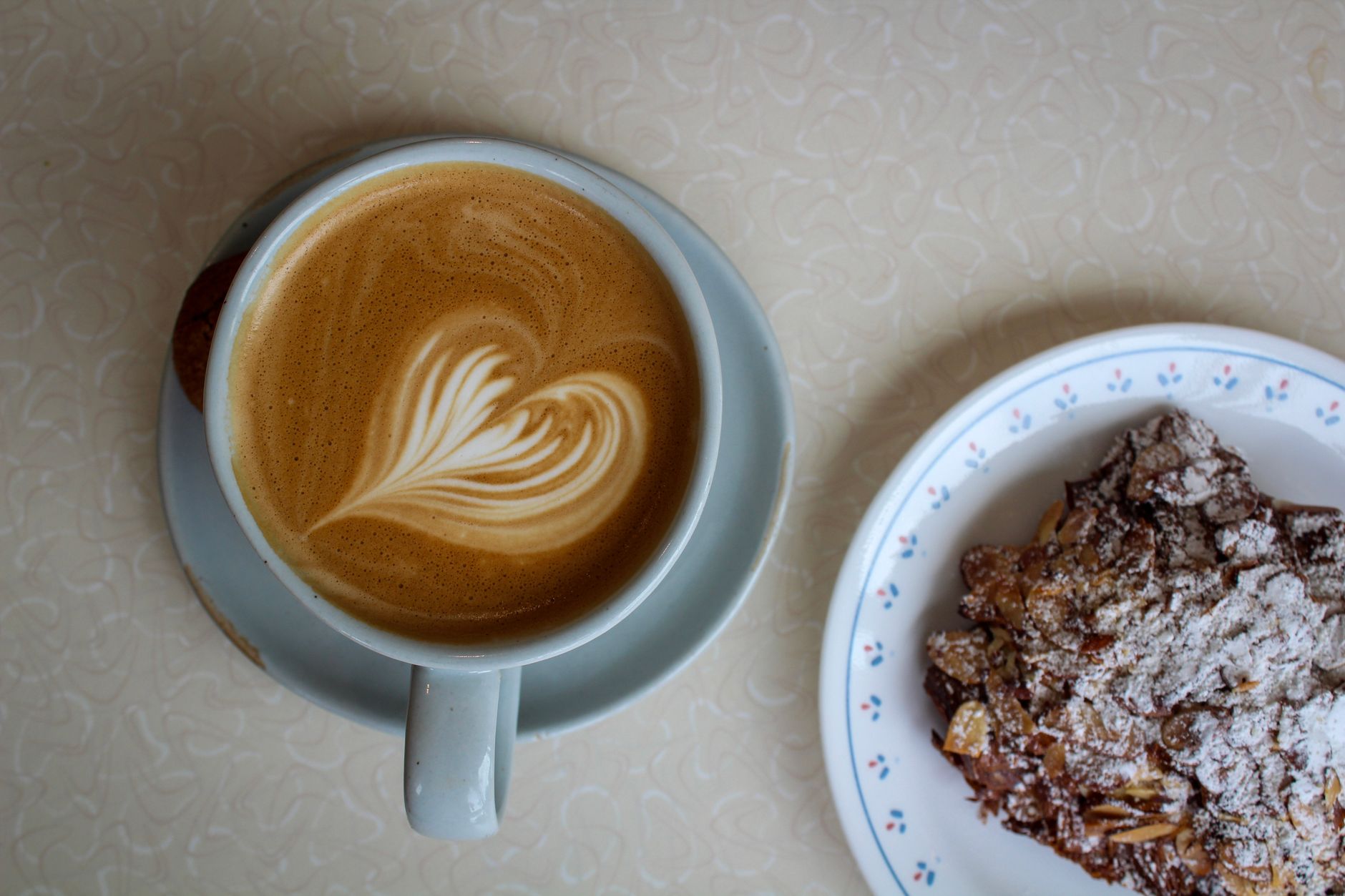 Photo: Daniela Barrera via Pexels
Cortado Milk
Steamed to around 60–65 °C with minimal air introduced. The milk should be warm and slightly sweet but not frothed. You want integration, not layers — when you pour, the milk and espresso combine immediately.
Flat White Milk
This is where barista technique matters most. You’re chasing microfoam: bubbles so small the texture feels creamy rather than frothy. The pour creates latte art, and the thin foam layer (~5 mm) sits flush with the cup rim. Poor steaming technique produces a flat white that’s just a small latte with large bubbles — noticeably worse.
Macchiato Milk
For an espresso macchiato, a small dollop of stiff foam placed on top. For a latte macchiato, the milk is fully steamed with a similar texture to a latte, and the espresso is poured through it to create visible layering.
Flavor Profile Comparison
Direct Answer: Cortado tastes like espresso with its sharp edges softened. Flat white tastes like espresso where the milk adds sweetness and body without becoming dominant. Espresso macchiato tastes almost entirely like espresso — the foam just tempers the initial bitterness slightly.
Which to Order Based on Your Palate
- You like espresso but find it too intense: Cortado
- You want more milk sweetness without going full latte: Flat white
- You want to taste the coffee, full stop: Espresso macchiato
- You want a layered, milkier experience: Latte macchiato
- You’re using a blend, not single origin: Any of the three; blend’s robustness holds up
- You’re using a delicate natural-process single origin: Cortado or espresso macchiato — the flat white’s milk can mask nuance
Origin and Regional Naming Differences
Direct Answer: Cortado comes from Spain (specifically Gibraltar in café culture). Flat white originated in Australia or New Zealand in the 1980s — both countries claim it. Macchiato is Italian, but “macchiato” now covers two completely different drinks depending on whether you’re in Naples or a North American chain.
 Photo: Roearte via Pexels
The cortado has a near-identical cousin called a Gibraltar — named after the specific glass in which it’s served at Blue Bottle Coffee in San Francisco. If someone orders a Gibraltar, they mean a cortado. Some menus list them separately, which is café theater more than a meaningful distinction.
The flat white entered the mainstream consciousness largely through its appearance on Starbucks menus in 2015. What Starbucks serves bears a reasonable resemblance to the real thing — a double ristretto in a smaller cup — though the milk-to-espresso ratio skews larger than an Australian café would pour.
Choosing by Cup and Equipment
Direct Answer: Cortados are served in 4–5 oz glasses or ceramic cups. Flat whites need a 5–6 oz ceramic tulip cup to allow proper latte art pours. Espresso macchiatos are served in a demitasse. If you’re making these at home, the vessel matters for heat retention and pour control.
| Drink | Vessel | Material | Why |
|---|---|---|---|
| Espresso Macchiato | 60 ml demitasse | Ceramic | Heat retention, traditional |
| Cortado | 120 ml Gibraltar glass or ceramic | Glass or ceramic | Visual layering, portion control |
| Flat White | 150–160 ml tulip cup | Ceramic | Pour angle for microfoam |
| Latte Macchiato | 240 ml tall glass | Glass | Visible layering effect |
→ See also:
- Espresso Drinks: The Complete Guide to Every Type
- What Is a Cortado? (And How It Differs From a Macchiato)
- What Is a Flat White? (Size, Milk Ratio, Origin)
FAQ
Is a cortado the same as a flat white? No. A cortado is 1:1 espresso to steamed milk, totaling around 60 ml. A flat white is 1:2 to 1:3 and served in a larger 150–160 ml cup with thin microfoam. They taste similar in espresso-forward intensity but the flat white is noticeably larger with a softer, silkier milk texture.
What’s the difference between an espresso macchiato and a latte macchiato? An espresso macchiato is a single or double shot with a small spoonful of foam — the espresso is poured first. A latte macchiato is milk poured into a glass first, with espresso poured through it after — the milk dominates. Despite sharing a name, they’re opposite constructions with completely different taste profiles.
Which has more milk: cortado, flat white, or macchiato? Flat white has the most milk at roughly 90–100 ml. Cortado comes second at 25–30 ml. Espresso macchiato has the least — just 5–10 ml of foam. If milk volume is your deciding factor, that’s your ranking.
Is a flat white stronger than a latte? Yes, in practice. A flat white uses a double ristretto (shorter, more concentrated extraction) in a smaller cup, so the espresso-to-milk ratio is higher than a standard latte even though both use similar milk volumes. The result is more espresso flavor per sip.
Can I order a cortado at any café? Most specialty cafés stock it, but chain cafés often don’t list it. If it’s not on the menu, ask for “a double espresso with an equal amount of steamed milk in a small cup” — any barista can make that, and it’s exactly a cortado.
Which drink is best for appreciating single-origin espresso? Espresso macchiato first, cortado second. Both use minimal milk that doesn’t suppress the espresso’s origin characteristics — brightness, fruit notes, terroir-driven sweetness. The flat white’s larger milk volume works better with espresso blends designed to cut through milk.
Editorial methodology: Assessments are based on manufacturer specifications, published user reviews, and editorial research. Physical hands-on testing is noted explicitly where it occurred. Rankings reflect our editorial judgment and are not influenced by affiliate commission rates. Full editorial policy · Affiliate disclosure