Contents
Breville Dual Boiler Review: Is It Worth $1,500?
TL;DR: The Breville Dual Boiler (BDB) delivers genuine prosumer espresso performance at a price most dedicated home baristas can justify. With independent boilers for brew and steam, a built-in PID, and a 58mm commercial portafilter, it punches well above its price class — though it demands quality grinder support to realize that potential.
What Is the Breville Dual Boiler?
The Breville Dual Boiler is a heat exchanger-free, true dual-boiler espresso machine with independent temperature control for brewing and steaming. At ~$1,500, it sits between entry-level semi-automatics and the $3,000+ prosumer tier, offering features typically found at twice the price.
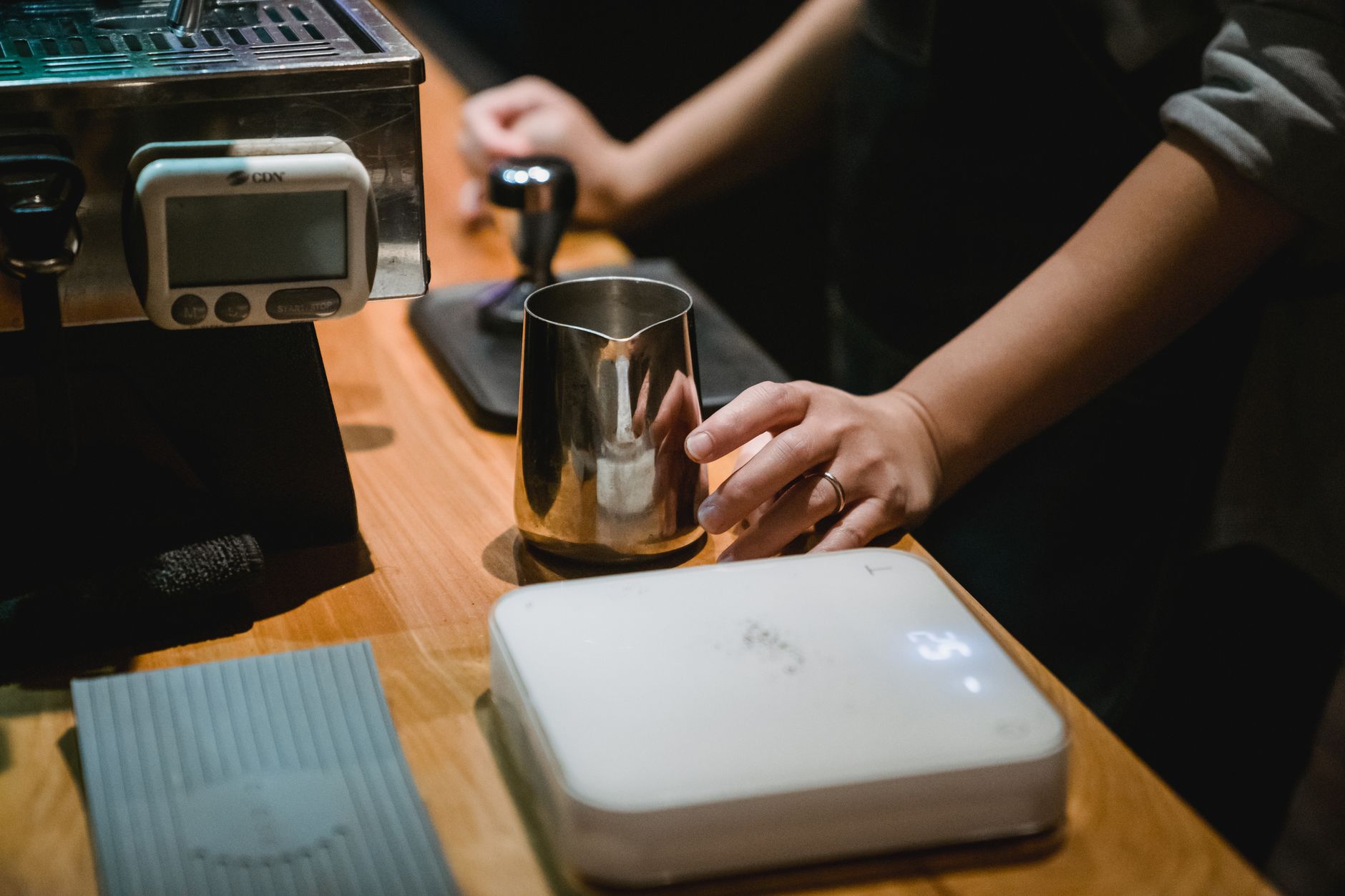 Photo: Mizuno K via Pexels
The BDB launched over a decade ago and has been refined through software updates and hardware revisions since. What makes it remarkable isn’t any single specification — it’s the combination: dual stainless steel boilers, a volumetric pump, PID temperature control on both boilers, pre-infusion, and a 58mm portafilter, all in one package under $1,600.
Who Built This, and Why Does It Matter?
Breville (sold as Sage in Europe) engineered the BDB to close the gap between home and commercial espresso. Unlike heat exchanger machines where brew temperature stability is an approximation, the BDB gives you independent, measurable control over each boiler. The brew boiler holds 0.3L; the steam boiler holds 1.6L. You’re not fighting thermal mass — you’re commanding it.
Breville Dual Boiler Specs
| Feature | Specification |
|---|---|
| Boiler Type | Dual stainless steel boilers |
| Brew Boiler Capacity | 300 mL |
| Steam Boiler Capacity | 1,600 mL |
| Portafilter Size | 58 mm commercial |
| PID | Yes — both boilers |
| Pump Type | Volumetric (Italian gear pump) |
| Pre-infusion | Yes — adjustable 0–20 seconds |
| Pressure Gauge | Yes |
| Dimensions | 14“ × 13.5“ × 16“ (W×D×H) |
| Weight | 28.6 lbs |
| Wattage | 1,800W |
Espresso Quality: Does the BDB Pull Good Shots?
Yes — the BDB pulls exceptional shots when paired with a quality grinder. Brew temperature is stable to within ±0.5°C, which is tighter than most machines at 2× the price. Expect well-defined sweetness, clarity in single origins, and consistent extraction across a morning session.
 Photo: RDNE Stock project via Pexels
The machine ships with a pressure gauge that reads 9 bar at the group head — not just from the pump. This matters because many cheaper machines advertise 15 bar pump pressure but deliver 11–13 bar at the puck. The BDB’s OPV is factory-set to 9 bar and user-accessible for adjustment.
Pre-infusion is a standout feature. Setting 3–8 seconds of low-pressure pre-infusion before full extraction visibly improves puck channeling resistance and produces more even extraction on lighter roasts. The implementation is mechanical, not pressure-profiling — it wets the puck before ramping to full pressure. Real pressure profiling (E61 lever style) requires an upgrade or a different machine entirely.
Temperature Stability Under Real Conditions
Pull three shots back-to-back — the BDB holds brew temperature tightly across all three. This is where heat exchanger machines often falter: the HX boiler loses thermal stability after consecutive shots as the single boiler compensates for both steam and brew demand. The BDB doesn’t have this problem.
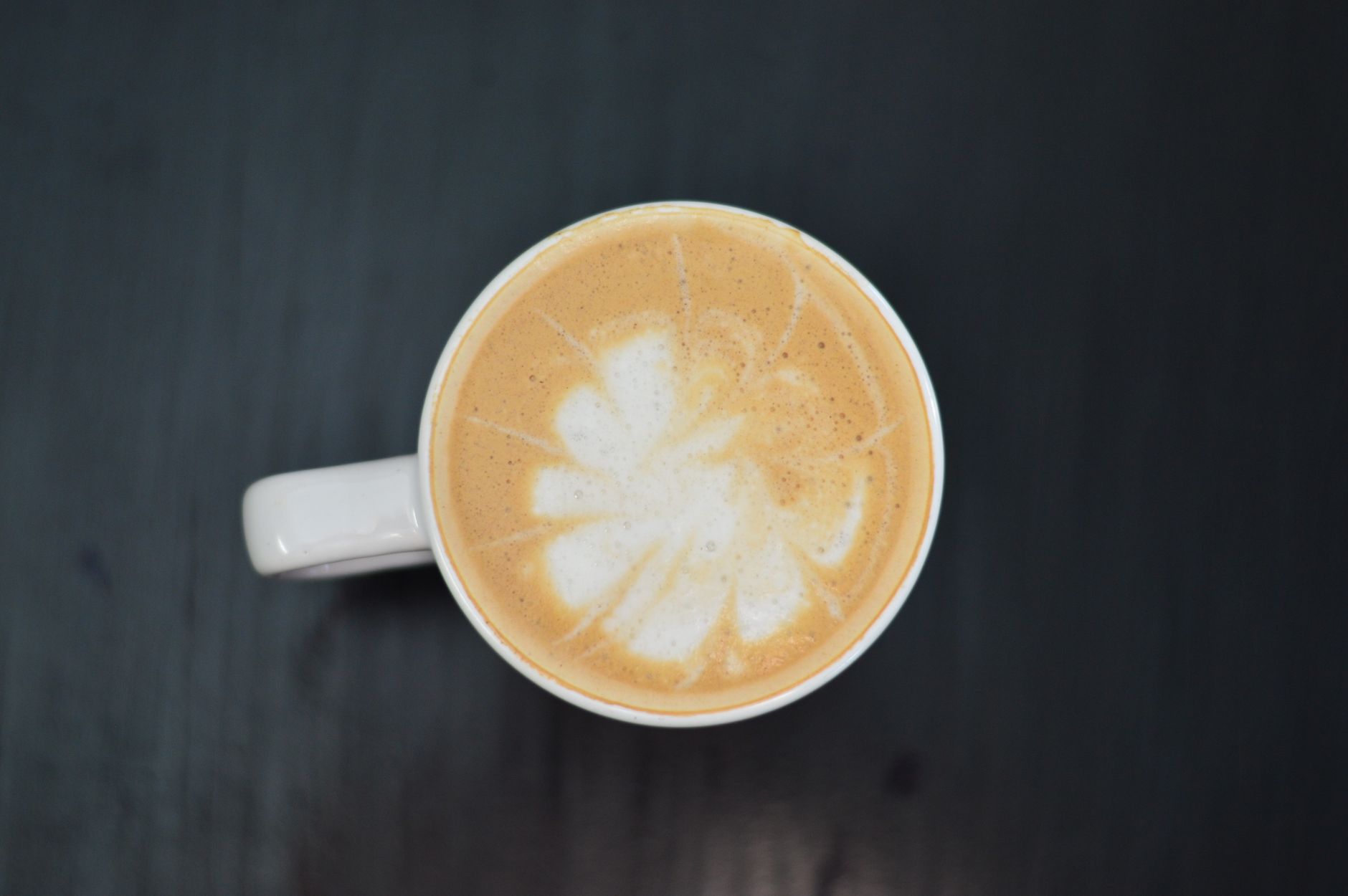
Steam boiler temperature is user-adjustable from the panel. Default is around 127°C, which produces dry, textured steam — solid for latte art. Experienced milk steamers will prefer 128–130°C for faster, denser microfoam.
Steam Performance and Milk Drinks
The BDB steams milk with authority. The 1.6L steam boiler recovers to temperature almost instantly after purging, and the single-hole tip produces focused, high-velocity steam suited to both flat whites and larger lattes.
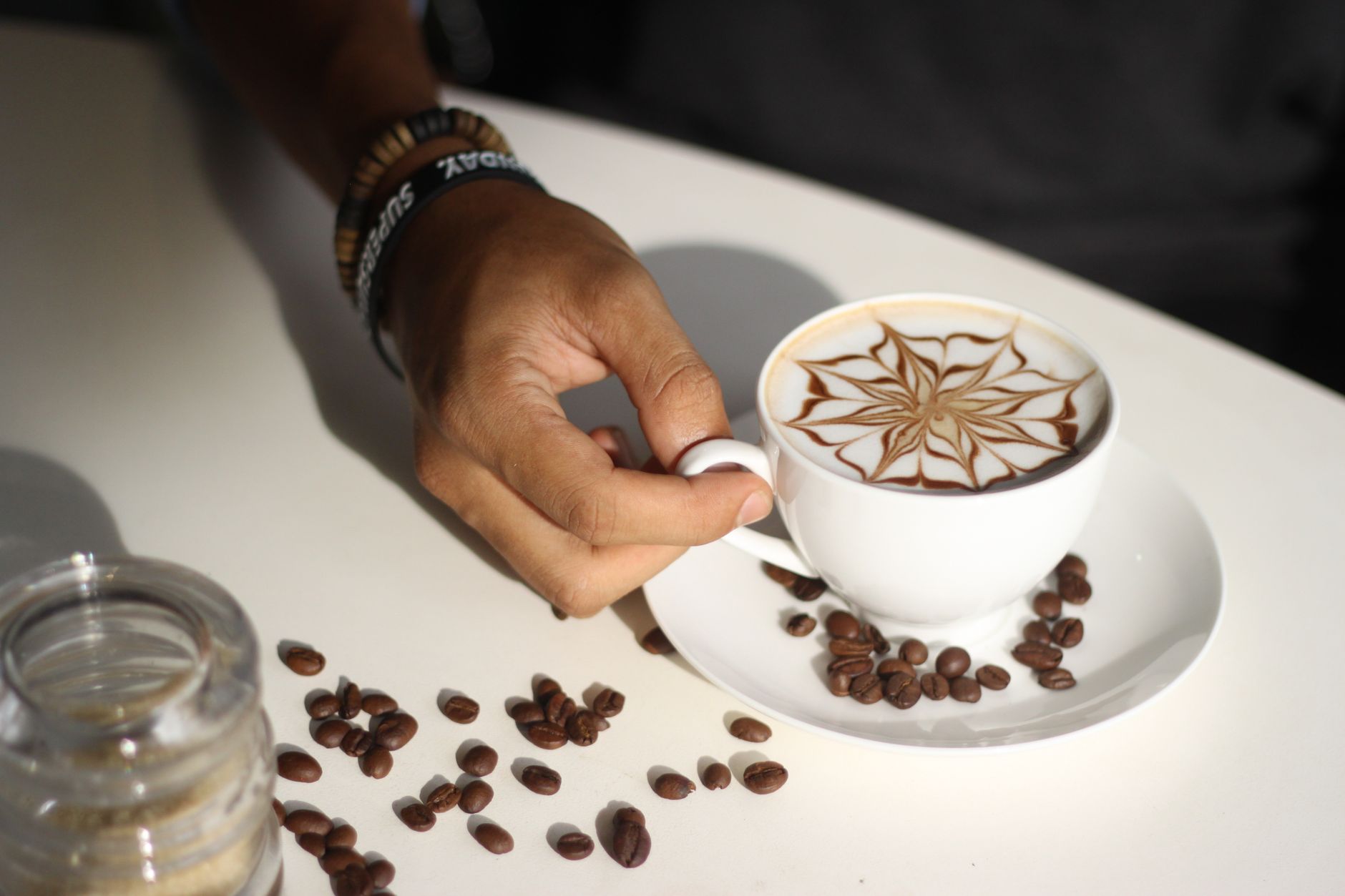 Photo: Din Aziz via Pexels
The wand lacks the joystick articulation of La Marzocco’s GS/3 or the Rocket Appartamento, but it positions well enough for both pitchers. Experienced steamers will want to swap the stock single-hole tip for a 2-hole or 4-hole tip — this widens the vortex and speeds up texturing on larger pitchers.
Steam-to-shot workflow is seamless. Because the boilers are independent, you can steam milk while the brew boiler stabilizes for the next shot. In a household serving multiple milk drinks, this matters.
Grinder Dependency: The Honest Assessment
The BDB will expose every weakness in your grinder. If you’re using a blade grinder or an entry-level conical like the Capresso Infinity, the machine’s shot quality will be limited by grind consistency, not the boiler.
Minimum viable pairing: Baratza Sette 270 or equivalent stepped grinder with espresso-range adjustment. Preferred pairing for the BDB’s full potential: a flat burr grinder in the $300–$700 range — the Eureka Mignon Specialita, DF64, or Niche Zero. Budget $500–$700 for a grinder alongside the machine and the entire system outperforms machines costing $3,500+ on extraction clarity.
Breville Dual Boiler vs. Competitors
| Machine | Price | Boiler | Portafilter | PID | Pump | Best For |
|---|---|---|---|---|---|---|
| Breville Dual Boiler | ~$1,500 | Dual SS | 58mm | Both boilers | Volumetric | All-around prosumer |
| Breville Barista Express | ~$700 | Single thermocoil | 54mm | No | Vibratory | Beginners with grinder included |
| Rancilio Silvia Pro X | ~$1,100 | Dual | 58mm | Both | Vibratory | Espresso purists, budget-conscious |
| Rocket Appartamento | ~$1,600 | HX | 58mm | No | Vibratory | Milk-focused, elegant design |
| ECM Synchronika | ~$2,700 | Dual | 58mm | Both | Rotary | Quiet operation, long-term build |
| Profitec Pro 700 | ~$2,800 | Dual | 58mm | Both | Rotary | Espresso purists, quiet homes |
The BDB’s primary competitive advantage is price-to-feature ratio. At $1,500 with a rotary-quiet vibratory pump, dual PIDs, and 58mm commercial group, it undercuts the ECM Synchronika and Profitec Pro 700 by over $1,000 while delivering similar shot quality. The trade-offs: vibration noise from the pump, plastic external components, and a less premium feel.
 Photo: Alexandre Canteiro via Pexels
Verdict by User Archetype
Milk drinker (lattes, cappuccinos daily): The BDB is an excellent choice. Steam boiler recovery is fast, the independent boilers mean no wait between pulling a shot and steaming, and the wand produces quality microfoam with practice. Upgrade the steam tip for best results.
Espresso purist (single origins, filter roasts, dialing in): This is the BDB’s strongest category. Temperature stability and pre-infusion enable expressive, clarity-forward shots from light roasts that budget machines can’t touch. Pair with a flat burr grinder.
Convenience-first (minimal fuss, consistent output): You might prefer a super-automatic or a machine with smarter automation. The BDB rewards dialing in — dose, distribution, tamp, temperature, pre-infusion time. If you want repeatable espresso with a minimal learning curve, the Breville Barista Touch or Oracle Touch handles more of that workflow automatically.
Common Complaints (And Whether They Matter)
Plastic body: Real. The exterior uses polycarbonate and ABS where premium machines use stainless steel. This affects perceived quality, not function. The internals — boilers, group head, steam wand — are stainless. Structurally, it’s fine.
Vibratory pump noise: Real and noticeable. At 6am in a quiet kitchen, it’s loud relative to rotary-pump machines. It doesn’t affect shot quality. If noise is a constraint, step up to the ECM Synchronika or Profitec Pro 700.
Learning curve: Intentional. Every adjustable parameter is exposed — brew temperature, steam temperature, pre-infusion, shot volume. This is a feature for espresso enthusiasts, a friction point for beginners.
Software updates: Breville has issued firmware updates for BDB units. Check for available updates on first setup.
→ See Also
- The Complete Guide to Espresso Machines (2026)
- Best Espresso Machine Under $200 (2026)
- Best Espresso Machine Under $500 (2026)
FAQ
Is the Breville Dual Boiler worth it for home use? For home baristas who pull 1–4 shots daily and want genuine prosumer shot quality without spending $3,000+, yes. The BDB’s dual PID temperature control and 58mm portafilter deliver extraction quality that’s hard to replicate at the price. Budget an equal amount for a quality grinder to realize its full potential.
How long does the Breville Dual Boiler take to heat up? Approximately 25–35 minutes to full thermal stability from cold start. The machine reaches brew temperature faster — around 10–12 minutes — but steam boiler and group head reach stable equilibrium closer to 25 minutes. Many users run a heat-up timer outlet to have it ready before they wake.
Can you use the Breville Dual Boiler for manual pressure profiling? No. The BDB includes adjustable pre-infusion (low-pressure soak before full extraction) but not dynamic pressure profiling. For lever-style or programmable pressure curves, you’d need a dedicated profiling machine like the Decent DE1 or a modified La Marzocco Linea Mini.
What grinder pairs best with the Breville Dual Boiler? The Niche Zero and Eureka Mignon Specialita are the most-recommended pairings in the $400–$700 range. The DF64 Gen 2 offers flat burr performance for less. Avoid grinders without fine espresso range adjustment — the BDB’s tight temperature control will amplify grind inconsistency rather than mask it.
How does the Breville Dual Boiler compare to the Breville Oracle? The Oracle adds automatic grinding, tamping, and milk texturing — trading manual control for convenience at a similar price point (~$1,500–$1,700). The BDB gives you full manual control and a 58mm portafilter; the Oracle uses a 58mm portafilter with automation built in. Espresso enthusiasts prefer the BDB; convenience-first buyers often prefer the Oracle.
Editorial methodology: Assessments are based on manufacturer specifications, published user reviews, and editorial research. Physical hands-on testing is noted explicitly where it occurred. Rankings reflect our editorial judgment and are not influenced by affiliate commission rates. Full editorial policy · Affiliate disclosure