Contents
Breve Coffee: What It Is and How to Make It
TL;DR: Breve coffee is an espresso-based drink made with half-and-half instead of whole milk, producing a richer, creamier result than a standard latte. The fat content in half-and-half creates a denser foam and noticeably sweeter flavor — no sugar added. It’s the same build as a latte, just with a different dairy.
What Is Breve Coffee?
Breve coffee (also called a caffè breve or breve latte) is a single or double espresso topped with steamed half-and-half. The name comes from the Italian word for “short” or “brief,” though in American coffee culture it refers specifically to the half-and-half substitution. Expect a heavier mouthfeel, richer foam, and natural sweetness that straight lattes can’t match.
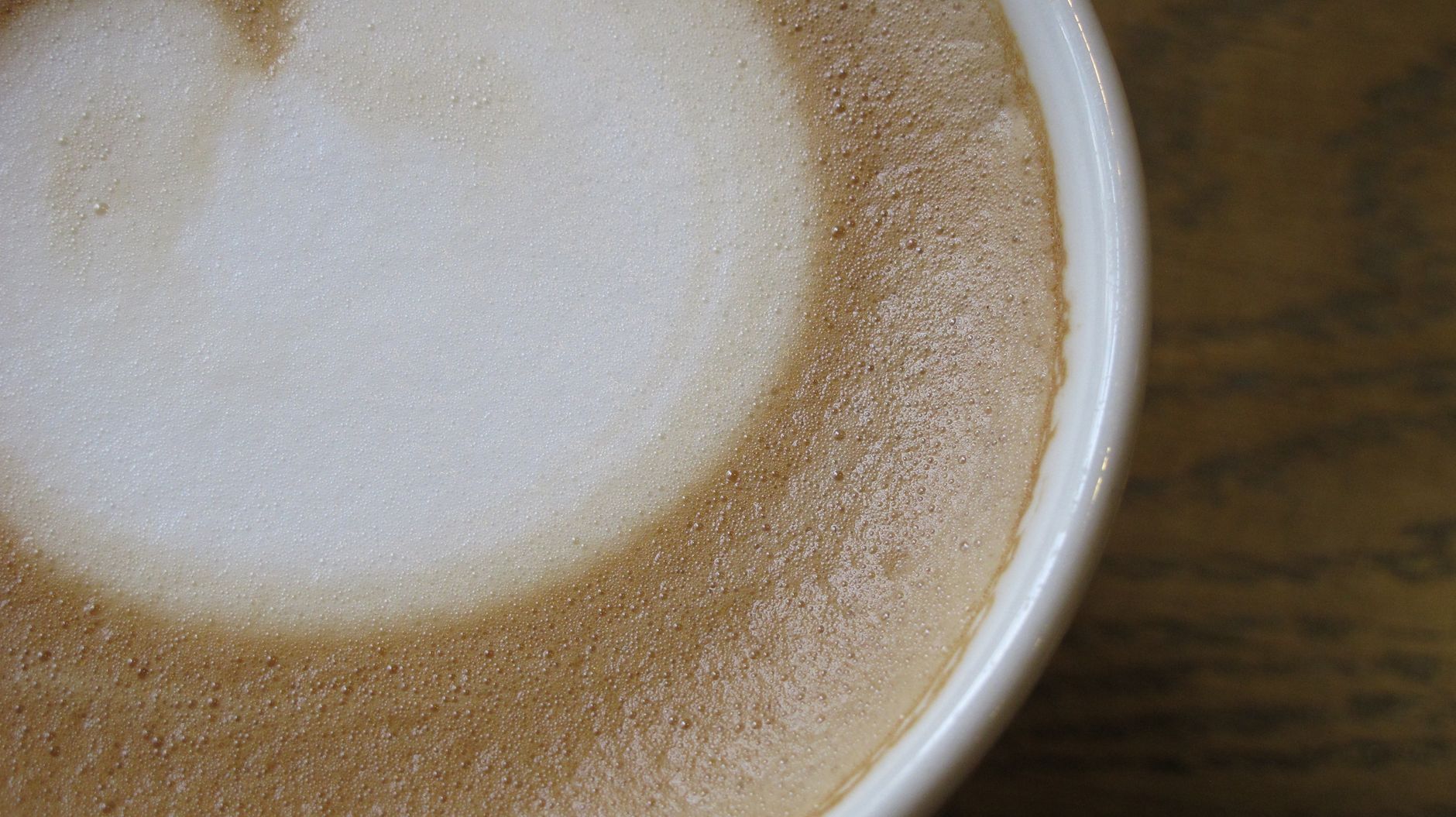 Photo: chunhsien shih via Pexels
Half-and-half sits at roughly 10–18% fat — well above whole milk’s 3.5%. That extra fat does two things: it slows foam formation (so you can’t stretch it as aggressively as milk), but the foam you do get is thick, stable, and almost velvet-like. The fat also coats the palate, which softens espresso’s bitterness considerably.
This is not a health drink. A 12 oz breve runs 300–400 calories before any syrups, compared to around 180 for the equivalent latte. Most specialty shops will make one on request even if it’s not on the menu — just ask for a latte with half-and-half.
Breve vs Latte: What’s the Difference?
The only difference between a breve and a latte is the dairy. A latte uses steamed whole milk; a breve uses steamed half-and-half. This single swap changes the calorie count, the foam texture, the sweetness level, and the mouthfeel — making them distinctly different drinks despite identical espresso bases.
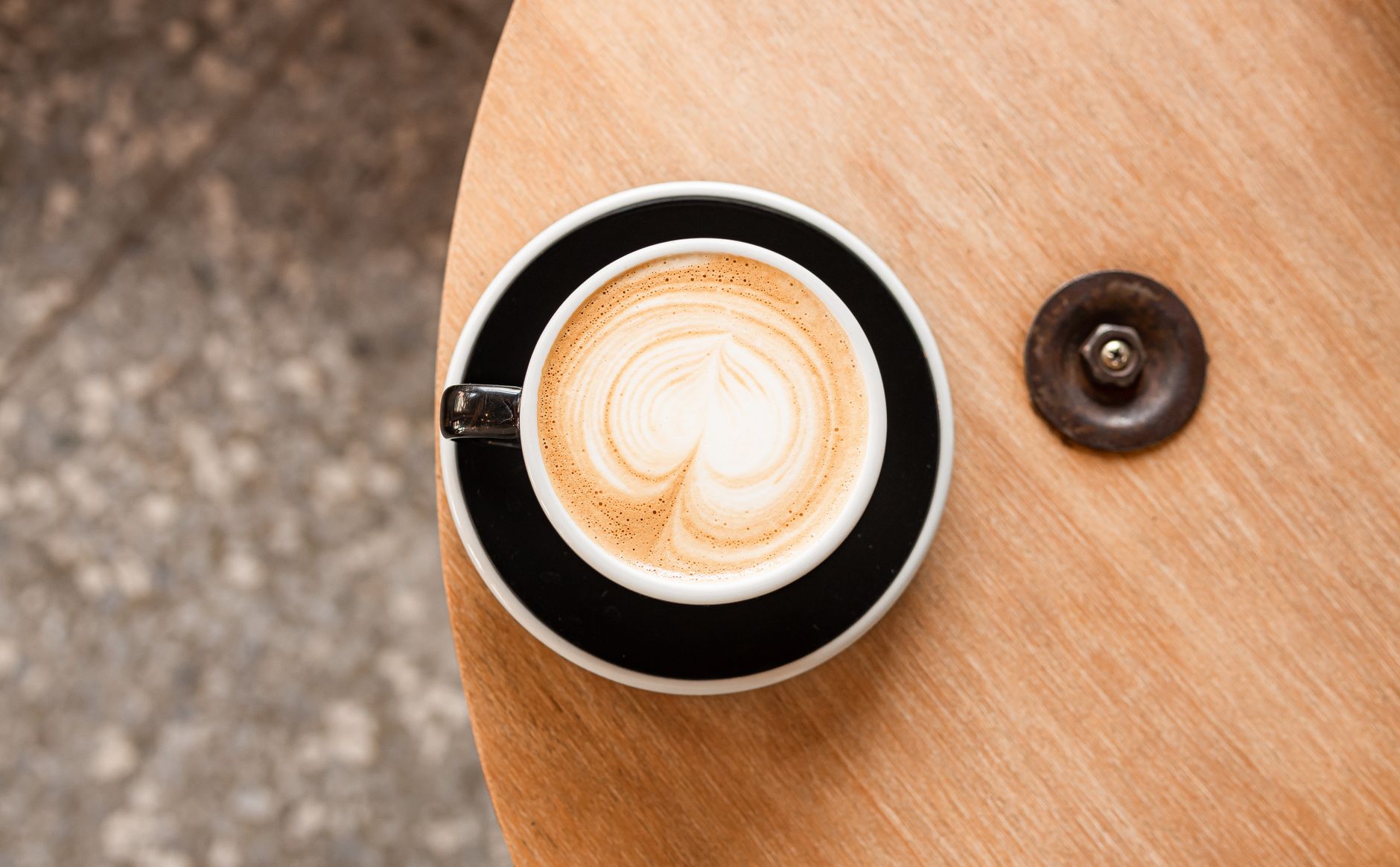 Photo: SpotwizardLee via Pexels
| Latte | Breve | |
|---|---|---|
| Dairy | Whole milk | Half-and-half |
| Fat % | ~3.5% | ~10–18% |
| Foam texture | Light, airy microfoam | Dense, creamy, slower to form |
| Natural sweetness | Moderate | High |
| Calories (12 oz) | ~180 | ~350–400 |
| Espresso ratio | 1–2 shots | 1–2 shots |
If you currently order lattes with a pump of vanilla syrup to take the edge off the bitterness, try a breve first — the fat content often eliminates the need for sweetener entirely.
How to Make Breve Coffee at Home
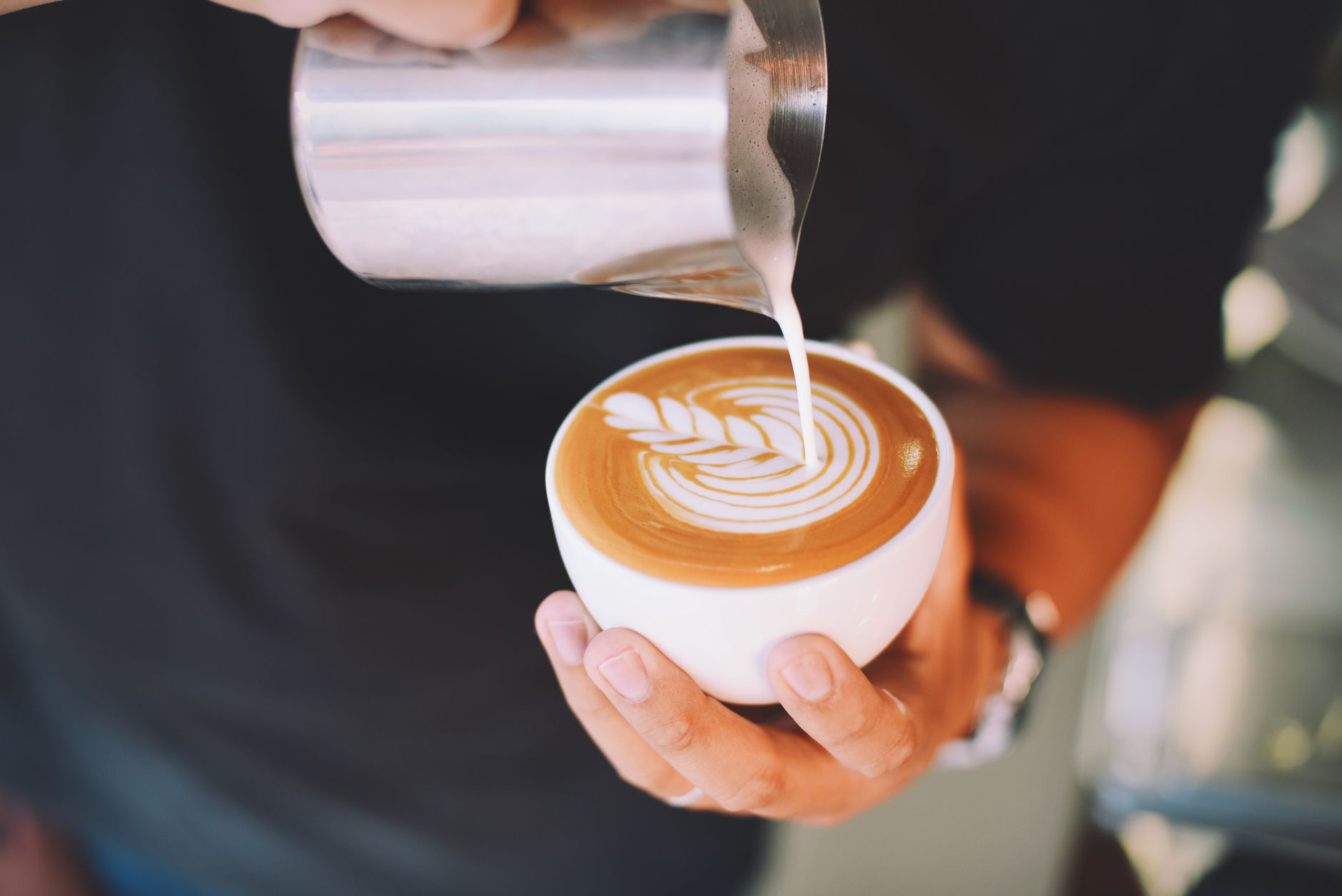
Steam half-and-half between 140°F and 150°F (60–65°C) — lower than you’d steam milk — and stop before it gets too hot. High heat breaks the fat structure and kills the foam. Pull a double espresso, pour it into a preheated 8 oz cup, then pour the steamed half-and-half over it with a spoon holding back the foam until the end.
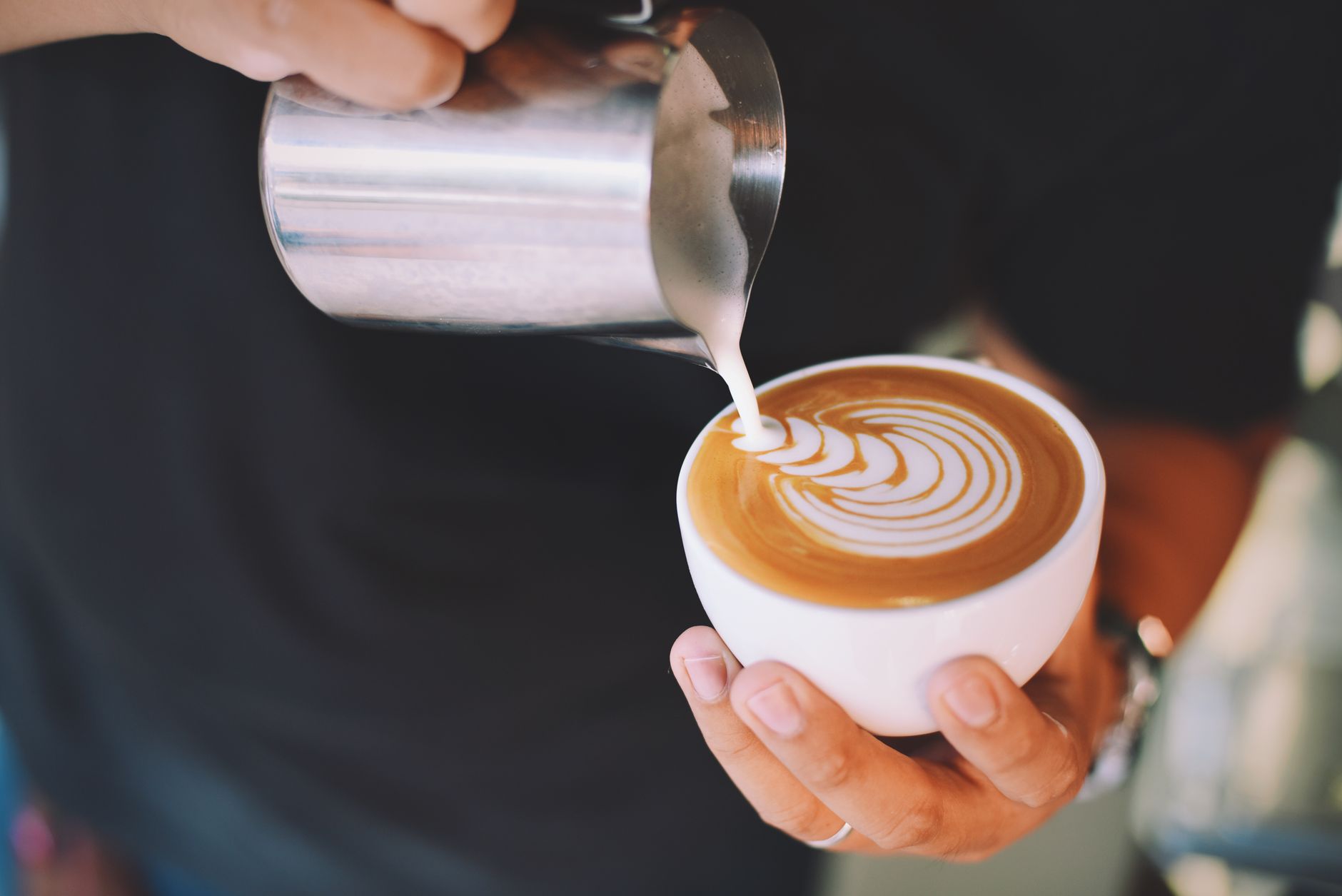 Photo: Chevanon Photography via Pexels
Equipment You’ll Need
You need an espresso machine with a steam wand. A moka pot produces concentrate, not true espresso pressure, so the result will be close but not identical. For the grinder, a burr grinder dialed to fine is non-negotiable — pre-ground coffee is too inconsistent for espresso extraction.
A basic home setup that works well for breves:
- Espresso machine: Breville Barista Express
Step-by-Step
- Preheat your cup with hot water, then discard.
- Pull a double espresso (18–20g in, 36–40g out, ~25–30 seconds).
- Pour 3–4 oz of cold half-and-half into a small steaming pitcher.
- Purge the steam wand, then submerge just below the surface and start steaming. Keep the tip near the surface briefly to introduce a small amount of air, then drop it deeper to heat and roll the liquid.
- Stop at 140–150°F. The pitcher should feel hot but not painfully so.
- Give the pitcher a firm tap on the counter and a swirl to integrate any bubbles.
- Pour the steamed half-and-half over the espresso, spooning the foam on last.
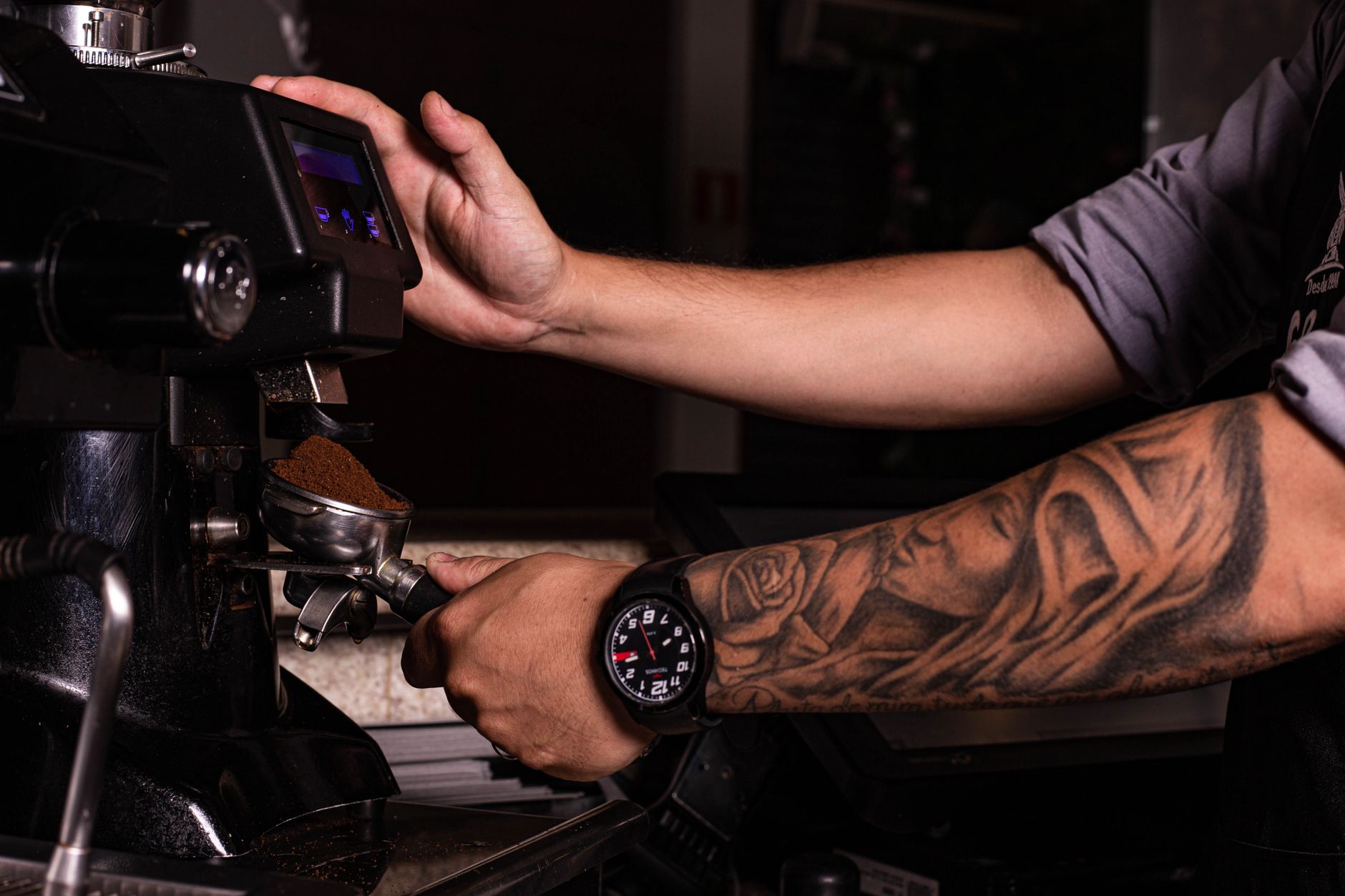 Photo: Guto Macedo via Pexels
Ratios
A standard breve is 1:3 espresso to half-and-half by volume — so a double shot (2 oz) gets about 6 oz of dairy. Scale down for a stronger drink, up for something milder.
→ See Also
- Espresso Drinks: The Complete Guide to Every Type
- What Is a Cortado? (And How It Differs From a Macchiato)
- Cortado vs Flat White vs Macchiato: Full Comparison
FAQ
What does breve mean in coffee? In American coffee shops, breve is shorthand for half-and-half. Ordering any espresso drink “breve” signals the barista to swap the standard milk for half-and-half. The word itself is Italian for “short” or “brief,” but that etymological connection is largely irrelevant to how the term is used in practice.
Is breve coffee sweeter than a latte? Yes — noticeably so. Half-and-half contains more fat and slightly more lactose than whole milk, and higher fat content amplifies the perception of sweetness and body. Most breve drinkers find they need less or no added syrup compared to a latte.
Can you make breve coffee without an espresso machine? You can get close using a moka pot or AeroPress for a concentrated brew, then steam or froth the half-and-half with a handheld frother or by shaking it in a jar and microwaving it. The result won’t have the same crema or extraction pressure, but the flavor profile — rich, creamy, mildly sweet — comes through well enough to be enjoyable.
How much caffeine is in a breve? The caffeine comes entirely from the espresso. A standard double shot contains roughly 120–140mg of caffeine. Since breve uses the same espresso base as a latte, the caffeine content is identical — the half-and-half adds no caffeine whatsoever.
Why is my breve foam grainy or watery? Two likely causes: overheating the half-and-half past 155°F (the fat breaks down and stops holding air) or not introducing enough surface air in the first few seconds of steaming. Keep the wand tip just at the surface at the start, listen for a light hissing rather than a loud screech, and pull the pitcher off heat before it gets uncomfortable to hold.
Editorial methodology: Assessments are based on manufacturer specifications, published user reviews, and editorial research. Physical hands-on testing is noted explicitly where it occurred. Rankings reflect our editorial judgment and are not influenced by affiliate commission rates. Full editorial policy · Affiliate disclosure