Contents
Best Pour Over Kettles for 2026: Top Picks Tested
TL;DR: The best pour over kettle for most brewers is the Fellow Stagg EKG — it holds temperature within ±1°F, has a precision flow-rate spout, and an intuitive interface. If budget is tight, the Bonavita 1L Variable Temperature delivers 90% of the performance at half the price. Flow control and temperature precision are the two specs that actually matter.
What Makes a Pour Over Kettle Worth Buying
A great pour over kettle does two things: holds a precise temperature and gives you consistent, controllable flow. Most gooseneck kettles look similar but differ dramatically in spout geometry, temperature accuracy, and hold times. These differences change your cup.
 Photo: cottonbro studio via Pexels
Pour over brewing is uniquely sensitive to water temperature and pour pattern. A 5°F swing mid-brew shifts extraction meaningfully — especially with light roasts that need 200–205°F to open up. A poorly designed spout turns a controlled spiral into a splashy mess that blows channels through your puck or bed.
Every kettle on this list was evaluated on: spout control at low flow rates, temperature accuracy vs. display, heat-up speed, hold performance, and build quality.
Best Pour Over Kettles: Ranked
Here are the top pour over kettles across price tiers. All are variable-temperature electric goosenecks — the only category worth recommending for serious pour over.
 Photo: Amar Preciado via Pexels
| Kettle | Capacity | Temp Range | Hold Time | Price |
|---|---|---|---|---|
| Fellow Stagg EKG | 0.9L | 135–212°F | 60 min | ~$165 |
| Bonavita 1L Variable | 1.0L | 140–212°F | 30 min | ~$79 |
| Brewista Artisan 600ml | 0.6L | 155–212°F | 60 min | ~$119 |
| Hario V60 Buono | 1.2L | Stovetop only | N/A | ~$65 |
| OXO Brew Adjustable | 1.0L | 140–212°F | 30 min | ~$99 |
| Cosori Electric Gooseneck | 0.8L | 104–212°F | 30 min | ~$45 |
Fellow Stagg EKG — Best Overall
The Stagg EKG
The LCD dial interface is cleaner than any competitor’s. Set temperature, hit the power button. No app, no Bluetooth required (though there’s an optional Bluetooth mode for obsessives).
Weakness: 0.9L fills a Chemex once with nothing left over. For 6-cup brews, you’re doing two fills.
Bonavita 1L Variable — Best Value
The Bonavita heats fast (around 3 minutes to 200°F), holds temperature for 30 minutes, and the spout — while not as refined as the Stagg — is workable for most pour over methods.
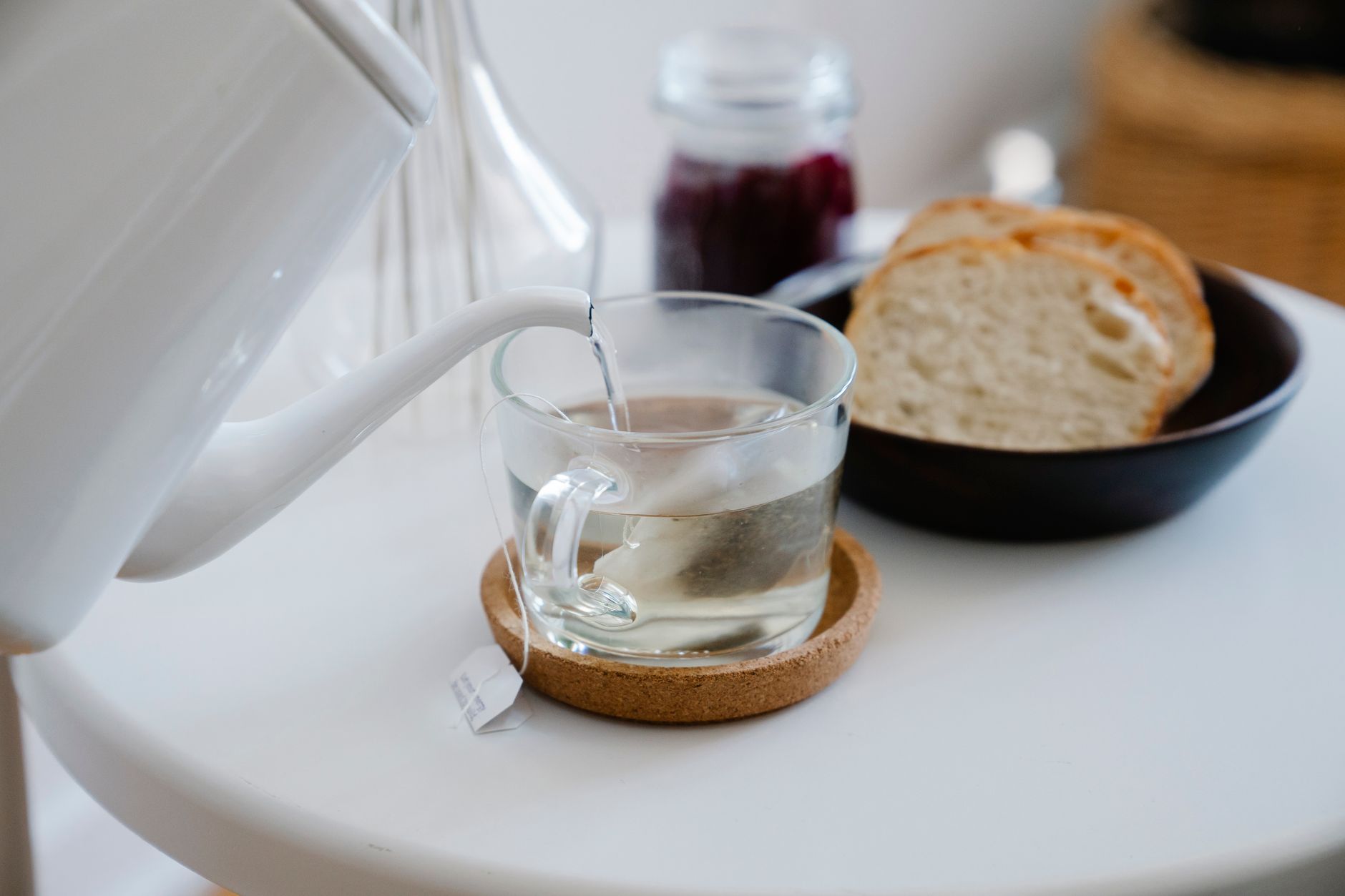 Photo: Felicity Tai via Pexels
At ~$79, it’s the obvious recommendation for anyone who doesn’t want to spend $165 on a kettle. The 1L capacity is practical for Chemex or batching multiple V60 brews. The button interface is clunkier than a dial, but it works.
Weakness: 30-minute hold limit, no Bluetooth, build feels less premium at the price.
Brewista Artisan 600ml — Best for Espresso and Single Cup
At 600ml the Brewista is the pick for single-cup V60, AeroPress, or as a companion to an espresso setup for rinse water and milk alternatives. The spout is arguably the most controllable of any kettle here — narrow bore, long neck, excellent balance.
60-minute hold and a 1°F-increment display make it precise. The small capacity is a feature for single brewers, a liability for households.
Hario V60 Buono — Best Stovetop Option
If you already have an induction or gas setup and don’t need electric, the Hario Buono is the reference gooseneck stovetop kettle. The spout geometry is nearly identical to what Hario designed the V60 around — it’s not a coincidence.
 Photo: Huy Phan via Pexels
You’ll need a separate thermometer (a Thermapen or similar), and you won’t get a hold function. But for brewers who already have precise stovetop control, it’s an excellent, lower-complexity option.
Weakness: No temperature control — you’re managing heat manually.
OXO Brew Adjustable — Best for Beginners
The OXO is the most approachable interface on this list. Large buttons, a clear display, and a preset system that includes common brew temperatures (175°F for green tea, 200°F for light roast, 212°F for French press) make it a strong gift for someone getting into pour over.
Flow control is looser than the Stagg or Brewista, but for drip rates above 5g/s it performs well.
Cosori Electric Gooseneck — Best Budget Pick
The Cosori at ~$45 is the honest budget answer. Temperature accuracy is within ±3–4°F (verify with a thermometer and dial in your set temp accordingly), the spout is functional if not refined, and the 104–212°F range covers everything including green tea.
For someone who wants variable temperature before committing to a premium kettle, it’s a valid starting point. Don’t expect the Stagg’s precision or the Brewista’s spout feel.
Pour Over Brewing Guide
Extraction Parameters
| Parameter | Light Roast | Medium/Dark Roast |
|---|---|---|
| Dose | 15–18g | 15–18g |
| Yield | 240–270ml | 240–270ml |
| Ratio | 1:15–1:16 | 1:15–1:17 |
| Time | 3:00–3:30 | 2:45–3:15 |
| Temperature | 200–205°F (93–96°C) | 192–200°F (89–93°C) |
| Pour pattern | Slow spiral, 3–4 pours | Continuous or 3 pours |
Puck Prep (V60 / Kalita Wave)
 Photo: Mike C via Pexels
- Bloom: 2× coffee weight in water (e.g., 30ml for 15g dose). 30–45 second bloom before main pours.
- Agitation: Gentle swirl after bloom pour — levels the bed, improves even extraction.
- Pour control: Keep water off the paper walls. Pour in slow concentric circles over the coffee bed.
- Flow rate: 5–8g/s during main pours for most V60 setups. Faster = shorter brew time = dial temp down slightly.
- Pre-infusion: Built into the bloom phase — no additional pre-infusion needed with filter coffee.
Troubleshooting Matrix
| Symptom | Likely Cause | Fix |
|---|---|---|
| Sour, thin cup | Under-extraction | Raise temp 3–5°F, grind finer, slow pour rate |
| Bitter, dry finish | Over-extraction | Lower temp 3–5°F, grind coarser, shorter brew time |
| Channeling (uneven bed) | Uneven grind distribution | Swirl bloom more aggressively, try WDT equivalent stirring |
| Slow drain (>4 min) | Too fine a grind | Coarsen one notch at a time |
| Fast drain (<2:30) | Too coarse | Fine one notch; also check if bloom was too short |
| Flat/no sweetness | Wrong roast temp match | Light roasts need ≥200°F; don’t use dark roast temps for light |
→ See also
- How to Brew Coffee at Home: Complete Method Guide
- French Press Coffee: Complete Brewing Guide (Ratios + Technique)
- French Press Coffee-to-Water Ratio Calculator
FAQ
Does the type of kettle actually matter for pour over? Yes — spout geometry controls flow rate consistency, and flow rate affects extraction evenness. A wide-mouth kettle makes it nearly impossible to pour slowly enough for V60 without flooding the bed. Gooseneck kettles aren’t aesthetic, they’re functional.
What temperature should I use for pour over coffee? For light roasts: 200–205°F (93–96°C). For medium roasts: 195–200°F (90–93°C). For dark roasts, 190–195°F is often enough — high heat on dark roasts pulls bitterness faster. If you don’t have a variable kettle, 30 seconds off boil is roughly 200°F.
Is the Fellow Stagg EKG worth the price? For daily use and temperature-sensitive brewing, yes. The ±1°F hold accuracy and spout precision are noticeably better than sub-$100 options. If you’re brewing 1–2 cups daily and care about consistency, the price difference is justified over 12–18 months of use.
Can I use a regular kettle for pour over? Technically yes, but you lose flow control and precise temperature management. You’ll need a gooseneck pour spout attachment (they exist, but add friction) and a separate thermometer. It works as a short-term solution; it’s worth upgrading if pour over becomes a regular habit.
What capacity should I buy? 0.9–1.0L covers most single-person or two-cup brewing scenarios. If you regularly brew for 3–4 people or use a Chemex 6-cup+, get a 1.2L+ kettle. The Hario Buono stovetop comes in 1.2L and is worth considering for larger households.
Does kettle material (stainless vs. titanium) affect taste? Not meaningfully with quality kettles — stainless is fine. What matters more is whether the kettle has plastic components in the water path that haven’t been thoroughly tested. All kettles listed here use stainless steel water-contact surfaces.
Editorial methodology: Assessments are based on manufacturer specifications, published user reviews, and editorial research. Physical hands-on testing is noted explicitly where it occurred. Rankings reflect our editorial judgment and are not influenced by affiliate commission rates. Full editorial policy · Affiliate disclosure