Contents
Best Syrups for Coffee: 2026 Rankings That Actually Matter
TL;DR: The best coffee syrups in 2026 are dominated by Monin and Torani for classic flavors, with 1883 Maison Routin pulling ahead for specialty applications. For sugar-free options, Jordan’s Skinny Syrups lead the category. The right pick depends on your use case — home espresso drinks, café service, or dietary needs.
How We Ranked the Best Coffee Syrups
The field is crowded and most syrups taste the same. We narrowed it down by evaluating flavor accuracy based on user reviews and published tasting notes (does hazelnut taste like hazelnut, or like candy?), sweetness balance, performance in milk-based drinks vs. black coffee, and value per bottle. Only syrups with consistently strong ratings in both espresso and milk-based drinks made the list.
 Photo: 🇻🇳🇻🇳 Việt Anh Nguyễn 🇻🇳🇻🇳 via Pexels
Flavor fidelity is the first filter. A vanilla syrup that tastes like artificial frosting fails immediately. A hazelnut that turns muddy when steamed milk hits it is out. We also weighted ingredient lists — syrups with fewer artificial dyes and stabilizers scored higher when flavor was equal.
Price matters differently depending on context. Home users buying one bottle have different math than café operators going through a liter a week.
The 7 Best Coffee Syrups Ranked
1. Monin Premium Syrups
Monin is the gold standard for a reason: consistent flavor across their entire 200+ SKU catalog, natural colorings on most lines, and a thin viscosity that integrates cleanly into both hot and cold drinks. The vanilla, hazelnut, and caramel are benchmark flavors other brands are measured against.
 Photo: Pink Press via Pexels
Monin has been a café-industry staple since the 1990s and the formula hasn’t drifted. Their Gourmet line uses real ingredients — real vanilla bean, real fruit — and you can taste the difference. The standard line is slightly thinner and works better in cold brew and iced drinks where a thicker syrup would pool.
The one knock on Monin: the sweetness level is calibrated for café service (typically 1–2 pumps per 8 oz drink). Home users sometimes over-pour. Start with one pump and adjust.
Best for: Daily drivers — vanilla, hazelnut, caramel, lavender, brown sugar cinnamon.
| Line | Sugar | Price/750ml | Best Use |
|---|---|---|---|
| Premium | Yes | ~$12 | Hot/iced lattes, syrups |
| Gourmet | Yes | ~$18 | Signature drinks, high-end |
| Zero Calorie | No | ~$13 | Dietary, same flavor profile |
| Craft | Yes | ~$15 | Seasonal, bartender focus |
2. Torani Original Syrups
Torani invented the coffeehouse syrup category in San Francisco in 1925. The flavor range is massive, the price is slightly lower than Monin, and the iconic pumps are interchangeable. Where Torani falls behind: some flavors lean sweeter and less nuanced than Monin’s equivalents.
 Photo: Pavel Danilyuk via Pexels
Torani excels in fruit flavors — their raspberry, strawberry, and peach perform better than almost any competitor because the brand has always leaned into Italian soda roots. For coffee applications specifically, vanilla and caramel are solid, but the hazelnut is sweeter and less roasted than Monin’s version.
Their Puremade line uses no artificial flavors or dyes and is worth the modest price premium over the Original line for anything that shows off flavor directly (cortados, macchiatos, flat whites).
Best for: Value buyers, fruit-flavored coffee drinks, Italian sodas alongside coffee.
3. 1883 Maison Routin
1883 is the most underrated syrup brand in specialty coffee. Made in the French Alps since 1883, the flavor concentration is higher than Monin or Torani, so you use less — which offsets the higher per-bottle price. The pistachio, rose, and salted caramel are genuinely distinctive.
1883 has no artificial dyes and uses natural flavors throughout the line. The higher concentration means one pump often does what two pumps of a competitor delivers, making the math on cost-per-serve surprisingly competitive.
The trade-off is availability — 1883 is harder to find in physical retail and the SKU count (~100) is smaller than Monin. But for home espresso setups where you’re buying a few bottles to rotate, this is the upgrade pick.
Best for: Specialty home espresso, cortados, flat whites, anyone who finds standard syrups too sweet.
4. Jordan’s Skinny Syrups
The best sugar-free coffee syrup line available. Jordan’s uses sucralose to deliver sweetness without the aftertaste problems that plague stevia-based alternatives. The vanilla, caramel, and white chocolate are genuinely good — not “good for sugar-free.”
 Photo: emmanuel Lozano via Pexels
Jordan’s has built a loyal following among keto and low-calorie coffee drinkers not by compromising on flavor but by getting the sweetener ratio right. Sucralose doesn’t perform identically to sugar in every context, but in a milk-based drink it’s close enough that most drinkers won’t notice.
The flavored seasonal drops (pumpkin spice, gingerbread, peppermint mocha) are popular and priced to encourage buying multiples.
Best for: Calorie-conscious drinkers, keto/low-carb, anyone reducing sugar without sacrificing a flavored latte.
5. Starbucks Syrups (Bottled)
Starbucks bottles their branded vanilla, caramel, and hazelnut syrups, and they’re worth mentioning because the formula matches what’s used in stores — if you like your Starbucks order, you can replicate it at home. These aren’t the best syrups objectively, but they’re the best for brand-matching.
Starbucks are sweeter and thicker than specialty-grade syrups. In an espresso-forward drink they can overpower. In a milky drink — a vanilla latte with oat milk, a caramel macchiato — they perform as expected.
Best for: Replicating Starbucks drinks at home, high-milk-ratio drinks.
6. DaVinci Gourmet
DaVinci’s Natural line competes directly with Monin Gourmet and is often priced slightly lower. Flavor quality is high, though the range is narrower. The vanilla bean and caramel are reliable.
DaVinci is widely used in food service and available in larger volumes (1-liter bottles), which matters for high-volume home use or small café operators. Less exciting for exploration, very reliable as a workhorse.
Best for: Volume buyers, classic flavors only, food service.
7. Ghirardelli Sauce (Chocolate/Caramel)
Ghirardelli sauces are a different category — thicker, sauce-not-syrup, used for mochas and drizzles rather than flavoring. The chocolate sauce is genuinely good and outperforms most syrup-format chocolate options for mocha lattes.
Ghirardelli contains real cocoa and produces a mocha that tastes like chocolate, not like brown sugar water. The squeeze bottle format makes it easy to portion and layer.
Best for: Mochas, chocolate lattes, drizzled finishes on cappuccinos.
How to Use Coffee Syrups Correctly
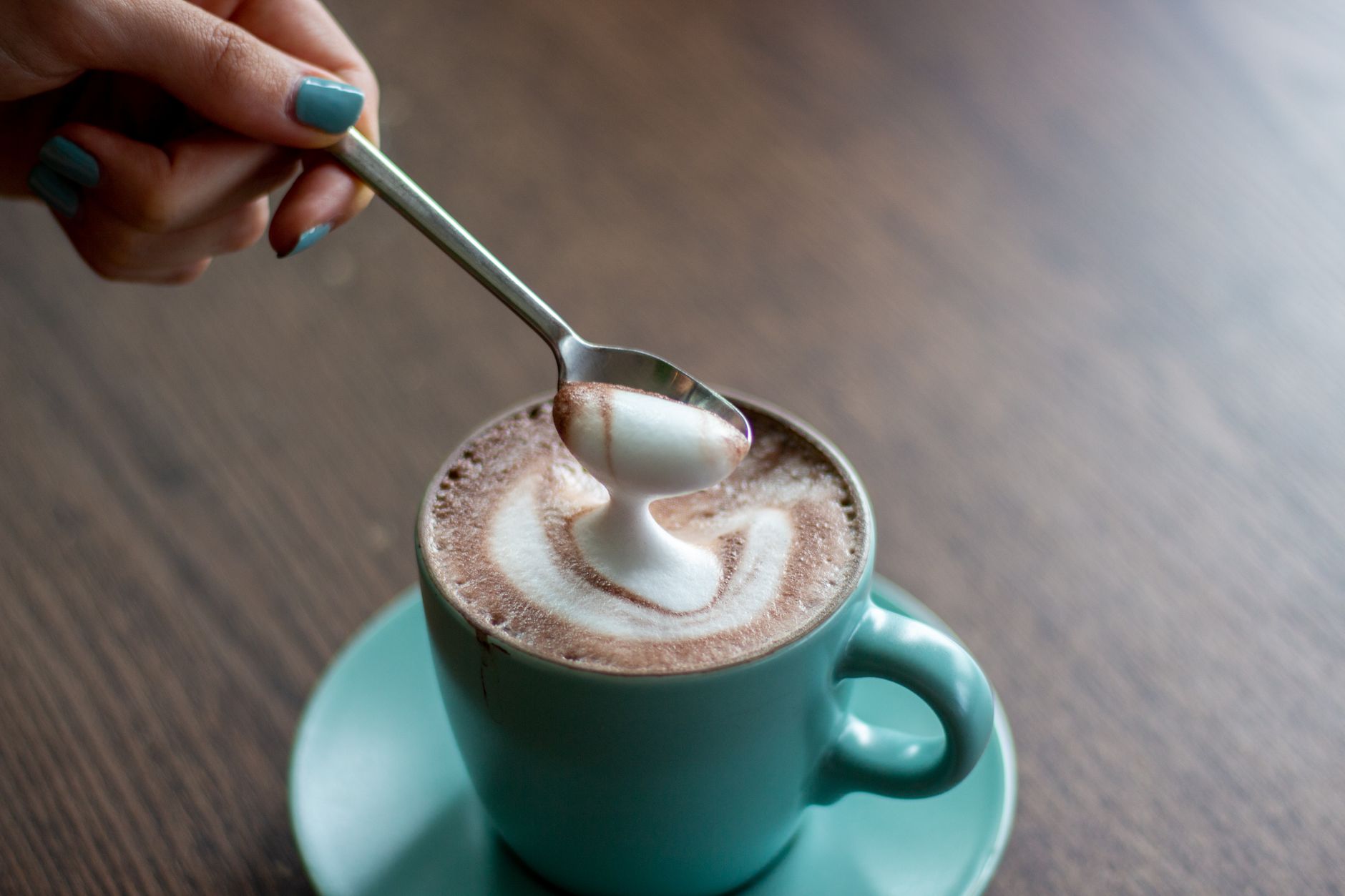 Photo: Augustinus Martinus Noppé via Pexels
Most home users over-sweet their drinks. The café standard is 1 pump per 4 oz of milk or liquid. A 12 oz latte gets 2–3 pumps — not 4–5. Starting under and building up teaches you what the syrup actually tastes like.
Add syrup to the cup before pulling espresso — the hot shot dissolves and integrates it better than adding after. For cold drinks, use cold brew or a quick stir; thick syrups don’t dissolve well in cold liquid without agitation.
Shelf life after opening is typically 3–6 months for most syrups. Glass bottles last longer than plastic. Store at room temperature, cap tightly, and if you see crystallization at the neck, the syrup is still fine — it’s just sugar.
Syrup Comparison: Flavor Quality vs. Price
| Brand | Flavor Quality | Sugar-Free Option | Price/750ml | Best Flavors |
|---|---|---|---|---|
| 1883 Maison Routin | ★★★★★ | No | ~$16 | Pistachio, salted caramel, rose |
| Monin Gourmet | ★★★★★ | Via Zero line | ~$18 | Vanilla bean, lavender, passionfruit |
| Monin Premium | ★★★★☆ | Via Zero line | ~$12 | Vanilla, hazelnut, caramel |
| Torani Puremade | ★★★★☆ | Via Sugar Free line | ~$13 | Caramel, vanilla, fruit flavors |
| Jordan’s Skinny | ★★★☆☆ (SF-best) | Yes (entire line) | ~$9 | Vanilla, caramel, white chocolate |
| DaVinci Gourmet | ★★★★☆ | Yes | ~$12 | Vanilla bean, caramel |
| Starbucks | ★★★☆☆ | No | ~$14 | Vanilla, caramel |
→ See Also
- Espresso Drinks: The Complete Guide to Every Type
- What Is a Cortado? (And How It Differs From a Macchiato)
- Cortado vs Flat White vs Macchiato: Full Comparison
FAQ
Q: What is the most popular coffee syrup flavor? Vanilla is the top-selling coffee syrup flavor globally and has been for decades. It works in nearly every drink — espresso-forward or milk-heavy — and serves as the baseline that all other flavors are measured against. Caramel and hazelnut follow closely.
Q: Are sugar-free coffee syrups good? The best sugar-free coffee syrups — Jordan’s Skinny and Monin Zero — are genuinely good in milk-based drinks. The sweetener (usually sucralose or erythritol/stevia) performs differently than cane sugar in texture and mouthfeel, but in a latte most drinkers can’t identify it. Avoid stevia-only syrups if you’re sensitive to bitterness.
Q: How many pumps of syrup should I use in a latte? The café standard is 2–3 pumps for a 12 oz latte, 1–2 for an 8 oz. This is calibrated for syrups that deliver about 5ml per pump. High-concentration syrups like 1883 need fewer pumps. Start low — you can always add, but you can’t remove.
Q: Can I use flavored syrups in cold brew? Yes, but thick syrups don’t dissolve well in cold liquid. Either pre-mix with a small amount of warm water, or choose a thin-viscosity syrup like Monin Premium or Torani Original. Simple syrup format (2:1 sugar:water) also works well cold.
Q: What’s the difference between coffee syrup and coffee sauce? Syrup is water and sugar-based, thin enough to pour and pump, used to flavor drinks. Sauce (like Ghirardelli chocolate or caramel) is thicker, contains additional ingredients like cream or cocoa, and is used for mochas, drizzles, and layering. Both have legitimate uses — they’re not interchangeable in most recipes.
Q: Do coffee syrups expire? Commercially-produced coffee syrups have a shelf life of 1–3 years unopened and 3–6 months after opening under normal conditions. They don’t become unsafe but flavors degrade and sweetness can become less balanced. Store at room temperature out of direct sunlight; refrigeration isn’t required and can cause crystallization.
Editorial methodology: Assessments are based on manufacturer specifications, published user reviews, and editorial research. Physical hands-on testing is noted explicitly where it occurred. Rankings reflect our editorial judgment and are not influenced by affiliate commission rates. Full editorial policy · Affiliate disclosure