Contents
Naked Portafilter Guide: What It Reveals About Your Espresso
TL;DR: A naked portafilter — also called a bottomless portafilter — removes the spout so you watch espresso flow directly from the basket. It’s the fastest diagnostic tool for espresso extraction issues: channeling, uneven distribution, and poor tamping all show up immediately as spraying, splitting, or pale streaks. Use it to fix your technique, then pull shots with it permanently if you want.
What Is a Naked Portafilter?
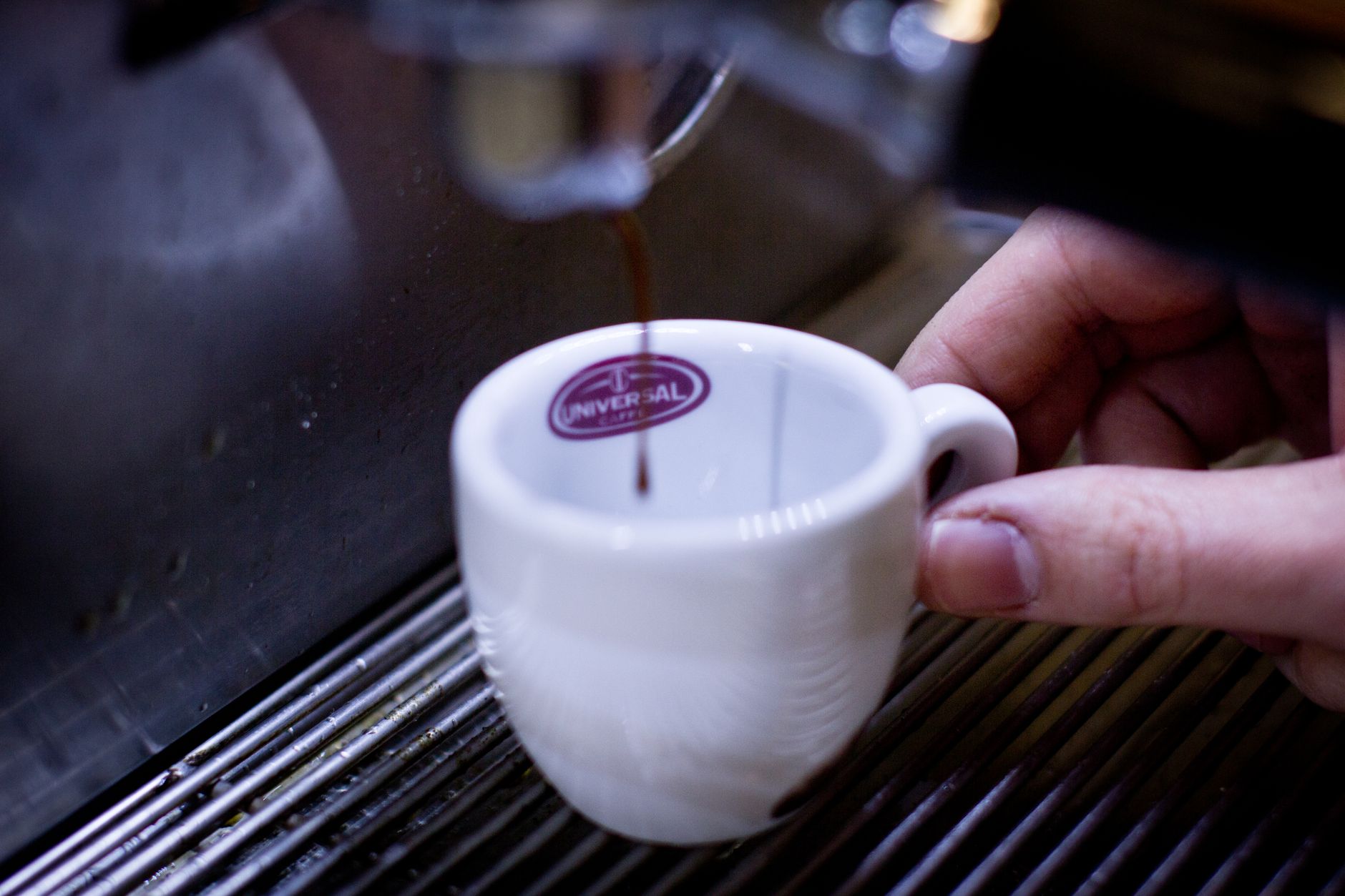
A naked portafilter is a standard portafilter with the bottom machined off, exposing the underside of the basket. Espresso drops fall directly into your cup. It gives you a real-time window into extraction quality that a spouted portafilter completely hides. Every flaw in your puck prep becomes visible in seconds.
 Photo: David Bares via Pexels
Standard portafilters route espresso through one or two spouts, which blend and obscure the flow. Channeling on one side of the basket gets mixed with clean extraction from the other side — the shot tastes mediocre and you have no idea why.
Strip the bottom off and the basket speaks for itself. If you see a single solid, syrupy column of dark espresso spreading evenly from the entire basket face, your puck prep is dialed. If you see jets, sprays, or a stream that starts on one side and migrates — you have a problem.
What the Flow Tells You
Each flow pattern maps directly to a specific puck prep error. Once you know the vocabulary, a naked portafilter espresso guide becomes a real-time coaching session every single pull.
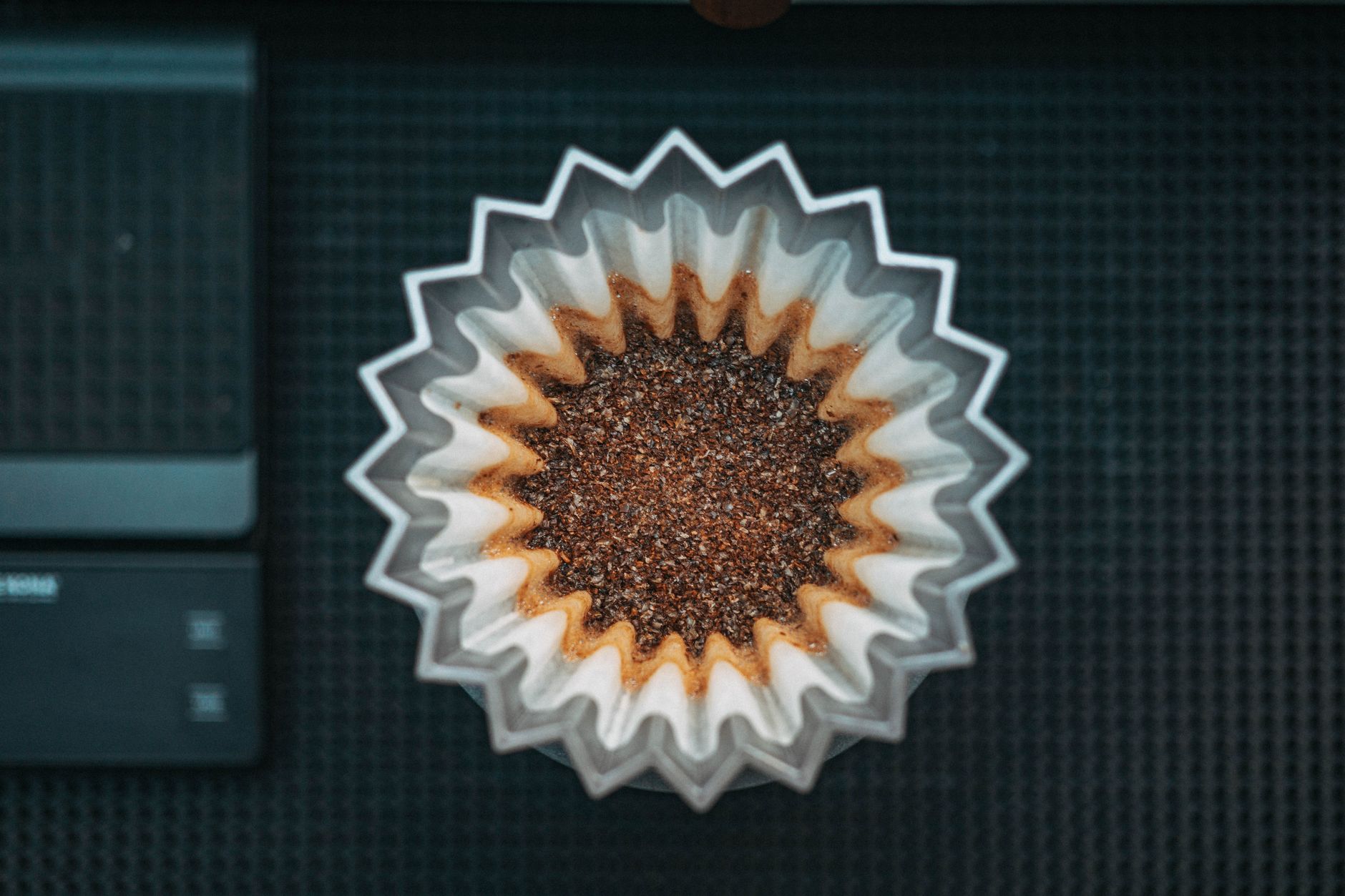 Photo: FOX ^.ᆽ.^= ∫ via Pexels
Single Jet or Spray
Water found a path of least resistance and blasted through it. The most common cause is an uneven tamp — one side of the puck compresses harder than the other, so water takes the soft path. A dry clump or air pocket from poor distribution does the same thing.
Fix: Use a WDT tool (Weiss Distribution Technique) before tamping to break up clumps and distribute grounds evenly. Then tamp level. The Pullman Chisel is built specifically for level compression.
Two Separate Streams That Don’t Merge
Classic channeling from a crack in the puck or a gap between the puck and the basket wall. Often caused by tamping at an angle, which pulls the puck edge away from the basket.
Fix: Check your tamp angle — elbow, wrist, and tamper face should be parallel to the counter. A self-leveling tamper like the Normcore V4 eliminates the angle variable entirely.
Pale, Blond Stream That Arrives Early
Extraction is running through a fast channel and picking up very little dissolved solids. Resulting shot will taste watery and sour.
Fix: If distribution and tamp look correct, check your dose. An underdosed basket leaves headspace that collapses into uneven channels under pressure.
Solid Cone That Slowly Widens
Ideal. Water percolates evenly through the entire puck face, the extraction front expands uniformly, and you get a tight, consistent cone that widens as yield accumulates. This is what you’re training toward.
Naked Portafilter vs Spouted Portafilter
| Feature | Naked Portafilter | Spouted Portafilter |
|---|---|---|
| Extraction visibility | Full, real-time | None |
| Channeling detection | Immediate | Hidden |
| Mess potential | High if technique is off | Contained |
| Cleaning | Easier (fewer parts) | Basket harder to access |
| Espresso temperature | Marginally cooler (open air) | Slightly warmer |
| Best for | Diagnosing and learning | Service, guests, dialed-in shots |
The temperature difference is negligible in practice — a pre-heated cup solves it. The mess concern is real while your technique is rough, but that’s the point: the mess is feedback.
How to Use a Naked Portafilter: Puck Prep Sequence
The puck prep sequence below applies to any basket, but it matters more with a naked portafilter because you’ll see exactly where it breaks down.
 Photo: Mikhail Nilov via Pexels
Extraction Parameters
| Parameter | Value |
|---|---|
| Dose | Matched to basket spec (±0.1g) |
| Yield | 1:2 ratio (e.g., 18g in → 36g out) |
| Time | 25–30 seconds |
| Temperature | 90–96°C depending on roast |
| Pressure | 9 bar (standard), 6 bar for pressure profiling |
| Pre-infusion | 3–8 seconds at low pressure |
Step-by-Step Puck Prep
- Dose precisely. Weigh your grounds every time. A 0.5g variance changes resistance enough to produce visible channeling.
- WDT. Insert a WDT tool into the basket and stir in overlapping circles. This breaks clumps and levels the bed before any compression happens.
- Stockfleth or NSEW leveling. Finger-level with a circular motion to eliminate the dome left by the grinder chute.
- Tamp parallel. Place the tamper, make contact, and press straight down. Check your elbow position. 15–20kg of pressure — enough to compress, not obliterate.
- Check the puck edge. Run your eye along the basket rim. The puck should sit flush, with no visible gaps at the wall.
- Lock in, pre-infuse. Pre-infusion at 1–3 bar for 3–8 seconds lets the puck swell and seal before full pressure hits. This alone eliminates a majority of channeling events.
Troubleshooting Matrix
| Symptom | Likely Cause | Fix |
|---|---|---|
| Spraying on one side | Uneven tamp | WDT + level tamp, check elbow alignment |
| Two separate streams | Puck crack or basket wall gap | Tamp parallel, check dose weight |
| Blond early extraction | Channeling or underdose | Increase dose, extend pre-infusion |
| Shot starts offset, corrects | Distribution clump | More aggressive WDT |
| Pulsing or spurting flow | Grinder retention / stale grounds | Purge grinder, use single-dose workflow |
| Solid cone, correct color | Good puck prep | Nothing |
Choosing a Naked Portafilter
Most naked portafilters are sold as 58mm (the near-universal commercial standard) but verify against your machine’s group head. E61 group heads and most prosumer machines take 58mm. Dedicated espresso machines from Breville/Sage take 54mm.
 Photo: cottonbro studio via Pexels
Look for:
- Basket compatibility — IMS, VST, and Pullman precision baskets all fit standard portafilter bodies
- Stainless construction — chrome-plated brass is fine, but stainless holds up to daily backflushing
- No rubber gasket deformation — the portafilter body needs a clean seal with the group head
The IMS Competition basket is the most-recommended precision basket upgrade for naked portafilter use — it has tighter hole tolerances that slow extraction slightly and reward even distribution.
→ See Also
- How to Dial In Espresso: Step-by-Step Decision Tree
- Espresso Extraction Explained: Under, Over, and Perfect
- How to Tamp Espresso Correctly (Pressure, Technique, Tools)
FAQ
Does a naked portafilter make better espresso? Not by itself — it’s a diagnostic tool, not a performance upgrade. What it does is accelerate skill development. Baristas who train with a naked portafilter espresso guide develop consistent puck prep significantly faster because every error has an immediate visual consequence.
Is a naked portafilter messy? Yes, during the learning phase. Expect spraying and drips until your technique tightens up. A drip tray with high walls helps. Once you’re pulling clean cones consistently, mess is minimal.
Can I use a naked portafilter for milk drinks? Yes — the espresso still ends up in the cup, just without a spout directing it. Some baristas prefer the slightly cooler drop temperature for latte art because it gives marginally more time to pour. Pull into a pre-warmed shot glass or directly into the milk pitcher.
What basket size works best with a naked portafilter? A precision basket (IMS, VST, Pullman) in whatever size matches your dose — typically 18g or 20g for a 58mm portafilter. Precision baskets have tighter, more consistent perforation patterns that make channeling events more visible and easier to diagnose. Standard commercial baskets work but show less nuance.
Why does my shot channel even with a perfect tamp? The tamp is one variable. Check grind distribution (clumps from the grinder), basket cleanliness (blocked holes create uneven resistance), and pre-infusion time. A grinder with poor distribution — typical in flat burr grinders without RDT or WDT — can channel consistently regardless of tamp quality.
Editorial methodology: Assessments are based on manufacturer specifications, published user reviews, and editorial research. Physical hands-on testing is noted explicitly where it occurred. Rankings reflect our editorial judgment and are not influenced by affiliate commission rates. Full editorial policy · Affiliate disclosure