Contents
Espresso Yield Chart: Quick Reference Guide
TL;DR: The espresso yield chart maps dose-to-yield ratios for ristretto, normale, and lungo pulls. A standard espresso yield chart shows a 1:2 ratio (18g dose → 36g yield) as the baseline, with ristretto at 1:1–1:1.5 and lungo at 1:2.5–1:3. Dial from this chart, then adjust by taste.
What Is an Espresso Yield Chart?
An espresso yield chart is a reference table showing target output weight for a given dose across three pull styles. It eliminates guesswork when dialing in: choose your dose, find your pull style, hit that yield. Everything else — grind size, time — adjusts to reach it.
 Photo: Buse Korkmaz Güngören via Pexels
| Pull Style | Ratio | 16g Dose | 18g Dose | 20g Dose | 22g Dose |
|---|---|---|---|---|---|
| Ristretto | 1:1 | 16g | 18g | 20g | 22g |
| Ristretto+ | 1:1.5 | 24g | 27g | 30g | 33g |
| Normale | 1:2 | 32g | 36g | 40g | 44g |
| Normale+ | 1:2.5 | 40g | 45g | 50g | 55g |
| Lungo | 1:3 | 48g | 54g | 60g | 66g |
How to Read the Espresso Yield Chart
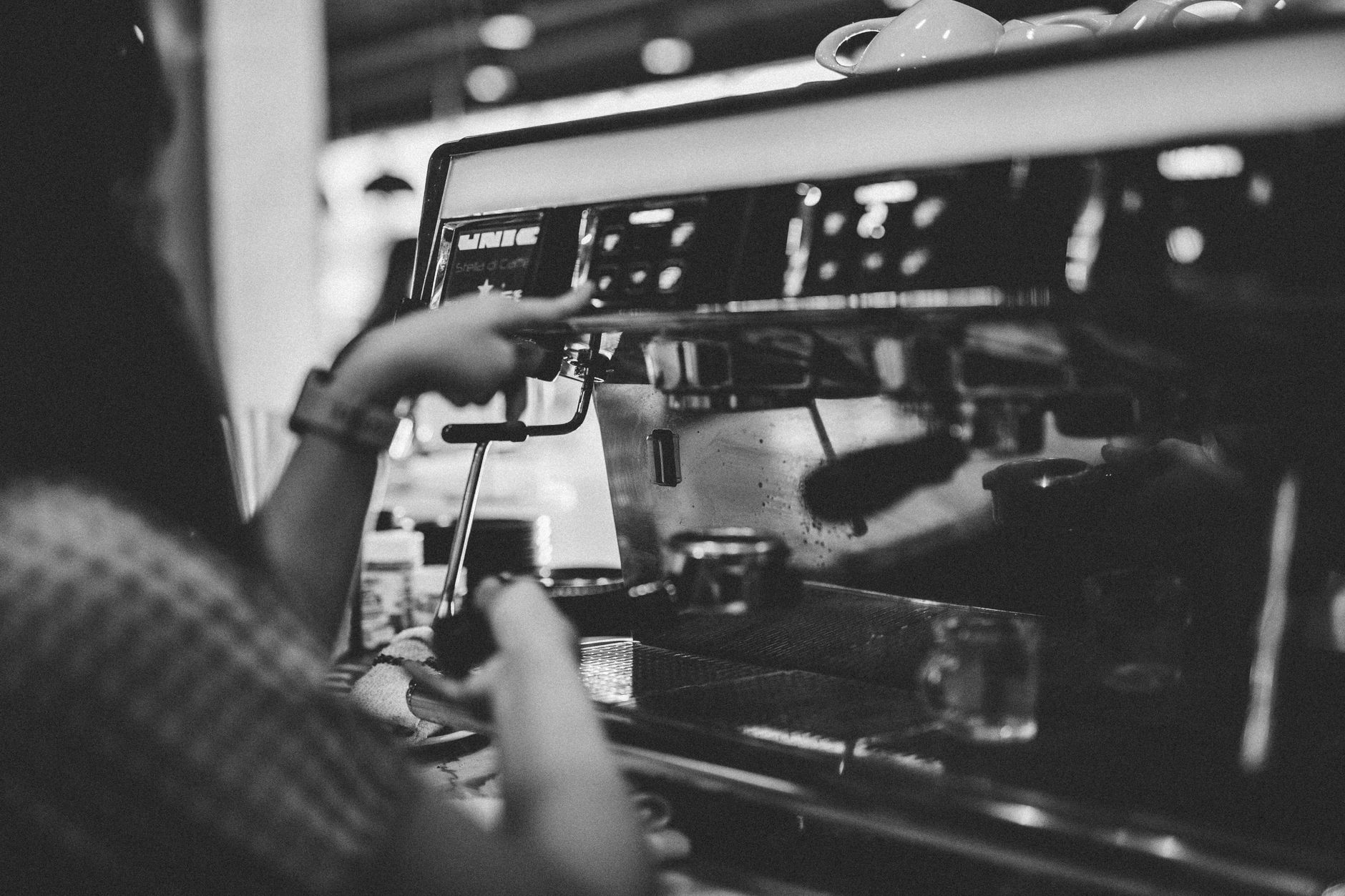
Find your dose in the column header. Move down to your target style. That weight is your yield stop. Weigh your output on a drip scale and stop the shot when the number hits. If it takes under 20s or over 35s to reach it, adjust grind — not yield.
 Photo: Maria Orlova via Pexels
Yield vs. Volume: Why Weight Wins
Espresso volume fluctuates with crema density, altitude, and temperature. A 36ml shot from one machine is 28g; from another it’s 42g. Weight is stable — use a gram scale, not a shot glass. A basic drip scale like the Acaia Pearl or Timemore Black Mirror resolves to 0.1g and removes the guesswork entirely.
Ratio Isn’t Taste — It’s a Starting Point
The chart gives you a repeatable extraction window, not a flavor target. A 1:2 at 93°C on a light Ethiopian will taste different from the same ratio on a dark Sumatra. Ratio controls extraction range; grind size, temperature, and roast level shape what comes out of that range.
Espresso Yield Chart by Roast Level
Lighter roasts need slightly higher yields to avoid under-extraction. Darker roasts can run leaner without turning bitter. This isn’t a rule — it’s a calibration nudge based on bean density and solubility.
 Photo: Boryslav Shoot via Pexels
| Roast | Suggested Ratio | Notes |
|---|---|---|
| Light / Filter roast | 1:2.5–1:3 | Higher solubility ceiling; runs longer without going sour |
| Medium | 1:2–1:2.5 | The chart baseline; most commercial beans land here |
| Dark | 1:1.5–1:2 | Bitter compounds extract fast; shorter pull protects sweetness |
| Blend (house espresso) | 1:2 | Blends are profiled for this; trust the baseline |
Brewing Guide: Hitting Your Yield Target
Extraction Parameters
| Parameter | Baseline | Ristretto | Lungo |
|---|---|---|---|
| Dose | 18g | 18g | 18g |
| Yield | 36g | 18–27g | 54g |
| Ratio | 1:2 | 1:1–1:1.5 | 1:3 |
| Time | 25–30s | 20–25s | 30–40s |
| Temperature | 93°C / 199°F | 91–92°C | 93–94°C |
| Pressure | 9 bar | 9 bar | 6–7 bar (if adjustable) |
Puck Prep
- WDT — Weiss Distribution Technique breaks clumps before tamping. A cheap WDT tool like the Zuriga or a homemade version with acupuncture needles works fine.
- Leveling — finger-level or use a distributor to eliminate high spots before tamping.
- Tamping — 15–20kg of even downward pressure. Angle matters more than force. A calibrated tamper like the Normcore V4 removes variable pressure entirely.
- Channeling prevention — dry, clump-free, level puck surface. Most channeling starts at prep, not pressure.
- Pre-infusion — 3–8s at low pressure (2–4 bar) wets the puck and reduces channeling on lighter, less dense roasts.
Troubleshooting Matrix
| Symptom | Likely Cause | Fix |
|---|---|---|
| Shot hits yield in under 20s | Grind too coarse | Step finer, recheck yield |
| Shot hits yield in over 35s | Grind too fine | Step coarser |
| Shot stops before yield, pressure drops | Channeling | Improve WDT and leveling |
| Yield correct, tastes sour | Under-extracted (grind still too coarse) | Finer grind or raise temp 1°C |
| Yield correct, tastes bitter | Over-extracted or too dark a roast ratio | Coarser grind, lower temp, or shorten to 1:1.5 |
| Inconsistent yields run to run | Dose inconsistency | Weigh every dose, check grinder retention |
 Photo: Ron Lach via Pexels
→ See also:
- How to Dial In Espresso: Step-by-Step Decision Tree
- Espresso Extraction Explained: Under, Over, and Perfect
- How to Tamp Espresso Correctly (Pressure, Technique, Tools)
FAQ
What is the standard espresso yield ratio? The standard is 1:2 — 18g dose produces a 36g yield. Most commercial espresso machines and specialty cafés use this as the calibration baseline. It suits medium roasts and produces balanced extraction across most varietals.
How do I use an espresso yield chart to dial in faster? Start at 1:2 with your actual dose weight. Pull the shot and time it. If it finishes in under 20 seconds, grind finer; over 35, go coarser. The chart fixes your target yield — you only have one variable left to adjust.
Why does my yield change even when I use the same dose? Grinder retention, humidity, and shot-to-shot temperature variation all shift yield. Weigh every dose in and out, and ensure your machine is fully warmed up — 20–30 minutes minimum for heat-exchanger machines.
Is a 1:3 lungo ratio over-extracted? Not automatically. A 1:3 pull at the right grind size extracts the same TDS window as a 1:2 — it just dilutes it with more water. On light roasts with high solubility ceilings, 1:3 often produces cleaner, sweeter cups than forcing a 1:2.
What yield should I use for milk drinks? For lattes and flat whites, stick to 1:2 — the espresso needs enough concentration to cut through milk. For cortados or macchiatos, a 1:1.5 ristretto-style pull produces a sweeter, less sharp base that integrates better with small milk volumes.
Does basket size change the yield chart? Yes — the chart scales with dose, not basket size. A 20g VST basket still uses the same ratios, just from a 20g starting point. Always build from your actual dose, not from basket capacity.
Editorial methodology: Assessments are based on manufacturer specifications, published user reviews, and editorial research. Physical hands-on testing is noted explicitly where it occurred. Rankings reflect our editorial judgment and are not influenced by affiliate commission rates. Full editorial policy · Affiliate disclosure