Contents
Moka Pot Buying Guide: Best Sizes and Materials (2026)
TL;DR: The best moka pot for most home brewers is an aluminum Bialetti Moka Express in the 3-cup or 6-cup size — it heats fast, brews consistently, and has been the category benchmark for 90 years. If you have an induction cooktop, go stainless. Size by cups brewed per session, not household headcount.
What to Look for in a Moka Pot Buying Guide
Direct Answer: Three variables decide your purchase — stovetop compatibility (aluminum vs. stainless), brew volume (1–12 cups), and valve/gasket quality. Everything else is aesthetics. The classic octagonal aluminum Bialetti remains the value benchmark; stainless costs more and heats slower but works on induction and resists corrosion.
 Photo: Mizuno K via Pexels
The moka pot market splits cleanly into two tiers: the classics (Bialetti, Pedrini, Alessi) and the induction-ready stainless options (Bialetti Moka Induction, Bellman, GROSCHE). Within each tier, build quality varies less than marketers want you to believe — the gasket, the safety valve, and the filter basket diameter are the real differentiators.
Aluminum vs. Stainless Steel
| Feature | Aluminum | Stainless Steel |
|---|---|---|
| Induction compatible | No | Yes |
| Heat conductivity | Higher | Lower |
| Flavor impact | Slight metallic edge (new only) | Neutral after break-in |
| Weight | Lighter | Heavier |
| Price | Lower ($15–$40) | Higher ($35–$80+) |
| Corrosion resistance | Moderate | High |
| Dishwasher safe | No | Sometimes |
 Photo: Cup of Couple via Pexels
Aluminum builds up a protective oxide layer over its first 5–10 brews — the metallic taste disappears. Never soap-wash aluminum; rinse with hot water only. Stainless is more forgiving on cleaning but adds 30–60 seconds to heat-up time, which can affect extraction consistency if you’re not careful about flame control.
Moka Pot Sizes Explained
Direct Answer: “Cup” in moka pot terms means roughly 60ml of brewed coffee — a single espresso-sized serving, not a mug. A “3-cup” moka pot brews ~180ml. Buy the size you’ll brew most sessions; moka pots don’t perform well when underfilled.
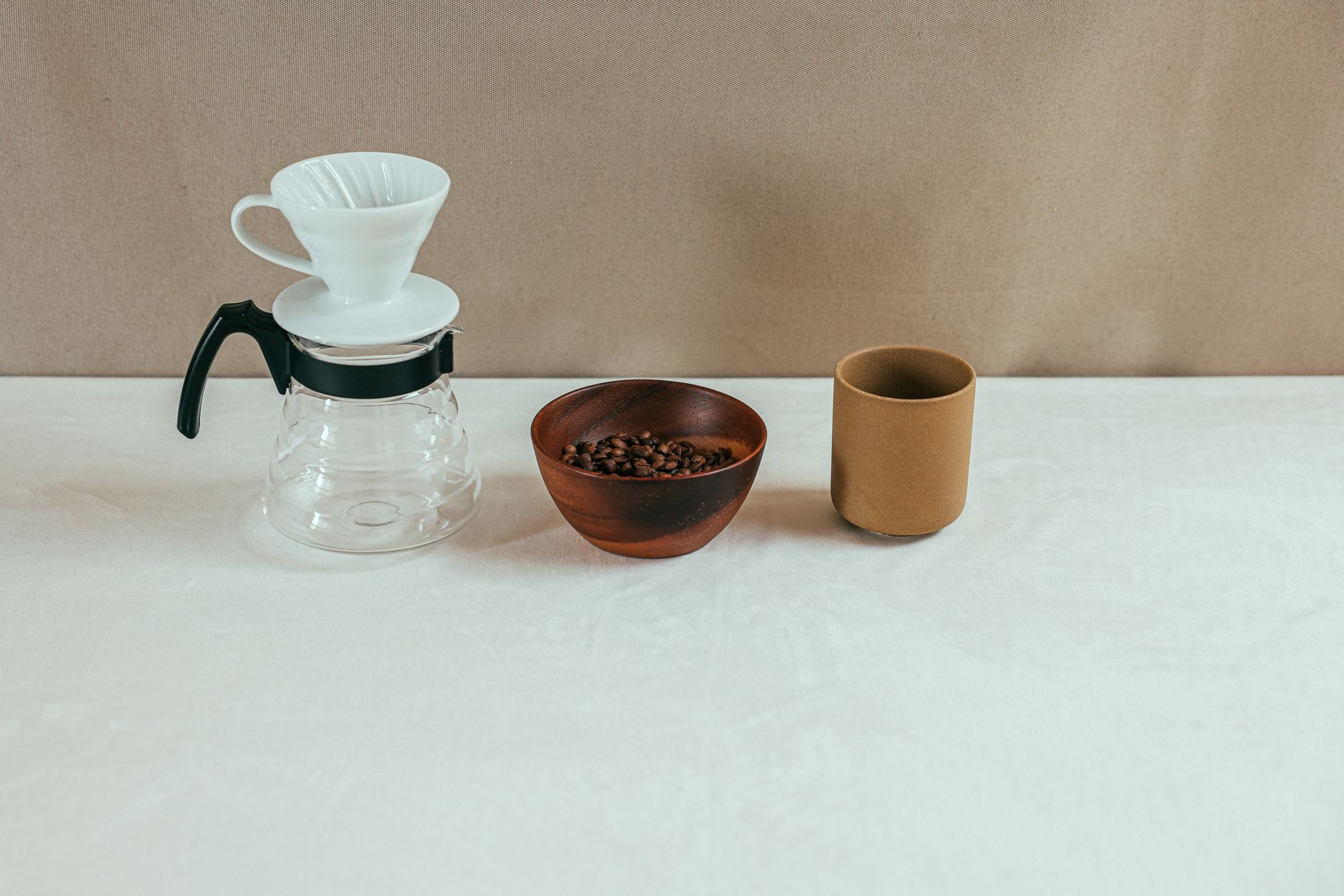 Photo: Cup of Couple via Pexels
Standard Sizes and Who They’re For
| Size | Brewed Volume | Best For |
|---|---|---|
| 1-cup | ~60ml | One espresso, travel, desk use |
| 2-cup | ~120ml | Solo drinker, one Americano |
| 3-cup | ~180ml | Solo with flexibility, best value |
| 4-cup | ~240ml | Two people, one large mug |
| 6-cup | ~360ml | Two–three people, morning batch |
| 9-cup | ~540ml | Small household or office |
| 12-cup | ~720ml | Entertaining, large households |
The 3-cup and 6-cup sizes are the sweet spot for most buyers. The 1-cup runs hot and fast — tricky to control. Anything above 9-cup requires more attention to even extraction across a larger basket.
Do not buy a 6-cup moka pot and try to brew 3-cup batches by half-filling the boiler. Underfilling the boiler changes pressure dynamics and produces a weaker, uneven brew. Size down if your usual batch is smaller.
Best Moka Pots by Category
Direct Answer: The Bialetti Moka Express is the default recommendation for gas and electric cooktops. For induction, the Bialetti Moka Induction is the most reliable upgrade. For design-focused buyers, the Alessi 9090 is the premium pick.
 Photo: Mehmet Turgut Kirkgoz via Pexels
Best Overall: Bialetti Moka Express
The original, still the best for non-induction cooktops. Replaceable gaskets and filter plates are available everywhere — any hardware store or Amazon order. The octagonal body isn’t decorative; it creates turbulence in the brew chamber that improves extraction uniformity. Available in 1 through 12-cup sizes.
What you’re actually buying: a 90-year-old gasket-and-valve system that Bialetti has never needed to fundamentally redesign. The replacement parts ecosystem is the hidden value.
Best for Induction: Bialetti Moka Induction
Stainless boiler, same Bialetti valve geometry, induction-compatible base. Brews slightly slower than aluminum on gas but within acceptable range. Available in 2, 4, and 6-cup sizes only — if you need a 3-cup induction moka pot, look at the GROSCHE Milano Steel .
Best Premium: Alessi 9090
Designed by Richard Sapper in 1978, still in production, still a design museum piece. Fully stainless, induction-compatible, built to last decades. The lid hinge and handle ergonomics are noticeably better than mass-market options. At 3–4× the price of a Bialetti, it’s for buyers who want a lifetime piece, not a workhorse.
Best Budget: Pedrini Moka Pot
— Italian-made, aluminum, same general geometry as the Bialetti. Harder to find replacement gaskets locally, but the brew quality is comparable. Worth considering if the Bialetti is out of stock or significantly more expensive in your region.
Brewing Guide: Moka Pot
Extraction Parameters
| Parameter | Target |
|---|---|
| Dose | 7g per cup (e.g., 21g for 3-cup) |
| Yield | ~60ml per cup |
| Grind | Medium-fine (finer than drip, coarser than espresso) |
| Water temp (boiler fill) | Pre-heated to ~70°C or cold water |
| Flame/Heat | Medium-low — reduce to low once brew starts |
| Brew time | 4–6 minutes total |
Puck Prep
Fill the filter basket level — do not tamp. Moka pots operate on pressure from steam, not pump pressure. Packing the grounds restricts flow and raises internal pressure dangerously. Level with a finger or a straightedge, then seat the basket.
Fill the boiler to just below the safety valve. Prefilling with hot water shortens brew time and reduces heat exposure on the aluminum — less bitterness from overcooked grounds.
Thread the top chamber on hand-tight while the basket is seated. Loose threading causes steam leaks; overtightening damages the gasket.
Heat Management
Start on medium heat. When the first coffee emerges at the top spout, reduce to low. You want a steady stream, not a splutter. A spluttering, hissing brew is running too hot — grounds are scorching in the basket.
Remove from heat entirely when the stream lightens in color and becomes translucent. The gurgling sound at the end means the boiler has emptied — stop here. Letting it continue produces bitter, ashy flavor from steam passing through spent grounds.
Run the base under cold water immediately after removing from heat to stop the thermal mass from continuing to cook the brew.
Troubleshooting
| Symptom | Likely Cause | Fix |
|---|---|---|
| Bitter, harsh flavor | Heat too high, grind too fine | Lower flame, coarsen grind by 1–2 steps |
| Weak, watery brew | Grind too coarse, underdosed | Fine grind slightly, fill basket fully |
| Coffee spurting/splashing | Heat too high | Reduce to low as soon as flow starts |
| Steam leaking from side | Gasket worn or loose | Replace gasket; thread top more firmly |
| No flow, pressure build-up | Grind too fine, basket overpacked | Coarser grind; never tamp |
| Metallic taste | New aluminum pot, not seasoned | Brew and discard 3–5 batches; never use soap |
→ See also:
- How to Brew Coffee at Home: Complete Method Guide
- French Press Coffee: Complete Brewing Guide (Ratios + Technique)
- French Press Coffee-to-Water Ratio Calculator
FAQ
What size moka pot should I buy for one person? A 3-cup moka pot is the best single-person choice. It brews ~180ml — enough for a large Americano or two small espresso-style servings — with more tolerance for heat control than the 1-cup, which overheats easily.
Can I use a moka pot on an induction cooktop? Standard aluminum moka pots don’t work on induction because aluminum isn’t ferromagnetic. You need a stainless steel moka pot with an induction-compatible base, like the Bialetti Moka Induction or Alessi 9090. Some stovetop adapters exist but add heat-transfer inefficiency.
How long does a moka pot gasket last? Expect 1–3 years under daily use, depending on heat exposure and cleaning habits. Signs of wear: steam leaking from the side seam, or the rubber feeling brittle and cracked. Bialetti gaskets cost under $5 and take 60 seconds to replace.
Is moka pot coffee as strong as espresso? Moka pot coffee is concentrated — roughly 2–3× drip strength — but not espresso. Espresso uses 9 bars of pump pressure; a moka pot produces 1–2 bars of steam pressure. The flavor profile is bolder and denser than drip but lacks the crema and emulsified oils of true espresso.
Aluminum vs. stainless moka pot — which brews better coffee? Brew quality is effectively identical once an aluminum pot is seasoned. Aluminum heats faster and more evenly on gas and electric, which can make heat control slightly easier. Stainless is the right choice only if you have induction or prefer easier cleaning — not for flavor reasons.
How do I clean a moka pot? Rinse with hot water only after each use. No soap on aluminum — it strips the seasoning and invites metallic taste. Disassemble weekly: remove the gasket and filter plate, rinse everything, check the safety valve isn’t blocked. Air dry fully before reassembling to prevent mold in the gasket groove.
Can I make regular coffee in a moka pot? Yes — dilute the output with hot water at a 1:2 ratio for an Americano-style cup. Some brewers use a coarser grind and slightly less coffee to brew a less concentrated result directly, though this can produce uneven extraction. The dilution method is more reliable.
Editorial methodology: Assessments are based on manufacturer specifications, published user reviews, and editorial research. Physical hands-on testing is noted explicitly where it occurred. Rankings reflect our editorial judgment and are not influenced by affiliate commission rates. Full editorial policy · Affiliate disclosure