Contents
Grind Size for French Press: Coarse But How Coarse?
TL;DR: The ideal grind size for French press is coarse — roughly 800–1000 microns, similar to coarse sea salt or breadcrumbs. Too fine and your cup turns muddy and bitter; too coarse and it’s weak and sour. Consistent particle size matters as much as the setting itself.
What “Coarse” Actually Means for French Press
Direct Answer: Target 800–1000 microns — the texture of coarse sea salt. On most burr grinders, that’s the upper third of the grind range. A coarse grind keeps grounds above the metal mesh filter, slows extraction to match the 4-minute steep, and limits fines that cloud the cup.
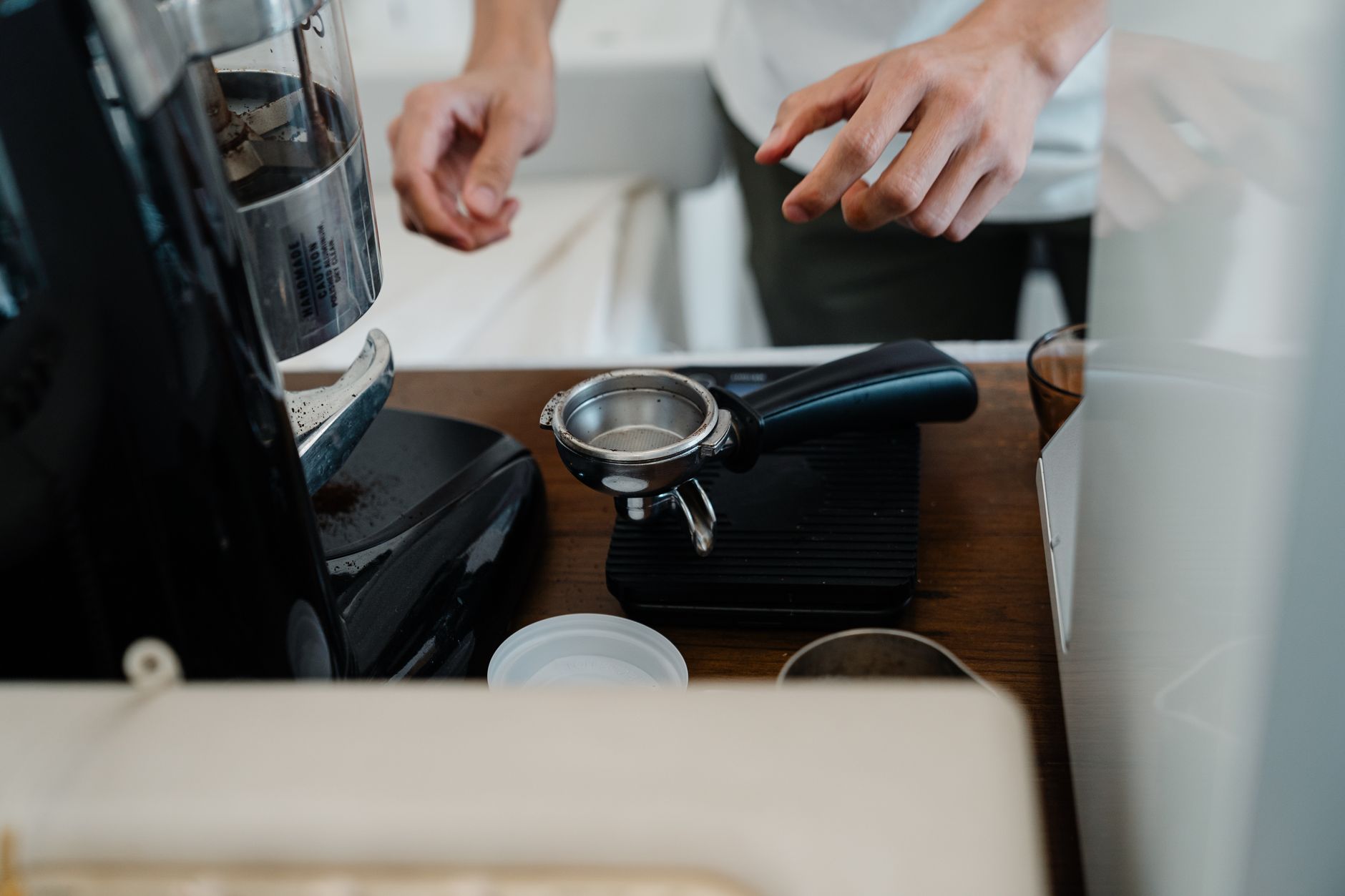
 Photo: Tima Miroshnichenko via Pexels
French press uses full immersion brewing: grounds sit in contact with hot water for the entire steep. That long contact time demands a coarse grind. If you grind fine, the same 4 minutes over-extracts and you get bitter, astringent coffee with a muddy silt layer at the bottom.
The 800–1000 micron target isn’t arbitrary. It’s the range where:
- Extraction peaks at 18–22% (the sweet spot) within a 4-minute steep at 93°C/200°F
- Enough grounds sit above the plunger mesh to prevent silt blowthrough
- You get a clean-ish cup without the channel or bypass issues espresso grind creates in a press
How to Dial In Without a Micrometer
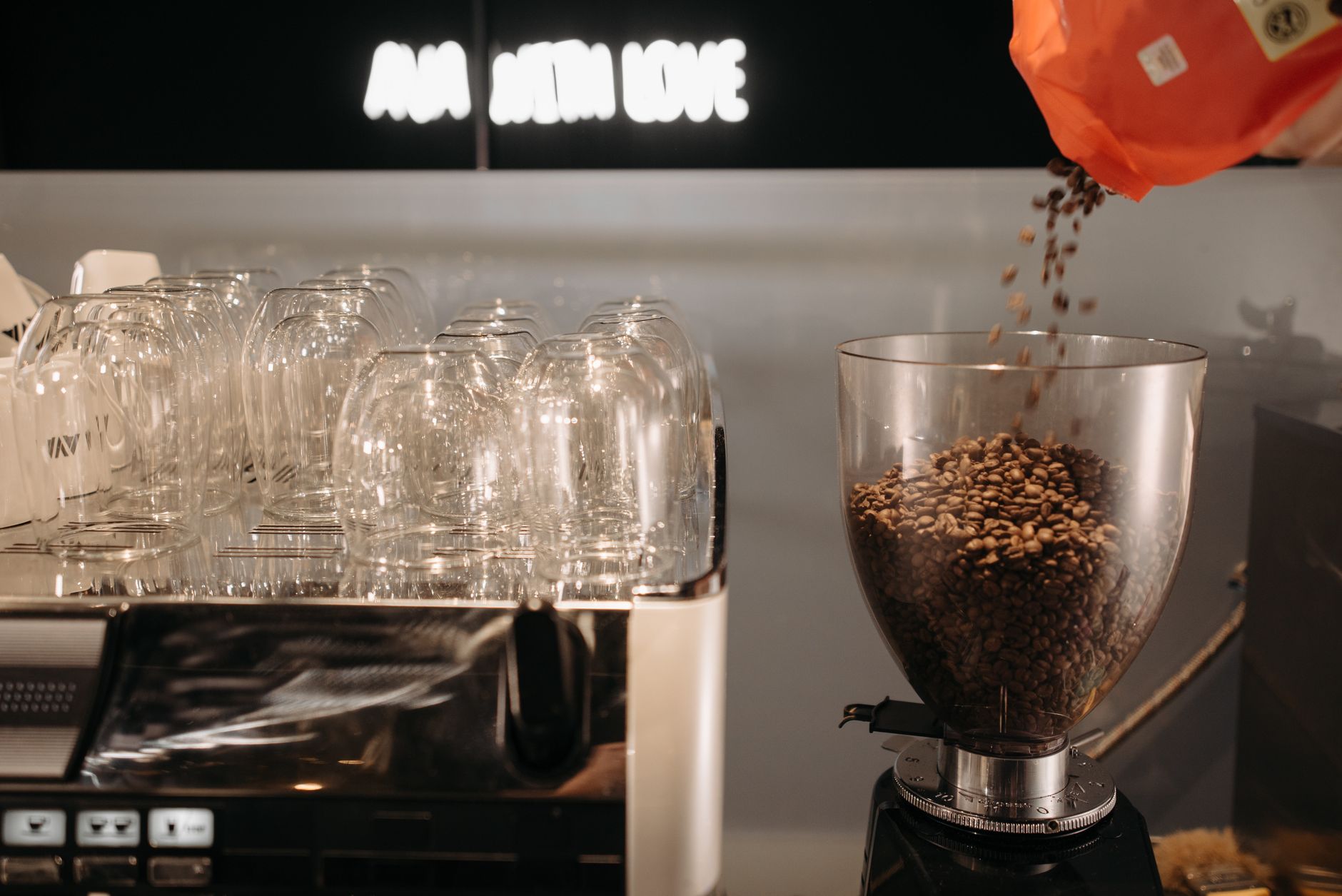
 Photo: KOREAN JH via Pexels
You don’t need to measure microns. Use this visual check: spread a pinch of ground coffee on a white plate. Individual particles should be clearly visible and irregular — not a powder, not a pile of rocks. If you can blow half of it off the plate, it’s too fine. If it looks like coarse cornmeal, you’re in range.
The hand-crush test: rub a small amount between your fingers. It should feel gritty with distinct pieces, not silky or floury.
Why Grind Consistency Matters More Than the Setting
Direct Answer: Uneven grind produces a mix of fines and boulders in the same batch. The fines over-extract in seconds; the coarse chunks barely extract in 4 minutes. The result is a cup that’s simultaneously bitter and weak — and no steep time adjustment fixes it.
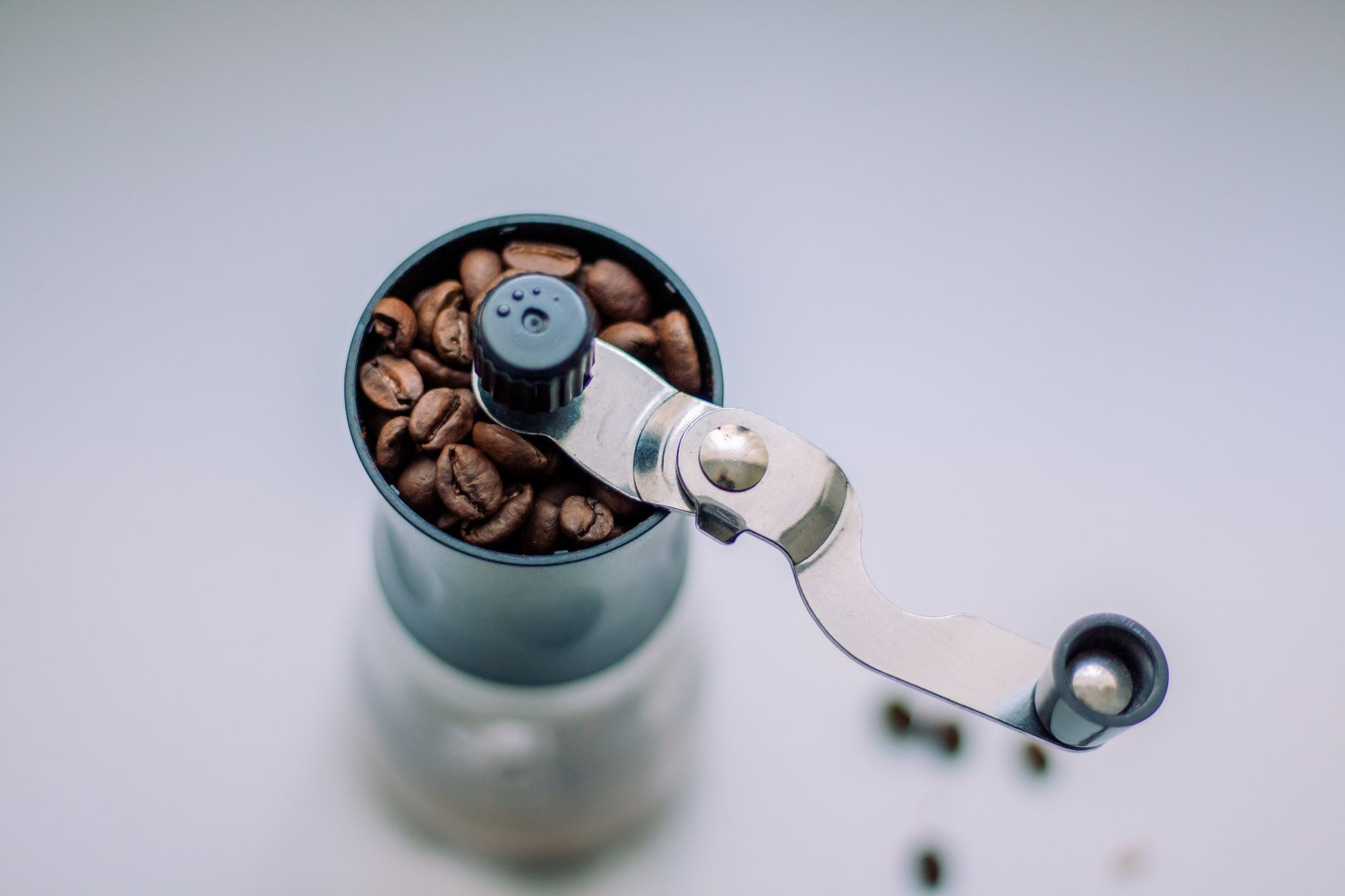
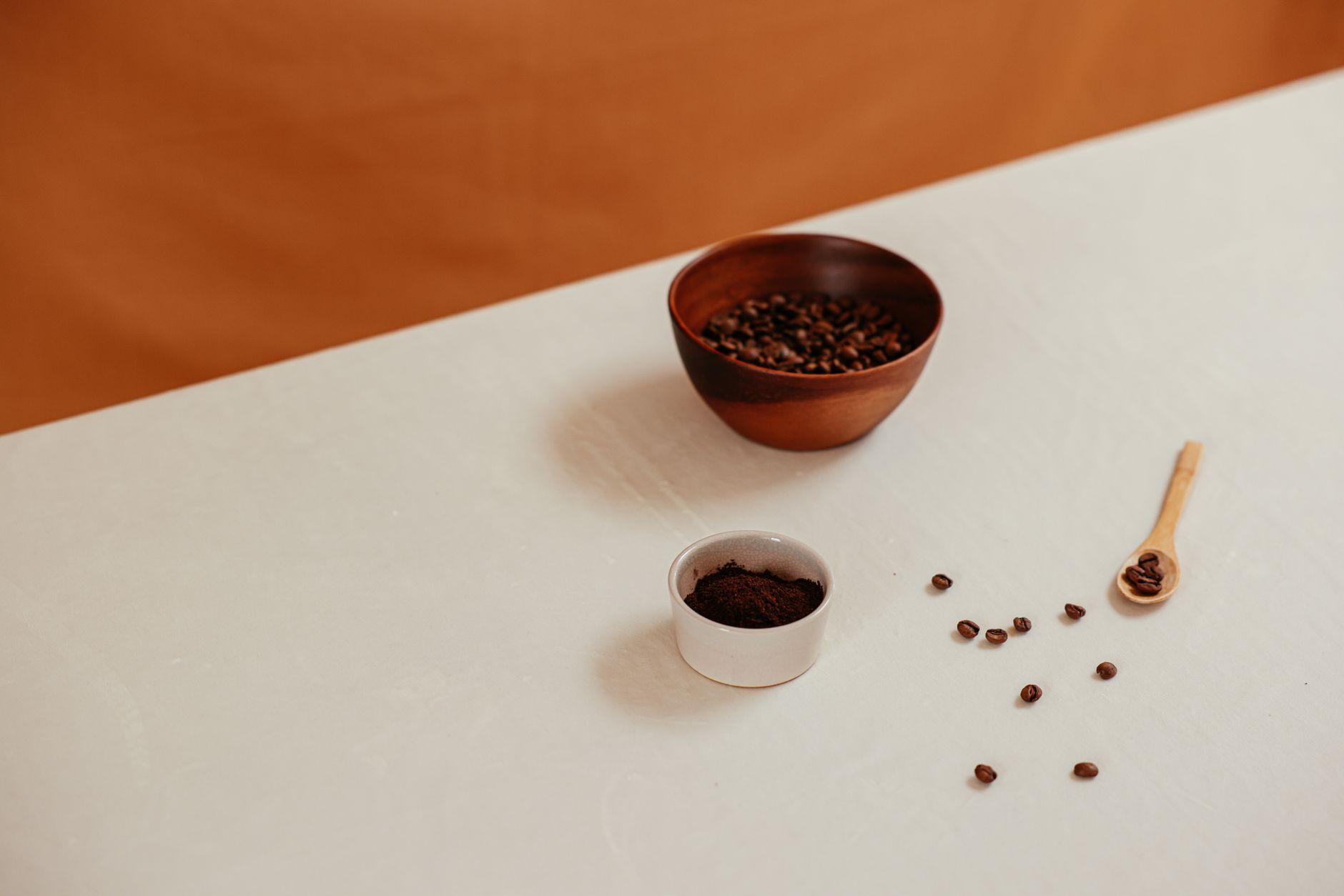 Photo: Cup of Couple via Pexels
This is where blade grinders fail categorically for French press. A blade grinder chops randomly — you get powder alongside chunks regardless of how long you run it. The grind setting on a blade grinder is how long you hold the button, not a repeatable particle size.
A burr grinder — even an entry-level one — crushes coffee between two abrasive surfaces set at a fixed distance. Every particle exits at roughly the same size. That consistency is what separates a clean French press from a muddy one.
Burr Types and French Press Performance
Flat burrs and conical burrs both work well at coarse settings. At 800–1000 microns, the shape difference matters less than calibration and burr quality. What to avoid: plastic burrs, which flex under pressure and produce inconsistent results at coarse settings where the gap is larger and less forgiving.
Adjusting Grind Size by Coffee Type
| Coffee Type | Suggested Adjustment | Why |
|---|---|---|
| Light roast | Slightly finer in range (~850 microns) | Denser beans, slower extraction |
| Medium roast | Center of range (~900 microns) | Baseline |
| Dark roast | Slightly coarser (~950–1000 microns) | Brittle beans produce more fines |
| Aged/stale beans | Coarser | Oils degrade, extraction accelerates |
| Fresh roast (<5 days off-roast) | Coarser | CO2 off-gassing affects extraction rate |
Dark roasts grind coarser because the roasting process makes bean cell walls brittle — they shatter into more fines than a light roast at the same setting. Compensating coarser keeps your fine particle count in check.
Common Grind Problems and Fixes
Muddy, silty cup: Grind is too fine, or you’re pressing the plunger too fast. Go coarser by one notch and plunge slowly over 20–30 seconds.
Weak, thin, sour cup: Grind is too coarse, or steep time is too short. Move finer by one notch, or extend steep by 30 seconds before adjusting the grind.
Gritty texture that gets worse at the bottom: Normal fines behavior in French press — pour slowly and stop before the last 50ml. Switching to a higher-quality burr grinder reduces fines significantly.
Inconsistent cup to cup: Check dose (use a scale, not a scoop), water temperature (off-boil water at 200°F/93°C), and steep time. If all three are consistent and results vary, the grinder is the variable.
→ See Also
- The Complete Coffee Grinder Guide (2026) — full grinder buying framework, burr geometry, and grind size charts for every brew method
- Burr vs Blade Grinder: Why It Matters for Your Coffee — why blade grinders fail for French press specifically
- Best Coffee Grinders Under $100 (2026) — tested picks that nail coarse grind consistency on a budget
FAQ
What number on my grinder should I use for French press? Grinder number scales aren’t standardized — a “7” on one brand is a “4” on another. Ignore the numbers and use the visual test: coarse sea salt texture, clearly distinct particles. Once you find that setting, note the number for your specific grinder as your personal reference point.
Can I use a medium grind for French press if I shorten the steep? You can, but the result is unpredictable. Medium grind produces more fines that extract fast regardless of steep time — you’ll mask over-extraction with under-extraction and get a muddy, unbalanced cup. A shorter steep with a medium grind doesn’t give you control; it just gives you two problems instead of one.
Why does my French press coffee taste bitter even with coarse grind? Check water temperature first — boiling water (100°C/212°F) over-extracts even coarse grounds. Let it sit 30 seconds off-boil, targeting 93°C/200°F. Second suspect: steep time over 5 minutes. Third: the grind is coarser-looking but still producing high fines — a sign of worn or plastic burrs.
Does pre-ground coffee work for French press? Supermarket pre-ground labeled “coarse” or “French press” works, but the particle distribution is wider than fresh-ground. Expect more sediment and less clarity in the cup. If you’re using pre-ground, brew it the day you open the bag — oxidation accelerates once the seal breaks and extraction behavior shifts noticeably within a week.
Editorial methodology: Assessments are based on manufacturer specifications, published user reviews, and editorial research. Physical hands-on testing is noted explicitly where it occurred. Rankings reflect our editorial judgment and are not influenced by affiliate commission rates. Full editorial policy · Affiliate disclosure