Contents
Coffee Grinder Comparison: Best Options at Every Price Point
TL;DR: This coffee grinder comparison guide covers every tier from $30 to $500+. Burr grinders dominate every category worth buying — the real question is which burr size, material, and form factor fits your brewing method and budget. Short answer: under $100 go Baratza Encore; $100–200 go 1Zpresso JX-Pro; $200+ go Eureka Mignon or DF64.
Why Grinder Choice Matters More Than Your Brewer
Direct Answer: Your grinder is the single highest-leverage equipment upgrade in your coffee setup. A $400 espresso machine with a $30 blade grinder will always lose to a $150 machine paired with a $150 burr grinder. Grind consistency determines extraction evenness — uneven grounds mean simultaneous over- and under-extraction in every cup.
 Photo: Engin Akyurt via Pexels
Blade grinders chop randomly. Some particles end up fine as powder, others coarse as sand — both end up in your cup. Burr grinders crush beans between two abrasive surfaces set at a fixed distance, producing uniform particle size with every pull.
The three variables that separate grinders at every price point:
- Burr material — steel (more durable, flavor-neutral) vs. ceramic (runs cooler, dulls slowly)
- Burr geometry — flat (clarity, intensity) vs. conical (sweetness, body)
- RPM — lower is better; heat and static increase with speed
Coffee Grinder Comparison by Price Tier
Direct Answer: Each price tier unlocks a meaningful capability jump. Under $50 buys you entry-level burrs. $100–200 buys you hand-grinder performance that rivals electric grinders costing twice as much. $300+ buys you espresso-grade consistency with low retention.
 Photo: Ahmet Yüksek ✪ via Pexels
Under $50: Entry Point
| Grinder | Price | Type | Burr | Best For |
|---|---|---|---|---|
| Hario Skerton Pro | ~$45 | Hand | Ceramic conical | Pour-over, French press |
| JavaPresse Manual | ~$25 | Hand | Ceramic conical | Travel, drip |
| Mr. Coffee Burr Grinder | ~$35 | Electric | Steel flat | Drip, basic espresso |
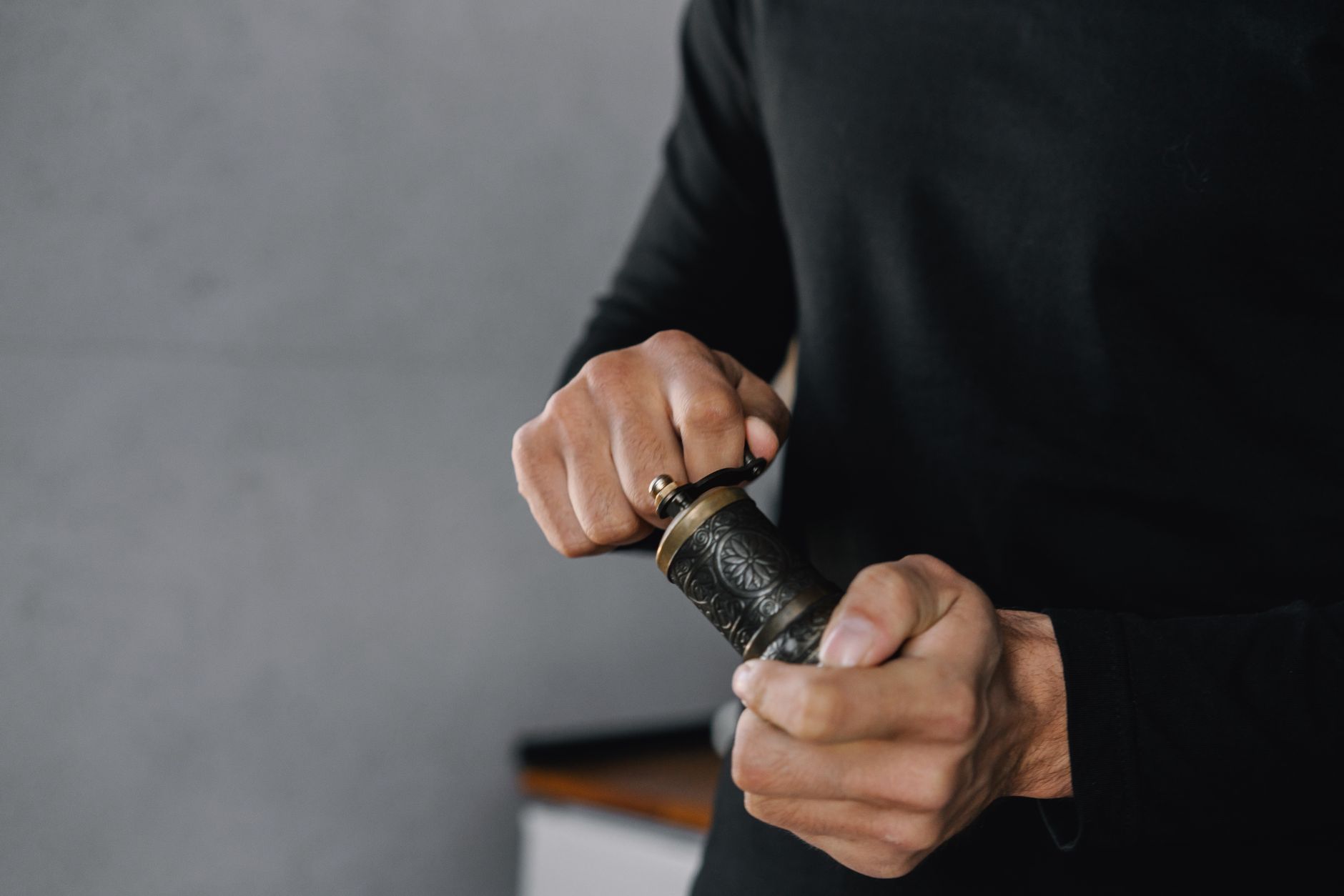
At this tier, hand grinders beat electric hands down. The Hario Skerton Pro produces a grind quality that no $35 electric can match — the physics favor hand-cranked at low prices because motor, housing, and gearbox eat the budget that should go to burrs.
Who should stop here: Occasional brewers, travelers, anyone making drip coffee with beans from the grocery store.
$50–$100: The Productive Middle
| Grinder | Price | Type | Burr | Best For |
|---|---|---|---|---|
| Baratza Encore | ~$170 (sale ~$130) | Electric | 40mm steel conical | Drip, pour-over, French press |
| Timemore Chestnut C2 | ~$65 | Hand | Steel conical | Pour-over, AeroPress |
| Kingrinder K4 | ~$75 | Hand | Steel conical | Pour-over, light espresso |
The Timemore Chestnut C2 is the tier’s best value — its 38mm steel conical burrs produce a grind that would have cost $200+ in electric form five years ago. If you brew pour-over or AeroPress daily, stop here and spend the saved money on better beans.
 Photo: Anna Shvets via Pexels
The Baratza Encore
Who should stop here: Daily filter brewers, pour-over enthusiasts, anyone who hates hand-grinding but has a hard budget cap.
$100–$200: The Sweet Spot
Direct Answer: This tier is where hand grinders pull dramatically ahead of electrics in grind quality per dollar. The 1Zpresso JX-Pro and Comandante C40 both produce espresso-capable grinds that $200 electric burr grinders struggle to match. For electric at this range, the Baratza Encore remains the reference.
 Photo: Alexandre Canteiro via Pexels
| Grinder | Price | Type | Burr | Best For |
|---|---|---|---|---|
| 1Zpresso JX-Pro | ~$170 | Hand | 48mm steel conical | Espresso, filter |
| Comandante C40 | ~$200 | Hand | Nitro blade steel | All brew methods |
| Baratza Encore | ~$170 | Electric | 40mm steel conical | Filter only |
| Oxo Brew Conical | ~$100 | Electric | 40mm steel conical | Drip, pour-over |
The 1Zpresso JX-Pro
The Comandante C40
Who should stop here: Home baristas brewing espresso 1–3 times per day, specialty coffee enthusiasts with a mid-range espresso machine.
$200–$400: Prosumer Electric Enters
Direct Answer: At this tier you get full electric convenience with grind quality that genuinely serves espresso. The Eureka Mignon Specialita and Baratza Sette 270 are workhorses. The DF64 offers flat-burr performance at a price that used to require spending twice as much.
 Photo: Michael Burrows via Pexels
| Grinder | Price | Type | Burr | Steps | Best For |
|---|---|---|---|---|---|
| DF64 Gen 2 | ~$275 | Electric | 64mm flat steel | Stepless | Espresso |
| Eureka Mignon Specialita | ~$350 | Electric | 55mm flat steel | Stepless | Espresso, filter |
| Baratza Sette 270 | ~$380 | Electric | 40mm steel conical | 270 macro/micro | Espresso |
| Fellow Ode Gen 2 | ~$350 | Electric | 64mm flat steel | 11 macro | Filter only |
The DF64 Gen 2
The Eureka Mignon Specialita
The Fellow Ode Gen 2 earns a separate mention because it is emphatically not an espresso grinder — it ships with 64mm flat burrs optimized for filter — but for pour-over and batch brewing it’s the best-looking, easiest-to-use electric under $400.
$400–$700: High-Performance Single Dose
| Grinder | Price | Burrs | Form Factor | Best For |
|---|---|---|---|---|
| Niche Zero | ~$700 | 63mm conical | Single-dose | Espresso + filter |
| Eureka Mignon Oro | ~$500 | 60mm flat | Hopper | Espresso |
| Lagom P64 | ~$600 | 64mm flat | Single-dose | Espresso, filter |
The Niche Zero
Specs at a Glance: Espresso-Capable Grinders
| Machine | Price | Burr Type | Burr Size | Steps | Retention | Best For |
|---|---|---|---|---|---|---|
| 1Zpresso JX-Pro | $170 | Conical steel | 48mm | Stepless (clicks) | ~0.1g | Budget espresso |
| DF64 Gen 2 | $275 | Flat steel | 64mm | Stepless | ~0.3g | Value flat burr |
| Eureka Specialita | $350 | Flat steel | 55mm | Stepless | ~0.5g | Daily home use |
| Niche Zero | $700 | Conical steel | 63mm | Stepless | ~0.1g | Premium single-dose |
Verdict by User Archetype
Filter-first brewer — Baratza Encore for set-and-forget, Fellow Ode Gen 2 if you care about workflow and aesthetics, Timemore C2 if you want to spend less and hand-grind.
Espresso purist — 1Zpresso JX-Pro if budget is real, DF64 Gen 2 for flat-burr flavor at a fair price, Niche Zero if you want a final answer and never want to think about grinders again.
Convenience-first — Eureka Mignon Specialita: reliable, quiet, stepless, fits in a cabinet, ships with a 1-year warranty, and has been the specialty shop recommendation for a decade for exactly this reason.
Traveling specialty drinker — Comandante C40 or 1Zpresso JX-Pro. Both survive luggage, both fit in a carry-on, both dial in espresso at the hotel if you pack a portable machine.
→ See also:
- The Complete Coffee Grinder Guide (2026)
- Burr vs Blade Grinder: Why It Matters for Your Coffee
- Best Coffee Grinders Under $100 (2026)
FAQ
Q: What’s the minimum grinder for good espresso at home? The 1Zpresso JX-Pro at ~$170 is the honest minimum for repeatably good espresso. It has numbered grind settings you can return to, low fines generation, and enough burr surface area to produce a properly layered puck. Below this, you’re fighting the equipment.
Q: Is a $500 grinder really better than a $200 grinder? Yes, but the gap narrows faster than the price gap widens. The jump from $30 to $150 is transformative. The jump from $200 to $500 is real but incremental — lower retention, better clarity on light roasts, quieter motor, more durable build. If you’re pulling 1–2 shots a day, the $200 tier is genuinely sufficient for most palates.
Q: Can I use a filter grinder for espresso? No — not reliably. Espresso requires a grind range far finer than most filter grinders reach, and the burr geometry matters. The Fellow Ode explicitly ships without an espresso-capable range. If someone offers you an Ode for espresso, they’re working around a limitation, not solving a problem.
Q: How long do burrs last? Steel burrs in home use: 500–1,000 kg of coffee before meaningful dulling — roughly 5–10 years for a typical home user. Ceramic burrs last longer but are more fragile. Buying replacement burrs for your grinder is cheaper than buying a new grinder; Baratza and Eureka both sell replacement sets.
Q: Does grind retention matter? For single-dosing espresso, yes — meaningfully. A grinder retaining 1–2g per dose means your first shot of the day is always a mix of fresh and day-old grounds. The DF64 and Niche Zero were designed specifically around low retention. For drip or pour-over with a consistent daily routine, retention under 1g is functionally irrelevant.
Q: Should I buy a hand grinder or an electric grinder? Depends on your daily volume and patience. Under $200, a hand grinder beats every electric at the same price on grind quality — but grinding 18g for espresso by hand takes 90 seconds. If you’re making one drink a day and want the best result for the money, hand grinder. If you’re making multiple coffees before 7am, pay the premium for electric.
Editorial methodology: Assessments are based on manufacturer specifications, published user reviews, and editorial research. Physical hands-on testing is noted explicitly where it occurred. Rankings reflect our editorial judgment and are not influenced by affiliate commission rates. Full editorial policy · Affiliate disclosure