Contents
WDT Tool for Espresso: Do You Really Need One?
TL;DR: A WDT tool espresso grinder puck prep matters more than most people expect. The Weiss Distribution Technique breaks up clumps in ground coffee before tamping, producing a more even extraction and eliminating channeling. If you’re pulling shots on a half-decent machine and still getting bitter, sour, or inconsistent results, a WDT tool is likely the cheapest fix available.
What Is a WDT Tool and What Does It Do?
A WDT tool is a thin-needled stirring implement used to distribute and de-clump espresso grounds in the portafilter basket before tamping. It takes 10–15 seconds and costs under $30. The result is a uniform puck density that water flows through evenly — no channels, no uneven extraction.
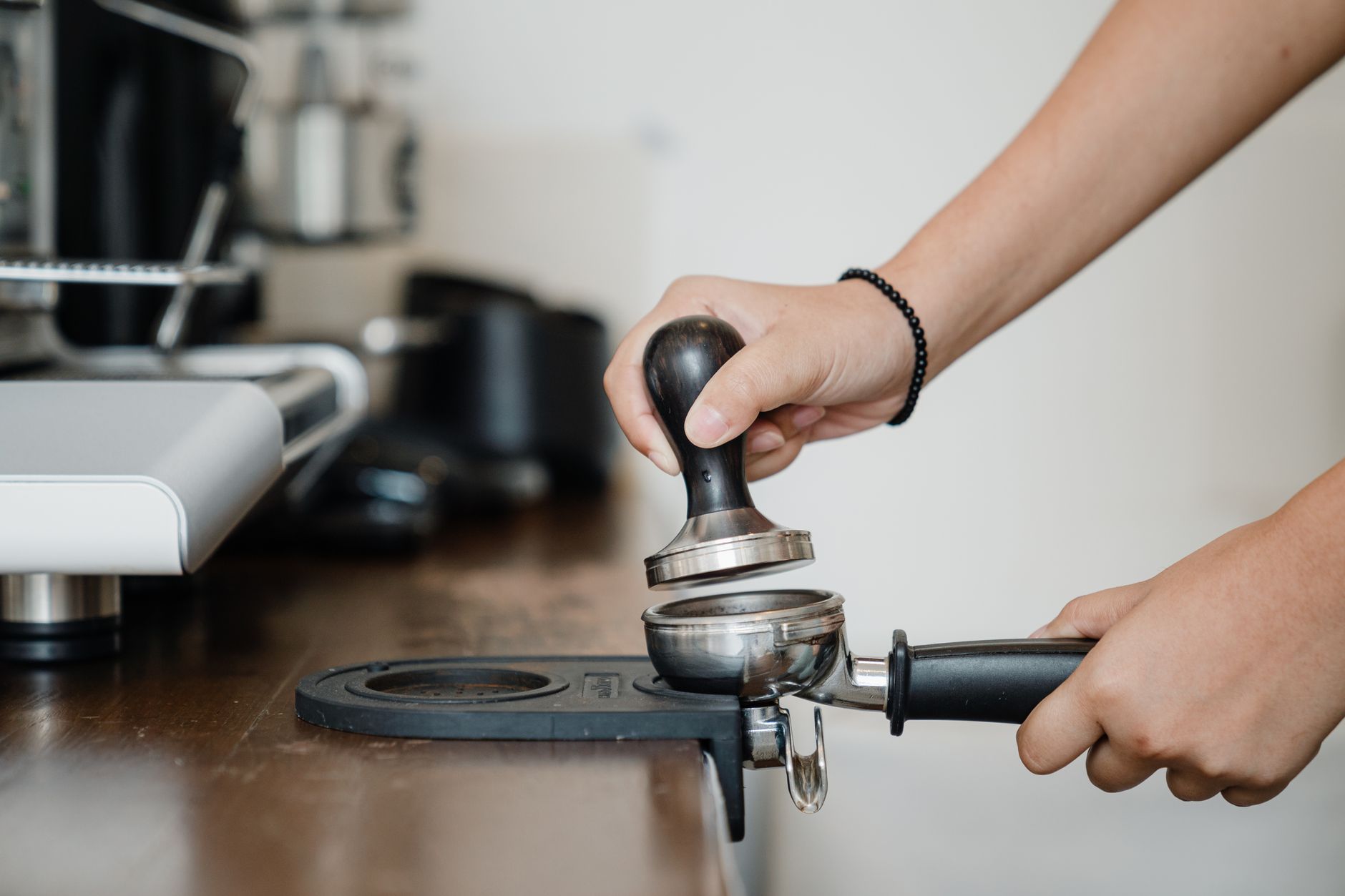
 Photo: Mike C via Pexels
When coffee exits a grinder, static electricity causes fine particles to clump. Tamp those clumps and you’ve locked in air gaps and density variations. Water finds the path of least resistance — the gaps — and rushes through them while the dense clumps under-extract. That’s channeling, and it’s why your shot tastes simultaneously bitter and sour.
The Weiss Distribution Technique, named after John Weiss who popularized it around 2005, solves this with a simple motion: insert thin needles into the grounds and stir in a circular, figure-8 pattern until the surface looks uniform. Then tamp as normal.
Does a WDT Tool Actually Improve Espresso?
Yes, measurably. Blind tasting studies in the home espresso community consistently show WDT reduces channeling, improves shot-to-shot consistency, and extends the workable grind range. The effect is most pronounced with fine, static-prone grinders and darker roasts.
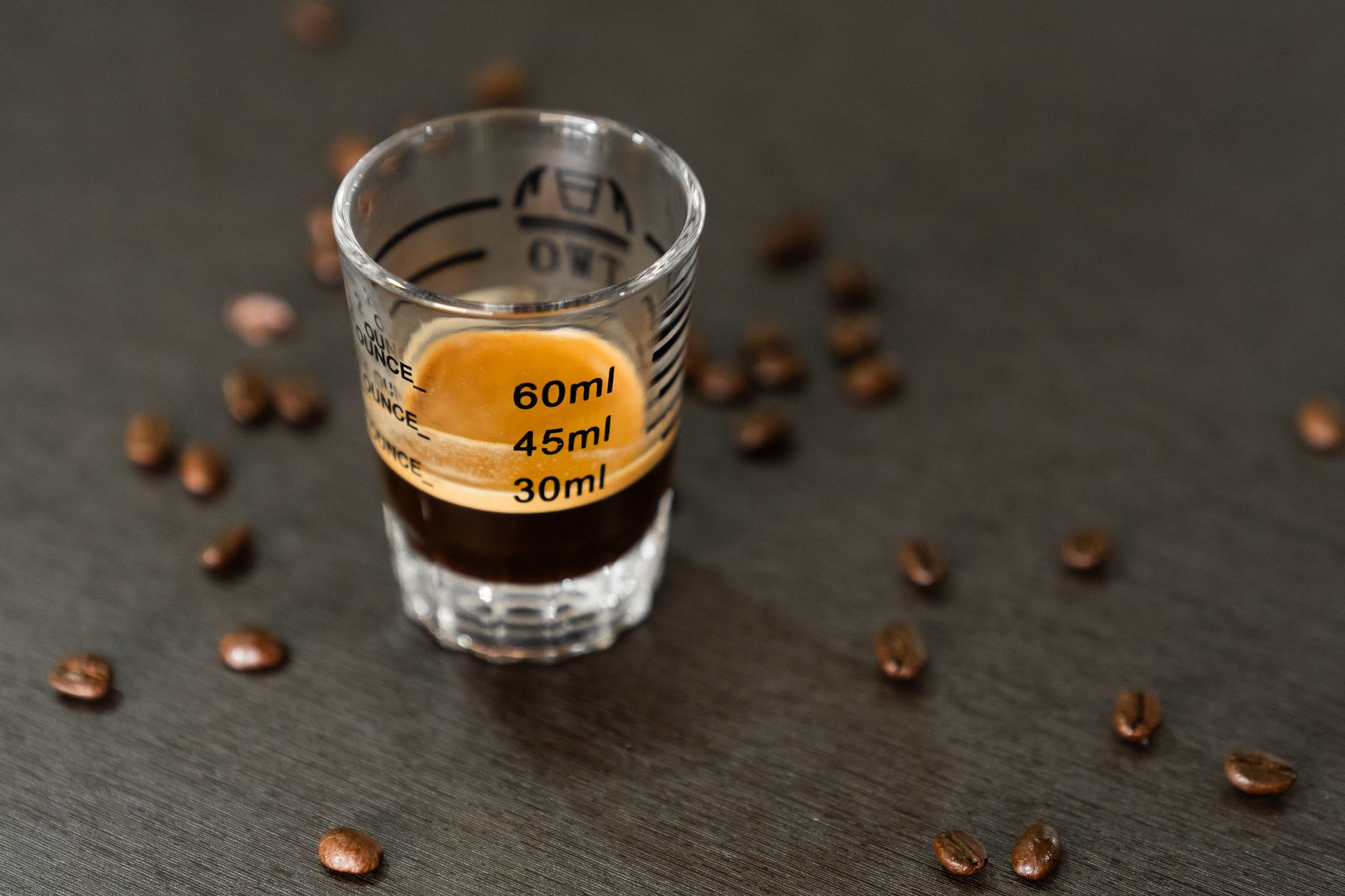 Photo: Nishess Shakya via Pexels
The magnitude of improvement depends on your setup:
| Setup | WDT Impact |
|---|---|
| Cheap burr grinder, fine grind | Very high — heavy clumping |
| Quality flat burr, medium roast | Moderate — still beneficial |
| Conical burr, low static | Lower — but still consistent |
| Single-dose workflow | High — no grinder chute to break clumps |
With high-end grinders like the Niche Zero or Eureka Mignon, WDT is still worth doing — you’ll see tighter TDS readings shot to shot even when clumping looks minimal to the eye.
WDT Tool vs. Other Distribution Methods
WDT outperforms finger tapping, the Stockfleth move, and distribution tools that only level the surface. Those methods redistribute clumps without breaking them. WDT is the only technique that physically separates fused particles before tamping.
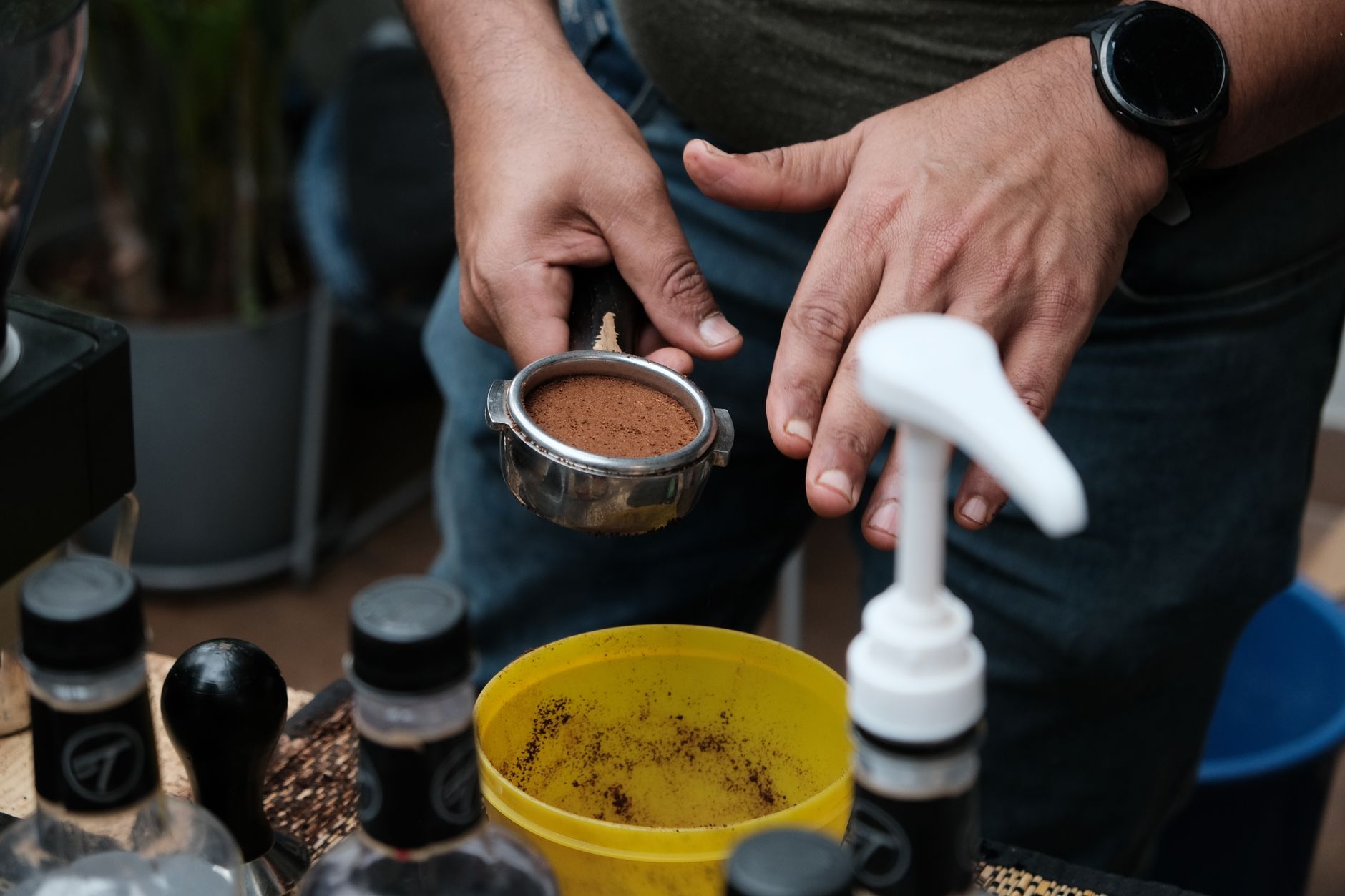 Photo: Aditya Oberai via Pexels
Stockfleth Technique
Spinning a finger across the basket rim levels the grounds but does nothing for subsurface clumps. It’s a surface fix for a volumetric problem.
OCD / Leveling Tools
Rotating levelers like the OCD are excellent for surface uniformity after WDT but shouldn’t replace it. Use both: WDT first to break clumps, then a leveler for a flat, consistent surface before tamping.
Palm Tapping
Hitting the portafilter on your hand compacts the puck prematurely and can introduce density layers. Worse than doing nothing in most cases.
What to Look for in a WDT Tool
Needle gauge and count matter most. You want 0.3–0.4mm needles — fine enough to move through grounds without creating new channels. Seven to ten needles is the sweet spot. Anything thicker than 0.5mm starts pushing clumps around rather than breaking them.
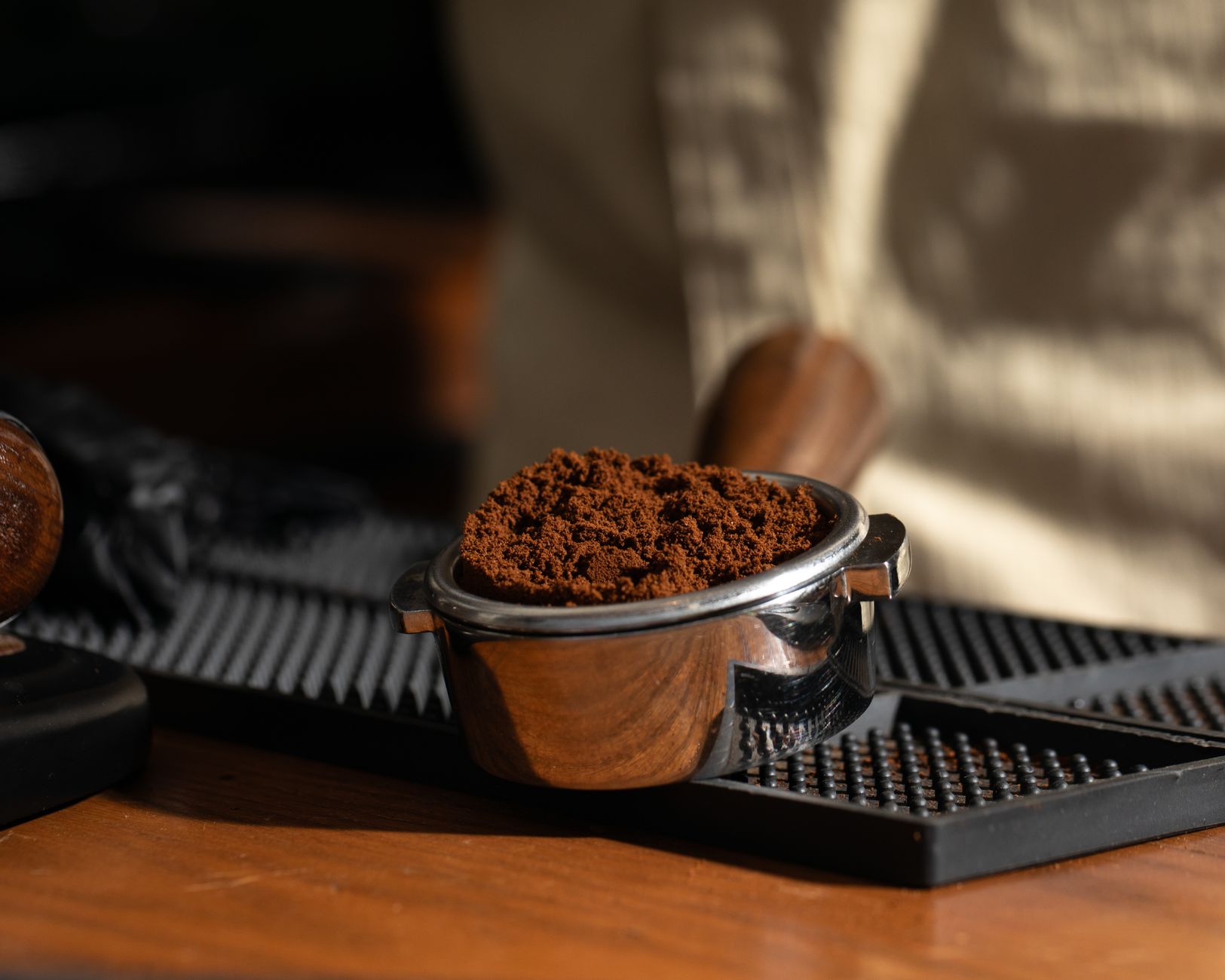 Photo: Badah Q via Pexels
Key Specs
| Feature | Ideal Spec | Why It Matters |
|---|---|---|
| Needle diameter | 0.3–0.4mm | Breaks clumps without channeling |
| Needle count | 7–10 | Coverage without resistance |
| Needle depth | 35–40mm | Reaches basket floor without compacting |
| Handle material | Any rigid material | Stability during stirring |
| Magnetic base | Optional but useful | Holds in funnel during use |
Top Options
| Tool | Price | Needles | Gauge | Best For |
|---|---|---|---|---|
| Crema Coffee WDT Tool | ~$25 | 9 | 0.35mm | Most users |
| Normcore WDT Tool | ~$30 | 8 | 0.4mm | Single-dose setups |
| DIY cork + acupuncture needles | ~$3 | Configurable | 0.25mm | Budget / experimental |
| Decent Espresso WDT | ~$45 | 10 | 0.35mm | High-volume home use |
The DIY version — acupuncture needles pushed through a wine cork — is genuinely competitive with commercial options. The Normcore is the best off-the-shelf buy if you want a solid handle and consistent needle spacing without thinking about it.
How to Use a WDT Tool Correctly
- Dose into basket — use a funnel if your basket rim is low
- Insert needles to basket floor — contact, not force
- Stir in wide circles and figure-8s for 10–15 seconds
- Lift straight out — don’t drag needles across the surface
- Level with a distribution tool or finger if needed
- Tamp as normal with consistent pressure
The motion should feel effortless. If you’re meeting resistance, your grind is too coarse for WDT to matter much, or the puck has already compacted from rough handling.
→ See Also
- Best Coffee Accessories (2026 Complete Guide)
- Best Coffee Scales (2026 Reviewed)
- Acaia Pearl Review: Is It Worth $150?
FAQ
Does a WDT tool work with all basket types? Yes — bottomless portafilters, pressurized baskets, and VST precision baskets all benefit from WDT. The effect is most visible with bottomless portafilters where channeling shows as uneven flow from the basket.
Can I use a toothpick instead of a WDT tool? A wooden toothpick works but the diameter (roughly 2mm at the tip) is too thick to break fine clumps effectively — it will move them rather than separate them. Acupuncture needles in a DIY handle perform closer to commercial WDT tools.
How fine should I grind if I’m using WDT? WDT doesn’t change your target grind size — it changes how reliably that grind size extracts. You may find you can grind slightly finer after adding WDT because puck density becomes more predictable, but start at your current setting and adjust from there.
Is WDT worth it if I have an expensive grinder? Yes. High-end grinders like the EK43 or Niche Zero produce less static clumping, but WDT still improves shot-to-shot consistency. The improvement is smaller in absolute terms but more noticeable because the rest of your variables are already dialed in.
Editorial methodology: Assessments are based on manufacturer specifications, published user reviews, and editorial research. Physical hands-on testing is noted explicitly where it occurred. Rankings reflect our editorial judgment and are not influenced by affiliate commission rates. Full editorial policy · Affiliate disclosure