Contents
Home Coffee Bar Ideas: From Studio Apartment to Dedicated Room
TL;DR: The best home coffee bar ideas work with your actual space — a single shelf and a quality grinder beats a cluttered countertop every time. Whether you have two feet of counter or a full spare room, the principles are the same: organize by workflow, prioritize equipment quality over quantity, and let your gear do the talking.
How Much Space Do You Actually Need?
Direct Answer: You need roughly 24 inches of clear counter depth and one power outlet to run a functional espresso or pour-over station. Anything beyond that is a bonus. Most people over-buy storage and under-buy workflow — the grinder should live next to the machine, not across the kitchen.
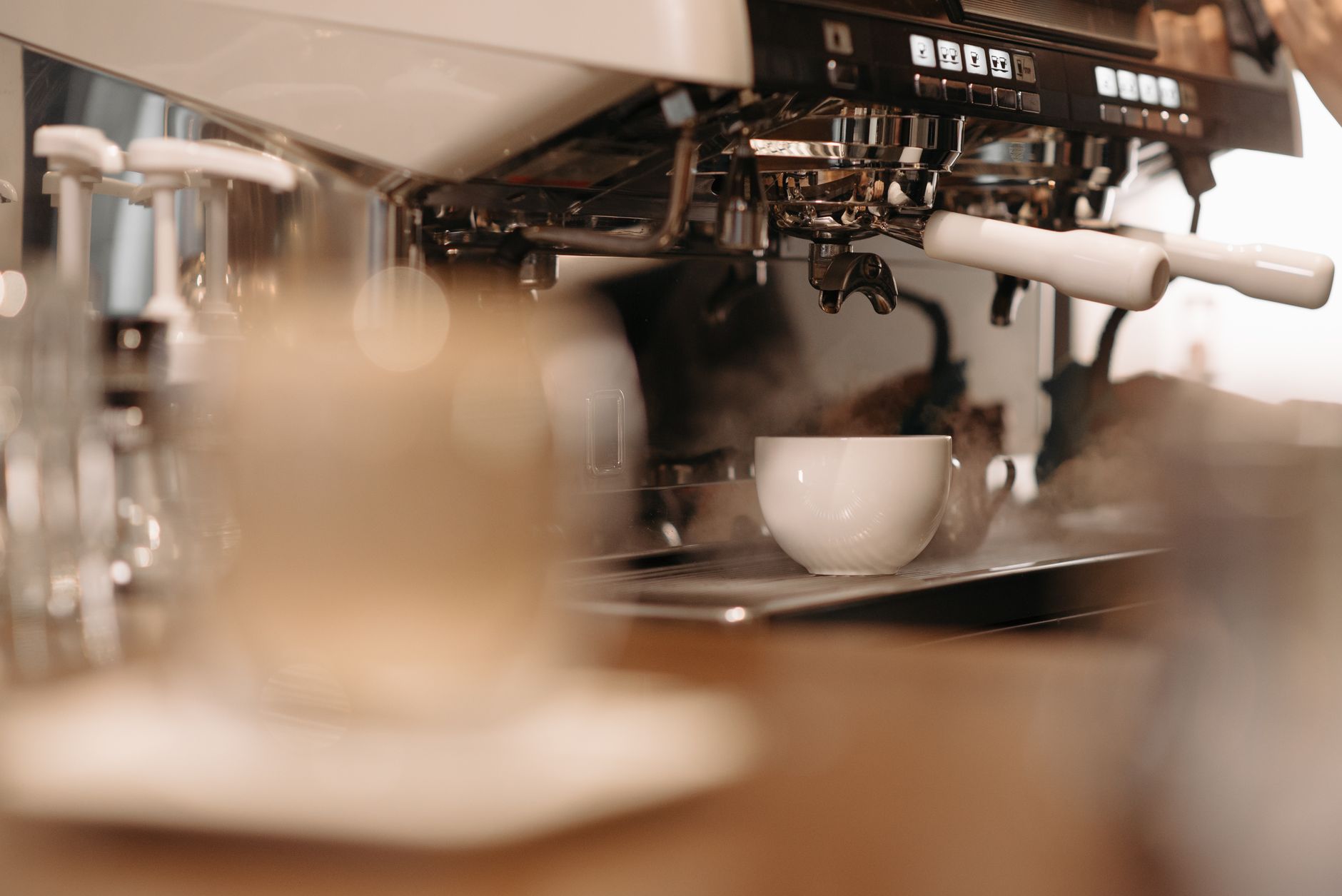 Photo: Pavel Danilyuk via Pexels
The fundamental unit of a coffee bar is the brew triangle: grinder → scale → brewer. Every decision you make about space and layout should keep those three elements within arm’s reach of each other. A $1,500 espresso machine parked six feet from the grinder is harder to use than a $400 setup that’s tight and ergonomic.
For context, here’s what you actually need by setup type:
| Setup Type | Minimum Counter Space | Must-Have Storage | Optional |
|---|---|---|---|
| Single-origin pour-over | 18“ × 18“ | 1 small shelf for beans/filters | Gooseneck kettle stand |
| Manual espresso (lever/piston) | 24“ × 20“ | Drawer for portafilter tools | Tamping mat, knock box |
| Semi-automatic espresso | 30“ × 24“ | Wall shelf or cabinet above | Steam wand tray, drip tray insert |
| Full bar (espresso + batch brew) | 48“+ | Dedicated cabinet or rack | Under-counter fridge for milk |
Small Apartment Coffee Bar Ideas (Under 30 Inches)
Direct Answer: In a tight space, go vertical. A floating shelf 18 inches above the counter holds beans, a Chemex, and a grinder without touching your prep area. The Nespresso Vertuo Pop
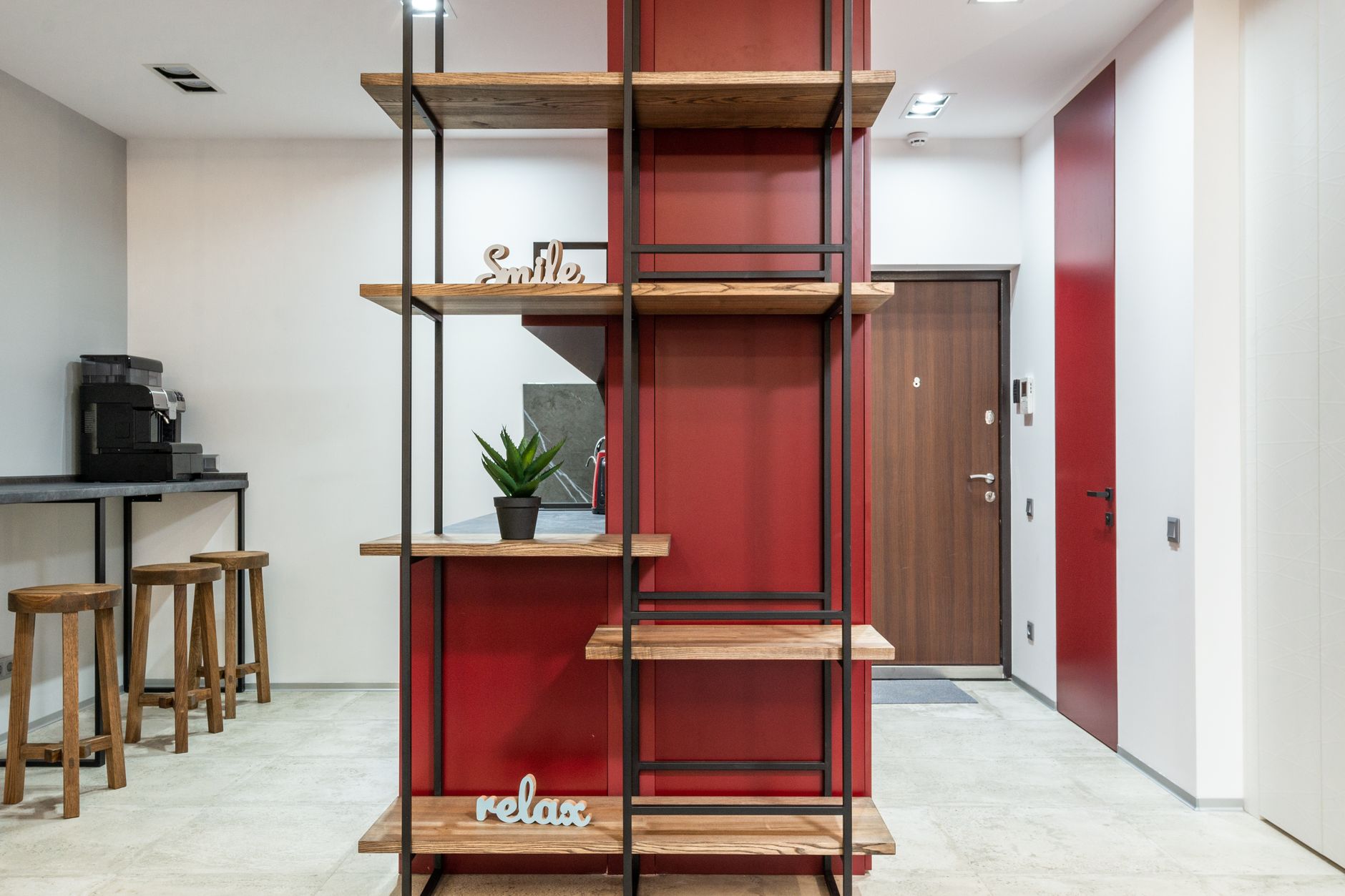 Photo: Max Vakhtbovych via Pexels
The One-Shelf System
Install a single 24-inch floating shelf at eye height above your coffee zone. That shelf holds:
- Whole beans in an airtight canister (Airscape or Fellow Atmos )
- Your preferred filters or paper storage
- A small notebook if you dial in recipes
Everything powered stays on the counter. Everything passive goes on the shelf. This single rule eliminates 80% of counter clutter.
Compact Grinder Picks for Tight Spaces
The Baratza Encore ESP has a 5-inch footprint and handles both espresso and drip — it’s the honest first grinder for anyone who doesn’t want to dedicate 12 inches of counter to grinding. If you’re doing pour-over only, a 1Zpresso JX-Pro
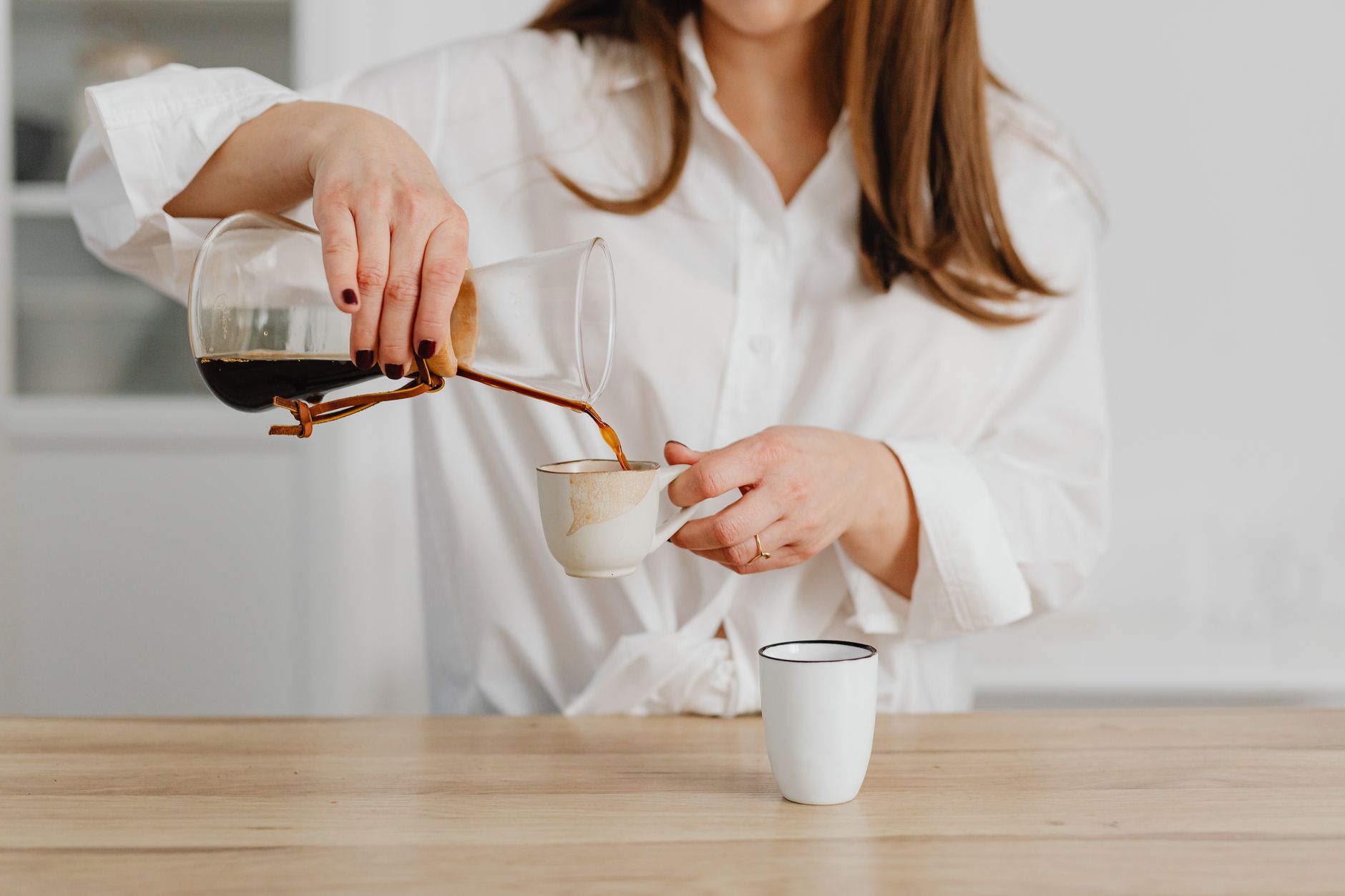 Photo: https://kaboompics.com/ via Pexels
The calculation: a hand grinder frees 100–200 square inches of permanent counter space. For a studio apartment, that’s the difference between a functional coffee bar and a crowded mess.
Dedicated Coffee Nook Ideas (30–60 Inches)
Direct Answer: This is the sweet spot. A 48-inch section of counter — roughly the width of a standard cabinet run — is enough to run a semi-automatic espresso machine alongside a grinder with room for a knock box and scale. Add one tall cabinet or open shelving unit and you have a proper coffee bar that competes with specialty café setups.
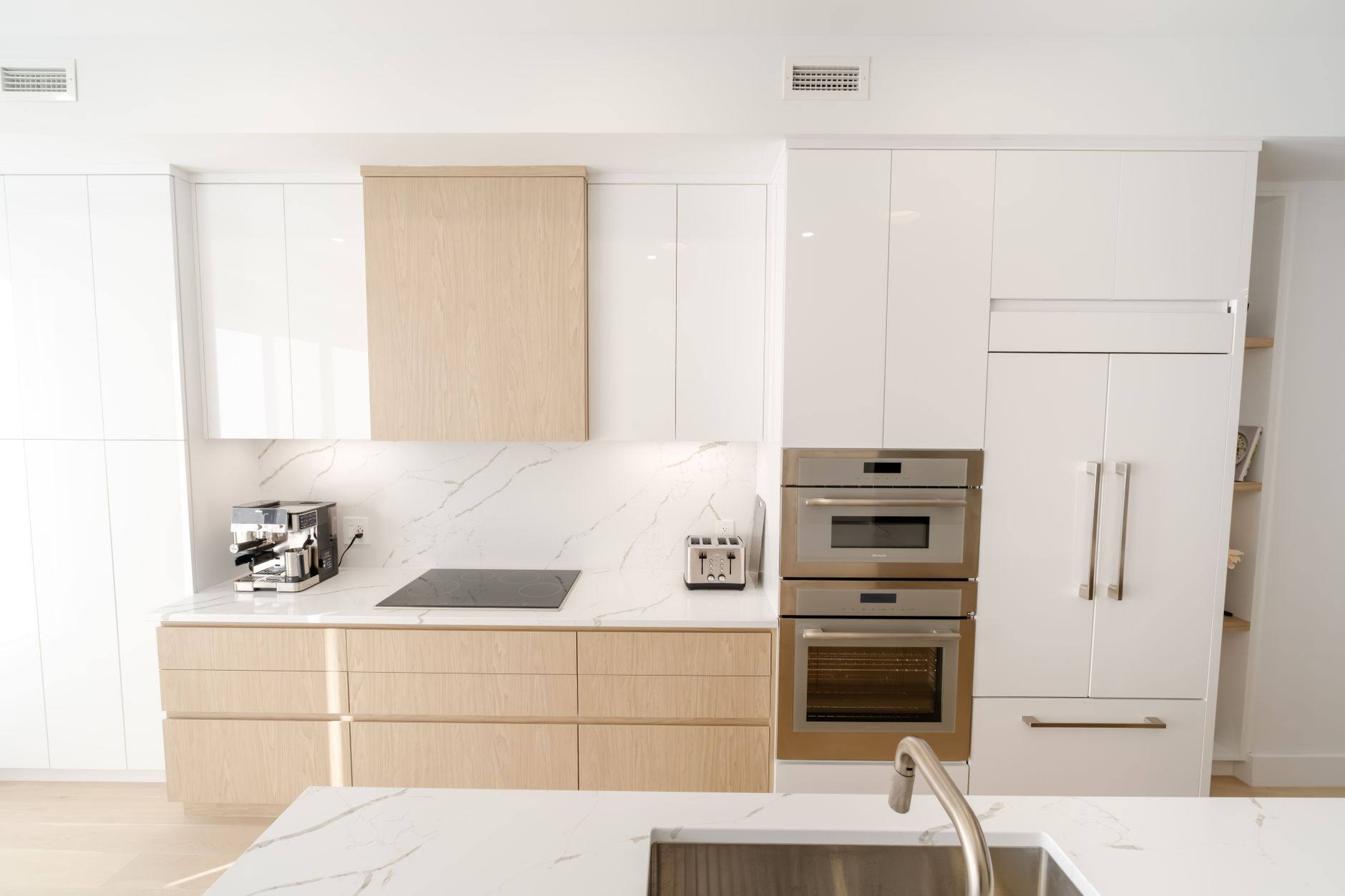 Photo: Ali Soheil via Pexels
Layout by Workflow
The single best upgrade you can make to any coffee bar in this size range is organizing by the actual sequence of steps:
- Bean storage (left side, or overhead) → accessible but not in the way
- Grinder → immediately left of the machine
- Machine → center, at a comfortable working height
- Knock box + scale → immediately right of the machine
- Cup storage → above the machine or on a warming tray
Working left to right mirrors natural motion. You dose, grind, tamp, pull, and knock — all in one direction without reaching over anything.
Equipment Upgrade Path
For a 30–60 inch nook, this is the realistic upgrade ladder:
| Budget | Grinder | Espresso Machine | Notes |
|---|---|---|---|
| ~$700 total | Baratza Encore ESP | Breville Bambino |
Dedicated Coffee Room: Full Build-Out
Direct Answer: A dedicated coffee room is fundamentally a workflow problem, not a decoration problem. Before you think about aesthetics, map where water comes from, where waste goes, and where you stand. A plumbed-in machine and an under-counter fridge change the game entirely — but only if the plumbing is on the right wall.
Plumbing First
If you’re converting a laundry room or utility space, you likely already have a drain and a cold water line. That’s all you need for a plumbed espresso machine. The Jura Impressa XS90 One Touch or a commercial prosumer machine like the ECM Synchronika
A drain plumbed directly under the machine means:
- No knock box emptying
- No drip tray emptying
- Consistent water supply with a inline softener or filter
This single change — a drain and a water line — is the upgrade that separates a coffee room from a coffee corner.
Storage and Display
Open shelving works visually but collects coffee dust. For a dedicated room, consider:
- Glass-front cabinets for cup displays — aesthetically clean, dust-protected
- Drawer organizers for portafilters, tampers, WDT tools, and distribution tools
- Pull-out shelves for bean storage — keeps everything labeled and rotatable
- Pegboard or magnetic rail for knock boxes, tampers, and tools you reach for every pull
The Fellow Stagg EKG Pro is the one kettle worth displaying openly — it doubles as a countertop object. Everything else can be stored.
Aesthetic Approaches That Actually Work
Home coffee bar ideas live and die on one decision: do you want it to look like a café or look like your home? Both are valid, but they’re different design languages.
Café-style: Espresso machines forward, exposed group heads, industrial shelving, black and stainless steel palette. Functional and honest about what it is.
Residential-style: Machine tucked into cabinetry with a lift door, matching cabinet fronts, warm wood tones, integrated lighting. Looks like a high-end kitchen addition.
Hybrid (most popular): Machine on display, storage concealed. Open upper shelving for cups and beans, closed lower cabinets for everything else.
The one aesthetic rule that holds across all three: cord management is the difference between a coffee bar and a counter full of appliances. Cable clips, in-wall routing, or recessed outlets behind the machine are worth the effort.
→ See also:
- The Third Wave Coffee Movement: A Complete Guide
- Best Coffee Cities in the US (2026 Guide)
- New York City Specialty Coffee Guide: 20 Best Cafés
FAQ
What’s the minimum budget for a functional home coffee bar? You can build a genuinely excellent pour-over station for under $300: a Timemore C3 hand grinder ($70), a Hario V60 or Chemex ($30–$45), a basic gooseneck kettle ($40), and an Acaia Lunar or budget scale ($30–$100). Espresso adds complexity — expect $600–$900 minimum for a setup that actually dials in correctly.
Does a home coffee bar add value to a house? A built-in, plumbed coffee bar in a dedicated room or kitchen nook can add perceived value in the same way a wine fridge does — it signals lifestyle and premium finish. A countertop setup adds no structural value. If you’re renovating to sell, focus on plumbing placement and cabinet quality over equipment.
What’s the best espresso machine for a small apartment coffee bar? The Breville Bambino is the honest answer for most people — compact footprint, fast heat-up time (3 seconds), and real steam pressure for milk. If you want an even smaller profile, the Nespresso Vertuo Pop handles pods with no mess, no grinder needed, and no learning curve.
How do I organize a home coffee bar without it looking cluttered? Two rules: everything you use daily is visible, everything else is stored. Your machine, grinder, and scale live on the counter. Filters, extra beans, cleaning tools, and backup equipment go in a drawer or cabinet. A matching canister for beans and a single tray under the machine to group accessories eliminates 90% of visual noise.
Can I build a home coffee bar without dedicated counter space? Yes — a bar cart is the most underrated coffee bar format for apartments. A two-tier bar cart on wheels parks against a wall, rolls out when in use, and handles an AeroPress or pour-over setup with room to spare. Some people run a compact espresso machine from a bar cart with a dedicated power strip. It’s not permanent, but it’s genuinely functional.
What water should I use for home espresso? Third Wave Water mineral packets mixed into distilled water are the cleanest solution — you control mineral content precisely, protect your machine from scale, and get consistent extraction. Standard tap water varies enough city-to-city that it’s worth at least running a TDS meter on yours before using it in a machine with a boiler.