
Contents
History of Coffee: From Ethiopia to Your Cup
TL;DR: The history of coffee begins in 9th-century Ethiopia, travels through Yemen’s first cultivated farms, explodes across Ottoman coffeehouses, and reaches your morning cup via centuries of colonial trade and third-wave craft. Understanding this 1,200-year arc explains why specialty coffee tastes the way it does today.
The Ethiopian Origin: Where Coffee Was Born
The history of coffee starts in the highlands of Kaffa, Ethiopia, where Coffea arabica grew wild before any human cultivated it. Goat herders noticed animals eating the red cherries and staying alert through the night. By the 9th century, Ethiopian communities were consuming coffee — not brewed, but eaten as a paste of ground beans mixed with fat.
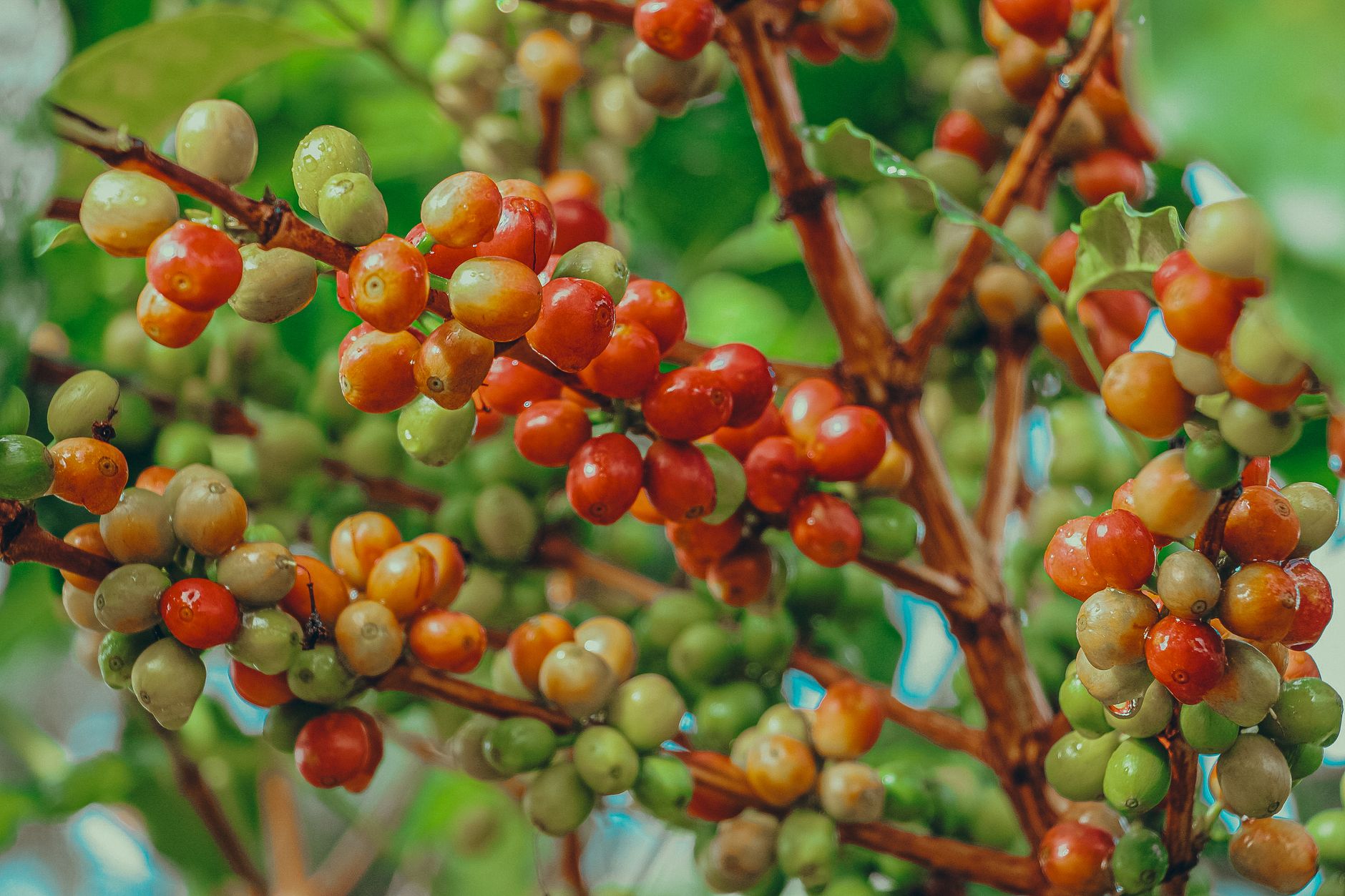 Photo: Edouard MIHIGO via Pexels
The Kaffa region still produces wild-grown arabica today. These aren’t heritage varieties in the marketing sense — they’re genuinely feral coffee plants with genetic diversity no modern cultivar can match. When specialty roasters talk about “heirloom Ethiopian,” this is the lineage they mean.
The early consumption method matters: chewing fat-and-coffee paste delivers caffeine faster than brewing. Ethiopian communities also fermented the fruit pulp into a drink called qishr, using the husk rather than the bean. The beverage we recognize — brewed from roasted, ground seeds — came later, and it came from Arabia.
Yemen and the First Coffee Farms
Sufi monks in Yemen were the first to cultivate coffee deliberately, around the 15th century. The port city of Mocha gave the world its first major coffee export trade and, eventually, a flavor descriptor that outlasted the trade itself. Yemeni farmers developed the dry-process method — sun-drying whole cherries — that still defines naturals today.
 Photo: Arturo Añez. via Pexels
The Yemeni terroir is extreme: thin soil, steep terraced hillsides, minimal rainfall. Arabica there adapted to stress in ways that produce intensely fruited, wine-like cups. Authentic Yemeni coffee commands some of the highest prices in the specialty market — not nostalgia, but genuine flavor complexity from that harsh environment.
Yemen also controlled exports aggressively. For over a century, the Ottoman Empire enforced a monopoly through Mocha, requiring that all coffee beans be parboiled or otherwise rendered infertile before export. The goal: prevent cultivation anywhere else.
It didn’t work.
The Ottoman Coffeehouses: Coffee Goes Public
The Ottoman Empire built the world’s first coffeehouse culture. By 1554, Istanbul had dedicated coffee establishments — qahveh khaneh — where men gathered to drink, play chess, and conduct business. These weren’t cafés in the modern sense; they were the dominant public social infrastructure of the era.
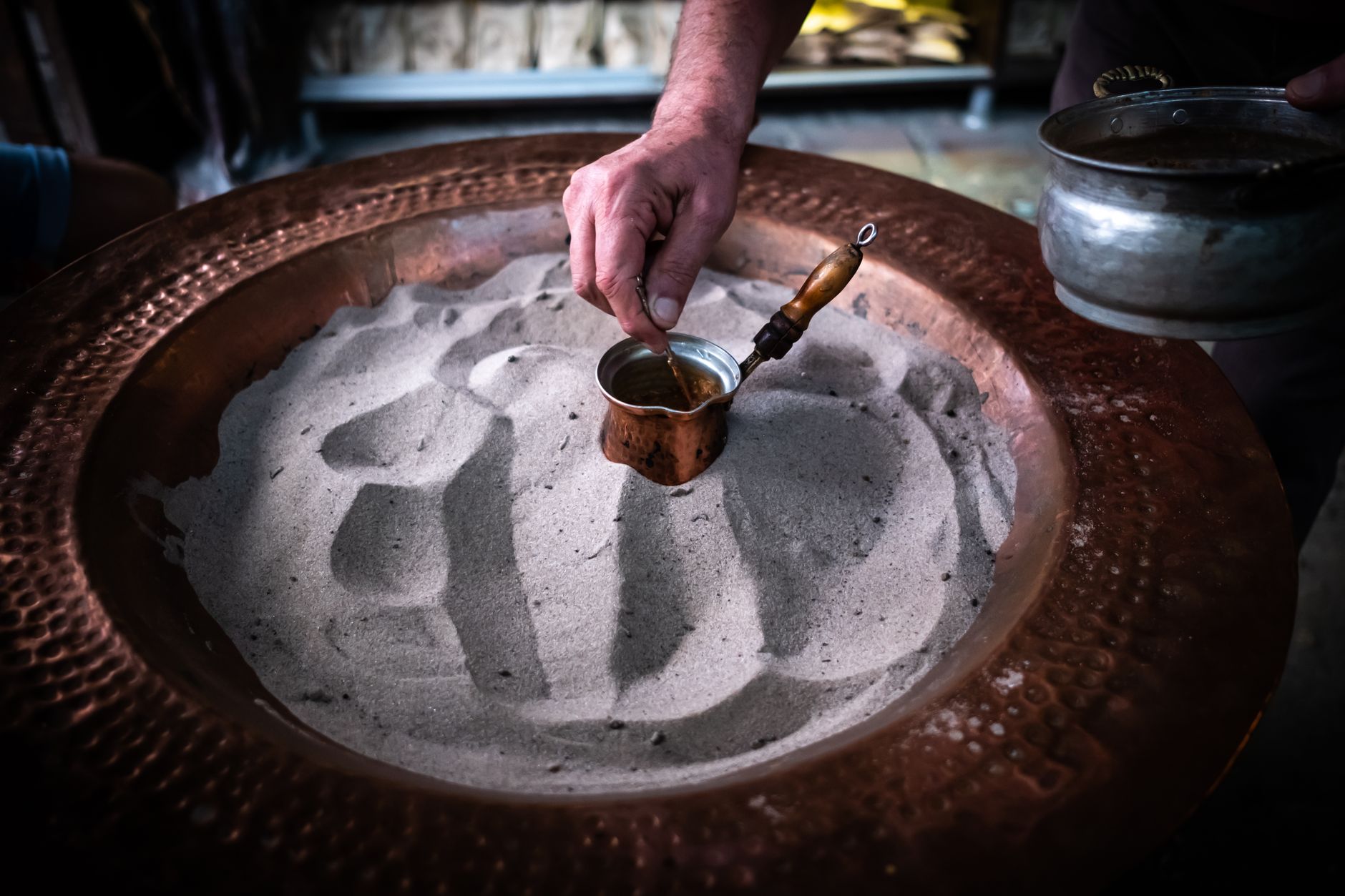 Photo: Ahmet Çığşar via Pexels
Why Coffeehouses Were Controversial
Within decades of their opening, coffeehouses faced bans across the Ottoman world. The reasons were political, not moral: rulers understood that coffeehouses were where dissent organized. Sultan Murad IV banned coffee in 1633 under penalty of death. The ban was ignored and eventually dropped.
Coffeehouses spread to Mecca, Cairo, and Aleppo before reaching Europe. Each city adapted them — Cairo’s were more scholarly, Aleppo’s more merchant-focused — but the core function held: a sober, affordable public space for conversation and commerce.
The parallel with modern third-wave coffee shops is exact. A well-lit space, good coffee, a laptop — the function hasn’t changed. Only the interface has.
Coffee Reaches Europe
Coffee arrived in Europe via Venetian traders around 1600. Within 50 years, London alone had over 300 coffeehouses. They became the operating system for Enlightenment-era commerce: Lloyd’s of London started in a coffeehouse, as did the London Stock Exchange. European coffeehouses were, effectively, the internet of their day.
 Photo: Wender Junior Souza Vieira via Pexels
The Pope, the Church, and the “Wine of Islam”
When coffee reached Rome, some clergy pushed for a papal ban, calling it the “wine of Islam.” Pope Clement VIII reportedly tried it, enjoyed it, and blessed it instead. That anecdote may be apocryphal, but the outcome was real: coffee faced no serious ecclesiastical resistance in Catholic Europe.
England’s King Charles II tried to ban coffeehouses in 1675, citing sedition. The public backlash was so immediate he reversed the order within 11 days.
The pattern repeats throughout the history of coffee: authorities recognize the social organizing power of the space, attempt suppression, fail.
Colonial Expansion and the Coffee Belt
The Dutch broke Yemen’s export monopoly in the late 1600s by smuggling live plants to Java. From Java, coffee spread across the entire colonial world within a century. By 1720, Brazil, the Caribbean, and Central America were all producing coffee — entirely through enslaved and coerced labor. The history of coffee is inseparable from the history of slavery.
 Photo: Q. Hưng Phạm via Pexels
How the Coffee Belt Was Built
The Dutch transplanted arabica to Java around 1696. A single plant from Amsterdam’s botanical garden reached Martinique in 1720, and its descendants populated most of the Caribbean and eventually Brazil. This genetic bottleneck — most of the Americas’ coffee tracing to one or two plants — is why Colombian and Brazilian arabica have less diversity than Ethiopian varieties.
Key milestones:
| Year | Event |
|---|---|
| 1696 | Dutch establish coffee cultivation in Java |
| 1720 | Martinique receives first arabica plants; Caribbean expansion begins |
| 1727 | Coffee introduced to Brazil |
| 1850s | Brazil becomes world’s largest producer |
| 1869 | Coffee leaf rust (Hemileia vastatrix) devastates Ceylon (Sri Lanka), shifting production to robusta |
The 1869 rust outbreak is why robusta exists in commercial coffee at scale. Ceylon was a major arabica producer; the disease wiped it out almost completely. Robusta, naturally resistant to rust, was adopted widely across colonial Africa and Asia. If you’re drinking a standard espresso blend with a “crema-enhancing” robusta component, you’re still feeling the ripple of that 1869 outbreak.
The Industrial Age: Coffee Becomes a Commodity
The 19th and 20th centuries turned coffee from a regional luxury into a global commodity. Vacuum cans extended shelf life. Instant coffee, developed seriously during World War I for troop rations, made mass adoption possible. By the 1960s, American coffee culture meant percolated, canned, commodity-grade robusta — the furthest the history of coffee had ever drifted from its aromatic origins.
The Commodity Trap
The International Coffee Agreement of 1962 set export quotas and price floors, creating artificial stability. When it collapsed in 1989, global coffee prices crashed. Small farmers across Central America and Africa lost their livelihoods. That economic devastation created the conditions for what came next: a counter-movement that valued quality, traceability, and fair compensation.
Commodity coffee culture had one accidental benefit: it made coffee ubiquitous. By the time specialty coffee emerged, a daily coffee habit was already wired into hundreds of millions of consumers. Specialty didn’t have to build the habit — it just had to offer a better version of it.
The Specialty Coffee Revolution
First-wave coffee brought mass availability. Second-wave — Peet’s, then Starbucks — introduced roast style as identity and café culture to the American mainstream. Third-wave, which began in the late 1990s, treats coffee as a single-origin agricultural product: the farmer, the varietal, the processing method, and the roast profile all matter and are disclosed.
What Changed and Why
Three things made the third wave possible:
- Better green coffee sourcing. Direct trade and transparent pricing meant specialty importers could pay premiums for exceptional lots and disclose where the money went.
- Better equipment. The spread of quality espresso machines — La Marzocco , followed by accessible home machines — and precise grinders brought barista-level technique within reach of serious home users.
- Better understanding of extraction. The Specialty Coffee Association’s formalization of extraction science (TDS, extraction yield, brew ratios) gave coffee professionals a shared technical language that accelerated skill development industry-wide.
The fourth wave, if it exists, is about fermentation science and processing innovation — washed, natural, honey, anaerobic, carbonic maceration. The flavor possibilities available in green coffee today would be unrecognizable to a 1970s American diner.
Coffee Varietals: The Genetics Underneath the History
Understanding varietals is how the history of coffee becomes useful at the cup level.
| Varietal | Origin | Flavor Profile | Notes |
|---|---|---|---|
| Typica | Yemen → Americas | Clean, balanced, sweet | Low yield; replaced by higher-yield varieties commercially |
| Bourbon | Réunion Island | Fruity, complex, rounded | Named for the island’s old name; distinct from Typica |
| Gesha/Geisha | Ethiopia → Panama | Jasmine, bergamot, tropical | Hacienda La Esmeralda’s 2004 auction changed specialty pricing forever |
| Heirloom Ethiopian | Kaffa, Ethiopia | Wide range; berry, floral, wine | Thousands of wild varietals; not a single genetic line |
| Robusta | Central Africa | Earthy, rubbery, bitter | High caffeine; resistant to disease and heat |
| SL28 / SL34 | Kenya (Scott Labs) | Blackcurrant, tomato, bold acid | Selected in 1930s; still defines Kenyan cup character |
Gesha’s auction history is worth noting: a 2004 Best of Panama competition entry from Hacienda La Esmeralda sold for $21/lb — then the highest price ever for green coffee. The same farm has since sold lots at over $1,000/lb. That varietal, traced to an Ethiopian forest collection in the 1930s, rewired the entire specialty market’s understanding of price and quality.
→ See also
- The Third Wave Coffee Movement: A Complete Guide
- Best Coffee Cities in the US (2026 Guide)
- New York City Specialty Coffee Guide: 20 Best Cafés
FAQ
When was coffee first discovered? Coffee was first consumed in Ethiopia around the 9th century, though the exact date is undocumented. The earliest reliable written accounts of coffee drinking come from Yemen in the 15th century, where Sufi monks used it to stay awake during prayers. Ethiopian communities likely consumed it as a food paste or fermented drink centuries before Arabic brewing methods developed.
Why did the Ottoman Empire try to ban coffee? Ottoman rulers banned coffee multiple times between the 16th and 17th centuries primarily for political reasons — coffeehouses were gathering places for dissent and political organizing. Sultan Murad IV issued a capital-punishment ban in 1633. Every ban eventually failed because coffeehouse culture had become too economically and socially embedded to suppress.
How did coffee spread from Ethiopia to the rest of the world? Coffee traveled from Ethiopia to Yemen, where it was first cultivated commercially, then through Mecca and the Ottoman trade network to Europe via Venice around 1600. The Dutch broke Yemen’s export monopoly around 1696 by transplanting live arabica plants to Java. From Java, coffee reached Martinique, then Brazil and the broader Americas through colonial networks in the early 18th century.
What is the difference between first, second, and third wave coffee? First wave (mid-20th century) was about mass availability — canned, commodity-grade coffee in every home. Second wave (1970s–2000s, Peet’s and Starbucks) introduced roast profiles and café culture as lifestyle identity. Third wave (late 1990s–present) treats coffee as a traceable agricultural product: single-origin, varietal-specific, with transparent sourcing and precise brewing. Each wave didn’t replace the previous — all three coexist today.
Why does Ethiopian coffee taste different from Brazilian? Ethiopian arabica descends from wild, genetically diverse forest plants with thousands of distinct varietals. Brazilian arabica traces mostly to a handful of plants that passed through the Dutch-Martinique bottleneck in the early 18th century — far less genetic diversity. Ethiopian coffees typically show floral, berry, and tea-like characteristics from that genetic breadth; Brazilian coffees tend toward chocolate, nuts, and low acidity, shaped by both genetics and the country’s lower-altitude, dry-process production methods.
Editorial methodology: Assessments are based on manufacturer specifications, published user reviews, and editorial research. Physical hands-on testing is noted explicitly where it occurred. Rankings reflect our editorial judgment and are not influenced by affiliate commission rates. Full editorial policy · Affiliate disclosure