Contents
Grind Size for Moka Pot: The Medium-Fine Guide
TL;DR: Use a medium-fine grind for moka pot — finer than drip coffee, coarser than espresso. Aim for a texture like fine table salt. Getting the grind size for moka pot right is the single biggest variable between a bitter, muddy brew and a clean, intense cup.
What Grind Size Does a Moka Pot Actually Need?
A medium-fine grind — roughly 400–600 microns — hits the sweet spot for moka pot extraction. Too fine and you restrict flow, overheat the grounds, and pull bitter compounds. Too coarse and water races through without extracting enough, leaving you with thin, sour coffee.
 Photo: Engin Akyurt via Pexels
The moka pot forces near-boiling water through a packed bed of grounds under 1–2 bars of pressure. That’s far less than an espresso machine’s 9 bars, which means it can’t compensate for a grind that’s too fine — the water will stall, overheat, and scorch. Espresso grind (200–300 microns) is genuinely too fine for a moka pot, despite what you may have heard.
Think of the texture you’re targeting: fine table salt or fine sand. If you rub it between your fingers and it feels powdery, it’s too fine. If it feels gritty like coarse sand, it’s too coarse.
How Grind Size Affects Moka Pot Extraction
Grind size controls flow rate, which controls contact time, which controls what gets extracted. Coarser = faster flow = under-extraction (sour, weak). Finer = slower flow = over-extraction (bitter, harsh). Medium-fine lands you in the extraction window where sugars and acids balance.
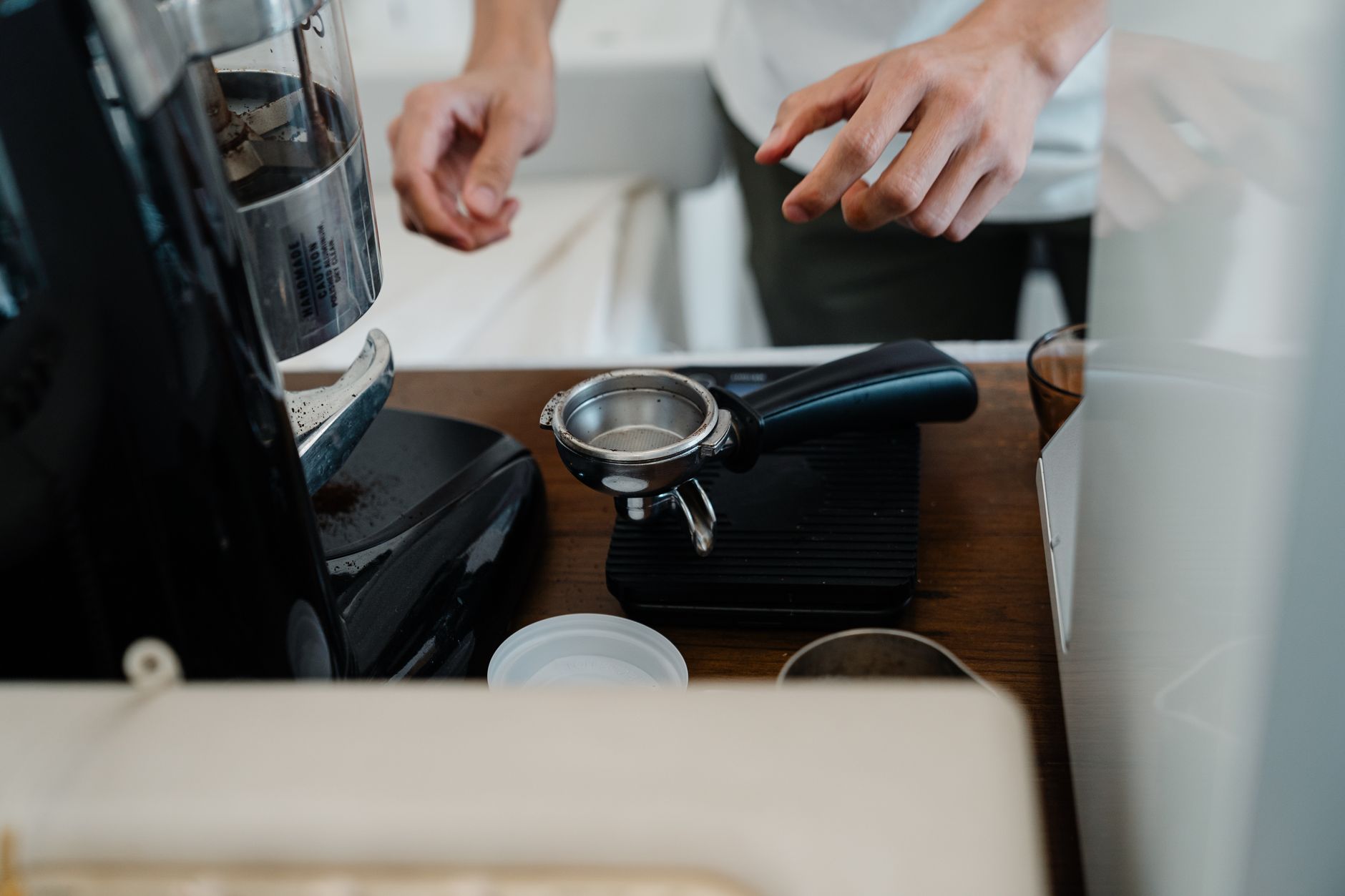
 Photo: Michael Burrows via Pexels
Dialing In by Taste
| Symptom | Likely Cause | Fix |
|---|---|---|
| Bitter, astringent finish | Too fine | Go one step coarser |
| Thin, sour, watery | Too coarse | Go one step finer |
| Muddy with grounds in cup | Way too fine | Move significantly coarser |
| Slow, sputtering extraction | Too fine + overpacked | Coarser and don’t tamp |
| Clean, balanced, slightly sweet | Correct | Don’t touch it |
The moka pot spits and sputters when extraction pressure gets too high — usually a grind problem before it’s a heat problem. If you hear gurgling and see slow flow, your grind is likely too fine.
Don’t Tamp the Basket
This one trips up everyone coming from espresso: do not tamp the moka pot basket. Espresso needs tamping because a pump machine can push through the resistance. A moka pot cannot. Level the grounds and brush off the excess — that’s it.
 Photo: Marek Piwnicki via Pexels
Burr Grinder vs. Blade Grinder for Moka Pot
A burr grinder is the right tool. A blade grinder chops unevenly, creating a mix of fine dust and coarse chunks in the same batch — you get simultaneous over- and under-extraction, resulting in bitter and sour flavors in the same cup.
| Feature | Burr Grinder | Blade Grinder |
|---|---|---|
| Particle consistency | Uniform | Highly variable |
| Grind setting repeatability | Yes | No |
| Moka pot suitability | Excellent | Poor |
| Entry price | ~$30–$40 | ~$10–$20 |
For moka pot specifically, grind consistency matters more than it does for French press (which is forgiving of fines) and almost as much as it does for espresso. If you’re using a blade grinder and your moka pot tastes off, the grinder is the first thing to change — not the coffee, not the heat setting.
Grind Settings by Grinder Type
Grinder markings vary wildly between brands, so absolute numbers are nearly useless. Use these as a starting reference, then adjust by taste.
| Grinder Type | Typical Starting Point | Notes |
|---|---|---|
| Manual hand grinder (e.g. 1Zpresso JX-Pro) |
The midpoint between your grinder’s espresso setting and drip setting is your first target. Adjust from there.
 Photo: Ketut Subiyanto via Pexels
→ See Also
- The Complete Coffee Grinder Guide (2026)
- Burr vs Blade Grinder: Why It Matters for Your Coffee
- Best Coffee Grinders Under $100 (2026)
FAQ
What happens if I use espresso grind in a moka pot? Flow rate drops too low, water overheats waiting to push through, and you extract bitter compounds along with scorched flavors. The moka pot will also sputter and spit aggressively. Go at least one or two steps coarser than your espresso setting.
Can I use pre-ground coffee for a moka pot? Pre-ground labeled “espresso” is usually too fine. Pre-ground labeled “drip” or “all-purpose” is typically too coarse. If pre-ground is your only option, look for a label that says “moka pot” or “stovetop espresso” — a few brands grind specifically for this.
Does roast level change the grind size I need? Lighter roasts are denser and need slightly finer grinding to achieve the same extraction. Dark roasts are more porous and extract faster, so you may need to go slightly coarser to avoid bitterness. Start at the same setting and adjust based on taste.
How do I know if my grind is the problem vs. my heat setting? If you’re getting sputtering and bitterness, test one variable at a time: first go one step coarser on the grind with the same heat. If heat is the issue, you’ll typically see very fast, almost explosive extraction even with a correctly-sized grind — lower the flame and the problem resolves without touching grind size.
Editorial methodology: Assessments are based on manufacturer specifications, published user reviews, and editorial research. Physical hands-on testing is noted explicitly where it occurred. Rankings reflect our editorial judgment and are not influenced by affiliate commission rates. Full editorial policy · Affiliate disclosure