Contents
Coffee Science: The Complete Extraction & Chemistry Guide
TL;DR: Coffee science covers how heat, water, grind size, and time work together to dissolve compounds from ground coffee into your cup. This coffee science guide cuts through the jargon: extraction yield, TDS, solubility, and the Maillard reaction all have direct, practical implications for how your coffee tastes. Master these fundamentals and you control the cup.
What Is Coffee Extraction?
Coffee extraction is the process of dissolving soluble compounds from roasted coffee grounds into water. Around 30% of a coffee bean is water-soluble, but not all of it tastes good — the goal is hitting the 18–22% extraction yield “sweet spot” where sugars, acids, and bitter compounds are in balance.
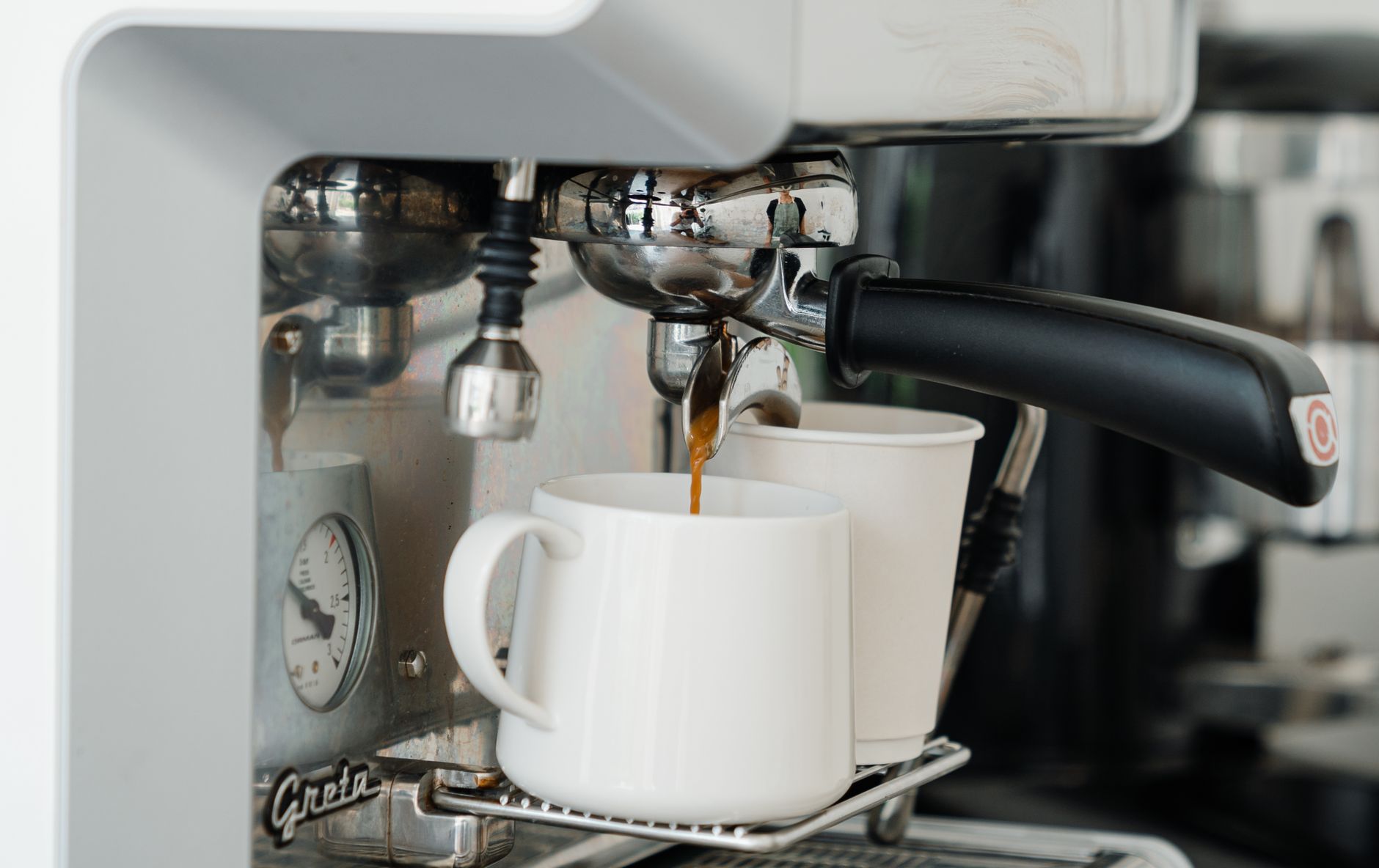 Photo: Ketut Subiyanto via Pexels
Extraction yield is expressed as a percentage: the mass of dissolved solids in your cup divided by the mass of dry coffee used. At 18% extraction, the cup tastes sour and thin — you’ve pulled the easy-to-dissolve acids and fruity compounds but left the body behind. At 24%+, you’ve crossed into bitterness and astringency as harsh phenolic compounds and tannins enter the solution.
The Specialty Coffee Association (SCA) defines the optimal extraction range as 18–22%. This is measured using a refractometer, which reads Total Dissolved Solids (TDS) in the brewed liquid. From TDS and brew ratio, you calculate extraction yield using the standard formula:
Extraction Yield (%) = (TDS% × Brewed Weight) ÷ Dry Coffee Weight × 100
A brew at 1.35% TDS from 60g of coffee into 1000g of water sits around 20.3% extraction — squarely in the sweet spot.
The Four Variables That Drive Extraction
Every brewing method controls extraction through the same four levers:
- Grind size — finer grind = more surface area = faster, higher extraction
- Water temperature — hotter water dissolves more compounds faster
- Contact time — longer contact = more extraction
- Agitation — stirring or turbulence accelerates dissolution
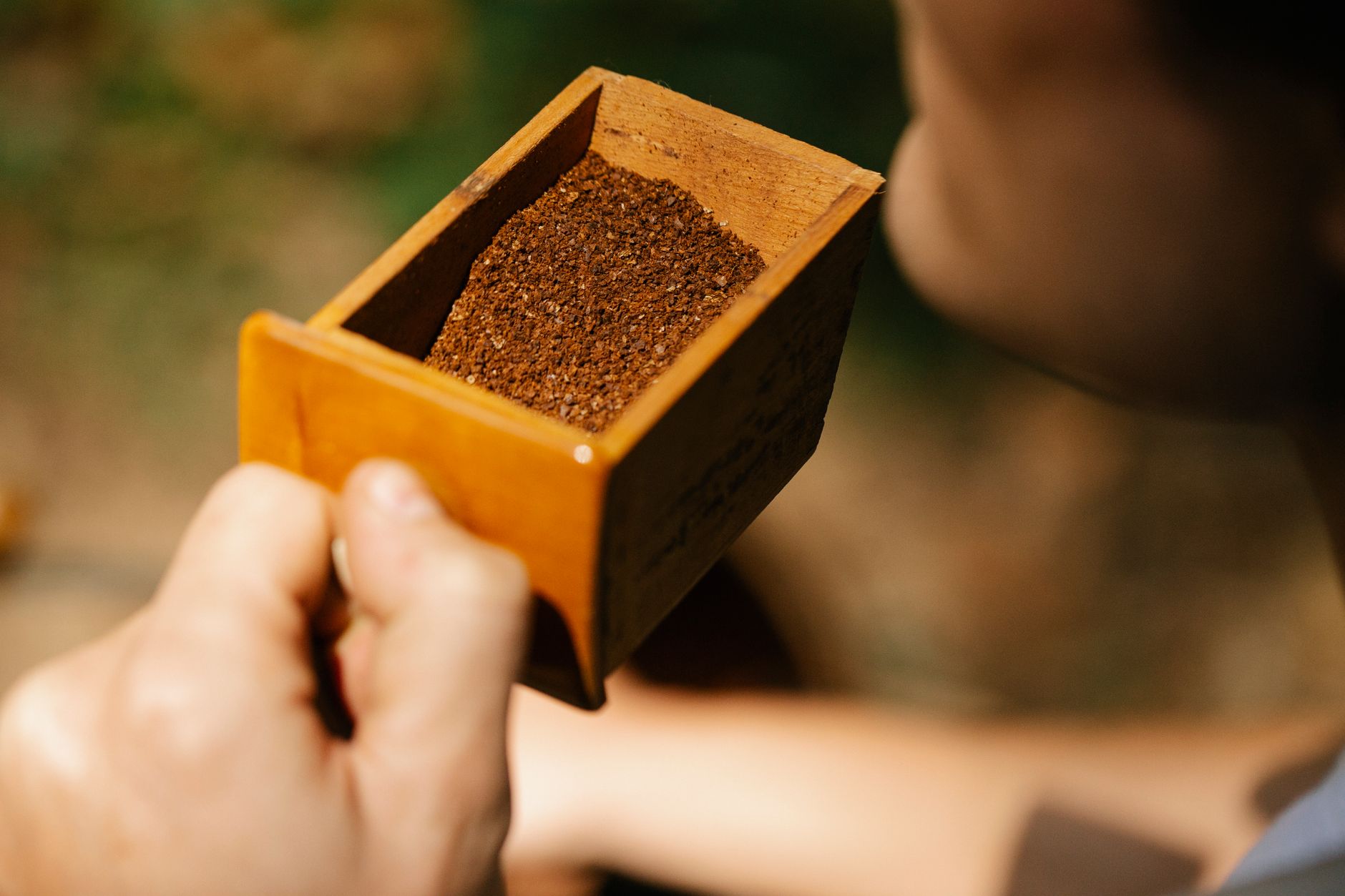 Photo: Michael Burrows via Pexels
These variables interact. A coarser grind with higher temperature and longer contact time can hit the same extraction as a fine grind at lower temperature. Understanding this lets you diagnose problems: a flat, bitter espresso likely needs coarser grinding or a shorter shot time, not a different bean.
The Chemistry of Roasted Coffee
Coffee contains over 1,000 identified flavor-active compounds. The roasting process transforms raw green beans through a cascade of chemical reactions — Maillard browning, caramelization, Strecker degradation, and pyrolysis — each contributing different flavor families to the final cup.
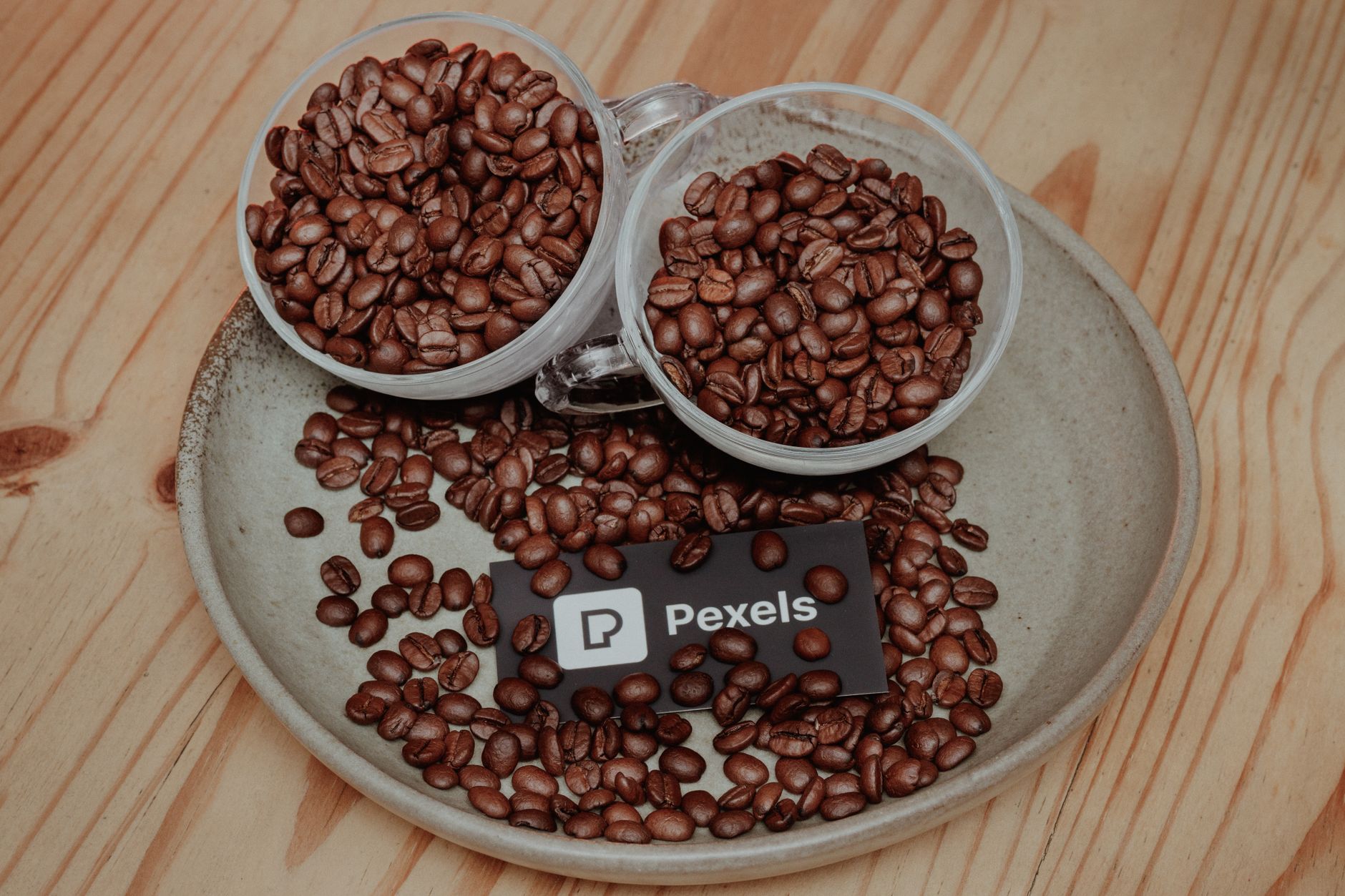 Photo: Alexandre Canteiro via Pexels
Maillard Reaction
The Maillard reaction is not caramelization (a common misconception). It’s a non-enzymatic browning reaction between amino acids and reducing sugars, occurring between roughly 140°C and 165°C during roasting. It produces hundreds of compounds including furans (caramel-like), pyrazines (earthy, nutty), and aldehydes (fruity, floral).
Lighter roasts preserve more Maillard-generated fruity and floral compounds. As roast temperature climbs, these delicate compounds degrade and pyrolysis products — the dark, bitter, smoky notes — dominate.
Caramelization
Sucrose in green coffee begins caramelizing around 160°C, producing compounds like diacetyl (buttery), hydroxymethylfurfural (sweet, caramel), and various furans. A medium roast profile that hits peak caramelization without burning through it is why a well-roasted Ethiopian Sidama tastes like brown sugar and bergamot, not char.
Chlorogenic Acids
Green coffee is rich in chlorogenic acids (CGAs) — phenolic antioxidants that make up 6–10% of the dry weight. During roasting, CGAs degrade into quinic acid and caffeic acid. Quinic acid contributes to perceived bitterness and acidity; caffeic acid has its own astringent note. Light roasts retain more intact CGAs, which is why they often taste brighter and more acidic. Dark roasts have broken down more CGAs but have accumulated more bitter pyrolysis compounds — the bitterness shifts in character, not in magnitude.
Lipids and the Crema
Coffee lipids (cafestol and kahweol) are concentrated in the oily surface layer of the bean. They’re hydrophobic — water alone barely touches them. Pressure brewing (espresso) and unfiltered methods (French press, Turkish coffee) push lipids into the cup, contributing body and mouthfeel. Paper filters trap most lipids, which is why pour-over and drip coffee taste cleaner and lighter-bodied.
Espresso crema is an oil-in-water emulsion stabilized by CO₂ and proteins. Freshly roasted coffee produces more CO₂ (from ongoing degassing), which is why beans 7–21 days off-roast pull crema more easily than stale beans. The crema itself contributes little flavor — it’s primarily a textural and visual indicator of freshness and extraction dynamics.
Water: The Universal Solvent in Your Cup
Water quality directly controls extraction efficiency. The SCA recommends water with 75–250 mg/L total dissolved solids, a pH of 7 (neutral), and no chlorine. Magnesium ions are the primary extraction catalyst; calcium ions contribute body but can interfere with extraction; sodium softens perceived bitterness.
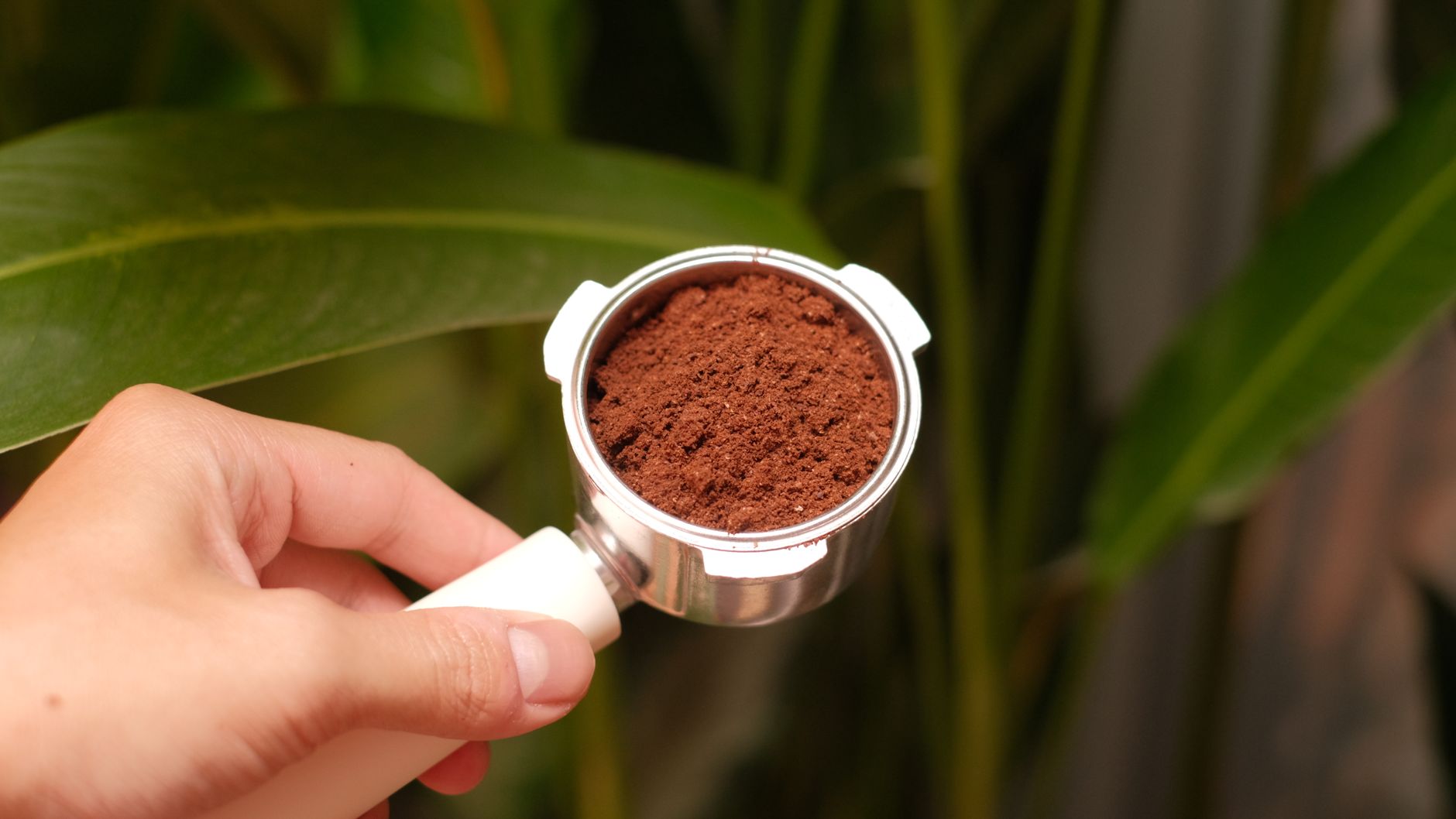 Photo: Pew Nguyen via Pexels
Hardness and Extraction
Magnesium (Mg²⁺) ions bind selectively to aromatic coffee compounds, pulling them into solution more effectively than pure water. Studies from the University of Bath confirmed that Mg-rich water extracts different flavor compounds than Ca-rich water — specifically more of the aromatic, fruity compounds that characterize a well-extracted cup.
Calcium contributes total hardness but doesn’t enhance extraction the same way. Very soft water (under 50 mg/L TDS) produces flat, dull coffee because there aren’t enough ions to facilitate compound dissolution. Distilled or reverse-osmosis water is actively bad for espresso — it extracts erratically and can corrode machine boilers.
Very hard water (above 300 mg/L) causes scale buildup in boilers and can actually suppress extraction by forming a mineral film on grounds that acts as a barrier.
The Chlorine Problem
Municipal tap water contains chlorine or chloramine as a disinfectant. Even at low concentrations (0.5–1 mg/L), chlorine reacts with coffee compounds to produce chlorophenols — intensely medicinal, band-aid off-notes that completely override delicate flavors. A basic carbon filter removes free chlorine; chloramine requires catalytic carbon or chemical treatment.
Brew Temperature
The SCA standard is 90–96°C (195–205°F), measured at the point of contact with grounds. Temperature is a solubility lever: hotter water dissolves more compounds faster, including bitter ones. A general rule: lighter roasts benefit from higher temperatures (94–96°C) because their flavor compounds are less soluble; darker roasts do better at lower temperatures (88–92°C) to limit bitter over-extraction.
Cold brew is a controlled under-extraction by design. Soaking grounds in cold water for 12–24 hours extracts primarily the low-solubility, low-bitterness compounds — the result is a smooth, low-acid concentrate that lacks the brightness of hot-brewed coffee.
Grind Science: Surface Area and Particle Distribution
Grind size controls surface area, and surface area controls extraction rate. A finer grind doesn’t just brew faster — it changes which compounds extract at what proportion. Grinder quality matters as much as grind setting: uneven particle size distribution (high “fines” content) causes simultaneous over- and under-extraction in the same brew.
Particle Distribution and Bimodal Grinding
No grinder produces a single, uniform particle size. All grinding generates a bimodal distribution: a coarse fraction at the target size and a fines fraction — particles much smaller than intended. Fines extract extremely quickly, reaching over-extraction within seconds, while the coarser particles are still in the under-extraction zone.
This is why espresso tastes bitter and sour simultaneously — the fines over-extract (bitter) while the coarser particles under-extract (sour/fruity), and you taste both at once. High-quality flat burr grinders produce a tighter, more uniform distribution with fewer fines. That’s the practical reason why a Niche Zero or Lagom P64 produces cleaner-tasting espresso than a blade grinder at any setting.
Blade grinders are not grinders — they’re choppers. The blade rotates randomly, producing wildly inconsistent particle sizes. Using one for espresso is comparable to trying to bake consistently while randomly measuring flour with your hands.
Burr Types: Flat vs. Conical
Flat burr grinders align two parallel circular burrs. Beans enter from the center and are ground outward by centrifugal force. They produce a more bimodal distribution but with a tighter peak — specialist espresso grinders are almost exclusively flat burr.
Conical burr grinders use an inner cone rotating inside an outer ring burr. The longer grinding path and lower RPM produce a slightly less bimodal distribution with more “boulders” (large fragments) but fewer ultra-fine particles. Many home baristas prefer conical burrs for filter coffee because they produce a cleaner cup with less fines-driven bitterness.
The Effect on Espresso vs. Filter
Espresso requires a very fine grind because the 25–30 second brew time at 9 bar pressure is extremely short. Fine grinding maximizes surface area and creates enough resistance (puck resistance) to slow water flow to the target 1–4 ml/second. Filter brewing uses gravity or gentle pressure, so coarser grinds with longer contact times achieve equivalent extraction without channeling.
Caffeine: What the Science Actually Says
Caffeine (1,3,7-trimethylxanthine) is the most pharmacologically active compound in coffee, but the relationship between brew method and caffeine content is more complicated than most people assume. A standard 8 oz drip coffee contains 80–120 mg of caffeine; a 1 oz espresso shot contains 60–75 mg — less total caffeine, higher concentration.
Caffeine is highly water-soluble across a wide temperature range. It extracts early in the brewing process — you’d have to dramatically under-extract coffee to meaningfully reduce its caffeine content. The common belief that dark roasts have more caffeine is wrong: caffeine is largely stable through roasting, and dark-roasted beans are denser and lighter by mass (water and CO₂ have off-gassed), so by weight you’re using slightly more beans per gram — the difference is negligible.
For detailed caffeine comparisons across every brew method, see How Much Caffeine Is in a Cup of Coffee? (All Brew Methods) and Caffeine in Espresso vs Coffee: Which Has More?.
Brew Ratios and the SCA Brewing Control Chart
The SCA Brewing Control Chart maps the relationship between extraction yield and beverage strength (TDS). “Ideal” by SCA standards is the 18–22% extraction yield window at 1.15–1.55% TDS for filter coffee — but this is a statistical average of preference, not a law of physics.
| Brew Method | Target Ratio (Coffee:Water) | TDS Target | Extraction Target |
|---|---|---|---|
| Espresso | 1:2 to 1:2.5 | 8–12% | 18–22% |
| Pour-over / Drip | 1:15 to 1:17 | 1.15–1.45% | 18–22% |
| French Press | 1:12 to 1:15 | 1.2–1.5% | 18–22% |
| Cold Brew Concentrate | 1:4 to 1:6 | 3–5% | 14–18% |
| AeroPress | 1:6 to 1:15 | 1.2–4% | 17–22% |
| Moka Pot | 1:7 to 1:10 | 3–6% | 16–20% |
The ratio is the biggest lever most home brewers never touch. If your coffee tastes consistently weak, the answer is probably using more coffee per gram of water, not brewing hotter or longer.
Understanding TDS vs. Strength
TDS measures the concentration of dissolved solids. “Strength” is a sensory experience influenced by TDS but also by which compounds are dissolved. A technically correct 1.3% TDS espresso-based filter dilution can taste thin if extraction yield is low (18%) — you have the right concentration of under-extracted compounds. Same TDS at 21% extraction tastes full and balanced.
This is why refractometers are useful diagnostic tools but not creative directors. They tell you what the numbers are; taste tells you whether those numbers are hitting your target.
The Roast Spectrum: Light to Dark
Roast level is the single biggest determinant of flavor profile in the cup — bigger than origin, variety, or processing method. It determines which compounds survive into your cup, what acids are present, and how soluble everything is.
| Roast Level | Internal Temp | Flavor Profile | Extraction Behavior |
|---|---|---|---|
| Light (Cinnamon, City) | 195–210°C | Fruity, floral, bright acid | Requires higher brew temp; less forgiving |
| Medium (City+, Full City) | 210–225°C | Balanced, caramel, nut | Widest extraction window |
| Medium-Dark (Full City+) | 225–230°C | Bittersweet, dark fruit, cocoa | Lower brew temp recommended |
| Dark (French, Italian) | 230°C+ | Smoke, char, low acid | Narrow window before ash-bitter |
Light roasts are denser, harder, and more difficult to extract evenly. Their flavor compounds are less soluble, requiring hotter water and a finer grind to hit the same extraction yield as a medium roast. This is why “light roast is hard to brew well” is genuinely true — the physics are working against you.
Dark roasts have more porous, brittle cellular structure from the extended heat exposure. They extract faster and more easily but have a narrow window between “under-extracted and flat” and “over-extracted and ashy.”
First and Second Crack
During roasting, two audible “crack” events mark structural changes in the bean:
First crack (~196°C): Steam pressure builds inside the bean until cells rupture — you hear popping like popcorn. This is the minimum roast endpoint; anything before this is underdeveloped. The bean is still sour and grassy before first crack.
Second crack (~224°C): CO₂ pressure causes a second, faster crackling as the cellular structure begins to fragment. Anything roasted into or past second crack is a dark roast. Oil begins migrating to the surface. Continuing past this point toward Italian or Spanish roast means the bean is carbonizing — literally starting to become charcoal.
Pressure and Espresso Physics
Espresso is brewed at 9 bar of pressure — nine times atmospheric pressure. This pressure doesn’t just force water through faster; it changes the chemistry of extraction by solubilizing compounds that wouldn’t dissolve under gravity brewing, emulsifying coffee oils, and physically shearing cell walls to release lipids.
The 9-bar standard was established empirically by Italian baristas in the mid-20th century. Modern specialty espresso explores lower pressures (6–8 bar “slayer-style” profiles) and extended pre-infusion, which allows more even saturation of the puck before full pressure is applied.
Pre-Infusion
Pre-infusion wets the puck at low pressure (2–4 bar) for 3–10 seconds before ramping to full pressure. This matters because dry coffee grounds repel water initially — the phenomenon is called channeling. Water finds paths of least resistance through the puck, creating channels where extraction is extremely high while the surrounding coffee under-extracts. Pre-infusion allows even saturation before channeling dynamics set in.
Temperature Stability
Espresso machines with poor thermal stability produce shots that vary in extraction because the brew temperature swings between shots. E61 group heads, saturated groups, and PID controllers exist specifically to maintain temperature at the puck within ±1°C. A machine that brews the first shot at 95°C and the second at 89°C (while the boiler recovers) will produce inconsistent results regardless of everything else the barista controls.
Degassing and CO₂ in Coffee
Freshly roasted coffee releases CO₂ continuously — a process called degassing. Brewing coffee too soon after roasting results in blooming (CO₂ escaping during extraction), agitation of the puck (in espresso), and uneven extraction. The optimal rest period is 7–21 days post-roast for espresso, 5–14 days for filter coffee.
During roasting, Maillard and pyrolysis reactions generate large quantities of CO₂ that become trapped in the cellular structure of the bean. After roasting, this CO₂ slowly escapes — the rate depends on roast level (darker roasts degas faster), grind size (grinding dramatically accelerates degassing), and storage conditions (heat and oxygen accelerate it; cool, sealed storage slows it).
The “bloom” step in pour-over brewing — adding a small amount of hot water and waiting 30–45 seconds — allows CO₂ to escape before full brewing begins. If you skip blooming, CO₂ bubbles interfere with water contact, creating uneven extraction and a rushing-gassy texture in the cup.
Espresso pulled from beans only 2–3 days off-roast will have unstable crema — large, fast-dissipating bubbles rather than persistent, fine foam — because the CO₂ is exiting the puck violently during extraction. The result is inconsistent flow rates and choppy extraction.
Flavor Compounds: Acids, Sugars, and Bitters
Coffee’s flavor complexity comes from three main compound classes: organic acids (brightness, fruitiness), sugars and browning products (sweetness, body, caramel), and phenolic and alkaloid compounds (bitterness, astringency). Balance between these classes defines a well-extracted cup.
Organic Acids
Coffee contains multiple organic acids, each with a distinct flavor contribution:
| Acid | Origin | Flavor Note |
|---|---|---|
| Citric acid | Origin compound, degrades in roasting | Lemon, lime brightness |
| Malic acid | Origin compound | Apple, pear, green fruit |
| Acetic acid | Fermentation artifact | Vinegar (undesirable at high levels) |
| Quinic acid | CGA degradation product | Dry, astringent bitterness |
| Phosphoric acid | Origin mineral | Clean, crisp acidity |
| Lactic acid | Fermentation processing | Smooth, creamy texture |
Light roasts from East Africa (Ethiopian, Kenyan) are typically high in citric and phosphoric acids — this is origin chemistry, not a processing artifact. As roast level increases, citric and malic acids break down, and quinic acid accumulates. This is why dark roast coffees taste “bitter-sour” when over-extracted: the organic acid brightness is gone, but quinic acid remains.
Sweetness Without Sugar
Coffee contains no appreciable sucrose after roasting — it’s almost entirely consumed in caramelization reactions during roasting. The “sweetness” in good coffee is primarily from Maillard products: certain furans, ketones, and aldehydes that trigger sweetness-adjacent sensory responses. This is why truly sweet-tasting coffee requires precise roasting — the compounds that create sweetness are produced in a narrow temperature window and easily burned off.
Processing Methods and Their Chemical Impact
Coffee processing — how the cherry is handled between harvest and green bean — introduces distinctive fermentation-derived compounds that roasting doesn’t erase. Natural (dry) processed coffees retain fruity, winey notes from extended fruit contact; washed (wet) processed coffees express cleaner origin flavors; honey-processed coffees fall between.
Washed Processing
The cherry skin and fruit are removed immediately after harvest, and the beans (still covered in mucilage) are fermented in water tanks for 24–72 hours before washing. This controlled fermentation removes mucilage and develops clean, distinct acidity. Washed Ethiopian coffees show the origin’s floral and citric profile most clearly.
Natural Processing
Whole cherries are dried in the sun for 4–6 weeks with the fruit intact. The bean ferments inside the cherry, absorbing fruity organic acids, esters, and alcohols. Natural Ethiopians from Yirgacheffe typically show intense blueberry and jasmine notes — these are fermentation-derived esters, not flavor additives.
The tradeoff: natural processing requires precise humidity and temperature control. Poor naturals produce overpowering, barnyard-fermented off-notes from acetic acid overproduction (ethyl acetate, butyric acid). Good naturals are extraordinary; bad naturals are undrinkable.
Anaerobic Fermentation
A newer processing technique: coffee is sealed in tanks with limited or no oxygen before pulping or drying. Anaerobic conditions favor different microbial populations and produce higher concentrations of lactic acid and unusual esters. The result is often polarizing — extremely fruit-forward, sometimes with tropical or even boozy notes that some specialty drinkers prize and others find overwhelming.
→ See Also
- How Much Caffeine Is in a Cup of Coffee? (All Brew Methods)
- Caffeine in Espresso vs Coffee: Which Has More?
FAQ
What is extraction yield in coffee? Extraction yield is the percentage of a coffee’s dry mass that dissolved into the brew water. It’s calculated from TDS and brew ratio. The SCA’s recommended target range is 18–22% — below this, the cup is sour and thin; above, it’s bitter and harsh.
Why does my coffee taste sour? Sourness in coffee means under-extraction. The acidic, fruity compounds dissolve first; if extraction stops before sweeter and heavier compounds follow, sour dominates. Fix it by grinding finer, brewing hotter, extending contact time, or using more agitation — any change that increases extraction.
Does dark roast have more caffeine than light roast? No. Caffeine is heat-stable and survives roasting largely intact. Dark-roasted beans are lighter by mass (they’ve lost water and CO₂), so if you measure by weight you’ll use slightly more beans for the same dose — but the caffeine difference is negligible. By volume (scoops), dark roast beans are larger after expansion, meaning fewer beans per scoop — if anything, slightly less caffeine per scoop.
What does TDS mean for coffee? TDS stands for Total Dissolved Solids — a measure of how much coffee material has dissolved into the water, expressed as a percentage. For filter coffee, 1.15–1.45% TDS is the SCA standard for optimal strength. Espresso runs at 8–12% TDS. TDS alone doesn’t determine cup quality; extraction yield (which compounds are dissolved) matters equally.
Why does grind size affect taste so much? Grind size controls surface area and particle distribution. Finer grinding creates more surface area, accelerating extraction. But inconsistent grinding (especially blade grinding) produces mixed particle sizes that extract at different rates simultaneously — some particles over-extract (bitter), others under-extract (sour), in the same brew.
What is the Maillard reaction in coffee roasting? The Maillard reaction is a chemical reaction between amino acids and reducing sugars that occurs during roasting, roughly between 140°C and 165°C. It produces hundreds of flavor compounds — the nutty, caramel, and fruity notes in roasted coffee. It’s not the same as caramelization, which involves sugars alone and occurs at higher temperatures.
How does water hardness affect coffee extraction? Magnesium ions in water bind selectively to aromatic coffee compounds, improving extraction efficiency. Calcium adds hardness but doesn’t enhance extraction the same way. Very soft water produces flat, dull coffee; very hard water scales equipment and can create a mineral film that suppresses extraction. The SCA recommends 75–150 mg/L total hardness.
What causes coffee to go stale? Staling is primarily driven by oxidation and CO₂ loss. Oxygen reacts with coffee’s volatile aromatic compounds, degrading fruity and floral notes first. CO₂ loss removes the natural preservation layer inside roasted cells. Exposure to heat, moisture, and light accelerates both processes. Store coffee in an airtight container at room temperature, away from light — not in the refrigerator (condensation cycles damage beans).
JSON-LD Schema
Editorial methodology: Assessments are based on manufacturer specifications, published user reviews, and editorial research. Physical hands-on testing is noted explicitly where it occurred. Rankings reflect our editorial judgment and are not influenced by affiliate commission rates. Full editorial policy · Affiliate disclosure