Contents
Coffee Extraction Explained: TDS, Yield, and Taste
TL;DR: Coffee extraction is the process of dissolving soluble compounds from ground coffee into water. The key metrics are TDS (total dissolved solids, measured as a percentage) and extraction yield (the percentage of the coffee’s mass that ended up in the cup). Together, these two numbers tell you whether your coffee tastes the way it does — and exactly how to fix it.
What Is Coffee Extraction?
Coffee grounds hold soluble and insoluble compounds. Extraction is how much of the soluble material you pull into the water. Too little and the cup tastes weak and sour; too much and it turns bitter and hollow. The target extraction yield for most brew methods is 18–22% of the coffee’s dry weight.
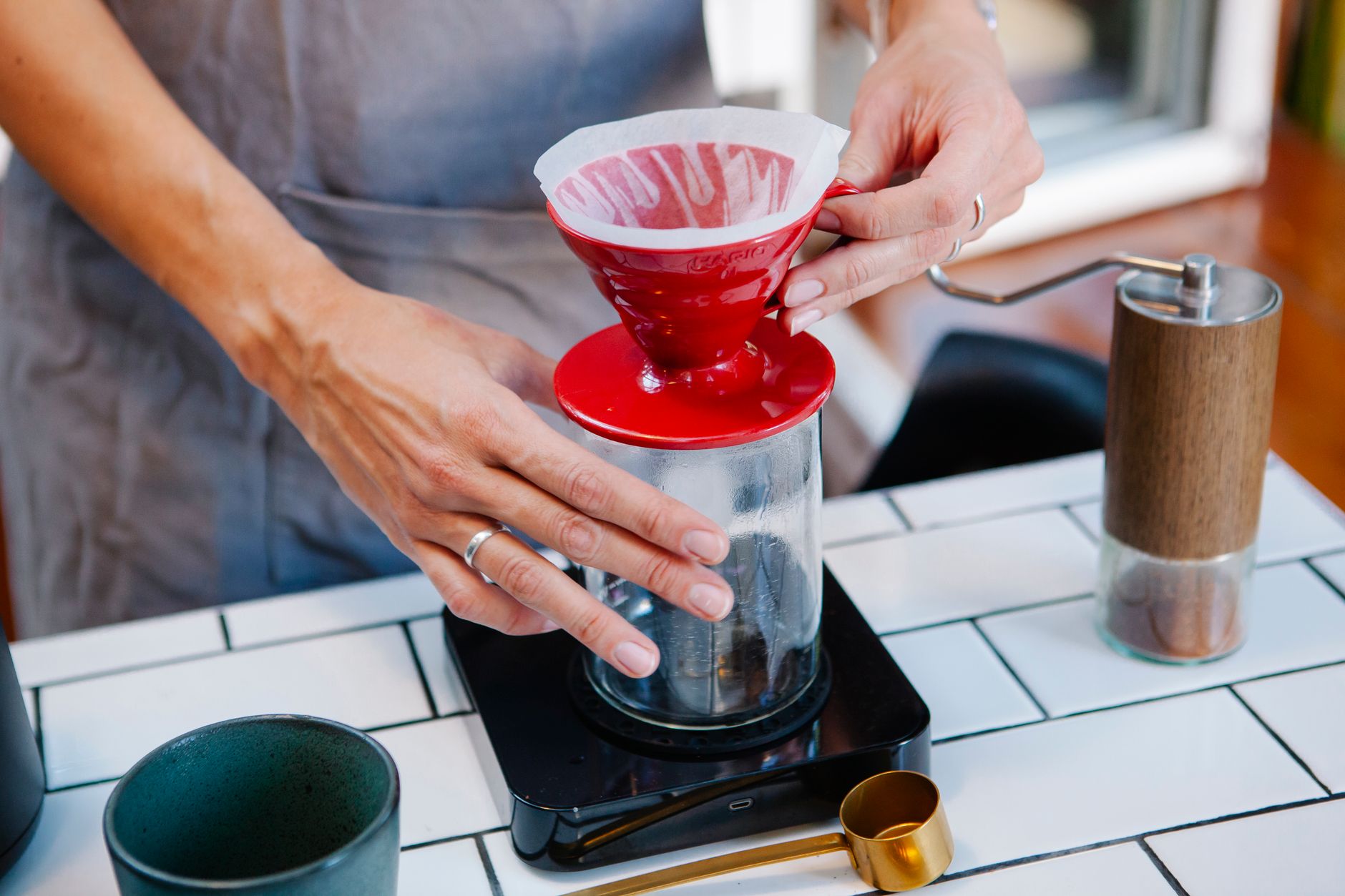 Photo: Tim Douglas via Pexels
Water doesn’t extract everything at the same rate. Fruity acids and light aromatics dissolve first, then sugars and caramel-like Maillard compounds, and finally bitter chlorogenic acids and woody tannins. Stop short and you get a one-dimensional cup with sharp acidity. Push too far and those bitter compounds dominate.
Every variable you control — grind size, water temperature, brew time, agitation, water chemistry — determines where on that extraction curve you land.
TDS: What It Measures and Why It Matters
TDS (total dissolved solids) is the concentration of dissolved coffee in your cup, expressed as a percentage by weight. Specialty coffee targets 1.15–1.45% TDS for most filter methods and 8–12% for espresso. A refractometer reads this directly in 30 seconds.
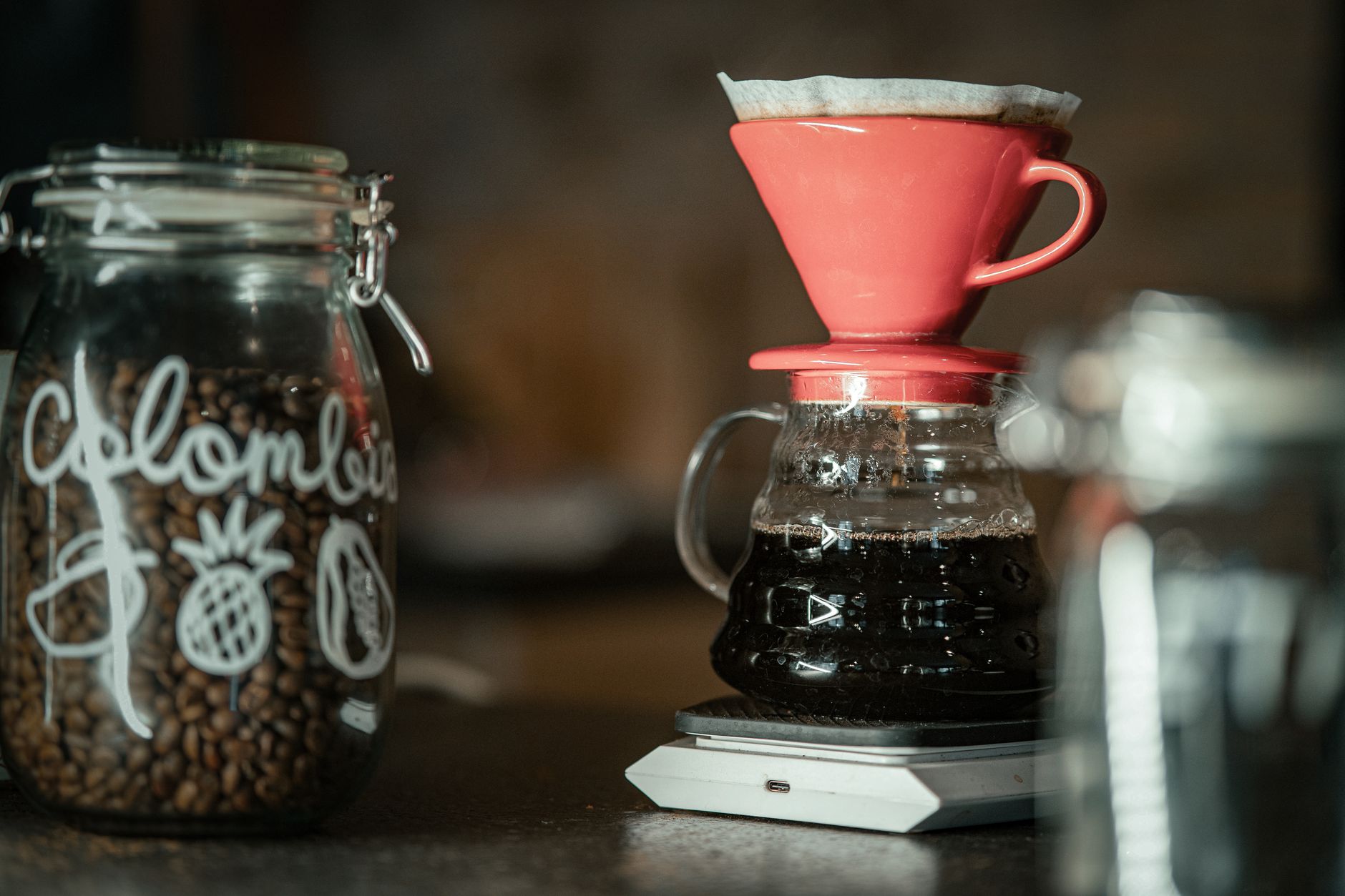 Photo: Ubeydulah Beşir KÖROĞLU via Pexels
TDS tells you strength — how much coffee is in the water. It doesn’t tell you extraction yield on its own. You can hit 1.3% TDS with an under-extracted brew (too much coffee, pulled short) or an over-extracted one (less coffee, pulled long). That distinction matters enormously for diagnosis.
Measuring TDS in Practice
A temperature-compensated optical refractometer is the standard tool. The Atago PAL-COFFEE is the most common lab-grade option. The VST LAB Coffee III is preferred for professional calibration. Budget refractometers work but require discipline: always use cooled, filtered samples and zero the device with distilled water.
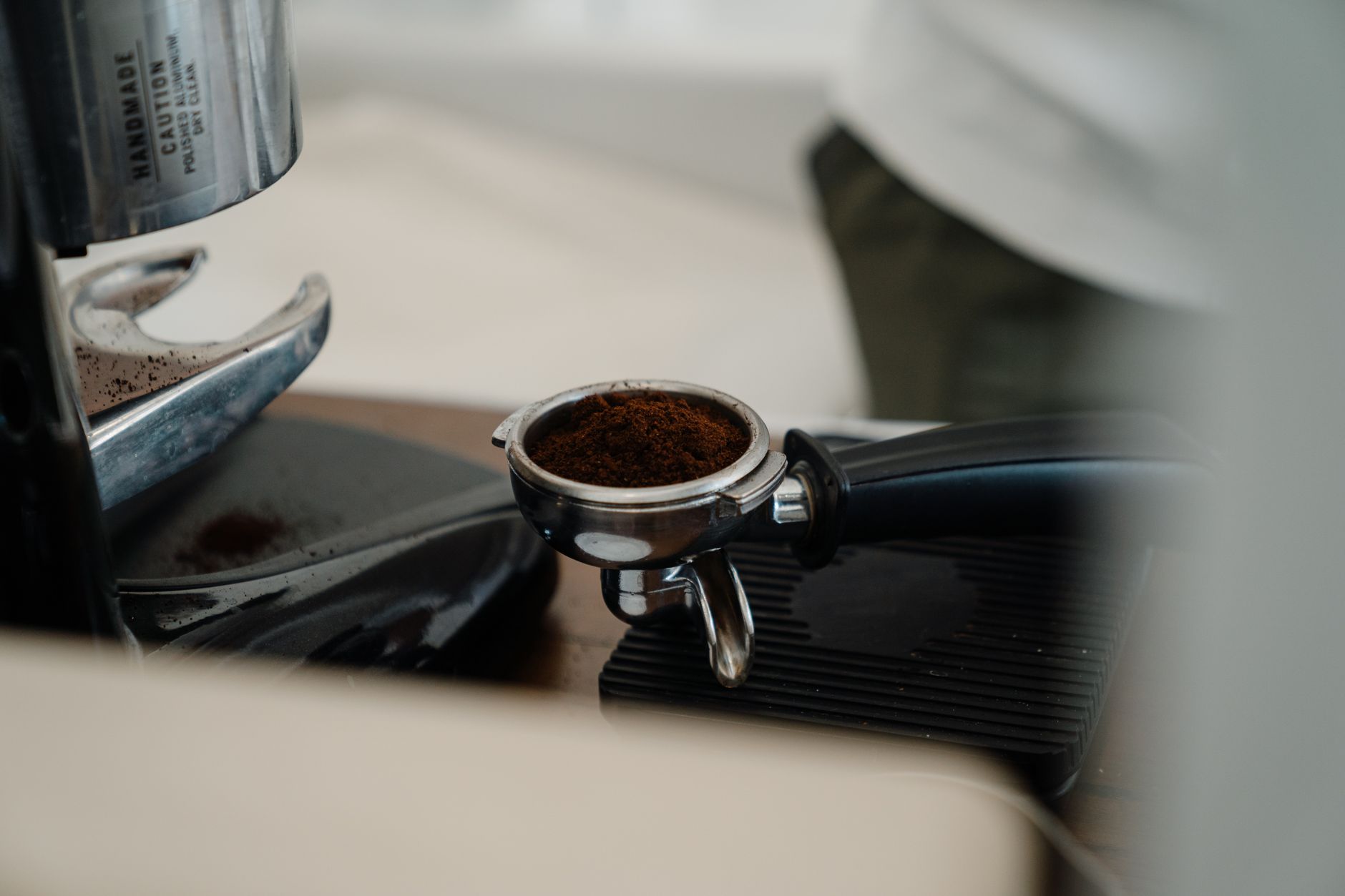 Photo: Ketut Subiyanto via Pexels
Extraction Yield: The Real Number
Extraction yield = the percentage of the coffee’s dry mass that dissolved into the brew. Formula: (brewed weight × TDS%) ÷ dose (g) × 100. A 20g espresso dose producing a 40g shot at 9% TDS gives an extraction yield of 18%. The SCA’s target range is 18–22%.
The formula requires knowing three things: your TDS reading, your output weight (the liquid in the cup), and your dry coffee dose. This is why brewing by weight — not volume — is foundational to dialing in.
The Extraction Yield Formula
Extraction Yield (%) = (Brew Weight × TDS) ÷ Dose × 100For filter coffee with a 500ml brew (≈500g) at 1.35% TDS from a 30g dose:
(500 × 0.0135) ÷ 30 × 100 = 22.5%That number sits at the high edge of the SCA target. Depending on the roast and origin, it may taste balanced or slightly bitter — which leads to the tasting correction.
The Brewing Control Chart
The SCA Brewing Control Chart plots TDS (strength) on the Y-axis against extraction yield on the X-axis. The “ideal” zone is a rectangle roughly 18–22% yield and 1.15–1.45% TDS. Most real-world preference research shows this zone is a starting point, not a law.
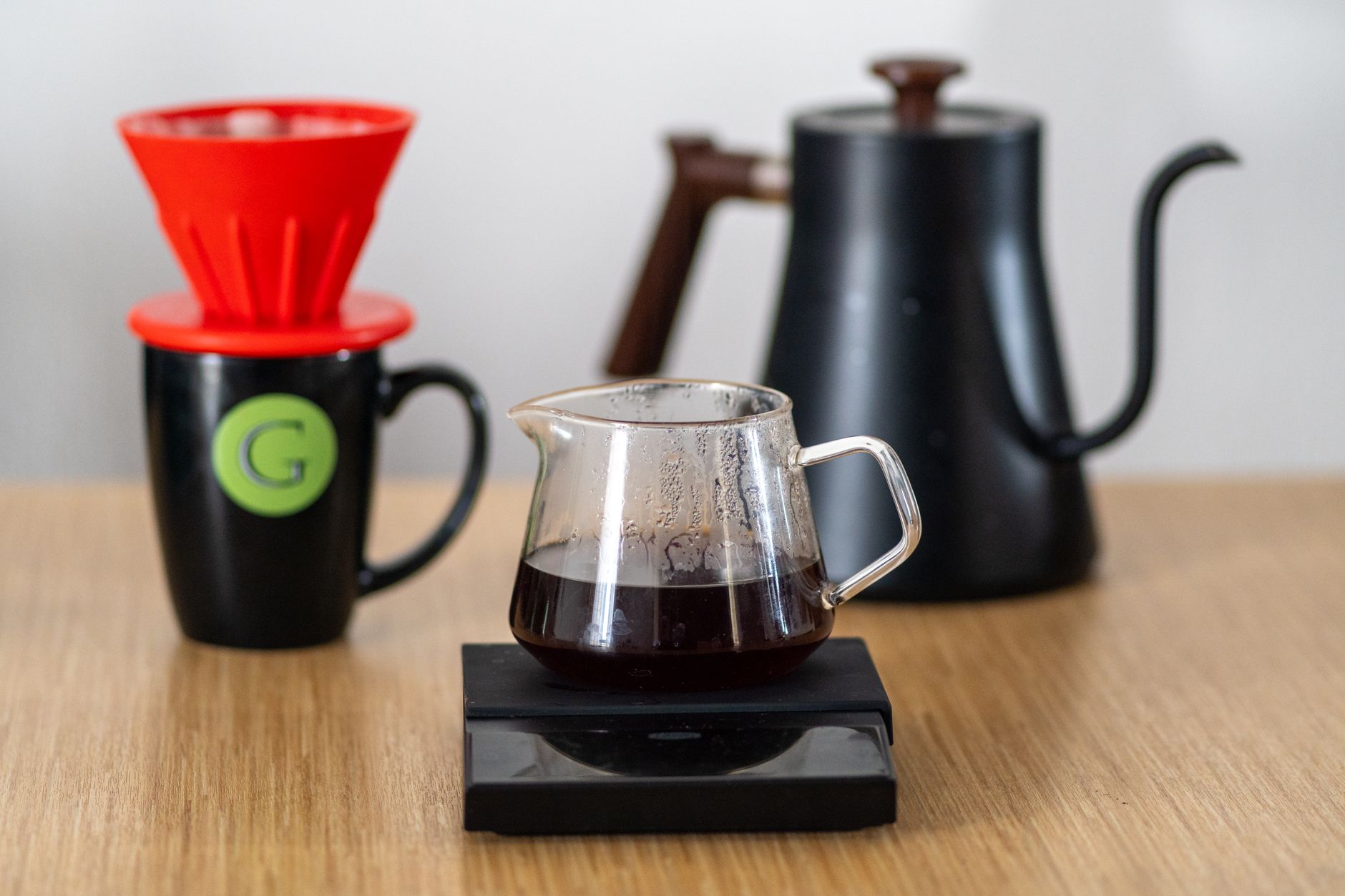 Photo: Israyosoy S. via Pexels
The chart separates four failure modes:
| Quadrant | TDS | Yield | Taste Profile |
|---|---|---|---|
| Weak & Under-extracted | Low | Low | Thin, sour, watery |
| Strong & Under-extracted | High | Low | Dense, sharp, salty-sour |
| Weak & Over-extracted | Low | High | Thin, bitter, hollow |
| Strong & Over-extracted | High | High | Heavy, astringent, harsh |
Most home brewers land in “Strong & Under-extracted” because they grind coarse (short extraction) but use more coffee to compensate for perceived weakness.
How Grind Size, Temperature, and Ratio Drive Extraction
Grind size is the primary extraction lever. Finer grinds expose more surface area and extract faster. Water temperature controls reaction rate — hotter water extracts more, faster. Brew ratio (coffee to water) sets the concentration ceiling independent of yield.
Grind Size
A coarser grind slows extraction and reduces yield at the same brew time. When a cup tastes sour and thin, finer is the first move. When it tastes bitter and dry, go coarser before adjusting anything else.
For espresso, grind changes are measured in micro-increments. A Baratza Encore
Water Temperature
The SCA standard is 90–96°C (195–205°F). Light roasts tolerate and often benefit from the higher end; dark roasts extract faster and can turn harsh above 94°C. Cold brew at 4°C works because time (12–24 hours) substitutes for heat.
Brew Ratio
Ratio is independent of extraction yield but determines TDS directly. A 1:15 ratio (1g coffee per 15g water) concentrates the brew; a 1:17 produces a lighter cup at the same extraction yield. Changing ratio doesn’t fix under- or over-extraction — it changes strength only.
| Brew Method | Typical Ratio | TDS Target |
|---|---|---|
| Espresso | 1:2 – 1:2.5 | 8–12% |
| Moka Pot | 1:5 – 1:7 | 4–6% |
| Pour Over | 1:15 – 1:17 | 1.2–1.45% |
| French Press | 1:12 – 1:15 | 1.2–1.5% |
| Cold Brew | 1:5 – 1:8 (concentrate) | 2–4% |
Channeling, Fines, and Uneven Extraction
Espresso channeling — water finding a low-resistance path through the puck — produces a bimodal extraction: some grounds over-extract while most under-extract. The result is simultaneously sour and bitter in the same shot. Distribution and tamping fix it, not grind or temperature.
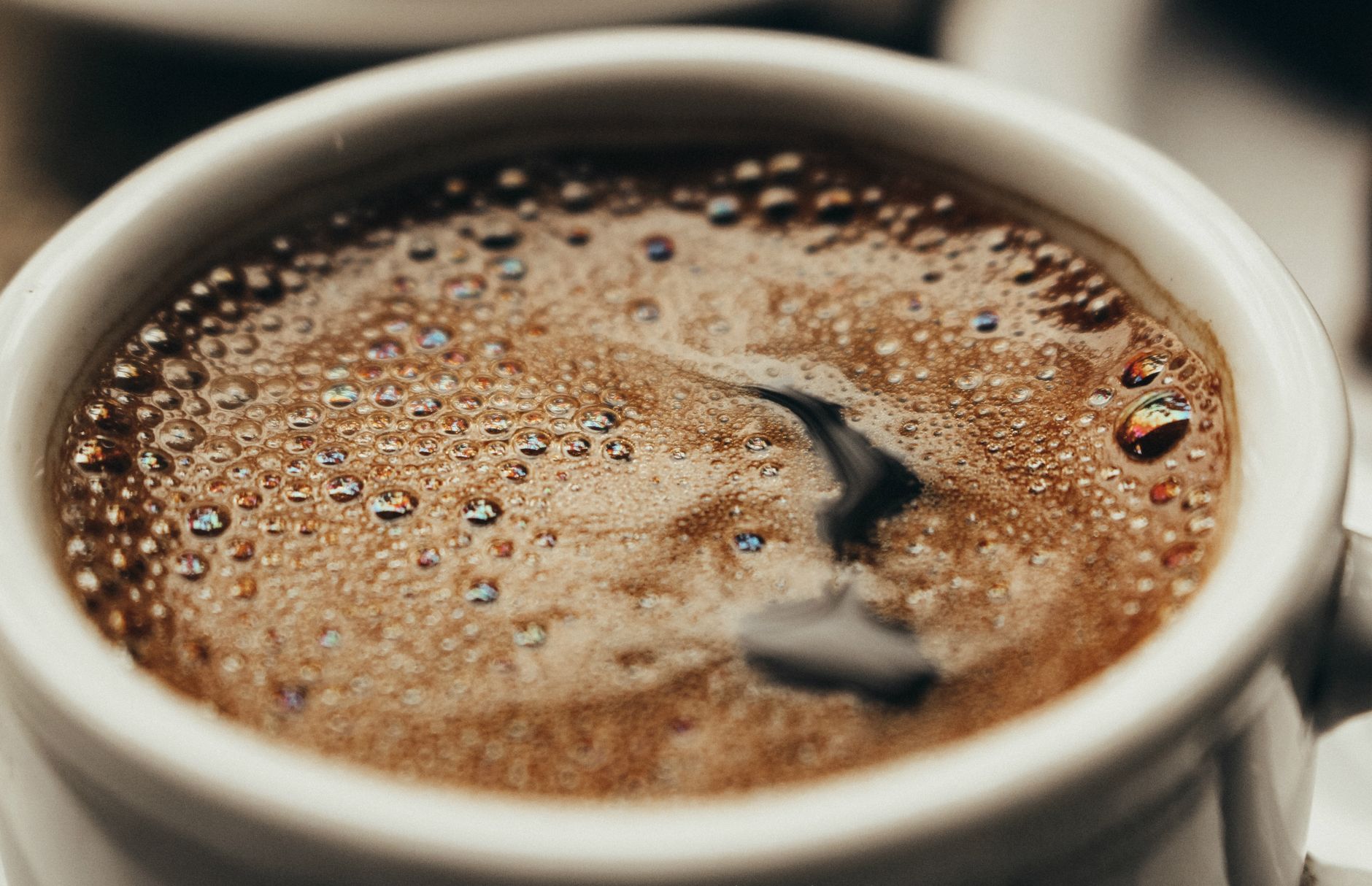 Photo: Samer Daboul via Pexels
For filter brewing, fines migration (tiny particles washing through the filter and continuing to extract in the cup) contributes to bitterness even when overall yield looks correct. A grinder with a tight particle size distribution — the Comandante C40 is the benchmark for hand grinders — reduces fines and makes yield measurements more predictive.
→ See Also
- Coffee Science: The Complete Guide to Extraction, Chemistry & Flavor
- How Much Caffeine Is in a Cup of Coffee? (All Brew Methods)
- Caffeine in Espresso vs Coffee: Which Has More?
FAQ
What is a good extraction yield for espresso? The standard target is 18–22%, with most specialty baristas aiming for 19–21%. Some light roast espresso tastes better at 22–23% because the higher yield balances intense fruit acidity. Taste is the final judge — use yield as a diagnostic tool, not an absolute target.
Can I measure coffee extraction without a refractometer? Not precisely. You can taste your way to a reasonable extraction using the sour-vs-bitter diagnostic: sour means under-extracted (extract more), bitter means over-extracted (extract less), balanced means you’re in range. A refractometer adds numerical confirmation and removes guesswork when troubleshooting inconsistent results.
Why does my coffee taste bitter even with low TDS? Low TDS with bitter taste is the “Weak & Over-extracted” quadrant — you extracted too high a yield from too little coffee. Increase your dose or reduce brew time/agitation. Alternatively, if you’re using very dark-roasted coffee, the roast itself contributes bitterness that no extraction adjustment fully eliminates.
Does water hardness affect coffee extraction? Yes, significantly. Magnesium ions in water enhance extraction and emphasize brightness; calcium creates heavier body. Extremely soft water (below 50 ppm total hardness) under-extracts and tastes flat; very hard water (above 200 ppm) suppresses volatile aromatics and can coat equipment with scale. The SCA water quality standard targets 75–150 ppm total hardness with a neutral pH of 7.
What’s the difference between strength and extraction? Strength is TDS — how concentrated the brew is in the cup. Extraction is the yield percentage — how much of the coffee’s mass dissolved. You can have strong under-extracted coffee (high TDS, low yield) or weak over-extracted coffee (low TDS, high yield). Both taste wrong for different reasons. Fixing strength without fixing extraction makes the cup more concentrated in the wrong direction.
Editorial methodology: Assessments are based on manufacturer specifications, published user reviews, and editorial research. Physical hands-on testing is noted explicitly where it occurred. Rankings reflect our editorial judgment and are not influenced by affiliate commission rates. Full editorial policy · Affiliate disclosure