Contents
Almond Milk vs Oat Milk for Espresso: Which Steams Better?
TL;DR: For steaming, oat milk wins — its higher carbohydrate content produces stable microfoam close to whole milk. Almond milk foams poorly, splits under high heat, and tastes thin against espresso. In almond milk vs oat milk espresso drinks, oat milk is the barista’s default for a reason, though almond milk works in iced or no-foam applications.
Oat Milk vs Almond Milk: The Core Difference
Direct answer: Oat milk contains 15–20g of carbohydrates per 100ml — mostly from starch and beta-glucan — which gives it the body and stability to form tight microfoam. Almond milk has 1–3g of carbs and almost no protein structure, so it foams inconsistently, collapses quickly, and can split or curdle against hot espresso.
 Photo: Snapwire via Pexels
The science here is straightforward. Foam needs two things: proteins to trap air bubbles and sugars/starches to stabilize them. Whole milk has both in abundance. Oat milk — especially barista editions — is engineered to approximate that matrix. Almond milk has neither in meaningful quantity, relying on stabilizers (gellan gum, sunflower lecithin) that only partially compensate.
| Property | Oat Milk (Barista) | Almond Milk (Barista) | Whole Milk |
|---|---|---|---|
| Protein per 100ml | 1–1.5g | 0.4–0.8g | 3.5g |
| Carbohydrates | 15–20g | 1–3g | 4.7g |
| Fat | 3–5g | 2–4g | 3.5g |
| Foam stability | High | Low–Medium | Very High |
| Ideal temp range | 55–65°C | 50–60°C | 60–68°C |
| Splits under heat? | Rarely | Often (high acidity espresso) | No |
How Each Milk Steams in Practice
Direct answer: Oat milk steams within 5–10°C of whole milk technique. Almond milk demands lower temperature, gentler steam pressure, and a shorter steam time — push it past 60°C and it separates on contact with espresso, especially light roasts with high acidity.
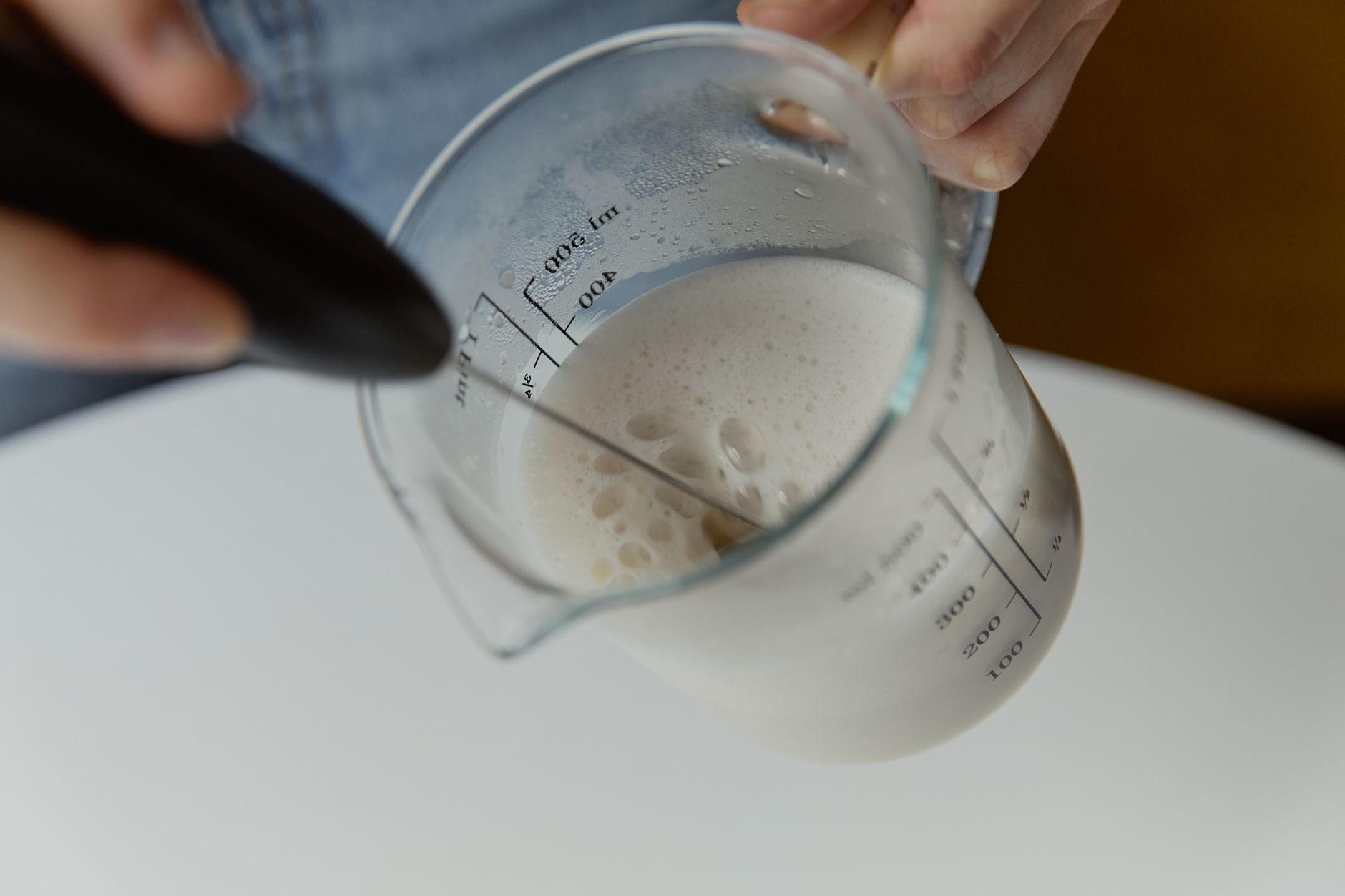 Photo: Darina Belonogova via Pexels
Steaming Oat Milk
Use a barista-formulated oat milk — standard grocery versions contain less stabilizer and foam poorly. The technique mirrors whole milk:
- Pitcher angle: Standard 45°, tip just below surface
- Incorporation phase: 3–5 seconds of surface hissing
- Stretch phase: Minimal — oat milk needs very little air addition
- Target temperature: 58–62°C (use a thermometer or practice stopping before the pitcher becomes uncomfortable to hold)
- Texture: Should feel like thin paint — dense, glossy, no large bubbles
Oat milk holds microfoam for 30–45 seconds before it starts to stratify. Pour immediately.
Steaming Almond Milk
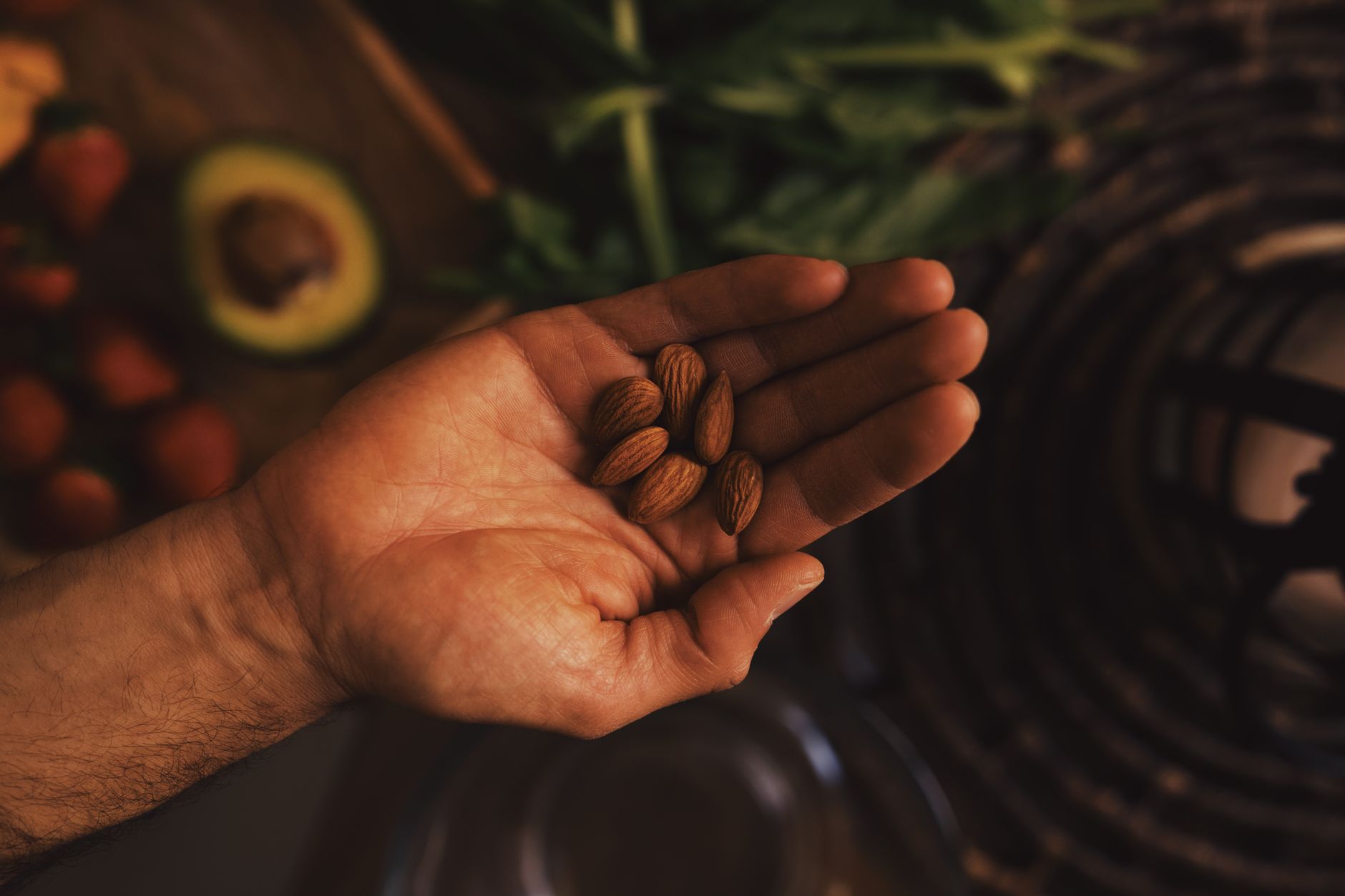 Photo: LEONARDO VAZQUEZ via Pexels
Almond milk is less forgiving. The lower protein and fat content means bubbles are larger and break down faster.
- Pitcher angle: Slightly more upright — encourage rotation, not aeration
- Steam pressure: Reduce pressure if your machine allows it, or use shorter bursts
- Target temperature: 54–58°C maximum — higher than this invites splitting
- Stretch phase: 1–2 seconds only; almond milk over-aerates easily, producing dry foam rather than microfoam
- Texture goal: Looser than oat milk — more latte foam than flat white foam
The splitting risk increases with light-roast espresso because light roasts are more acidic. Acid destabilizes the emulsion in almond milk. If you’re pulling a bright Ethiopian natural, almond milk is a gamble.
Flavor Profile Against Espresso
Direct answer: Oat milk’s mild sweetness and neutral grain flavor integrate with espresso without competing. Almond milk’s nutty, slightly bitter background can clash with certain origins, though it works well with chocolate-forward medium-dark roasts.
 Photo: Mike C via Pexels
Oat milk tastes like lightly sweetened oats — which is close enough to neutral that it doesn’t redirect the cup. Its sweetness comes from enzymatic starch conversion (the same reason oat milk is sweeter than its ingredient list suggests), which softens bitter espresso edges without adding sugar.
Almond milk introduces its own flavor signature: faint nuttiness, slight bitterness from almond skins, and a thinner mouthfeel. In a flat white, where the milk-to-espresso ratio is tight, this can work pleasantly with a medium roast. In a 12oz latte, it thins everything out.
| Drink Format | Oat Milk | Almond Milk |
|---|---|---|
| Flat white | Excellent | Acceptable |
| Cortado | Very good | Good (low milk volume hides texture) |
| Latte (8oz) | Excellent | Mediocre |
| Iced latte | Good | Good (texture less important cold) |
| Cappuccino (wet) | Excellent | Poor (foam collapses) |
| Cold brew drink | Fine | Works well (no steaming required) |
Extraction Parameters for Plant Milk Espresso
Dose / Yield / Ratio / Time / Temperature / Pressure
| Parameter | Oat Milk Drinks | Almond Milk Drinks |
|---|---|---|
| Dose | 18–20g | 18–20g |
| Yield | 36–40g | 36–38g (slightly ristretto helps) |
| Ratio | 1:2 | 1:1.9–2 |
| Time | 26–32s | 25–30s |
| Temperature | 93–94°C | 91–93°C (lower temp = less acid = less splitting) |
| Pressure | 9 bar | 9 bar |
For almond milk drinks specifically, pulling the espresso slightly shorter and cooler reduces acidity — which is the main trigger for splitting.
Puck prep: No changes required for plant milk drinks. Standard WDT to break up clumps, even distribution, level tamp at 15–20kg, smooth puck surface. Channeling creates uneven extraction and sharp acidity spikes that are more noticeable in almond milk drinks.
Troubleshooting Matrix
| Symptom | Likely Cause | Fix |
|---|---|---|
| Almond milk splits in cup | Espresso too acidic / milk too hot | Lower brew temp 1–2°C; cap steam at 57°C |
| Oat milk foam collapses fast | Standard (non-barista) oat milk | Switch to barista edition with added emulsifiers |
| Thin, watery texture | Under-steaming — insufficient incorporation | Add 2–3 more seconds of surface aeration |
| Large bubbles in foam | Over-aeration or too much stretch | Reduce steam time; submerge wand earlier |
| Grainy or separated foam | Milk overheated | Stay under 62°C for oat, 58°C for almond |
| Flat milk in iced drink | N/A — cold milk doesn’t foam | Use as-is; shaking with ice adds texture if needed |
Which Should You Buy?
For steamed espresso drinks at home — especially flat whites, lattes, or cappuccinos — buy a barista-edition oat milk. Oatly Barista , Minor Figures , and Califia Barista Blend are the most consistent performers across machine types.
If you’re mostly making iced drinks or you simply prefer the flavor of almond milk, a barista almond milk like Califia Barista Almond or Elmhurst Barista Almond is workable — just keep temperatures low and don’t try to pull latte art.
→ See also:
- How to Dial In Espresso: Step-by-Step Decision Tree
- Espresso Extraction Explained: Under, Over, and Perfect
- How to Tamp Espresso Correctly (Pressure, Technique, Tools)
FAQ
Does almond milk curdle in espresso? It can — specifically it splits (separates into watery liquid and foam solids) rather than curdling in the dairy sense. The cause is usually heat above 60°C combined with high-acidity espresso. Lowering the steam temperature and pulling the shot slightly shorter reduces the risk significantly.
Which plant milk is closest to whole milk for steaming? Barista-edition oat milk is the nearest equivalent in terms of foam stability, texture, and mouthfeel. Soy milk (barista editions) also performs well, particularly for latte art. Almond, rice, and coconut milks are all notably further from whole milk behavior.
Can you use regular (non-barista) oat milk for espresso? You can, but results are inconsistent. Grocery oat milk lacks the added rapeseed oil, sunflower lecithin, and emulsifiers that barista editions include — so it foams less reliably and separates faster. For occasional use it’s fine; for regular home espresso drinks, the barista version is worth the small price difference.
Why does oat milk taste sweeter than almond milk in coffee? Oat milk contains starch that enzymes convert to maltose during production — a natural sugar that isn’t added but registers as sweetness. Almond milk contains almost no starch and therefore no enzymatic sweetness, leaving the slight bitterness of almonds more prominent.
Is almond milk better for iced espresso drinks? Yes, relatively. The texturing limitations of almond milk don’t apply when you’re not steaming — an iced almond milk latte or almond milk cold brew works well. The thinner body is also less noticeable when diluted over ice. If you primarily make iced drinks, almond milk is a reasonable choice.
Does the type of espresso machine affect how these milks steam? Yes. Machines with high steam pressure (prosumer or commercial) make it harder to steam almond milk gently without overheating it. Single-boiler home machines with lower steam output can actually be easier for almond milk. For oat milk, higher steam pressure produces better microfoam — it’s more forgiving across machine types.
Editorial methodology: Assessments are based on manufacturer specifications, published user reviews, and editorial research. Physical hands-on testing is noted explicitly where it occurred. Rankings reflect our editorial judgment and are not influenced by affiliate commission rates. Full editorial policy · Affiliate disclosure