
Contents
Keurig K-Elite Review (2026): Is It Worth Your Counter Space?
TL;DR: The Keurig K-Elite delivers strong brewing performance for a pod machine — strong brew mode, iced coffee, and a hot water on demand feature in a sleek brushed finish. It’s the best mid-range Keurig for households that want flexibility without a monthly subscription. If you want true espresso, look elsewhere.
What Is the Keurig K-Elite?
The K-Elite is Keurig’s flagship single-serve brewer, positioned above the K-Classic and K-Select, with five brew sizes (4–12 oz), a strong brew toggle, and iced coffee mode. It brews in under a minute and fits K-Cup pods universally. MSRP sits around $130–$170 depending on retailer and finish.
 Photo: Get Lost Mike via Pexels
The K-Elite sits in a crowded field of pod machines, but it earns its price with a feature set most competitors at this price point don’t match. The 75 oz removable reservoir is one of the largest on any Keurig, reducing the fill frequency that frustrates daily users. The machine heats water quickly and maintains brewing temperature with reasonable consistency — something the cheaper K-Mini line struggles with noticeably.
Build quality is a step above base Keurig models. The metal accents and matte-finish housing feel premium without being pretentious. Buttons are tactile and responsive. The handle on the reservoir is actually useful, unlike the vestigial grip on the K-Slim.
Brew Performance: What You Actually Get
Brew temperature holds reliably between 192–197°F across all five cup sizes — within acceptable specialty coffee range, though not calibrated for single origin pour-over precision. The strong brew mode extends the brew cycle to increase extraction, producing noticeably bolder, less watery results compared to standard mode.
 Photo: Toni Cuenca via Pexels
Most pod coffee criticism comes down to under-extraction. Keurig’s standard cycle prioritizes speed over contact time, and the result is often flat, thin coffee. The K-Elite’s strong brew mode compensates meaningfully — it won’t produce the clarity of a Chemex or the crema of an espresso, but it makes K-Cup coffee that’s actually drinkable for people who care about cup quality.
The iced coffee mode brews a concentrated dose directly over ice, preventing the diluted, pale iced coffee you get when you just let a standard brew cool. It works. It’s a small thing, done right.
Brew Sizes and Flexibility
| Size | Best Use |
|---|---|
| 4 oz | Strong concentrate, travel mug base |
| 6 oz | Standard mug, full K-Cup extraction |
| 8 oz | Everyday cup |
| 10 oz | Lighter brew, large mug |
| 12 oz | Weak unless strong brew enabled |
The 6 oz setting gets the most out of a K-Cup pod — it’s the sweet spot where extraction time and water volume produce the best flavor balance. Going to 10 or 12 oz without strong brew mode produces noticeably thin coffee; this is a hardware physics problem, not a flaw unique to the K-Elite.
K-Elite vs. Nespresso: Different Categories
The K-Elite and Nespresso machines are not direct competitors — they solve different problems. Nespresso targets espresso-style drinks with higher pressure (up to 19 bar); the K-Elite brews drip-style coffee at low pressure. If you want a cappuccino base, Nespresso wins. If you want a large mug of coffee in 60 seconds, Keurig wins.
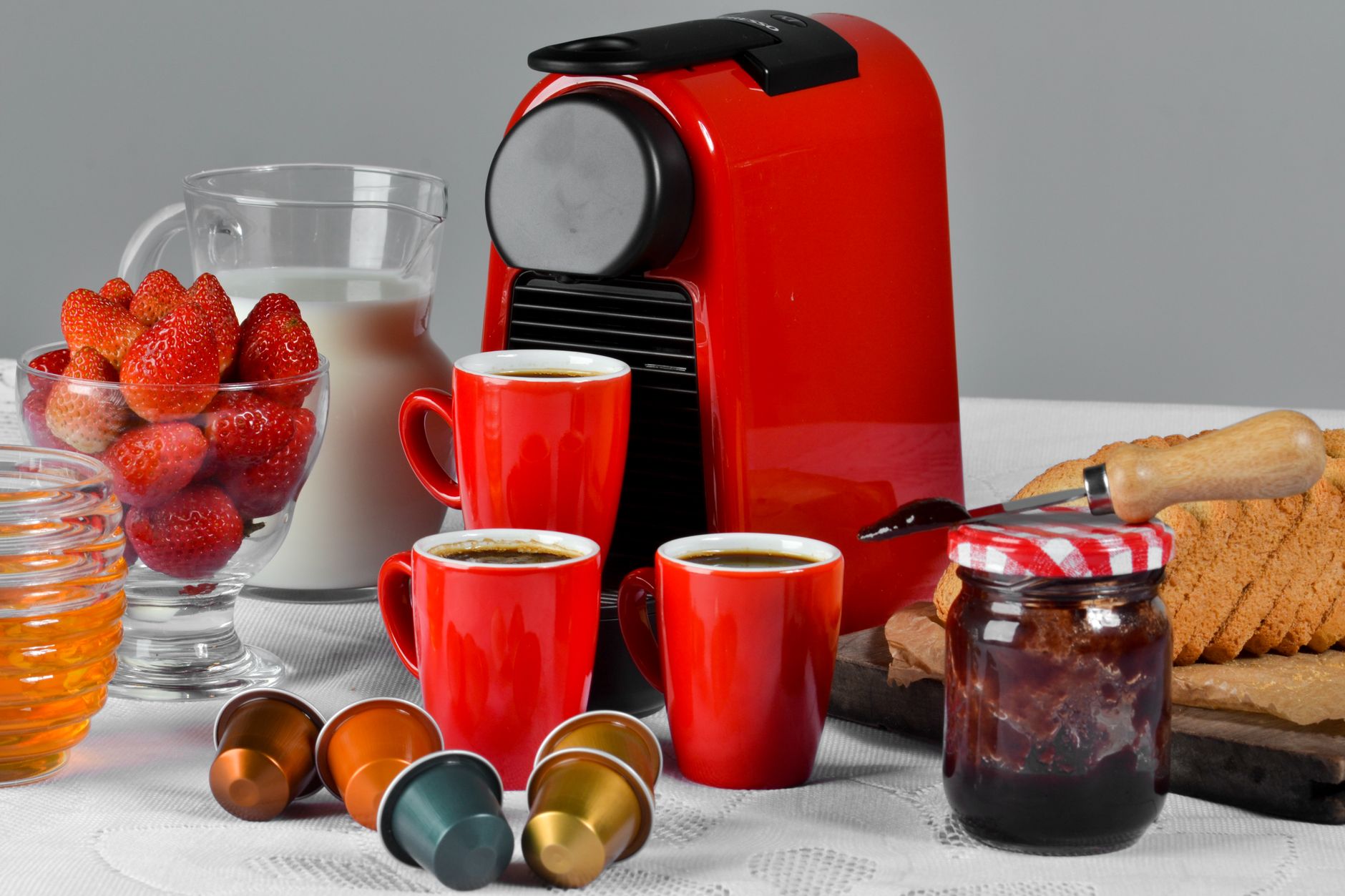 Photo: Karine Monteiro via Pexels
| Feature | Keurig K-Elite | Nespresso Vertuo |
|---|---|---|
| Max brew size | 12 oz | 18 oz (carafe) |
| Espresso option | No | Yes |
| Pressure | ~1–2 bar | Up to 19 bar |
| Pod ecosystem | K-Cup (4,000+ pods) | Nespresso proprietary |
| Iced coffee mode | Yes | Yes (select models) |
| MSRP | ~$150 | ~$180–$230 |
| Milk frother included | No | Some bundles |
For households that want both espresso and coffee, a Nespresso Vertuo handles both better than two separate machines, though at a higher per-pod cost. If your household is coffee-only — no lattes, no espresso — the K-Elite’s pod selection advantage is significant.
Hot Water on Demand
The K-Elite dispenses hot water without a K-Cup, a feature missing on entry-level Keurig machines. Water reaches brew temperature reliably, making it usable for instant oatmeal, tea, or hot cocoa. Not a headline feature, but it removes a friction point that annoys people who discover its absence after purchasing.
This single feature differentiates it from the K-Classic and K-Select at a meaningful quality-of-life level for households where not everyone drinks coffee.
What It Gets Wrong
 Photo: Roktim | রক্তিম 🇧🇩 via Pexels
Pod waste is the honest objection to any K-Cup machine. Keurig’s own My K-Cup reusable filter addresses this at the hardware level — it’s compatible with the K-Elite and allows ground coffee. Flavor results with the reusable filter are good; the extra 90 seconds of prep and cleanup is the real tradeoff.
Scale buildup matters more than most owners expect. The K-Elite’s descaling reminder light is a useful nudge, but the descaling process takes 45 minutes and requires either Keurig’s branded solution or white vinegar. Hard water households should treat this as a quarterly task, not an annual one.
No built-in milk frother. At $150, this is a reasonable omission, but it’s worth naming — the Nespresso Vertuo Pop
Who Should Buy the Keurig K-Elite
The K-Elite makes sense for:
- Multi-person households where drink preferences vary — 4,000+ K-Cup SKUs means everyone gets what they want
- Office environments without access to proper brewing equipment
- Convenience-first users who want good coffee fast without any technique requirement
- Households that already have K-Cup inventory from a previous brewer
Skip it if you care about espresso, if you want to develop your palate for specialty coffee, or if per-cup cost is a driving factor (K-Cups run $0.40–$1.00+ each vs. $0.05–$0.15 for ground coffee).
→ See also:
- Nespresso Vertuo vs Original: Which System Should You Buy?
- Best Nespresso Machines (2026 Ranked)
- Nespresso Vertuo Pop Review (2026)
FAQ
Does the Keurig K-Elite make espresso? No. The K-Elite brews drip-style coffee at low pressure — it cannot produce the concentrated, crema-topped shot that defines espresso. Keurig makes no espresso-capable machines; for espresso at home, Nespresso or a dedicated espresso machine is required.
Is the Keurig K-Elite worth it over the K-Classic? Yes, if you use iced coffee mode, strong brew, or hot water on demand regularly. The K-Elite adds those three features over the K-Classic at roughly a $40–$60 price premium. If you use none of them, the K-Classic is sufficient.
How often does the Keurig K-Elite need descaling? Every 3–6 months depending on water hardness. The machine’s descaling light will illuminate when the internal counter reaches its threshold, but in hard water areas, descaling proactively before the light activates extends pump and heating element lifespan.
Can I use any K-Cup pod with the K-Elite? Yes — the K-Elite is compatible with all standard K-Cup pods from any brand. It also works with the My K-Cup Universal Reusable Filter, which accepts any ground coffee and is sold separately.
What’s the difference between the K-Elite and K-Elite C? The K-Elite C adds a built-in carbonation setting for cold beverages using a CO₂ cartridge system. For standard hot and iced coffee, the base K-Elite is sufficient — the C model costs more and the carbonation feature has limited practical use for most buyers.
Editorial methodology: Assessments are based on manufacturer specifications, published user reviews, and editorial research. Physical hands-on testing is noted explicitly where it occurred. Rankings reflect our editorial judgment and are not influenced by affiliate commission rates. Full editorial policy · Affiliate disclosure