
Contents
How to Make a Latte With Nespresso (No Frother Needed)
TL;DR: You can make a latte with Nespresso by pulling a lungo or double espresso shot, then adding warm milk you’ve frothed by hand — shaking in a jar, whisking, or microwaving. No frother required. The result is a genuine espresso-based latte with decent foam in under 5 minutes.
What You Actually Need
Direct Answer: A Nespresso machine, milk, and any sealed container or microwave-safe mug. That’s it. No dedicated frother, no steaming wand, no extra equipment. The methods below use what’s already in your kitchen.
 Photo: furkanfdemir via Pexels
Ingredients:
- 1–2 Nespresso capsules (lungo or espresso intensity 7+)
- 150–200 ml whole milk (or oat milk for plant-based)
- Mug or glass
The Jar-Shake Method (Best Without Any Equipment)
Direct Answer: Fill a jar halfway with cold milk, seal it, shake hard for 30–45 seconds until foamy, then microwave the jar (lid off) for 20–30 seconds. The foam rises and stabilizes. Pour your Nespresso shot over the warm milk and spoon foam on top.
 Photo: atîka. . via Pexels
Step by step:
- Pull a lungo shot (Nespresso Original) or Alto Intenso (Vertuo) directly into your mug — roughly 110 ml
- Fill a clean jar or bottle to about one-third with whole milk
- Seal tightly and shake vigorously for 30–45 seconds — the milk should roughly double in volume
- Remove the lid and microwave for 20–25 seconds to warm the milk and set the foam
- Pour the warm milk slowly into your mug, holding back the foam with a spoon
- Spoon the remaining foam on top
Why it works: The mechanical agitation introduces air; the microwave heat sets the protein structure so foam holds longer. Whole milk foams best because of its fat and protein balance.
The Microwave-and-Whisk Method
Direct Answer: Heat milk in a mug for 60–75 seconds, then whisk briskly for 20–30 seconds using a regular fork or small manual whisk. You won’t get barista-level microfoam, but you’ll get a warm, lightly aerated milk that blends well with espresso.
 Photo: Abdus Salam via Pexels
- Pour 150–180 ml milk into a mug — do not fill above halfway
- Microwave on medium-high for 60–75 seconds (should reach ~65°C / 150°F — warm but not scalding)
- Whisk or stir rapidly with a fork for 20–30 seconds
- Pull your Nespresso shot into a separate mug
- Pour the frothed milk over the shot, foam included
This is faster than jar-shaking and works well if you want a hot latte. The foam is lighter and less dense than the jar method — closer to a flat white texture.
Choosing the Right Nespresso Capsule for Lattes
Direct Answer: Go for intensity 8+ on Original Line, or the Odacio / Melozio on Vertuo. Mild capsules disappear under milk. You need body and bitterness to punch through 150+ ml of dairy.
| Capsule | System | Intensity | Works for Latte? |
|---|---|---|---|
| Arpeggio | Original | 9 | Excellent — bold, holds up well |
| Kazaar | Original | 12 | Strong and chocolatey — best with oat milk |
| Odacio | Vertuo | 7 | Good baseline for lattes |
| Melozio | Vertuo | 6 | Mellow — better for flatter ratios |
| Fortado | Vertuo | 8 | Best all-rounder for Vertuo lattes |
For Original Line: use the lungo setting (110 ml) rather than espresso (40 ml) — more volume means better milk integration without over-diluting.
Milk Matters More Than You Think
Direct Answer: Whole milk froths most reliably. For plant-based, barista-edition oat milk (Oatly Barista, Minor Figures) performs closest to dairy because it’s formulated with stabilizers that survive heat and agitation.
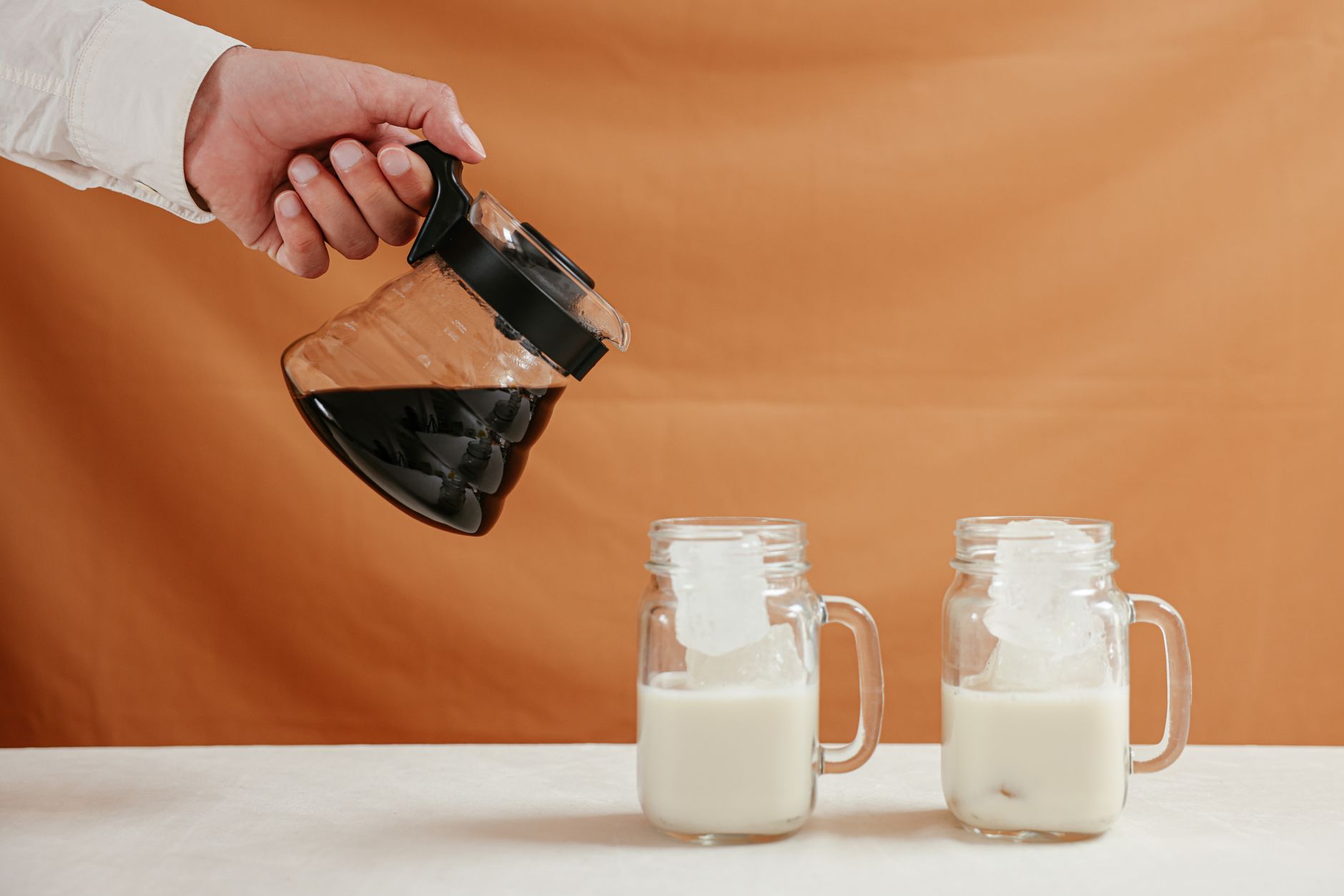 Photo: Cup of Couple via Pexels
Cold milk out of the fridge creates more stable foam than room-temperature milk — the cold proteins structure better under agitation. Skim milk creates more foam but it’s fragile and watery. Full-fat produces creamier, denser foam that holds for 2–3 minutes.
Scaling Up: Iced Nespresso Latte
Jar method works cold too. Skip the microwave step, pull your shot over ice first, then add the cold-shaken milk directly. The shake gives enough aeration for a light cold foam on top.
→ See also:
- Nespresso Vertuo vs Original: Which System Should You Buy?
- Best Nespresso Machines (2026 Ranked)
- Nespresso Vertuo Pop Review (2026)
FAQ
Can I make a latte with any Nespresso capsule? Technically yes, but low-intensity capsules (under 6) get lost under milk. Stick to intensity 8 or above for espresso-based drinks — you want bitterness and body that survives dilution.
Does the jar-shake method work with plant milk? Yes, with caveats. Regular plant milks (almond, standard oat) produce thin, quick-collapsing foam. Barista editions are specifically formulated for this — Oatly Barista and Minor Figures are the two most consistent options for home use.
How do I make a latte without a microwave? Heat milk in a small saucepan over medium-low heat until steaming (not simmering), then transfer to a jar and shake. Same result — the microwave is just faster.
Why does my foam collapse immediately? Either the milk was too warm before shaking, or you used low-fat milk. Start cold, shake aggressively, then heat. High-fat milk gives you a 2–3 minute stable foam window; skim milk foam lasts under 60 seconds.
What’s the milk-to-espresso ratio for a Nespresso latte? Standard is roughly 1:3 to 1:4 espresso to milk — one lungo shot (110 ml) to 150–180 ml milk. Adjust to taste, but going below 1:3 starts tasting more like warm milk than a latte.
Can I make a latte with Nespresso Vertuo without extra equipment? Yes. Vertuo’s Alto pod brews a longer shot by default, which is ideal — pull an Alto Intenso or Odacio directly into your mug, froth milk via jar-shake or whisk, combine. No Aeroccino or barista tools needed.
Editorial methodology: Assessments are based on manufacturer specifications, published user reviews, and editorial research. Physical hands-on testing is noted explicitly where it occurred. Rankings reflect our editorial judgment and are not influenced by affiliate commission rates. Full editorial policy · Affiliate disclosure