Contents
Best Cold Brew Coffee Makers (2026): Top Picks Tested
TL;DR: The best cold brew coffee maker for most people is the Oxo Brew Compact Cold Brew Coffee Maker — it nails the steep-to-drain ratio, cleans in under two minutes, and fits in a standard fridge. If you want larger batches or café-grade clarity, step up to an immersion tower or a dedicated jar system. Price, batch size, and cleanup time are what actually separate these picks.
What Makes a Cold Brew Maker Worth Buying
The best cold brew coffee makers share three traits: a fine-enough filter to block sediment without slowing the drain, a vessel that holds ≥32 oz of concentrate, and a design you’ll actually clean. Everything else — glass vs. plastic, handles, lids — is personal preference. A mason jar with a paint strainer bag technically works; these products just make it repeatable.
 Photo: 🇻🇳🇻🇳Nguyễn Tiến Thịnh 🇻🇳🇻🇳 via Pexels
Cold brew is forgiving by nature — time and water temperature do the work. But a bad maker introduces variables: grounds leaking past a loose filter, oxidation from a poor-fitting lid, concentrate sitting in contact with wet grounds because there’s no drain mechanism. That’s what you’re paying to avoid.
The picks below are sorted by use case. If you’re a daily drinker making 32–48 oz per week at home, the compact immersion models are the sweet spot. If you host or batch-brew for a week, go tall-jar or full-immersion with a large vessel.
Best Overall: OXO Brew Compact Cold Brew Coffee Maker
OXO’s design solves the core problem of home cold brew: draining without a mess. The rainmaker lid distributes water evenly over the grounds, the perforated bottom holds the filter tight, and a single switch opens the valve to drain straight into the included carafe. 32 oz concentrate in 12–24 hours, zero sediment.
 Photo: azra melek via Pexels
The grounds container holds 10 oz of coarsely ground coffee — enough for a 1:4 concentrate ratio that yields about 4–6 cups of ready-to-drink cold brew after dilution. The BPA-free plastic is lighter than glass alternatives, which matters when you’re moving a full carafe from fridge to counter.
Cleanup: rinse the filter basket, wipe the valve. Two minutes, no disassembly gymnastics.
Best for: Daily drinkers, small households, anyone who wants a repeatable process without thinking.
Batch size: 32 oz concentrate
Steep time: 12–24 hours (fridge)
Best Large Batch: Toddy Cold Brew System
The Toddy is the original, and it’s still the right call for anyone making 48+ oz at a time. Felt filter produces an exceptionally clean, low-acid concentrate. The rubber stopper drains by gravity into a glass carafe. No valves, no switches — the simplicity is the feature.
The system brews 12 oz of grounds to ~56 oz concentrate. At 1:4 dilution, that’s around 14 cups. Batch brewers, small offices, and anyone who hates running the process more than once a week should start here.
The felt filters are consumable — plan for roughly one per 10 brews. At ~$10 for a pack of two, it’s not painful, but it’s a recurring cost the OXO avoids with its reusable mesh.
| Feature | OXO Compact | Toddy System |
|---|---|---|
| Batch size | 32 oz | ~56 oz |
| Filter type | Reusable mesh | Disposable felt |
| Drain mechanism | Valve switch | Gravity stopper |
| Material | BPA-free plastic | Glass carafe |
| Cleanup effort | Low | Moderate (felt swap) |
| Price tier | Mid | Mid |
Best for: Weekly batchers, households of 3+, anyone prioritizing cup clarity.
Batch size: ~56 oz concentrate
Steep time: 12–24 hours
Best Glass Option: County Line Kitchen Cold Brew Mason Jar
If you want the simplest possible setup in an inert, non-plastic vessel, this is it: a wide-mouth mason jar with a fine-mesh stainless filter basket that drops straight in. No valves, no proprietary parts — just cold brew the way it was made before the category had a name.
 Photo: azra melek via Pexels
The 64 oz jar brews at full-immersion — grounds sit submerged the entire steep — so you get a slightly fuller body than drip-style cold brew. Pull the basket, drop the lid on, done.
Where it falls short: no drain carafe, so you’re decanting or pouring straight from the jar. Fine for most, awkward if you’re portioning by the glass into a packed fridge.
Best for: Glass-preferred households, apartment fridges with limited space, minimalists.
Batch size: Up to 48 oz (leaves room for grounds + filter)
Steep time: 12–24 hours
Best Concentrate-Only: Bruer Cold Drip Tower
Drip tower cold brew — water drips through grounds over 3–8 hours — produces a brighter, more tea-like cup than immersion. The Bruer is the most approachable tower on the market: compact, borosilicate glass, and designed to sit on a counter rather than take up a full shelf.
 Photo: Phát Trương via Pexels
Drip method is slower and fussier than immersion, but delivers nuance that immersion can’t: stone fruit clarity, cleaner finish, distinct terroir from single-origin beans. If you’re already buying specialty coffee and care about extraction character, the Bruer rewards the patience.
Drip rate is adjusted manually via the top valve — too fast and you over-extract; too slow and you’re still waiting at hour 12. There’s a learning curve of 2–3 brews before you dial it in.
Best for: Specialty coffee drinkers, pour-over fans who want cold brew with character.
Batch size: ~20 oz
Steep time: 3–8 hours (counter)
Best Budget: Takeya Patented Deluxe Cold Brew Coffee Maker
At under $30, the Takeya beats most competitors on sealing: the lid and spout are airtight, concentrate keeps fresh for two weeks in the fridge. The fine-mesh filter is stainless and reusable. This is the pick if you want to test cold brew before committing to a premium system.
The pitcher format is familiar — it’s basically a 1-quart Brita-shaped container with a filter basket instead of a cartridge. Fits in a fridge door. The 32 oz capacity is right for a 1–2 person household.
Weakness: no drain mechanism. You remove the filter basket while the pitcher is vertical, which means wet grounds dripping across your fridge shelf if you’re not careful. Acceptable at this price; annoying if you’ve used an OXO.
| Feature | Takeya Deluxe | OXO Compact |
|---|---|---|
| Price | $ | $$ |
| Batch size | 32 oz | 32 oz |
| Drain mechanism | Manual lift | Valve switch |
| Seal quality | Airtight lid + spout | Standard lid |
| Filter | Reusable mesh | Reusable mesh |
Best for: First-time cold brewers, budget households, fridge-door storage.
Batch size: 32 oz
Steep time: 12–24 hours
What to Look for When Buying
Filter quality
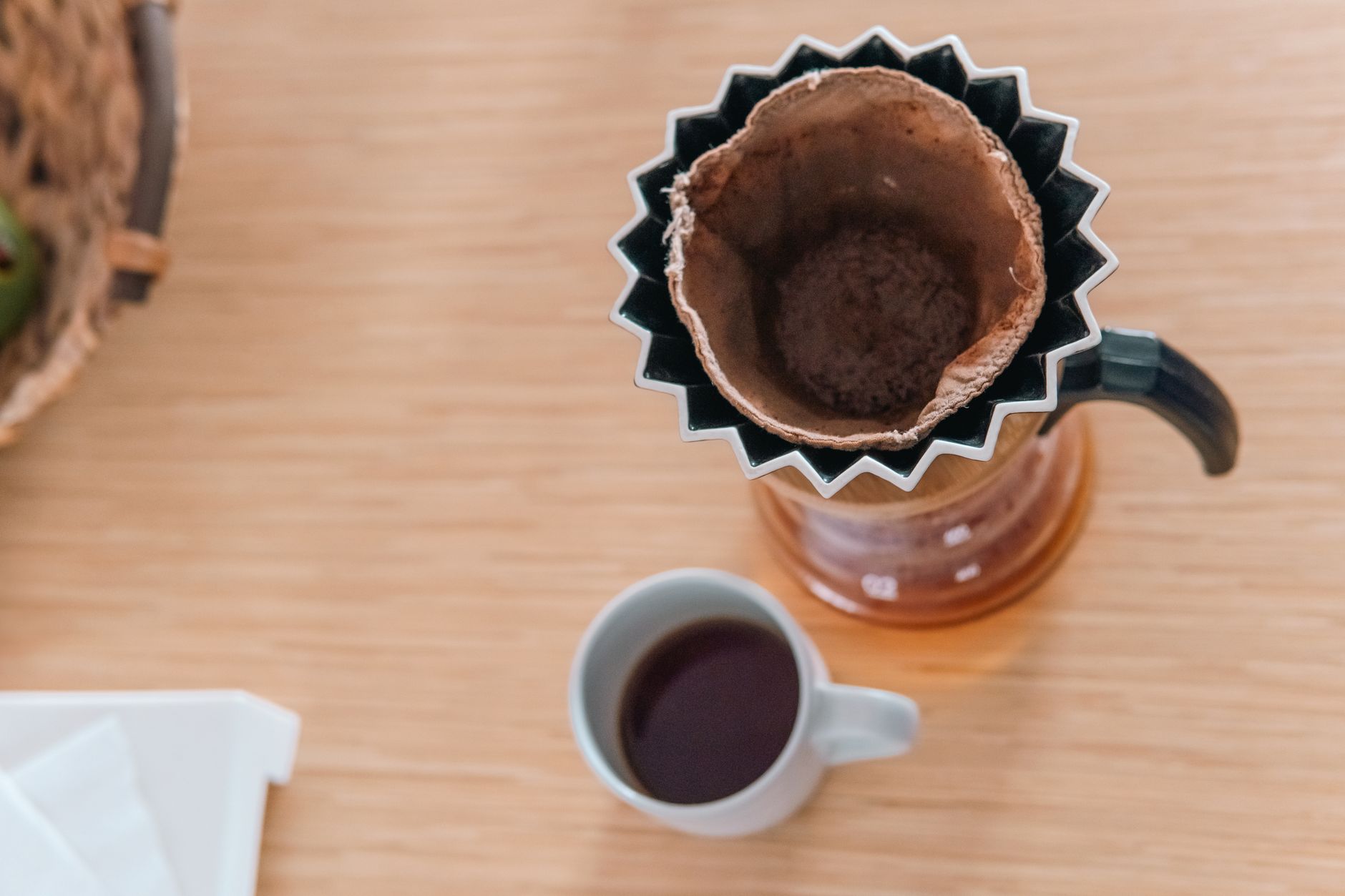
The filter is the single most important component. Mesh filters must be fine enough to block fine grounds (sub-200 micron) without being so fine they clog mid-steep. Felt filters like Toddy’s produce the cleanest cup but require replacement. Most stainless mesh filters hit 100–200 micron — more than adequate.
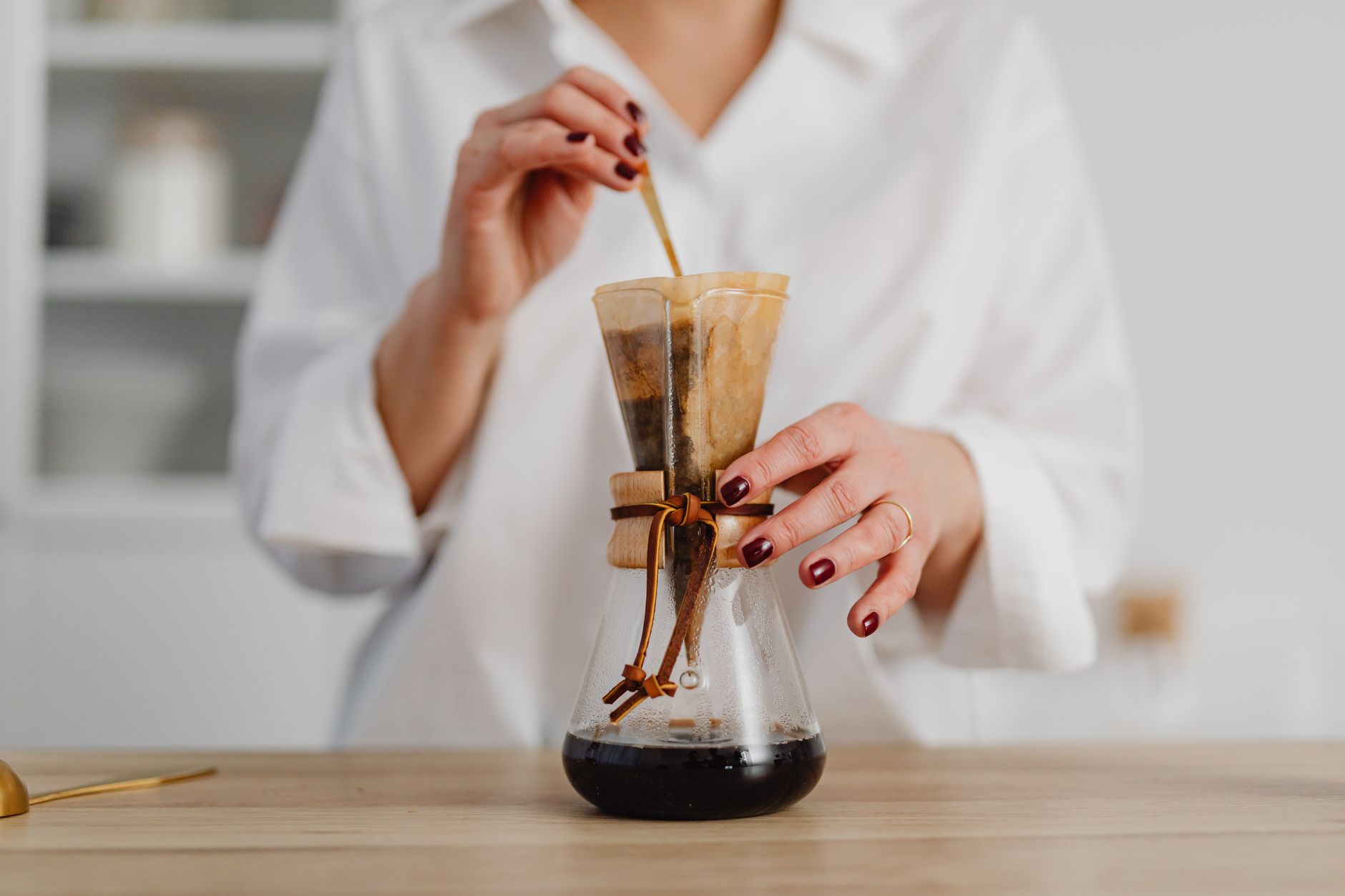 Photo: https://kaboompics.com/ via Pexels
If you’re grinding your own beans (you should be), err toward a coarser grind and let the filter work with the steep time, not against it. See our Cold Brew Coffee Ratio Calculator for exact grind-to-water ratios by vessel.
Vessel size and fridge fit
32 oz concentrate is the practical minimum for a daily drinker. Most cold brew makers sit upright in a fridge shelf — measure your shelf height before buying a tall tower or pitcher. The OXO at ~9 inches and Takeya at ~11 inches both clear standard fridge shelves; the Bruer tower at 17 inches needs a dedicated spot.
Steep time and workflow
Immersion cold brew: 12–24 hours in the fridge (slower, gentler extraction, less acidity). Room-temperature steep: 8–12 hours, slightly more extraction. Drip tower: 3–8 hours on the counter. For most people, a fridge overnight steep means the least intervention — load before bed, drain in the morning.
→ See also
- Cold Brew Coffee: The Complete Guide (Ratio, Method, Storage)
- Cold Brew Coffee Ratio Calculator
- How to Make Cold Brew Coffee at Home
FAQ
What is the best cold brew coffee maker for home use?
The OXO Brew Compact is the best all-around home cold brew maker for most people. Its valve drain system, reusable filter, and 32 oz capacity hit the right balance of capacity, cleanup, and repeatability. If you need larger batches, the Toddy System is the upgrade path.
How long does cold brew take in these makers?
Immersion-style makers (OXO, Toddy, Takeya, County Line) take 12–24 hours in the fridge. Drip towers like the Bruer take 3–8 hours at room temperature. Longer cold steeps produce lower acidity; shorter room-temperature steeps give slightly more brightness.
Can you use any ground coffee in a cold brew maker?
Yes, but coarse-ground coffee performs best — it flows through filters easily and avoids over-extraction during a long steep. Medium-coarse (similar to French press grind) is a good starting point. Pre-ground “cold brew” bags exist but fresh-ground whole beans produce noticeably better flavor.
How long does cold brew concentrate last in the fridge?
Properly stored concentrate lasts 1–2 weeks in a sealed container. The Takeya’s airtight lid and the Toddy glass carafe both extend freshness well. Diluted cold brew (ready-to-drink) should be consumed within 3–5 days.
Is a cold brew coffee maker better than using a mason jar?
A dedicated maker adds a filter system and drain mechanism, both of which make the process cleaner and more repeatable. A mason jar with a paint strainer bag works and costs almost nothing, but draining is messy and results vary batch to batch. The County Line Kitchen system bridges the gap — mason jar simplicity with a proper stainless filter basket.
What’s the difference between cold brew and iced coffee?
Iced coffee is hot-brewed coffee chilled or poured over ice — quick, but higher acidity and a faster staleness curve. Cold brew steeps grounds in cold water for 12–24 hours, producing a lower-acid, naturally sweeter concentrate. They’re different products, not interchangeable. Cold brew is significantly less acidic, which is why many people with acid sensitivity prefer it.
Do you need a special grinder for cold brew?
No special grinder is required, but any burr grinder set to coarse will outperform a blade grinder. Consistency matters more than grind size: uniform particles extract evenly over a 12-hour steep. A blade grinder produces a mix of fine dust and large chunks, which leads to simultaneous over- and under-extraction. If you’re investing in a cold brew maker, pair it with at least an entry-level burr grinder.
Editorial methodology: Assessments are based on manufacturer specifications, published user reviews, and editorial research. Physical hands-on testing is noted explicitly where it occurred. Rankings reflect our editorial judgment and are not influenced by affiliate commission rates. Full editorial policy · Affiliate disclosure