Contents
Best Coffee Storage Containers (2026): Freshness Tested
TL;DR: The best coffee storage container is an airtight canister with a one-way CO₂ valve, opaque walls, and a seal you’ll actually use daily. For most home brewers, the Fellow Atmos or Airscape Classic hits that mark without overthinking it. Whole beans stay fresh 2–4 weeks; ground coffee degrades in days regardless of container.
What Actually Makes a Coffee Storage Container “Best”
The four enemies of fresh coffee are oxygen, light, moisture, and heat — in that order. A genuinely good coffee storage container addresses all four. Vacuum-seal or one-way valve canisters outperform simple airtight lids because they actively reduce headspace oxygen as beans degas. Opaque over clear, always.
 Photo: Cup of Couple via Pexels
Most people overbuy on storage. A UV-resistant, airtight container with a tight gasket already handles 90% of the problem. The vacuum pump on a high-end canister matters most when you’re storing coffee for 2+ weeks — for weekly drinkers, a well-sealed ceramic or stainless canister is plenty.
The CO₂ Valve Explained
Fresh-roasted beans off-gas CO₂ for 5–14 days. A one-way valve lets that gas escape without letting oxygen back in. Without it, pressure builds in vacuum-sealed containers and breaks the seal. This is why you should never vacuum-seal coffee roasted within 5 days.
Best Coffee Storage Containers: Reviewed
1. Fellow Atmos Vacuum Canister — Best Overall
The Atmos uses a twist-top pump mechanism that pulls a measurable vacuum in seconds. No separate pump tool, no batteries. The lid locks visually when vacuum holds — you know it worked. Available in matte black, steel, and glass versions at 0.4L and 1.2L.
 Photo: Arina Krasnikova via Pexels
| Spec | Detail |
|---|---|
| Seal type | Mechanical vacuum (twist pump) |
| Material | Stainless steel / borosilicate glass |
| Sizes | 0.4L, 0.7L, 1.2L |
| Light blocking | Yes (steel) / No (glass) |
| CO₂ valve | No — wait 5 days post-roast |
| Price range | $30–$55 |
The glass version looks beautiful on a counter but defeats the light-blocking purpose. Go matte black steel unless the container lives in a dark cabinet.
Verdict: Best for home brewers who buy in 250g–500g bags and want a no-fuss daily driver.
2. Airscape Classic Stainless Steel — Best for Value
The Airscape pushes excess air out with an inner lid that plunges down onto the beans before the outer lid seals. It’s fast, satisfying to use, and the plunger visually confirms contact. The 64oz size holds a full pound of whole beans.
 Photo: Helena Lopes via Pexels
| Spec | Detail |
|---|---|
| Seal type | Plunger + airtight outer lid |
| Material | BPA-free stainless or plastic |
| Sizes | 32oz, 64oz |
| Light blocking | Yes (stainless) |
| CO₂ valve | No |
| Price range | $25–$40 |
The stainless version is noticeably more durable than the Airscape Lite plastic model. Worth the few extra dollars.
Verdict: Best for larger households or those buying 1lb bags. Simpler mechanism than the Atmos, slightly easier to clean.
3. Fellow Atmos Vault — Best for Ground Coffee
A dedicated vacuum canister designed around ground coffee: wider mouth for easy scooping, shorter profile that fits under most grinders. Same vacuum mechanism as the Atmos, same quality materials. The 1.2L holds roughly 400g of ground coffee.
Ground coffee loses volatile aromatics 15–20x faster than whole beans — surface area is the killer. Vacuum sealing buys you days, not months, but it’s still meaningfully better than a bag clip.
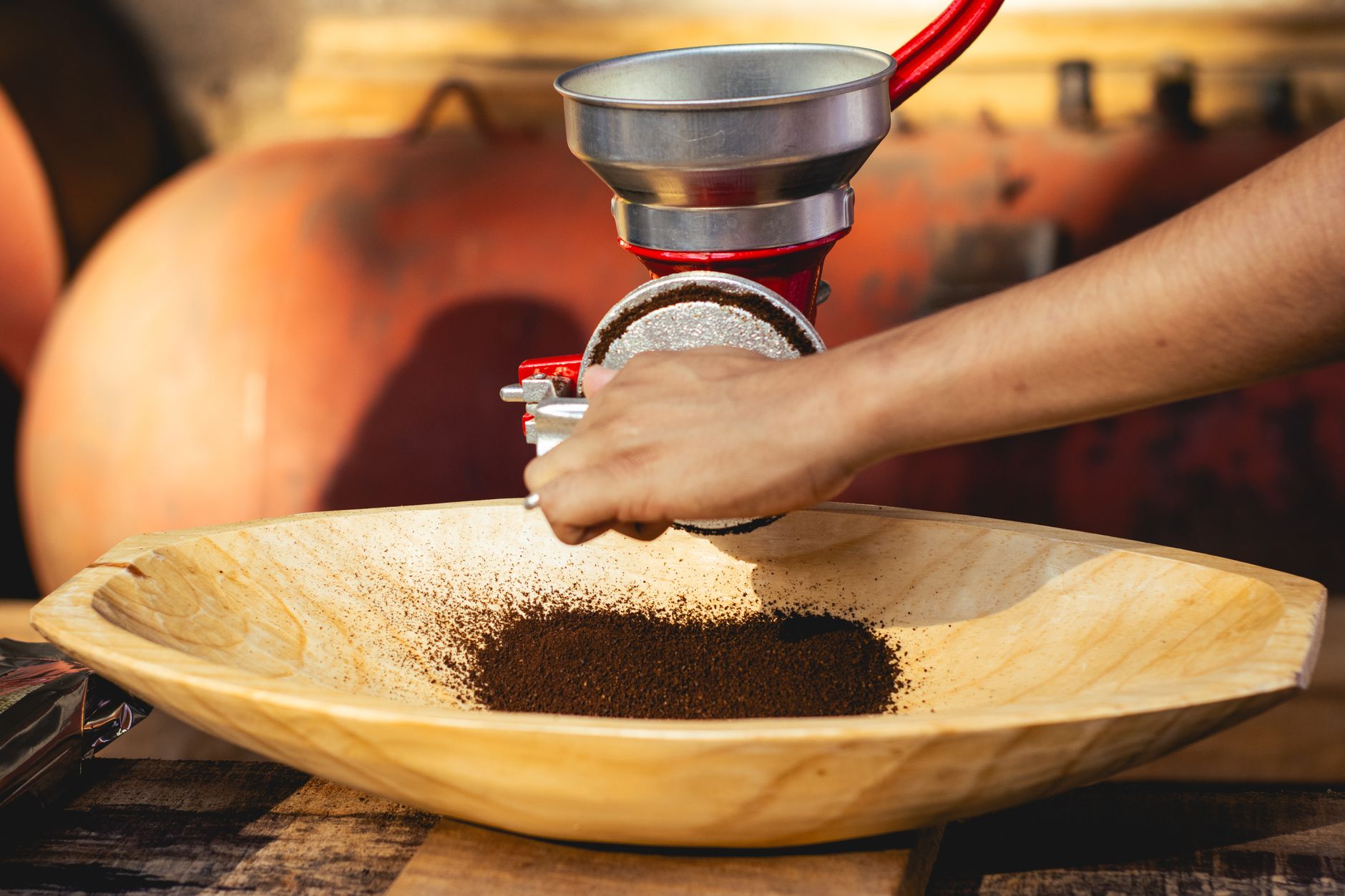 Photo: Daniel Morales via Pexels
Verdict: The only container worth buying specifically for pre-ground coffee. If you’re grinding daily, any airtight jar works fine — save the money.
4. Friis Coffee Vault — Best Budget Vacuum Pick
The Friis uses a replaceable CO₂ valve filter rather than active vacuuming — it vents gas out but keeps oxygen from entering. No mechanism to break, no pump. The 16oz version fits a standard half-pound bag.
 Photo: Lukas Blazek via Pexels
| Spec | Detail |
|---|---|
| Seal type | CO₂ one-way valve + airtight lid |
| Material | Stainless steel |
| Sizes | 16oz, 22oz |
| Light blocking | Yes |
| CO₂ valve | Yes — valve filter ($5, replace every 6 months) |
| Price range | $20–$28 |
The replaceable filter is the only ongoing cost and minor friction point. That said, the CO₂ valve makes it the better choice for freshly roasted coffee.
Verdict: Best option under $25. Ideal for third-wave beans bought fresh from a local roaster.
5. OXO Pop Container — Best for Bulk Storage
OXO’s one-push button creates an airtight seal. Not vacuum — just airtight. The large sizes (2.0L, 4.5L) make it practical for buying in bulk and decanting into a smaller daily-use canister. Clear body is a drawback; keep it in a cabinet.
No one-way valve, no vacuum. Pure convenience play for bulk quantities or infrequent brewing.
Verdict: Use as a pantry reserve container paired with a proper vacuum canister at the grinder. Not a standalone freshness solution.
Full Comparison Table
| Container | Price | Seal Type | CO₂ Valve | Best Size | Light Blocking | Best For |
|---|---|---|---|---|---|---|
| Fellow Atmos | $30–$55 | Mechanical vacuum | No | 0.7L | Yes (steel) | Daily home brewer |
| Airscape Classic | $25–$40 | Plunger + airtight | No | 64oz | Yes | Large households |
| Fellow Atmos Vault | $35–$50 | Mechanical vacuum | No | 1.2L | Yes | Ground coffee |
| Friis Coffee Vault | $20–$28 | One-way CO₂ valve | Yes | 16oz | Yes | Fresh-roasted beans |
| OXO Pop | $15–$25 | Push-button airtight | No | 4.5L | No | Bulk reserve storage |
What to Skip
Ceramic canisters with rubber gaskets — the gasket degrades and the seal fails within a year. Fine for display, not for freshness.
Clear glass jars — even mason jars. Light breaks down chlorogenic acids and volatile aromatics. Move them to a cabinet or don’t bother.
Refrigerator storage — condensation on cold beans destroys the aromatics the moment they warm back up. Freezing whole beans in sealed, portioned bags works; refrigerating does not.
Bags with zip-seals — the original roaster bag with a one-way valve is actually fine for the first 1–2 weeks. After that, transfer to a proper canister.
How Long Does Coffee Actually Last?
| Form | Airtight Container | Vacuum Canister | Frozen (sealed) |
|---|---|---|---|
| Whole beans | 2–3 weeks | 3–5 weeks | 3–6 months |
| Ground coffee | 3–5 days | 1–2 weeks | 1–2 months |
| Espresso puck (wet) | N/A | N/A | N/A |
These are peak-flavor windows, not safety dates. Coffee won’t make you sick past these marks — it just tastes flat.
→ See also:
- Best Coffee Accessories (2026 Complete Guide)
- Best Coffee Scales (2026 Reviewed)
- Acaia Pearl Review: Is It Worth $150?
FAQ
Does a vacuum coffee container actually work? Yes, measurably — independent testing shows vacuum-sealed beans retain more volatile aromatics after two weeks than airtight-only storage. The improvement is modest for beans consumed within a week, significant for anything held longer.
Can I store coffee in the fridge? No. The temperature swing when you open and close the door causes condensation on the beans, which strips aromatics and accelerates staling. Freeze for long-term storage in sealed, portioned bags — never refrigerate.
What size coffee canister do I need? Match your buying habits: a 0.7L–1.0L canister holds roughly 250–350g of whole beans, which is a standard bag. Buying 1lb bags regularly? Go 1.2L–1.5L.
Is the Fellow Atmos worth it over a cheaper canister? If you go through a bag in under 10 days, probably not — a good Airscape or even a well-sealed ceramic canister is fine. For anything held longer, the vacuum mechanism earns its price difference.
How often should I clean my coffee storage container? Every 2–3 bag refills. Coffee oils go rancid and coat the interior, tainting fresh beans. Warm water and dish soap, fully dry before refilling — moisture is worse than old oil residue.
Can I store pre-ground coffee in these containers? Yes, and it helps — but only meaningfully in a vacuum or valve-equipped canister. Even then, pre-ground degrades fast enough that grinding fresh daily outperforms any storage solution.
Editorial methodology: Assessments are based on manufacturer specifications, published user reviews, and editorial research. Physical hands-on testing is noted explicitly where it occurred. Rankings reflect our editorial judgment and are not influenced by affiliate commission rates. Full editorial policy · Affiliate disclosure