Contents
Best Coffee Accessories (2026 Complete Guide)
TL;DR: The best coffee accessories depend on your brewing method, but a quality burr grinder, precise scale, and gooseneck kettle deliver the biggest upgrade for most home brewers. This guide covers every essential and optional tool — ranked by actual impact on cup quality — so you can spend where it matters and skip what doesn’t.
Why Coffee Accessories Make or Break Your Cup
The grinder is the most important purchase after your brewer. Everything else — scales, kettles, thermometers — closes the gap between inconsistent and repeatable. Buy the best coffee accessories you can afford in that order, and the rest is refinement.
 Photo: Tima Miroshnichenko via Pexels
Most people spend $400 on a machine and $20 on a blade grinder. That’s backwards. Uniform particle size determines extraction evenness more than water temperature, dose weight, or brew time combined. The accessories below are ranked by impact, not price.
The Essential Tier: Non-Negotiable Upgrades
1. Burr Grinder
A burr grinder produces consistent particle sizes because two abrasive surfaces shear beans rather than smashing them. Blade grinders create a mix of powder and chunks that extract unevenly — some bitter, some sour, in the same cup. Any burr grinder outperforms any blade grinder.
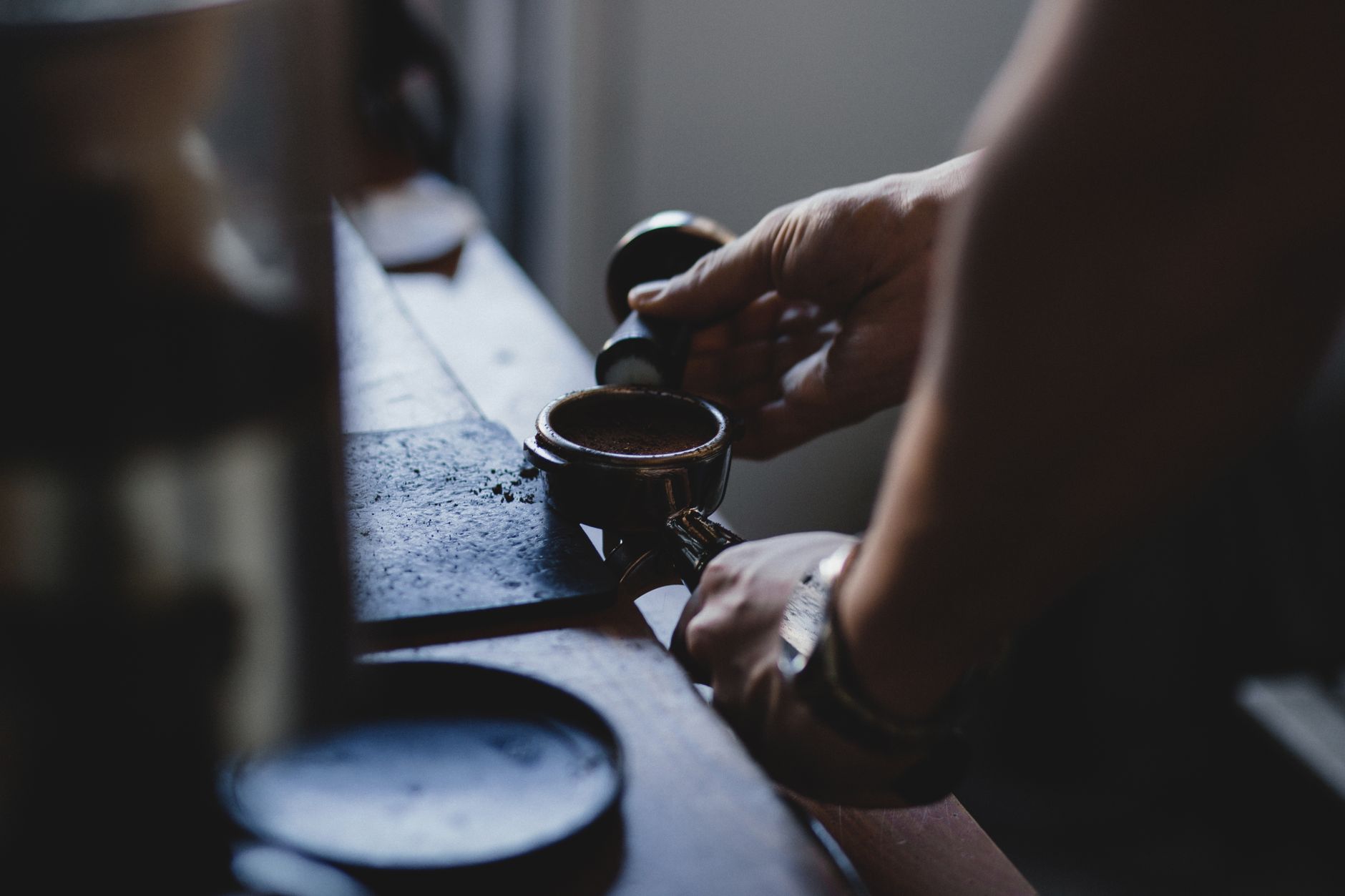 Photo: freestocks.org via Pexels
The grinder market splits into two burr geometries:
| Type | Best For | Pros | Cons |
|---|---|---|---|
| Flat burr | Espresso, filter | Uniform, bright, analytical | More retention, louder |
| Conical burr | All-around, quieter setups | Low retention, forgiving | Slightly less separation |
Entry-level picks:
- Baratza Encore ESP — best flat-burr entry grinder under $200
- Comandante C40 — best manual conical for travel and pour-over
Mid-range:
- DF64 Gen 2
The upgrade rule: If your grinder costs less than your brewer, fix that first.
2. Coffee Scale with Timer
Dose and yield control is the fastest path to repeatable espresso and filter coffee. Without a scale, you’re guessing your brew ratio every time. A scale with a built-in timer removes one variable entirely.
 Photo: ธันยกร ไกรสร via Pexels
For pour-over and French press, any 0.1g-resolution scale works. Espresso is tighter — you need auto-tare, fast response (under 500ms), and splash resistance.
| Scale | Price | Resolution | Response | Best For |
|---|---|---|---|---|
| Timemore Black Mirror | ~$50 | 0.1g | Fast | Pour-over, espresso |
| Acaia Pearl | ~$150 | 0.1g | Very fast | Espresso, app integration |
| Hario V60 Drip Scale | ~$55 | 0.1g | Medium | Pour-over, batch |
| Brewista Smart Scale II | ~$80 | 0.1g | Fast | All methods |
→ See also: Best Coffee Scales (2026 Reviewed) | Acaia Pearl Review: Is It Worth $150?
The Acaia Pearl justifies its price if you pull more than 5 shots a day — the Bluetooth app and shot tracking add up. For everyone else, the Timemore Black Mirror does the same job for a third of the cost.
3. Gooseneck Kettle
Pour control matters in any manual brew method. A gooseneck spout narrows the water stream to a pencil-width flow, letting you saturate grounds evenly and control pour rate. Standard kettles pour too fast and too wide to do this reliably.
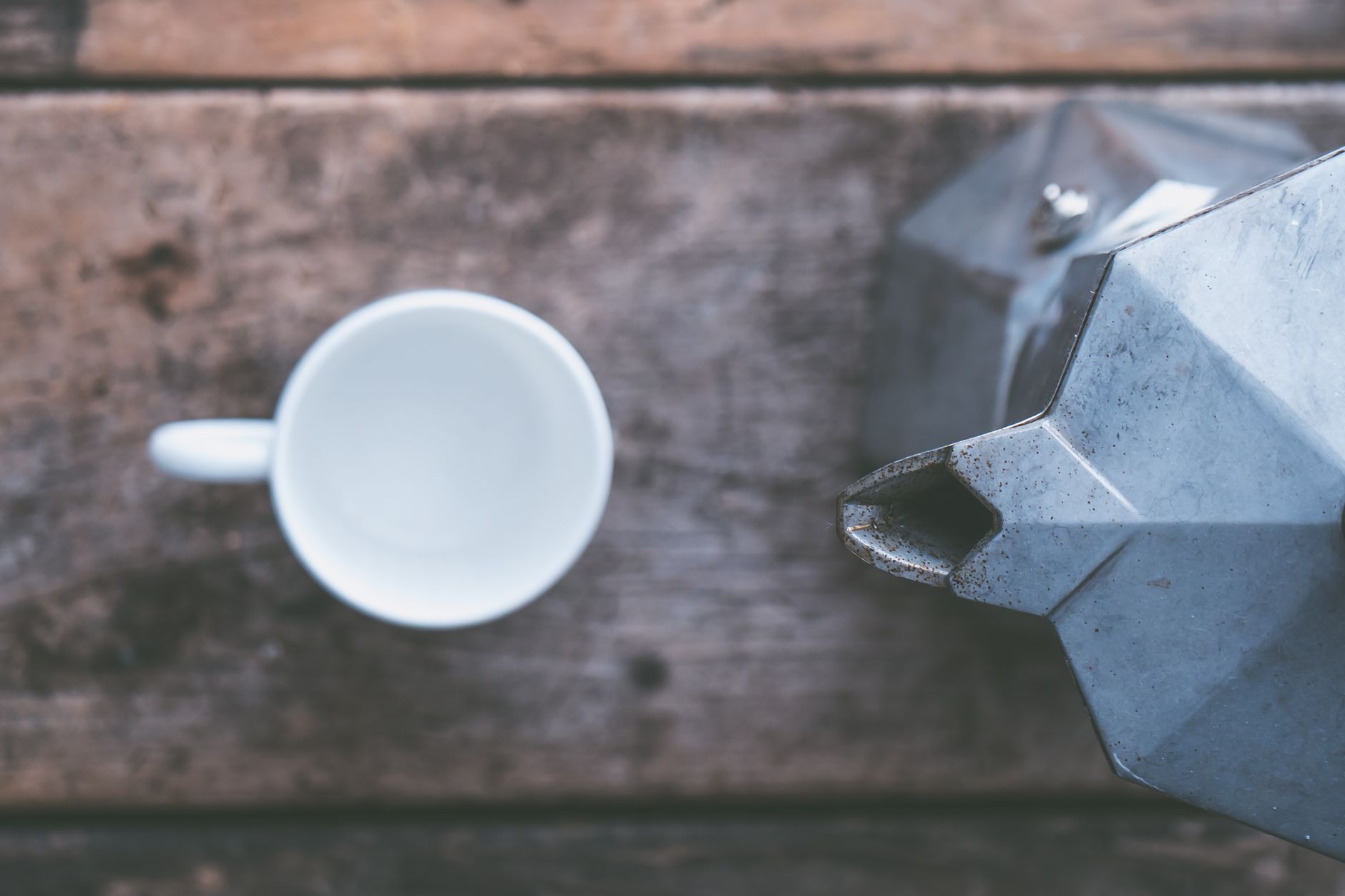 Photo: Jessica Lewis 🦋 thepaintedsquare via Pexels
The temperature control debate is simpler than it sounds: if you’re brewing light roasts (which extract at 92–96°C), variable temperature matters. Dark roasts forgive a wider range.
| Kettle | Price | Temp Control | Capacity | Hold Temp |
|---|---|---|---|---|
| Fellow Stagg EKG | ~$165 | Yes (1°C) | 0.9L | Yes (60 min) |
| Hario V60 Power Kettle | ~$90 | Yes | 0.8L | No |
| Bonavita 1L Variable | ~$70 | Yes | 1.0L | No |
| Timemore Fish Smart | ~$110 | Yes | 0.8L | Yes |
Fellow Stagg EKG remains the benchmark — precise, fast to heat, hold temperature is genuinely useful during a slow pour. The Hario V60 Power Kettle is the budget pick that doesn’t sacrifice temperature control.
4. Coffee Storage Canister
Roasted coffee goes stale from oxygen exposure, not moisture. An airtight canister with a one-way valve (lets CO₂ out, keeps oxygen out) extends peak flavor from 3–4 days to 2–3 weeks after opening.
Avoid clear canisters — UV light accelerates oxidation. Ceramic or opaque stainless steel are better choices.
- Airscape Stainless — best mechanical valve design, multiple sizes
- Fellow Atmos — vacuum seal, compact, matte finish
- OXO Pop Container — decent, widely available, no valve (less ideal for whole beans)
The Precision Tier: Method-Specific Tools
Pour-Over Setup
The pour-over method rewards equipment investment more than any other brew method because every variable — water temperature, pour rate, bloom time — is manually controlled. The brewer itself is cheap; the accessories are what matter.
The three-piece pour-over kit that most specialty cafés use:
- Hario V60 02 (ceramic or glass) — $25–45
- Gooseneck kettle (see above)
- Scale with timer (see above)
Add Hario filters (rinse before use to remove paper taste) and you have a complete setup under $300 including a mid-range grinder.
Chemex is the alternative — larger batches, thicker filters produce a cleaner, lighter body. The filters cost roughly 3x Hario and aren’t interchangeable.
Espresso Accessories
Equipment Review: Entry to Mid-Range Espresso Machines
| Machine | Price | Boiler | Portafilter | PID | Pump | Best For |
|---|---|---|---|---|---|---|
| Breville Bambino Plus | ~$500 | Thermocoil | 54mm | Yes | Vibratory | Convenience-first, milk drinks |
| Rancilio Silvia Pro X | ~$900 | Dual SS | 58mm | Yes | Vibratory | Espresso purist, home use |
| Gaggia Classic Evo Pro | ~$550 | Boiler | 58mm | No (mod-friendly) | Vibratory | Tinkerers, budget espresso |
| Lelit Mara X | ~$1,400 | HX | 58mm | Yes | Vibratory | Milk + espresso balance |
| ECM Synchronika | ~$2,800 | Dual | 58mm | Yes | Vibratory | Espresso purist, high volume |
Specs (Rancilio Silvia Pro X):
| Spec | Value |
|---|---|
| Boiler type | Dual stainless steel |
| Portafilter size | 58mm |
| PID | Yes (dual) |
| Pump type | Vibratory |
| Burr size | N/A (grinder separate) |
Verdict by archetype:
- Milk drinker: Breville Bambino Plus
Espresso Workflow Accessories
These tools close the gap between a good shot and a great one:
Distribution Tool / WDT Weiss Distribution Technique eliminates clumping in the puck. A cheap WDT tool (thin needles in a handle, ~$15–30) beats a $300 distributor for most home setups.
- Normcore WDT Tool — consistent, affordable, magnetic lid
Tamper A calibrated tamper that fits your portafilter basket exactly (58.5mm for most 58mm machines) produces a level puck. Flat base for most espresso, slight convex for lighter roasts.
- Normcore V4 Tamper — spring-calibrated, 15kg pressure, inexpensive
- Pullman Chisel — step up, machined steel, excellent fit
Puck Screen A 1.7mm stainless mesh placed on top of the puck before locking in the portafilter distributes water evenly during pre-infusion. Genuinely reduces channeling.
- IMS Precision Puck Screen — fits most 58mm baskets
Portafilter Basket The OEM basket is usually the weakest link on any machine under $1,000. A precision basket (tighter hole tolerances, flat base) improves extraction consistency immediately.
- IMS Competition Basket — 20g, fits most 58mm machines
- VST Basket — tighter tolerances, preferred by competition baristas
 Photo: Lukas Blazek via Pexels
Cold Brew and Immersion
Cold brew requires no specialized equipment beyond a container and a filter. The accessories below speed up the process or improve clarity — none are essential for the method to work.
- Toddy Cold Brew System — reusable felt filter, glass decanter, consistent results
- OXO Cold Brew Maker — perforated basket, easy cleanup, good for 1L batches
- Mason jar + cheesecloth — zero cost, slightly messier, identical flavor
French Press
The classic press requires nothing beyond the press itself and coarse-ground coffee. One accessory worth buying:
Metal mesh replacement filters reduce sediment and increase durability over OEM plastic frames.
- French Press Replacement Filter (maker-specific) — check compatibility before buying
The Nice-to-Have Tier: Situational Upgrades
Thermometer / Refractometer
A pocket thermometer confirms your kettle’s temperature display is accurate (some aren’t). A refractometer measures TDS (total dissolved solids), translating to extraction yield — useful for dialing in filter recipes but overkill for most home setups.
- Pocket thermometer (~$15) — buy if you’re brewing light roasts without temperature control
- Atago PAL-COFFEE refractometer — $200+, useful for filter coffee enthusiasts who want to optimize extraction
Knock Box
Espresso-only. A rubber-lined bin with a bar to knock out spent pucks. Not necessary if you knock into a trash can, but countertop-friendly if you pull multiple shots.
- Breville Knock Box Mini — compact, solid rubber bar, fits under most grinders
Milk Frothing Pitcher
Stainless steel, 12–20oz for single drinks, 20–32oz for multiple. A spout angle matters — sharper spout = more latte art control.
- Motta Europa Pitcher — $25, sharp spout, used in competition
- Barista Hustle Pitcher — ridged interior for better vortex control
Descaler
Every machine that uses water needs descaling every 2–4 months. Use a dedicated coffee machine descaler, not vinegar (vinegar leaves residue and can damage rubber gaskets).
- Urnex Dezcal — citric-acid based, safe for all machines, widely available
Building Your Setup by Budget
| Budget | Priority Order |
|---|---|
| Under $200 | Burr grinder (manual or entry electric) + basic scale |
| $200–$500 | Electric burr grinder + gooseneck kettle + scale |
| $500–$1,000 | Above + entry espresso machine + tamper + precision basket |
| $1,000–$2,000 | Mid-range grinder + mid-range espresso machine + full workflow tools |
| $2,000+ | Single-dose flat burr grinder + heat-exchange or dual-boiler machine + all precision tools |
The inflection point is around $500 total. Below that, the grinder produces the highest ROI. Above $1,000, workflow accessories (baskets, tampers, puck screens) close the remaining gap. Diminishing returns set in hard above $3,000.
→ See Also
FAQ
What coffee accessories should I buy first? A burr grinder. It has a bigger impact on cup quality than any other single purchase, including the brewer. If budget is tight, a manual conical burr grinder for $50–80 outperforms any blade grinder at any price.
Do I need a scale for pour-over coffee? Not strictly required, but a scale eliminates the most common source of inconsistency: guessing dose and yield. A basic 0.1g kitchen scale does the job. Buying a coffee-specific scale with a timer adds convenience but not accuracy.
Is a gooseneck kettle worth it for pour-over? Yes, if you’re using a V60, Chemex, or any manual dripper. A standard kettle pours too fast and too wide to control bloom saturation or maintain even coverage. The Fellow Stagg EKG is the best premium option; the Hario V60 Power Kettle is the best budget pick.
What’s the difference between a precision basket and a standard basket? Precision baskets (IMS, VST) have tighter hole diameter tolerances and a flat bottom, producing more even water distribution through the puck. The OEM basket on most home machines under $1,000 has looser tolerances that contribute to channeling. Swapping baskets is one of the cheapest high-impact upgrades for espresso.
How do I store coffee to keep it fresh longer? In an opaque, airtight container with a one-way CO₂ valve, at room temperature, away from light. Don’t refrigerate (condensation degrades flavor). Don’t freeze unless you’re storing more than 2–3 weeks’ worth — and only freeze in single-dose portions to avoid repeated thaw cycles.
What accessories do I actually need for a home espresso setup? The minimum functional setup: grinder, scale, tamper. The meaningful upgrade set: precision basket, WDT tool, puck screen. Everything else (knock box, refractometer, dosing cup) is convenience. Buy in that order.
Are expensive tampers worth it? Above a calibrated spring tamper (~$30–50), the returns diminish fast. The Normcore V4 produces a level, consistent tamp at 15kg — the same result as a $200 tamper. Spend the difference on a better basket.
What’s the best coffee accessory for travel? A manual burr grinder covers the most ground — it replaces both the grinder and eliminates the need for a power outlet. The Comandante C40 is the benchmark for hand grinders; the Timemore C3 is the budget pick. Pair it with a portable AeroPress and a small scale for a complete travel kit.
Editorial methodology: Assessments are based on manufacturer specifications, published user reviews, and editorial research. Physical hands-on testing is noted explicitly where it occurred. Rankings reflect our editorial judgment and are not influenced by affiliate commission rates. Full editorial policy · Affiliate disclosure